Latvia Travel Guide: Essential Things to Know Before Your Trip
Latvia was one of those trips where we knew the basics before arriving: Riga, forests, Baltic beaches, and plenty of history. But as usual, the smaller details made the country more interesting once we were there.
From getting around and paying for things to local food, prices, and a few cultural quirks, we picked up plenty along the way. So, instead of another list of places to see, here are the things to know before visiting Latvia, including practical tips and a few things we wish we had known before our trip.
Basic Facts About Latvia
- Name: Republic of Latvia (Latvijas Republika)
- Capital: Riga
- Land area: approximately 62,200 km²
- Population: approximately 1.9 million
- Official language: Latvian
- Official currency: Euro (€)
- Religion: No state religion; Christianity has historically been the largest religion.
- Administrative divisions: 36 municipalities and 7 state cities
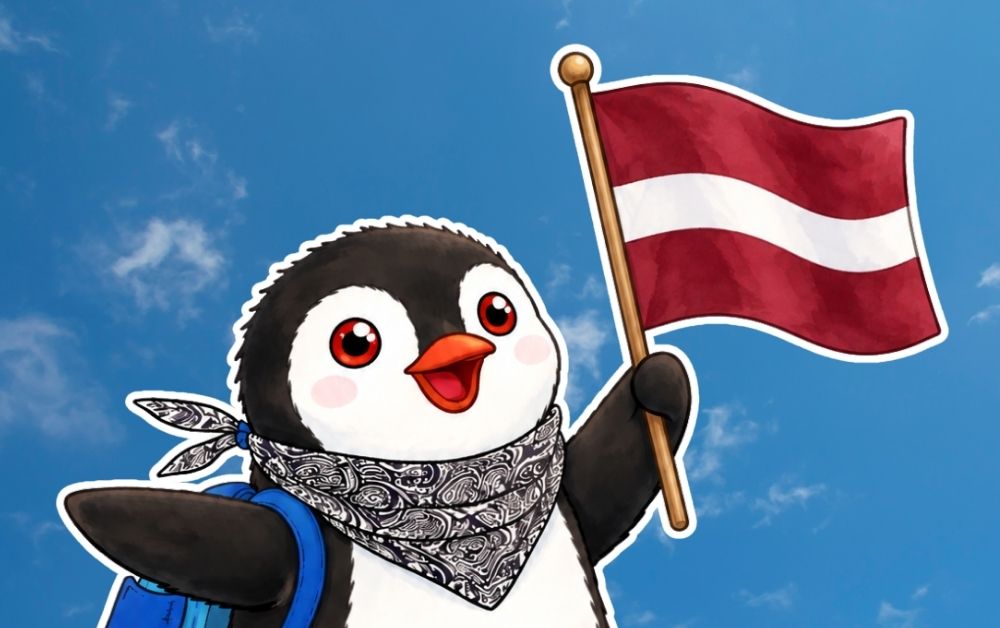
- Flag of Latvia: The flag has two dark carmine-red bands separated by a narrow white stripe. According to Latvian legend, the design comes from a wounded Latvian leader who was wrapped in a white sheet. His blood stained both sides of the cloth while the section beneath his body remained white. Red commonly represents courage and sacrifice, while white represents truth, freedom, and loyalty.
Why Latvia Made It Onto Our Travel List
Latvia and Lithuania had both been sitting on our travel list for a while, partly because, for some reason, we always mixed the two up. So we decided it was time to get them straight, starting with Latvia finally. Plenty of reasons make it worth a visit. Beyond Riga and its Art Nouveau architecture, Latvia brings together Baltic beaches, forests, medieval towns, castles, and a food scene we were curious to try. It also feels a little less obvious than many European destinations, which was part of the appeal. Latvia seemed like the perfect place to start our Baltic waddle.
Latvia’s History in a Nutshell
- c. 3000–2000 BC. Baltic peoples begin settling in the territory of modern-day Latvia.
- 1201. Bishop Albert founds Riga, and it soon becomes an important Baltic trading center.
- 1282. Riga joins the Hanseatic League, strengthening its role in European trade.
- 1561. The Livonian Confederation collapses, and Latvian lands come under different foreign powers.
- 1629. Sweden gains control of much of northern Latvia, including Riga.
- 1721. Riga and northern Latvia become part of the Russian Empire; the rest of present-day Latvia follows by the end of the 18th century.
- 1918. Latvia declares independence on November 18, following World War I.
- 1940. The Soviet Union occupies and annexes Latvia.
- 1941–1944. Nazi Germany occupies Latvia during World War II; most of Latvia’s Jewish population is murdered in the Holocaust.
- 1944–1991. Soviet rule returns, bringing repression, deportations, Russification, and major demographic changes.
- 1991. Latvia restores its independence as the Soviet Union collapses.
- 2004. Latvia joins both the European Union and NATO.
- 2014. Latvia adopts the euro, replacing the Latvian lats.
18 Interesting Facts About Latvia
#1: More Than Half of Latvia Is Covered by Forest
Latvia is seriously green. Around 55% of the country is covered by forest, making woodland a huge part of the landscape once you leave the cities. Pine, birch, and spruce are everywhere, and with Latvia covering about 64,600 km² in total, that means plenty of space for hiking, nature walks, and simply getting away from the crowds.
#2: Latvia Has Around 500 km of Coastline
Latvia might not be the first country that comes to mind when you think of a European beach trip, but it has almost 500 km of Coastline along the Baltic Sea and the Gulf of Riga. Much of it consists of long stretches of sand backed by forests and dunes rather than rows of hotels and resorts. Jūrmala, just outside Riga, is the best-known beach destination, but head farther along the coast and things quickly become quieter. The Baltic Sea isn’t known for tropical temperatures, but in summer, Latvia’s beaches offer a very different reason to visit.
#3: Latvia Is Home to Europe’s Widest Waterfall
Forget towering waterfalls for a moment because Latvia holds a very different European record. Venta Rapid (Ventas Rumba) in Kuldīga is considered Europe’s widest natural waterfall, stretching about 240 meters across and even wider during periods of high water. What it has in width, however, it definitely lacks in height: the drop is only about 1.8–2 meters. Visit in spring, and you might also spot fish jumping over the waterfall as they migrate upstream, a spectacle that has given Kuldīga its famous association with “flying fish.”
#4: Riga Is an Art Nouveau Hotspot
You do not have to waddle far through Riga before the buildings start stealing your attention. Around one-third of the buildings in Riga’s city center are Art Nouveau, giving the Latvian capital one of the highest concentrations of the style anywhere in the world. Many were built during Riga’s rapid growth around the turn of the 20th century, with elaborate faces, animals, flowers, and geometric details decorating their façades. Alberta Street is one of the best places to see them, so this is definitely one city where it pays to keep looking up.


#5: Latvia Has One of the World’s Oldest Flags
Latvia’s dark red-and-white flag might look simple, but its story goes back centuries. A red-and-white Latvian banner appears in the Livonian Rhymed Chronicle from the late 13th century, linked to warriors from the region of Cēsis. This makes it one of the oldest flag designs in the world still used by a modern nation. The familiar carmine-red, white, and carmine-red design was officially adopted in 1921, banned during Soviet rule, and restored as Latvia moved toward independence in 1990.
#6: Your Jeans Have a Surprising Latvian Connection
The next time you pull on a pair of jeans, a small Latvian connection hides in their history. Jacob W. Davis was born in Riga in 1831, then emigrated to the United States and eventually worked as a tailor in Nevada. Looking for a way to make work trousers stronger, he began reinforcing stress points such as pockets with metal rivets. Davis approached Levi Strauss for financial help with the patent, and in 1873 the pair received a US patent for riveted work trousers. Those reinforced trousers helped lay the foundations for the modern blue jeans we know today.
#7: The Famous Minox “Spy Camera” Was Developed in Latvia
Latvia also has a surprising connection to espionage. In the 1930s, inventor Walter Zapp developed the tiny Minox camera in Riga, with production beginning at the Latvian company VEF in 1937. Small enough to fit easily into a pocket, the camera was created as a compact photography tool, not for secret agents. Its size later made it popular for intelligence and surveillance work, earning Minox its lasting reputation as the classic “spy camera.”
#8: Latvia Takes Singing Very Seriously
Singing in Latvia is much more than entertainment; it is a big part of the country’s cultural identity. The first Latvian Song Festival was held in Riga in 1873, and the tradition has since grown into the huge Latvian Song and Dance Festival, generally held every five years. It brings together tens of thousands of singers, dancers and musicians, with mass choirs made up of thousands of voices performing at once. UNESCO also recognizes the Baltic song and dance celebration tradition as Intangible Cultural Heritage, and if your Latvia trip coincides with the festival, expect Riga to be very busy.
#9: Riga’s Central Market Was Built Using Zeppelin Hangars
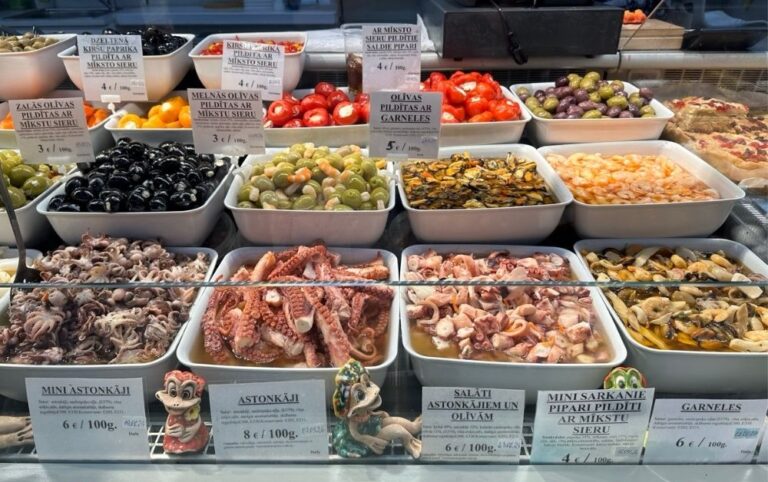
One of Riga’s biggest markets has a rather unexpected connection to aviation. When Riga Central Market opened in 1930, its huge pavilions incorporated parts of German Zeppelin hangars left behind in Latvia after World War I. The original hangars were too large to relocate easily, so workers dismantled sections and incorporated them into the five market halls you see today. At the time, it was considered one of Europe’s largest and most modern markets. Today, you can waddle between the pavilions, shopping for everything from fish and meat to vegetables, bread, and Latvian specialties, all inside pieces of aviation history.


#10: Jāņi Is One of Latvia’s Biggest Celebrations
If you happen to visit Latvia around the summer solstice, you will quickly realize that Jāņi is a big deal. Celebrated on the night of June 23 into June 24, the festival brings together old Latvian traditions with plenty of food, drink, and singing. People light bonfires, stay awake until sunrise, wear flower crowns and oak-leaf wreaths, drink beer, and eat Jāņi cheese, traditionally flavored with caraway seeds. Many Latvians leave the cities and celebrate in the countryside, making it one of the best times to experience just how strongly Latvia remains connected to its traditions.
#11: Latvia Has More Than 2,000 Lakes
For a relatively small country, Latvia has a lot of water. More than 2,000 lakes are scattered across the country, with the biggest concentration in Latgale in eastern Latvia. The region is often nicknamed the “Land of Blue Lakes”, and its landscape is a mix of lakes, forests, small towns and countryside. Latgale is also home to Lake Rāzna, one of Latvia’s largest lakes, and Lake Drīdzis, the country’s deepest at around 65 meters. If you want to see a quieter, more rural side of Latvia beyond Riga, this region is worth adding to the map.
#12: Ice Hockey Is a Big Deal in Latvia
Latvia might have fewer than 2 million people, but when it comes to ice hockey, the country punches well above its weight. The sport has a huge following, and games involving the Latvian national team regularly bring out crowds dressed in the country’s dark red and white. One of the biggest moments came at the 2023 IIHF World Championship, when Latvia defeated the United States 4–3 in overtime to win bronze, its first-ever medal at the tournament. The achievement was such a big deal that the following day was declared a national holiday so Latvians could celebrate the team’s return home.
#13: Riga Claims One of the World’s First Christmas Trees
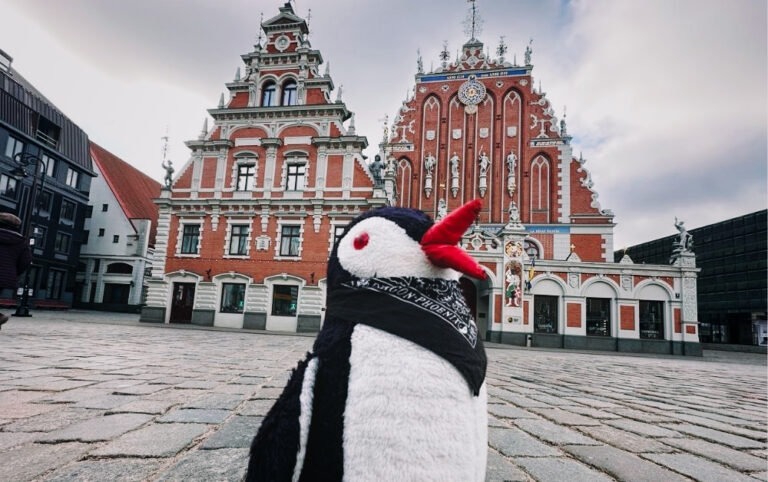
Riga has a fun claim to Christmas history. According to local tradition, one of the earliest decorated public Christmas trees was put up in the city in 1510 by the Brotherhood of Blackheads, a guild of unmarried merchants. Today, a plaque in Riga’s Town Hall Square marks the supposed spot, and a Christmas tree is still placed nearby during the festive season. There is a catch, though: historians debate exactly what happened in 1510, and Tallinn in Estonia makes a competing claim dating back to 1441. So Riga might not be able to prove it invented the Christmas tree, but the rivalry certainly makes the story more interesting.


#14: Latvia Has Its Own Mysterious Herbal Drink
You will probably come across Riga Black Balsam sooner or later in Latvia. This dark herbal drink dates back to 1752 and is traditionally associated with Riga pharmacist Abraham Kunze. The exact recipe remains a secret, but it contains a blend of 24 natural ingredients, including herbs, roots, berries, and other botanicals. The original version is strong at 45% alcohol, with a bitter, herbal taste that can take you by surprise on the first sip. Latvians drink it straight, add it to coffee or mix it into cocktails, and those distinctive brown ceramic bottles also make for a very Latvian souvenir.
#15: Latvia Has Four Distinct Cultural-Historical Regions
Latvia may be relatively small, but it does not feel the same everywhere you go. The country is traditionally divided into four cultural-historical regions: Vidzeme, Kurzeme, Zemgale and Latgale, each with its own landscapes, traditions and local identity. Vidzeme is known for forests and historic towns, Kurzeme for its Baltic Coastline, Zemgale for flatter farmland and manor estates. Latgale stands out for its lakes, pottery, and strong regional culture. You may also hear Sēlija (Selonia) described separately, particularly in modern Latvian cultural and administrative contexts, making Latvia’s regional identity a little more complicated than the classic four-region map suggests.
#16: Latvian Women Are Among the Tallest in the World
Here is one Latvian fact you might actually notice while walking around Riga. Latvian women are among the tallest in the world, with an average height of around 170 cm (5 ft 7 in). A major international study of height across 200 countries found Latvian women ranked among the very tallest globally. Latvian men are tall too, averaging roughly 181 cm (5 ft 11 in). So if you are on the shorter side, Latvia might quite literally be a country where you spend a lot of time looking up.
#17: Mark Rothko Was Born in Latvia
One of the biggest names in modern art has Latvian roots. Mark Rothko was born in Daugavpils in 1903, when the city was part of the Russian Empire, before his family emigrated to the United States when he was a child. He later became famous for his huge blocks of color and emerged as one of the leading figures of Abstract Expressionism. His works now sell for extraordinary sums: No. 6 (Violet, Green and Red) was reportedly sold privately in 2014 for around €140 million. Today, you can explore his connection to Latvia at the Rothko Museum in Daugavpils.
#18: Latvians Say “Čau” Just Like Italians Say “Ciao”
One word might sound surprisingly familiar when you arrive in Latvia: čau. Latvians use it casually to say “hi” and “bye,” and yes, it sounds much like the Italian ciao. But the connection is not quite as mysterious as it first appears. Variations of ciao spread across Europe during the 20th century, entering several Central and Eastern European languages, including Latvian. Today, čau is completely at home in everyday Latvian, so it is probably one of the easiest local words to remember on your trip.
Practical Facts for Travelers Coming to Latvia
Before traveling to Latvia, it helps to know a few basics that can make planning and getting around easier. From entry requirements and money to public transport and drinking water, here are the practical facts worth knowing before you go.
- Visa Requirements. Latvia is part of the Schengen Area. EU, EEA, and Swiss citizens can enter without a visa, while travelers from many other countries can visit visa-free for up to 90 days in any 180 days. Requirements depend on your nationality, so always check the current rules before traveling.
- Passport and ID. EU citizens can generally travel to Latvia with a valid passport or national identity card. Travelers from outside the EU should check the applicable passport validity requirements before departure.
- Currency. Latvia uses the euro (€), which replaced the Latvian lats in 2014.
- Card Payments. Cards and contactless payments are widely accepted, particularly in Riga and other towns. It is still useful to carry a little cash for markets, smaller businesses, or more rural areas.
- Time Zone. Latvia uses Eastern European Time (EET, UTC+2) and switches to Eastern European Summer Time (EEST, UTC+3) during daylight saving time.
- Socket Plugs. Latvia uses Type C and Type F plugs, with a standard voltage of 230 V and 50 Hz. Travelers from countries using different sockets may need an adapter.
- Driving Side. Cars drive on the right-hand side of the road, with the steering wheel on the left.
- Public Transport. Riga has an extensive network of buses, trams and trolleybuses, while trains and intercity buses connect the capital with other parts of Latvia. You can comfortably explore Riga without renting a car.
- Tap Water. Tap water is generally safe to drink in Latvia. In older buildings, however, plumbing can affect the taste or quality, so ask your accommodation if you are unsure.
- Emergency Number. Call 112 for emergency assistance. It works throughout Latvia and across the European Union.
- Language. Latvian is the official language. English is commonly spoken in Riga and tourist areas, particularly among younger Latvians. Russian is also widely understood by part of the population.
- Mobile Roaming. Travelers with an EU SIM card can generally use their domestic mobile allowance in Latvia under EU roaming rules, subject to their provider’s fair-use policy.
- Tipping. Tipping is not compulsory, but leaving around 5–10% for good service in restaurants is appreciated. Always check whether service has already been included.
- Drinking Age. You must be 18 or older to buy alcohol in Latvia.
- Weather. Latvia has four distinct seasons. Winters can be cold and snowy, while summers are generally mild to warm. Rain is possible year-round, so a waterproof layer is useful even in summer.
- Daylight Hours. Daylight hours vary greatly by season. Summer brings very long days, while winter days can feel surprisingly short, something worth considering when planning sightseeing.
- Public Toilets. Public toilets are available at stations, shopping centers and tourist areas, but some require a small payment, so having a few coins can be useful.
- Sunday Opening Hours. Many supermarkets, shopping centers and businesses in Riga open on Sundays, although smaller shops and businesses outside the capital may operate shorter hours.
- European Union and Schengen. Latvia has been a member of the European Union and NATO since 2004 and is part of the Schengen Area, making onward travel to neighboring Estonia and Lithuania straightforward for travelers who meet Schengen entry requirements.
Best Time to Visit Latvia
The best time to visit Latvia really depends on what you want from your trip. Summer brings long days and warmer weather, while winter offers Christmas markets and a much colder Baltic experience. Spring and autumn can mean fewer crowds, but the weather becomes less predictable.
- Spring (March–May). Fewer tourists and gradually longer days, but March can still feel very much like winter. May is a much better choice if you want milder weather and more greenery.
- Summer (June–August). The best time for warm weather, beaches, and long daylight hours. June is also when Latvia celebrates Jāņi, while July and August are popular for trips to Jūrmala and the Baltic coast.
- Autumn (September–November). September can still be pleasant, while the changing leaves make Latvia’s forests particularly worth exploring. By November, expect colder temperatures and much shorter days.
- Winter (December–February). Come for Christmas markets, snow, and a winter atmosphere, particularly in Riga. Temperatures can drop well below freezing, so pack accordingly.
We visited Latvia at the end of March, and while it worked for our trip, we probably wouldn’t choose that month again. It was still quite cold; we had plenty of cloudy weather, and spring had not really arrived yet. On the plus side, there were fewer crowds, and we certainly did not have to worry about getting too hot while waddling around Riga.
Buy Us a Ko-fi

How Much Time Do You Need in Latvia
How much time you need in Latvia depends on whether you are planning a Riga city break or want to explore beyond the capital. Latvia is relatively compact, and places such as Sigulda, Cēsis, and Jūrmala work well as trips from Riga. For a first visit, we would recommend at least 3–4 days. This gives you enough time to explore Riga without rushing and add at least one trip outside the capital. If you want to include places such as Kuldīga, Liepāja, Cēsis, or Gauja National Park, give yourself 5–7 days. A full week also makes a road trip much more realistic.
We spent 4 days and 3 nights in Latvia, from March 21–24. For us, that worked well for a first introduction to the country, although we definitely left with more places still on our Latvia list.
Things We Wish We Knew Before Visiting Latvia
There are always a few things you only really understand once you arrive. Latvia was relatively easy to travel around, but a few practical details would have been useful to know before our trip.
- Riga is very walkable. Most of the main sights in and around the Old Town are close enough to explore on foot, so bring comfortable shoes and expect to do plenty of walking.
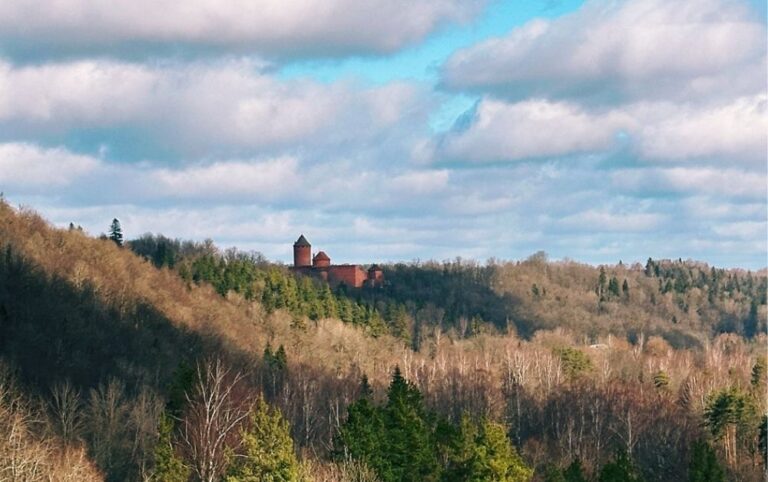
- Latvia is much more than Riga. The capital is an easy starting point, but forests, castles, beaches and towns such as Cēsis and Kuldīga give you plenty of reasons to stay longer.
- March is still cold. We visited toward the end of March expecting at least a hint of spring, but the weather was cold and frequently cloudy. Pack proper layers if you visit around then.
- Card payments are easy. We found paying by card straightforward, particularly in Riga, although having a little cash is still useful for smaller purchases.
- English gets you quite far. We had no major problems communicating in English, particularly in Riga and places used to international visitors.
- Latvian is not Russian. Latvia has a sizeable Russian-speaking population, but Latvian is the country’s official language and an important part of its national identity. Even learning a simple word like “ paldies for “thank you” is worth it.
- Do not underestimate travel distances outside Riga. Latvia looks small on a map, but trying to fit too many destinations into a short trip can still mean spending much of your day getting from one place to another.
- If you can, give yourself more than a weekend. We spent 4 days and 3 nights in Latvia, which worked for a first visit, but a few extra days would make it easier to see more of the country instead of focusing mainly on Riga.
Latvia turned out to be a country with far more to it than we expected. Riga might be the obvious starting point, but between the forests, Baltic Coastline, castles, small towns, local food, and some surprisingly interesting history, there is plenty more to explore. Our 4 days in Latvia gave us a good introduction, but they also left places still on our map for another trip. And while we probably would not choose the end of March again, we would definitely return to Latvia, preferably when the days are a little longer and the weather a little warmer. We hope these Latvia travel tips and things to know before visiting Latvia help you plan your own trip, avoid a few surprises, and make the most of your Baltic waddle.
Travel Bold. Eat Well. Waddle Wild.

This post contains affiliate links. If you click and buy, I might earn a tiny commission, enough to help a penguin keep up its globe-trotting lifestyle. No extra cost to you, just more fish for me. Thank you for supporting the adventure!