What to Eat in Latvia: A Guide to Traditional Latvian Food
Food is always part of our journey. When we visit a new country, tasting local dishes is just as important as seeing its landmarks, and it helps to know what to expect before sitting down at the table. Latvia is no exception. From hearty traditional dishes to rye bread, smoked fish, and local treats, Latvian cuisine reflects the country’s history, climate, and connection to the land. In this guide, we introduce some traditional Latvian foods you shouldn’t miss when visiting Latvia.
What to Expect from Latvian Cuisine
Latvian food reflects the country’s northern climate, forests, farmland, and Baltic Sea coastline. Expect hearty, comforting dishes built around simple local ingredients rather than complicated techniques. Rye bread, potatoes, grains, cabbage, peas, dairy, pork, mushrooms, and berries appear often, while fish plays an important role thanks to Latvia’s coastal location. Smoked, pickled, and fermented foods are also part of the culinary tradition, adding plenty of depth and contrast to otherwise straightforward dishes.
Latvian cuisine shares similarities with the food traditions of its Baltic and Northern European neighbors, particularly Estonia and Lithuania. At the same time, historical influences from Germany, Russia, and Scandinavia have also left their mark. The result is food that can feel familiar yet distinctly Latvian: earthy mushrooms, tangy fermented vegetables, rich smoked fish, dense rye bread, and warming soups sit alongside modern interpretations in Riga’s restaurants. It is not necessarily a cuisine built around light meals, but its reliance on seasonal produce and minimally processed ingredients gives it a strong connection to the land and the seasons.
So, Latvian cuisine is simple, seasonal, and hearty, built around local ingredients and traditional cooking methods that reflect the country’s climate, landscape, and history.

Best Traditional Latvian Food
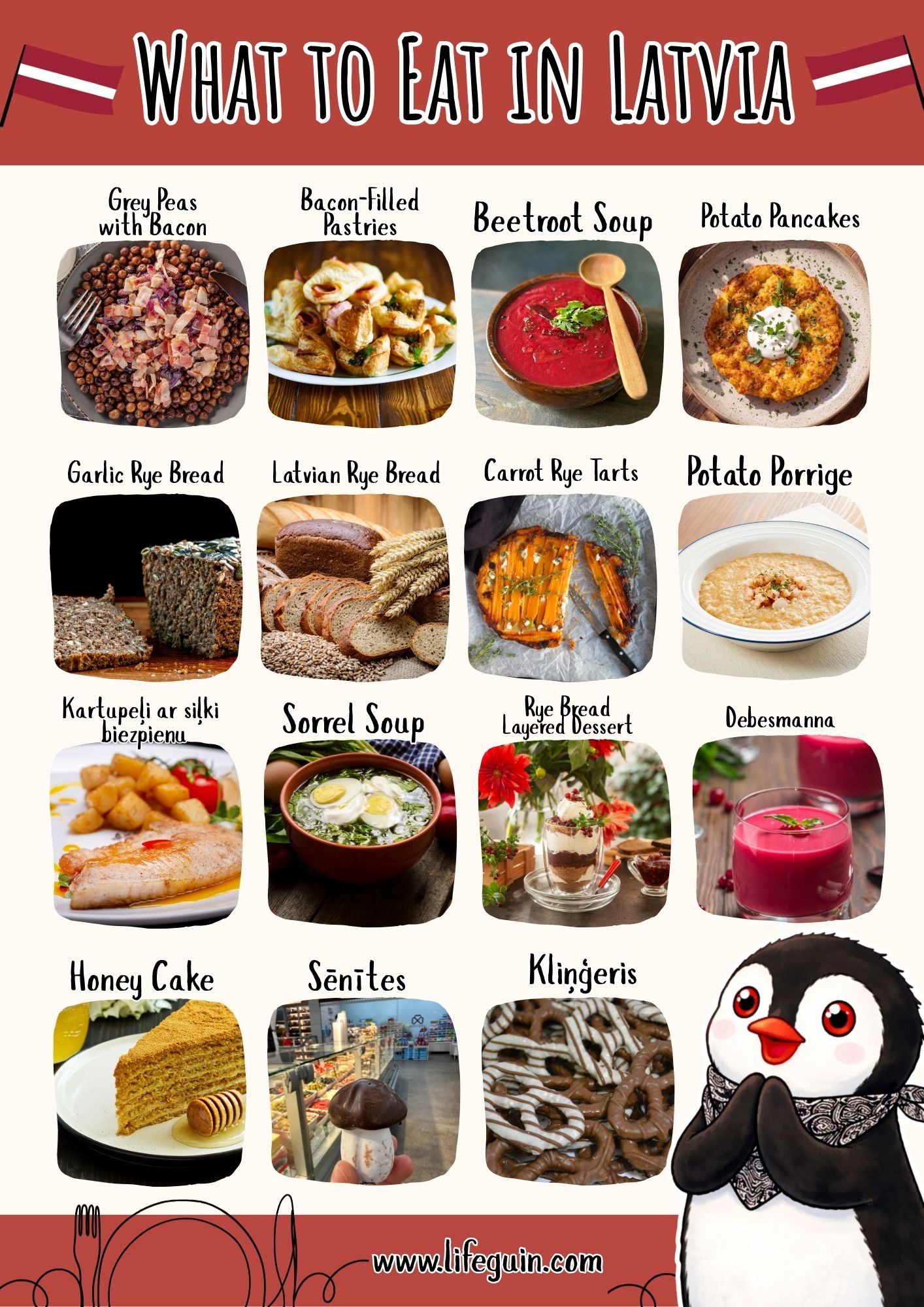
- Pelēkie zirņi ar speķi (Grey Peas with Bacon). One of Latvia’s best-known traditional dishes, combining cooked grey peas with fried bacon, smoked pork, and onions. It is particularly associated with Christmas and traditional Latvian celebrations.
- Pīrāgi (Bacon-Filled Pastries). Small crescent-shaped yeast pastries traditionally filled with finely chopped bacon and onions. They make an easy snack and are a classic example of Latvia’s love for simple, filling food.
- Aukstā zupa (Cold Beetroot Soup). A bright pink summer soup made with beetroot, kefir, cucumber, dill, and often a boiled egg. Served cold, it offers a refreshing contrast to some of Latvia’s heavier traditional dishes.
- Kartupeļu pankūkas (Potato Pancakes). Grated potato is mixed into a simple batter and fried until crisp, usually served with sour cream. Potato pancakes are a familiar comfort food across the region and remain a staple of Latvian cuisine.
- Ķiploku grauzdiņi (Garlic Rye Bread). Strips of dark rye bread are fried until crisp and rubbed or tossed with garlic. Often served with a creamy cheese or sour-cream dip, these make a particularly good beer snack.
- Sklandrauši (Carrot and Potato Rye Tarts). A traditional Kurzeme specialty made from a rye pastry base filled with layers of potato and carrot. These small, open-faced tarts are among the more distinctive regional foods to look for.
- Bukstiņputra (Potato and Barley Porridge). A hearty traditional dish combining potatoes and barley into a thick, comforting porridge. It is particularly associated with Latvia’s rustic home cooking and remains a staple among traditional Latvian dishes.
- Kartupeļi ar siļķi un biezpienu (Potatoes with Herring and Cottage Cheese). A simple combination of boiled potatoes, herring, and cottage cheese that brings together several staples of Latvian cooking. It is especially associated with traditional home-style meals.
- Skābeņu zupa (Sorrel Soup). A tangy soup made with sorrel and traditionally served with a boiled egg. It is particularly associated with spring and shows how seasonal greens feature in Latvian cooking.
- Rupjmaizes kārtojums (Rye Bread Layered Dessert). Crumbled rye bread is layered with whipped cream and tart berry or cranberry jam, creating a dessert that balances the sweetness of berries with rye’s earthy flavor. It is a classic Latvian dessert.
- Rīgas Melnais Balzams (Riga Black Balsam). Latvia’s famous herbal bitter is made from a blend of botanicals and has a strong, complex flavor. People traditionally enjoy it as a drink or use it in cocktails and other drinks.
Traditional Latvian Desserts to Try
Latvian desserts lean into the same ingredients found throughout the country’s cuisine: rye bread, berries, dairy, honey, and simple pastry. Expect plenty of contrasts, from tangy berries and lightly sweetened cream to rich caramel and the distinctive flavor of dark rye bread. These traditional treats are worth seeking out while traveling around Latvia.
- Rupjmaizes kārtojums (Rye Bread Layered Dessert). Crumbled rye bread is layered with whipped cream and berry or cranberry jam, creating a dessert that balances earthy, slightly sour rye with tart fruit and creamy sweetness.
- Sklandrauši (Carrot and Potato Tarts). These small open-faced pastries from western Latvia combine a rye pastry base with sweetened layers of potato and carrot. Their unusual savory-sweet combination makes them one of Latvia’s most distinctive traditional treats.
- Maizes zupa (Rye Bread Soup). Despite its name, this traditional dessert is more like a thick, sweet rye bread pudding. Cook rye bread with dried fruit and spices, then serve it chilled with whipped cream.
- Gotiņa (Milk Caramel). These small milk caramel sweets are a classic Latvian treat, made by slowly cooking milk and sugar until they develop a rich caramel flavor and chewy texture.
- Debesmanna (Semolina Mousse). A light, airy dessert made by whipping cooked semolina with fruit or berry juice. Often served with milk, this nostalgic Latvian favorite turns simple ingredients into something surprisingly delicate.
- Zefīrs (Latvian Marshmallow). A soft, airy sweet made from fruit or berry purée and sugar, similar to marshmallow but with a light, slightly tangy flavor.
- Biezpiena sieriņš (Curd Cheese Snack). A small sweet made from smooth curd cheese, usually coated in chocolate and sometimes filled or flavored with vanilla, fruit, or other additions. It is an everyday Latvian favorite rather than a restaurant dessert.
- Medus kūka (Honey Cake). A layered cake made with thin honey-flavored sponge or pastry and a creamy filling. The layers soften as the cake rests, creating the rich, tender texture typical of this popular regional dessert.
- Sēnītes (Mushroom-Shaped Cookies). These charming little sweets are shaped like mushrooms, with a pale biscuit stem and a chocolate-coated cap. They have a nostalgic, homemade feel and are a fun Latvian treat to look out for in bakeries and shops.
- Kliņģeris (Latvian Celebration Cake). A festive, ring-shaped sweet yeast bread traditionally served at birthdays, weddings, and other celebrations. It is often decorated with nuts, dried fruit, icing, or colorful toppings, making it as much a centerpiece as a dessert.
Traditional Latvian Drinks to Try
Latvia has a mix of traditional drinks that reflect its northern climate and local ingredients. Alongside beer and herbal liqueurs, you will find fermented drinks, berry-based refreshments, and birch sap, a seasonal favorite. Here are a few Latvian drinks worth trying during your trip.
- Rīgas Melnais Balzams (Riga Black Balsam). Latvia’s best-known herbal liqueur, made from a blend of botanicals and spices. It has a strong, bitter taste and is traditionally enjoyed neat, mixed with coffee, or used in cocktails.
- Kvass (Fermented Rye Bread Drink). A lightly fermented drink made from rye bread, with a sweet-and-tangy flavor and a low alcohol content. It is particularly refreshing on a warm day.
- Bērzu sula (Birch Sap). Collected from birch trees in early spring, this naturally sweet drink is a seasonal Latvian tradition. You can find it fresh or bottled, sometimes flavored with berries or herbs.
- Alus (Latvian Beer). Beer has a long history in Latvia, and local breweries produce a range of styles, from light lagers to darker, more characterful beers. It commonly accompanies traditional Latvian food.
- Mors (Berry Drink). A refreshing non-alcoholic drink made from berries, particularly cranberries or lingonberries. Its naturally tart flavor pairs well with Latvia’s hearty cuisine.
Eating in Latvia: What to Know Before You Go
Eating out in Latvia is generally easy and relaxed, whether you are stopping for a quick meal in a café or sitting down for a traditional dinner. Riga has plenty of restaurants where reservations are useful, while outside the capital you can often walk in. A few practical details will make ordering and paying a little smoother.
- Reservations. Not usually necessary for casual restaurants, but book ahead for popular places in Riga, especially on weekends.
- Meal times: Lunch is generally around 12–14:00, while dinner tends to start from around 18:00.
- Tipping. Around 10% is a reasonable tip for good service. Check whether a service charge is already included.
- Bread. Rye bread is a staple and may appear on the table with the meal.
- Portions. Traditional Latvian dishes tend to be hearty, so check portion sizes before ordering several dishes.
- Tap water. Ask whether tap water is available rather than assuming it’s complimentary.
- Cards. Card payments are widely accepted in restaurants, particularly in Riga.
- Menus. English menus are common in tourist areas, although smaller local restaurants may have menus primarily in Latvian.
- Service: Service can be more understated than in some countries. Staff may not check on you constantly, so ask when you need something.
- Prices. Expect higher prices in Riga’s Old Town and tourist areas than in neighborhood restaurants or smaller towns.
Buy Us a Ko-fi

Is Latvian Food Worth Trying
For us, trying local food is one of the best ways to understand a country, and Latvia offers plenty to explore. Its cuisine is not about complicated dishes or flashy presentation. Instead, it celebrates rye bread, potatoes, berries, fish, dairy, smoked meats, and seasonal ingredients, often turning simple staples into comforting meals. From grey peas with bacon and colorful cold beetroot soup to mushroom-shaped sweets and traditional rye desserts, there is plenty to taste beyond the usual tourist menu. So when you visit Latvia, leave room at the table and let local cuisine become part of the journey.
Travel Bold. Eat Well. Waddle Wild.

This post contains affiliate links. If you click and buy, I might earn a tiny commission, enough to help a penguin keep up its globe-trotting lifestyle. No extra cost to you, just more fish for me. Thank you for supporting the adventure!