Skopje Travel Guide: Things to Know Before You Go
Skopje wasn’t really on our radar at all, but when there’s a direct flight from the city you currently live in, sometimes you say yes to the opportunity and see where it takes you. And we’re glad we did. Skopje ended up being one of those cities we’re genuinely happy we got to experience, a little unexpected, a little different, and full of things we didn’t know before arriving.
In this guide, we’re sharing some interesting facts about Skopje, along with practical travel facts and useful things to know before you go. Basically, all the little bits of information that can make planning your first waddle around North Macedonia’s capital much easier.
Quick Facts About Skopje
- Location: Northern North Macedonia, along the Vardar River
- Region: Skopje Statistical Region
- Population: Around 525,000 residents in the wider Skopje area
- Year Established: Skopje has ancient origins dating back more than 2,000 years; the Roman settlement of Scupi developed nearby.
- Elevation: Around 245 meters (804 ft) above sea level
- Language: Macedonian; Albanian is also widely spoken
- Currency: Macedonian Denar (MKD)
- Nearest Major Cities: Pristina (around 90 km away), Thessaloniki (around 230 km away), and Sofia (around 240 km away)
- Nearest Airport: Skopje International Airport (SKP), around 20 km from the city center
- Main River: Vardar River
- Known For: Huge statues, the Old Bazaar, Stone Bridge, Mother Teresa, Ottoman heritage, brutalist architecture, and the controversial Skopje 2014 redevelopment project
- Major Historical Event: A devastating earthquake struck Skopje on July 26, 1963, destroying much of the city
- Highest Nearby Mountain: Mount Vodno, with its summit at 1,066 meters (3,497 ft)
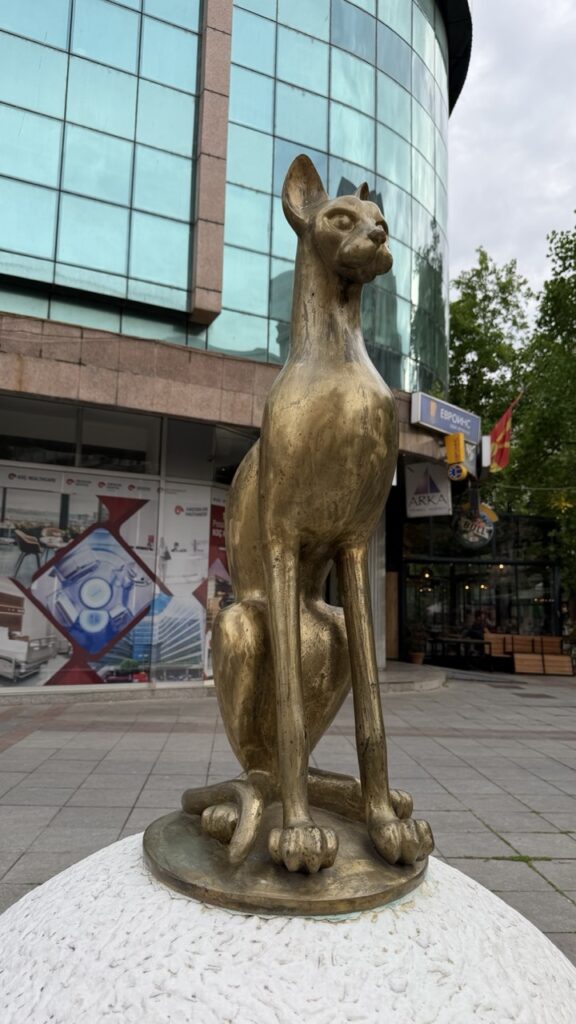
- Nickname: Sometimes referred to as the “City of Statues” because of the remarkable number of statues and monuments scattered around the city.
Brief History Of Skopje
- 1st Century AD. The Romans developed Scupi, an important settlement near present-day Skopje.
- 518 AD. A major earthquake destroyed much of ancient Scupi, and the city gradually developed closer to its present location.
- 1346. Serbian ruler Stefan Dušan was crowned Emperor in Skopje.
- 1392. Skopje came under Ottoman rule, which lasted for more than 500 years and strongly shaped the city’s culture and architecture.
- 1689. Much of Skopje was burned during the Great Turkish War after being captured by Austrian forces.
- 1912. Ottoman rule ended, and Skopje became part of the Kingdom of Serbia.
- 1918. Skopje became part of the newly created Yugoslav state.
- 1944. Skopje became the capital of the Socialist Republic of Macedonia within Yugoslavia.
- 1963. A devastating 6.1-magnitude earthquake destroyed much of Skopje, killing more than 1,000 people.
- 1960s–1980s. The city was rebuilt with international help, giving Skopje much of its distinctive modernist and Brutalist architecture.
- 1991. Macedonia declared independence from Yugoslavia, making Skopje the capital of the independent country.
- 2010s. The Skopje 2014 project transformed the city center with statues, monuments, fountains, and new façades.
- 2019. The country officially became the Republic of North Macedonia, with Skopje remaining its capital.
The Legend Behind Skopje’s Name
Skopje Fortress even comes with a local legend or, more precisely, a legend connected to how Skopje got its name. According to folk tradition, when Slavic forces were trying to capture the fortified city, its walls were so difficult to penetrate that their leader repeatedly ordered the soldiers to attack “со копја” (so kopja), meaning “with spears.” The story says those repeated words eventually became associated with the name Skopje. It’s folklore rather than accepted historical etymology, but we love little stories like this they make staring at a very old stone wall considerably more entertaining.
11 Interesting Facts About Skopje
#1: An Earthquake Almost Destroyed Skopje
One of the most important events in Skopje’s modern history happened on July 26, 1963, when a powerful 6.1-magnitude earthquake struck the city. More than 1,000 people lost their lives, thousands were injured, and around 80% of Skopje was destroyed or severely damaged. The disaster completely changed the face of the city, and much of the unusual modernist and Brutalist architecture you see around Skopje today comes from the massive rebuilding effort that followed. And interestingly, the old Skopje railway station clock stopped during the 1963 earthquake, showing the time of the disaster.
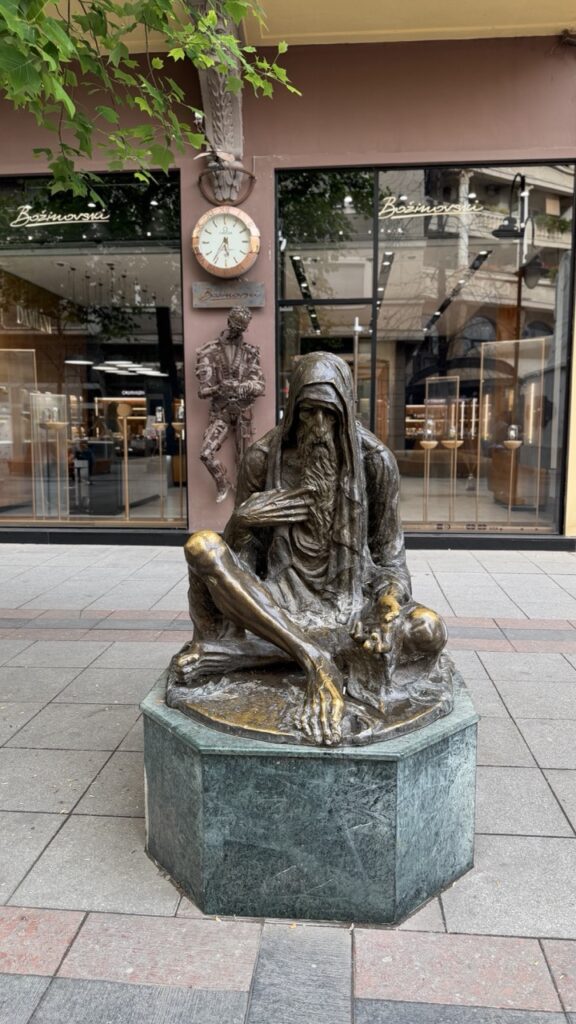
#2: Skopje Is a City Full of Statues
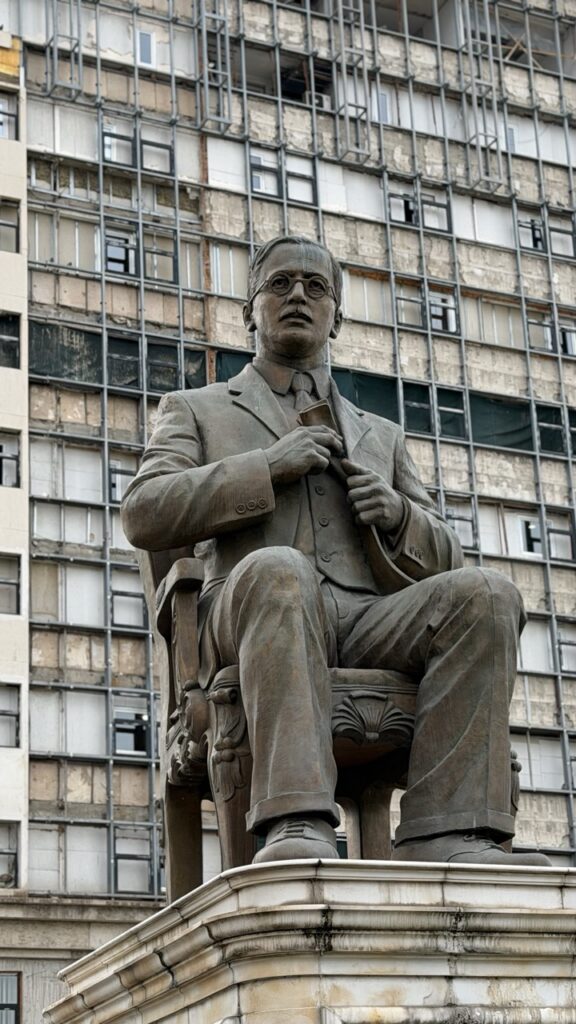
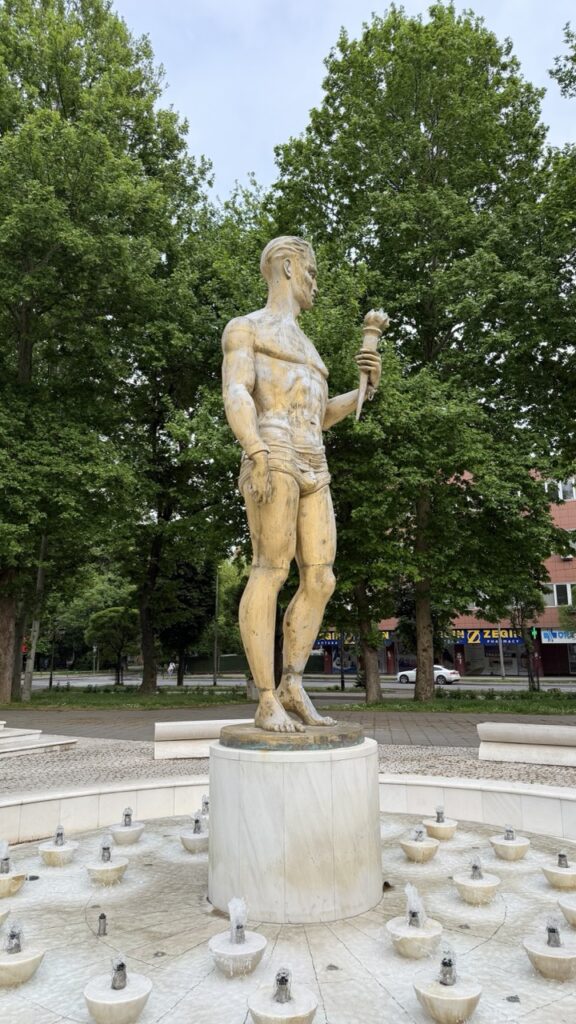
One of the first things we noticed when we started waddling around Skopje was the huge number of statues; they really are everywhere. Many were part of the Skopje 2014 project, which transformed the city center with new monuments, fountains, bridges, and grand façades. From enormous historical figures to smaller statues scattered along the river, you don’t have to walk far before spotting another one. Estimates vary, but more than 100 statues and monuments were added around central Skopje as part of the Skopje 2014 project.
#3: Mother Teresa Was Born in Skopje
Mother Teresa was born in Skopje on August 26, 1910, when the city was still part of the Ottoman Empire. She spent the first 18 years of her life here before leaving to become a missionary. Today, you can visit the Memorial House of Mother Teresa, located close to the site of the former church where she was baptized.
#4: The Giant “Warrior on a Horse” Has a Controversial Story
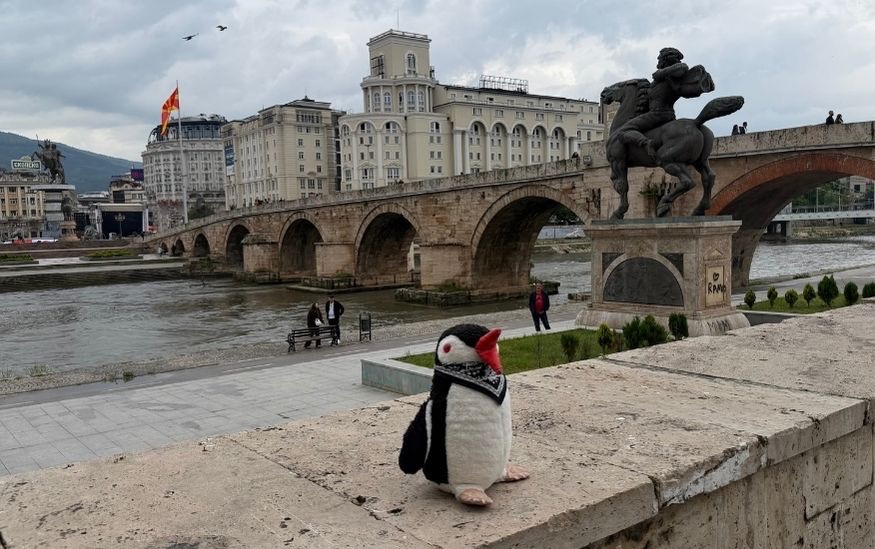
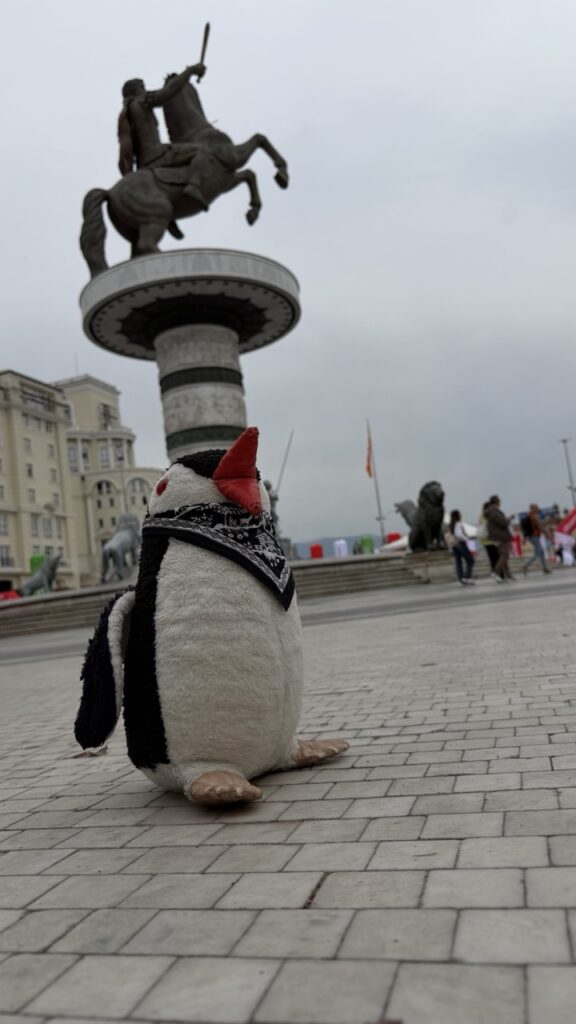
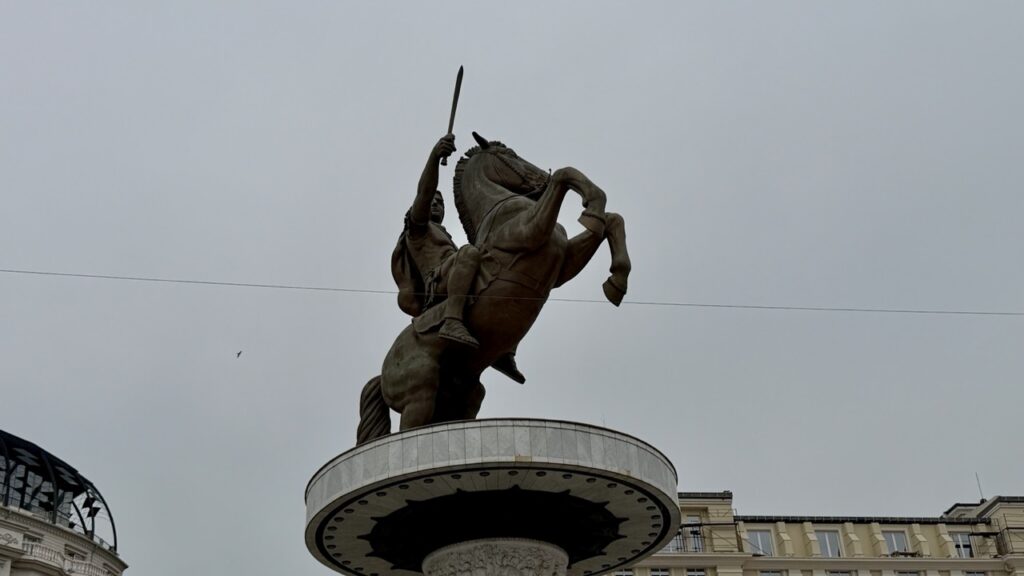
Standing right in the middle of Macedonia Square, the “Warrior on a Horse” is one of those monuments you can’t miss. Unveiled in 2011, the bronze figure stands around 14.5 meters tall, while the entire monument, including its pedestal, reaches roughly 22 meters. Although officially called Warrior on a Horse, it is widely understood to represent Alexander the Great.
The careful naming is connected to a much bigger historical and political dispute between North Macedonia and Greece. Both countries have laid claim to aspects of ancient Macedonian heritage, with Greece strongly objecting to North Macedonia’s use of Alexander the Great as a national symbol. The disagreement formed part of the wider decades-long dispute over the country’s former name, Macedonia, which eventually led to the Prespa Agreement and the country’s official renaming as North Macedonia in 2019.
#5: Skopje 2014 Completely Changed the City Center
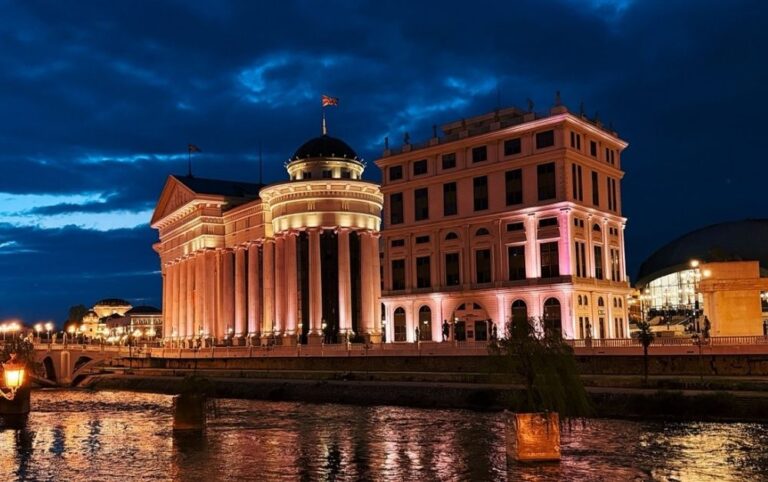
A big reason why central Skopje looks the way it does today is the Skopje 2014 project. Launched by the government in 2010, the project added dozens of statues and monuments, new bridges, fountains, museums, government buildings, and classically styled façades to the city center. It is responsible for much of the grand and sometimes slightly over-the-top architecture you’ll notice while waddling around Skopje.
The project was also highly controversial. Its final cost reportedly reached hundreds of millions of euros, far beyond early estimates, and critics questioned both the spending and the attempt to give modern Skopje a more ancient, monumental identity. Love it or hate it, Skopje 2014 definitely created one of the most unusual-looking city centers we’ve visited in Europe.
#6: The Old Bazaar Is One of Skopje’s Oldest Areas
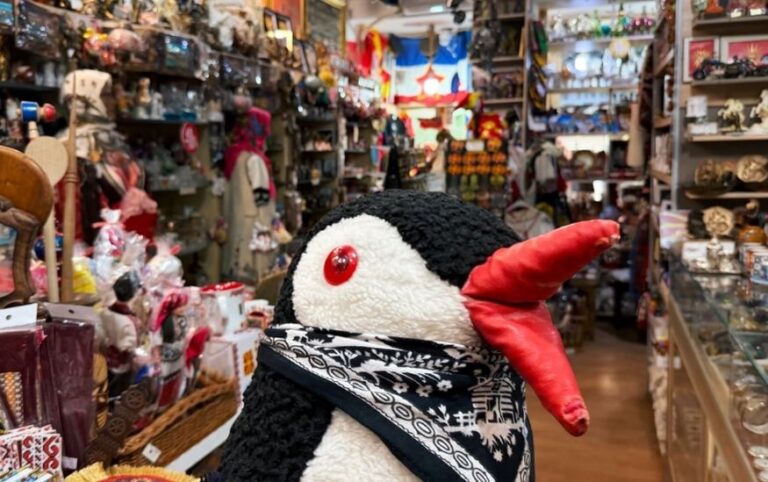
Skopje’s Old Bazaar (Stara Čaršija) is one of the oldest and largest marketplaces in the Balkans, with centuries of Ottoman influence still visible in its narrow streets. As you waddle around, you’ll pass historic mosques, hammams, caravanserais, small workshops, cafés, and traditional shops. An interesting fact is that the bazaar became one of the city’s main commercial centers during Ottoman rule and remains an active shopping and social district today; it doesn’t feel like just a preserved tourist attraction.
#7: Skopje Has Been Ruled by Many Different Empires
Skopje has changed hands many times throughout its long history. The city and surrounding region have been influenced or controlled by the Romans, Byzantines, Bulgarian and Serbian states, and the Ottoman Empire, among others. One of the longest periods began in 1392, when Skopje came under Ottoman rule. The Ottomans controlled the city for more than 500 years, until 1912, leaving a lasting mark on its architecture, food, culture, and especially the Old Bazaar.
#8: Matka Canyon Is Just Outside Skopje
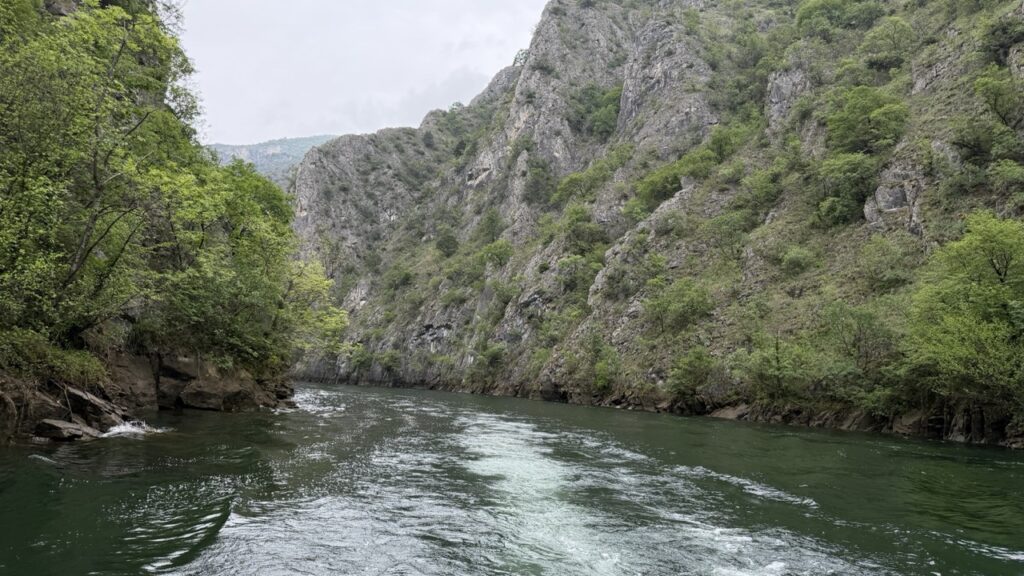
One of the best things about Skopje is how quickly you can swap the busy city for nature. Matka Canyon is only around 15 km from central Skopje, yet it feels completely different, with cliffs, turquoise water, caves, historic monasteries, and hiking trails. You can also kayak or take a boat trip through the canyon, making it one of the easiest and most popular day trips from Skopje.
#9: Skopje Was Once the Capital of a Powerful Medieval Empire
In 1346, Stefan Dušan was crowned Emperor in Skopje, taking the imperial title commonly translated as “Emperor of the Serbs and Greeks.” Under his rule, the Serbian Empire reached its greatest territorial extent, covering large parts of the Balkans, including areas of present-day Serbia, North Macedonia, Albania, and Greece.
And an interesting clarification: Dušan was not the only Serbian emperor. After he died in 1355, his son Stefan Uroš V succeeded him as emperor. So it’s better to describe Dušan as the first ruler of medieval Serbia to assume the title of emperor, rather than the only one.
#10: The Stone Bridge Connects Old and New Skopje
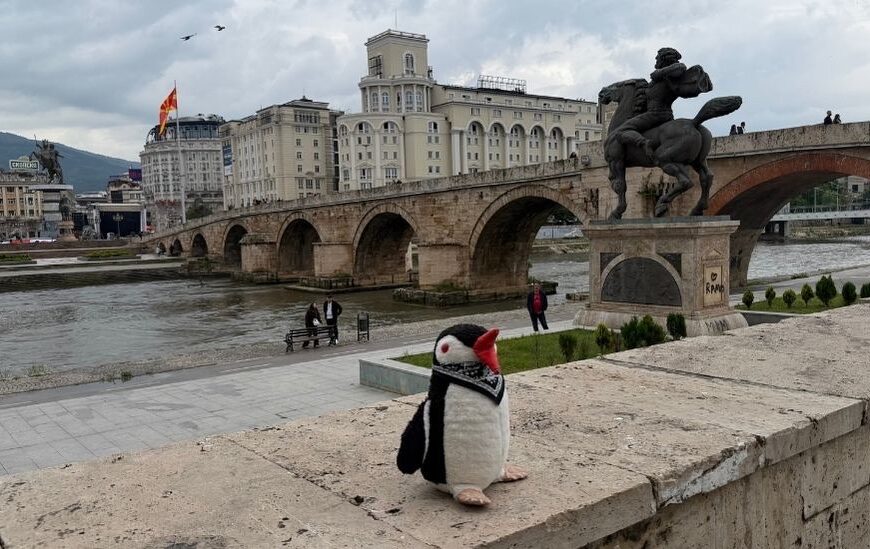
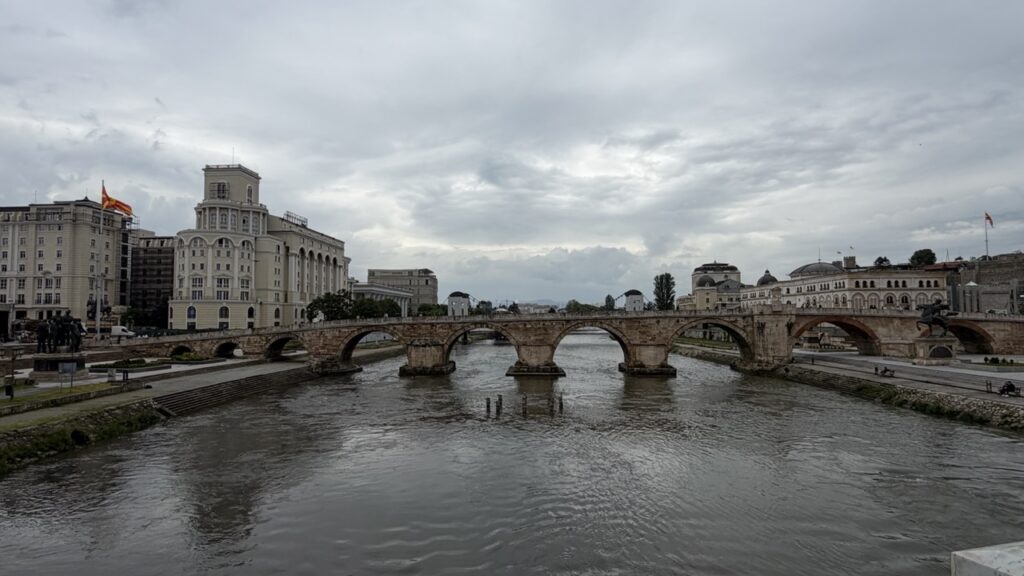
The Stone Bridge is one of the most recognizable symbols of Skopje, crossing the Vardar River between Macedonia Square and the Old Bazaar. The bridge you see today largely dates back to the 15th century and the Ottoman period, although a bridge existed at this location much earlier. At around 214 meters long, it has survived earthquakes, floods, wars, and centuries of change. What we love about it is the contrast: in just a few minutes, you can waddle from Skopje’s grand modern center straight into the narrow streets and Ottoman atmosphere of the Old Bazaar.
#11: Skopje Fortress Has Watched Over the City for Centuries
Sitting on the highest point above the Old Bazaar, Skopje Fortress, better known as Kale; has watched over the city for centuries. The word kale comes from the Turkish word for fortress, a reminder of Skopje’s long Ottoman history. Archaeological finds suggest the hill was inhabited thousands of years ago, while much of the fortress you see today dates to the medieval period. One of the best reasons to walk up is the panoramic view over Skopje, the Vardar River, and Mount Vodno, and you can visit the fortress for free.
Useful Travel Tips For Skopje
- Currency. North Macedonia uses the Macedonian Denar (MKD). Euros are not the official currency, so it is best to pay in denars.
- Card or Cash. Cards are widely accepted in hotels, larger restaurants, supermarkets, and shops, but cash is still very useful in Skopje, particularly in the Old Bazaar, smaller cafés, markets, taxis, and local businesses.
- ATMs. ATMs are easy to find around central Skopje. When withdrawing money, check the fees and avoid unnecessary currency conversion offered by the ATM.
- Tap Water. Tap water in Skopje is generally considered safe to drink, although bottled water is also inexpensive and widely available.
- Tipping. Tipping isn’t compulsory, but around 5–10% is appreciated in restaurants and cafés when you’re happy with the service.
- Language. Macedonian is the main language, while Albanian is also widely spoken. We found that English was fairly common in hotels, restaurants, attractions, and other tourist areas.
- Public Transport. Skopje mainly relies on buses; there are no metro or tram systems. Tickets are inexpensive, although taxis can sometimes be the easier option for visitors.
- Waddling Friendly. Central Skopje is easy to explore on foot. Macedonia Square, Stone Bridge, the Old Bazaar, Skopje Fortress, and many of the main sights are within waddling distance of each other.
- Airport Access. Skopje International Airport (SKP) is around 20 km from the city center. Airport buses and taxis connect the airport with central Skopje.
- Taxis. Taxis are relatively affordable compared with many European capitals. Stick to official, registered taxis and make sure the meter is being used or agree on the fare beforehand.
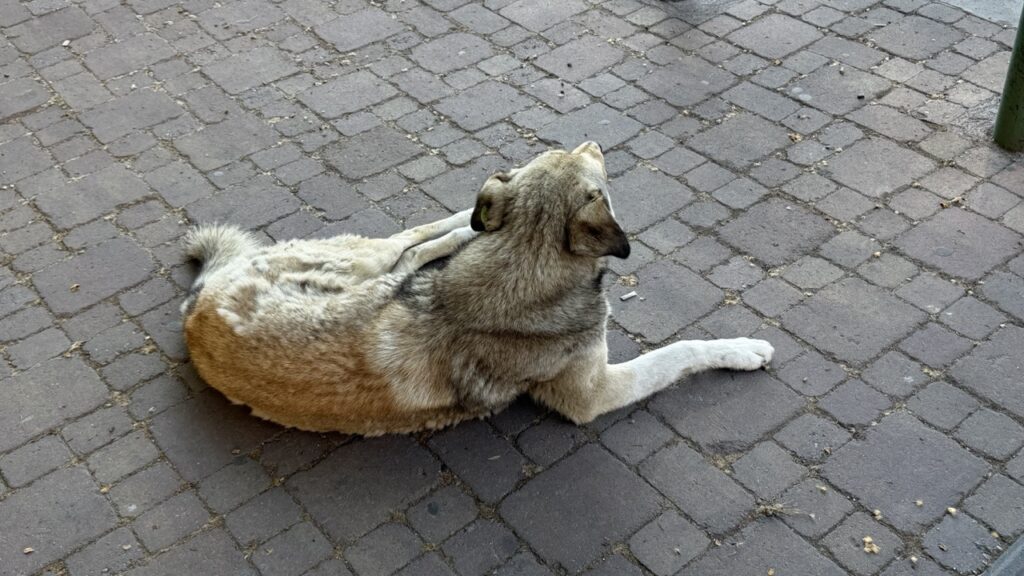
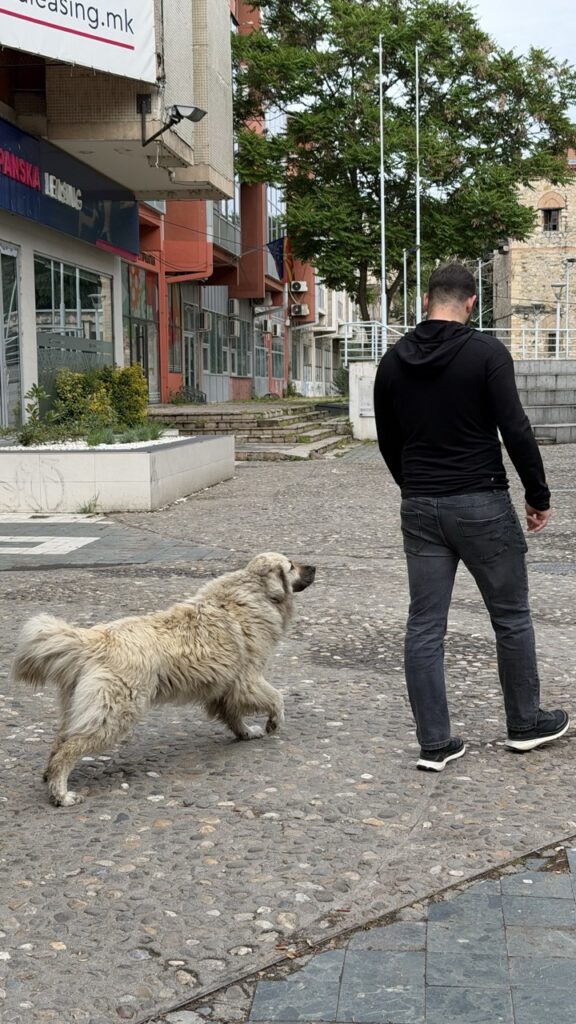
- Street Dogs. You will probably notice quite a few free-roaming dogs around Skopje. Many have colored tags or ear tags, which generally indicate that they have been registered and/or processed through the city’s stray-dog management program, such as being vaccinated, sterilized, and returned to the area. Most we encountered went about their day, but as with any unfamiliar dog, give them space and avoid approaching or feeding them if you’re unsure of their behavior.
- Prices. Skopje is affordable compared with many Western and Central European capitals, particularly for eating out, coffee, taxis, and local transport.
- Safety. Skopje is considered safe for tourists, including around the main central areas. As in any city, keep an eye on your belongings in busy places and use normal precautions at night.
- Day Trips. One of the easiest trips from Skopje is Matka Canyon, only around 15 km away. You can also use Skopje as a base for exploring more of North Macedonia.
- EU & Schengen. North Macedonia is not a member of the European Union or the Schengen Area, which is worth remembering when crossing borders, roaming, or purchasing travel insurance.
- Smoking Everywhere. Smoking is still very common in Skopje, and you’ll notice it much more than in many other European capitals. Expect people to smoke around cafés, restaurant terraces, bars, and other public spaces, so this is something to keep in mind if cigarette smoke bothers you.
- Mobile Data & Roaming. North Macedonia is not part of the EU, so EU “Roam Like at Home” rules do not automatically apply. Check your provider before traveling to avoid unexpected charges. A local SIM or eSIM can be an easy alternative.
- Sunday & Shop Opening Hours. Many cafés, restaurants, and tourist-oriented businesses remain open on Sundays, but some shops have restricted Sunday opening, so it’s worth doing any important shopping earlier.

- Day Trips From Skopje. Skopje is a good base for exploring nearby attractions. Matka Canyon is around 15 km away, while Mount Vodno and the Millennium Cross are even closer. Other options for a longer day trip include Tetovo, Lake Ohrid, and Kosovo.
- People Begging. You may encounter people begging around busy parts of central Skopje, particularly near tourist attractions, Macedonia Square, and the Old Bazaar. Some may approach tourists directly or persistently, so a polite but firm “no” and continuing to walk is usually the easiest way to handle it.
Buy Us a Ko-fi

Scams And Tourist Traps To Be Aware Of In Skopje
Although Skopje is a safe city for tourists, there aren’t many major tourist scams to worry about. Still, a few things are worth keeping in mind.
- Unofficial Taxis. Be careful with random or unlicensed taxis, particularly around the airport and bus/train station. Use an official taxi company, ask your accommodation to arrange one, or make sure the meter is running. Official Skopje taxis should have a visible TAXI sign, company name and contact details, registration/identification markings, and a working taximeter inside the car. Licensed taxis typically have yellow license plates. Avoid drivers who approach you directly and offer a ride in an unmarked vehicle, and always check that the meter is switched on before you leave.
- Taxi Overcharging. Agree on how the fare will be calculated before leaving and avoid drivers who quote suspiciously high fixed prices.
- Currency Exchange. Use banks, ATMs, or established exchange offices rather than exchanging money informally on the street.
- Restaurant & Bar Bills. Check menu prices before ordering, and quickly review your bill before paying, especially in tourist-heavy areas.
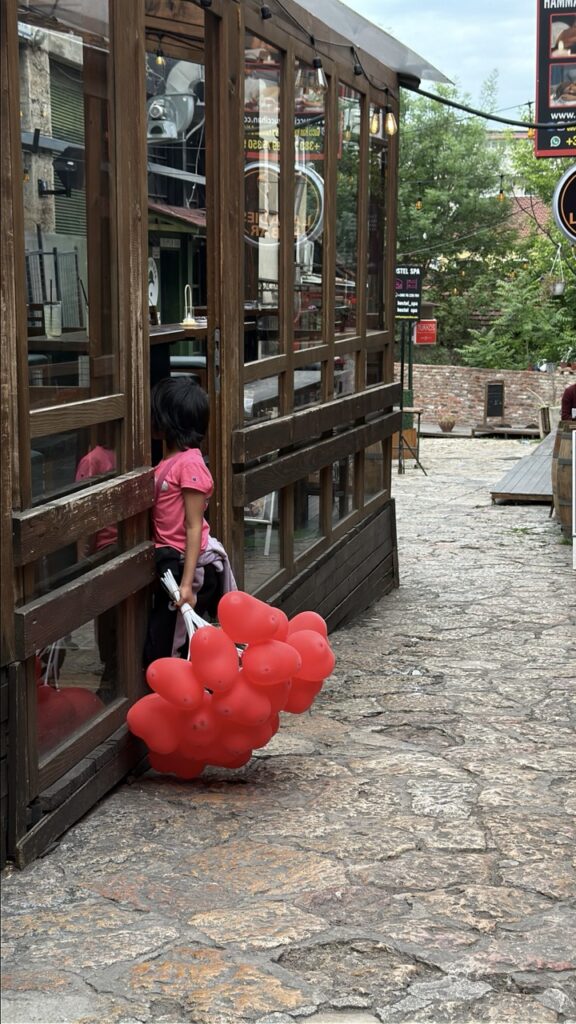
- Kids Selling Balloons & Small Items. Around busy tourist areas, especially Macedonia Square, you may see children approaching visitors to sell balloons, tissues, small souvenirs, or other items. Some can be quite persistent and may continue following you after you say no. If you don’t want to buy anything, a firm but polite no and continuing to walk is usually the easiest approach.
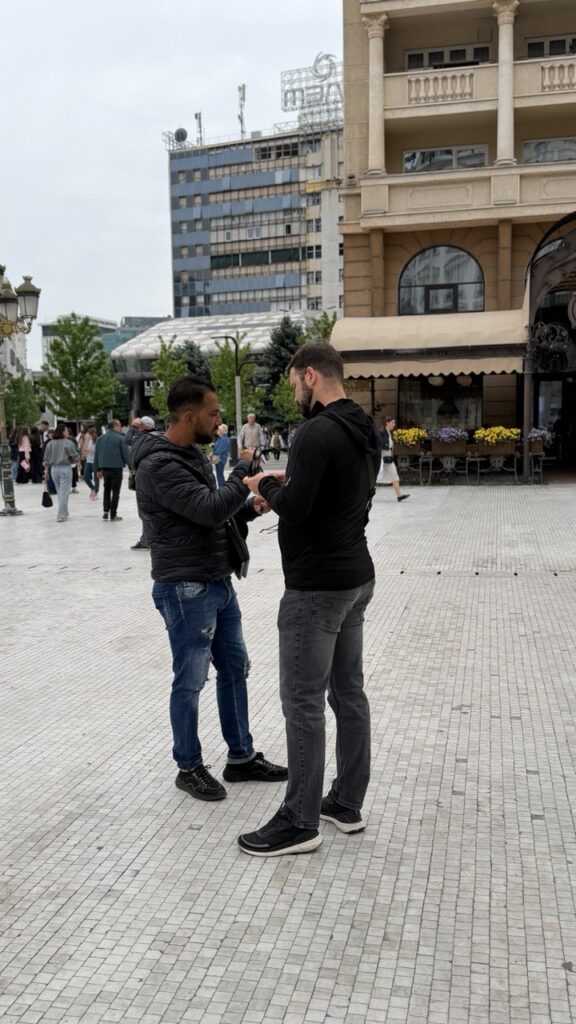
- Fake Luxury Goods. Around Macedonia Square, particularly near the large Warrior on a Horse monument, you may be approached by street sellers offering what appear to be luxury watches, sunglasses, bags, perfumes, or other branded goods. These items may be counterfeit rather than genuine luxury products, so don’t assume you’re getting an incredible designer bargain. Sellers can sometimes be persistent, so decline and keep waddling if you’re not interested.
Best Time To Visit Skopje
The best time to visit Skopje really depends on what kind of trip you want, as each season brings something a little different.
- Spring (March–May): Spring is one of the best times to explore Skopje, with comfortable temperatures, greener surroundings, and fewer crowds than in summer. We visited in mid-May and can only recommend it. The weather was warm enough to explore the city all day, while we could still see snow covering the peaks of the surrounding mountains, which made the views even better.
- Summer (June–August): Summer brings long, sunny days, but Skopje can get very hot, particularly in July and August. If you visit during this time, plan sightseeing for the morning and evening, and take things more slowly during the hottest part of the day.
- Autumn (September–November): Early autumn is another great time to visit, with pleasant temperatures and fewer tourists. As the season progresses, the weather becomes cooler and more unpredictable.
- Winter (December–February): Winters are cold, and snow is possible both in Skopje and on the surrounding mountains. You won’t get the lively terrace atmosphere of the warmer months, but you’ll experience a quieter side of the city.
For us, mid-May was pretty much perfect. We had comfortable sightseeing weather, plenty of greenery, and snowy mountain peaks in the background, a combination we’d happily choose again.
How Long Do You Need In Skopje
For most first-time visitors, 2–3 full days in Skopje should be enough to explore the main sights without rushing. The city center is compact, so you can easily cover Macedonia Square, the Stone Bridge, Old Bazaar, Skopje Fortress, and the main museums and monuments on foot. If you have an extra day, we definitely recommend adding Matka Canyon or Mount Vodno to your itinerary.
We turned our trip into a long weekend, arriving on Thursday and leaving on Monday. This gave us plenty of time to explore Skopje at a relaxed pace, take a trip outside the city, stop for food and coffee without constantly watching the clock, and waddle around. We wouldn’t say you need four nights just for the main sights, but if you like slower travel, it worked really well for us.
Where to Stay in Skopje
For a first visit to Skopje, we recommend staying somewhere around the city center and Macedonia Square. Skopje is very walkable, and from here you can easily reach the Stone Bridge, Old Bazaar, Mother Teresa Memorial House, Vardar River, and many of the main attractions without relying on public transport.
We stayed at Hotel Senigallia, probably one of the most unusual places to stay in Skopje, because the hotel is designed like a ship sitting directly on the Vardar River. The location was a big plus for us, Macedonia Square and the Stone Bridge are only about a three-minute waddle away.
Some of the best areas to consider are:
- Macedonia Square & City Centre: Best for first-time visitors who want to walk to most of Skopje’s main attractions. A good example is Hotel Macedonia Square, located right in the heart of the city.
- Old Bazaar: Best if you want to stay among Skopje’s historic streets, Ottoman architecture, traditional restaurants, and shops. One option is Hotel Old Konak, right in the Old Bazaar area.
- Debar Maalo: Great for restaurants, cafés, nightlife, and experiencing a more local side of Skopje while still being close to the center.
- City Park Area: A good choice if you prefer somewhere a little greener and quieter while remaining within walking distance of central Skopje. Hotel City Park is a well-located option here.
For a short city break or your first time in Skopje, we’d personally choose the city center again. Being able to walk almost everywhere made exploring the city incredibly easy.
Hotel search from Booking.comShows Booking.com’s own box, which can set Booking.com cookies.
Skopje wasn’t a city that had been sitting on our travel list for years, but we’re really glad that direct flight convinced us to give it a chance. We enjoyed simply waddling around and taking in the unusual mix of Ottoman, Brutalist, modern, and grand neoclassical-style architecture.
And then there was the food, which became another highlight of our trip. We ate really well, tried plenty of local dishes, and loved how affordable eating out could be compared with many other European capitals.
Overall, Skopje surprised us in a good way. It might not be the first European capital that comes to mind when planning a city break, but maybe that’s exactly why we enjoyed it. If you have the chance to visit, give it a few days, come hungry, keep an open mind about the architecture, and enjoy your waddle around North Macedonia’s capital.
Travel Bold. Eat Well. Waddle Wild.

This post contains affiliate links. If you click and buy, I might earn a tiny commission, enough to help a penguin keep up its globe-trotting lifestyle. No extra cost to you, just more fish for me. Thank you for supporting the adventure!