Skopje Old Bazaar: History, Food & Things to See
The modern side of Skopje was nice to explore, but the moment we waddled across the Stone Bridge and entered the Old Bazaar, it felt like we had stepped into a completely different city. Suddenly, the wide streets and endless statues gave way to narrow lanes, little shops, mosques, cafés, restaurants, and people going about their day. We weren’t quite expecting such a big change in atmosphere, and that contrast really took us by surprise. Of course, it didn’t take long before we started wandering down random streets, peeking into shops and seeing what there was to eat and buy. In this guide, we’re taking you along on our waddle through Skopje Old Bazaar, sharing what to see, what to eat, what to buy, a little bit of its history and all the practical things worth knowing before you visit.
- Skopje Old Bazaar at a Glance
- Where Old Skopje Comes Alive
- Why Is It Called Čaršija
- A Short History of Skopje Old Bazaar
- How to Get to Skopje Old Bazaar
- Our Waddle Through the Bazaar
- What to See in Skopje Old Bazaar
- What to Eat in Skopje Old Bazaar
- How Long Do You Need in Skopje Old Bazaar
- Best Time of Day to Visit Skopje Old Bazaar
- What to Know Before Visiting
- Is Skopje Old Bazaar Worth Visiting and Is It Safe
- What to See Near Skopje Old Bazaar
Skopje Old Bazaar at a Glance
- Location: North of the Vardar River, central Skopje
- Also known as: Old Čaršija / Stara Čaršija
- Best for: History, shopping, food & wandering
- Time needed: Around 2–3 hours
- Entrance: Free
- Best time to visit: Morning or late afternoon
Where Old Skopje Comes Alive
The Old Bazaar, or Stara Čaršija, is the kind of place where you don’t really need a plan. In fact, we think it’s better without one. Just pick a street and start waddling. This historic part of Skopje is packed with narrow lanes, tiny shops, cafés, restaurants, mosques, old inns and traditional workshops, with something different waiting around almost every corner. It is also one of the largest and oldest bazaars in the Balkans, shaped by centuries of Ottoman history. What we loved most, though, is that it doesn’t feel like an attraction created just for tourists. People still shop, eat, meet friends, and work here every day, which makes Čaršija feel like a living part of Skopje rather than an open-air museum.


Why Is It Called Čaršija
You’ll often hear Skopje Old Bazaar called Stara Čaršija, which literally means Old Bazaar. The word čaršija comes from the Turkish çarşı, meaning a market or commercial district, a little reminder of the centuries of Ottoman influence you can still see throughout this part of Skopje. But Čaršija isn’t just about shopping. Traditionally, it was the busy heart of city life, filled with merchants, artisans, workshops, cafés and places where people met and spent time. And to be fair, not that much has changed. You might be buying a fridge magnet instead of a handmade copper pot, but the streets are still very much alive.

A Short History of Skopje Old Bazaar
- 12th century. Skopje develops into an important trading center.
- 1392. Skopje comes under Ottoman rule, beginning centuries of major bazaar development.
- 15th–16th centuries. Mosques, hammams, hans and covered markets transform Čaršija into a busy commercial hub.
- 1555. A major earthquake damages parts of Skopje and the bazaar.
- 1689. A large fire during the Great Turkish War causes significant destruction across Skopje.
- 1963. The devastating Skopje earthquake damages many historic buildings in and around the bazaar.
- Today. Stara Čaršija remains a lively mix of shops, cafés, restaurants, religious buildings and historic landmarks.
How to Get to Skopje Old Bazaar
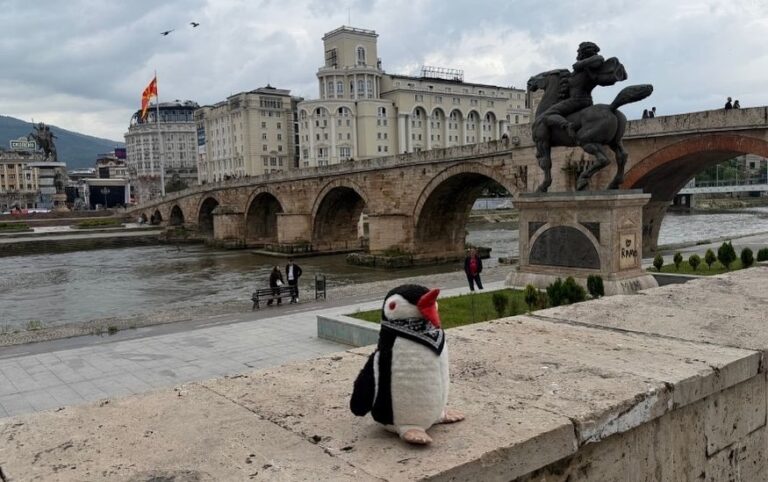
Getting to the Old Bazaar from central Skopje couldn’t be easier. From Macedonia Square, it’s only around 500 meters and roughly a 5 to 7-minute waddle to the beginning of the bazaar. Head towards the Stone Bridge, waddle across the Vardar River, and you’re basically there. Once you cross the bridge, the atmosphere starts changing, and the little streets of the Old Bazaar open up in front of you. There’s absolutely no need for public transport if you’re already exploring central Skopje. Just cross the bridge and keep waddling.
Our Waddle Through the Bazaar
We really enjoyed exploring central Skopje and Macedonia Square, but the moment we waddled across the Stone Bridge and stepped into the Old Bazaar, something changed. It felt like we had entered a completely different city. The wide streets and grand statues disappeared, replaced by narrow lanes packed with tiny shops, colorful clothes hanging outside, souvenirs filling the windows and people chatting in front of cafés. The smell of grilled meat, fresh bread and sweet pastries drifted through the streets, mixing with the sound of conversations, shopkeepers and the general buzz of the bazaar. There was always something happening around us and another little street tempting us to turn down it. For us, this was where Skopje suddenly felt a little bit magical.


The first time we wandered through the Old Bazaar, it felt a little overwhelming, because there were so many tiny streets leading in different directions. We didn’t know whether to follow our eyes towards the colorful shops or our noses towards whatever delicious food we could smell around the next corner. The narrow cobblestone streets are packed with merchants, little stores, clothes, souvenirs, cafés and restaurants, and there always seems to be something happening around you. But that’s also part of the fun. The more we waddled through Čaršija, the more familiar it became, and soon we stopped thinking about which street we were taking and simply enjoyed getting a little lost.
And then there’s the food, which is almost impossible to ignore while wandering through the bazaar. Apart from plenty of restaurants serving grilled meats, kebapi, burek and other Balkan favorites, you’ll find bakeries, little sweet shops and windows filled with trays of baklava and other traditional desserts. We also highly recommend stopping at one of the traditional coffee places. Coffee here is not really about grabbing a cup and rushing off. It is meant to be enjoyed slowly, often served strong in a small cup, with people sitting, chatting and watching the bazaar go by. Find a table, order a coffee, add a piece of baklava if you still have room, and simply enjoy the atmosphere for a while. Sometimes the best way to explore a city is to stop exploring it for half an hour.


Souvenir Shopping in Skopje Old Bazaar
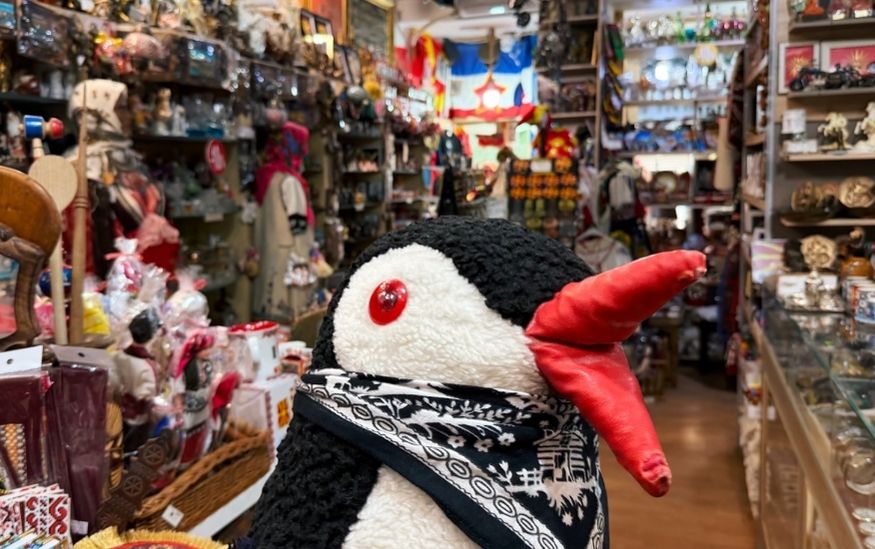
You’ll also find plenty of souvenir shops scattered throughout the Old Bazaar, and browsing them is part of the fun. Expect everything from magnets, postcards and mugs to traditional textiles, jewelry, handmade crafts, decorative coffee sets and plenty of items featuring North Macedonia and Skopje. If you want something a little more special than the classic fridge magnet, we would look for handmade filigree jewelry, traditional embroidery, locally made ceramics, or a džezve coffee pot with small coffee cups. The bazaar has a long tradition of crafts and trade, so choosing something connected to that history feels much more memorable than picking up another generic souvenir. No judgment from us, but we definitely have enough magnets at home to cover a small refrigerator.


Beyond Souvenirs: What Else to Buy in the Bazaar
- Spices. Look for paprika, dried herbs, pepper blends, and other Balkan staples.
- Tea & coffee. Pick up traditional coffee or loose-leaf teas to take home.
- Clothes. You’ll find everything from everyday fashion to more traditional clothing.
- Textiles. Browse scarves, embroidered fabrics, tablecloths and other decorative pieces.
- Jewelry. Čaršija is especially known for its small jewelry and filigree workshops.
- Leather goods. Bags, belts, wallets and other leather accessories are easy to find.
- Copperware. Traditional coffee pots, trays, cups and decorative pieces make a more local purchase.
- Sweets. Packaged baklava, Turkish delight and other sweet treats are perfect if you prefer edible souvenirs.
- Homeware. Ceramics, coffee sets and small decorative pieces are scattered throughout the shops.
- Random finds. Part of the fun is that some shops sell a little bit of everything, so waddle in and have a look.
One of the best things to do in Skopje Old Bazaar is forget the map and wander. The narrow cobblestone streets twist in different directions, and every time we thought we knew where we were going, another little lane caught our attention. Some streets are packed with shops and cafés, while others suddenly become much quieter, with old workshops and historic buildings tucked between them. Interestingly, the bazaar was traditionally organized by craft and trade, with artisans of the same profession often working along the same street. So getting lost here isn’t really getting lost. It’s basically sightseeing.
What to See in Skopje Old Bazaar
If shopping and following the smell of food aren’t enough to keep you busy, the Old Bazaar also has plenty of historical sights worth stopping for. You’ll come across many of them naturally while waddling through the streets, so you don’t necessarily need to plan a strict route.
- Stone Bridge. The iconic 15th-century bridge across the Vardar River and our favorite way to enter the Old Bazaar.
- Mustafa Pasha Mosque. A beautiful Ottoman mosque dating back to 1492, located just below Skopje Fortress.
- Daut Pasha Hamam. A former 15th-century Ottoman bathhouse that now houses part of the National Gallery.
- Čifte Hamam. Another historic Ottoman bathhouse, today used as an art gallery and exhibition space.
- Kapan Han. A 15th-century caravanserai where merchants and travelers once stayed with their goods and animals.
- Suli Han. Another historic Ottoman inn, built in the 15th century and once used by traveling merchants.
- Bezisten. The historic covered market area that once formed an important part of trade in the bazaar.
- Clock Tower. One of Skopje’s oldest towers, standing above the bazaar near the Sultan Murad Mosque.
- Church of the Holy Saviour. A 19th-century Orthodox church known for its beautifully carved wooden iconostasis.
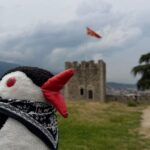
- Skopje Fortress. Sitting just above the bazaar, Kale Fortress is an easy addition to your waddle and gives you some of the best views over Skopje.
What to Eat in Skopje Old Bazaar
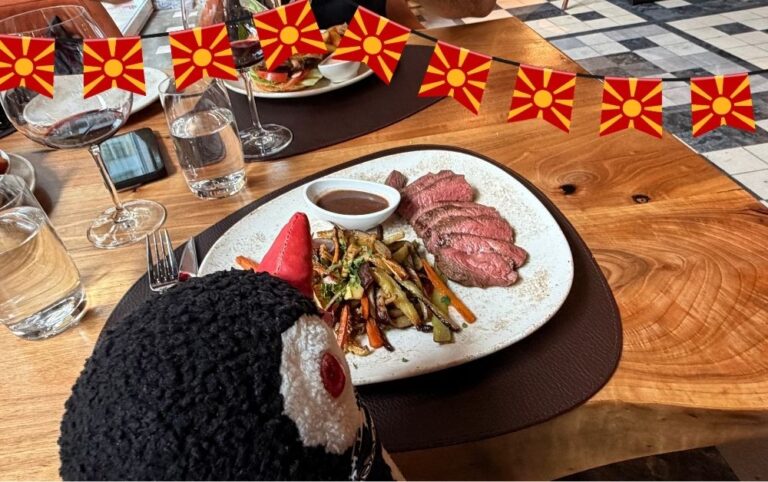
Come to the Old Bazaar hungry because food is a huge part of the experience here. Between the narrow streets, you’ll find bakeries, grills, traditional restaurants, sweet shops, and little coffee spots serving everything from burek and kebapi to pide, lahmacun, baklava, and strong Turkish-style coffee. We definitely did our part in trying a few of them.
- Baklava at Nexho. One place we absolutely loved was Nexho, a little baklava shop that was good enough to make us come back twice. You’ll find trays filled with different types of baklava, so choosing one is probably the hardest part. Sweet, nutty, and soaked in syrup, it was exactly the kind of stop we wanted while wandering through the bazaar. Coming back a second time probably tells you everything you need to know.
- Pide & Lahmacun at Gallery 7. For something savory, we stopped at Gallery 7 for pide and lahmacun. Pide is a boat-shaped Turkish flatbread topped with different combinations of meat, cheese, and vegetables, while lahmacun is much thinner and topped with seasoned minced meat, vegetables, and herbs. Both are great for a casual meal while exploring, and Gallery 7 was a nice place to sit down, rest our feet, and refuel before continuing our waddle through Čaršija.


What made the Old Bazaar memorable wasn’t only the historic buildings or the food, but all the little everyday details happening around us. Cats wandered between tables like they had somewhere important to be, shopkeepers chatted outside their stores, the smell of coffee and grilled meat followed us through the streets, and every few meters another colorful display spilled onto the cobblestones. What makes this even more interesting is that Čaršija has been a center of trade and craftsmanship for centuries, and many streets were associated with specific crafts. So while today you might be walking past souvenir shops, cafés and clothing stores, you’re following streets where generations of craftsmen once worked and sold their goods. This mix of history and everyday life makes the bazaar feel alive, not like something preserved purely for tourists.
How Long Do You Need in Skopje Old Bazaar
We’d recommend at least 2 to 3 hours for the Old Bazaar, especially if you want to wander without constantly checking the time. You can walk through the main streets much faster, but you’d miss half the fun. There are shops to peek into, little streets to get lost in, historical sights to stop at and, most importantly, plenty of food and coffee breaks along the way. We actually came back to the bazaar several times during our stay because there was always something else we wanted to see, eat or waddle past again. If you have the time, don’t treat Čaršija as something to tick off your list. Slow down and enjoy it.
Best Time of Day to Visit Skopje Old Bazaar
For the full Old Bazaar experience, aim for late morning through the afternoon, when the streets are buzzing, and most shops, bakeries, and cafés are open. Many shops generally open around 9:00 or 10:00, but there is no single opening time across the bazaar since businesses set their own hours. Early morning is much quieter and lovely for photos, but you might find quite a few shutters still down. During the afternoon, Čaršija is at its liveliest, with merchants outside their shops, food cooking and people filling the cafés. Evening has a completely different atmosphere, especially around the restaurants and coffee spots, but smaller shops may already be closing. If you want a little bit of everything, we would start around 10:00 or 11:00, waddle around, stop for lunch, and see where the streets take you.
What to Know Before Visiting
- Bring cash. Many smaller shops, bakeries and stalls prefer Macedonian denars, although some larger places accept cards.
- Can you negotiate? Yes, sometimes. Bargaining is acceptable in some craft and family-run shops, especially when prices aren’t clearly fixed. Keep it friendly and reasonable rather than treating every purchase like a battle.
- Compare prices. If you’re buying souvenirs, jewelry or crafts, wander around first. You’ll often see similar things in several shops.
- Wear comfortable shoes. Those beautiful cobblestone streets can be uneven, so this is definitely not the day for uncomfortable shoes.
- Photography. Taking photos around the streets is generally fine, but ask before photographing shopkeepers, craftsmen, or people up close.
- Opening hours. Most shops open around 9:00 to 10:00 and close in the early evening, while restaurants and cafés usually stay open later.
- Sundays. The bazaar itself is accessible, but many shops are closed or have reduced hours on Sundays. Cafés, restaurants and some souvenir shops may still be open.
- Don’t rush. The best part is turning down random streets, stopping for coffee and seeing what you find. This is one place where getting slightly lost is part of the plan.
Is Skopje Old Bazaar Worth Visiting and Is It Safe
For us, Skopje Old Bazaar is absolutely worth visiting and was actually one of our favorite parts of the city. We loved the contrast with modern Skopje, the narrow cobblestone streets, the food, the little shops, the coffee culture, and the fact that you can waddle around without a strict plan. It isn’t perfectly polished, and some streets and buildings feel a little rough around the edges, but we think that is also part of its character. It feels like a real neighborhood rather than something created purely for tourists.
As for safety, we personally felt safe waddling around the Old Bazaar, and it is considered safe for tourists. As in any busy market area, keep an eye on your phone, wallet, and bag, particularly when the streets get crowded, as pickpocketing can happen. The smaller streets also become much quieter once the shops close, so later at night we stuck to the busier, better-lit streets. During the day, though, we felt comfortable simply getting lost, stopping for food and seeing where our waddle took us. If you only have a short time in Skopje, Čaršija would definitely be high on our list.
Buy Us a Ko-fi

What to See Near Skopje Old Bazaar
- Skopje Fortress. Historic fortress with great views over the city.
- Macedonia Square. Skopje’s main square, packed with statues and monuments.
- Stone Bridge. The iconic bridge connecting the bazaar with modern Skopje.
- Mother Teresa Memorial House. Small museum dedicated to Mother Teresa, who was born in Skopje.
- Museum of Macedonia. Explore North Macedonia’s history, culture and traditions.
- Museum of Contemporary Art. Modern art with another great view over Skopje.
Pro Penguin Tip
If you want to see a more local side of the Old Bazaar, waddle away from the busiest souvenir streets and explore the smaller lanes around the traditional craft shops. Čaršija was historically divided by trades, and you can still find small workshops where craftsmen make filigree jewelry, leather goods and other traditional pieces. These quieter streets are easy to walk past, but they are often where the bazaar feels most authentic. And if you spot locals sitting over coffee rather than tourists taking photos, you’re probably waddling in the right direction.
Skopje Old Bazaar was one of our favorite parts of Skopje. We liked exploring the modern city center, but the moment we crossed the Stone Bridge and entered Čaršija, Skopje suddenly felt like it had switched personalities. We loved getting a little lost in the narrow streets, peeking into shops, stopping for baklava and coffee, trying local food, and simply watching the everyday chaos of the bazaar around us. Some corners are definitely a little rough around the edges, but for us that was part of its charm. Nothing feels too polished or staged, and there is always something happening. If you’re visiting Skopje, give yourself a few hours, forget about following the perfect route, and waddle wherever the little streets take you. And most importantly, come hungry. We tried to resist the baklava. We failed. Twice.
Travel Bold. Eat Well. Waddle Wild.

This post contains affiliate links. If you click and buy, I might earn a tiny commission, enough to help a penguin keep up its globe-trotting lifestyle. No extra cost to you, just more fish for me. Thank you for supporting the adventure!