Skopje Left Us Confused, Curious, and Wanting to Understand North Macedonia
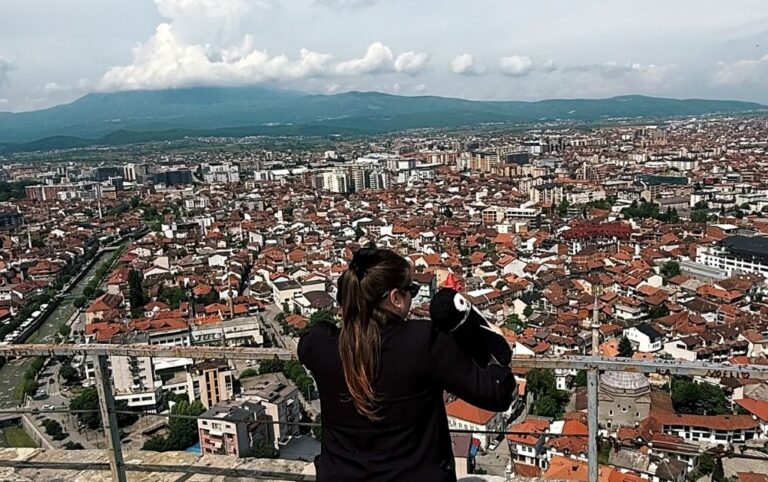
We arrived in North Macedonia on a cold, cloudy day, with Skopje sitting under a heavy grey sky and the mountains almost disappearing into the distance. As always, we had done our research before the trip. We knew the basic history, had a list of places we wanted to see, and had read enough about Skopje to have some idea of what was waiting for us. But we also try not to research a destination so much that nothing can surprise us anymore. We like to leave some blank spaces and let the place fill them in.
And North Macedonia certainly did. Skopje did not take long to challenge some of our expectations and replace them with new questions. Over the next few days, those first impressions came from everywhere: conversations with people, plates of food, busy streets, quiet corners, enormous statues, the lanes of the Old Bazaar, and the landscapes beyond the city. Some things surprised us, some made us uncomfortable, and others made us want to understand the country better. We arrived knowing a few facts about North Macedonia. We left with far more impressions than answers.
- What We Thought North Macedonia Would Be Like
- Skopje: A City That Doesn’t Give You One First Impression
- Crossing the Stone Bridge Felt Like Crossing Into Another City
- The People We Met
- Hospitality, Food and the Importance of Sitting Down
- The Things That Made Us Uncomfortable
- A Country That Feels Caught Between Different Identities
- Leaving Skopje Changed the Picture
- What Surprised Us Most
- What We Still Don’t Understand About North Macedonia
- So, What Impression Did North Macedonia Leave on Us?
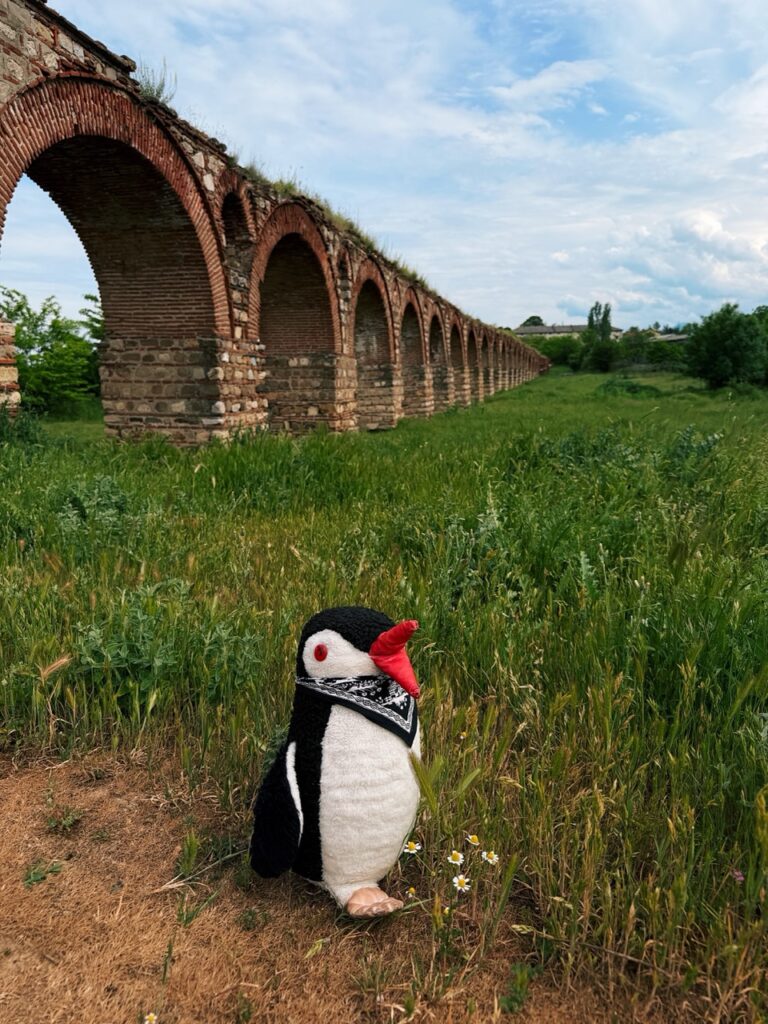

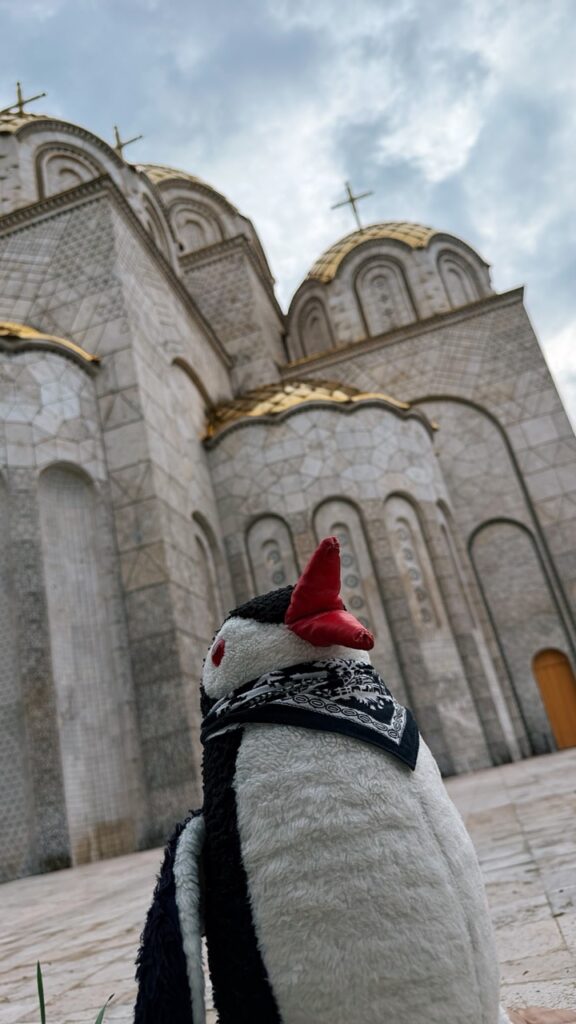
What We Thought North Macedonia Would Be Like
Before arriving, North Macedonia was still a bit of a blank space for us. We knew some of its history and, thanks to a friend who had visited before, we had already been warned about the almost unbelievable number of statues waiting for us in Skopje. We had heard about Lake Ohrid, knew about Matka Canyon, and had a general idea of what traveling through the Balkans can feel like. But knowing facts about a country and actually experiencing it are two very different things. It is a little like applying for a new job. You can read the job description, research the company, and think you understand what you are getting into, but the reality only becomes clear once you walk through the door and start working there. Countries are much the same. You can read about their history, culture, and attractions, but you don’t know how the streets sound, how people interact, what everyday life feels like, or which little details will stay with you until you actually arrive. North Macedonia was about to fill in all those gaps for us.
Skopje: A City That Doesn’t Give You One First Impression
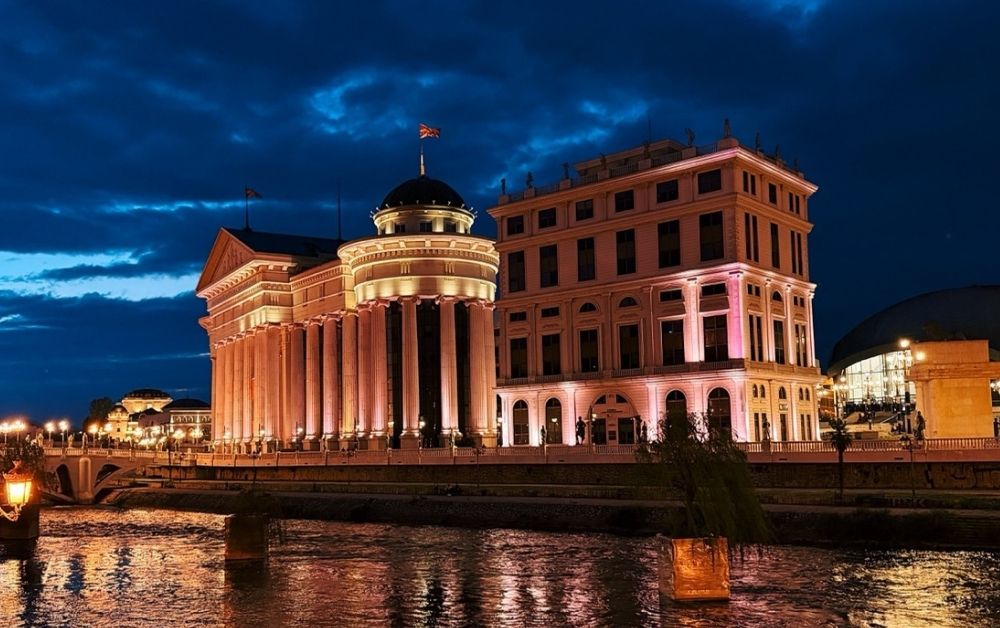
Skopje is a city of strong opposites, and we started noticing them almost as soon as we began wandering around. Our first reaction was: wow. Macedonia Square feels grand and almost theatrical, surrounded by monumental buildings, fountains and statues. So many statues. At first, you are impressed by the scale of everything, but almost immediately another feeling creeps in: confusion. The architecture does not always seem to belong together. Different styles compete for your attention, enormous monuments appear around every corner, and the legacy of the Skopje 2014 project makes parts of the center feel like an elaborate stage set. You keep looking around and wondering what exactly is happening in this city.
Then you cross the Stone Bridge and the atmosphere changes almost instantly. The monumental architecture gives way to the narrow streets of the Old Bazaar, traditional shops, mosques, small restaurants and cafés where people sit over coffee. Modern Skopje suddenly meets a much older version of the city, and the contrast makes both sides feel even stronger. But once that initial wow effect begins to wear off, you also start noticing the smaller details. Look beyond the grand facades, and you see neglected buildings, rougher streets just minutes from the polished central square, overflowing rubbish bins, crumbling corners, and places where the investment visible in the center seems to stop quickly. Skopje impressed us, confused us and occasionally left us wondering what to make of it. Perhaps that was our strongest first impression of all: this was not a city we could understand at a glance.


Crossing the Stone Bridge Felt Like Crossing Into Another City
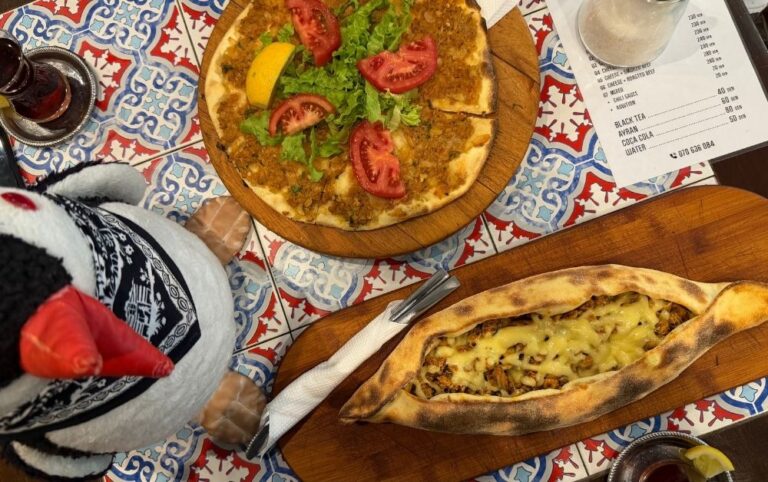
Within a few minutes, the grand statues and monumental facades behind us gave way to narrow cobblestone streets, small shops, mosques, cafés, and restaurants tucked into old buildings. The streets twisted in different directions, people moved between tiny storefronts, and the smell of grilled food and something sweet seemed to follow us as we wandered deeper into the bazaar. At first, it was almost overwhelming. There was so much happening at once that we had no idea which street to take or where to look first. But that was also part of its charm. We stopped for pide and lahmacun, discovered baklava so good that we returned for it a second time, and watched people sitting in cafés over small cups of coffee, in no hurry to leave. The longer we wandered, the less confusing the maze of streets became, and the more we started to enjoy getting lost in it. Only a bridge separated this from Macedonia Square, yet the atmosphere could hardly have felt more different. If central Skopje had made us stop and stare, the Old Bazaar made us slow down, look closer, and experience the city rather than look at it.


The Old Bazaar felt like a world where time slowed down. We loved simply waddling through its narrow streets without rushing anywhere, stopping occasionally to watch what was happening around us. Craftspeople worked inside tiny workshops, old crafts seemed to come alive in front of us, and trays of baklava were still being prepared the traditional way. Around the cafés, people sat together over small cups of coffee, talking, laughing, and enjoying each other’s company without seeming in any hurry to leave. People-watching here felt almost calming. You could hear conversations drifting from the cafés, smell something sweet from a bakery and then pass a workshop where someone was working with their hands just a few steps later. On the other side of the Stone Bridge, Skopje felt big, theatrical and constantly demanding your attention. Here, life seemed to move at its own pace, and for a little while, we were happy to move at that pace too.
The People We Met
Most of our interactions in North Macedonia were the small, everyday kind you have while traveling: talking to restaurant staff, shop assistants, people in the Old Bazaar, or someone helping us figure something out. Again and again, we found people willing to talk, explain, and share a little more than we expected. One conversation in a bar, for example, started casually and ended with us discovering that the man we were speaking to was a dancer in a national folk ensemble, the Ensemble Studio Folklor. These spontaneous encounters gave us small glimpses into life here that no guidebook really can.
One conversation that stayed with us most, however, was with a taxi driver we hired for a private tour; we also talked about North Macedonia itself. He was deeply engaged with what was happening in his country and spoke openly about the things he believed needed to improve. He told us that he was involved with the local government and was trying, in his own way, to help change some of those things. He spoke with pride about North Macedonia, but also with a clear awareness of its problems. That combination stayed with us. From the few conversations we had, we got the impression of people who know where their country struggles and want things to move forward, while also recognizing that meaningful change can be frustratingly slow. It felt familiar from other parts of the Balkans too. Of course, a handful of conversations cannot tell us what an entire country thinks. Still, the people we happened to meet were friendly, open to conversation, and often surprisingly willing to talk about the realities of the place they call home.

Hospitality, Food and the Importance of Sitting Down
Food is one of our favorite ways to get to know a new country, and in North Macedonia we tried to taste as much as we could. Many of the flavors and dishes were different from what we are used to at home, which made sitting down for a meal part of the experience rather than simply a break between sights. We tried pide and lahmacun, ordered local dishes whenever we could, and developed a particular weakness for the baklava in the Old Bazaar. We liked it so much that we went back to Nexho a second time. The smell of freshly baked dough, grilled meat and sweet syrup seemed to drift through the bazaar, making it almost impossible to waddle around without eventually stopping somewhere.
But what stayed with us was not only what people were eating. It was how much time people seemed to give to eating, drinking, and simply sitting together. Cafés were busy in the morning and again in the afternoon, with people lingering over small cups of coffee, talking and watching the world pass rather than drinking quickly and moving on. Meals seemed social, and coffee even more so. We saw the same thing again and again: friends and families sitting around tables, conversations continuing long after the plates were empty. Especially in the Old Bazaar, there was very little sense of rushing. For us, it became another small window into North Macedonia. Sometimes learning about a place does not happen inside a museum or beside a monument. Sometimes you understand a little more simply by sitting down, ordering something unfamiliar and watching how everyone around you spends their time.
The Things That Made Us Uncomfortable
Every place has things that do not quite sit right with you, especially when you are seeing them through the eyes of a visitor. Skopje was no different. The main tourist areas, particularly Macedonia Square and the busiest streets of the Old Bazaar, could feel polished and lively. Waddle only a little farther, however, and the scenery sometimes changed surprisingly quickly. Pavements became rougher, potholes appeared, buildings looked more neglected, and some streets had an atmosphere that made us instinctively more alert. At times, we didn’t feel as relaxed wandering without a destination as we did around the main sights. Whether there was any real reason to feel unsafe is another question, but as travelers, that was our reaction to the surroundings.
We were also uncomfortable with the amount of begging we encountered. In some areas, people approached us repeatedly, and seeing children waddling around trying to sell things was particularly difficult. We can observe it, but after only a few days in the country, we don’t yet have the context to understand the circumstances behind it. Smoking was another, much more everyday frustration. People seemed to smoke almost everywhere, including on restaurant terraces, and sitting down to enjoy a meal could easily mean having cigarette smoke drifting across the table from the people next to you. Then there were smaller details we kept noticing: rubbish around bins, neglected corners and the contrast between the money and attention seemingly poured into monumental central Skopje and streets nearby that appeared to need far more basic investment. None of these observations defines North Macedonia, nor do a few days in Skopje give us enough perspective to explain why these things are the way they are. But they were part of what we experienced, and leaving them out would mean presenting a version of the city that did not quite match the one we actually saw.


A Country That Feels Caught Between Different Identities
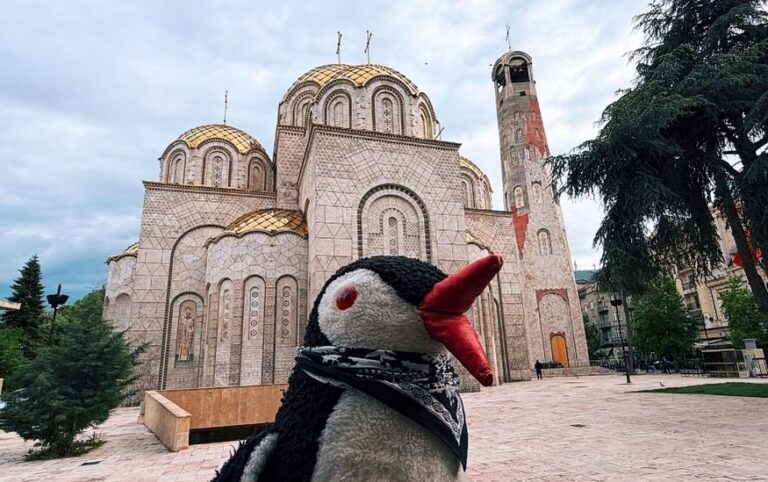
North Macedonia left us a little confused, and Skopje perhaps reflects that feeling better than anywhere else. In just a short waddle, you move between enormous classical-style monuments, Ottoman-era streets, mosques, Orthodox churches and architecture left from the Yugoslav period. Different histories and identities seem to sit almost on top of one another. Even the country’s name, officially changed to North Macedonia in 2019, hints at how complicated identity questions can be here. We didn’t spend enough time in the country to fully understand those layers, but that became part of our impression too. North Macedonia didn’t feel like a place you could easily explain or fit into one neat category.
Leaving Skopje Changed the Picture
We left Skopje a couple of times during our stay, and each trip gave us another small glimpse of North Macedonia beyond its capital. Matka Canyon was perhaps the strongest reminder of just how beautiful the country’s nature can be. Surrounded by cliffs, green slopes and the dark water cutting through the canyon, it felt worlds away from the statues and busy streets of central Skopje. At the same time, it showed us another side of tourism here. Despite the number of visitors Matka Canyon receives, the tourist infrastructure felt limited. There were crowds, a few places selling souvenirs and kitschy toys, but relatively little of the infrastructure we would normally expect at such a popular attraction.
Still, leaving the city made us curious rather than disappointed. Driving past mountains, villages and stretches of countryside reminded us that Skopje could only ever give us one small piece of the country. We had seen enough of North Macedonia’s landscapes to realize how much we had not seen. If anything, those trips nudged us to keep North Macedonia on our travel list. Next time, we would like to go farther, spend more time in its mountains and nature, and discover what the country feels like once Skopje is no longer the center of the story.


What Surprised Us Most
What surprised us most about Skopje was just how many contradictions could exist within such a compact city. We had been warned about the statues, but nothing quite prepares you for how many there are. They are everywhere, sometimes enormous, sometimes seemingly appearing out of nowhere, and together with the grand buildings they give central Skopje an almost theatrical feeling. Then there was the architecture itself. One moment we were impressed, the next we were confused, trying to understand how all these different styles were supposed to fit together.
Perhaps the biggest surprise, though, was how quickly everything could change. Cross the Stone Bridge and monumental, modern Skopje gives way to the cobblestone lanes, mosques, workshops and coffee culture of the Old Bazaar. Walk a little farther again, and the polished streets become rougher and more neglected. Skopje kept shifting in front of us. Modern and old, grand and crumbling, busy and strangely slow, polished and chaotic seemed to exist side by side. We expected contrasts when coming to the Balkans, but we didn’t expect them to be so visible within just a few streets.
What We Still Don’t Understand About North Macedonia
The more we saw of North Macedonia, the more we realized how little we actually understood. A few days in Skopje, several trips outside the city, and a handful of conversations can give you impressions, but they cannot explain a country. We could see the contrasts between the monumental center and neglected streets, hear people talk about wanting change, experience the mix of cultures in the Old Bazaar and notice how different histories and identities exist side by side. But understanding why those contrasts exist is something entirely different. Questions about the country’s economy, politics, Macedonian and Albanian communities, its Yugoslav past, and even how people see North Macedonia’s future cannot be answered during a long weekend.
Perhaps that is what we ultimately liked about the experience. North Macedonia did not become clearer the longer we stayed. In some ways, it became more complicated. We left with opinions and observations, but also with the awareness that they were exactly that: impressions from visitors who had only scratched the surface. And sometimes, that is a much better reason to return than leaving a country thinking you have already figured it out.
Hotel search from Trip.comShows Trip.com’s own box, which can set Trip.com cookies.Search hotels on Trip.comTrip.com’s box can’t load on this device (an ad blocker often stops it). This opens Trip.com’s own hotel search.Open Trip.com
So, What Impression Did North Macedonia Leave on Us?
North Macedonia left us curious. It felt welcoming but complicated, beautiful but sometimes neglected, proud of its past yet still trying to work out how that past fits into the country it is today. Skopje impressed us at times, confused us at others, and made us uncomfortable at still others. But perhaps that is exactly why the experience stayed with us. It did not feel polished for visitors or easy to put into one neat description. It felt like a place with many layers, some immediately visible and others we could only begin to notice.
That’s the biggest takeaway: we are not finished with North Macedonia. Skopje gave us the statues, the contrasts, the conversations, the food, and our first glimpse of the landscapes beyond the capital, but it also showed us how much of the country we still know nothing about. We arrived in North Macedonia thinking we were visiting Skopje. We left realizing that Skopje had only given us the first few pages of a much bigger story, and we would very much like to come back one day and keep reading.
Travel Bold. Eat Well. Waddle Wild.

This post contains affiliate links. If you click and buy, I might earn a tiny commission, enough to help a penguin keep up its globe-trotting lifestyle. No extra cost to you, just more fish for me. Thank you for supporting the adventure!