2 Days in Brussels: What to See & Do
Brussels was the first city on our city-hopping trip, and we quickly realized there was much more to see and do than we could squeeze into two days. Between famous sights, museums, chocolate shops, waffles, Belgian beer, and simply waddling through the streets, our itinerary filled up very quickly.
We only had two full days in Brussels, so we tried to make the most of them without turning the trip into a race from one attraction to another. We explored the historic center, visited some of the city’s biggest landmarks, went inside the Atomium, ate probably more chocolate than necessary and, naturally, made time for Belgian beer.
Could we have stayed longer? Absolutely. But if you only have a weekend, you can still see and do a lot. So, here is exactly how we spent two days in Brussels, what we managed to fit in, and a few things we learned along the way.
Why Brussels Works Well for a Short City Break
Brussels works really well when you only have a couple of days because a lot of the main sights are packed into a fairly small area. You can waddle from the Grand Place to Manneken Pis, get distracted by a chocolate shop, grab a waffle, find another pretty square and somehow end up stopping for a Belgian beer, all without covering huge distances. Of course, two days are not enough to see everything Brussels has to offer, especially if you want to visit museums and attractions too, but it is enough to experience quite a lot without spending most of your trip getting from place to place.
Brussels 2-Day Itinerary at a Glance
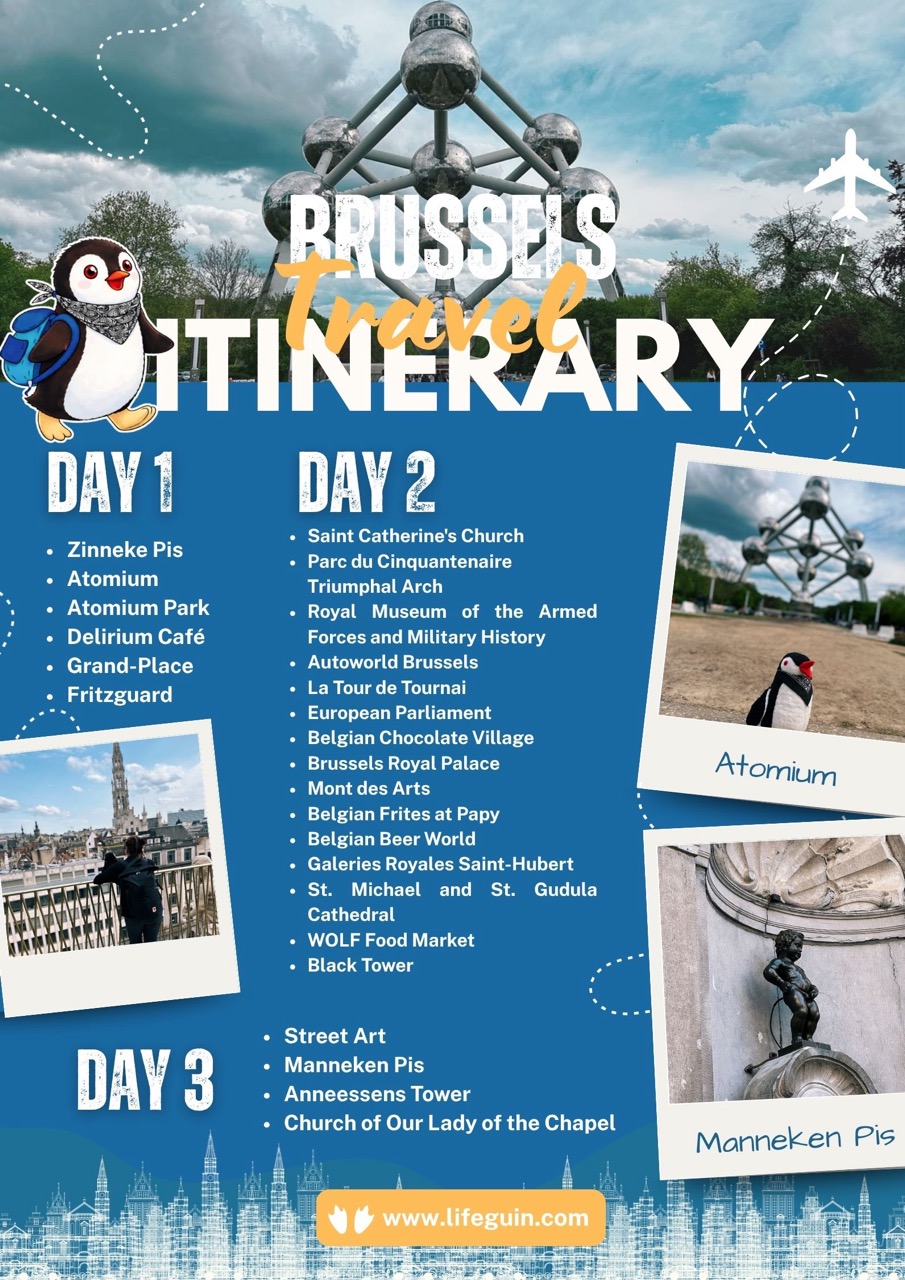
Brussels in 2 Days
Two days in Brussels doesn’t sound like much, but you can squeeze in a lot if you are ready to walk. And by walk, we mean around 20,000 steps a day. 😅 Our itinerary was definitely busy, but we still had time for food, chocolate, beer, and plenty of random stops along the way.
Our Day 1 was actually only half a day. Our flight left at 10:42 AM, and we landed at Brussels Charleroi Airport at around 1:15 PM. From there, we headed straight into Brussels, dropped off our things, and basically started exploring as soon as we could. So even though we call this our two-day Brussels itinerary, the first day proves you can see quite a bit in just one afternoon and evening.
Day 1 (or rather half a day)
Once we arrived in Brussels, we headed to Atlas Hotel Brussels, dropped off our stuff, and pretty much went straight back out to start exploring. We did not have to waddle far before meeting our first Brussels character: Zinneke Pis, a bronze dog casually peeing against a street post. 😂 Created by Brussels artist Tom Frantzen in 1999, Zinneke is basically the four-legged member of Brussels’ famous peeing-statue family, alongside Manneken Pis and Jeanneke Pis. Not a bad introduction to Brussels.


Atomium
Our next stop was one of the sights we were most excited to see in Brussels, the Atomium. You can spot this giant structure from a distance, but we did not just admire it from outside. We waddled inside to explore the spheres, exhibitions, escalators, and views from the top. If you want to know what it is actually like inside and whether we think the ticket is worth it, read more in our blog: Inside Brussels’ Giant Atomium.
Atomium Park
After exploring the Atomium, we spent some time walking around Atomium Park and seeing the structure from different angles. It is worth leaving a little time for this because the Atomium looks completely different depending on where you stand, and it is also a nice chance to slow down after exploring the inside. Naturally, we took far too many photos before continuing our Brussels waddle.
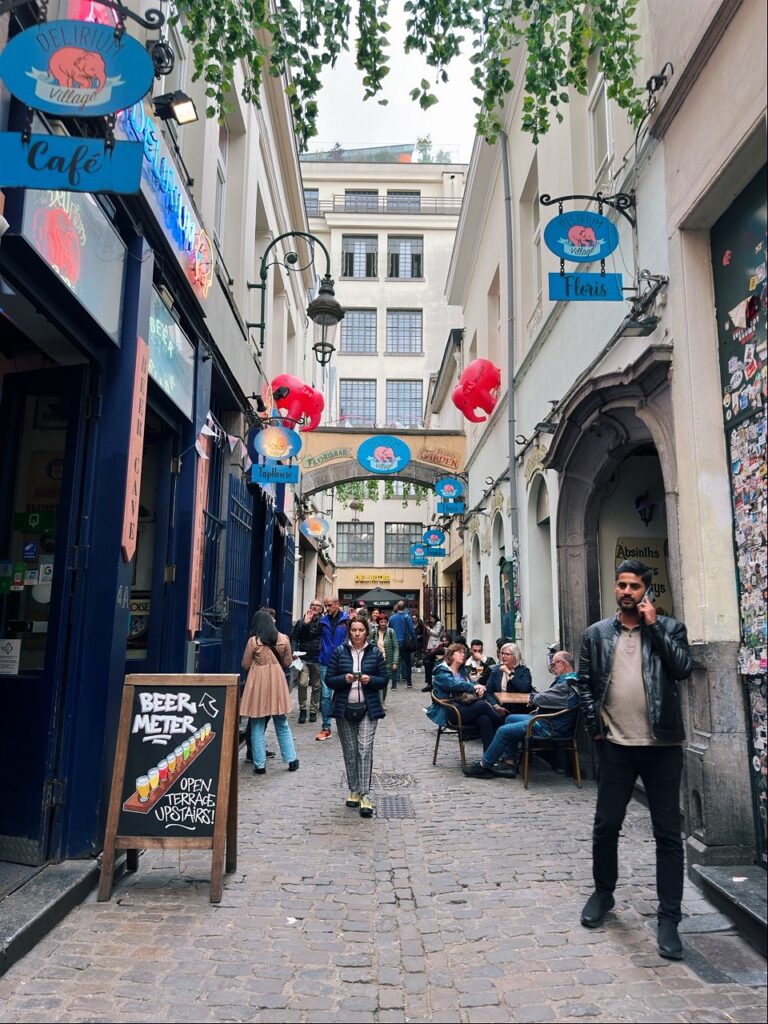
Delirium Café
From Atomium Park, we hopped on a bus and headed back toward the center, because it was time for something very important in Brussels: Belgian beer. Our destination was the famous Delirium Café, known for its huge beer selection and definitely one of those places we wanted to experience while in the city. After all those steps around the Atomium, sitting down with a Belgian beer felt very well deserved.
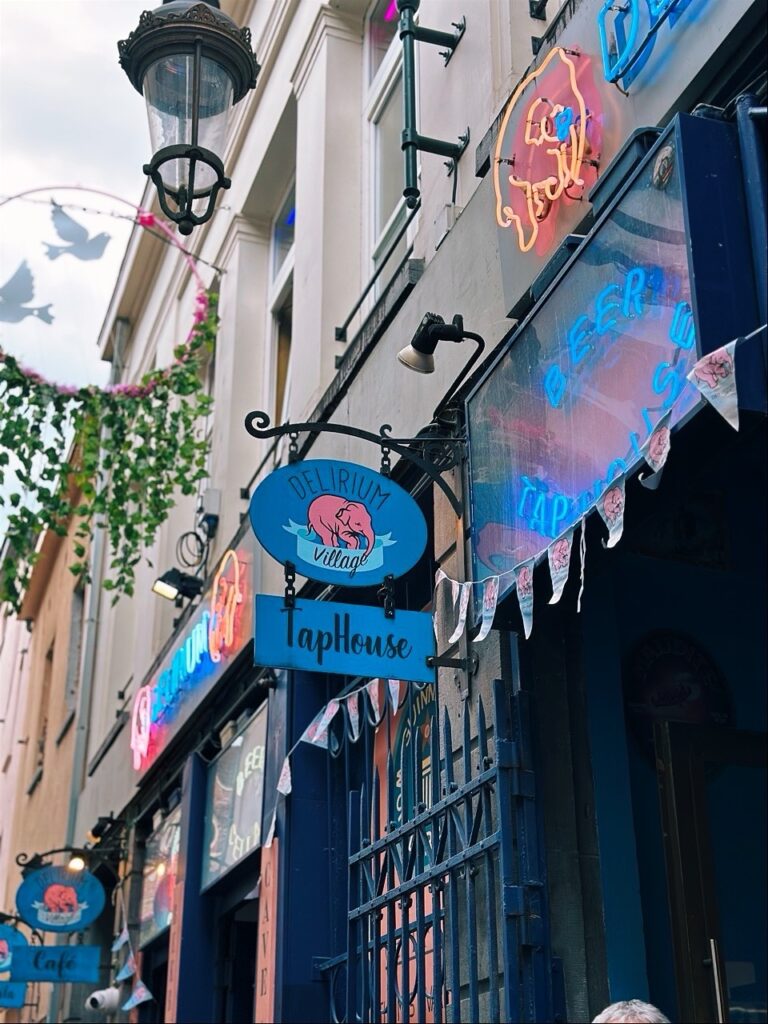
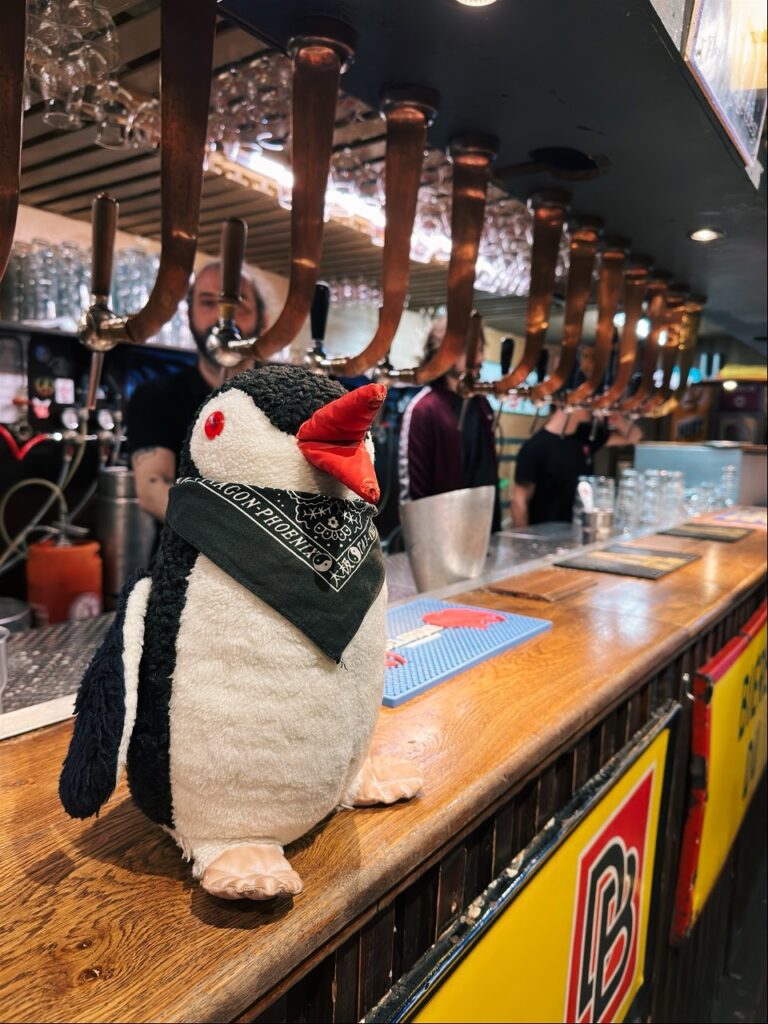
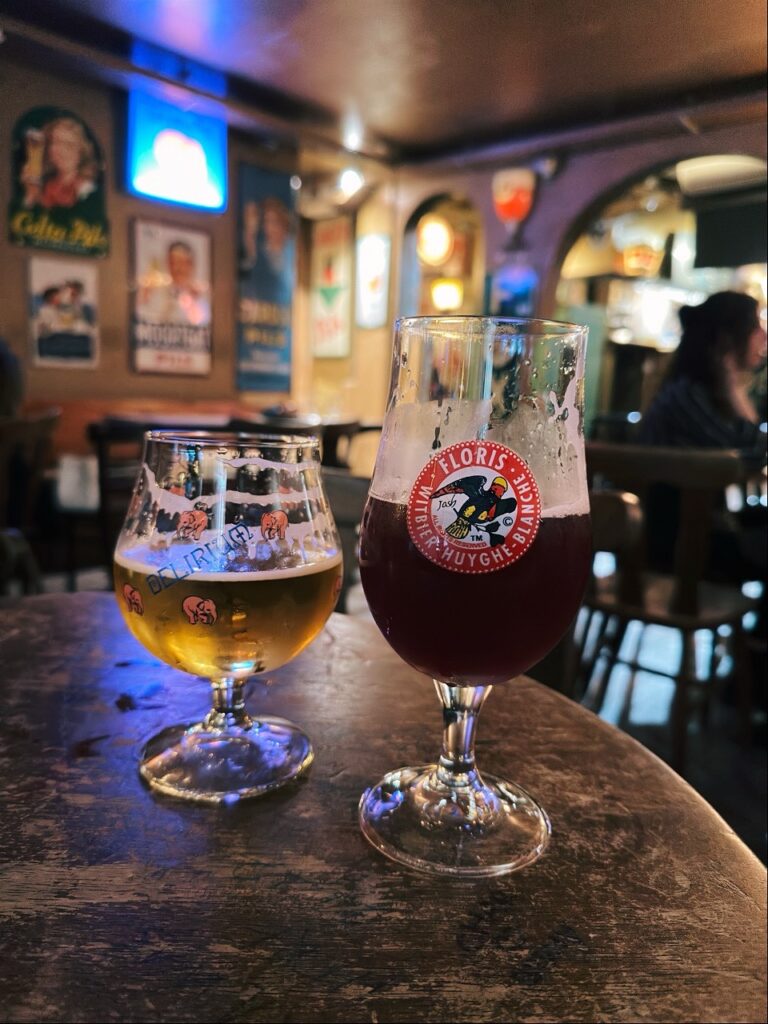
Grand-Place
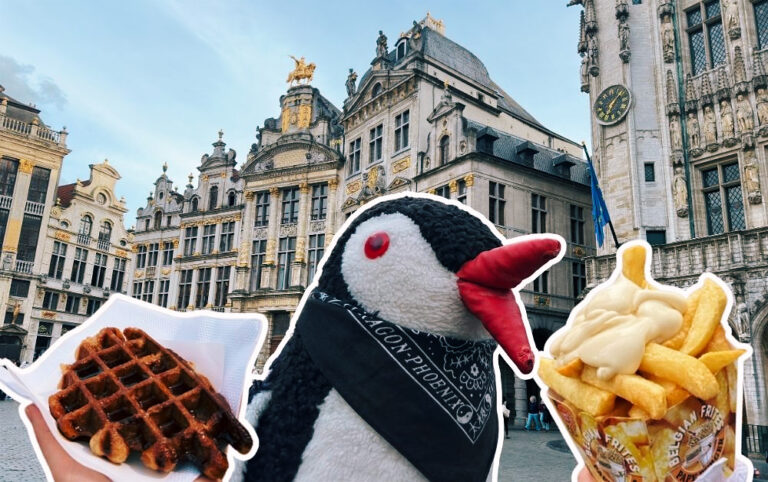
With a couple of Belgian beers successfully sampled, we headed back out to explore and made our way to the Grand-Place, right in the heart of Brussels. This is the city’s main square and one of those places where you will probably spend a few minutes just standing there and looking around. The Grand-Place is also a UNESCO World Heritage Site, and while you can waddle through it in a few minutes, we recommend sticking around for a bit. Walk around the whole square, look up at the buildings, and waddle through some of the little streets leading away from it. We visited later in the day, which made it a great stop as Brussels shifted into its evening mood.
What to see around Grand-Place:
- Brussels Town Hall with its tall Gothic tower
- King’s House (Maison du Roi/Broodhuis), home to the Brussels City Museum
- The historic guildhalls surrounding the square
- Everard ‘t Serclaes monument, which you will probably notice people touching as they pass
- The little streets around Grand-Place, packed with chocolate shops, cafés, restaurants and plenty of places tempting you to make another food stop


All that exploring eventually caught up with us, so we made a very important Brussels stop: Belgian fries. We headed to Fritzguard, not far from the Grand-Place, where the concept goes a little beyond your standard cone of fries. They serve loaded fries topped with Belgian classics, including beef cheeks, Liège-style meatballs and vol-au-vent.
For us, it was an easy way to tick another Brussels essential off the list while also getting some actual food into our stomachs after the beers, because you cannot really come to Belgium and not have fries at least once. Or, realistically, several times.


With our Belgian fries successfully demolished, we waddled around the area for a little longer before calling it a day. One of the buildings we passed was La Bourse, the former Brussels Stock Exchange, sitting right on Place de la Bourse and pretty hard to miss with its huge columns. We wandered through a few more streets, took in a little more of Brussels in the evening, and then finally headed back to our hotel. Considering we had only landed that afternoon, we had already managed to squeeze quite a lot into our first half-day.


Day 2: A Full Day Exploring Brussels
St. Catherine’s Church
With a full day of exploring Brussels ahead of us, we started by waddling over to St. Catherine’s Church. Sitting in the Sainte-Catherine neighborhood, the church immediately stands out with its large stone façade and mix of architectural styles. We took a quick look around before heading back into the city, with a full Brussels itinerary still ahead of us.


Parc du Cinquantenaire
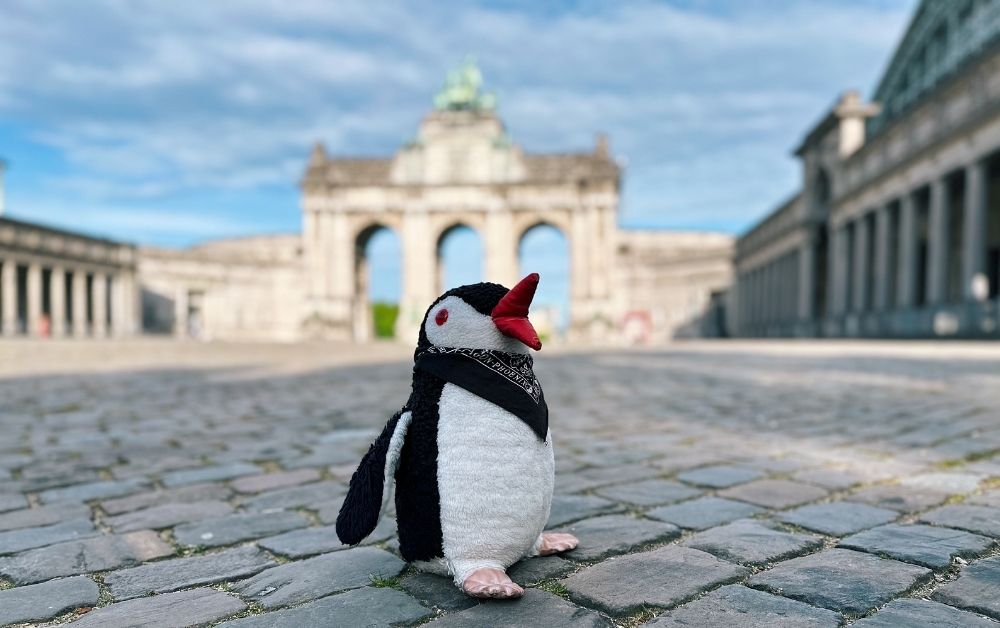
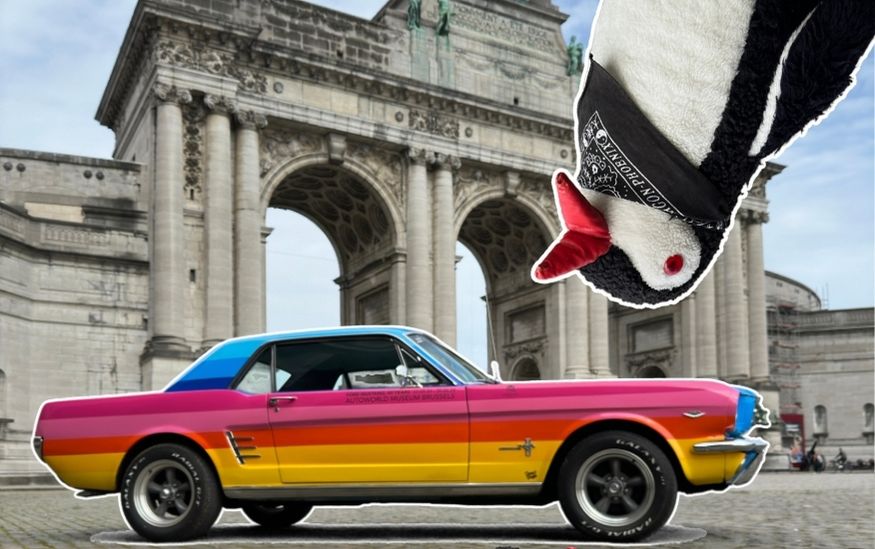
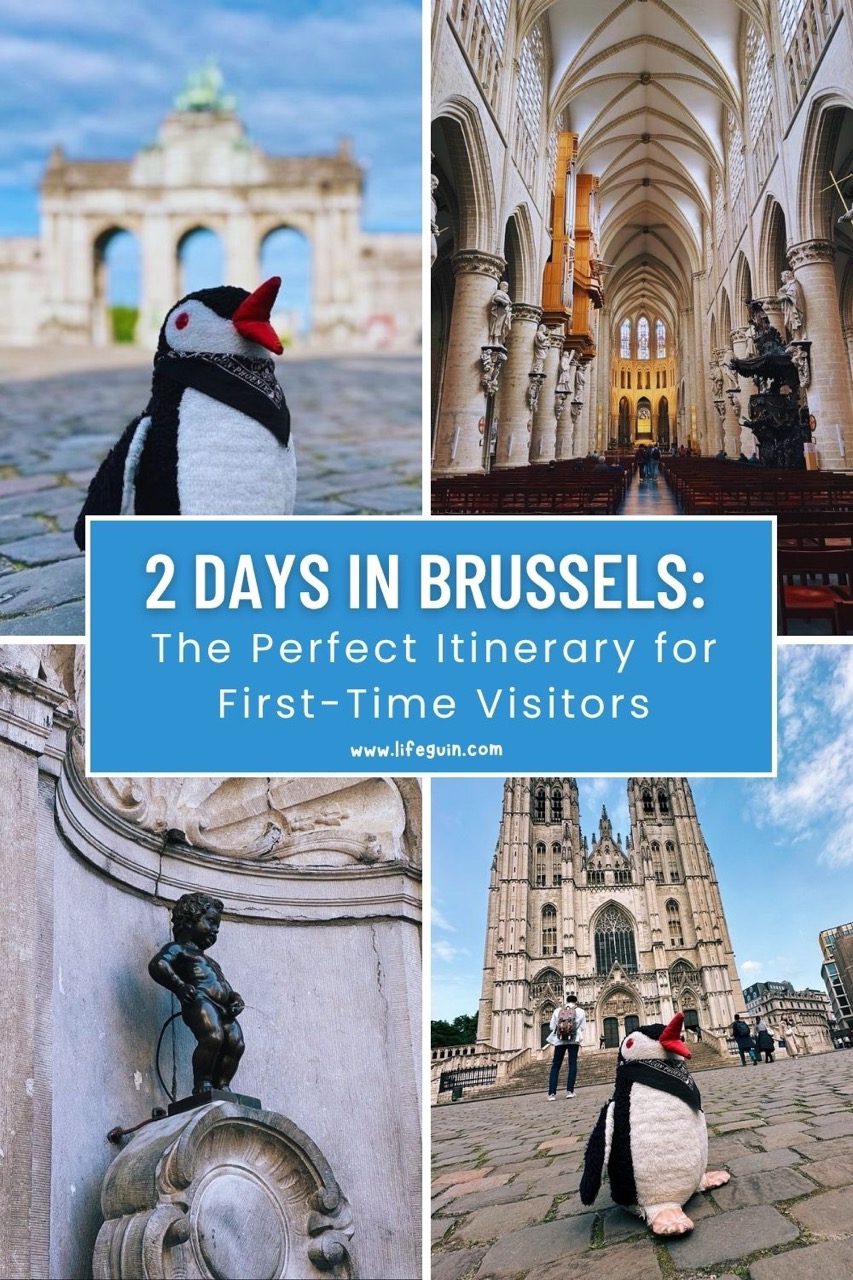
Our next stop was Parc du Cinquantenaire, one of those places in Brussels where the park itself is nice, but the massive Triumphal Arch really steals your attention. The park was created in 1880 to celebrate 50 years of Belgian independence, and today it is home to gardens, monuments and several museums, including Autoworld, the Art & History Museum and the Royal Military Museum.
We mainly came to waddle through the park and see the arch, and it looks much bigger when you stand underneath it than it does in photos. A bronze quadriga tops the three arches, and a fun fact is that you can actually go to the top of the arch through the Royal Military Museum for panoramic views over Brussels. Something we definitely did not realize when we first saw it!


Royal Museum of the Armed Forces and Military History
While we were at Parc du Cinquantenaire, we also went inside the Royal Museum of the Armed Forces and Military History, and it’s much bigger than you might expect. The collection takes you through different periods of Belgian and European military history, with uniforms, weapons, tanks and plenty of other exhibits. Still, our favorite part was the huge aviation hall packed with aircraft. Even if military history is not normally your thing, there is enough variety here to make it worth a waddle around.
Autoworld Brussels
Right across the park, we also checked out Autoworld, which takes you into a completely different world. Instead of planes and military equipment, you get halls filled with cars from different periods, from some of the earliest automobiles to classic cars, sports cars and more modern models. You don’t need to be a massive car fan to enjoy walking through it, and having both museums right around the same park makes them easy to combine in your Brussels itinerary.
Post List #1
From some of the earliest automobiles to vintage classics, Belgian cars, royal vehicles, and iconic…
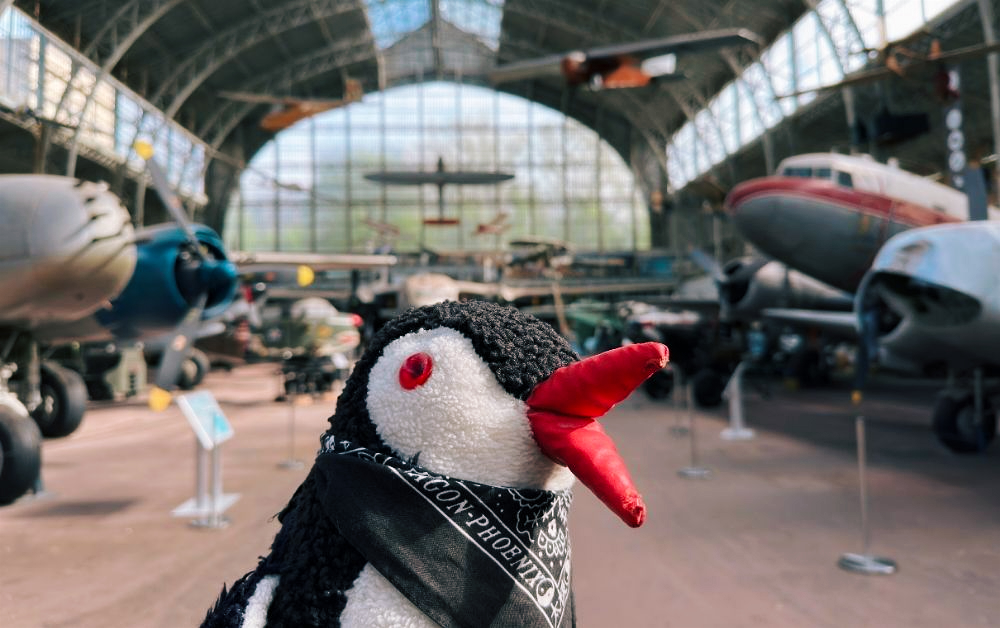
One of the biggest surprises of our Brussels trip was the Royal Military Museum. From…
Tour de Tournai
While exploring the park, we also stumbled across the Tour de Tournai, a small medieval-looking tower that seems a little random at first. It is not actually medieval at all. Architect Henri Beyaert designed it for the 1880 National Exhibition, and it was built specifically to showcase Tournai limestone and its uses. Its design was inspired by the coat of arms of the city of Tournai, which explains the little castle-like appearance.
It is one of those small details in Parc du Cinquantenaire that is very easy to walk straight past, but once we spotted it, we obviously had to waddle over for a closer look.


European Parliament
From there, we continued our Brussels waddle into the European Quarter and around the European Parliament. Even if politics isn’t exactly at the top of your holiday itinerary, it is still pretty interesting to see where so many decisions affecting the European Union are discussed and made. The Brussels complex includes several buildings, including the Paul-Henri Spaak Building, which contains the Hemicycle, as well as the Altiero Spinelli, Willy Brandt, and József Antall buildings. Many of them are named after important figures in the history of European integration.
We didn’t go inside this time, but there is actually quite a lot to visit. You can tour the Hemicycle, explore the Parlamentarium, and visit the nearby House of European History. One little detail we found especially interesting is that two original sections of the Berlin Wall stand beside the visitor entrance to the Hemicycle. So even if you don’t plan a full Parliament visit, it is worth waddling through the area, checking out the modern architecture, and getting a feel for Brussels’ role as one of the EU’s main political centers.


Belgian Chocolate Village
From the European Quarter, we hopped on a bus. We headed to the Belgian Chocolate Village because, obviously, we couldn’t spend two days in Brussels without dedicating some proper time to chocolate. 🍫 The museum is located inside the former Victoria chocolate and biscuit factory in Koekelberg and has around 900 m² dedicated to the history and production of chocolate.
Inside, you follow chocolate from cocoa bean to finished bar, learn how it is produced, see chocolate sculptures, and even wander through a small tropical greenhouse showing the conditions in which cacao grows. There is also a chocolatier workshop where you can watch chocolate being made and, most importantly, get a little taste. Because reading about Belgian chocolate is educational, but eating it is clearly an essential part of the research.
Brussels Royal Palace
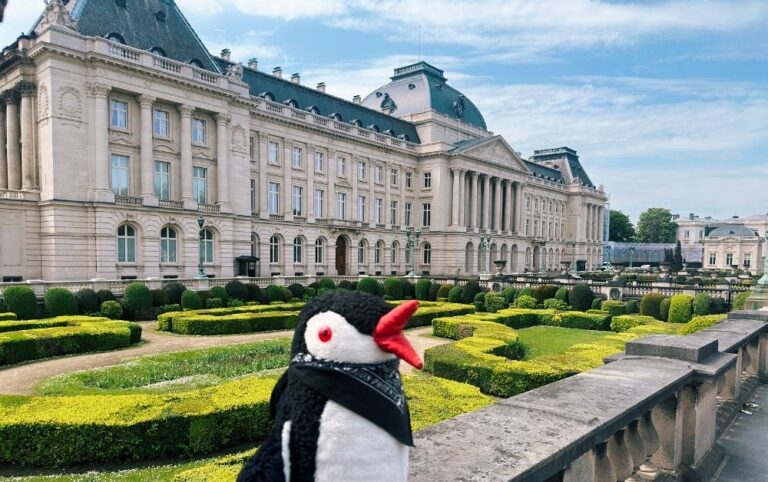
Next, we waddled around the Brussels Royal Palace, one of the main landmarks in the city’s Royal Quarter. One interesting thing we learned is that, despite the name, the King and Queen do not actually live here. The palace is the King’s main workplace and administrative residence, where he meets politicians, ambassadors, heads of state and other official guests. The royal family lives at the Castle of Laeken instead.
The palace stands opposite Brussels Park, and even if you cannot go inside, it is worth walking past to see the long façade and explore the surrounding area. If you visit Brussels during the summer, you may even get a chance to see the interior, as the palace traditionally opens to visitors for a limited period each year.


Mont des Arts
Our next stop was Mont des Arts, and it’s one of those places where you want to stop for a few minutes and take in the view. The landscaped garden sits between Brussels’ upper and lower city, connecting the Royal Quarter with the historic center around Grand-Place. From the top, you get a great view across the gardens toward the Brussels Town Hall tower, which you can see rising above the rooftops in the distance.
We waddled through the geometric gardens and past the equestrian statue of King Albert I, which was created by sculptor Alfred Courtens and inaugurated in 1951. It is also a good place to slow down for a moment, especially after a day of museums, chocolate, and what was already becoming another serious step-count situation.


Belgian Frites at Papy
By this point, all that waddling had made us hungry again, so it was time for another very important Belgian activity: fries. We stopped at Belgian Frites, also known as Belgian Frites – Papy, close to Grand-Place. They specialize in fresh homemade Belgian fries, which you can get in a classic cone or load up with one of their many sauces. Nothing fancy, just a quick cone of fries before we continued exploring Brussels. At this point, we were taking our Belgian-fries research very seriously. We have to admit, fries are our kryptonite, so we couldn’t resist.


Belgian Beer World
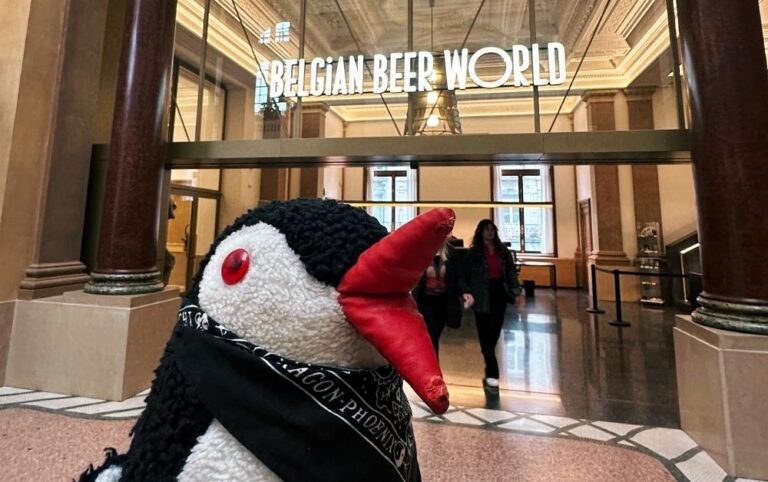
With the salty fries successfully demolished, we headed straight for another Belgian essential: beer. We waddled back to La Bourse, which we had already passed the evening before. Still, this time we actually went inside to visit Belgian Beer World. The interactive experience takes you through Belgian beer culture, its history, brewing process, and the huge variety of beers produced around the country. It is not your typical museum with endless displays to read either. Interactive sections, sensory elements, and tastings line the way, and the experience ends on the rooftop Beerlab with a beer and views over central Brussels.
Even if you are not a huge beer person, we think this is a fun way to understand why beer is such a big deal in Belgium. Belgian beer culture is even included on UNESCO’s Representative List of the Intangible Cultural Heritage of Humanity, so there is definitely more behind that glass than simply ordering another pint.
Galeries Royales Saint-Hubert
Our next stop was the Galeries Royales Saint-Hubert, a beautiful covered shopping arcade just a short waddle from Grand-Place. Opened in 1847, it is one of the oldest shopping galleries in Europe and is divided into three sections: the King’s Gallery, Queen’s Gallery and Princes’ Gallery. Under its huge glass roof, you will find chocolate shops, cafés, boutiques, restaurants, a cinema and theatres.
We did not come here to shop or spend hours exploring. We waddled through, checked it out and admired the architecture before continuing with our day. Even for a quick visit, it is worth adding to your Brussels itinerary, especially since you will probably be exploring this part of the city anyway.


St. Michael and St. Gudula Cathedral
Our next stop was the Cathedral of St. Michael and St. Gudula, one of Brussels’ most important churches. Construction of the current Gothic cathedral began in 1226, but it continued for more than 250 years, with the main building eventually completed around 1480. Even more surprisingly, it only officially became a cathedral in 1962.
And it is pretty big. The cathedral is around 114 meters long and 57 meters wide, while its two towers rise about 64 meters above Brussels. We stopped to check it out before continuing our waddle through the city, but if you have more time, you can also head inside and even see remains of the 11th-century Romanesque church that once stood here.


WOLF Food Market
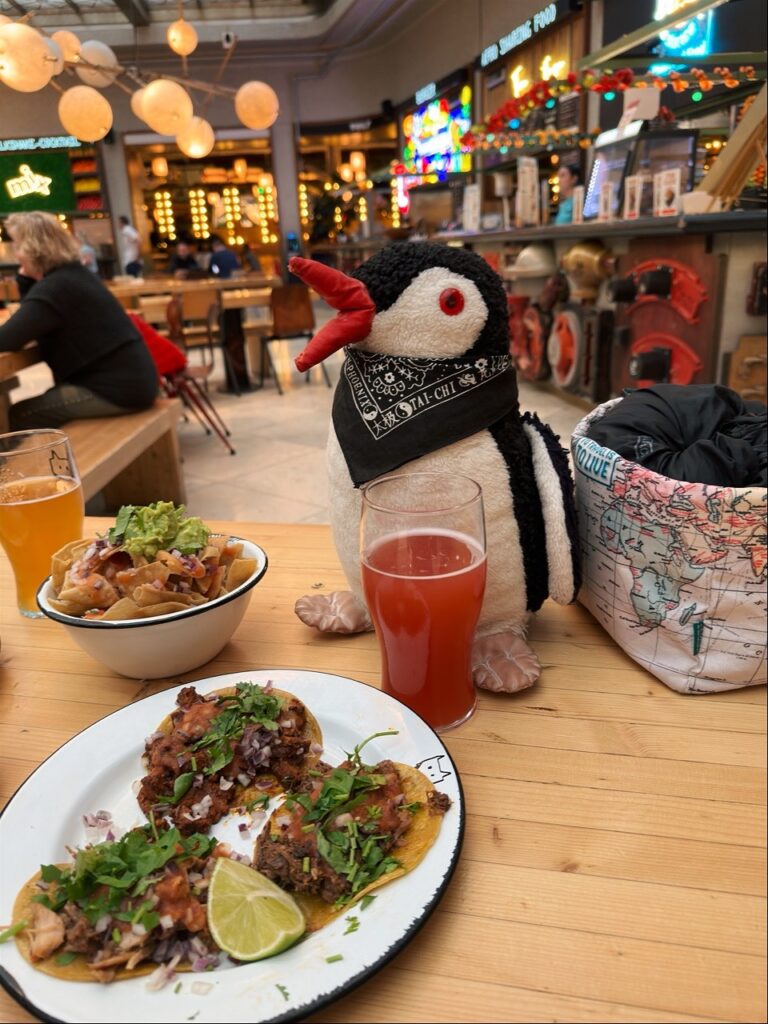
By this point, we were getting hungry again, so our next stop was WOLF Food Market, right in the center of Brussels. WOLF opened in 2019 inside a former bank building and was actually the first food market of its kind in Brussels. The old banking hall has been turned into a huge shared space filled with food counters, tables and bars, so it is a fun place to check out even before deciding what you want to eat.
And choosing is probably the hardest part. Today, WOLF brings together around 16 restaurants, with everything from Syrian food and homemade pasta to pizza, sushi, burgers, tacos and plenty of vegetarian options. There is even a microbrewery producing beer right on site. We wandered around the different counters, checked out our options and eventually grabbed some food before continuing our Brussels waddle. It is especially handy when you are traveling together, and everyone suddenly wants something completely different.

Black Tower
Our next little stop was the Black Tower (Tour Noire), tucked away behind St. Catherine’s Church and looking slightly out of place surrounded by much newer buildings. The tower dates back to the 13th century and is one of the best-preserved remains of Brussels’ first city walls, which once stretched for around 4 kilometers around the medieval city.
We only stopped for a quick look, but we loved how this little piece of medieval Brussels has somehow survived while the city grew around it. It was even threatened with demolition in the late 19th century before being saved and restored, definitely an easy little stop to add while waddling around the St. Catherine area.


Day 3: One Last Half-Day in Brussels
Street Art Around Brussels
With one last half-day in Brussels, we decided to spend some time simply waddling around the city and hunting for street art. Brussels is particularly known for its comic book murals, with characters like Tintin, the Smurfs, Asterix and many others popping up on buildings around the city. More than 80 works now make up the wider Comic Strip Trail.
We did not follow the entire official route or try to find every mural. Instead, we just wandered around, spotted whatever we could along the way, and enjoyed seeing another side of Brussels before continuing with our final few stops. It is a fun little activity to mix into your sightseeing, especially since you can come across some of the murals while walking between the major attractions anyway.


Manneken Pis
Of course, we could not leave Brussels without seeing its most famous little resident, Manneken Pis. And little really is the right word because the statue is only 55.5 cm tall! The bronze figure of a boy peeing into a fountain was created by Jérôme Duquesnoy the Elder in 1619, although a fountain with a peeing boy had existed here long before that. Over the centuries, Manneken Pis went from being part of Brussels’ water supply to becoming one of the biggest symbols of the city and its slightly cheeky sense of humor.
One of the funniest traditions is his huge wardrobe of more than 1,000 costumes, and he regularly gets dressed for special occasions. Another fun fact? The Manneken Pis you see on the street today is actually a replica. The original was stolen and damaged several times and is now safely kept in the Brussels City Museum. So yes, an enormous amount of attention surrounds one very tiny peeing boy, but that is also exactly why we had to waddle over and see him before leaving Brussels.


Anneessens Tower
We continued our waddle through Brussels and stopped at Anneessens Tower, another little piece of the medieval city hiding among much newer buildings. The tower is one of the best-preserved remains of Brussels’ first city wall, built in the early 13th century and once stretching about 4 kilometers, with seven gates and dozens of defensive towers.
The name also has an interesting story behind it. According to legend, François Anneessens was imprisoned in the tower before being executed in 1719, but he was actually held in the nearby Steenpoort. The name stuck anyway. The tower was later restored in 1967, and today it is one of only a handful of surviving towers from Brussels’ original fortifications. It is another quick stop, but we loved finding these little reminders of medieval Brussels while simply waddling around the city.


Time to Say Goodbye to Brussels
From there, we slowly started making our way toward the train station, squeezing in a few final glimpses of Brussels along the way. There was no more rushing from sight to sight, just one last waddle through the city before catching our 2 PM train and continuing our Belgium city-hopping adventure. Brussels had officially kept us very busy, and our step count definitely agreed.
Getting Around Brussels
We mostly relied on our favorite form of transport in Brussels: our own feet. A lot of the main sights in the historic center are close enough to walk between, and waddling around also meant we stumbled across street art, little squares, and buildings we probably would have missed otherwise.
For longer distances, though, we used Brussels’ metro and buses, especially when heading to places like the Atomium or moving between attractions farther from the center. Public transport was also included with our Brussels Card, so it made sense to hop on whenever our next stop was a little too far away. Overall, we found the combination of walking + public transport worked perfectly for our two days, and we never felt like we needed a car.
Buy Us a Ko-fi

Practical Tips for a Brussels Weekend
A couple of days in Brussels can be pretty packed, especially if you want to combine the main sights with museums, food and plenty of Belgian beer. Here are a few things we kept in mind when planning our trip.
- Book major attractions ahead. If there is somewhere you absolutely want to visit, we would book it before arriving, particularly on weekends and during busy periods.
- Wear comfortable shoes. We were doing around 20,000 steps a day, so this isn’t the trip to break in a new pair of shoes. A lot of central Brussels is best explored simply by waddling around.
- Visit the Atomium early. The Atomium recommends visiting around 10 AM when it opens, or later in the day if you want to avoid the busiest period, generally between 11 AM and 3 PM.
- Reserve restaurants you really want to try. We were quite spontaneous with food, but if you have a particular restaurant on your list, especially for dinner or on a weekend, booking ahead saves you from reorganizing your evening when you are already hungry.
- Prepare for Brussels weather. Bring layers and something waterproof. Brussels is very walkable, which is great until the weather decides not to cooperate.
- Cards are easy to use. We mainly used cards during our trip. Contactless payment is also available directly across the STIB metro, tram and bus network, so getting around is simple even without a transport pass.
- Check Monday opening hours. This matters if your weekend stretches into Monday. Many Brussels museums close on Mondays, although attractions such as the Atomium and several other museums remain open. Always check individual opening hours when planning your itinerary.
- Consider the Brussels Card. We used one during our trip, and it worked well with our museum-heavy itinerary. You can add unlimited STIB public transport and Atomium access as options, which can make a busy sightseeing weekend much easier.
Hotel search from Trip.comShows Trip.com’s own box, which can set Trip.com cookies.
Is 2 Days in Brussels Enough
For us, yes, two days in Brussels was enough for a first visit, especially if you are happy with a busy itinerary. We managed to see the major sights, visit several museums, explore the Atomium, learn about Belgian chocolate and beer, and still find plenty of time for fries, food stops, and simply waddling around the city.
That said, we definitely did not see everything. Brussels has plenty more museums, neighborhoods and places we would happily come back for. If you prefer slower mornings, long lunches, and fewer 20,000-step days, we recommend three days instead. But for a weekend city break or as part of a longer Belgium trip, two days gave us a really good introduction to Brussels without feeling like we had barely scratched the surface.
Map of Our 2-Day Brussels Itinerary
Brussels surprised us with just how much there is to do beyond the obvious landmarks. We came expecting the Grand-Place, the Atomium, chocolate, waffles, and beer. Still, we filled our days with museums, street art, medieval towers, churches, parks, and plenty of random discoveries in between. And yes, there was still a lot of chocolate, fries, and beer involved. Would we do anything differently? We would probably add one more day. Our itinerary worked, but those 20,000-step days were no joke, and having an extra day would have meant slowing down a little, spending longer in some places and exploring more without constantly thinking about the next stop. Two days gave us a great introduction, but Brussels deserves more than a quick weekend stop. Plenty here justifies a longer stay. For us, though, it was time to hop on the train and continue our city-hopping adventure. Brussels had set the bar for stop number one.
Travel Bold. Eat Well. Waddle Wild.
Save This Pin for Later!
This post contains affiliate links. If you click and buy, I might earn a tiny commission, enough to help a penguin keep up its globe-trotting lifestyle. No extra cost to you, just more fish for me. Thank you for supporting the adventure!