Visiting Belgian Chocolate Village in Brussels: What to Expect
When you think of Belgium, it does not take long before chocolate enters the conversation. Chocolate shops seem to appear around every corner in Brussels, pralines fill windows like little pieces of jewelry, and somehow buying a box “for later” usually turns into eating at least one before you get back to the hotel. So, visiting a museum dedicated entirely to chocolate felt like a pretty reasonable thing to do. We waddled into Belgian Chocolate Village to learn why Belgium and chocolate are such a famous pair, see how cocoa becomes pralines, peek inside the tropical greenhouse, and, of course, taste some chocolate along the way.
Belgian Chocolate Village Quick Facts
- Location: Rue De Neck 20, Koekelberg, Brussels
- Setting: Former Victoria biscuit and chocolate factory
- Opening Days: Wednesday to Sunday
- Weekday Hours: 09:00 to 18:00
- Weekend Hours: 10:00 to 18:00
- Last Entry: 17:30
- Adult Admission: From €8
- Typical Visit: Around 1 hour
- Highlights: Chocolate history, tropical greenhouse, chocolatier demonstration and tasting
Why Is Belgium So Famous for Chocolate
Before waddling through a Belgian chocolate museum, there is one fairly obvious question worth answering. Why Belgium? Chocolate itself obviously did not originate here. Cocoa comes from Central and South America, and chocolate had already reached Europe centuries before Belgium became an independent country. Belgium’s reputation developed later, particularly in the 19th and early 20th centuries, when chocolate production became increasingly industrialized and Belgian manufacturers and chocolatiers built businesses around it.
Names now inseparable from Belgian chocolate began to appear, including Neuhaus, Côte d’Or, Jacques, Callebaut, and later Leonidas. Belgium became known not only for producing chocolate at scale, but also for turning chocolate-making into a craft. Then Brussels contributed one particularly important invention.
Brussels Gave the World the Belgian Praline
In 1857, Swiss-born Jean Neuhaus opened a pharmacy inside Brussels’ Galeries Royales Saint-Hubert. To make medicine a little easier to swallow, he covered it in chocolate. His grandson, Jean Neuhaus Jr., eventually had a better idea. In 1912, he replaced the medicine inside with a soft filling and created what Belgians call the praline, a filled chocolate shell. A few years later, his wife Louise Agostini helped create the ballotin, the box designed to protect the chocolates while also making them suitable for gifting. More than a century later, pralines are still one of the things Brussels is best known for. So when you see entire streets lined with chocolate shops here, it is not simply something created for tourists. Chocolate has been part of the city’s commercial and culinary story for generations.

Where Is Belgian Chocolate Village
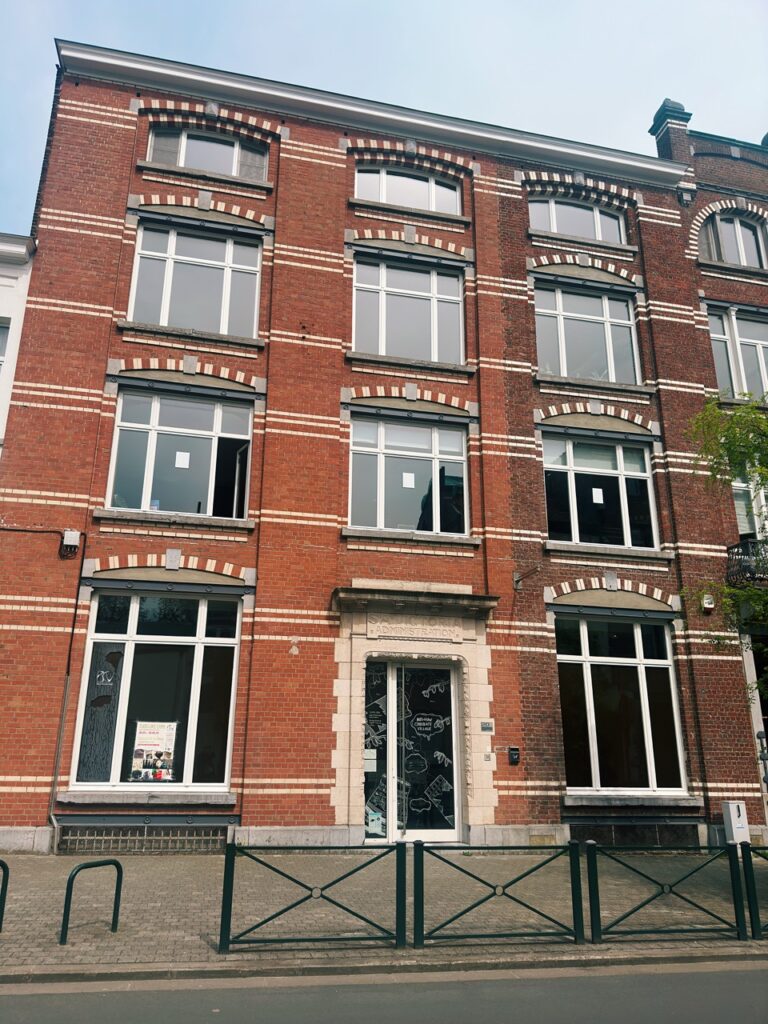
The Belgian Chocolate Village sits just outside the main tourist center in Koekelberg, in a former chocolate and biscuit factory. Belgian Chocolate Village is located in Koekelberg, northwest of Brussels city center, at Rue De Neck 20. It is not in the part of Brussels where you will probably spend most of your first sightseeing day, but public transport makes it easy to get there. The museum is close to Simonis and Elisabeth, which are major metro and tram connections in this part of the city. The location actually makes sense once you learn a little about the area. Koekelberg has a long connection with chocolate production, and the museum occupies part of the former Victoria biscuit and chocolate factory. Instead of placing a chocolate museum in the tourist center simply because visitors are already there, you visit it in an area genuinely connected to Brussels’ chocolate industry.
How to Get to Belgian Chocolate Village
Getting there by public transport is easy. We came by metro, using lines 2 or 6 to Simonis/Elisabeth, and from there it is only around a 3-minute walk to the museum. Once you leave the station, head towards Rue De Neck, and you will reach Belgian Chocolate Village very quickly. Simonis is also served by trams 9 and 19 and buses 13, 49, and 87, so you have a few options depending on where you are coming from in Brussels.
Opening Hours & Admission Tickets
Opening Hours
Belgian Chocolate Village is open Wednesday through Sunday and closed on Mondays and Tuesdays.
- Wednesday to Friday: 09:00 to 18:00
- Weekends, school holidays & public holidays: 10:00 to 18:00
- Last Admission: 17:30
- Closed: 25 December and 1 January
Since the museum takes roughly an hour to explore, you do not necessarily need to dedicate half a day to it. Still, avoid arriving just before last admission if you want to watch the chocolatier, look around properly, and, naturally, take your time with the chocolate.
Admission Tickets
You can buy tickets for Belgian Chocolate Village and choose between a standard museum visit or options that include additional tasting experiences.
- Adults: €8
- Under 18: €7
- Children: €2
- Plushies: Free
- Brussels Card: Free entry
Chocolate workshops are also available for an additional fee, including sessions where visitors can make mendiants or pralines. Prices and packages can change, so as always, we recommend checking the official Belgian Chocolate Village website before your visit.
Facilities & Amenities
- Toilets: Available for museum visitors.
- Audioguides: Available in 7 languages, with a children’s version in French, Dutch and English.
- Interactive Displays: Touchscreens and multimedia stations are part of the museum route.
- Chocolate Tasting: Included with selected ticket options.
- Chocolate Shop: Buy artisan Belgian chocolate before you leave.
- Workshops: You can book chocolate-making workshops separately.
- Parking: Q-Park at Place Simonis 24 is the nearest recommended car park.
Our Chocolate Waddle Begins
We arrived shortly after noon and weren’t sure whether there would be a chocolate workshop, a chocolatier demonstration, or anything else happening then. We just decided to wing it. The museum was included with our Brussels Card, so we waddled in, showed the card at reception, and were let straight inside. The staff first told us to start on the lower floor and then work our way up to the first floor, which made the visit easy to follow.
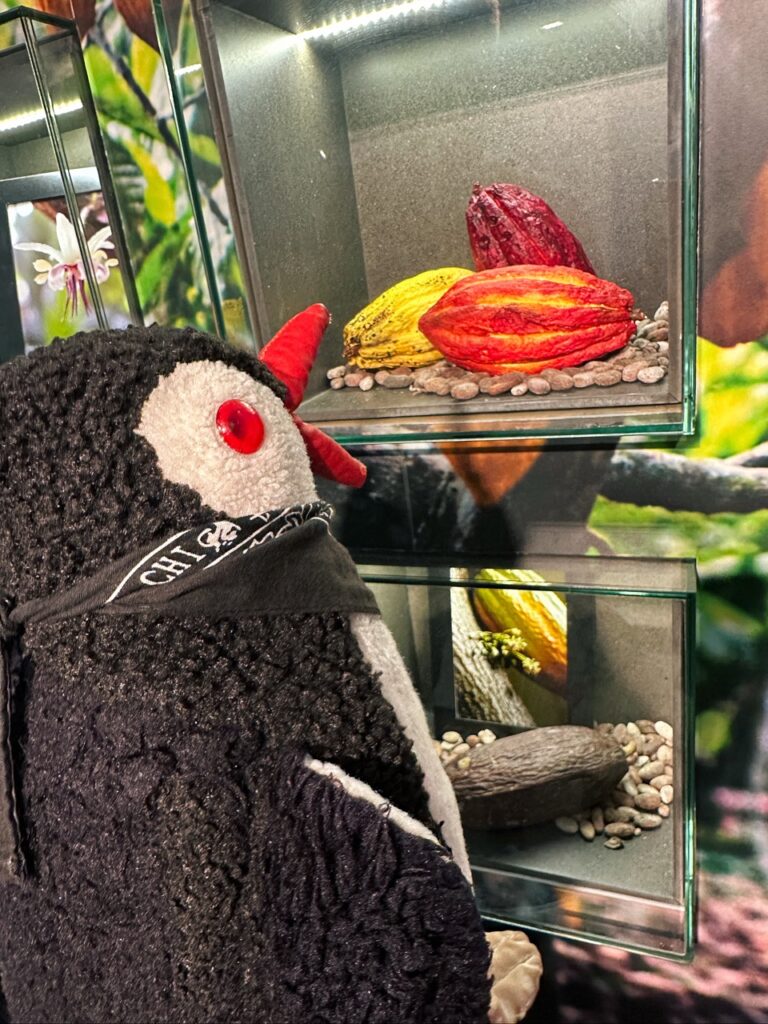
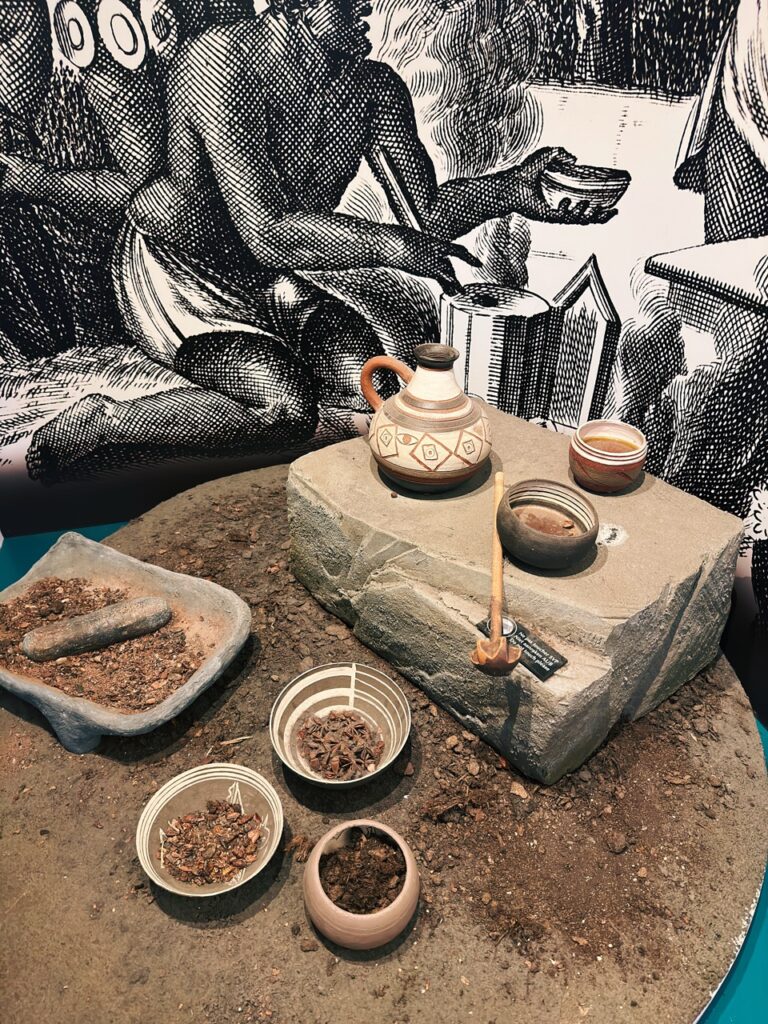
Once inside, you follow the story of chocolate more or less from the beginning. We liked that approach because you don’t start with a finished praline sitting beautifully in a box. You start much earlier, with the cacao tree, pods and beans that make chocolate possible in the first place. The museum gradually takes you through where cacao grows, how the beans are harvested and processed, how chocolate reached Europe, and how production eventually developed into the bars and pralines we recognize today. It gives you enough information to learn something without feeling like you accidentally enrolled in chocolate university. Although, to be fair, we would probably attend that university.
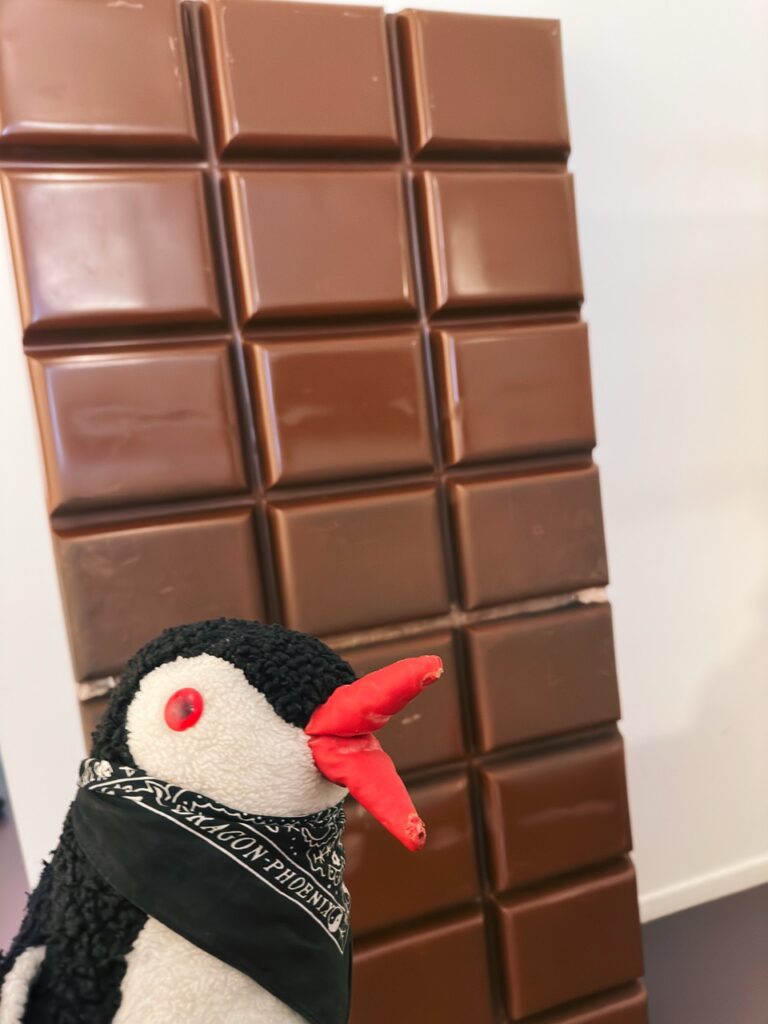
As we worked our way through the museum, we also came across some giant chocolate sculptures, and of course we had to stop. There was a chocolate Atomium, a cathedral, and other Brussels-inspired creations, all made from chocolate. It was one of those fun little sections where you start looking at the details and then immediately wonder how long something like that takes to make. We were also glad nobody asked us to guard them, because a penguin around that much chocolate probably isn’t the safest idea.


We somehow also managed to wander straight into a chocolate-making workshop without booking anything in advance. The chocolatier had just started, there was space, and suddenly we were part of it. He explained how the chocolate is prepared, how pralines are made, and what happens at each step. We even got to help make our own pralines, which made the whole thing much more fun than simply watching from the side. It was one of those lucky travel moments where you do not plan anything, show up at the right time, and somehow end up covered in chocolate and very happy about it.


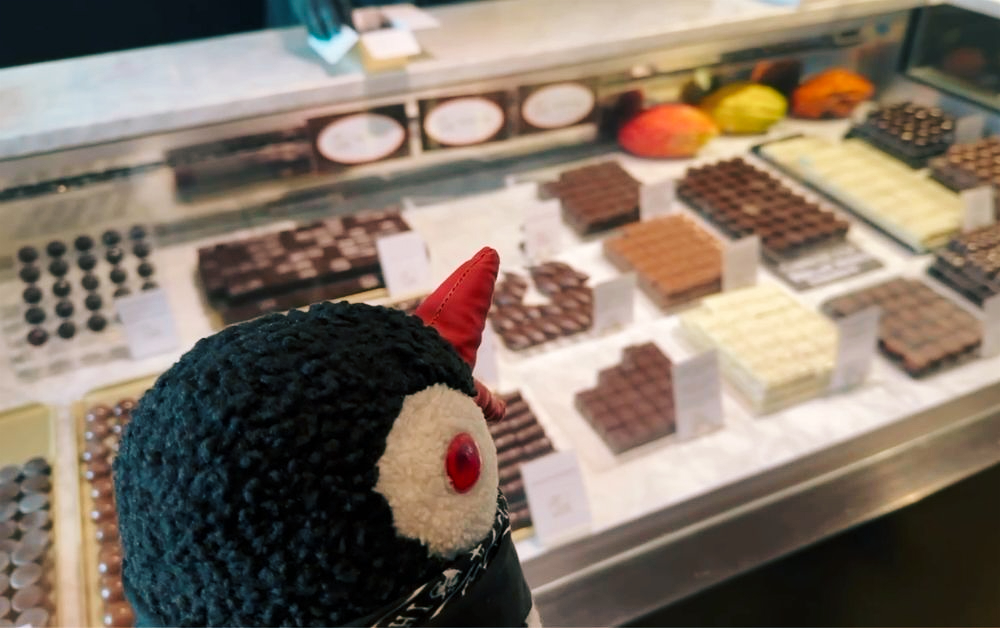
The chocolates the chocolatier makes during these demonstrations are not just for show. They actually end up being sold in the shop at the end of the museum, which made the whole process feel even more real. Of course, we did not leave empty-handed. We bought a few chocolates to eat ourselves and picked up some extra ones as souvenirs to take home. It felt like a pretty perfect ending after seeing how everything was made just a few rooms earlier.
What we liked about the concept is that Belgian Chocolate Village doesn’t make chocolate tasting the entire attraction. You actually get the story first. The museum covers the cacao plant, global history, production, Belgian chocolate makers, advertising, techniques, and the evolution of chocolate culture before bringing it all together with a chocolatier demonstration and tasting.
It makes eating that little piece of chocolate at the end slightly more interesting because you have just spent an hour learning how much work went into creating it. Although we probably would have eaten it either way.
Our visit to Belgian Chocolate Village was short, but informative. We learned a lot about where chocolate comes from, why Belgium became so connected with it, and how pralines are actually made, all without spending half a day inside. Brussels has several chocolate museums and chocolate experiences to choose from, but we picked this one partly because it was included with our Brussels Card, and it turned out to be a great little stop. One thing to keep in mind: the museum now lists its hands-on workshops separately, so if you want to make chocolate rather than watch the artisan demonstration, book ahead. Current prices are €20 per person for the adult mendiant workshop and €35 per person for the adult and teen praline workshop, with museum admission charged separately. Always double-check the latest workshop options, prices and booking requirements on the official website before you waddle over.
How Much Time Do You Need
We would recommend around one hour for the standard museum route. That’s enough time to go through the exhibits, visit the greenhouse, watch the chocolatier, and have your tasting without rushing. Allow around 1 to 1.5 hours for a normal visit. If you also want to sit down for chocolate afterward, browse the shop, or join a workshop, you can obviously stay much longer. Compared with some of Brussels’ enormous museums, this one is very manageable and easy to fit between other sightseeing stops.
Buy Us a Ko-fi

One useful extra stop when visiting Belgian Chocolate Village is the Godiva factory and outlet shop, located just around the corner in Koekelberg. We visited it too and picked up a few Godiva chocolate bars and pralines, including some at outlet prices, which made it a nice little chocolate detour after the museum. However, there is an important update: although Godiva’s official website still lists the outlet at Avenue de Jette 4, recent local reports from 2026 say this outlet has closed. So we loved combining the two when we visited, but definitely check the current situation before adding it to your itinerary.
Hotel search from Trip.comShows Trip.com’s own box, which can set Trip.com cookies.
If you came to Brussels planning to eat Belgian chocolate anyway, learning a little about it first is not a bad idea. Belgian Chocolate Village is not an enormous museum, and you do not need half a day to explore it. Instead, it is a compact experience that explains why chocolate became so connected with Belgium, shows you where cocoa actually comes from, lets you watch a chocolatier at work, and then rewards all that learning with the part everyone was waiting for: tasting it.
For us, that is exactly what makes it work. You leave knowing a little more about something you have probably already been eating throughout your Brussels trip. And really, if a museum teaches us something and then gives us chocolate, we are very easy penguins to please.
Travel Bold. Eat Well. Waddle Wild.
Save This Pin for Later!
This post contains affiliate links. If you click and buy, I might earn a tiny commission, enough to help a penguin keep up its globe-trotting lifestyle. No extra cost to you, just more fish for me. Thank you for supporting the adventure!