What to See Around Atomium Park in Brussels
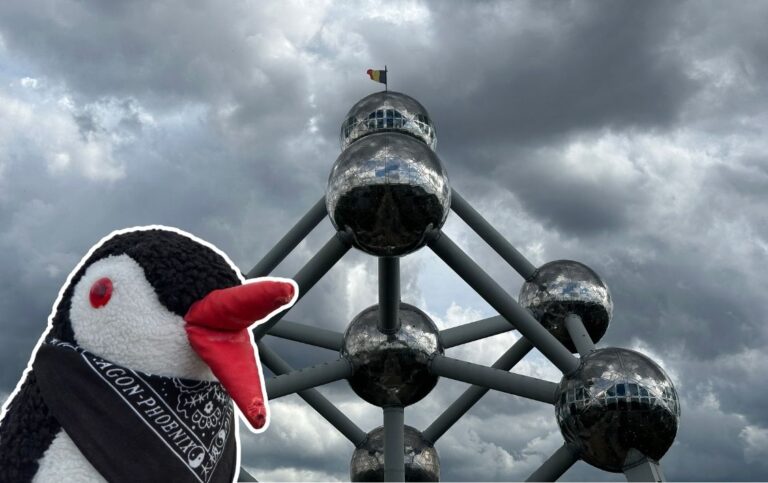
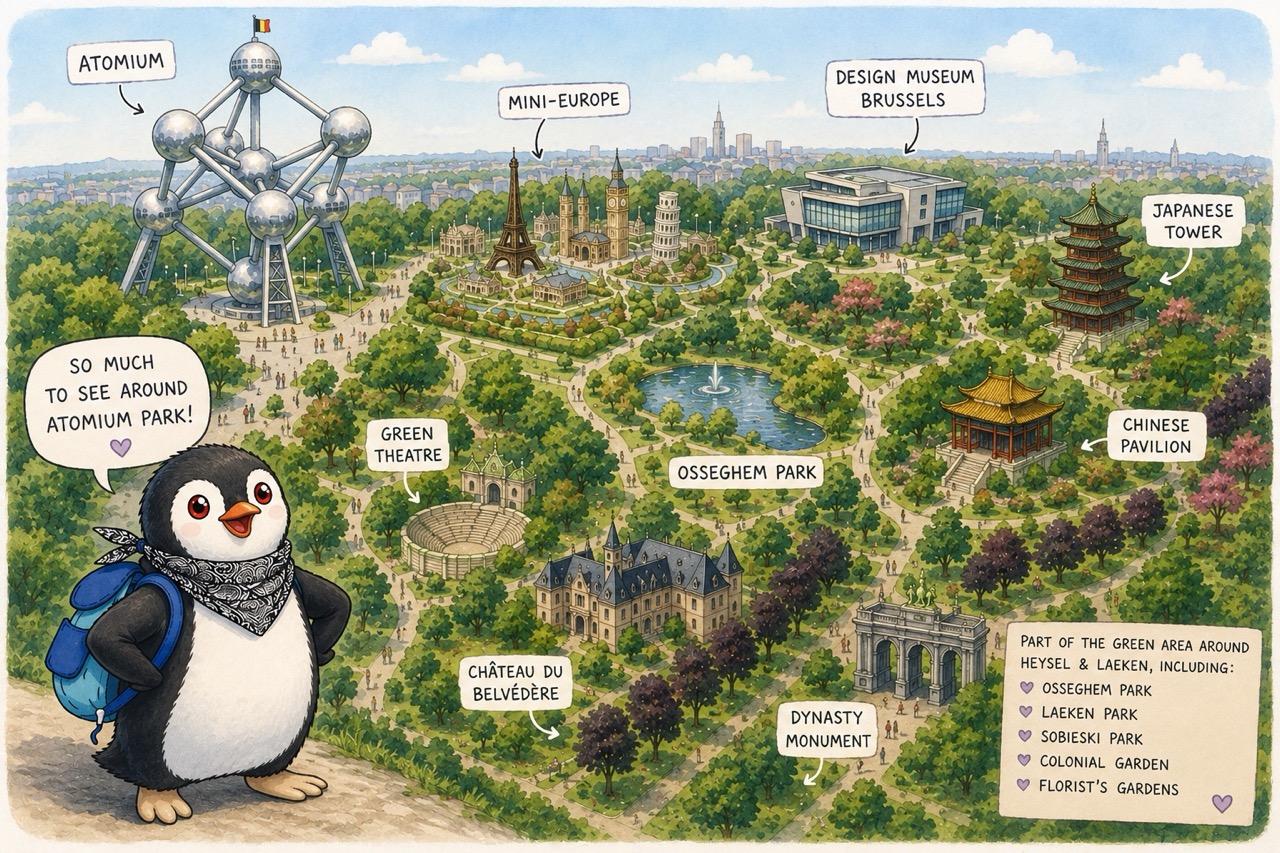
We first visited the Atomium itself, but since we were already there, we decided to spend a little more time exploring all that green space we had been looking down on from the Atomium. We call it Atomium Park in this guide for simplicity, although that is not really one official park. The Atomium sits right beside Osseghem Park, which connects to Laeken Park and a wider network of green spaces, including Sobieski Park, the Colonial Garden, and the Florist’s Gardens. Together, they create a large green area around the Heysel and Laeken neighborhoods that you can easily explore on foot. So, rather than heading straight back into central Brussels, we decided to waddle through it and see where the paths took us. Here is our short guide to what you can see along the way.
Atomium Park Quick Facts
- Location: Heysel, Laeken, Brussels
- Area: Part of the 68-hectare Heysel Plateau
- Admission: Free
- Opening Hours: No fixed park hours
- Famous For: The Atomium and Expo 58
- Nearby: Mini-Europe & Design Museum Brussels
- Best For: Walking, relaxing & photos
- Time Needed: Around 30–60 minutes
The Park Around the Atomium: From Expo 1935 to Expo 58
The green space you see beside the Atomium is Osseghem Park, part of the wider Heysel area in northern Brussels. The park is actually older than the Atomium. Belgian landscape architect Jules Buyssens created it for the 1935 Brussels World’s Fair in an English landscape style, with wooded areas, wide lawns, winding paths, a pond, and an open-air theatre. The wider Heysel site had previously been assembled under King Leopold II through the acquisition of land before being transformed for major exhibitions.
The Atomium arrived more than two decades later when the Heysel Plateau hosted another World’s Fair, Expo 58. Built as the fair’s showpiece, the Atomium now stands right beside Osseghem Park, making the two easy to combine in one visit. The park also connects to the much larger Laeken Park and other green spaces in northern Brussels, creating a surprisingly green area around one of the city’s most famous landmarks.

Our Waddle In The Park
Once we finished exploring the Atomium, we didn’t really want to head straight back the way we came. Instead, we decided to waddle through the park. Partly because we wanted to see what was there, but also because we knew the Japanese Tower was nearby, and we could reach it on foot through the wider park area.
The park actually surprised us in a very positive way. We started getting great views of the Atomium from different angles, but what surprised us most was how extensive and green the area felt. Huge lawns stretched between the paths, with plenty of trees and people simply sitting or lying on the grass and enjoying the day. At times, it even gave us a little Central Park feeling, just on a much smaller Brussels scale. It was quiet, relaxed, and felt completely different from the busy area directly around the Atomium.


The Neptune Fountain
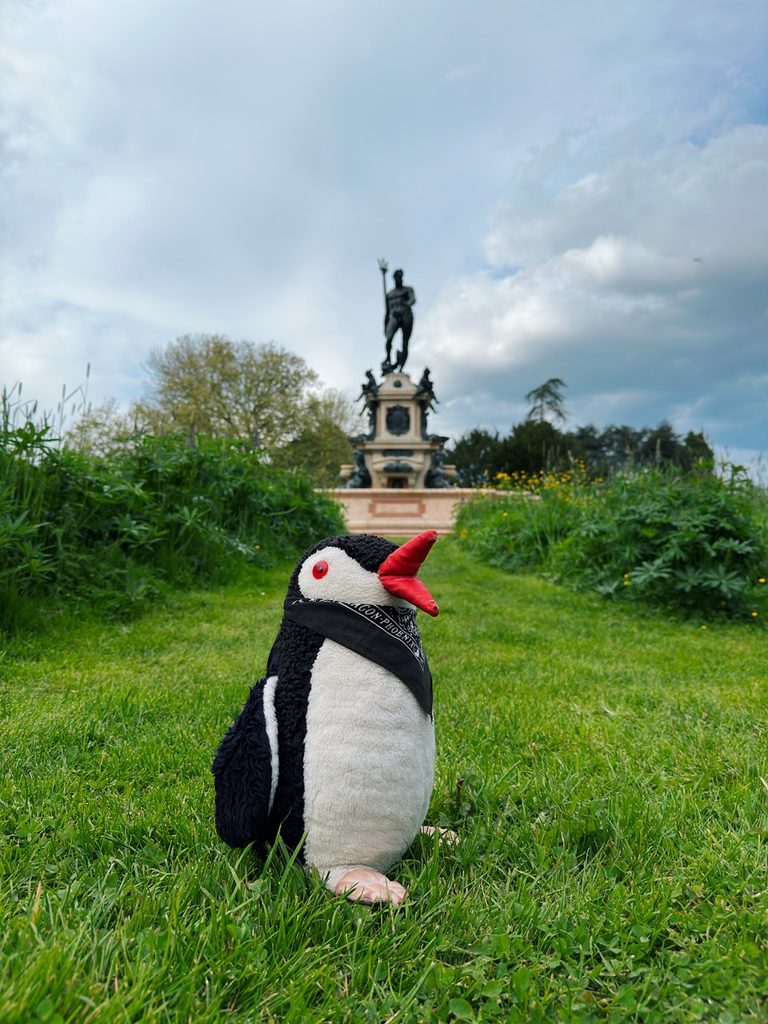
As we waddled towards the Japanese Tower, we also came across the Neptune Fountain, with Neptune standing right in the middle. We probably would not have thought much about it, but it made us realize just how many Neptune fountains we have seen on our travels. Apparently, cities around the world really like Neptune. 😂 At this point, we might have to start our own little collection and see how many Neptune fountains we can find on our future waddles.

A Little Piece of Asia in Laeken
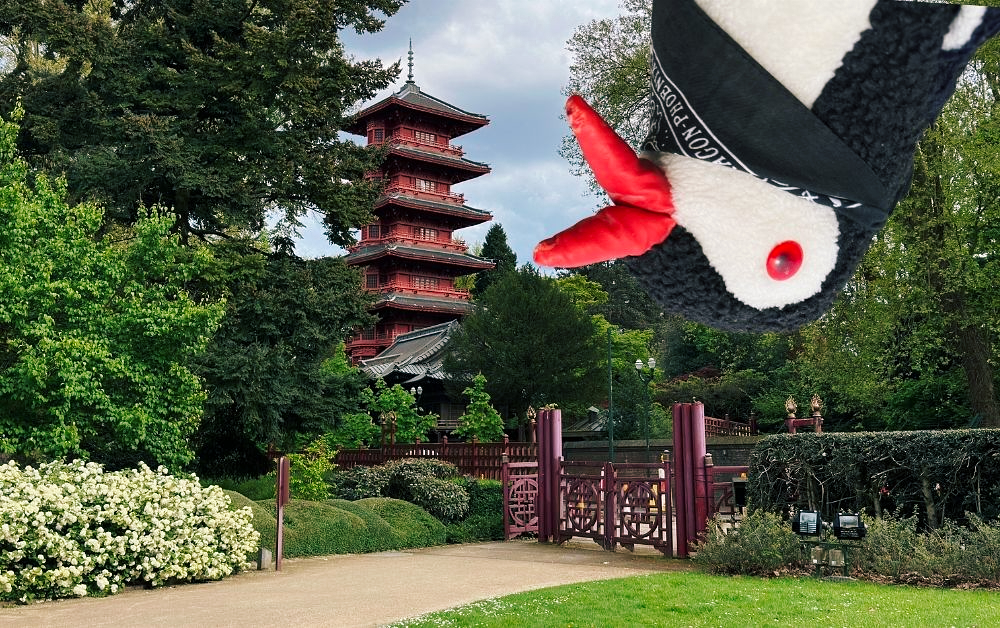
Then, finally, we reached the Japanese Tower, a Chinese Pavilion, and other Asian-inspired details that felt a little unexpected in the middle of Brussels. There is actually a story behind why they are here.
The buildings date back to King Leopold II. During the 1900 Paris Universal Exhibition, Leopold II met French architect Alexandre Marcel, who later designed a group of buildings for Laeken inspired by East Asian architecture. The idea was to create a place representing connections between Europe and the Far East. Construction took place during the first decade of the 1900s, so these buildings are actually much older than the Atomium.
The one that immediately caught our attention was the Japanese Tower, built between 1901 and 1904. Some of its decorative elements were even imported from Japan. Nearby stands the Chinese Pavilion, which opened in 1910. Together with the Museum of Japanese Art, they later became known as the Museums of the Far East. And it transported us to Japan for a moment.


Unfortunately, you cannot currently explore the buildings inside. The Japanese Tower, Chinese Pavilion, and Museum of Japanese Art are closed for safety reasons. At the same time, restoration is planned or underway, and their collections have been moved to the Art & History Museum. You can still see the buildings from outside, though, which was exactly what we came here for.
We actually loved stumbling across this part of our walk. One minute we were looking back at the Atomium, and a little later we were standing in front of a Japanese tower in the middle of Brussels. It made the walk through the park feel much more interesting than simply taking the quickest route back into the city.


Other Things to See Around Atomium Park
The Japanese Tower and Chinese Pavilion aren’t the only things worth seeing. Osseghem Park connects with Laeken Park and several other green spaces, so you can easily turn a quick walk after the Atomium into a longer waddle.
- The Atomium. Brussels’ famous giant atom and the main landmark of the area. If you plan to go inside, read our separate Atomium guide.
- Mini-Europe. A miniature park right beside the Atomium featuring models of famous landmarks from across Europe. It requires a separate ticket.
- Design Museum Brussels. A design museum close to the Atomium, focused on 20th and 21st-century design. A good extra stop if you are interested in design and architecture
- Green Theatre. An open-air amphitheater hidden inside Osseghem Park. It can hold around 3,000 people and is still used for concerts and festivals.
- Osseghem Park Pond. A small pond surrounded by walking paths and greenery, perfect for a short detour through the park.
- Adolphe Max Memorial. From here, you can follow an avenue lined with distinctive purple beech trees.
- Dynasty Monument. One of the main landmarks in Laeken Park, dedicated to King Leopold I. Its nine arches represent Belgium’s nine provinces at the time it was built.
- American Theatre. A remaining piece of Expo 58 located in Laeken Park. The surrounding lawns also offer good views back toward the Atomium.
- Saint Anne Chapel & Fountain. Another small historic stop you can come across while exploring Laeken Park.
- Florist’s Gardens. A quieter garden connected to the wider network of Laeken’s parks, with viewpoints over Brussels.
- Sobieski Park & Colonial Garden. Two more connected green spaces if you want to extend your walk beyond the main Atomium area.
- Château du Belvédère. A royal residence within the wider Laeken estate, built in the 18th century. Today, it is best known as the private residence of King Albert II and Queen Paola, so it is not open to the public, but you may spot it while exploring the area.
- Royal Palace of Laeken (Kasteel van Laken). The official residence of the Belgian royal family, built in the late 18th century. The palace itself is not normally open to visitors, but the surrounding Royal Greenhouses of Laeken are open to the public for a short period each spring.
- Stuyvenberg Castle. A 19th-century royal residence within the Royal Estate of Laeken. Several members of Belgium’s royal family have lived there over the years, including Queen Elisabeth and Queen Fabiola. The castle and its grounds are not normally open to the public, but they form part of the wider royal area around Laeken.
You do not need to hunt down every single sight. For us, part of the fun was picking a direction, waddling through the greenery, and seeing what we came across.
You could spend most of the day exploring the parks around the Atomium if you wanted to, especially if you followed the paths into Laeken and stopped at the different sights along the way. We kept our visit much shorter, enjoyed a waddle through the park after the Atomium, saw a few things along the way, and eventually hopped on a bus back to Brussels city center. Even without seeing everything, we were glad we took the longer way back.


Waddling through the park also gave us something sightseeing alone doesn’t always show you: a glimpse into how people in Brussels actually spend their free time. We passed people lying on the grass, meeting friends, walking their dogs, jogging, or simply sitting around doing very little. There was no rush and no need to be anywhere. As travelers, we enjoy these moments because we start observing the city rather than just visiting its landmarks. You see where people go to switch off, how they use their public spaces, and what an ordinary afternoon can look like.
Practical Tips for Visiting Atomium Park
- Entrance: The outdoor areas of Osseghem and Laeken parks are free to explore. Nearby attractions such as the Atomium and Mini-Europe require tickets.
- Opening Hours: The parks do not have the same fixed visiting hours as the attractions, but some areas within the wider Royal Estate have restricted access.
- Best Time to Visit: Visit during daylight hours, especially if you want to continue walking towards the Japanese Tower and other sights around Laeken.
- Getting There: Heysel/Heizel metro station is the easiest option for the Atomium. From there, you can continue through the parks on foot and use buses or trams to return to the city from another point.
- Food & Drinks: Most food options are concentrated around the Atomium and Heysel attractions, so bring water or a snack if you plan a longer walk.
- Toilets: Public toilets are limited inside the parks. It is easier to use facilities at the Atomium or other nearby attractions before starting a longer walk.
- Accessibility: Main paths and lawns are generally easy to explore, but expect some slopes, uneven paths, and longer distances once you continue deeper into Laeken.
- What to Bring: Comfortable shoes are useful because the area is much bigger than it first appears. Bring water and something for Brussels’ very changeable weather.
- Plan Your Route: If you are not planning to walk back to the Atomium, check bus and tram stops near the end of your route before setting off.
Hotel search from Trip.comShows Trip.com’s own box, which can set Trip.com cookies.Search hotels on Trip.comTrip.com’s box can’t load on this device (an ad blocker often stops it). This opens Trip.com’s own hotel search.Open Trip.com
How Much Time Do You Need
How much time you need really depends on how much of the area you want to explore. If you only want to waddle around the park after visiting the Atomium, see a few sights and enjoy the greenery, we would allow around one to two hours. If you want to walk farther through Laeken, see the Japanese Tower and Chinese Pavilion, or stop at more of the landmarks along the way, you can easily spend several hours here. And if you combine the parks with attractions such as Mini-Europe, the Design Museum Brussels or the Atomium itself, you could easily turn the whole area into a full-day visit.
Buy Us a Ko-fi

If you are already visiting the Atomium, we recommend spending a little extra time wandering through the parks around it. It is a nice way to stretch your legs, see the Atomium from a few different angles, and get away from the main tourist area. More importantly, you get a glimpse of how people in Brussels spend their free time: sitting on the grass, walking, meeting friends, and simply enjoying the park. You do not need a big plan. Just pick a path, waddle for a while, and see where it takes you.
Travel Bold. Eat Well. Waddle Wild.

This post contains affiliate links. If you click and buy, I might earn a tiny commission, enough to help a penguin keep up its globe-trotting lifestyle. No extra cost to you, just more fish for me. Thank you for supporting the adventure!