Inside Autoworld Brussels: Is It Worth It
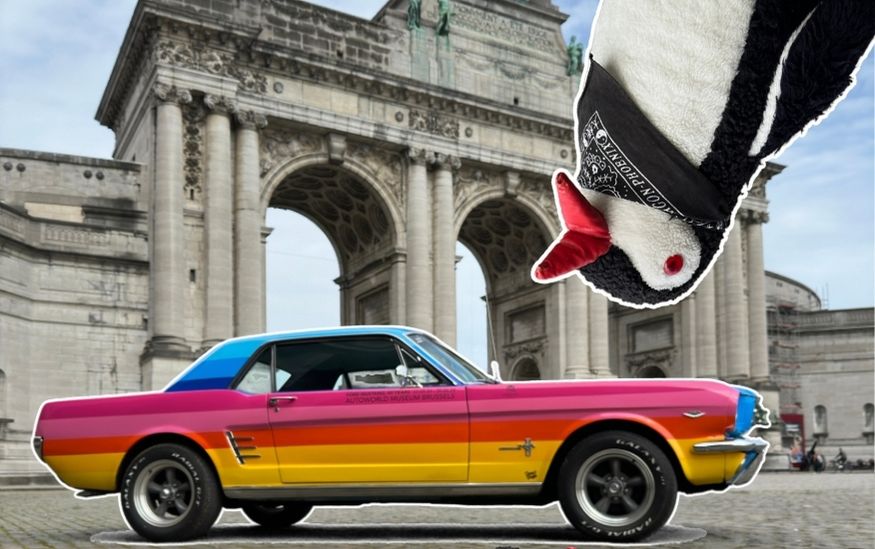
Unlike the Royal Military Museum, which was at least somewhat on our radar before our trip, Autoworld was not on our Brussels bucket list at all. We just waddled outside the Royal Military Museum when a colorful Mustang parked outside caught our attention. Naturally, we waddled closer. One thing led to another and, well, we ended up waddling inside. And once again, Brussels surprised us. We are not huge car enthusiasts. We appreciate a nice car when we see one, but we are definitely not the kind of people who can identify an engine by the sound it makes. Still, Autoworld was so much bigger and more varied than we expected that we had a great time. Vintage cars, early automobiles, racing cars, Belgian brands, royal vehicles and modern supercars all sit under one huge roof. Even if cars are not normally your thing, there is a good chance something here will catch your attention.
Autoworld Brussels Quick Facts
- Location: Parc du Cinquantenaire 11, Brussels
- Opened: 1986
- Size: Around 16,000 m²
- Collection: More than 300 vehicles
- Opening Hours: Monday to Friday 10:00 to 17:00, weekends 10:00 to 18:00
- Adult Ticket: €18; free with Brussels Card
- Best For: Vintage cars, motorsport, automotive history and design
- Time Needed: Around 1.5 to 3 hours
Autoworld opened on 26 September 1986 and today occupies one of the historic buildings of the Cinquantenaire complex. Its permanent collection takes you through more than a century of automotive history.
Getting To Autoworld Brussels
Autoworld is inside Parc du Cinquantenaire, directly across the complex from the Royal Museum of the Armed Forces and Military History. If you are already exploring this part of Brussels, the museums are incredibly easy to combine.
The easiest metro station is Merode, served by metro lines 1 and 5. From there, waddle through the park towards the Cinquantenaire Arch, and you will soon reach the museum. You can also reach the museum by tram or bus.
We actually think arriving through the park makes the experience better. You get the huge Cinquantenaire buildings in front of you, people relaxing on the lawns, and then suddenly an entire automobile museum waiting inside one of those grand halls.

Opening Hours & Admission Tickets
Opening Hours
Autoworld is open seven days a week, so it’s easy to fit into your Brussels itinerary. During the week, you can visit from 10:00 to 17:00, while on Saturdays and Sundays the museum stays open an hour longer, until 18:00. We still recommend arriving with enough time to explore, as the museum is much bigger than it looks. It’s easy to spend a couple of hours inside.
Admission Tickets
You can buy tickets at the museum when you arrive or book online in advance. Buying online at least one day before your visit currently gives you a small discount.
- Adults (18+): €18
- Children: Reduced rates depending on age, with children under 4 entering free
- Plushies: free entry
- Free Entry: Included with the Museum Pass and Brussels Card
We visited Autoworld because it was included in our Brussels Card. Since we are not particularly big car fans, we probably would not have paid the full admission price to visit the museum. But since it was already included in our pass, we thought, why not? And as it turned out, we were very glad we waddled inside.
As always, check the official Autoworld website before your visit for the latest ticket prices, discounts and opening hours.


Facilities & Amenities
- Toilets. Available inside the museum.
- Lockers. Available for storing bags and personal belongings.
- Accessibility. The museum is accessible for visitors with reduced mobility, with a lift between floors.
- Museum Shop. Model cars, books, and other automotive souvenirs.
- Food & Drinks. There is a café inside if you want to take a break.
- Photography. Photography is allowed, which is good news because there are plenty of cars worth snapping.
- Seating. Seating and places to take a break are available throughout the museum.
- Wi-Fi. Free Wi-Fi is available inside.
A Little History of Autoworld
The building is part of the Cinquantenaire complex, created for the celebrations surrounding the 50th anniversary of Belgian independence. The cars are not newcomers here. Automobile and motorcycle shows were already being held in the Cinquantenaire halls in the early 20th century.
Autoworld itself opened in 1986, and its creation is linked to King Albert II, Louis Olivier, and Herman De Croo. A major part of the original display came from the collection of Ghislain Mahy and his family, who built up a collection of almost 1,000 vehicles. Around 200 vehicles from the Mahy Collection went on display when Autoworld opened.
Since then, the museum has continued to evolve, adding dedicated areas for motorsport, Belgian automotive history, design, royal cars and other themes. Today, more than 300 vehicles tell the story of the automobile from its earliest days to modern supercars.
Our Waddle Through Autoworld
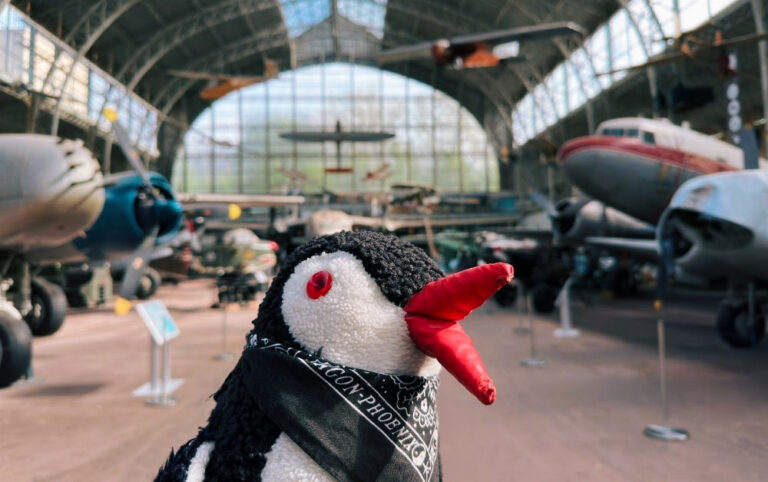
The colorful Mustang outside had already done its job and pulled us toward the entrance, but we still didn’t expect the museum itself to be this big. When you waddle inside, it’s the space that wows you. The museum sits inside a huge historic hall with a steel-and-glass roof stretching above rows and rows of cars. You look ahead, and there are cars. You look upstairs, and there are more cars. Then you realize there are entire themed areas you have not even reached yet.
What we liked instantly was that it did not feel like a warehouse where someone had parked hundreds of old cars. A clear journey through automotive history, and the changing displays make you want to keep walking to see what comes next.


The permanent collection includes more than 300 vehicles, from early automobiles and historic Belgian brands to royal cars, motorcycles, racing cars, and modern supercars. The collection is arranged partly chronologically and partly through dedicated themed zones.
That variety was probably our biggest surprise. You do not need to spend two hours looking at similar vintage cars. One minute you are looking at something that barely resembles the cars we drive today, and a little later you are standing beside a Ferrari or staring at a racing car
From the First Cars to Vintage Classics
One of the best parts of Autoworld is simply seeing how dramatically cars have changed. The museum takes you back to the early days of motoring, when automobiles were still something new and experimental. Some look more like horse-drawn carriages with engines attached than modern cars. From there, you move through different decades and watch cars become faster, more comfortable and much more familiar.
The Salon 1910 section is particularly interesting. Around 30 original cars are displayed in a 1,000 m² space designed to recreate the atmosphere of an early 20th-century motor show. It fits the building perfectly, especially because actual automobile shows were once held here.


Belgian Cars We Had Never Heard Of
We also learned that Belgium has a much richer automotive history than we realized. The Belgian Zone introduces manufacturers such as Minerva, FN, Impéria, Excelsior and Gillet, alongside the wider story of automobile production and assembly in Belgium. International manufacturers, including Volkswagen, Audi, Volvo and Ford, also produced or assembled cars in the country.
Because this is Belgium, there are some royal cars too. The Royal Zone includes vehicles connected with the Belgian Royal Family, including a Minerva once owned by King Albert I and a Cadillac Series 62 State Limousine used for royal weddings. You will even find historic ceremonial carriages among the displays.
Even if royal history is not your thing, these cars are worth stopping for simply because they are such a different chapter of automotive history.


Sport & Competition
Then we reached the Sport & Competition Zone, and things became a little faster. More than 20 racing cars are displayed here, covering Formula 1, GT racing, rallying and other forms of motorsport. Instead of simply lining the cars up, the museum creates more of a racing atmosphere with a starting grid, historic paddocks, photographs, films and interactive screens. This was one of our favorite sections. Even if you don’t follow motorsport, racing cars are fun to see up close. They look completely different when you can stand beside them and see how low, compact and purpose-built some of them really are.
The collection also changes, as some privately owned cars continue to participate in rallies and historic races. That means this part of Autoworld may look slightly different depending on when you visit.


Autoworld is not only about vehicles from a century ago. It also has space for modern classics, youngtimers, and supercars. The museum currently has a Ferrari Premium Selection featuring models including the Ferrari F50, Testarossa, Enzo, 599 GTO and 330 GTC. This creates a fun contrast as you explore. You can spend part of your visit looking at the earliest attempts at building automobiles and then suddenly find yourself standing in front of cars that probably appeared on bedroom posters. We may not be serious car people, but even we have limits. Put a Ferrari in front of us, and yes, we are going to stop and look.
Another part we enjoyed was seeing how car design changes with each generation. The Design Zone focuses particularly on the 1960s and 1970s, moving from the smoother, chrome-heavy designs of the 1960s to the sharper, more futuristic shapes that became popular in the 1970s. Belgian automotive designers are also part of the story. Even without knowing much about engines, you can appreciate this part simply from a design perspective. Cars are such an everyday object that it is easy to forget how strongly their shapes reflect the period in which they were made.

There Are Motorcycles Too
Despite the name Autoworld, four wheels do not get all the attention. The museum also has a motorcycle collection, including a recreated Belle Époque workshop connected with Belgian collector Marcel Thiry. Other Belgian and international motorcycles appear throughout the museum as well.
Temporary Exhibitions Make Every Visit Different
One thing worth checking before you visit is what temporary exhibition is running; Autoworld stages two major temporary exhibitions each year, along with several smaller pop-up exhibitions. Previous themes have focused on particular manufacturers, famous models, design movements, and racing history.
One of those temporary exhibitions during our visit was dedicated to the Ford Mustang, which made the timing pretty perfect for us because the Mustang is one of our favorite cars. When we arrived, they were still rolling some Mustangs into place for the exhibition, so we were lucky enough to catch a few before everything was fully set up.


With more than 300 vehicles, the museum could feel overwhelming or repetitive. Instead, the collection is broken into different periods and themes, with recreated spaces, old photographs, videos, racing displays and historic settings helping to give the cars some context. And then there is the building itself. The huge steel-and-glass hall gives you views across the collection from different levels, and seeing all those cars spread beneath the roof is part of the experience.
How Much Time Do You Need at Autoworld
If you want to see the main highlights, we recommend 1.5 hours. That gives you enough time to waddle through the main collection, stop at the cars that interest you, and explore the racing section. For a more relaxed visit, plan around 2 to 3 hours, especially if you want to read more of the information, explore the temporary exhibition, and take plenty of photos. Serious car enthusiasts could easily stay longer. We would not rush it too much. The museum is bigger than it looks from outside, and there is always another section or another car pulling you over for a closer look.
What Else Can You See Nearby
One of the best things about Autoworld is its location. You are already inside Parc du Cinquantenaire, with several other attractions just a short waddle away.
- Royal Museum of the Armed Forces and Military History. Directly across the complex and another surprisingly huge museum.
- Art & History Museum. Collections covering archaeology, decorative arts and civilizations from around the world.
- Cinquantenaire Arch. The landmark sitting right between the museums.
- Parc du Cinquantenaire: Spend some time walking through the park or sit on the grass between museum visits.
- House of European History. A free museum in the nearby European Quarter.
- European Parliament. Also within walking distance if you want to continue towards the European Quarter.
There is also a Museums in the Park combi ticket for €30, which currently includes Autoworld, the Royal Military Museum and the Art & History Museum. If you genuinely want to visit all three, it is worth checking.
Buy Us a Ko-fi

Autoworld was never really part of the plan, but that is exactly what made it such a fun stop. We waddled in because the Mustangs outside caught our attention and somehow ended up spending hours looking at vintage cars, royal rides, racing legends, and a few dream cars we would happily take home. We are not car experts, but we did not need to be. The museum was easy to enjoy, full of little surprises and a great reminder that sometimes the best travel moments start with a simple, “why not?” So if you find yourself in Parc du Cinquantenaire with a little extra time, follow the shiny cars and waddle inside.
Travel Bold. Eat Well. Waddle Wild.
Save This Pin for Later!

This post contains affiliate links. If you click and buy, I might earn a tiny commission, enough to help a penguin keep up its globe-trotting lifestyle. No extra cost to you, just more fish for me. Thank you for supporting the adventure!