Planes, Tanks & History: Visiting Brussels’ Royal Military Museum
The Royal Museum of the Armed Forces and Military History was not really on our Brussels bucket list. In fact, we had not planned to visit it at all. But we ended up in the area, had some extra time, and thought, well, why not? And we are very glad we walked inside.
The museum surprised us, especially with the way everything is displayed. You are not simply walking past objects in glass cases. Huge halls filled with aircraft, tanks, uniforms, weapons, and military equipment make you feel like you have stepped straight into different periods of history. Even if military museums are not usually at the top of your travel list, this one might surprise you too. Here is what it is like inside and what you should know before visiting.
- Royal Military Museum Brussels Quick Facts
- How to Get to the Royal Military Museum
- Opening Hours & Admission Tickets
- Facilities & Amenities
- A Little History of the Royal Military Museum
- Our Experience Exploring the Royal Military Museum
- How Much Time Do You Need
- Who Will Enjoy This Museum
- What Else Can You See Nearby
Royal Military Museum Brussels Quick Facts
- Location: Parc du Cinquantenaire, Brussels
- Opening Hours: Tuesday–Sunday, 9:00–17:00; closed Mondays.
- Entrance: €11 adults, with reduced and free-entry categories available; free with Brussels Card
- Collection: Covers around 12 centuries of military history
- Don’t Miss: The huge Aviation Hall, home to around 130 aircraft
- Fun Fact: The Aviation Hall itself is 170 meters long and 40 meters high.
- Extra: You can access the Cinquantenaire Arcades for panoramic views over Brussels for an additional €5.
How to Get to the Royal Military Museum
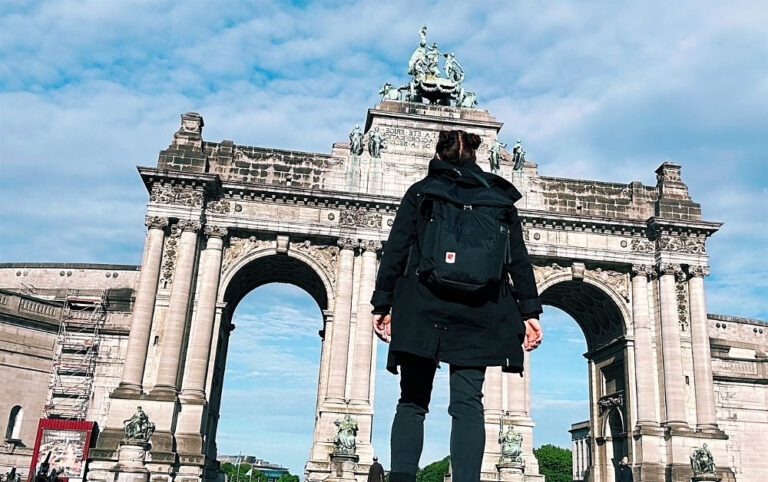
The Royal Museum of the Armed Forces and Military History is at Parc du Cinquantenaire 3, right inside Cinquantenaire Park. We actually recommend making the journey part of the visit. Get off at Merode, then waddle through Cinquantenaire Park towards the huge triumphal arch. The museum is in the complex around the arch, so it’s hard to miss once you get there.
For public transport, the easiest option is the metro lines 1 or 5 to Merode or Schuman. You can also use trams 61 or 81 to Merode, or buses 22, 27 and 80. From Schuman, buses 12, 21, 36, 60, and 79 serve the area. We would choose Merode if you want to combine getting there with a walk through the park rather than simply heading straight to the museum entrance.

Opening Hours & Admission Tickets
Opening Hours
The Royal Military Museum is open Tuesday to Sunday from 9:00 to 17:00 and closed on Mondays. The last admission is at 16:00, and visitors start leaving the galleries at 16:30. It is also closed on 1 January, 1 May, 1 November and 25 December, while 24 and 31 December have shorter opening hours.
Admission Tickets
You can buy your ticket at the museum reception when you arrive, where you can pay in cash or by card, or you can purchase it online in advance.
- Adults (19+): €12
- Youngsters (6–18): €9
- Children under 6: Free
- Family ticket: €36 for up to 2 adults and 3 youngsters
- First Wednesday of the month: Free from 13:00 onwards
- Museum Pass & Brussels Card: Free admission
You can always check the latest ticket prices, discounts and opening hours on the official Royal Military Museum website.
Facilities & Amenities
- Toilets. Available inside the museum, including accessible toilets on both the ground and upper floors.
- Lockers. Free lockers are available at reception for bags, umbrellas and backpacks. Backpacks are not allowed in the exhibition spaces.
- Café. Sky Café is open from 10:00 to 16:00 for drinks and a break. Picnics are not allowed inside.
- Drinks. A drinks vending machine is also near the 14–18 Gallery.
- Seating. Benches are available throughout several galleries, which is useful because the museum is huge.
- Museum Shop. The shop sells books, models, badges, souvenirs, and other military-themed items.
- Baby Changing. A changing table is available in the accessible toilets.
- Accessibility. Most galleries are wheelchair accessible, although a few sections and mezzanines are not.


A Little History of the Royal Military Museum
The museum’s story begins with the 1910 Brussels International Exhibition, when Belgian officer Louis Leconte brought together around 900 objects to tell the story of Belgium’s military past. The exhibition proved so popular that the collection was kept and became the foundation of the Military Museum.
After World War I, the collection grew quickly through donations, gifts from foreign governments and military equipment left behind by German forces. It soon needed a much bigger home, and in 1923 the museum moved into the north wing of the Palais du Cinquantenaire, where you can still visit it today.
The building is part of the grand Cinquantenaire complex, originally designed by Belgian architect Gédéon Bordiau to celebrate Belgium’s independence. French architect Charles Girault later completed the famous triple triumphal arch, which was inaugurated in 1905. Interestingly, the Military Museum is now the only part of the complex that still occupies an original pavilion designed by Bordiau.
Over the years, the museum expanded, adding dedicated sections for aviation in 1972, armored vehicles in 1980, arms and armor in the 1980s, and the navy in 1996. Today, its five main exhibition galleries cover roughly 40,000 m², which explains why the museum feels much bigger once you start exploring it.
Hotel search from Trip.comShows Trip.com’s own box, which can set Trip.com cookies.
Our Experience Exploring the Royal Military Museum
As we mentioned, the Royal Military Museum wasn’t really on our Brussels bucket list. We had some time to spare, were already in the area, and decided to waddle in. But the moment we entered, it was a bit of a wow. The first thing that hits you is just how much there is to look at. Uniforms, weapons, flags, equipment, and all kinds of military artifacts seem to fill every part of the space. But what really made the first impression for us was the building itself. The exhibition follows this huge curved gallery, so when you first step inside, your eyes naturally follow the displays as they continue around the bend, almost disappearing from view. You immediately get that feeling of, okay, this place is much bigger than we expected. And that was only the beginning.


What Can You See Inside
The museum is much bigger and more varied than we expected, with more than 100,000 collection pieces spanning military history from the Middle Ages to the present day. You will move between completely different sections, from armor, swords, and historic weapons to uniforms, flags, tanks, military vehicles, and huge aircraft. Dedicated galleries cover Belgian military history, World War I, World War II, aviation, the navy, and more. It is one of those museums where you enter thinking you will have a quick look around, then soon realize that probably won’t happen.
Exploring the Museum
- Historic Arms & Armor. One section that really takes you back in time is the Arms and Armor Gallery, which covers the development of weapons and protection from the 6th to the 18th century. You can see everything from swords and early firearms to full suits of armor, tournament equipment, and even armor made for horses. It is not only about warfare, as some pieces were created for hunting, tournaments, or simply to show status.
- The Belgian Revolution & 19th Century. The Historic Gallery moves the story towards Belgium itself. It begins with the period of the United Kingdom of the Netherlands and the Belgian Revolution of 1830, before following the Belgian army from 1831 to 1914. The gallery houses more than 8,000 objects, including rows of colorful uniforms, military headgear, flags, weapons, portraits, and personal belongings connected to Leopold I and Leopold II. We also loved that the gallery itself has barely changed since it opened in 1923, so it almost feels like walking through a museum inside a museum.


- World War I. The 14–18 Galleries were another section where the collection’s scale really stood out. The museum holds one of the world’s largest reference collections dedicated to the First World War, with almost every country that fought represented. You can see uniforms, weapons, machine guns, armored vehicles, personal belongings and photographs, while the displays also cover trench life, new military technology, camouflage and everyday life in occupied Belgium. It does a good job of showing that the war was not just about battles, but also about the people living through it.
- World War II. The World War II section feels quite different from some of the museum’s older galleries. Located in the Bordiau Gallery, it uses more modern displays, lighting, multimedia, and more than 2,000 objects to tell the story of the period from 1919 to 1945. It does not focus only on battles and military equipment. You also learn about occupied Belgium, resistance, collaboration, propaganda, persecution and genocide, liberation, and the experiences of civilians and Belgian soldiers. It also covers major events such as D-Day, Stalingrad, and the Battle of the Bulge. We liked that this section puts the objects into context, so you are not simply looking at uniforms and weapons, but following what the war meant for the people living through it.


- Tanks & Armored Vehicles. This is where some of the really big toys start appearing. The museum’s armored section includes tanks, artillery, engineering, and communication vehicles from different periods, each with distinct roles. Highlights include three World War I tanks: a British Mark IV, a Whippet, and a French Renault FT17. Seeing these machines up close also gives you a much better sense of their actual size than any history book ever could.


The Aviation Hall
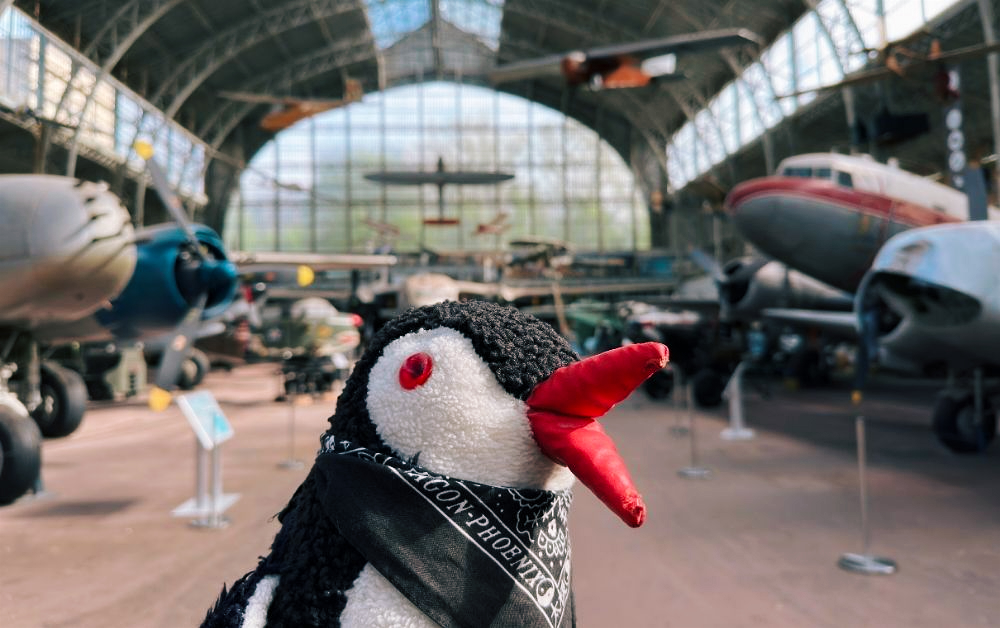
We were already surprised by the museum’s scale and setup, but then we stepped into the Aviation Hall and had another wow moment. The hall is enormous, measuring around 170 meters long, 70 meters wide, and 40 meters high, with its iron-and-glass structure creating one huge open space filled with aircraft. The museum’s aviation collection includes more than 130 aircraft and around 100 aircraft engines, making it one of Europe’s most important aviation collections.
And they are not just small planes lined up on the floor. Aircraft are everywhere, including above your head, so you keep looking up as you walk through. Highlights include a Spitfire, Tiger Moth, Dakota, MiG-21, and F-16, alongside rare First World War aircraft, helicopters, transport planes, and even parts of a Zeppelin. Even if you are not particularly into aviation, the sheer scale of the hall and seeing all these aircraft together is enough to knock your socks off.


While exploring the Aviation Hall, we also stumbled across a room dedicated to Belgian expeditions to Antarctica. Obviously, the moment we spotted penguins, we knew this was a good museum. The exhibition takes you from the famous Belgica expedition of 1897–1899, led by Belgian explorer Adrien de Gerlache, through the King Baudouin Base of the late 1950s and all the way to today’s Princess Elisabeth Antarctica research station. The museum even displays objects from the original Belgica expedition that had not previously been shown to the public.


What we really liked about the museum is that it does not feel like one long row of objects behind glass. The presentation changes as you move through the building, from the almost untouched Historic Gallery, which still looks much like it did a century ago, to more modern exhibition spaces. You walk past full-size tanks and aircraft, packed displays of uniforms and weapons, personal belongings, photographs, and equipment, all arranged to put the history into context. With more than 100,000 pieces in the museum’s collection, there is always something else around the corner. For us, that changing setup was a big part of what made the museum so enjoyable. It feels less like looking at a collection and more like waddling through different chapters of history.


The Cinquantenaire Arcades
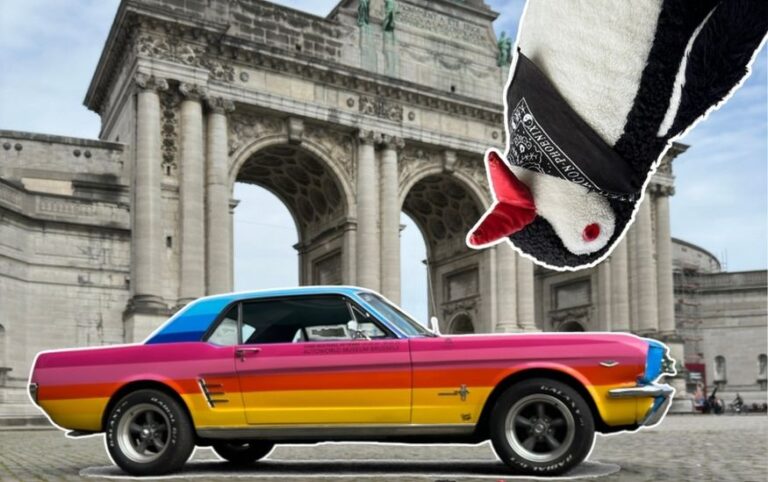
Another reason to visit is that your ticket also gives you access to the top of the Cinquantenaire Arcades. An elevator takes you inside the triumphal arch, but you still need to climb a few stairs to reach the terrace. If you are feeling energetic, you can skip the elevator and tackle all 186 steps instead. From the top, around 85 meters above ground level, you get panoramic views across Brussels, with landmarks such as the Atomium, Koekelberg Basilica and European Parliament visible in the distance.
Good news: according to the museum’s current official information, access to the panoramic viewpoint is included with your museum ticket, so you don’t need to pay extra. It is definitely worth adding to your visit if you have the time and do not mind a few final stairs.
Overall, the Royal Military Museum was one of those unplanned stops that turned out to be very enjoyable. There was much more to see than we expected, and the way the museum is set up kept us interested as we moved from one section to another. If we had to pick one highlight, though, it would definitely be the Aviation Hall. Waddling into that huge space filled with aircraft was the moment that really stayed with us. Sometimes the places that were never on the itinerary end up being some of the best surprises.
How Much Time Do You Need
The museum is much bigger than it looks at first, so how much time you need depends on how you want to explore it. If you only want to see the main highlights, allow 1.5 to 2 hours. For a more relaxed visit where you explore the different galleries, spend time in the Aviation Hall and head up to the Cinquantenaire Arcades, plan for around 3 to 4 hours. If you are really into military history or aviation, you could easily spend half a day or even longer here. We don’t recommend squeezing it into a tiny gap in your itinerary because there is much more inside than you might expect.
Buy Us a Ko-fi

Who Will Enjoy This Museum
This museum will appeal most to military and history fans, as well as anyone interested in aviation, engineering, tanks, World War I or World War II. But you don’t need to be a fan of any of those things to enjoy it. We are not particularly into military history or aviation ourselves, and we still had a great time exploring the museum. The scale of the collections and the way everything is displayed make it interesting even if this would not normally be your first choice of museum. It is also a great place to visit on a rainy day in Brussels, since you can easily spend several hours wandering around inside.
What Else Can You See Nearby
The museum sits right inside Parc du Cinquantenaire, so there is plenty more to see without traveling across Brussels. You can spend some time walking through the park, see the Cinquantenaire Arch, or combine the Military Museum with another museum nearby.
- Parc du Cinquantenaire. A large park with lawns, paths and the famous triumphal arch right beside the museum.
- Art & History Museum. Located in the same Cinquantenaire complex, with collections covering archaeology, decorative arts and civilizations from around the world.
- Autoworld. A large automobile museum with hundreds of vehicles, also located inside the Cinquantenaire complex.
- House of European History. A free museum in the nearby European Quarter exploring the history of Europe and European integration.
- European Parliament. Also within walking distance if you want to combine the museum with a visit to Brussels’ European Quarter.
You could easily spend half a day or even a full day around Cinquantenaire if you combine the Military Museum with the park and one or two nearby attractions.


If You Only Have Time for Three Things
Aviation Hall. World War galleries. Cinquantenaire panorama. If you are short on time, these would be our three picks. The Aviation Hall was easily our personal highlight; the World War sections give you some of the museum’s strongest historical displays, and finishing with the view from the Cinquantenaire Arcades gives you something completely different before you leave.
The Royal Military Museum is worth the waddle, even if military history would not normally make it onto your Brussels itinerary. It wasn’t on ours, which is why it surprised us so much. The size of the collection, the way the exhibits are presented, and especially that huge Aviation Hall made it much more enjoyable than we expected. What started as a spontaneous way to fill some extra time became one of those unexpected Brussels stops we were really glad we made. So, if you find yourself around Cinquantenaire with a few hours to spare, waddle inside. You might be just as surprised as we were.
Travel Bold. Eat Well. Waddle Wild.
Save This Pin for Later!
This post contains affiliate links. If you click and buy, I might earn a tiny commission, enough to help a penguin keep up its globe-trotting lifestyle. No extra cost to you, just more fish for me. Thank you for supporting the adventure!