Amsterdam Beyond the Tourist Sights: Why This City Stole Our Hearts
Amsterdam is a city you think you know before you arrive. Canals, crooked houses, bicycles, tulips. The postcards have done their job. But somewhere between our first canal crossing and another unplanned waddle down a narrow street, we realized the Amsterdam we were falling for was not the one we had expected. It was cleaner, calmer, and more captivating, a city where even getting slightly lost felt like part of the experience.
- Amsterdam Looks Exactly Like the Postcards. And Somehow Better.
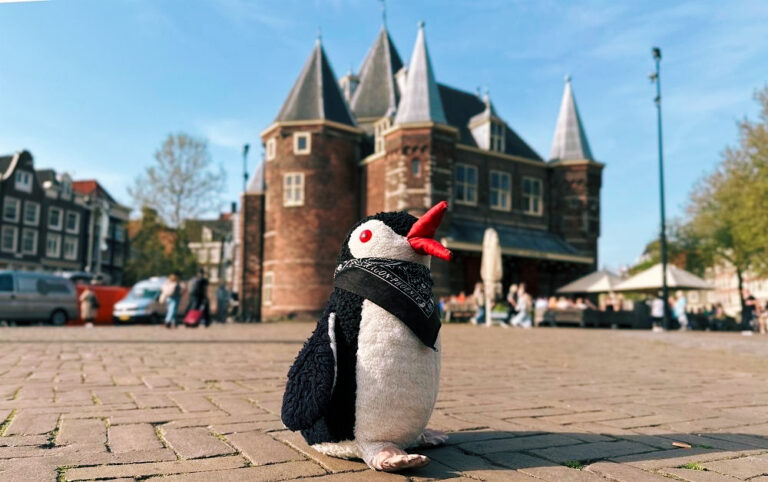
- The Best Way to See Amsterdam? Waddle.
- Amsterdam Makes You Look Up
- And Then There Are the Bicycles
- A City Built Around Water
- Even the Rain Worked in Amsterdam
- Amsterdam Was Surprisingly Clean
- The Tourist Amsterdam Is Still Worth Seeing
- Amsterdam Beyond Tulip Season
- Amsterdam Is Busy, But It Knows How to Be Quiet
- The Amsterdam We Remember Is Made of Small Things
- Did We Fall in Love With Amsterdam?
Amsterdam Looks Exactly Like the Postcards. And Somehow Better.
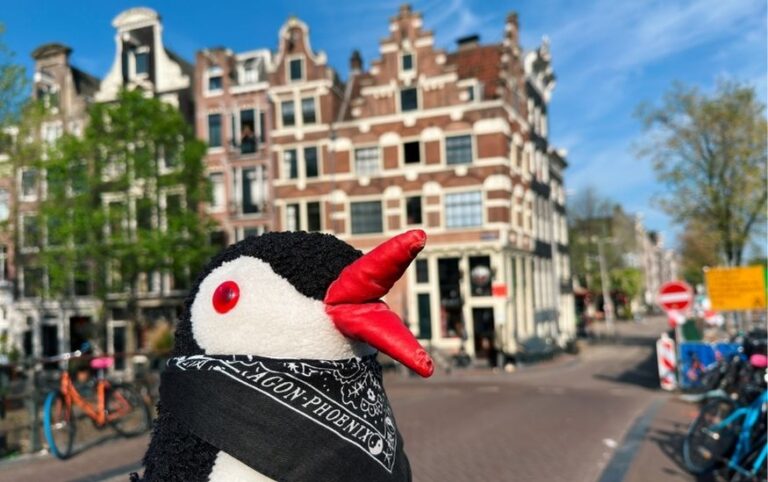
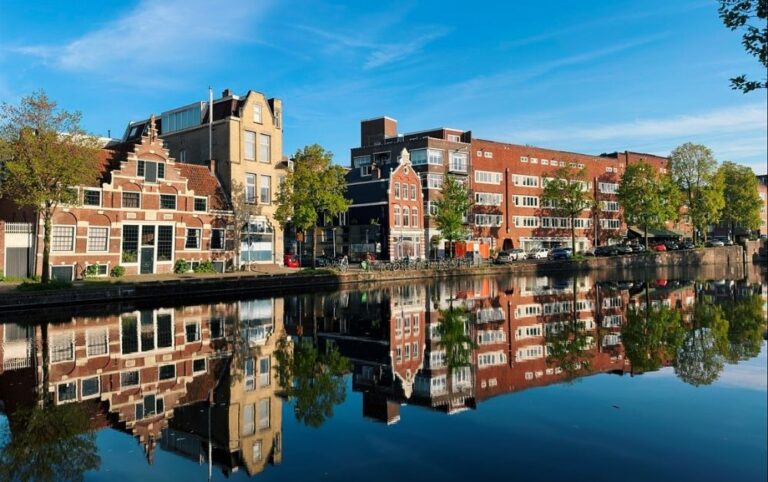
There are cities where you spend half the trip searching for the view you saw online. Amsterdam is not one of them. Waddle for a few minutes and there it is: a row of narrow houses leaning slightly toward one another, a canal cutting through the street, bicycles chained to every available railing, and a small boat passing underneath a bridge.
Then you turn another corner, and somehow it happens all over again. The canals are not simply something to see in Amsterdam. They are Amsterdam. They divide neighborhoods, frame the architecture, and turn an ordinary walk across town into something worth slowing down for.
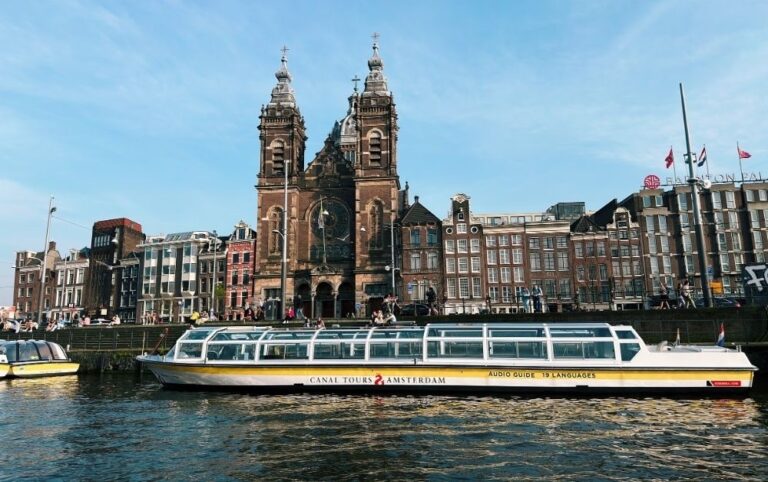
We took a canal cruise during our first day, almost spontaneously, and it gave us our first proper look at the city. From the water, Amsterdam suddenly made sense. We noticed the hooks hanging from the tops of old houses, once used to hoist goods and furniture through windows. We saw houseboats sitting almost at eye level and heard stories about the narrow buildings lining the water. But we liked Amsterdam from land even more. Waddling meant stopping whenever something caught our attention. And in Amsterdam, that happened a lot.
The Best Way to See Amsterdam? Waddle.
Amsterdam rewards people who waddle without much of a plan. Of course, we had one. We had museums to visit, restaurants saved on our map, and attractions with timed tickets that didn’t particularly care whether we had discovered a beautiful canal along the way.
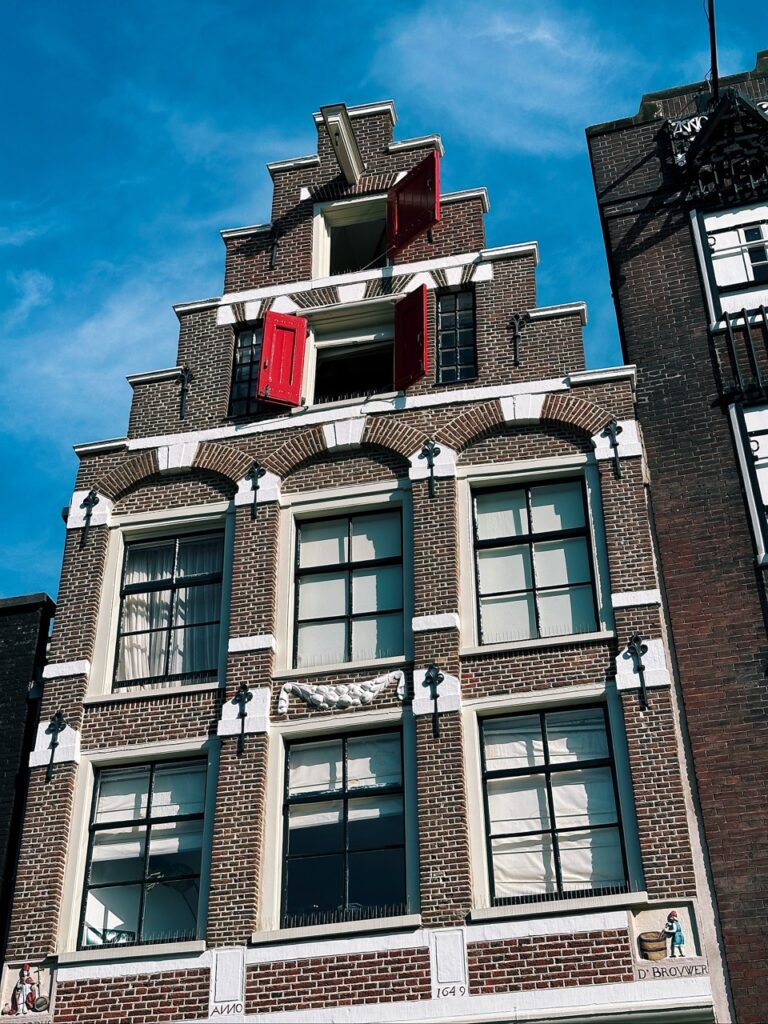
But some of our favorite moments happened between those places. We crossed bridges simply because we liked the street on the other side. We wandered through residential areas where bicycles outnumbered people. We stopped to look at gable stones on old buildings. We found tiny shops we never would have found online.
One of them was De Posthumus Winkel, a historic stamp shop where we found a penguin stamp. Naturally, we brought it home. That tiny purchase probably says more about how we experienced Amsterdam than any checklist could. The city constantly gives you reasons to stop.
Amsterdam Makes You Look Up
Amsterdam’s houses deserve more attention than they usually get. Some are impossibly narrow. Others appear to lean forward or sideways. Many have decorative gables, enormous windows, and hooks hanging high above the street. Together, they give Amsterdam an instantly recognizable look without making the city feel frozen in the past. People still live behind those windows. Bikes pile up outside centuries-old buildings. Cafés occupy old houses. Trams rattle past architecture that has stood there far longer than the tracks beneath them. That mixture of old and everyday life was one of the things we liked most.
Amsterdam does not feel like an open-air museum. It feels lived in.

And Then There Are the Bicycles
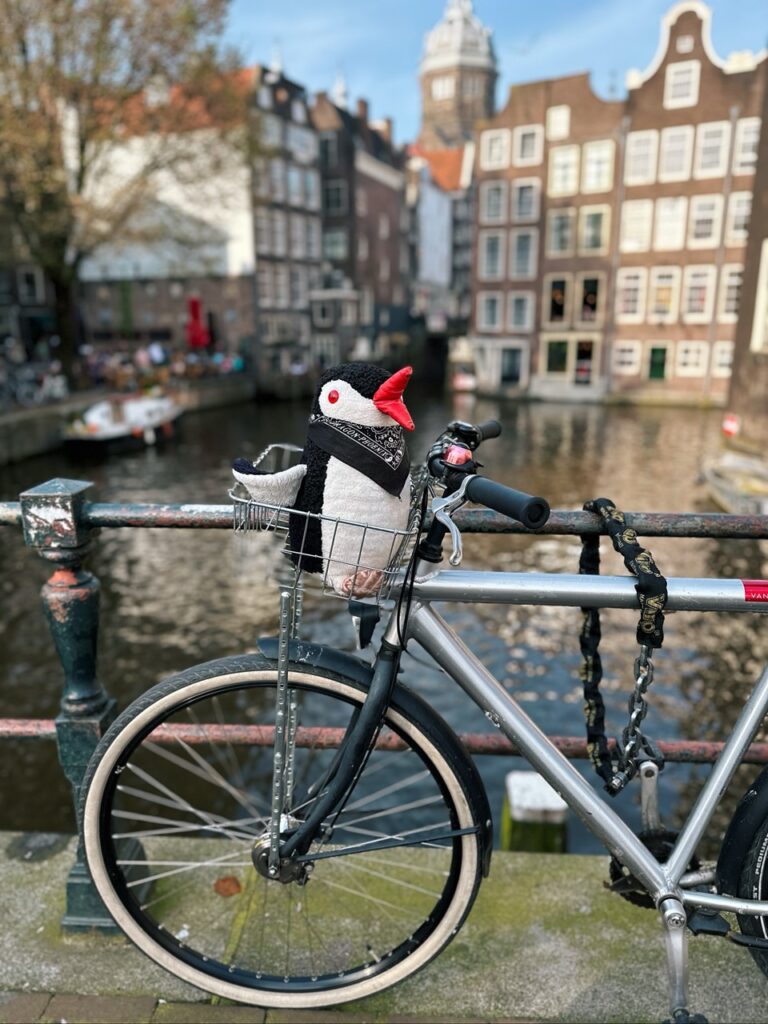
You cannot write about Amsterdam without mentioning the bicycles. They are everywhere: parked beside canals, leaning against buildings, attached to bridges and flying past while you are still trying to work out whether you have accidentally wandered into a cycle lane.
Interestingly, though, Amsterdam did not feel like the most bicycle-dominated city we have visited. That title still goes to Copenhagen. The Danes may be famous for cycling, and from our experience, Copenhagen really did feel even more built around life on two wheels.
Amsterdam comes close, though. Here, bicycles feel woven into the city rather than added to it. People cycle to work, meet friends, pick up groceries, or get from one canal to the next.
We never rented bikes ourselves. Amsterdam is compact enough that we preferred to waddle, using trams and the metro when our feet needed a break. But even without getting on a bike, cycling becomes part of your Amsterdam experience. The bicycle is not a tourist attraction here. It is simply how Amsterdam moves. And if you are waddling, learn where the cycle lanes are quickly. The locals certainly know.


A City Built Around Water
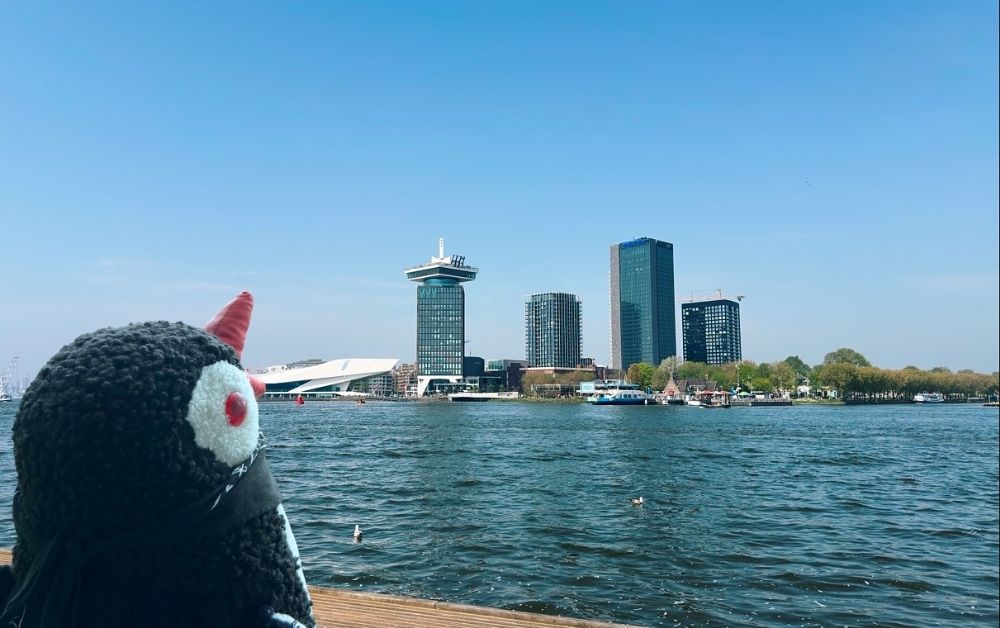
Eventually, you stop photographing every canal. Not because they become less beautiful, but because you realize you would never get anywhere. There are bridges everywhere. Boats slide past restaurant terraces. Houseboats sit beside grand canal houses. Reflections change depending on the weather and time of day. Water is so integrated into Amsterdam that it becomes part of the background. One of our favorite ways to experience that relationship was also completely free: crossing the IJ by ferry from Amsterdam Centraal. Within minutes, the historic center disappears behind you, and another side of Amsterdam starts to appear.
Across the IJ, Amsterdam Changes
We took the ferry to NDSM, a former shipyard in Amsterdam-Noord. It could hardly feel more different from the canal belt. The neat rows of historic houses give way to industrial buildings, open spaces, street art and old shipyard structures. We wandered without much of a plan, grabbed something to eat and eventually sat beside the water. No major attraction demanded our attention.
That was precisely why we liked it. Amsterdam is famous enough that it can feel like you should spend every minute seeing something important. NDSM reminded us that a city can be interesting simply because you are there. For travelers with only a day or two, we would still prioritize central Amsterdam. Give yourself longer, though, and the city becomes much more interesting when you start moving away from the obvious postcard.
Even the Rain Worked in Amsterdam
It rained during our trip. More than once. And strangely, we didn’t mind much. Rain changed our plans rather than ruining them. It pushed us inside the Heineken Experience, into cafés and eventually toward Fabrique des Lumières, where we spent more than two hours surrounded by floor-to-ceiling projections of Van Gogh’s work. On another grey Amsterdam day, a coffee shop suddenly became somewhere we were happy to stay longer. Perhaps that is part of Amsterdam’s appeal.
It does not require perfect weather. The canals still look good beneath grey skies. The cafés feel better when raindrops cover the windows. Museums give you somewhere to disappear for a few hours. And when the rain stops, you start waddling again.
Amsterdam Was Surprisingly Clean
For a city that gets so many visitors, Amsterdam surprised us with how clean and well cared for it felt. This was something we noticed repeatedly. The center is busy. Some streets are packed. Around the biggest attractions, there is no escaping the fact that you are in one of Europe’s most visited cities. Yet our overall impression wasn’t chaos.
Public transport worked well. Streets generally felt well maintained. Residential neighborhoods could become remarkably peaceful only a short distance from the crowds. Amsterdam somehow manages to feel busy without feeling completely consumed by its visitors. That is not an easy balance for a city this famous to maintain.
The Tourist Amsterdam Is Still Worth Seeing
There is no point pretending we discovered some secret version of Amsterdam untouched by tourism. We went to the Anne Frank House. We visited the Heineken Experience. We ate a warm stroopwafel. We tasted cheese. We took a canal cruise. We went to ARTIS Zoo, where, naturally, the African penguins were high on our list. We did many of the things millions of other people come to Amsterdam to do. And that is fine. Popular places are sometimes popular because they are worth experiencing. The trick, at least for us, was mixing those places with everything in between. An hour at a famous attraction followed by a walk without a destination. A busy museum followed by a quiet canal. Foodhallen one day, a random neighborhood snack stop another. Amsterdam worked best when we stopped trying to separate the “tourist” city from the “real” one. They exist side by side.
Amsterdam Beyond Tulip Season
Tulips are so closely tied to the Netherlands that it is easy to think spring is the time to come. We visited in early May, but Amsterdam convinced us it doesn’t need tulip season to be worth the trip. The canals do not disappear when the flowers do. Neither do the museums, architecture, cafés, neighborhoods, ferries, parks, food, or crooked houses. In fact, we would happily return at a completely different time of year to see how the city changes. Amsterdam is not simply somewhere to stay while chasing Dutch windmills and tulip fields. It is a destination in its own right.
Amsterdam Is Busy, But It Knows How to Be Quiet
Perhaps our biggest surprise was how quickly Amsterdam could change character. One moment we were squeezing past crowds near a major attraction. Ten minutes later, we were walking beside a canal with barely anyone around. Busy streets and packed trams gave way to parks, residential neighborhoods, and quiet stretches of water where the city seemed to slow down. Vondelpark gave us another version of Amsterdam: green, relaxed, and full of people simply using their city rather than sightseeing in it. That contrast kept Amsterdam interesting. Whenever one part became too busy, we waddled somewhere else.
The Amsterdam We Remember Is Made of Small Things
Looking back, our Amsterdam memories are surprisingly fragmented. A boat rocking slightly beneath us. The sound of a bicycle bell. A penguin stamp in a tiny shop. Warm syrup inside a stroopwafel. The ferry pulling away from Centraal. Cheese on a toothpick. Rain. Rows of narrow houses reflected in dark canal water. A quiet residential street we could probably never find again. None of these moments would justify flying to Amsterdam on their own. Together, they became the trip. And perhaps that is what separates a city you enjoyed from a city you actually miss.
Buy Us a Ko-fi

Did We Fall in Love With Amsterdam?
Yes. Not because Amsterdam is perfect. It is expensive. Popular attractions need planning. Some areas are crowded. You will almost certainly find yourself standing in a bicycle lane at least once while wondering why everyone is ringing bells at you. But Amsterdam has something many heavily visited cities gradually lose: it still feels like a city, not a collection of attractions. People live here. Commute here. Cycle home with groceries. Sit beside canals with friends. Take ferries across the IJ. Drink coffee while tourists wander past their windows.
We arrived expecting to like Amsterdam. We did not expect to miss it. We still have museums we didn’t enter, restaurants sitting patiently on our saved map, and neighborhoods we barely touched. More of the Netherlands is waiting outside the city, too. So no, we did not finish Amsterdam. We left. And one day, we hope to waddle back.
Travel Bold. Eat Well. Waddle Wild.

This post contains affiliate links. If you click and buy, I might earn a tiny commission, enough to help a penguin keep up its globe-trotting lifestyle. No extra cost to you, just more fish for me. Thank you for supporting the adventure!