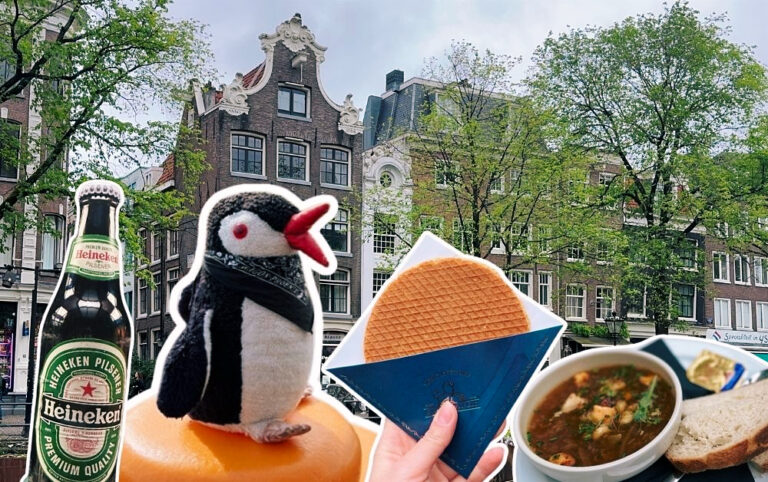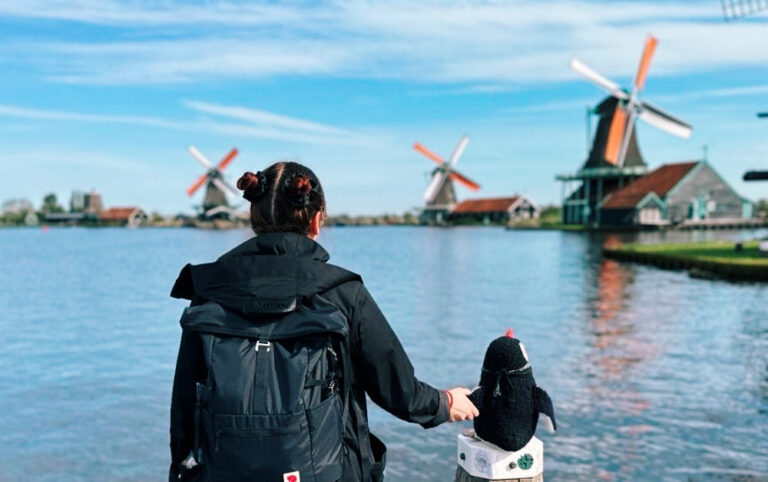
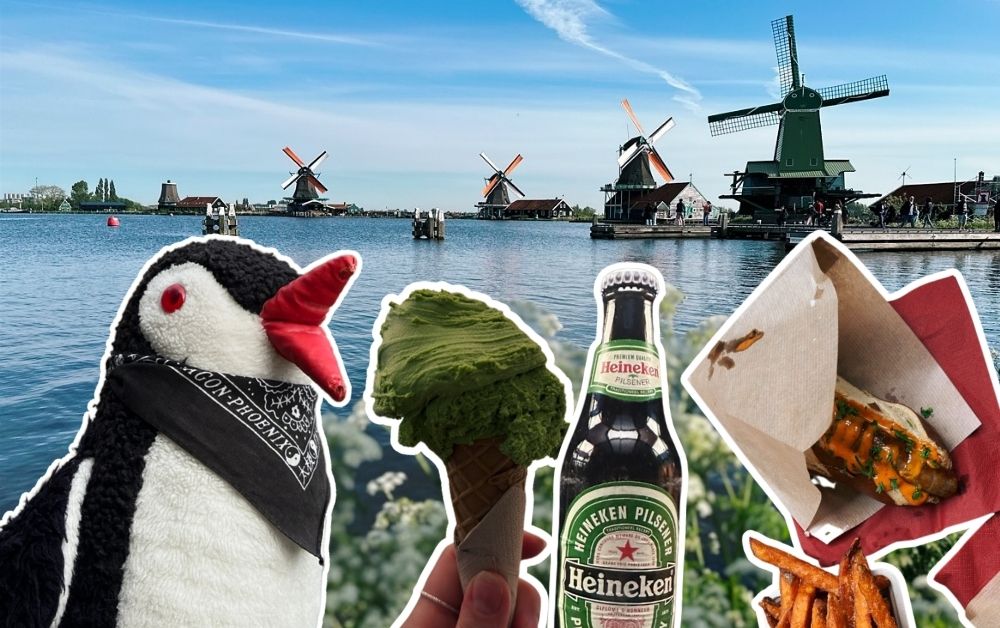
What to Eat and Drink in the Netherlands: Dutch Foods You Need to Try
Ask someone what to eat in Italy and the answers come quickly. Ask the same question about the Netherlands, and you usually get a longer pause. Dutch cuisine rarely gets top billing when people plan a trip here, but start paying attention to what people eat at markets, cafés, fish stalls, and bars, and the country becomes much more interesting through its food. Hot bitterballen sit beside cold beers, paper cones overflow with fries, tiny poffertjes disappear under powdered sugar, and herring stalls might test just how adventurous you really are.
The food is typically straightforward and filling rather than elaborate. Potatoes, vegetables, cheese, and fish have long played important roles. At the same time, regional specialties and influences from the Netherlands’ trading and colonial history have made the wider food culture much more varied than the stereotype of meat and potatoes suggests. So, what should actually make it onto your Dutch food list? Come hungry.
The Flavors That Define Dutch Food
If you arrive in the Netherlands expecting a cuisine built around big spices and complicated sauces, traditional Dutch food might surprise you. At its core, it’s straightforward and filling, with potatoes, vegetables, meat, dairy, and fish doing much of the work. Stamppot is mashed and comforting; aged cheeses bring saltiness and a firmer, sometimes crumbly texture, while herring introduces a softer, briny side of Dutch food.
But then you start snacking, and things get much more fun. The Dutch seem to have a particular talent for crispy things with soft centers. Bitterballen hide hot, creamy ragout beneath a crunchy breadcrumb shell, thick fries are crisp outside and fluffy inside, and kibbeling gives you battered fish with a tender center. On the sweeter side, stroopwafels are thin and chewy with sticky syrup between them, while poffertjes are soft and pillowy under a generous layer of powdered sugar.
Flavor-wise, don’t expect everything to be heavily seasoned. Traditional dishes often lean toward salty, creamy, smoky, pickled, and mildly sweet, with mustard, mayonnaise, and gravy appearing regularly. But Dutch food culture today stretches far beyond those traditional flavors, particularly through Indonesian and other international influences that have become part of how the country eats.
And perhaps that was what surprised us most while eating around the Netherlands. Dutch food is often at its best when it isn’t trying to be fancy. A hot portion of fries, bitterballen beside a beer, cheese from a market stall, or a warm stroopwafel eaten while waddling through the city can tell you just as much about the country’s food culture as a restaurant meal.
Hotel search from Trip.comShows Trip.com’s own box, which can set Trip.com cookies.Search hotels on Trip.comTrip.com’s box can’t load on this device (an ad blocker often stops it). This opens Trip.com’s own hotel search.Open Trip.com
Traditional Dutch Foods You Need to Try
Now for the important part: what should you actually eat while waddling around the Netherlands? Some of these dishes have been part of Dutch kitchens for generations; others belong firmly to its street-food and snack culture, but together they give you a good taste of how the country eats. Come hungry, because there are plenty worth trying.
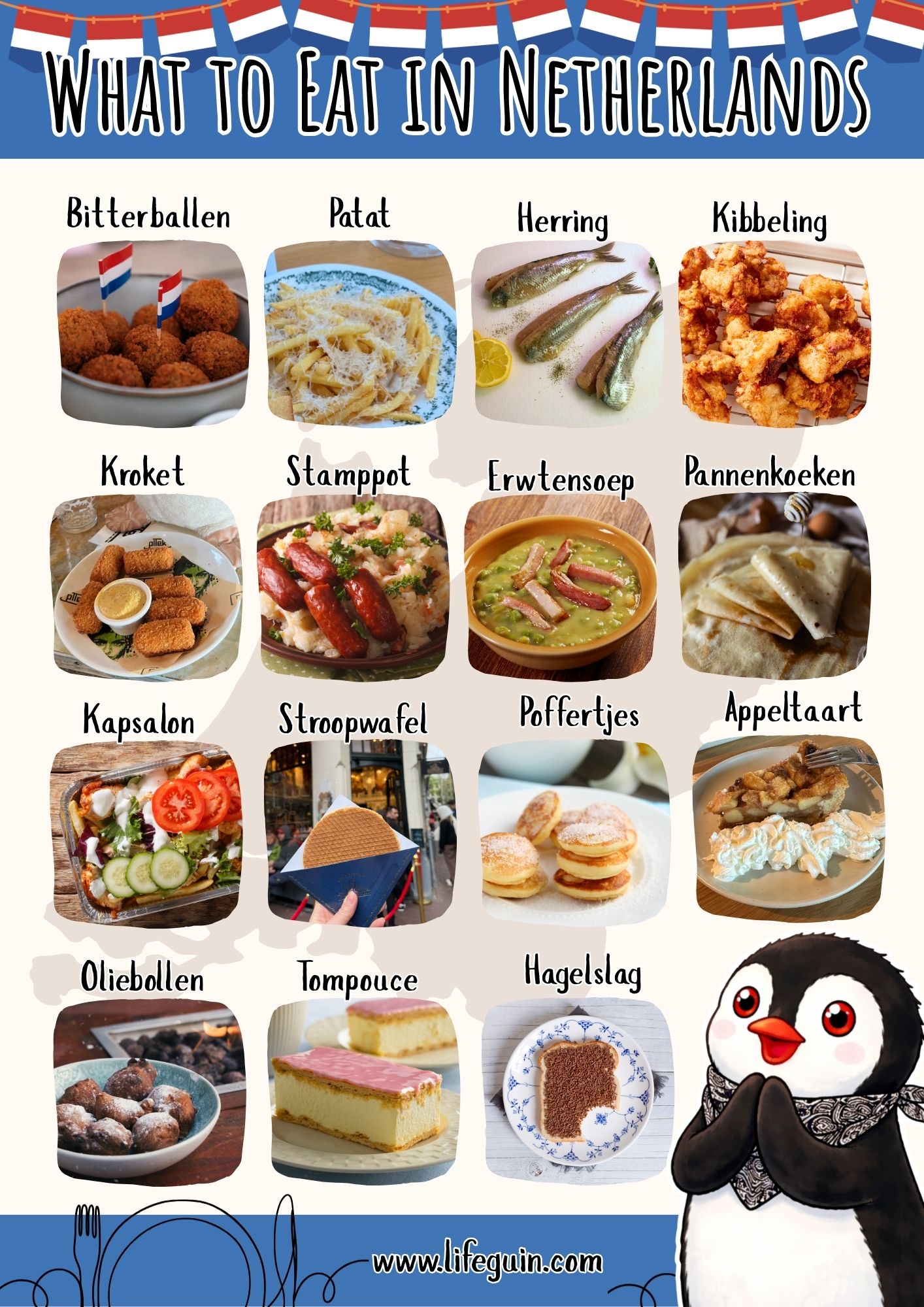
- Bitterballen. If there is one Dutch snack we would happily order again and again, bitterballen are an easy contender. These small, breaded, and deep-fried balls contain a thick meat ragout and traditionally arrive with mustard. Carefully break one open, because the filling can be seriously hot. Bitterballen are closely tied to Dutch borrel culture, where drinks and small snacks go hand in hand. Order a beer, add a portion of bitterballen, and suddenly that afternoon drink becomes a very Dutch experience.
- Patat. The Dutch don’t tend to leave their fries alone. Known as patat or friet, depending partly on where you are in the country, thick-cut fries are commonly served in a paper cone and accompanied by mayonnaise or considerably more ambitious combinations. Look out for patatje oorlog, literally “war fries”, topped with mayonnaise, peanut satay sauce and usually chopped onions. It sounds chaotic. That’s rather the point. And yes, eating fries covered in sauce from a paper cone while walking requires more coordination than travel guides generally acknowledge.
- Hollandse Nieuwe Haring. This is where your Dutch food adventure becomes a little more serious. Haring, or herring, is served cured rather than cooked and is among the country’s most recognizable food traditions. Hollandse Nieuwe refers specifically to new-season herring that meets protected production requirements, with the season associated with catches from late spring into summer. The famous method involves holding the fish by its tail, tilting your head back, and taking a bite. If that feels like a bit much for your first encounter, you can also have it chopped and served with onions and pickles, or tucked into a bread roll as a broodje haring.
- Kibbeling. If herring is a step too far, kibbeling is the considerably easier introduction to Dutch fish. Small pieces of white fish are battered, fried until crisp, and typically served with a creamy sauce. You will find kibbeling at fishmongers, markets, and dedicated fish stalls around the country. Hot, crispy, and easy to eat while exploring, this is Dutch street food at its most approachable.
- Kroket. Think of a kroket as bitterballen’s longer relative. A thick ragout filling is breaded and deep-fried into a crispy cylinder. You can eat one on its own, but a broodje kroket, served inside a soft bread roll with mustard, is a classic quick lunch. You may even encounter them inside the Netherlands’ famous food vending machines. Putting money into a wall and pulling out a hot croquette might not sound like culinary tourism, but here we are.
- Stamppot. Dutch food starts making particularly good sense when the temperature drops. Stamppot combines mashed potatoes with vegetables such as kale, sauerkraut, carrots, or endive. It is often served with gravy and a smoked sausage (rookworst). It is simple, heavy, and designed for weather that makes you reconsider leaving your hotel. There are plenty of variations, but the principle remains much the same: mash everything together and make winter more manageable. Stamppot remains one of the country’s best-known traditional dishes.
- Erwtensoep, or Snert. Another cold-weather classic is erwtensoep, a thick split-pea soup also known as snert. Traditionally packed with vegetables and often smoked sausage or pork, proper snert is much closer to a meal than a light starter. Look for this if you visit the Netherlands in winter rather than on a warm summer afternoon. Pea soup remains among the traditional foods recommended by the Netherlands’ official tourism organization.
- Pannenkoeken. Dutch pancakes sit somewhere between the thick American pancake and a French crêpe. Pannenkoeken are large and thin, and they don’t have to be sweet. Apple and powdered sugar are common, but savory versions can include cheese, bacon, and other toppings. Dedicated pancake houses can turn this very simple dish into an entire meal.
- Kapsalon. Traditional? Not in the centuries-old sense. Dutch? Absolutely. Kapsalon originated in Rotterdam and typically piles shawarma or döner meat over fries, then adds melted cheese, salad, and sauces. The name translates to “hair salon“, tracing back to the Rotterdam hairdresser whose regular order inspired the dish. It is messy, heavy, and probably not what anyone means when they suggest “just grabbing something small.”
Dutch Sweets, You Need to Try
The savory side of Dutch cuisine might be practical, but the Dutch sweet tooth is considerably less restrained. Markets are great places to find stroopwafels, poffertjes, and seasonal baked treats.
- Stroopwafel. You have probably seen packaged stroopwafels outside the Netherlands. Forget those for a moment. A proper fresh stroopwafel consists of two thin waffle discs pressed around a warm syrup filling. They are believed to have originated in Gouda in the early 19th century, reportedly beginning as an inexpensive sweet made using leftover crumbs and syrup. The supermarket versions make excellent souvenirs, but if you find a stall making them fresh, get one warm.
- Poffertjes. They look like tiny pancakes, but poffertjes deserve their own category. Small, puffy, and traditionally served warm with butter and a generous snowfall of powdered sugar, they are exactly the sort of food that smells impossible to ignore when you walk past a market stall. You will find versions loaded with sauces and toppings, but we would try the simple version first.
- Appeltaart. Dutch apple pie isn’t the neat little slice you may be picturing. Appeltaart tends to be tall and substantial, packed with chunks of apple flavored with cinnamon and enclosed in a firm pastry crust. Order it with whipped cream and coffee, and suddenly you have a perfectly reasonable excuse for an afternoon break.
- Oliebollen. If you are visiting around New Year’s, keep an eye out for oliebollen stands. These deep-fried dough balls are traditionally eaten around the festive season and can contain raisins or currants before being dusted generously with powdered sugar. Somewhere between a doughnut and fried dough, they are not subtle. They aren’t trying to be.
- Tompouce. You will recognize a tompouce before you know how you’re supposed to eat it. Two layers of puff pastry sandwich a thick custard filling, with brightly colored icing across the top. Around King’s Day, that icing famously turns orange. Eating one neatly is another matter entirely. Consider the mess part of the cultural experience.
- Drop. And then there is drop: Dutch licorice. The Netherlands takes licorice seriously, and the selection ranges from sweet to intensely salty varieties. If you didn’t grow up eating salty licorice, your first piece can be… educational. We recommend trying it anyway. Nobody said this list was only about things you are guaranteed to love.
- Hagelslag. Chocolate sprinkles for breakfast? The Dutch have already considered the matter and decided yes. Hagelslag is sprinkles scattered generously over buttered bread and commonly eaten at breakfast or lunch. Chocolate is the classic choice, although other varieties exist. It may look like something an eight-year-old invented while unsupervised in the kitchen, but it is an established part of everyday Dutch food culture.
Don’t Leave Without Trying Dutch Cheese
You can’t talk about eating in the Netherlands without getting to cheese. Gouda is the obvious name, but don’t stop there. Try different ages of Gouda, from mild, younger cheeses to much firmer, saltier, and more complex aged versions. Edam is another internationally familiar Dutch cheese, while markets and cheese shops offer plenty more regional varieties. Rather than simply buying whatever cheese comes with a tourist-friendly windmill printed on the packaging, go into a proper cheese shop and taste a few different ages. The difference can be surprisingly dramatic.


Indonesian Food Is Part of the Dutch Food Story
A guide to eating in the Netherlands shouldn’t pretend Dutch cuisine developed in isolation. The country’s colonial history has left a significant, complicated mark on what people eat today, especially through Indonesian cuisine. One of the best-known examples is the rijsttafel, or “rice table”: a spread of numerous small Indonesian dishes served together with rice.
It originated during the Dutch colonial period in Indonesia rather than as a traditional Indonesian meal in its present form, and its history deserves that context. Today, however, Indonesian restaurants and flavors remain an important part of the Dutch culinary landscape. The country’s food culture still reflects international influences alongside its regional traditions. If you’re spending several days in Amsterdam, make room for an Indonesian meal rather than eating only foods marketed as “traditional Dutch.”
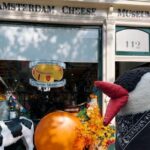
What to Drink in the Netherlands
- Dutch Beer. Beer is the obvious place to begin. Heineken may be the internationally famous name, but Dutch beer goes far beyond the green bottle. You’ll find pilsners, witbiers, strong specialty beers, and a growing range from smaller breweries. And if you’re in Amsterdam, you can even go back to where the Heineken story began at the former brewery, now home to the Heineken Experience.
- Jenever. Before gin became gin, there was jenever. This traditional Dutch spirit is flavored with juniper but generally has a different character from modern London dry gin. Styles range from younger, lighter jonge jenever to more malt-forward oude jenever. Traditionally, a glass can be filled right to the brim, encouraging that slightly awkward first sip while the glass is still sitting on the bar.
- A Kopstootje. Feeling particularly Dutch? Order a kopstootje, literally a “little headbutt”: a glass of jenever accompanied by beer. The combination tells you almost everything you need to know about the name.
Eating Out in the Netherlands: A Few Things to Know
Eating out in the Netherlands is generally casual and straightforward, but there are a few habits worth knowing before you grab a table. From paying the bill to Dutch dining times, these small details can make eating your way around the country a little easier.
- Tipping. Service is included in menu prices, so tipping isn’t compulsory. Rounding up the bill or leaving around 5–10% for good service is common.
- Reservations. For popular restaurants in cities such as Amsterdam, Rotterdam, and Utrecht, booking ahead is a good idea, particularly for dinner and weekends.
- Payment Methods. The Netherlands is extremely card-friendly, and contactless payment is common. However, some businesses accept debit cards but not all international credit cards, so it helps to have another payment method available.
- Meal Times. The Dutch tend to eat dinner relatively early compared with southern Europe. Lunch commonly falls around 12:00–14:00, while dinner often starts from 17:30 or 18:00.
- Lunch Can Be Simple. Don’t expect every Dutch lunch to be a big restaurant meal. Sandwiches, soups, salads, and bread-based dishes are common, and a broodje makes an easy lunch while sightseeing.
- Getting the Bill. Don’t be surprised if the bill doesn’t appear right after you finish eating. In many restaurants, you ask for it when you’re ready to leave.
- Tap Water. Tap water is safe to drink, but restaurants don’t always automatically bring a free jug to the table. If you want water, ask what is available.
- Dietary Options. Vegetarian and vegan choices are widely available, particularly in larger Dutch cities, and many menus clearly mark dietary information.
- Markets Are Worth Exploring. Don’t limit yourself to restaurants. Markets and food stalls are some of the easiest places to try herring, kibbeling, cheese, stroopwafels, and other Dutch snacks without committing to a full meal.
Buy Us a Ko-fi

So, What Should You Eat First?
If your time in the Netherlands is limited, we would start with fresh stroopwafel, bitterballen with a beer, Dutch fries, poffertjes, and some good Dutch cheese. Add kibbeling if you like fish, and herring if you’re ready to commit to the assignment properly. Dutch food probably isn’t why most travelers book their flight to Amsterdam. But it should become part of the trip once you arrive. Markets, brown cafés, bakeries, fish stalls and even those slightly ridiculous croquette vending machines all tell you something about how the country eats. You don’t need fine dining to understand Dutch food. Sometimes you need a paper cone of fries, too much mayonnaise, and somewhere beside a canal to eat them.
Travel Bold. Eat Well. Waddle Wild.

This post contains affiliate links. If you click and buy, I might earn a tiny commission, enough to help a penguin keep up its globe-trotting lifestyle. No extra cost to you, just more fish for me. Thank you for supporting the adventure!