Liechtenstein Travel Tips: What to Know Before Your Trip
Before we visit any new country, we always do a little research. We love learning a few interesting facts, understanding what makes the country unique, and knowing some practical things before we arrive. Once there, we also try to chat with locals whenever we can, because sometimes the best facts and little stories are the ones you cannot find online.
Liechtenstein was no different. In this post, we are sharing some of the most interesting facts about Liechtenstein, things we learned before and during our visit, and a few practical Liechtenstein travel tips to help you plan your own trip to this tiny Alpine country.
Quick Facts About Liechtenstein
- Location: Central Europe, between Switzerland and Austria
- Capital: Vaduz
- Largest Municipality: Schaan
- Population: Around 41,000
- Area: 160 km² (62 sq mi)
- Sovereign Since: 1806
- Language: German
- Currency: Swiss Franc (CHF)
- Borders: Switzerland and Austria
- Main River: Rhine
- Government: Constitutional hereditary monarchy
- Highest Mountain: Grauspitz, 2,599 m (8,527 ft)
- Known For: Alps, Vaduz Castle, hiking, skiing, banking, and postage stamps
- National Day: August 15
- Fun Fact: One of only two doubly landlocked countries in the world
Brief History Of Liechtenstein
- 1719. Liechtenstein was officially created when Emperor Charles VI united the counties of Vaduz and Schellenberg into the Principality of Liechtenstein.
- 1806. It became a sovereign state following the dissolution of the Holy Roman Empire.
- 1815–1866. Liechtenstein belonged to the German Confederation before becoming fully independent.
- 1868. The country abolished its army and has remained without a military ever since.
- 1921. A new constitution established Liechtenstein as a constitutional hereditary monarchy.
- 1924. Liechtenstein adopted the Swiss franc and strengthened its close economic relationship with Switzerland.
- World Wars. Liechtenstein remained neutral during both World War I and World War II.
- Post-War Era. Once relatively poor and agricultural, Liechtenstein developed into a wealthy industrial and financial center.
- 1984. Women gained the right to vote in national elections, making Liechtenstein the last European country to introduce national women’s suffrage.
- 1990. Liechtenstein joined the United Nations.
- Today. Liechtenstein is one of Europe’s smallest yet wealthiest countries, known for its monarchy, strong economy, Alpine landscape, and close ties with Switzerland.

14 Interesting Facts About Liechtenstein
#1: One of the Smallest Countries in the World
Liechtenstein may be tiny, but that is part of what makes the country so fascinating. Covering just 160 km² (62 sq mi), it is the world’s sixth-smallest country and the fourth-smallest in Europe, after Vatican City, Monaco, and San Marino. From north to south, Liechtenstein stretches only about 25 kilometers so that you can drive across the entire country in less than an hour. Despite its small size, it manages to pack in Alpine peaks, hiking trails, castles, vineyards, picturesque villages, and the Rhine Valley, proving that you really do not need a huge country to find plenty to explore.
#2: A Rare Geographic Position
Liechtenstein has a pretty unusual geographic claim to fame: it is one of only two doubly landlocked countries in the world, alongside Uzbekistan. This means Liechtenstein is landlocked, and every country it borders is also landlocked. Its only neighbors are Switzerland and Austria, so reaching the sea requires crossing at least two international borders. Liechtenstein is also the smallest country in the world to border two different countries, making its tiny position in the heart of Europe even more unique.
#3: The Army That Came Back With an Extra Man
Liechtenstein has no standing army, having abolished its military in 1868 because maintaining one was too expensive for such a small country. Its final military deployment has also inspired one of Liechtenstein’s most famous stories. In 1866, 80 soldiers were sent to guard a mountain pass during the Austro-Prussian War. They returned safely without seeing combat, reportedly arriving home with 81 men after an Austrian joined them on the journey back. While the “extra man” part is often treated as a charming legend rather than firmly documented history, it has become one of the country’s favorite quirky tales.
#4: A Tiny Country With a Powerful Prince
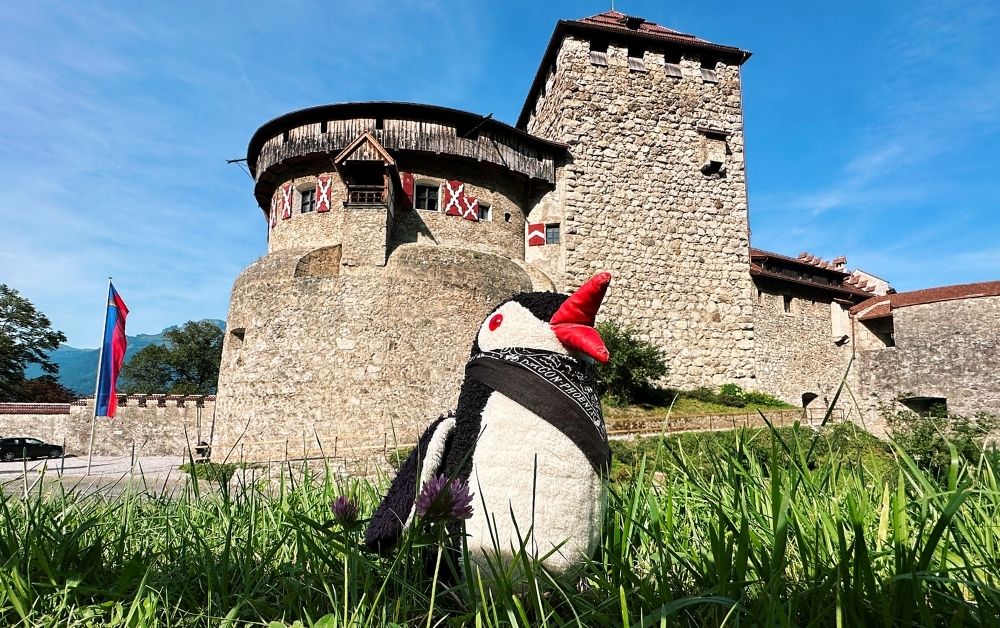
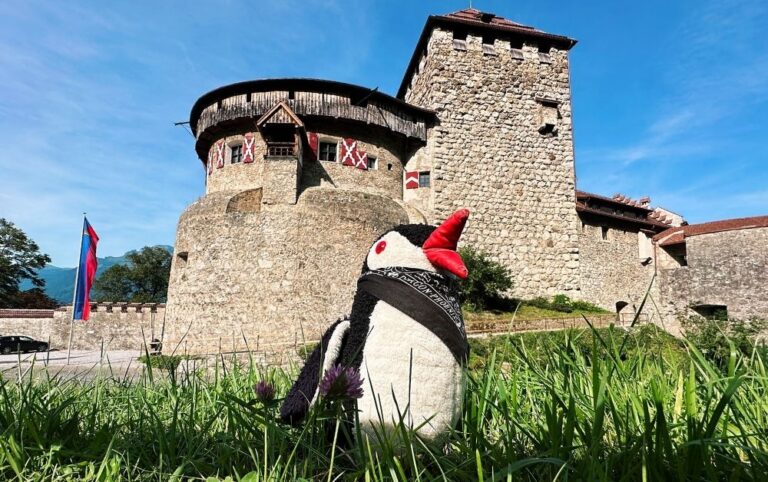
The country is a principality, not a kingdom or republic, and the Prince of Liechtenstein is one of Europe’s few remaining monarchs with substantial political powers. The royal family lives at Vaduz Castle, overlooking the capital, which is also why you cannot simply buy a ticket and explore it. Vaduz Castle is not normally open to the public because it is the Prince’s residence, so for most of us, seeing it from the outside is as close as we are going to get.
#5: The Country Is Named After Its Ruling Family
The name Liechtenstein actually comes from the House of Liechtenstein, the family that still rules the country today. This is quite unusual because the country was named after its ruling dynasty, rather than the family taking its name from the land it ruled. The family originally took its name from Liechtenstein Castle in Austria, and when the Principality of Liechtenstein was created in 1719, the new state carried the family name. That means the name you see on the map today is directly connected to the same dynasty that still heads the country.
#6: You Can Waddle Into Switzerland
There is no traditional border checkpoint between Liechtenstein and Switzerland, so you can waddle from one country into the other without stopping to show your passport. The two countries share an open border as part of the Schengen Area, and in some places the border is little more than a bridge, a road, or a sign telling you that you have entered another country. It makes crossing between Liechtenstein and Switzerland feel more like walking into the next town than entering another country.
#7: More Companies Than People
Liechtenstein has more registered companies than residents, which is a striking statistic for a country with a population of only around 41,000. And while Liechtenstein is often associated with banking and finance, it also has a highly developed industrial sector. Manufacturing and specialized companies play a major role in its economy, showing that much more happens here than its small size might suggest.
Hotel search from Trip.comShows Trip.com’s own box, which can set Trip.com cookies.
#8: The Highest Point Is Grauspitz
Liechtenstein’s highest point is Grauspitz, at 2,599 meters (8,527 ft) above sea level. It sits on the border with Switzerland and marks the highest point in the entire country. Reaching the summit isn’t a simple tourist walk either, as no official marked trail leads all the way to the top, making it better suited to experienced hikers.
#9: The Flag Mix-Up That Added a Crown
At the 1936 Summer Olympics, Liechtenstein discovered its national flag was virtually identical to Haiti’s. Until then, both countries used the same blue-and-red horizontal design, and apparently neither had realized the similarity. To make its flag easier to distinguish, Liechtenstein added a golden crown in 1937 to represent the country’s status as a principality. The crown remains on the flag today, meaning a chance Olympic discovery helped create the national flag we now recognize.
#10: The Only Country Entirely Within the Alps
Liechtenstein is the only country in the world located entirely within the Alps, with 100% of its territory lying within the Alpine region. Other countries such as Switzerland, Austria, Italy, and France are strongly associated with the Alps, but their territory also extends beyond the mountain range. In Liechtenstein, the Alps are quite literally part of the entire country, from the Rhine Valley to its highest mountain peaks.
#11: A Tiny Country With Big Olympic Success
Despite its small population, Liechtenstein has had remarkable success at the Winter Olympics. Even more interesting, every Olympic medal the country has ever won has come from Alpine skiing. Some of its best-known athletes are siblings Hanni and Andreas Wenzel, who both won Olympic medals for Liechtenstein. This success has also given the country one of the highest numbers of Winter Olympic medals per capita in the world.
#12: Once a Year, Everyone Is Invited to the Castle
Every year on Liechtenstein’s National Day, August 15, the celebrations include a tradition you don’t see in many countries. The princely family welcomes the public to a reception in the grounds of Vaduz Castle, giving residents and visitors a chance to celebrate close to the royal family. The day continues with festivities in Vaduz, including food, drinks, music, and fireworks, making National Day one of the few occasions when the normally private castle grounds become part of the celebrations.
#13: Yes, You Could Once Rent the Entire Country
For a short time, you could technically rent Liechtenstein for around $70,000 a night. The unusual offer launched in 2011 through a partnership involving Airbnb and Rent a Village, with packages designed for groups of up to 150 people. The experience could include customized street signs, a symbolic key to the country, wine tasting, special events, and even temporary personalized currency. Apparently, nobody ever went through with renting the whole country, although Snoop Dogg reportedly tried to arrange something similar in 2010 when he wanted to film a music video there. His request was turned down, but the story certainly adds another unusual fact to Liechtenstein’s list.
#14: Liechtenstein Did Not Recognize the Czech Republic or Slovakia Until 2009
For years, Liechtenstein had an unusual diplomatic dispute with the Czech Republic and Slovakia that dated back to the aftermath of World War II. Czechoslovakia confiscated extensive property belonging to the House of Liechtenstein, including forests, farmland, and castles, under post-war decrees that treated the family’s property as German-owned. The Liechtenstein family disputed the confiscations, and the issue contributed to decades without formal diplomatic relations. Even after Czechoslovakia split in 1993, Liechtenstein did not establish diplomatic relations with either successor state. That finally changed in 2009, when Liechtenstein established relations with both the Czech Republic and Slovakia, ending a rather unusual chapter between three small Central European countries.
Other Facts Good to Know
- Postage Stamps. Liechtenstein issues its own stamps and is well known among stamp collectors.
- Royal Wine. The princely family owns a winery and vineyards in Vaduz.
- Football. Liechtenstein is the only UEFA member without its own national football league. FC Vaduz. The country’s best-known club plays in the Swiss football league system.
- Ancient History. Archaeological finds show that people lived in the area thousands of years before Liechtenstein existed.
- Roman Past. The country has discovered remains of Roman settlements and villas.
- 1927 Rhine Flood. A major flood caused extensive damage across Liechtenstein and became an important event in its modern history.
- World Wars. Liechtenstein remained neutral during both World Wars.
- Swiss Connection. Switzerland can represent Liechtenstein diplomatically in some countries where it has no embassy.
- Gutenberg Castle. Unlike Vaduz Castle, parts of Gutenberg Castle in Balzers are open to visitors.
Buy Us a Ko-fi

Travel Facts Good to Know
- Visa. Liechtenstein is part of the Schengen Area, so the same entry and visa rules that apply to the Schengen zone apply here. EU/EEA and Swiss citizens do not need a visa for short visits, while other nationalities should check Schengen requirements before traveling.
- Passport & ID. There are normally no routine border checks when entering from Switzerland or Austria, but you should still carry a valid passport or accepted national ID.
- Souvenir Passport Stamp. Want proof that you made it to Liechtenstein? You can buy a souvenir passport stamp at the Liechtenstein Center in Vaduz.
- No Airport. Liechtenstein has no commercial airport of its own. Closest Major Airport: Zürich Airport (ZRH) in Switzerland is the main international airport for reaching Liechtenstein, roughly 115 km from Vaduz. Other Airports: Depending on your route, Friedrichshafen Airport (FDH) in Germany and St. Gallen-Altenrhein Airport (ACH) in Switzerland may also be options, although they offer far fewer flights.

- Getting There by Train. Liechtenstein has a short railway line connecting Austria and Switzerland, but Vaduz itself has no train station. Travelers commonly use Sargans or Buchs in Switzerland and continue by bus.
- Public Transport. Liechtenstein has an extensive bus network, making it possible to explore without renting a car.
- No Motorway. There is no motorway within Liechtenstein. The Swiss A13 runs just across the Rhine and provides easy road access to the country.
- Driving. Cars drive on the right-hand side of the road.
- Currency. Liechtenstein uses the Swiss franc (CHF), not the euro.
- Euros. Some tourist-oriented businesses may accept euros, but don’t rely on this; change may be given in Swiss francs.
- Cards. Credit and debit cards are widely accepted, although carrying some Swiss francs is useful for smaller purchases.
- EU Status. Liechtenstein is not a member of the European Union, despite its close connections with neighboring EU countries.
- EEA. The country is part of the European Economic Area (EEA).
- Schengen. Liechtenstein is part of the Schengen Area, which makes crossing the borders with Austria and Switzerland straightforward.
- Language. The official language is German, while locals commonly speak Alemannic dialects. English is commonly understood in hotels, restaurants, and tourist attractions, so most visitors should have little trouble communicating.
- Mobile Data & Roaming. Liechtenstein is not covered automatically by EU “Roam Like at Home” rules, despite being in the EEA. Some European mobile providers voluntarily include it in their roaming packages, while others charge separately, so check your provider before arriving.
- Swiss Networks. Because of the country’s size and location, your phone may connect to a Swiss mobile network, especially near the border. Check your roaming settings if your plan treats Switzerland differently.
- Wi-Fi. Hotels, restaurants and cafés commonly offer Wi-Fi.
- Plugs. Liechtenstein uses 230V, 50Hz electricity. Swiss Type J sockets are standard, so some European Type C plugs fit, but the common Type E/F plugs used in countries such as Slovakia may require an adapter.
- Tipping. Service is generally included in restaurant and café prices. Tipping is not compulsory, but rounding up the bill or leaving a small tip for good service is common.
- Tap Water. Tap water is safe to drink and is of high quality.
- Opening Hours. Shops commonly close earlier than you might expect, and Sunday shopping is limited, so plan groceries and other purchases.
- Safety. Liechtenstein has a very low crime rate, but normal travel precautions still apply.
- No Coast. The country has no coastline or seaport and is doubly landlocked.
- Hiking. Liechtenstein has an extensive network of marked hiking trails, from walks around Vaduz to mountain hikes.
- Skiing. Malbun is Liechtenstein’s main ski resort and is around 20 minutes by car from Vaduz.
- Time Zone. Liechtenstein uses Central European Time (CET) and observes daylight saving time.
- Emergency Number. 112 is the general European emergency number and works in Liechtenstein.
- Day Trips. Because the country is so small, Liechtenstein works well as a day trip from eastern Switzerland, western Austria, or the Lake Constance region, although staying overnight gives you more time for the mountains and smaller villages.
Best Time to Visit Liechtenstein
There really isn’t a bad time to visit Liechtenstein, but the best season depends on what you want to do. For us, spring and autumn are great choices if you want to explore Vaduz, waddle around the smaller towns, and spend time outdoors without the busier summer period. Summer gives you long days for hiking and cycling, while winter changes the focus completely, especially if you head into the mountains around Malbun. Since the country is so small, you can also easily mix sightseeing with a few hours in nature, whatever season you choose.
- Spring (March–May). Mild weather returns to the Rhine Valley, nature starts turning green, and the main sightseeing season slowly picks up. Higher mountain trails can still have snow.
- Summer (June–August). Expect warmer temperatures and long days. This is the best time for hiking, cycling, mountain trips, and exploring the whole country outdoors.
- Autumn (September–November). Cooler days, autumn colors, vineyards, and fewer visitors make this a good time for walking, sightseeing, and road trips. September and early October are especially worth considering.
- Winter (December–February). Head to Malbun for skiing, snow, and winter activities. Vaduz and the Rhine Valley are quieter, while some mountain hiking routes become inaccessible or require winter equipment.
We visited Liechtenstein toward the end of August, and overall, the weather was pleasant for exploring. It did get quite hot during the day, though, especially when walking around in the sun. If we were planning the trip again, we would probably come a little later in the year, perhaps in late September or October, when the temperatures are cooler and the autumn colors start to appear.
Hotel search from Booking.comShows Booking.com’s own box, which can set Booking.com cookies.
How Long Do You Need In Liechtenstein
Liechtenstein may be small, but we would still recommend giving yourself at least one full day rather than simply driving through. In a day, you can explore Vaduz, see Vaduz Castle, visit a museum or two, stop in a few smaller towns, and enjoy some of the scenery along the way. If you also want to hike, visit Malbun, or explore at a slower pace, two days would be even better. You certainly don’t need a week here, but we also wouldn’t rush it just because it looks tiny on the map.
Where to Stay in Liechtenstein
Because Liechtenstein is so small, you do not have to worry too much about choosing the “wrong” area. Most places are a short drive or bus ride apart. Vaduz is the easiest choice for a first visit, while Malbun makes more sense if you are coming for the mountains. Triesenberg and Schaan are good alternatives if you prefer staying outside the capital.
- Vaduz – Best for First-Time Visitors. Stay here if you want to be close to the museums, restaurants, Vaduz Castle, and the main sights. Hotel Residence is a good central option.
- Malbun – Best for Mountains & Hiking. Choose Malbun if hiking, skiing, and spending more time in nature are your priorities. Gorfion Familienhotel is one option right in the mountain resort area.
- Triesenberg – Best for Views & a Quieter Stay. Triesenberg sits above the Rhine Valley and gives you easy access to both Vaduz and the mountains. Hotel Oberland is a popular option here.
- Schaan – Best for a Practical Base. Just north of Vaduz, Schaan has good transport connections and can be a useful alternative if accommodation in the capital is expensive. For a more budget-conscious stay, look at Schaan-Vaduz Youth Hostel.
- Triesen – Best for Staying Outside Vaduz. Triesen is another convenient base in the Rhine Valley, particularly if you are traveling by car. Hotel Schatzmann is one option.
For a one- or two-night first visit, we would probably choose Vaduz simply for convenience. If the trip is more about hiking, skiing, and waking up closer to the mountains, we’d pick Malbun instead.


Liechtenstein may be one of the smallest countries in the world, but it has much more to offer than its size. Between its history, unusual facts, Alpine scenery, castles, small towns, and close connection with Switzerland, we found plenty to learn and explore during our visit. It is also an easy country to add to a wider Central European road trip without needing many days.
For us, part of the fun was waddling around and seeing what life in such a small country actually feels like. Whether you come for one day or stay a little longer to explore the mountains, we hope these Liechtenstein facts and travel tips help you plan your own visit and know a little more about the country before you arrive.
Travel Bold. Eat Well. Waddle Wild.

This post contains affiliate links. If you click and buy, I might earn a tiny commission, enough to help a penguin keep up its globe-trotting lifestyle. No extra cost to you, just more fish for me. Thank you for supporting the adventure!