One Day in Liechtenstein: Best Things to Do in 24 Hours
While road-tripping from Austria to Switzerland, we knew we couldn’t simply drive past Liechtenstein. We were already so close that skipping one of Europe’s smallest countries felt like a missed opportunity! So, we added one day in Liechtenstein to our itinerary, stopped along the way, and made the most of our short visit. Here’s exactly how we spent it.
Quick Overview: One Day in Liechtenstein
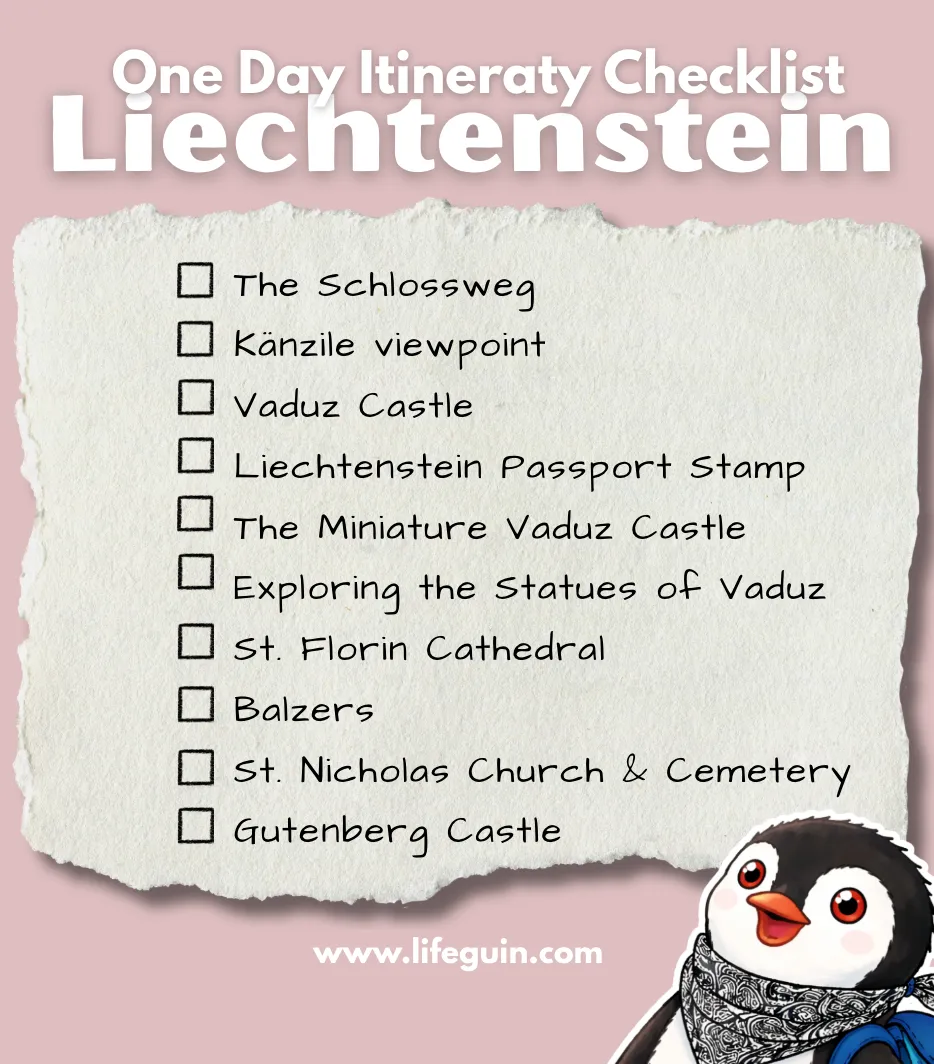
Our One Day in Liechtenstein Itinerary
Starting Our Day in Vaduz
Since we were on a road trip, we already had our car with us, which made exploring Liechtenstein pretty easy. We decided to make Vaduz, Liechtenstein’s capital, our main stop for the day. Before heading out to explore, our first mission was finding somewhere to leave the car.
We parked at parking area 201–356, right in the middle of Vaduz, which made it a convenient starting point for exploring the city center on foot. Parking cost CHF 1.50 per hour, and the parking area was open from 7:00 AM to 5:00 PM. From here, we left the car behind and started our Vaduz adventure.
Quick Facts about Vaduz
- Population: Around 5,000–6,000 people, making it one of Europe’s smallest capital cities
- Area: Around 17.3 km²
- Elevation: Around 460 meters above sea level
- First mentioned: 1150 AD
- Famous for: Vaduz Castle, the home of Liechtenstein’s princely family
- Language: German, although an Alemannic dialect is commonly spoken in Liechtenstein
- Currency: Swiss franc (CHF)
- Local nickname: Locals sometimes refer to Vaduz as “Städtle,” meaning “little town,” while Liechtenstein itself is affectionately called “Ländle,” or “little country.”
There are actually several parking areas around the center of Vaduz, but we simply chose the one that worked best for us. Once we parked, we headed straight into the city to start exploring.
Almost immediately after leaving the parking area, we were greeted by several sculptures dotted around the streets. At first, they felt like random pieces of art scattered through the city, but this is actually quite typical for Vaduz. The center is almost like a small open-air gallery, with sculptures by both Liechtenstein and international artists appearing throughout the pedestrian area. It made for a slightly unexpected start to our walk, and of course we stopped for a few photos before continuing into the center.


Walking Up to Vaduz Castle
As it was still early in the morning, and we knew the day would only get hotter, we decided to tackle the uphill part of our Vaduz itinerary first. And if there is one place you really cannot miss in Vaduz, it is Vaduz Castle. From the city center, a well-marked walking path called Schlossweg leads directly up toward the castle. The walk is around 1 km one way and takes roughly 20 minutes, climbing about 120 meters from the center to the castle, which sits at around 570 meters above sea level.
Yes, it is an uphill waddle, but we actually really enjoyed it. The higher we climbed, the better the views became, with Vaduz spreading out below us and the Rhine Valley and Swiss mountains appearing in the distance. There is also the little Känzile viewpoint about halfway up, which gives you a perfect excuse to stop, catch your breath, and enjoy the scenery before continuing toward the castle.


The Schlossweg: A Little History Along the Way
What made the waddle up to Vaduz Castle even more enjoyable was that it wasn’t just about getting to the top. Along the Schlossweg, several information boards explain the history of Liechtenstein and the Princely House, available in German, English, and French. We really liked this little detail because you can stop, read a bit of history, catch your breath, and then continue waddling uphill. The route also passes the princely vineyards, and around halfway up you reach the Känzile viewpoint, where you can look across Vaduz, the Rhine Valley, and toward Switzerland.
And, of course, we couldn’t leave without adding a tiny piece of our own story to the route. We hid several penguin stones along the way, so somewhere between all that Liechtenstein history and those mountain views, a few little penguins are now waiting to be discovered.


Vaduz Castle
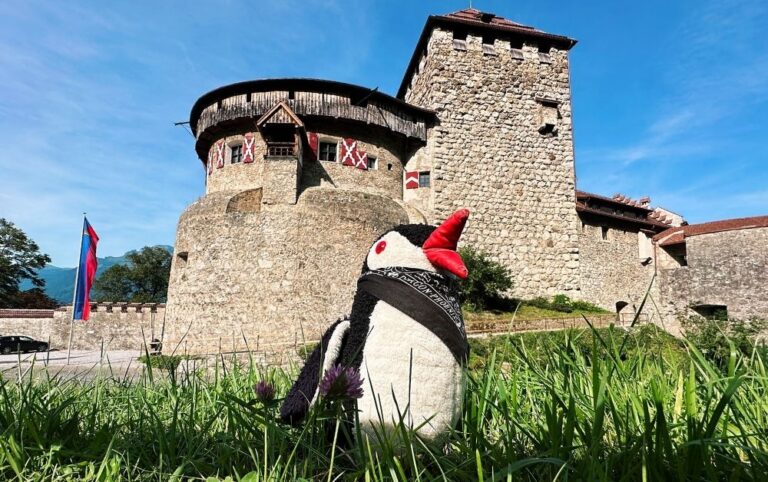
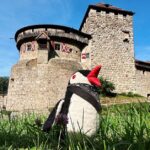
After soaking up the views from the Känzile viewpoint, we continued our waddle uphill toward Vaduz Castle (Schloss Vaduz). The castle sits dramatically above the capital, around 120 meters above Vaduz, and the closer we got, the more impressive it looked. Eventually, the path led us to the castle lawn, with the castle rising above the rocky hillside at around 570 meters above sea level.
You can walk around the outside and admire the castle, but there is one important thing to know before making your way up: you cannot actually go inside. Vaduz Castle is still the private residence of Liechtenstein’s princely family, so it is closed to visitors. Still, we think the walk up is absolutely worth doing for the castle itself, the views, and the experience along the way.


Quick Facts About Vaduz Castle
- Name: Vaduz Castle, or Schloss Vaduz in German
- Location: Around 120 meters above Vaduz, at approximately 570 meters above sea level
- Origins: The oldest parts probably date back to the 12th century
- First documented: 1322
- Oldest dated section: The residential tower dates to 1287
- Owned by the House of Liechtenstein since: 1712
- Royal residence: The castle has been the princely family’s permanent residence since 1939, according to Liechtenstein Tourism.
- Can you visit inside? No. Because it is a private residence, the interior is not open to the public.
- Fun fact: The castle lawn is used for celebrations connected with Liechtenstein’s National Day on August 15.
- Worth the climb? Definitely. Even without going inside, the castle is one of the country’s most recognizable landmarks, and the walk gives you some of the best views over Vaduz and the Rhine Valley.
Even though you cannot go inside Vaduz Castle, you can actually get surprisingly close to it. The path takes you almost right up to the front, so you can get a proper look at the castle and see just how impressive it is up close. We wandered a little farther uphill beyond the main castle area as well, mainly to enjoy a few more views over Vaduz and the surrounding mountains. Once we had taken enough photos and soaked it all in, we turned around and started our waddle back down toward the city center.


Get a Liechtenstein Passport Stamp
Back in the city center, we headed to the Liechtenstein Center, which also serves as the tourist information center. One fun little thing you can do here is get an official Liechtenstein souvenir stamp in your passport. It does cost a small fee, but we couldn’t resist. It is such a simple souvenir, but also a nice little reminder that, yes, you really did waddle through one of the smallest countries in Europe.


The Miniature Vaduz Castle
Continuing our waddle through the city center, we stopped for a few photos at the Miniature Vaduz Castle, a detailed little replica of the real castle we had just waddled up to. It is located right in the pedestrian area between the Liechtenstein Center and Engländerbau, so it’s easy to spot while exploring Vaduz.
And it has a lovely story behind it. Alfred Würgler handmade the miniature over countless hours and gave it to the municipality of Vaduz from his private collection in 2006. It originally stood near the Vaduz bus terminal, but after the area was redesigned, the model disappeared from public view for several years. It was later carefully restored and, in November 2022, placed at its current location on land belonging to the Princely House. It has even become one of Vaduz’s popular little photo stops. Of course, we couldn’t just take a picture and leave. We also hid a penguin stone right by the miniature castle, adding another little penguin to our Liechtenstein trail.


Exploring the Statues of Vaduz
As we continued along the main pedestrian walkway through Vaduz, we slowly made our way farther down the city center, stopping now and then to check out more of the sculptures scattered along the route. Art is actually a big part of central Vaduz, and you will find modern sculptures by both Liechtenstein and international artists displayed outdoors between the museums, government buildings, shops, and cafés. It gives the otherwise tiny center an open-air gallery feel, and we enjoyed stumbling upon different pieces as we waddled along.


St. Florin Cathedral
At the end of the main walkway, we reached St. Florin Cathedral, one of Vaduz’s most recognizable landmarks, and of course, we waddled inside for a quick look. The neo-Gothic church was built between 1869 and 1873 and only became a cathedral in 1997, when the Archdiocese of Vaduz was established. The interior is quite simple and peaceful compared with some of Europe’s grand cathedrals, making it a nice little stop before continuing our day in Liechtenstein.


What Else to See in Vaduz
Overall, we really enjoyed our waddle around Vaduz. It is a small, relaxed capital that is incredibly easy to explore on foot, and you certainly do not need an entire day just for the city center. Between the castle views, sculptures, little streets, museums, and mountains surrounding the city, there was plenty to keep us busy during our short visit.
If you have a little more time in Vaduz, you can also check out:
- Kunstmuseum Liechtenstein, the country’s museum of modern and contemporary art.
- Liechtenstein Treasure Chamber, a small collection featuring treasures connected to the Princely Family and Liechtenstein.
- Postal Museum, dedicated to Liechtenstein’s stamps and postal history.
- Liechtenstein National Museum, one of the best places to learn more about the country’s history and culture.
- Hofkellerei des Fürsten von Liechtenstein, the Prince of Liechtenstein Winery, just outside the main pedestrian center.
- The Red House, one of Vaduz’s most distinctive historic buildings, recognizable by its dark red exterior and tower.
- Government Building & Parliament of Liechtenstein, two striking buildings near St. Florin Cathedral that are worth seeing while walking through the government district.
- Rheinpark Stadion, Liechtenstein’s national stadium, located closer to the Rhine.


Next Stop: Balzers
After exploring Vaduz, we hopped back in the car and continued south to Balzers, another small municipality worth adding to a one-day Liechtenstein itinerary. It is only about 10–12 km from Vaduz, so the drive takes roughly 10–15 minutes, making it an easy next stop. Our main reason for coming here was Gutenberg Castle, which you can already spot sitting above the village as you approach.


St. Nicholas Church & Cemetery
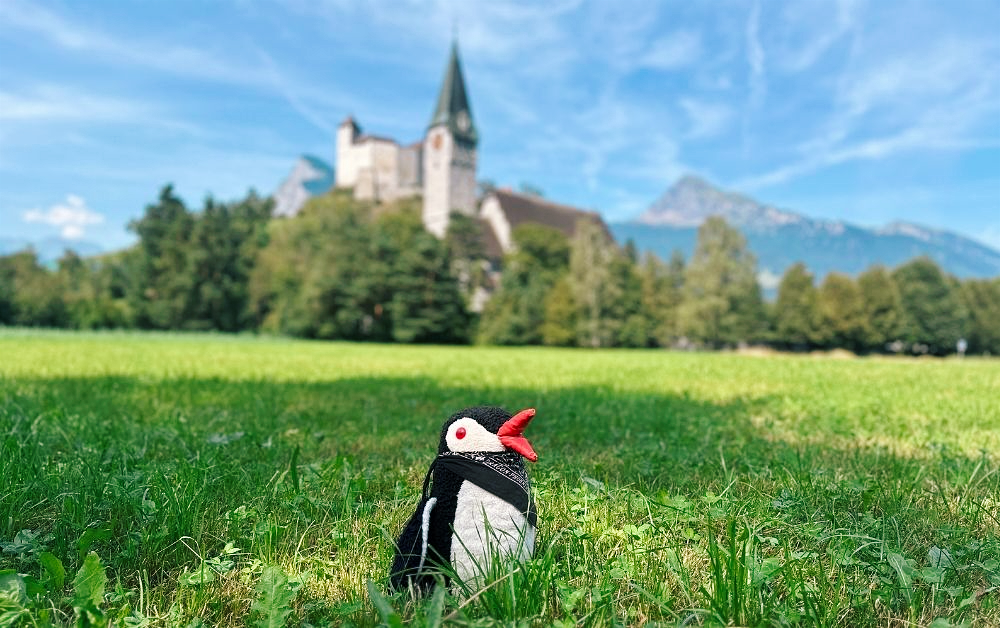
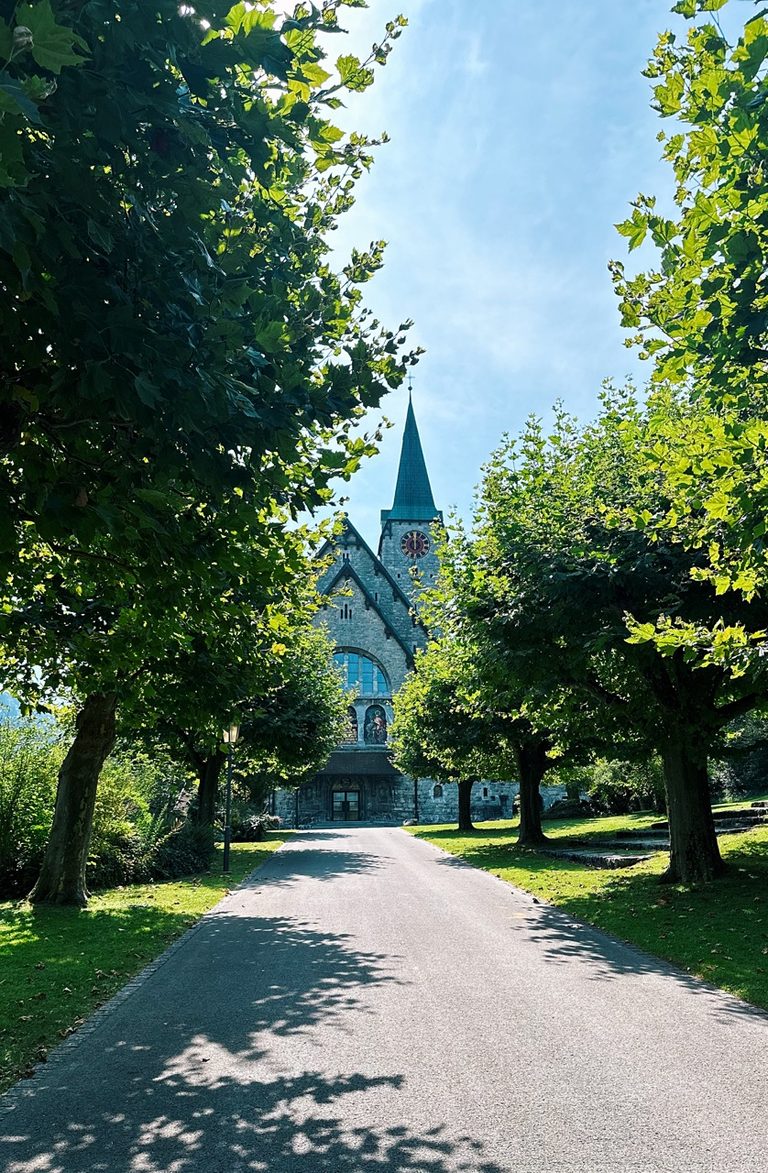
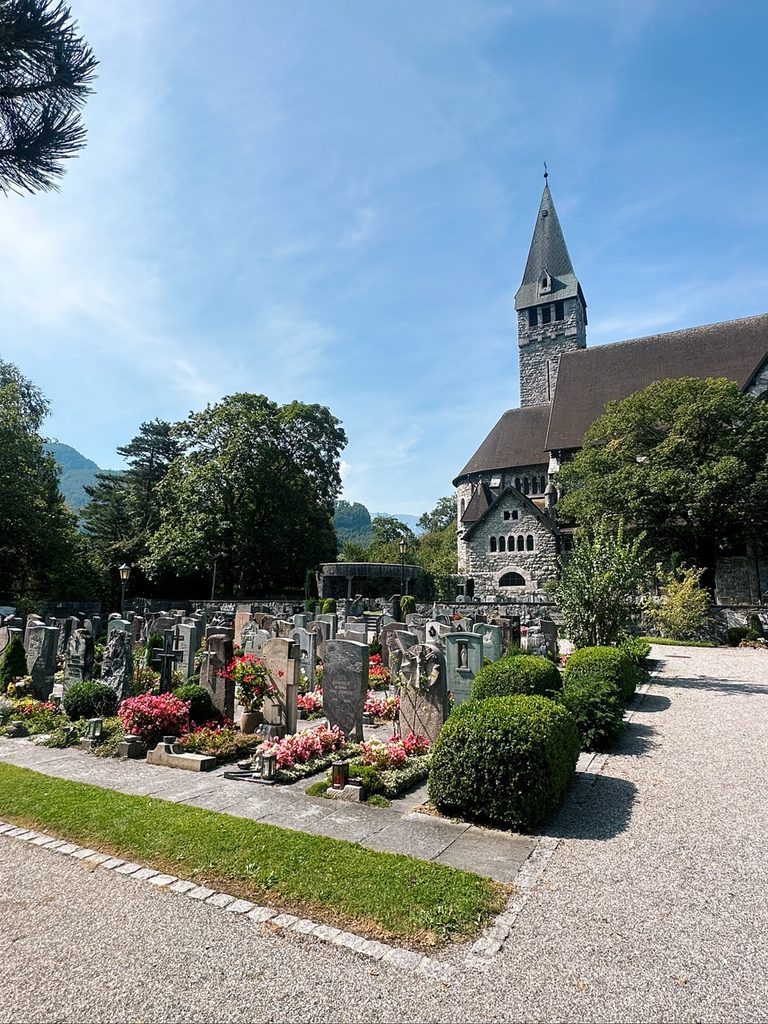
We parked our car right next to the cemetery at the foot of Gutenberg Castle, which turned out to be a perfect starting point for our Balzers walk. Before heading up to the castle, we took a little time to look around the cemetery and St. Nicholas Parish Church standing beside it. The current church was built between 1909 and 1912 in a Neo-Romanesque style, using local Balzers stone, and Prince Johann II of Liechtenstein covered two-thirds of its construction costs. The cemetery itself is much newer than the church and was inaugurated in 1966. With the church below and Gutenberg Castle rising directly above it, it is a really pretty little corner of Balzers and a nice introduction to the village before starting the walk uphill.
Reaching Gutenberg Castle
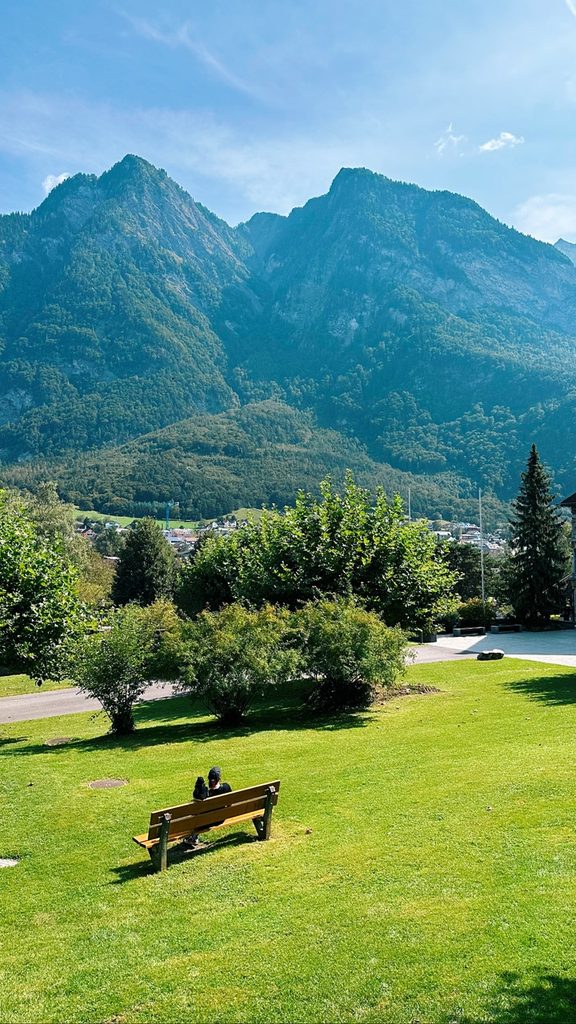
From the church and cemetery, we started making our way uphill toward Gutenberg Castle. It is a bit of a climb, especially on a warm day, but definitely worth the waddle. Once we reached the top, we were rewarded with the castle itself and some lovely views over Balzers and the surrounding mountains.
Quick Facts About Gutenberg Castle
- Built: The castle dates back to the 12th century
- Much older history: The hill itself was already inhabited during the Neolithic period
- Inhabited until: The 18th century
- Restored: Between 1905 and 1912, after falling into disrepair
- Location: On a hill around 70 meters above Balzers
- Can you visit? Yes, the outer bailey is accessible year-round, and you can enter the castle courtyard
- Rose garden: Open on Sundays from May to October
- Best part: The elevated position gives you beautiful views across Balzers, the Rhine Valley, and surrounding mountains.
Once we reached Gutenberg Castle, we took our time wandering around the grounds, enjoying the quiet atmosphere and the mountains rising all around us. We had hoped to explore the inside as well, and the castle had information about arranging a guided visit, but somehow we didn’t manage to make it work during our visit. You can visit the interior only as part of a pre-arranged guided tour, while the outer bailey is freely accessible year-round. Still, we didn’t feel disappointed. We slowed down, walked around, and soaked up those incredible views across Balzers, the Rhine Valley, and the surrounding mountains. And dare we say it, we actually thought the views from Gutenberg Castle were even better than the ones from Vaduz Castle. Definitely worth that uphill waddle!


After enjoying the views from Gutenberg Castle, we waddled back down to the car and said goodbye to Liechtenstein. From Balzers, we continued across the border into Switzerland, bringing our short but surprisingly packed one-day adventure in Liechtenstein to an end.
Is One Day in Liechtenstein Enough
We think one day in Liechtenstein is enough for a first visit, especially if you have a car and want to see some of the country’s main highlights. In one day, we managed to explore Vaduz, walk up to Vaduz Castle, visit the city center, and continue to Balzers and Gutenberg Castle without feeling too rushed. Of course, there is always more to explore in any country, and Liechtenstein is no exception. With extra time, you could head into the mountains, visit Malbun, hike some of the trails, or discover more of the smaller villages. But if you are passing through on a road trip like us, one day gives you a surprisingly good taste of Liechtenstein.
Hotel search from Trip.comShows Trip.com’s own box, which can set Trip.com cookies.
Tips for Spending One Day in Liechtenstein
If you only have one day in Liechtenstein, a little planning helps you fit quite a lot into those few hours. Here are a few things we would keep in mind:
- Parking. If you are exploring by car like us, parking is fairly straightforward. Vaduz has several public parking areas and garages close to the center, although most are paid.
- Currency. Liechtenstein uses the Swiss franc (CHF), not the euro. Euros are accepted in many places, and card payments are widely available, but having a few Swiss francs can still be useful.
- Switzerland Connection. Liechtenstein shares an open border with Switzerland, so combining the two countries on a road trip is incredibly easy. There are no regular border controls between Switzerland and Liechtenstein, and both countries use the Swiss franc.
- Opening Hours. Check opening hours before your visit, especially if you want to visit museums, restaurants, or smaller attractions. Shops generally have shorter hours on Saturdays, while many are closed on Sundays. The Liechtenstein Center in Vaduz is open daily, making it an easy stop even on a weekend.
- Weather. Liechtenstein may be tiny, but the Rhine Valley and the mountains can feel very different. Summers are generally mild to warm, with average temperatures around 20–28°C, but mountain weather can change quickly.
- What to Pack. Bring comfortable walking shoes, especially if you plan to waddle up to Vaduz Castle or Gutenberg Castle. A reusable water bottle, sunscreen, sunglasses, and a light rain jacket are also useful. If you are heading farther into the mountains, proper footwear and an extra layer are a good idea.
Buy Us a Ko-fi

Our one day in Liechtenstein may have been short, but it was absolutely worth adding to our road trip. From waddling uphill to Vaduz Castle, exploring the tiny capital, collecting our passport stamp, and discovering all the little sculptures along the way, to ending our visit with the incredible views from Gutenberg Castle in Balzers, we managed to see quite a lot in just a few hours. Liechtenstein might be one of Europe’s smallest countries, but that certainly doesn’t mean there is nothing to see. We loved how easygoing and compact everything felt, and being surrounded by mountains made even the drives between stops part of the experience. If you are traveling between Austria and Switzerland, we definitely recommend making room for a little Liechtenstein waddle along the way. Pack your bag, explore, and waddle more.
Travel Bold. Eat Well. Waddle Wild.

This post contains affiliate links. If you click and buy, I might earn a tiny commission, enough to help a penguin keep up its globe-trotting lifestyle. No extra cost to you, just more fish for me. Thank you for supporting the adventure!