The Brussels We Saw Beyond the Landmarks
Brussels was the first stop on our city-hopping trip, and it took a little longer to get there than expected. We landed at Brussels South Charleroi Airport, which is quite far from the city, so we still had a bit of traveling to do before we could finally drop our bags and start exploring.
But once we arrived, Brussels had its own feel. We came with certain expectations. As Belgium’s capital, home to major European institutions and one of Europe’s most important political cities, we expected something a little more polished. Instead, our first impressions were much more complicated. There were beautiful buildings and impressive squares, but also dirty streets, rougher corners and moments that made us feel slightly uneasy. Brussels wasn’t exactly what we had pictured, and over the next two days, that contrast followed us almost everywhere we waddled.
- The Capital of Europe, But It Didn’t Feel Like One
- Our First Impression: A Little Rough Around the Edges
- The Beer Can Moment
- Beautiful, Then Suddenly Not
- The Urinals We Did Not Expect
- We Didn’t Always Feel Completely Comfortable
- And Yet, Brussels Has Some Incredible Places
- The Quirky Side of Brussels We Actually Loved
- A City of Contradictions
- Did Brussels Grow on Us
- Would We Come Back to Brussels
- Not Every City Has to Win You Over
The Capital of Europe, But It Didn’t Feel Like One
A certain image comes with being called Europe’s capital. We imagined something polished, organized, and perhaps even a little formal, a city shaped by the European institutions that call it home. But walking through Brussels, that image faded surprisingly quickly. Away from the grand buildings and political landmarks, parts of the city felt rougher, dirtier, and less cared for than we expected.
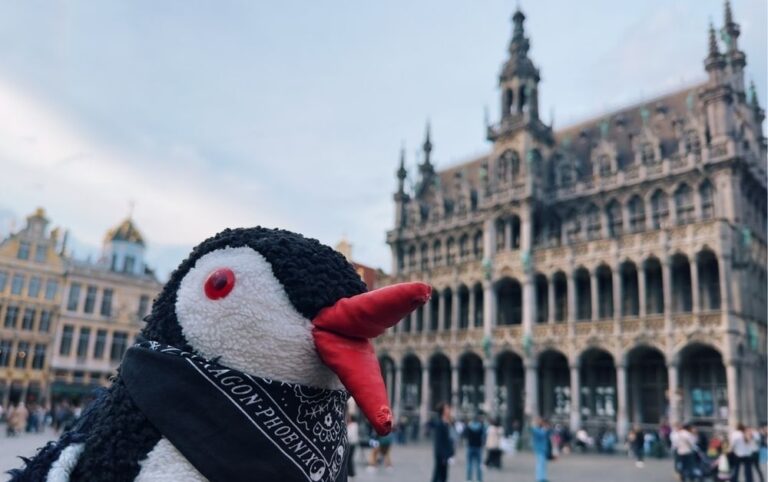
That does not mean Brussels is unattractive, far from it. We stopped and admired what was around us, especially around Grand-Place and some of the historic streets. But Brussels seemed to change character almost from one corner to the next. One street could feel grand and unmistakably European, while the next felt messy, worn and slightly sketchy. That contrast became one of our strongest impressions of the city.
Perhaps that was the biggest surprise. Brussels carries enormous political importance, yet on the ground it did not always feel like the polished European capital we had imagined. It felt more complicated than that, more lived-in, sometimes chaotic and occasionally uncomfortable. And while that might not have been the Brussels we expected to find, it was the Brussels we experienced.


Our First Impression: A Little Rough Around the Edges
It did not take long for us to notice that Brussels has a rougher side. As we waddled beyond the main squares and tourist streets, we started noticing litter, overflowing bins, graffiti, and corners that felt a little neglected. Some streets had that slightly sketchy feeling where you become a bit more aware of your surroundings and instinctively keep your belongings a little closer.
What surprised us was how quickly the atmosphere could change. You could be admiring an incredible historic building, walk a few hundred meters, and suddenly find yourself on a street that felt completely different. Brussels did not feel polished from one end to the other, and perhaps we noticed it more because of the expectations we had before arriving.
Of course, two days in a city can only give you a snapshot, and this was our experience of Brussels during our visit, not a judgment on every neighborhood or on what living here is like. But first impressions are part of travel too, and ours was that Brussels felt a little grittier, messier, and less comfortable in places than we had expected from the city at the heart of Europe.


The Beer Can Moment
Sometimes a famous landmark or major attraction doesn’t shape how you remember a city. Sometimes it is one tiny moment on an otherwise ordinary street. For us, one of those moments in Brussels involved nothing more than a man, an empty beer can and a pavement.
We were walking through the city when a man in front of us finished his drink and, without hesitating, threw the empty can onto the ground and kept walking. No bin search, no second thought. He just dropped it right there in front of us as if that was where it belonged. We remember looking at each other because it somehow summed up part of what we had already been noticing around Brussels.
Of course, one person throwing rubbish on the street doesn’t define an entire city, and we would never pretend it does. But travel impressions are often built from these small encounters. Combined with the litter and neglected corners we had already noticed, that little beer-can moment stayed with us. It was nothing dramatic, yet somehow it reinforced the feeling that parts of Brussels were less cared for than we had expected, especially from a city carrying the unofficial title of Europe’s capital.
Beautiful, Then Suddenly Not
Brussels has a strange way of changing almost before you realize it. One moment, you are standing in Grand-Place surrounded by ornate guildhalls and one of the most impressive squares in Europe. A little later, you are waddling beneath the glass roof of Galeries Royales Saint-Hubert, with its polished shopfronts, cafés and chocolate stores. In those moments, Brussels looks exactly like the grand European capital we had imagined.
But walk a few streets further, and the picture can change remarkably quickly. The buildings become less polished, litter reappears, graffiti covers walls, and suddenly the atmosphere feels completely different. We experienced this contrast several times, sometimes within what felt like only a few minutes of walking.
And perhaps that is what made Brussels so difficult for us to define. We found parts of the city beautiful, but they often felt like pockets rather than one continuous experience. Brussels could impress us, disappoint us, and surprise us within the same waddle. That constant switch between grandeur and grit became one of the things we remembered most about the city.


The Urinals We Did Not Expect
Then there were the public urinals, or urinoirs, which certainly didn’t help our first impression of Brussels. The ones that really caught our attention were attached to the exterior of Sainte-Catherine Church. They are not just random places where people have decided to pee. They are actual historic public urinals dating from 1873, and today they are the only surviving examples from a much larger network of public urinals that once existed across Brussels. The city introduced the first in 1845 in response to public urination and poor sanitation.
They have an interesting social history. The Sainte-Catherine urinals later became discreet meeting places for gay men at a time when the community faced persecution. But seeing them in use today was still quite a culture shock for us. They are essentially open-air facilities designed for men, tucked against the church, and they felt like another example of the strange contrasts we kept encountering in Brussels. Even historically, the imbalance was striking: Brussels installed hundreds of public urinals for men during the 19th century, while facilities for women were extremely limited. Interesting from a historical perspective? Definitely. Did it make Brussels feel cleaner or more welcoming to us? Not exactly.


We Didn’t Always Feel Completely Comfortable
There were also moments when Brussels did not make us feel completely at ease. Some streets felt rougher and a little sketchier, especially once we moved away from the main tourist areas. Nothing particularly serious happened to us, and we would not label Brussels as unsafe based on our short visit. Still, there were definitely times when we became more aware of our surroundings. It was simply another part of the mixed impression the city left on us.
And Yet, Brussels Has Some Incredible Places
For all the moments that made us question Brussels, there were just as many that reminded us why people come here in the first place. Waddling into Grand-Place for the first time was one of them. Whatever we thought about the streets around it, the square itself delivered. Then there was the Atomium, which looks slightly ridiculous from a distance but turned out to be one of the most memorable things we explored, especially once we waddled inside.
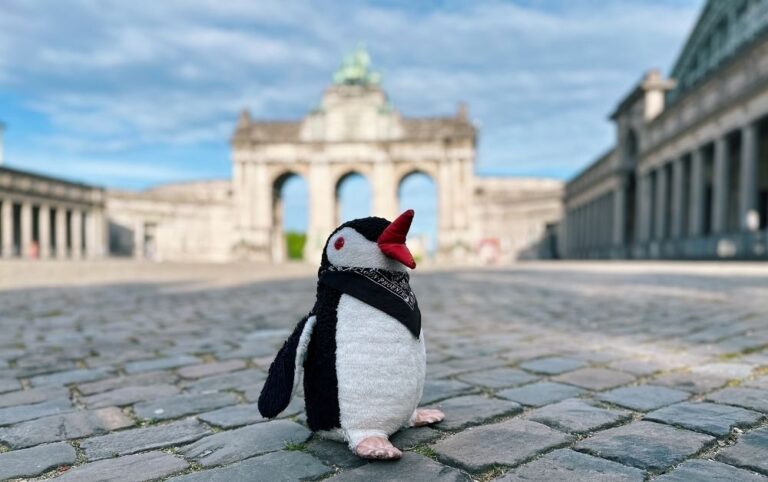
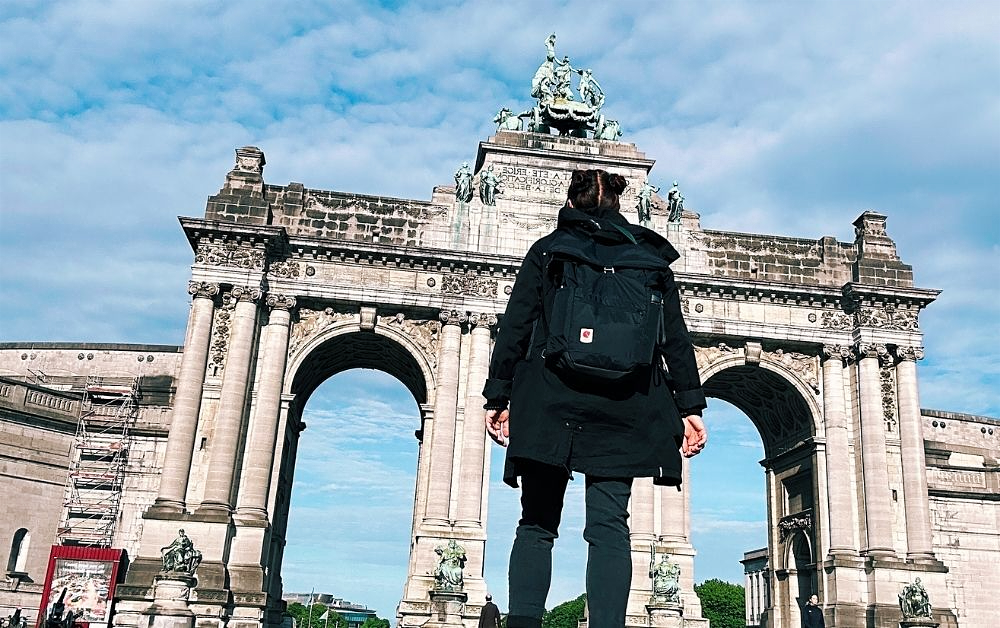
We also loved Parc du Cinquantenaire, and the museums around it were some of the biggest surprises of our trip. The Royal Military Museum was far larger than we expected, Autoworld kept us interested even though we’re not huge car fans, and Belgian Beer World turned something as familiar as beer into a genuinely fun experience. Add the churches, comic murals, Galeries Royales Saint-Hubert and all those little pieces of history we kept stumbling across, and Brussels gave us plenty of moments we genuinely enjoyed.
That is what makes our relationship with Brussels complicated. We did not particularly fall in love with the city, but we absolutely loved parts of it. And sometimes those two things can be true at the same time.
The Quirky Side of Brussels We Actually Loved
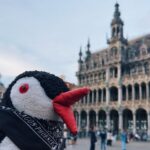
And then there was the Brussels that made us smile. A city that has Manneken Pis as one of its biggest symbols was probably never going to take itself too seriously. Then you find Zinneke Pis, comic-book characters painted across entire buildings, strange little statues and, of course, a giant Atom standing over the city. Brussels has a playful, slightly weird side that we genuinely loved.
But it was not only the obvious quirky sights. Some of our favorite moments were in the smaller details. An interesting façade above a shop you almost walk past, a medieval tower squeezed between newer buildings, beautiful details on old houses, a mural appearing around a random corner, or a tiny piece of history hiding in an otherwise ordinary street. Brussels rewards you for looking up, looking around, and occasionally wandering somewhere that was not on the itinerary.
Perhaps that is why our feelings about the city became so complicated. Brussels as a whole did not always win us over, but Brussels in the details often did. There were these little pockets of beauty, humor, and character scattered throughout the city, and finding them while we waddled around was one of the parts we enjoyed most.


A City of Contradictions
Brussels often felt like two different cities sharing the same streets. Beautiful yet dirty, grand yet scruffy, serious enough to run European politics but playful enough to celebrate peeing statues and comic murals. One moment impressed us, the next left us wondering what to make of it. And perhaps that contradiction is the most Brussels thing of all.
Did Brussels Grow on Us
In some ways, yes. In others, not really. The more we explored, the more little things we found that we genuinely enjoyed, from the museums and architecture to quirky statues, hidden details and some very good food and beer. There are definitely parts of Brussels we would happily waddle back to.
But those discoveries did not completely erase our first impressions. Some streets still felt dirty, neglected or uncomfortable, and there were parts of the city we could quite happily go without seeing again. So did Brussels grow on us? Certain parts absolutely did. The city as a whole left us with much more mixed feelings. And maybe that is simply Brussels for us.
Would We Come Back to Brussels
Yes, we would come back, because Brussels still has places we did not manage to explore, museums we skipped, and neighborhoods we would like to experience beyond a packed two-day itinerary. There are enough unfinished corners on our Brussels map to give us a reason to waddle back.
But would Brussels be one of the first cities we recommend to someone beginning to explore Europe? Probably not. Some European cities captured us almost immediately, while Brussels made us work much harder to find that connection. We enjoyed many of its individual pieces, from its museums and architecture to its beer culture, food and wonderfully strange sense of humor, but the city as a whole never quite came together for us.
And perhaps that is the fairest way to describe how Brussels made us feel. We appreciated it more than we loved it. We saw places we would happily return to and had experiences we genuinely enjoyed. Still, we also left with memories of littered streets, rougher corners and moments when we did not feel fully comfortable. Travel doesn’t always end with falling in love with a destination, and it shouldn’t have to. Brussels gave us plenty to talk about, plenty to remember and even a few reasons to return. It just did not leave us longing to come back the moment we left.
Buy Us a Ko-fi

Not Every City Has to Win You Over
Not every trip ends with falling in love with a city, and we think that is part of what makes travel interesting. Brussels did not completely win us over. We loved individual pieces of it, from the architecture and museums to the beer, chocolate, quirky statues, and little details we discovered while waddling around. Still, the overall feeling was much more complicated.
Beautiful moments gave way to neglected streets, and impressive landmarks gave way to corners where we didn’t feel entirely comfortable. Brussels gave us both grandeur and grit, sometimes within a few minutes of each other. And while that contrast certainly made the city interesting, it did not necessarily make us fall in love with it.
Would we tell you not to visit? Absolutely not. Our experience is exactly that, our experience. Cities feel different to everyone, and Brussels deserves to be explored rather than judged from someone else’s impressions. We are glad we went; we would return to see the places we missed, and there are experiences there we genuinely loved. But when we waddled away, Brussels left us intrigued rather than attached. And sometimes, that is how a city makes you feel.
Travel Bold. Eat Well. Waddle Wild.

This post contains affiliate links. If you click and buy, I might earn a tiny commission, enough to help a penguin keep up its globe-trotting lifestyle. No extra cost to you, just more fish for me. Thank you for supporting the adventure!