Across the Water: A Waddle Through NDSM Amsterdam
By this point in our Amsterdam trip, we had spent plenty of time among canals, narrow houses, museums, and streets packed with bicycles. But there was another side of the city sitting just across the water, and getting there required little more than stepping onto a ferry.
We met up with a friend in the city and decided to cross the IJ together to NDSM, a former shipyard in Amsterdam-Noord that has traded much of its industrial past for street art, creative spaces, cafés and cultural venues. From what we had seen before visiting, it looked nothing like the Amsterdam we had been waddling through so far. That was precisely the appeal. We weren’t heading across with a long list of attractions to tick off. The plan was much simpler: take the ferry, waddle around NDSM and see what we found. And sometimes, that is all the itinerary you need.
- NDSM Amsterdam Quick Facts
- The Ferry Is Part of the Experience
- First Impressions: This Doesn’t Look Like the Amsterdam We Just Left
- From Shipyard to Cultural Playground: What Exactly Is NDSM
- Our Waddle Through NDSM
- Street Art Is Everywhere, But It Isn’t Just Decoration
- If You Want to Explore NDSM With a Plan
- NDSM Isn’t a Museum, and That’s the Point
- How Much Time Do You Need at NDSM
- When Is the Best Time to Visit NDSM
- Is NDSM Worth Visiting
NDSM Amsterdam Quick Facts
- Location: Amsterdam-Noord, directly across the IJ from central Amsterdam
- What NDSM Means: Nederlandsche Dok en Scheepsbouw Maatschappij, the Dutch Dock and Shipbuilding Company
- Originally: A major industrial shipyard, which eventually became the largest shipyard in the Netherlands before shipbuilding operations ended in 1979
- Known For Today: street art, creative studios, exhibitions, cultural events, cafés, industrial heritage, and the STRAAT Museum spread across a roughly 10-hectare site.
- Getting There: Take the F4 ferry from behind Amsterdam Centraal directly to NDSM
- Ferry Cost: Free: You don’t need to use your GVB ticket for the crossing
- NDSM Admission: The outdoor NDSM Wharf is a public space and free to explore 24/7; individual museums, events, and attractions may charge admission.
- Time to Allow: Around 2–3 hours is comfortable for a relaxed waddle, street art, and a food stop. Add more time if you plan to visit STRAAT or attend an event
The Ferry Is Part of the Experience
If it hadn’t been for our friend Brix, we might have skipped NDSM altogether. Amsterdam already gives you more than enough to fill several days, and crossing the IJ wasn’t originally high on our list. Brix suggested we head over together, so we followed his lead to the ferry terminal behind Amsterdam Centraal.
Getting there is remarkably simple. The F4 ferry runs directly from Centraal Station to NDSM, and unlike almost every other form of transport we had been using around Amsterdam, it is completely free. No ticket, no tapping in, and no need to use our 72-hour GVB pass. You waddle or cycle aboard and find a spot for the crossing.
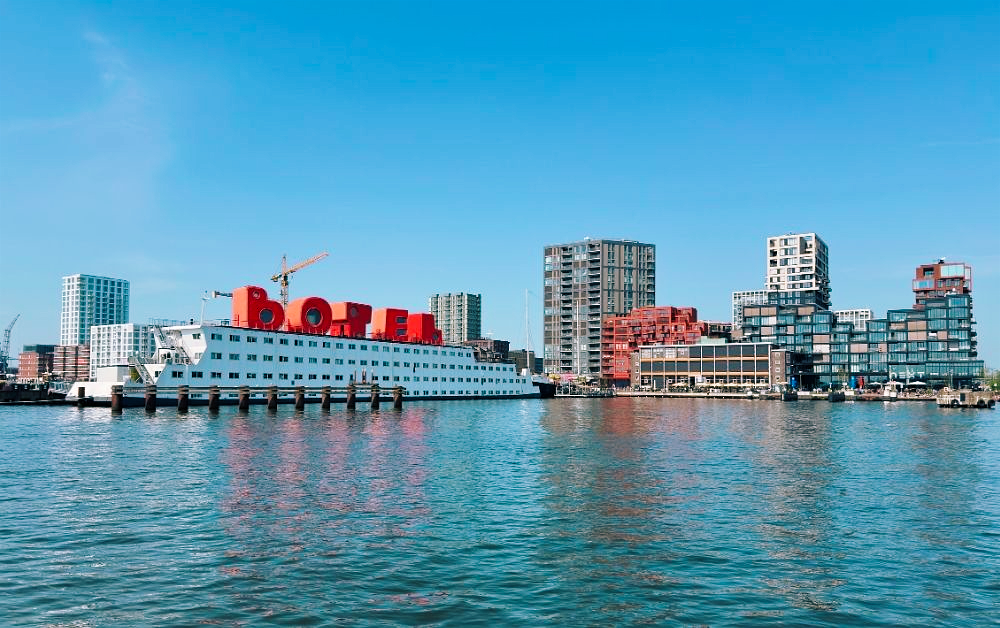
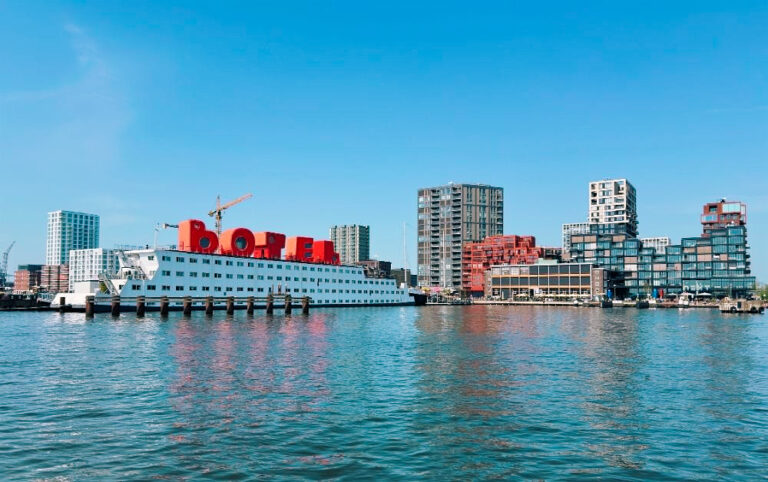
The journey takes roughly 15 minutes, but it feels less like a commute and more like part of the outing. Amsterdam’s historic center gradually slips behind you as the ferry crosses the IJ, while cranes, modern buildings and the industrial waterfront of Amsterdam-Noord begin to take its place. The ferry drops you at NDSM itself, so no second tram or long waddle is waiting at the other end. You step off the boat and straight into the former shipyard.


First Impressions: This Doesn’t Look Like the Amsterdam We Just Left
Stepping off the ferry at NDSM feels like arriving in a different city. Just 15 minutes earlier, Amsterdam meant canal houses, bicycles squeezed against bridges and narrow streets. On this side of the IJ, suddenly there was space; a lot of it.
The former shipyard still dominates the landscape. Huge warehouses, old industrial structures, cranes and stretches of concrete replace the tidy streets of central Amsterdam, while murals and graffiti cover walls that once belonged to a working shipyard. Nothing feels particularly polished, and that is largely the point.
NDSM wears its industrial past openly rather than trying to disguise it. Old infrastructure sits alongside creative studios, cafés and cultural spaces, and street art appears almost everywhere you look. There is always something slightly unexpected around the next corner, whether it is another enormous mural, an unusual structure or simply another reminder of what this place used to be.
It was a sharp contrast to the Amsterdam we had spent the previous days exploring. We had crossed one stretch of water, but it felt like we had traveled much farther.

From Shipyard to Cultural Playground: What Exactly Is NDSM
To understand why NDSM looks the way it does, you need a little history, but don’t worry, we aren’t about to turn this into a shipbuilding lecture.
NDSM stands for Nederlandsche Dok en Scheepsbouw Maatschappij, the Dutch Dock and Shipbuilding Company. For much of the 20th century, this waterfront in Amsterdam-Noord was a working shipyard that eventually became the largest in the Netherlands. Thousands of people worked here building and repairing ships until the company collapsed and the shipyard finally closed in 1984.
What happened next explains the NDSM you see today. Artists, craftspeople and other creatives gradually began using the abandoned industrial spaces, turning former workshops and warehouses into studios, performance venues and places to experiment. Rather than clearing away the shipyard and starting again, much of its industrial character became part of the new identity.
You can still read that history while waddling around. The enormous NDSM Loods warehouse, old slipways, cranes and stretches of concrete remain, but now they share the waterfront with murals, exhibitions, cafés and creative spaces. The result isn’t a perfectly restored historic district, and it doesn’t try to be.
That is part of what makes NDSM interesting: the shipyard never completely disappeared. Amsterdam found a very different use for it.
Our Waddle Through NDSM
We didn’t have a checklist for NDSM, and that turned out to be the best way to explore it. We waddled around, following whichever mural, old industrial structure, or strange corner caught our attention.
NDSM rewards that wandering. One moment you’re waddling past an enormous former shipyard building, the next you’re looking at street art or something you can’t quite work out the purpose of. We stopped, took photos, doubled back a few times, and let the area decide where we went next. There was no rush and no particular destination. For once, getting slightly lost was basically the plan.
A Stop at Pllek
We still had a little time to wander before making our way to Pllek, one of NDSM’s best-known places to eat and hang out by the water. Its industrial, slightly unconventional setting fits the neighborhood almost perfectly. By then, we were ready to sit down, catch up with our friend, and try something we had been seeing on menus around Amsterdam: croquettes. We ordered Pllek’s forest mushroom croquettes, six vegan croquettes served with mustard. Croquettes are a Dutch snack staple, so even though this mushroom version puts a modern spin on the classic, it felt like a fitting order in Amsterdam. We stayed for a while, enjoyed the food, and let the waddle pause. Pllek felt less like another attraction to tick off and more like part of the NDSM experience itself.


Street Art Is Everywhere, But It Isn’t Just Decoration
You don’t have to search very hard for street art at NDSM. Murals, graffiti, painted containers and smaller pieces appear across the former shipyard, sometimes covering entire walls and sometimes hiding in places you only notice because you happened to waddle past.
But the art here doesn’t feel like decoration added to make an old industrial area more photogenic. When artists and creatives began occupying the abandoned shipyard spaces, art became part of NDSM’s new identity. Studios, workshops and cultural projects followed, while the walls and industrial structures became canvases themselves.
That also means NDSM never feels finished. Murals change, new work appears, and old pieces disappear, so what we saw during our waddle might not be exactly what you find on yours. That temporary quality is part of what makes walking around here interesting.
And then there is STRAAT Museum, housed inside one of the enormous former shipyard warehouses, taking the street-art connection indoors on a much bigger scale. Even if you don’t visit the museum, its presence makes sense here. At NDSM, street art isn’t something confined behind museum walls. The whole neighborhood already feels like part of the gallery.
If You Want to Explore NDSM With a Plan
We were perfectly happy winging our way around NDSM, but you don’t have to follow our slightly questionable navigation strategy. If you prefer knowing what you’re looking for, there are several landmarks and cultural spaces worth building your waddle around:
- STRAAT Museum. The big one for street-art fans, housed in a former shipbuilding warehouse and filled with large-scale works by artists from around the world.
- NDSM Loods. One of the enormous surviving shipyard buildings and now home to artists, makers, and creative workspaces. Even the building itself gives you a sense of NDSM’s industrial scale.
- Anne Frank Mural. Look for Eduardo Kobra’s enormous, colorful portrait of Anne Frank on the side of the STRAAT building, one of the most recognizable works at NDSM.
- NDSM Crane. The towering former shipyard crane is difficult to miss and remains one of the clearest reminders of what this waterfront used to be.
- IJ-Hallen. If your visit falls on one of its market weekends, NDSM hosts one of Europe’s largest flea markets, spread through and around the old industrial halls.
- Pllek. A good place to build a break into your exploration, whether for lunch, drinks or simply some time beside the IJ.
- NDSM Outdoor Art. Leave some room between the named sights to wander. Murals, installations, old shipyard structures and changing artworks are scattered throughout the site, and some of the most interesting things here aren’t really attractions at all.
NDSM Isn’t a Museum, and That’s the Point
NDSM can be confusing if you arrive expecting a polished attraction with a clear entrance, route, and list of things to complete. There isn’t really a correct way to visit it. This is still a working neighborhood and cultural space, and parts of it remain deliberately rough around the edges.
At the same time, NDSM is no longer simply an abandoned shipyard reclaimed by artists. The area has become increasingly fashionable, and even a little posh in places, with waterfront restaurants, new apartments, hotels and creative businesses appearing alongside graffiti-covered warehouses and old industrial structures. That contrast is now part of the story too: alternative Amsterdam and a rapidly developing neighborhood occupying the same stretch of waterfront.
That is why NDSM works best when you don’t treat it like a museum. Come to waddle, look around, and see what is happening that day. An exhibition might be open, a market might fill the old halls, artists might be working, or you might end up beside the IJ with a coffee. NDSM isn’t something you complete. It is a part of Amsterdam you spend a little time in.
How Much Time Do You Need at NDSM
How long you need at NDSM really depends on what you want from it. If, like us, you mainly want to waddle around, see the street art, soak up the industrial atmosphere and stop somewhere for food, 2–3 hours is plenty.
You can easily turn that into half a day, though. Add a visit to STRAAT Museum, time your trip with the IJ-Hallen flea market, have lunch at Pllek or stay for a drink beside the IJ, and suddenly there is no reason to rush back. That is probably the best way to approach NDSM: don’t worry too much about how long you’re supposed to stay. Start with a couple of hours and let the neighborhood decide the rest.
When Is the Best Time to Visit NDSM
The best time depends on which version of the neighborhood you want to experience. During the day, you can properly explore the street art, industrial buildings, and outdoor spaces. Later, the focus shifts more toward restaurants, drinks, events, and the waterfront.
We visited during the daytime and stayed into the afternoon, which worked well for us. Plenty was happening, but we could still waddle around at our own pace, take photos, explore, and eventually stop at Pllek before catching the ferry back.
Weekends feel livelier, particularly when markets or events are taking place, while weekdays can give you a quieter look at NDSM. If you specifically want to visit IJ-Hallen, an exhibition or another event, check the calendar before crossing the IJ rather than assuming something will be happening. For a first visit, we would choose late morning or early afternoon. You get daylight for exploring, cafés and cultural spaces are active, and you can always stay longer if NDSM convinces you to postpone that ferry back.
Is NDSM Worth Visiting
Yes, if you have enough time in Amsterdam. NDSM is especially worth visiting for street-art fans, photographers, and anyone curious about the city’s industrial and creative side. However, if you only have one or two days, we would prioritize the historic center, canals, and major sights. NDSM is best when you have a few hours to cross the IJ and waddle without rushing.
Buy Us a Ko-fi

Back Across the IJ
Eventually, we waddled back to the same ferry dock and crossed the IJ towards Amsterdam Centraal. The shipyard, street art, and industrial landscape slowly disappeared behind us as the familiar historic city came back into view. Sometimes seeing a completely different side of Amsterdam requires nothing more than taking a free ferry across the water.
Travel Bold. Eat Well. Waddle Wild.

This post contains affiliate links. If you click and buy, I might earn a tiny commission, enough to help a penguin keep up its globe-trotting lifestyle. No extra cost to you, just more fish for me. Thank you for supporting the adventure!