Getting Around Amsterdam: Public Transport, Waddling, Bikes & Tickets
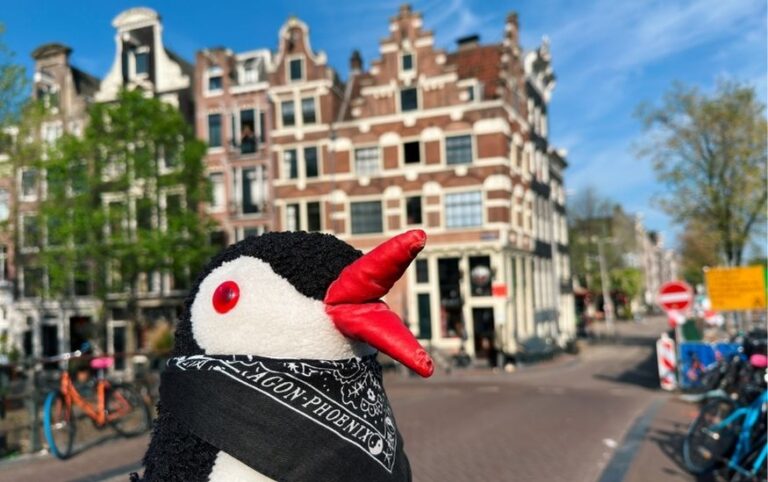
Getting around Amsterdam is much easier than it can look when you first open the map. Between the canals, bridges, tram tracks, bikes coming from every direction, and several types of public transport, a lot is happening at once. In reality, we found Amsterdam straightforward to navigate, and we actually waddled most of the time.
During our trip, we also bought a 72-hour public transport ticket, which let us jump on public transport whenever the distance was longer, or our feet had had enough. For us, that combination worked best: waddle whenever possible and use public transport when it actually saves time.
- Amsterdam’s Public Transport Network
- Getting Around Amsterdam at a Glance
- Arriving in Amsterdam
- Public Transport in Amsterdam
- Amsterdam Ferries
- Cycling in Amsterdam
- Waddling Around Amsterdam
- Public Transport Tickets in Amsterdam
- OVpay: Paying With Your Bank Card
- Amsterdam Travel Ticket vs GVB Ticket
- What We Recommend
Amsterdam’s Public Transport Network
Amsterdam has a well-connected public transport network, operated mainly by GVB, that covers most places you are likely to visit during a city trip. The network includes trams, metro lines, buses, and ferries, with trains connecting Amsterdam to Schiphol Airport and other cities across the Netherlands. Trams are particularly useful around the center, while the metro and buses make it easier to cover longer distances. Add Amsterdam’s bike network and walkable center, and you have plenty of ways to get around without a car.
Getting Around Amsterdam at a Glance
Amsterdam gives you plenty of choices, but you probably will not use all of them equally. The main ways to get around are:
- Waddling. Our preferred option for central Amsterdam, and how we covered most of the city.
- Trams. Probably the most useful form of public transport for sightseeing and moving around central neighborhoods.
- Metro. Better for longer distances and reaching areas farther from the historic center.
- Buses. Useful where tram and metro connections are less convenient, and at night.
- Ferries. Particularly useful for crossing the IJ between Amsterdam Centraal and Amsterdam Noord. Most GVB ferries across the IJ are free for pedestrians and cyclists.
- Bicycles. A major part of everyday transport in Amsterdam, although renting one as a visitor is not necessarily the easiest way to see the city.
- Taxis and ride-hailing. Available, but rarely necessary if you are staying somewhere with good public transport connections.
Arriving in Amsterdam
Getting From the Airport to the City Center
If you are flying to Amsterdam, chances are you will arrive at Amsterdam Airport Schiphol (AMS), the city’s main international airport. Schiphol is about 15 km southwest of central Amsterdam, and several options get you from the airport into the city. The best option depends mainly on where you are staying.
- Train. Usually the easiest way to reach central Amsterdam. Direct trains connect Schiphol Airport to Amsterdam Centraal, and the journey takes about 15–20 minutes.
- Bus. Several bus services connect Schiphol with different parts of Amsterdam. This can be more convenient than the train if your hotel is around Museumplein, Leidseplein, or another area away from Amsterdam Centraal.
- Taxi. Official taxis are available outside the airport. They cost more than public transport but can make sense if you have a lot of luggage or want to go directly to your hotel.
- Amsterdam Travel Ticket. If you plan to use public transport throughout your stay, this ticket combines airport travel with unlimited GVB transport in Amsterdam for its validity period.
Remember that a regular GVB multi-day ticket does not cover the NS train between Schiphol and Amsterdam. If you buy a standard GVB pass as we did, you will need to purchase your airport train journey separately.
Arriving in Amsterdam by Train
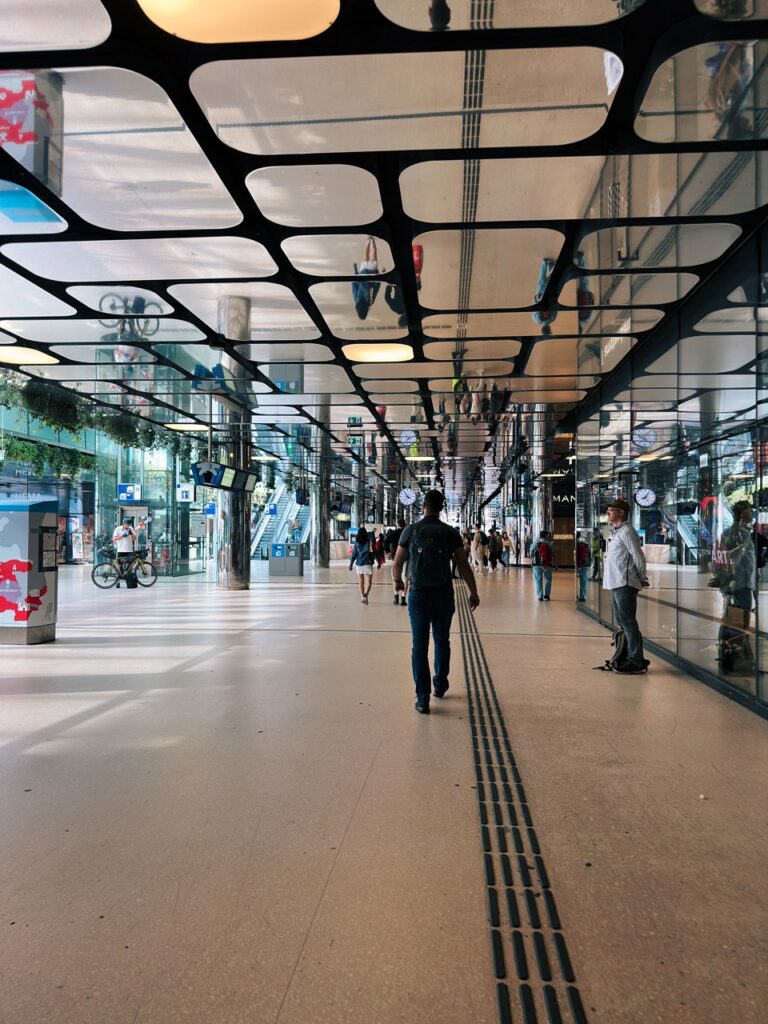
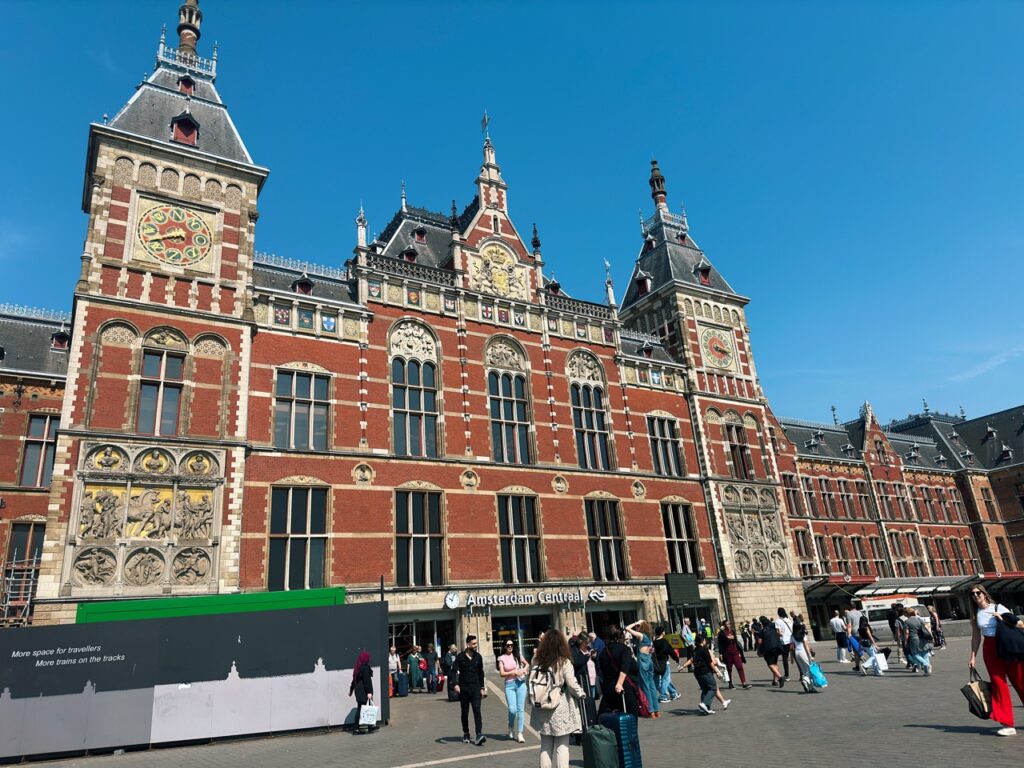
We actually arrived in Amsterdam by train from Belgium, which made getting into the city particularly easy. International trains from Belgium and other European destinations arrive at Amsterdam Centraal, the city’s main railway station. The station sits right on the edge of the historic center, so once you step outside, you are already within walking distance of the canals, Dam Square, and many central sights.
Amsterdam Centraal is also one of the city’s main transport hubs, with trams, metro services, buses, and ferries connecting from here to other parts of Amsterdam. Since we were staying for several days, we sorted out local transport here and bought 72-hour GVB tickets. We paid around €42 for the two of us, which gave us unlimited use of GVB public transport for the next 72 hours. Even though we ended up walking most of the time, having the tickets made it easy to jump on a tram or metro whenever we needed one.
Public Transport in Amsterdam
Amsterdam’s main public transport operator is GVB, which operates the city’s trams, metro, buses and ferries. The network covers both the center and farther-out neighborhoods, so you can easily visit Amsterdam without renting a car.
For sightseeing, we found public transport most useful for longer distances rather than moving between attractions that were already close together.
The good thing is that you generally don’t need separate tickets for every type of GVB transport. The same GVB ticket works across the included trams, buses, and metro services, making transfers much simpler.
Getting Around Amsterdam by Tram
If there is one form of public transport you are likely to use in central Amsterdam, it is the tram. The network runs through much of the city and connects the center with areas such as the Museum Quarter, De Pijp, and Oud-West. Trams are often more useful than the metro because stops are close to many sights and you get to see the city along the way.
Using the trams is straightforward, but there are a couple of things to remember. You need to check in when you board and check out when you leave, whether you are using a GVB ticket, OV-chipkaart, or contactless payment. With contactless payment, make sure you use the same card or device for both taps.
Also pay attention to the tram doors. On many Amsterdam trams, passengers generally enter through the front door or the designated entrance near the conductor and exit through the other doors. Signs and arrows on the doors show which ones to use, so check them before boarding rather than simply following the nearest open door.
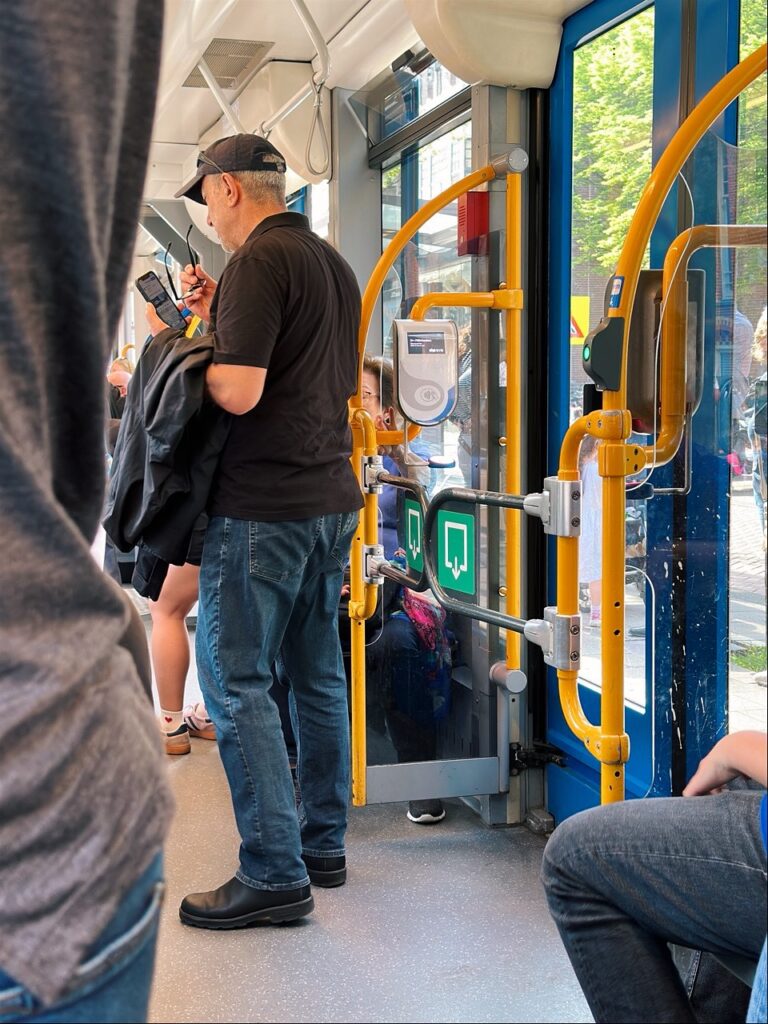
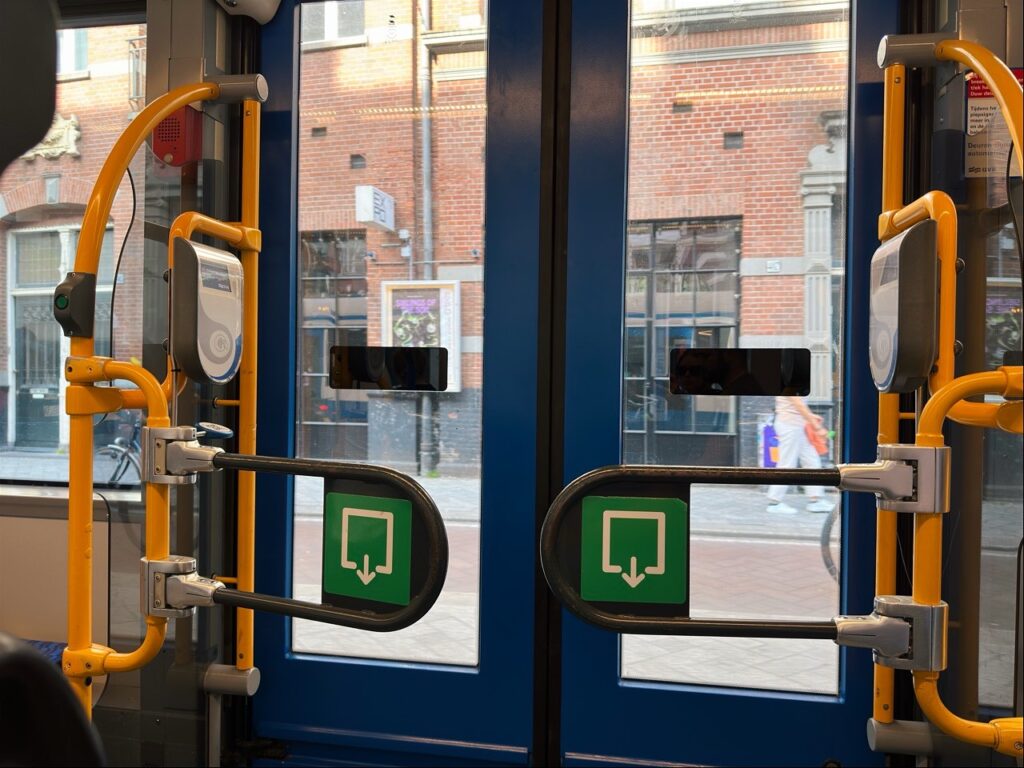
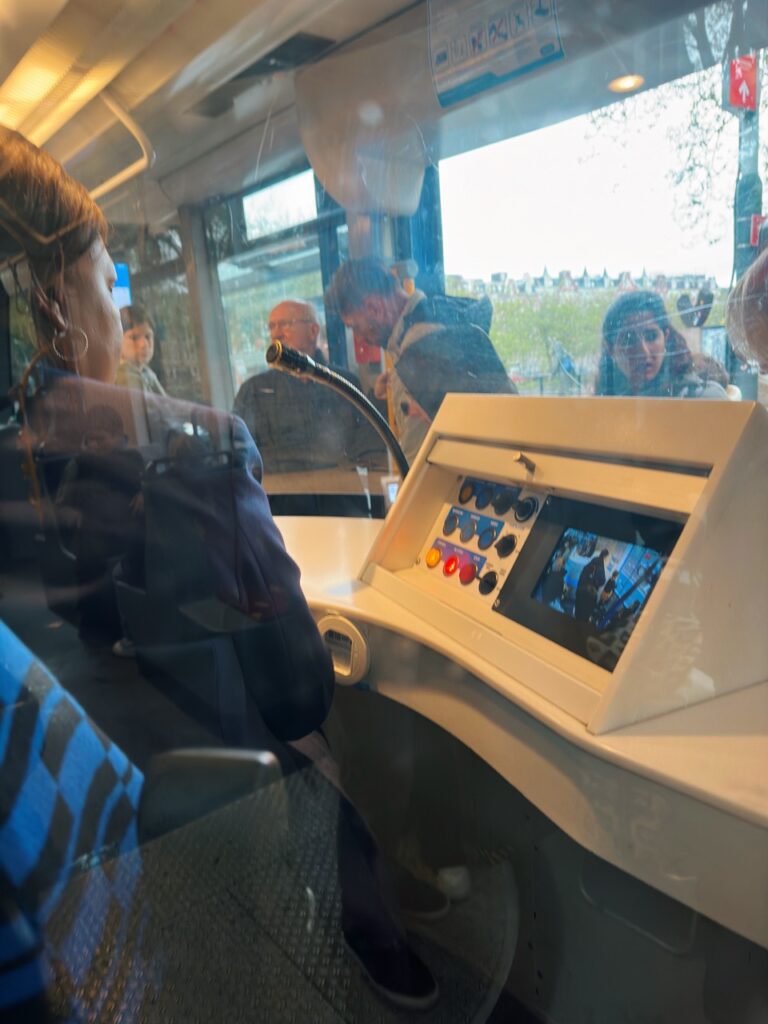
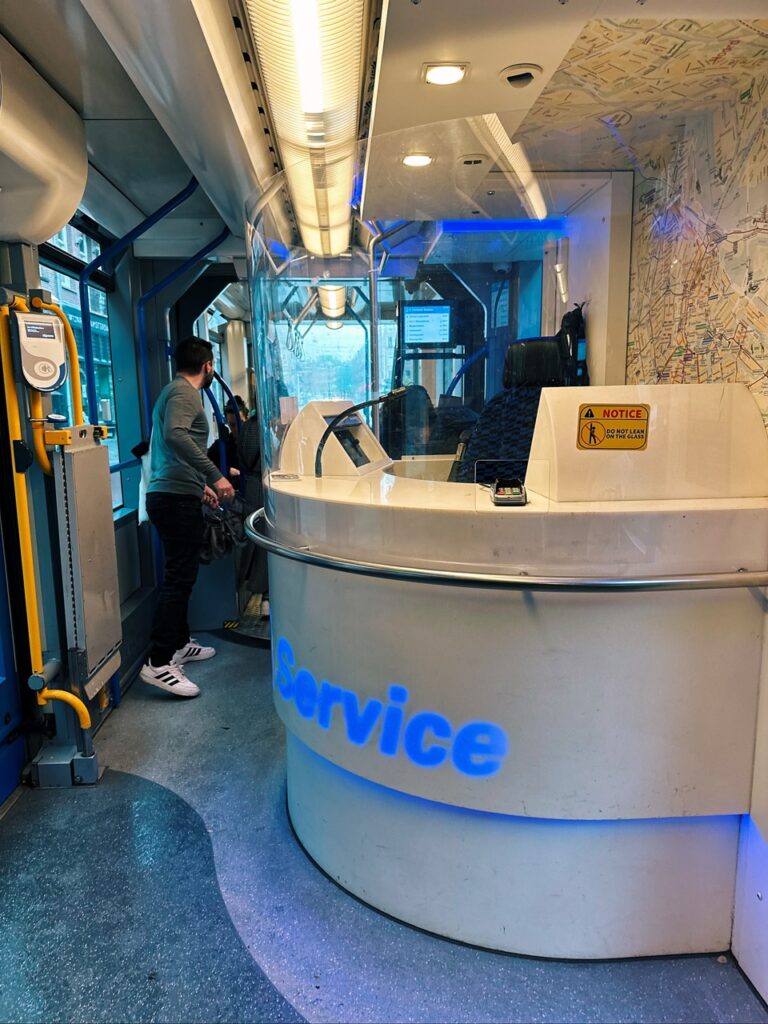
One thing we noticed on Amsterdam’s trams was the conductor sitting in a booth inside. This is an official GVB position, and the conductor helps passengers, oversees boarding, and can sell certain tickets. They also keep an eye on what is happening inside the tram. When it gets busy, you may hear the conductor asking passengers to move farther down the tram so that more people can board. We heard this several times during our trip, and it is another reason to pay attention when getting on rather than simply stopping beside the doors.
Getting Around Amsterdam by Metro
Amsterdam’s metro is useful for longer distances, and we used it several times during our stay. It is not always the best choice for short journeys around the Canal Ring, where walking or taking a tram often makes more sense, but it is quick and easy to use when your destination is farther away.
- 5 metro lines. Amsterdam currently has five lines: 50, 51, 52, 53, and 54.
- Metro 52. The North/South Line is particularly useful for visitors, connecting Amsterdam Noord with Amsterdam Centraal, the city center, De Pijp, and areas farther south.
- Amsterdam Centraal. Several metro connections are available from or around the main railway station, making it easy to transfer after arriving in Amsterdam by train.
- Check in and out. As with trams, you need to tap in before traveling and tap out at the end of your journey. If you are using contactless payment, use the same card or device for both.
Getting Around Amsterdam by Bus
Buses are another part of Amsterdam’s GVB public transport network and are most useful for areas not served directly by the tram or metro. If you are staying in the center, you may not use them as often, but they can be useful for accommodation or attractions farther out.
- Getting on the bus. You generally board through the front door and leave through the middle or rear doors. Follow the signs on the bus if the door arrangement differs.
- Check in and out. Remember to tap when you board and again when you leave. This applies whether you are using a GVB ticket, OV-chipkaart, or contactless payment.
- Press the stop button. As your stop approaches, press one of the stop buttons inside the bus to indicate that you want to get off.
- Night buses. GVB operates night buses after regular daytime services finish, which can be useful if you are returning to your accommodation late.
We used buses far less than trams and the metro during our stay. For most of our sightseeing in central Amsterdam, we either waddled or used the trams.
Amsterdam Ferries
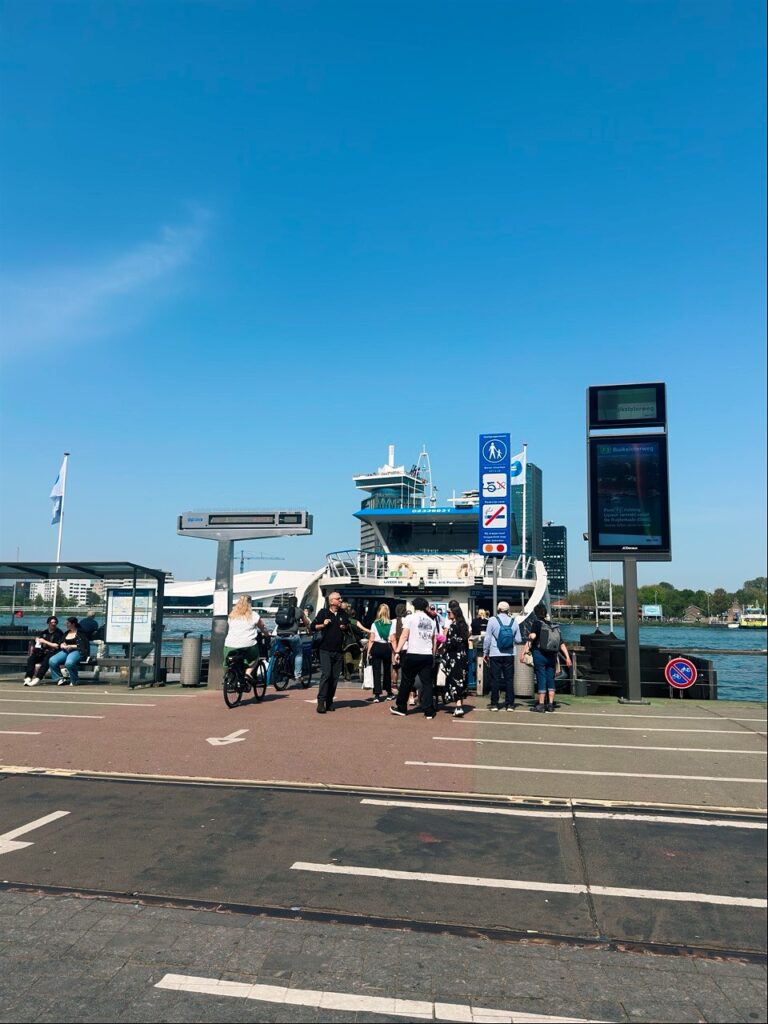
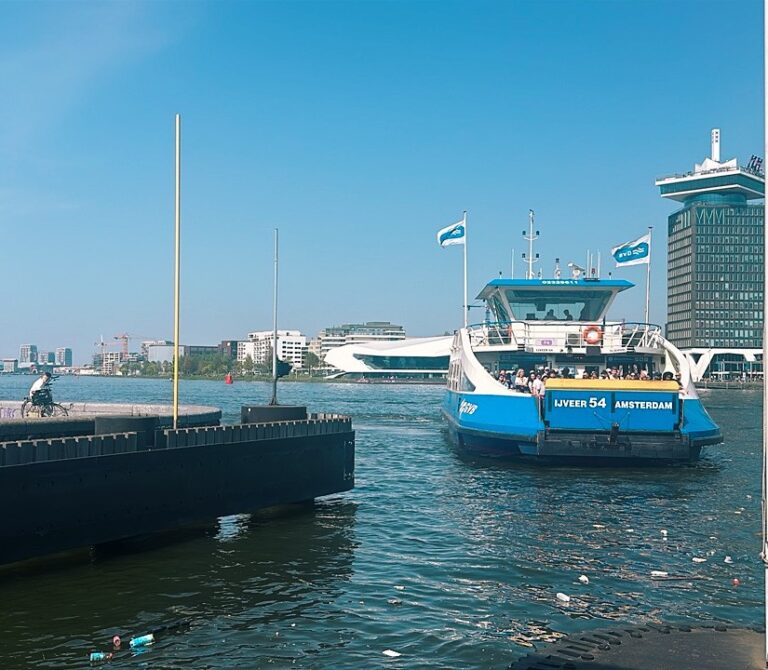
One transport option you should not overlook is the ferry. We took one during our trip as well, departing from the ferry terminals directly behind Amsterdam Centraal Station. If you waddle through the station toward the IJ waterfront, you will see the ferries coming and going throughout the day.
The ferries connect central Amsterdam with Amsterdam Noord, including routes toward Buiksloterweg, IJplein, and NDSM. Locals use them as regular public transport so that you will see plenty of people boarding with their bikes.
And yes, we double-checked this: the GVB ferries crossing the IJ are free for pedestrians and cyclists. You do not need to use your GVB ticket or tap in and out. Routes F2, F3, and F4 connect Amsterdam Centraal with IJplein, Buiksloterweg, and NDSM, respectively.
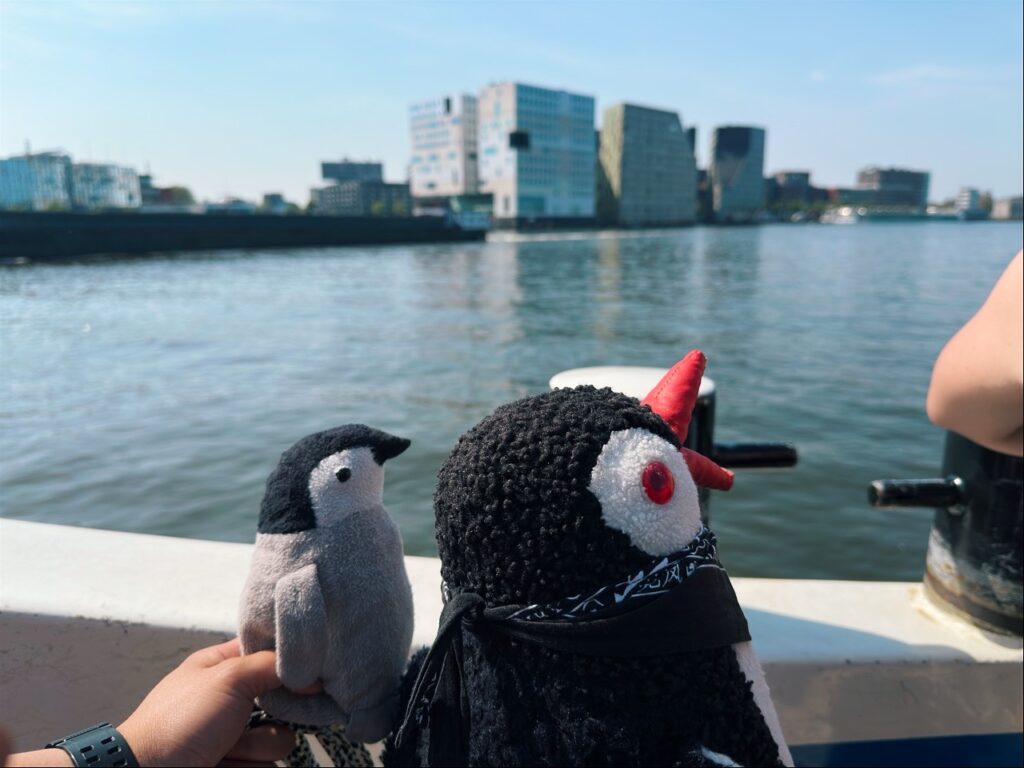
Even if you are not staying in Amsterdam Noord, it is worth knowing about the ferries. We used one during our sightseeing, and it is another simple way to experience Amsterdam’s transport network while reaching a different part of the city. Check Amsterdam ferry routes and information on GVB.
Cycling in Amsterdam
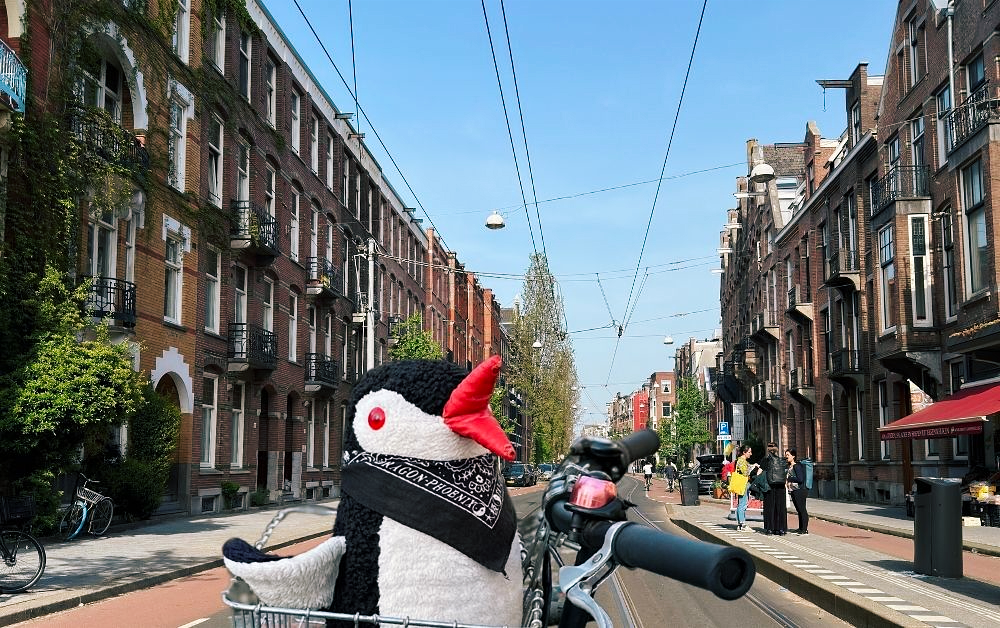
You cannot really talk about getting around Amsterdam without mentioning bicycles. Cycling is part of everyday transport here, with bike lanes, traffic lights, parking areas, and crossings throughout the city. As a visitor, you can rent a bike too, although we personally chose to waddle and use public transport instead.
There are several ways to rent a bike in Amsterdam:
- Bike rental shops. You will find rental shops across the center, including around Amsterdam Centraal and Vondelpark. For example, MacBike currently charges €11.25 for one hour, €16.50 for six hours, or €17.95 for a city bike for one day. E-bikes are also available but cost considerably more.
- OV-fiets. The Dutch railway company NS operates OV-fiets, with bikes available at stations across the Netherlands. In 2026, a standard OV-fiets costs €4.80 for up to 24 hours. Still, you need a personal OV-chipkaart with an OV-fiets subscription or NS Flex, so this option is generally more useful for locals and regular visitors than for someone arriving for a short city break.
- Hotel rentals. Some Amsterdam hotels also rent bikes directly to guests, so check with your accommodation before using a separate rental shop.
If you decide to cycle, remember that Amsterdam’s bike lanes are part of the transport network, not sightseeing paths. Follow the traffic lights, signal when turning, stay in the correct lane, watch for trams and pedestrians, and always lock your rental bike properly when you leave it.
We did not rent bikes during our trip. With so much of central Amsterdam within waddling distance and our 72-hour public transport tickets ready when we needed them, walking, trams, and the metro worked better for us.
Waddling Around Amsterdam
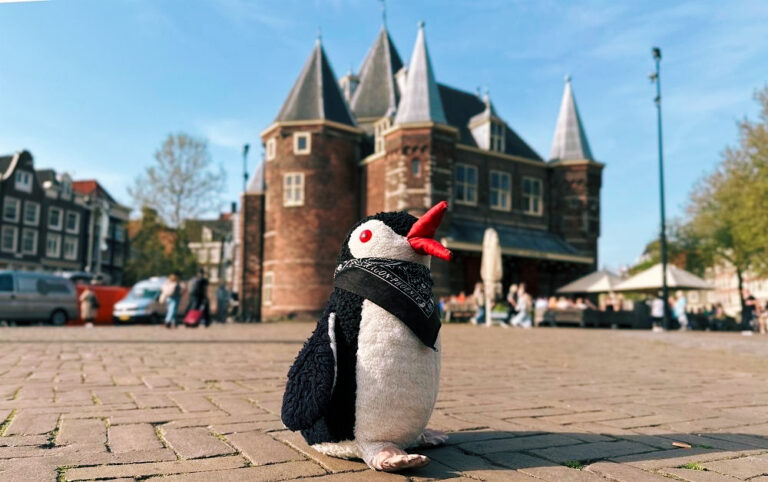
Our preferred way to get around Amsterdam was waddling. Even though we had 72-hour public transport tickets, we spent most of our trip on foot because so much of what we wanted to see was close together. In the historic center, you can often walk from one sight to the next in 10 to 20 minutes, so waiting for a tram didn’t always make sense.
Walking also became part of the sightseeing for us. Instead of only moving between places on our itinerary, we crossed canals, wandered through different neighborhoods, passed rows of canal houses, and found things we would have missed if we had taken public transport everywhere. Amsterdam is compact enough that you can cover a lot in a day without realizing how far you have actually waddled.
The main thing to remember is to watch the bike lanes. They are not part of the pavement, and cyclists often move quickly. Look both ways before crossing, follow pedestrian signals, and definitely do not stop in the middle of a bike lane to check Google Maps. Other than that, we found Amsterdam very easy to explore on foot, and waddling would still be our first choice if we returned.
Public Transport Tickets in Amsterdam
There are several ticket options, which is probably the part that looks most complicated when you start planning.
For many mainly traveling within Amsterdam, GVB day and multi-day tickets are among the easiest options. They provide unlimited travel on GVB services for a specified period.
The important part is that these tickets work by hours rather than calendar days. A 72-hour ticket gives you 72 hours from activation rather than simply expiring at midnight on your third calendar day.
| Ticket Validity | 2026 Price per Person | Best For |
|---|---|---|
| 24 hours | €10.00 | One full day of sightseeing |
| 48 hours | €16.00 | Weekend or short city break |
| 72 hours | €21.50 | Three-day visit |
| 96 hours | €27.50 | Four-day visit |
| 120 hours | €34.00 | Five-day visit |
| 144 hours | €39.00 | Six-day visit |
| 168 hours | €43.00 | Full week in Amsterdam |
These tickets provide unlimited travel on GVB trams, metros, and buses during their validity period. The time starts from your first check-in, so a 72-hour ticket is valid for 72 hours rather than three calendar days. Standard GVB multi-day tickets do not include the NS train between Schiphol Airport and Amsterdam.
The 72-Hour Ticket We Used
For our trip, we bought 72-hour tickets and paid around €42 for the two of us. It was a convenient choice because we didn’t have to buy another ticket every time we used public transport.
That said, we waddled far more than we expected. Having the pass did not make us use public transport for every journey. Instead, it became our backup. We could spend the day waddling around the canals and jump on a tram or metro when we were tired or needed to cover a larger distance.
Would we buy it again? For a first trip like ours, yes. The convenience was worth it, particularly because we were staying for several days and did not want to calculate the cost of every individual journey.
Do You Need a Car in Amsterdam
For a city trip, we would not rent a car to explore Amsterdam. Between walking, trams, metro, buses, trains, ferries, and bikes, there are plenty of ways to move around without one. A car also introduces parking costs, restricted streets, and the challenge of driving in a city full of cyclists and tram tracks. If Amsterdam is part of a longer Netherlands road trip, that is different. But for exploring Amsterdam itself, public transport and your own two feet are much easier.
OVpay: Paying With Your Bank Card
You do not necessarily need to buy a multi-day ticket anymore. Amsterdam also uses OVpay, which lets you travel with a contactless debit or credit card or compatible device.
You check in with the same card or device when starting your journey and check out with that same card or device when you finish. This can be a practical option if you expect to use public transport only occasionally.
For someone following the way we explored Amsterdam, this is worth comparing against an unlimited pass. If you know you will walk most of the time and take only a handful of rides, paying as you go may make more sense. If you expect to jump on and off public transport throughout the day, a multi-day ticket removes the need to think about individual journeys.

Amsterdam Travel Ticket vs GVB Ticket
This distinction matters because the names are easy to confuse.
A GVB multi-day ticket offers unlimited travel on GVB transport within Amsterdam. The Amsterdam Travel Ticket also includes travel between Schiphol Airport and Amsterdam, plus unlimited GVB transport during its validity.
There is also an Amsterdam & Region Travel Ticket for travelers who need to use public transport beyond Amsterdam itself. These products have different coverage, so do not simply buy the ticket with “Amsterdam” in the name without checking what you actually need. Ticket products and prices change, so check the current conditions before your trip.
What We Recommend
Based on our own trip, we kept getting around Amsterdam simple: walk first, and use public transport when it actually helps.
We spent four full days in Amsterdam and walked most of the time. For us, that was part of experiencing the city rather than simply getting from attraction A to attraction B. Amsterdam is full of things you notice between the places marked on your itinerary, and some of our favorite moments came simply from waddling along the canals.
At the same time, having our 72-hour tickets meant we never had to worry about getting back when we had walked enough for the day. That combination worked perfectly for us: comfortable shoes, plenty of walking, and a public transport ticket ready whenever our feet voted against another few kilometers.
Buy Us a Ko-fi

Amsterdam might look complicated when you first see all those tram lines, metro numbers, buses, ferries, and bikes, but you get used to it quickly. You certainly don’t need to master the entire transport network before you arrive.
For a first visit, learn how your ticket works, remember to check in and out, respect the bike lanes, and then waddle whenever you can. Amsterdam is compact enough to explore on foot but connected well enough that public transport is there whenever you need it. That balance worked for us, and it is exactly how we would explore Amsterdam again.
Travel Bold. Eat Well. Waddle Wild.

This post contains affiliate links. If you click and buy, I might earn a tiny commission, enough to help a penguin keep up its globe-trotting lifestyle. No extra cost to you, just more fish for me. Thank you for supporting the adventure!