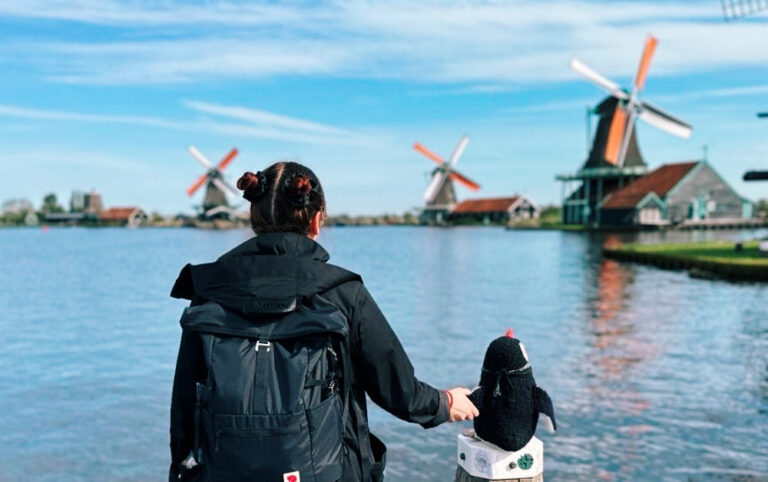
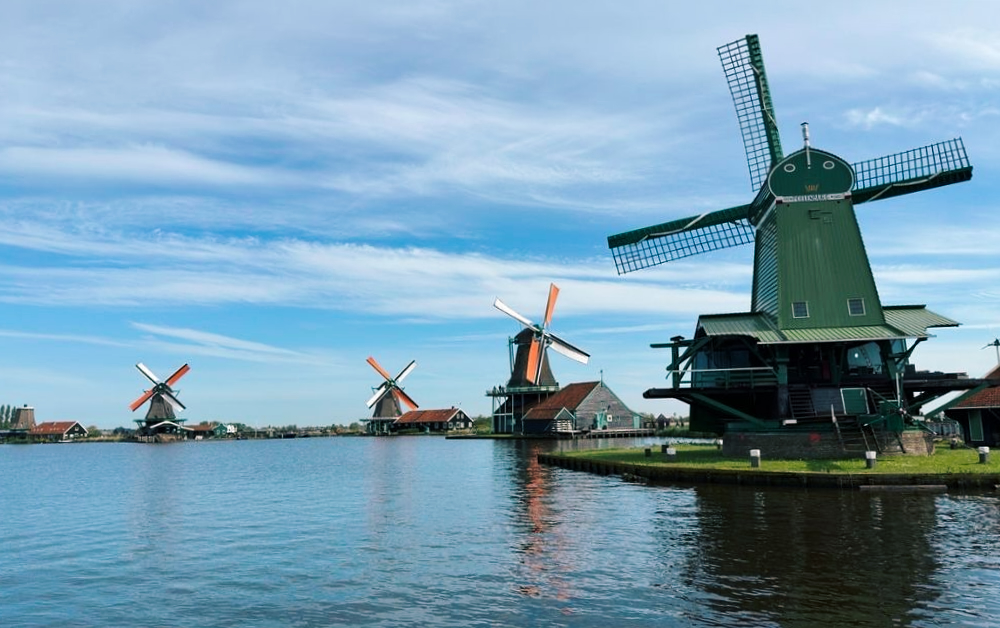
Zaanse Schans Travel Guide: What to Know Before Visiting
Just outside Amsterdam, Zaanse Schans makes for a perfect day trip if you want to see a different side of the Netherlands. With its windmills, wooden houses, small museums, and traditional workshops, it is easy to see why so many travelers add it to their Amsterdam itinerary. And, of course, we could not resist doing the same. Before you waddle off to explore it yourself, here are some interesting and practical things to know about Zaanse Schans that will help you plan your visit.
Quick Facts About Zaanse Schans
- Location: North Holland, Netherlands, along the Zaan River
- Nearest Major City: Amsterdam, around 20 km away
- Population: around 100 residents live in Zaanse Schans itself.
- Established: developed as an open-air heritage area mainly during the 1960s and 1970s
- Language: Dutch
- Nearest Airport: Amsterdam Airport Schiphol
- Getting There: accessible from Amsterdam by train, bus, car, or organized tour
- Known For: Historic windmills, traditional green wooden houses, workshops, museums, cheese, and wooden clogs
- Entrance: waddling around the Zaanse Schans neighborhood is free, while individual museums and windmills may charge admission
- Best Known Products: Cheese, wooden clogs, spices, cocoa, and traditional Dutch crafts
- How Much Time to Spend: Around half a day is enough for most.
- Fun Fact: Many of the historic buildings you see today were relocated to Zaanse Schans from elsewhere in the Zaan region to preserve them
Brief History Of Zaanse Schans
- 17th century. The Zaan region became one of Europe’s earliest major industrial areas, powered by hundreds of windmills used to saw timber, grind spices, produce oil, and make paper.
- 18th century. Industry continued to flourish along the Zaan, with windmills playing a central role in the local economy.
- 19th century. Steam-powered machinery gradually replaced many windmills, and numerous traditional mills disappeared.
- 1925. The association De Zaansche Molen was founded to protect and preserve the remaining windmills of the Zaan region.
- 1946. Architect Jaap Schipper proposed creating a protected neighborhood where historic Zaan buildings could be preserved together.
- 1963. The first historic buildings were relocated to Zaanse Schans, marking the beginning of the heritage neighborhood visitors see today.
- 1960s–1970s. More traditional wooden houses, workshops, warehouses, and other buildings were moved here from across the Zaan region.
- Today. Zaanse Schans is a living historic neighborhood and major visitor destination where working windmills, traditional crafts, museums, shops, and private homes preserve the region’s industrial heritage.

11 Interesting Facts About Zaanse Schans
#1: Zaanse Schans Is Not Actually a City
Although sometimes described as a city, Zaanse Schans is not a city or even a separate town. It is a historic neighborhood within the municipality of Zaanstad in North Holland, close to the town of Zaandam. Today, you see a collection of traditional wooden houses, windmills, workshops, and other historic buildings that preserve the heritage of the wider Zaan region. It may feel like stepping into a small Dutch village, but Zaanse Schans is technically a neighborhood, and people still live and work here today.
#2: People Still Live in the Historic Houses
Zaanse Schans might look like an open-air museum, but it is also a real residential neighborhood. People still live in some of the traditional wooden houses you pass as you explore the area. This means not every building is a museum, shop, or attraction. Some are private homes, so keep an eye out for signs and respect residents’ privacy as you wander around. It is one of the details that makes Zaanse Schans different from a purpose-built historical theme park.
#3: Many Buildings Were Moved Here
Zaanse Schans may look like it has stood this way for centuries, but many of its historic buildings originally stood elsewhere in the Zaan region. From the 1960s onward, traditional wooden houses, warehouses, and workshops threatened by demolition were relocated here to preserve them. Some were even transported whole by road or water. Together, they created the historic neighborhood we waddle through today, making Zaanse Schans less of an untouched old village and more of a carefully preserved collection of Zaan heritage.
#4: The Windmills Were Once Industrial Powerhouses
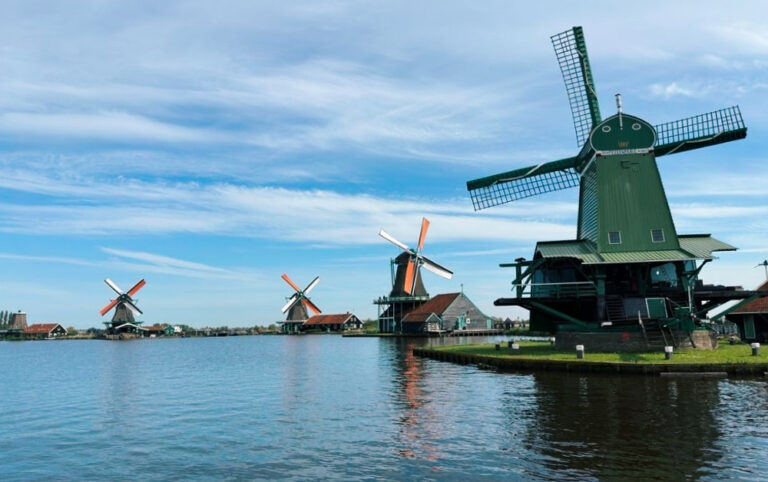
The windmills of the Zaan region weren’t built simply to pump water. During the 17th and 18th centuries, the area had hundreds of working windmills, powering what became one of Europe’s earliest industrial regions. They were used to saw timber, grind spices, crush seeds for oil, produce pigments, and make paper, among other jobs. Several historic windmills at Zaanse Schans are still operational today, and you can visit some of them to see the machinery working inside. So, while they make for the classic Dutch photo, these windmills were once serious pieces of industrial technology.
#5: Zaanse Schans Is Free to Explore, but Not Everything Is Free
Zaanse Schans was created to preserve traditional Zaan architecture and the region’s industrial heritage, bringing historic houses, workshops, and other buildings together in one area. Today, you can enter Zaanse Schans and waddle around the neighborhood for free, which makes it an easy addition to a day trip from Amsterdam. However, free entry doesn’t mean everything inside is free. Several windmills, museums, and attractions require admission tickets, while others, including some shops and demonstrations, you can visit without paying. If you plan to visit several paid attractions, check available combination passes before you go.

#6: You Can See How Traditional Wooden Clogs Are Made
You cannot really have a classic Dutch experience without coming across a pair of wooden clogs, and Zaanse Schans has its own working clog workshop. At the Kooijman Wooden Shoe Workshop, you can see how traditional Dutch klompen are made using specialized machines, with demonstrations showing how a block of wood is transformed into a wearable shoe. There is also a collection of clogs in different shapes and styles, including examples made for specific jobs and occasions. The workshop and demonstrations are free to visit, and, of course, plenty of clogs are available to buy if you want to take a very Dutch souvenir home.
#7: You Can Watch Dutch Cheese-Making Demonstrations
Cheese is another Dutch classic you will find at Zaanse Schans. At the Catharina Hoeve Cheese Farm, you can learn how traditional Dutch cheese is made through demonstrations that explain the process from milk to the finished wheel. The farm produces and sells several types of cheese, and you can usually taste plenty of samples before deciding which one to take home. Entry and the cheese-making demonstrations are free, making this an easy stop to add while exploring Zaanse Schans, especially if tasting your way through the Netherlands is already part of your itinerary.


#8: Zaanse Schans Attracts Millions of Visitors
For what is technically a small historic neighborhood, Zaanse Schans attracts a huge number of visitors. Before the pandemic, the area welcomed more than two million visitors per year, putting it among the most popular tourist attractions in the Netherlands. Its location close to Amsterdam certainly helps, with travelers coming for the windmills, wooden houses, cheese, and clogs all in one place. The downside is that it can get very busy, especially during the main summer season and around midday. If you want a quieter waddle around Zaanse Schans, arriving early in the morning is one of the best things you can do.
#9: The Zaan Region Helped Invent the Industrial Sawmill
One invention that transformed the region was the wind-powered sawmill. Around 1594, Dutch inventor Cornelis Corneliszoon van Uitgeest patented a mechanism that converted a windmill’s rotation into the back-and-forth motion needed to saw wood. This made cutting timber much faster and helped supply wood for Dutch shipbuilding during the country’s rise as a maritime power.
#10: Claude Monet Painted the Zaan Region
In 1871, French painter Claude Monet spent several months in Zaandam and the surrounding Zaan region. The windmills, wooden houses, boats, and waterways caught his attention, and he produced around 25 paintings during his stay. Monet reportedly found so much to paint here that he wrote about there being enough material to work on for a lifetime. Today, you can still recognize parts of the landscape that inspired him.
#11: The Zaan Region Has a Chocolate Connection
You might notice another smell around the Zaan region that has nothing to do with cheese: cocoa. The area developed into an important center for cocoa processing, a connection that continues today. On certain days, depending on the wind, the smell of cocoa from nearby factories can drift through the area. It is a small reminder that the Zaan is not only a preserved piece of industrial history. It remains an active industrial region today.
How to Get to Zaanse Schans from Amsterdam
Zaanse Schans is only around 20 km from Amsterdam, so getting there is relatively easy by train, bus, or car. We chose the train, and for us, it was the easiest way to travel without worrying about traffic or parking.
Getting to Zaanse Schans by Train
We were staying in Amsterdam’s Schipluidenbuurt area, so we started our journey from Amsterdam Lelylaan station. From there, we took the train to Zaandijk – Zaanse Schans, the closest railway station to Zaanse Schans. If you are staying in central Amsterdam, however, the easiest starting point is usually Amsterdam Centraal; take a local train to Zaandijk – Zaanse Schans, the closest railway station to Zaanse Schans. The train journey takes around 17 minutes. From the station, it is another 15-minute waddle to the historic area.
For the two of us, our return train tickets to Zaanse Schans cost €16 in total, making public transport a pretty affordable option. That came to €8 per person for the return journey. Since we didn’t have to worry about driving or parking and could hop on the train and waddle to Zaanse Schans from the station, we found it a convenient option for our half-day trip.


The waddle is straightforward and gives you your first glimpse of the area before you reach the windmills. Once you cross toward Zaanse Schans, it becomes pretty obvious that you have arrived.
Our route in short:
Schipluidenbuurt → Amsterdam train network → Zaandijk – Zaanse Schans → 15-minute walk → Zaanse Schans
If you use public transport in the Netherlands, check your exact route on the day of travel, as the best connection depends on where in Amsterdam you are starting.
Getting to Zaanse Schans by Car
Driving is also possible and may make sense if Zaanse Schans is only one stop on a longer Netherlands road trip. For navigation, use Schansend 7, Zaandam, which takes you to the official Zaanse Schans parking area.
Parking currently costs €15 per car per visit. Keep in mind that parking space is limited and the lot can fill up on busy days, particularly during the high season and public holidays. Parking along the nearby roads or outside designated spaces is not permitted.
Getting to Zaanse Schans by Bus
Another easy option is the Zaanse Schans Express (bus 800) from Amsterdam Centraal. The journey takes around 24 minutes, and the bus stops directly beside the Zaans Museum, so you won’t need to waddle 15 minutes from the station. Bus 800 runs approximately every 15 minutes between 09:00 and 17:00, while route 801 also connects Amsterdam/Zaandam with Zaanse Schans and continues toward Volendam. The bus can therefore be a good option if you want to be dropped closer to the attractions or plan to combine Zaanse Schans with other places in the region.
Which Option Do We Recommend
For us, the train is the easiest way to get to Zaanse Schans from Amsterdam, and it is the option we would choose again. The journey is short, you avoid parking hassles, and the walk from Zaandijk – Zaanse Schans station is easy enough. Altogether, it makes Zaanse Schans a very manageable day trip from Amsterdam, even if you do not have a car.
Organized Day Trips to Zaanse Schans from Amsterdam
If you do not want the hassle of figuring out trains, buses, or parking, there are also plenty of organized day trips to Zaanse Schans from Amsterdam. You can choose a simple half-day tour focused on Zaanse Schans, usually including transport and a guide, or turn it into a full-day trip combining the windmills with places such as Edam, Volendam, and Marken. Many tours leave from around Amsterdam Centraal and may include stops for the clog workshop, cheese tasting, and a working windmill. It is a convenient option if you want someone else to handle the logistics, although you will have less freedom over how long you spend at each stop. We traveled independently by train, which we would still recommend if you prefer exploring at your own pace.
How Much Time Do You Need at Zaanse Schans
For most, half a day at Zaanse Schans is enough, and that is how much time we spent there. Plan around 3–4 hours if you want to waddle along the windmills, explore the historic streets, stop at the clog workshop and cheese farm, take photos, and visit one or two attractions without rushing. If you only want to see the windmills and walk around, 2 hours can be enough, while those planning to enter several windmills and museums could easily spend 4–5 hours here. We found half a day to be a good balance, especially when visiting Zaanse Schans as a day trip from Amsterdam.
What Is the Best Time of Day to Visit Zaanse Schans
We chose to visit Zaanse Schans early in the morning and return to Amsterdam in the afternoon, and we would recommend doing the same. Arriving early gives you some time to waddle around the windmills and historic houses before the biggest tour groups arrive and the main paths become busier. You also have enough time to visit the clog workshop, taste some cheese, enter a windmill or museum, and still be back in Amsterdam with plenty of the day left. Late afternoon can be quieter again, but some attractions may already be closing. For a half-day trip, an early morning start worked perfectly for us.
Buy Us a Ko-fi

For us, Zaanse Schans was an easy yes. It is touristy, and you certainly will not have those famous windmills all to yourself, but that didn’t make the experience any less worth it. We headed there early in the morning, spent half a day waddling between windmills, wooden houses, cheese, and clogs, and were back in Amsterdam by the afternoon. It was easy to reach, did not require a full day, and gave us a glimpse of the Netherlands beyond Amsterdam. If you have a few days in the city and want to add one simple day trip to your itinerary, we recommend Zaanse Schans.
Travel Bold. Eat Well. Waddle Wild.

This post contains affiliate links. If you click and buy, I might earn a tiny commission, enough to help a penguin keep up its globe-trotting lifestyle. No extra cost to you, just more fish for me. Thank you for supporting the adventure!