
What to Eat in Lithuania: A Guide to Traditional Lithuanian Food
One of our favorite parts of traveling is discovering a destination through its food, and Lithuania gave us plenty to try. During our time in Vilnius, Kaunas, and beyond, we came across hearty traditional dishes, comforting soups, potato favorites, and plenty of sweet treats, with some dishes becoming instant favorites and others taking a little more convincing. Here are the Lithuanian foods we think are worth trying on your next trip.
What to Expect from Lithuanian Cuisine
Lithuanian cuisine is hearty, comforting, and closely connected to the country’s agricultural traditions. Potatoes, rye bread, dairy, meat, mushrooms, and seasonal vegetables feature heavily, with many traditional dishes designed to be filling rather than fussy. Expect plenty of dumplings, pancakes, stews and soups, alongside lighter dishes made with fresh seasonal ingredients.
Potatoes are particularly important, appearing in everything from cepelinai and kugelis to potato pancakes, while rye bread is a staple on many Lithuanian tables. You will also find plenty of sour cream, dill, smoked meats, and pickled vegetables, with mushrooms playing a bigger role in traditional cooking than you might expect. And then there are the sweets, with šakotis being the showstopper. Overall, Lithuanian food feels rustic and generous, with recipes that are made to warm you up and keep you satisfied.

10 Traditional Lithuanian Foods You Need to Try
From hearty potato dishes to colorful soups and surprisingly elaborate desserts, Lithuanian food has plenty of character. These are some of the classics you are most likely to come across, and the ones we think are worth adding to your food itinerary.
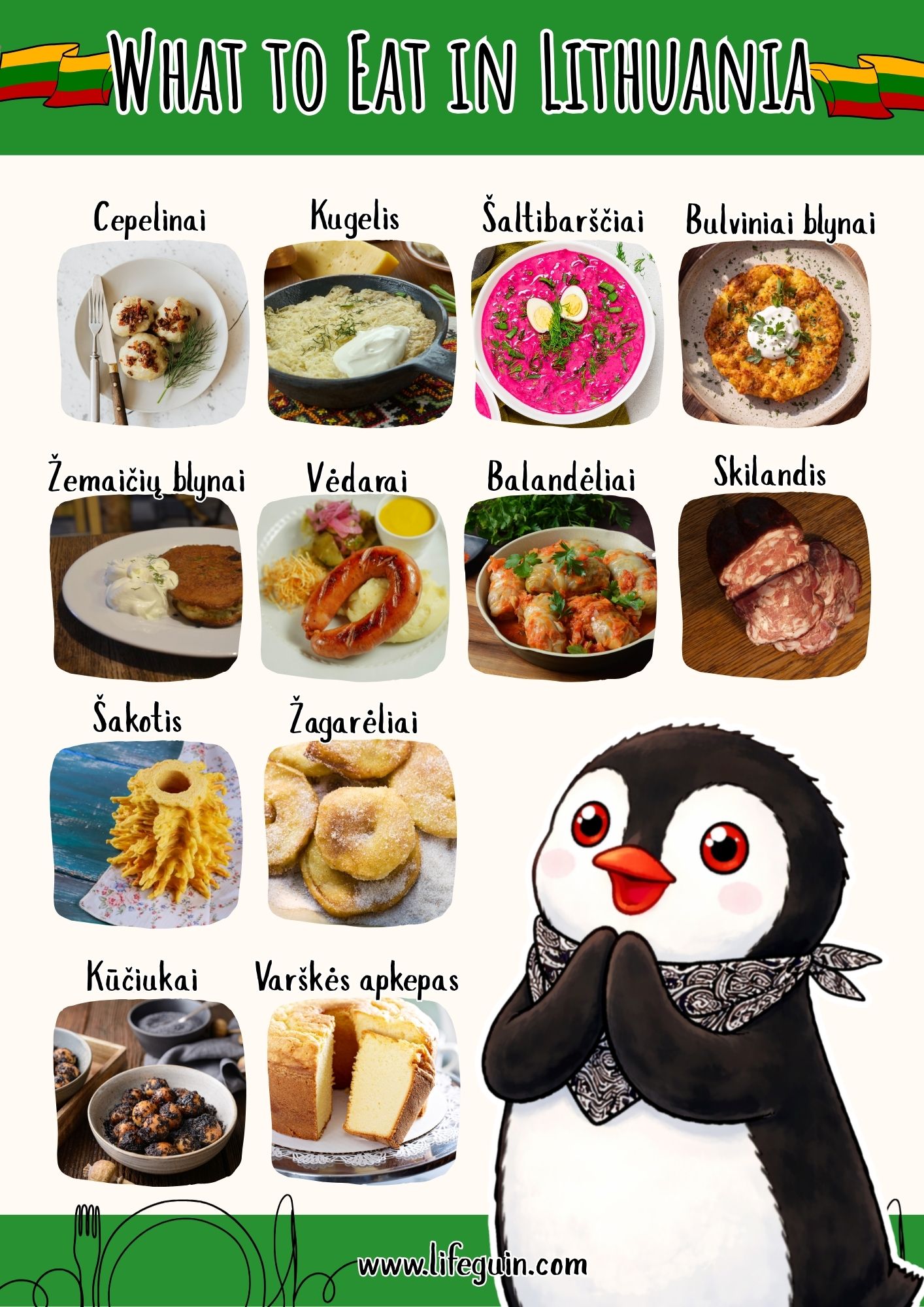
- Cepelinai. Lithuania’s most famous dish is made from grated and boiled potatoes, shaped around a filling of minced meat, curd cheese, or mushrooms. The large dumplings are typically served with sour cream and a bacon or onion topping. This is one of the most traditional Lithuanian dishes and absolutely worth trying.
- Kugelis. Often described as a Lithuanian potato pudding, kugelis is made from grated potatoes baked with ingredients such as bacon, onion, and eggs until golden on top. It is wonderfully filling and comforting, especially on a cold day—a truly traditional Lithuanian favorite and well worth trying.
- Šaltibarščiai. This bright pink cold beetroot soup is made with beetroot, kefir or buttermilk, cucumber, dill, and eggs and is usually served with hot boiled potatoes on the side. It is refreshing, colorful, and very different from the heavier dishes associated with Lithuanian cuisine. This classic Lithuanian dish is definitely worth trying.
- Bulviniai blynai. Lithuanian potato pancakes are crispy on the outside, soft inside, and usually served with sour cream or another creamy topping. Simple as they may sound, they are a staple of traditional Lithuanian home cooking. These classic potato pancakes are very traditional and well worth ordering.
- Žemaičių blynai. These Samogitian potato pancakes are made from potato dough wrapped around a filling, most commonly minced meat, then fried until golden. They are heartier than ordinary potato pancakes and make a very satisfying meal. A traditional regional dish and well worth trying.
- Vėdarai. Vėdarai are potato-filled intestines, traditionally prepared with grated potatoes, onion, and bacon, then baked. The combination may sound unusual at first, but it is one of the dishes that gives Lithuanian cuisine its distinctly rustic character. It is a truly traditional dish and worth trying if you are feeling adventurous.
- Balandėliai. Literally meaning “little doves,” these cabbage rolls are filled with minced meat and rice and cooked in a sauce, usually served with sour cream. They are similar to stuffed cabbage dishes found elsewhere in Eastern Europe, but remain a familiar part of Lithuanian home cooking. Traditional, comforting, and well worth trying.
- Skilandis. This traditional Lithuanian smoked meat product is made by stuffing minced or chopped pork into a pig’s stomach or intestine before curing and smoking it. It has a rich, smoky flavor and is often sliced thinly and served as part of a cold spread. It is a very traditional Lithuanian specialty and worth trying for a taste of the country’s preserved-food traditions.
- Šaltiena. A traditional Lithuanian savory jelly made by slowly cooking pork or other meat with vegetables before cooling it until the broth sets into a firm jelly, usually served cold.
- Koldūnai. Lithuanian dumplings filled with minced meat, curd cheese, or other fillings, then boiled and commonly served with sour cream, butter, or crispy bacon.
Traditional Lithuanian Desserts to Try
Lithuanian desserts range from elaborate celebration cakes to simple homemade treats that have been part of local kitchens for generations. After all the hearty potato dishes, there is always room for something sweet, and these are a few Lithuanian desserts worth looking out for.
- Šakotis. Often called the Lithuanian tree cake, this spectacular dessert is made by pouring layers of batter onto a rotating spit over an open flame, creating its distinctive branches and golden exterior. It is traditionally served at weddings, celebrations, and other special occasions.
- Tinginys. The name literally means “lazy,” and this no-bake dessert certainly lives up to it. Crushed biscuits are mixed with chocolate, butter, and condensed milk, then chilled into a rich, fudgy slice. It is simple, sweet, and hugely popular in Lithuania.
- Žagarėliai. These delicate fried pastries are made from a simple dough, twisted into ribbon-like shapes and fried until crisp before being dusted with powdered sugar. They are a traditional Lithuanian treat often enjoyed with coffee or tea.
- Kūčiukai. These tiny, lightly sweet poppy-seed pastries are traditionally associated with Christmas Eve, when they are served with poppy-seed milk. They are small enough to snack on by the handful and are an important part of Lithuanian Christmas food traditions.
- Varškės apkepas. This baked curd-cheese pudding is made with Lithuanian-style farmer’s cheese, eggs, and other simple ingredients and is often served with berries, jam, or sour cream. It is somewhere between a cheesecake and a baked pudding and makes a comforting Lithuanian sweet treat.
Traditional Lithuanian Drinks to Try
Lithuanian drinks range from refreshing fermented beverages to warming herbal teas and traditional spirits. Some are closely tied to the country’s rural traditions, while others are still easy to find in cafés, restaurants, and local shops.
- Gira (Lithuanian Kvass). A lightly fermented drink made from rye bread, water, sugar, and yeast, with a mildly sweet and tangy flavor. It is refreshing, traditional, and usually low in alcohol.
- Midus. Traditional Lithuanian mead made by fermenting honey with water, sometimes with herbs or spices. It can be sweet, aromatic, and considerably stronger than gira, making it more of a sipping drink.
- Krupnikas. A sweet Lithuanian honey-based liqueur made with honey and a blend of spices such as cinnamon, cloves, and nutmeg. It is particularly warming and is often enjoyed during colder months.
- Žolelių Arbata. Herbal tea made from locally foraged plants such as chamomile, peppermint, linden flowers, and other herbs. It reflects Lithuania’s long tradition of using wild plants and is often served simply with honey.
- Kompotas. A homemade fruit drink made by simmering fresh or dried fruit with water and sugar. It is simple, lightly sweet, and a familiar drink across Lithuanian homes and traditional restaurants.
- Kisielius. A thick, sweet fruit drink made from berries or fruit juice and starch. It sits somewhere between a drink and a dessert and is traditionally served warm or chilled.
Lithuanian Eating Etiquette and Things to Know
Eating in Lithuania is generally relaxed, but a few things are useful to know before sitting down for a meal. From restaurant reservations and tipping to alcohol rules, these small details can make the experience a little easier.
- Tipping. Tipping is appreciated for good service but is not generally compulsory. A small tip or rounding up the bill is perfectly appropriate, especially when you are happy with the service.
- Check the Bill. Before adding a tip, check whether the bill already includes a service charge.
- Restaurant Reservations. For popular restaurants, particularly in Vilnius and Kaunas or for Michelin-listed restaurants, making a reservation in advance is a good idea. Lithuania now has a well-established fine-dining scene, with 44 restaurants included in the 2026 Michelin Guide.
- Cards Are Widely Accepted. Most restaurants and cafés accept cards and contactless payments, although carrying a little cash can still be useful at markets, fairs and smaller places.
- Alcohol Age. You must be 20 years old or older to purchase alcohol in Lithuania legally. Current government guidance confirms that retailers are penalized for selling alcohol to anyone under 20.
- Alcohol Shopping Hours. Alcohol cannot normally be purchased from shops outside the permitted hours: 10:00–20:00 Monday to Saturday and 10:00–15:00 on Sundays. There is also a nationwide ban on retail alcohol sales on 1 September.
- Eating Out Late. Restaurants can serve alcohol for on-premises consumption outside retail shop hours, but alcohol cannot be sold to take away during restricted hours.
- Skanaus! When someone in Lithuania wishes you an enjoyable meal, you may hear “Skanaus!”, roughly meaning “Enjoy your meal!” It is a lovely little phrase to know when exploring Lithuanian food culture.
Buy Us a Ko-fi

Lithuanian food may surprise you with how comforting, hearty, and varied it can be. From filling potato dishes and bright šaltibarščiai to sweet šakotis and simple local drinks, there is plenty to discover beyond the dishes you might expect to find on a typical Baltic menu. We hope this guide gives you a good starting point for eating your way through Lithuania. Leave room for something unfamiliar, order that dish you cannot pronounce, and enjoy your own little waddle through Lithuanian cuisine.
Travel Bold. Eat Well. Waddle Wild.

This post contains affiliate links. If you click and buy, I might earn a tiny commission, enough to help a penguin keep up its globe-trotting lifestyle. No extra cost to you, just more fish for me. Thank you for supporting the adventure!