One Very Unscientific Ranking: Which Baltic State Won Us Over
Three Countries, One Sea: Our Journey Through the Baltics
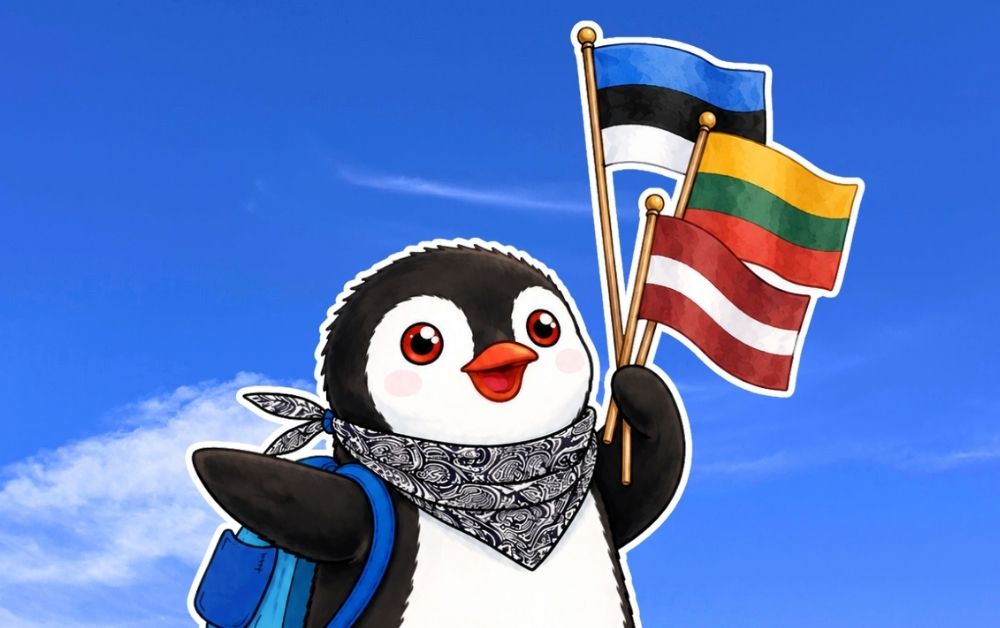
Three countries. One region. A complicated history. A very cold sea. And, for us, three very different travel experiences. After traveling through Latvia, Lithuania, and Estonia, we started noticing something easy to miss when you tick the three countries off a map: the Baltics may be grouped, but they don’t feel interchangeable. Each has its own personality, rhythm, architecture, food, landscapes, and relationship with its past. So, naturally, we did what any serious travel journalists with a penguin would do. We ranked them.
This is not a scientific assessment, and we are certainly not claiming that one country is objectively better than another. It is our personal ranking based on what stayed with us after traveling through the region: the atmosphere, the places we explored, how much there was to discover, and, naturally, our highly sophisticated penguin-friendliness scale.
And there was a clear winner.
- First Things First: What Exactly Are the Baltics
- Getting Under the Skin of the Baltics
- Latvia: The Quiet One
- Lithuania: The One We Didn’t See Coming
- Estonia: Cold, Clever and Completely Our Thing
- But Is Estonia Really “Better”
- What Traveling the Baltics Taught Us
- If You’re Visiting the Baltics for the First Time, Where Should You Start
- Our Final Baltic Ranking
First Things First: What Exactly Are the Baltics
The Baltic states are Estonia, Latvia, and Lithuania, the three countries on the eastern coast of the Baltic Sea. People often discuss them together because of their geography, shared modern history, and close regional connections. But calling them simply “three countries next to the sea” misses much of the story.
The Baltic Sea itself is much larger than the three countries. Its coastline also reaches Denmark, Germany, Poland, Sweden and Finland, among others. The European Commission describes it as a semi-enclosed, relatively shallow, brackish sea with a particularly distinctive marine ecosystem.
So why do Estonia, Latvia and Lithuania get their own collective name? History has a lot to do with it.
All three countries experienced Soviet occupation and incorporation into the USSR in 1940, followed by German occupation during the Second World War and renewed Soviet rule. They regained independence as the Soviet Union collapsed, and all three later joined the European Union and NATO.
One of the most remarkable symbols of their shared modern history came on 23 August 1989, when around two million people formed the Baltic Way, a human chain stretching roughly 600 kilometers from Vilnius through Riga to Tallinn. It became a powerful demonstration of the three nations’ desire for independence.
That shared history gives the word Baltics much more meaning than a geographical label. But once you actually travel through the region, the differences become just as interesting as the similarities.
Hotel search from Trip.comShows Trip.com’s own box, which can set Trip.com cookies.Search hotels on Trip.comTrip.com’s box can’t load on this device (an ad blocker often stops it). This opens Trip.com’s own hotel search.Open Trip.com
Getting Under the Skin of the Baltics
We did not set out with a clipboard and a complicated scoring system.
We traveled. We walked through old towns, climbed towers, wandered through neighborhoods, ate local food, explored castles and ruins, sat in cafés, took trains, got slightly confused by local rules, and tried to understand what made each place feel different.
And somewhere along the way, a ranking started forming in our heads.
Our categories were deliberately unscientific: Vibes. Penguin-Friendliness. Scenery & City Life.
Because sometimes travel is not about measuring things. It is about asking yourself the slightly more difficult question:
Where did I actually feel something?
Latvia: The Quiet One
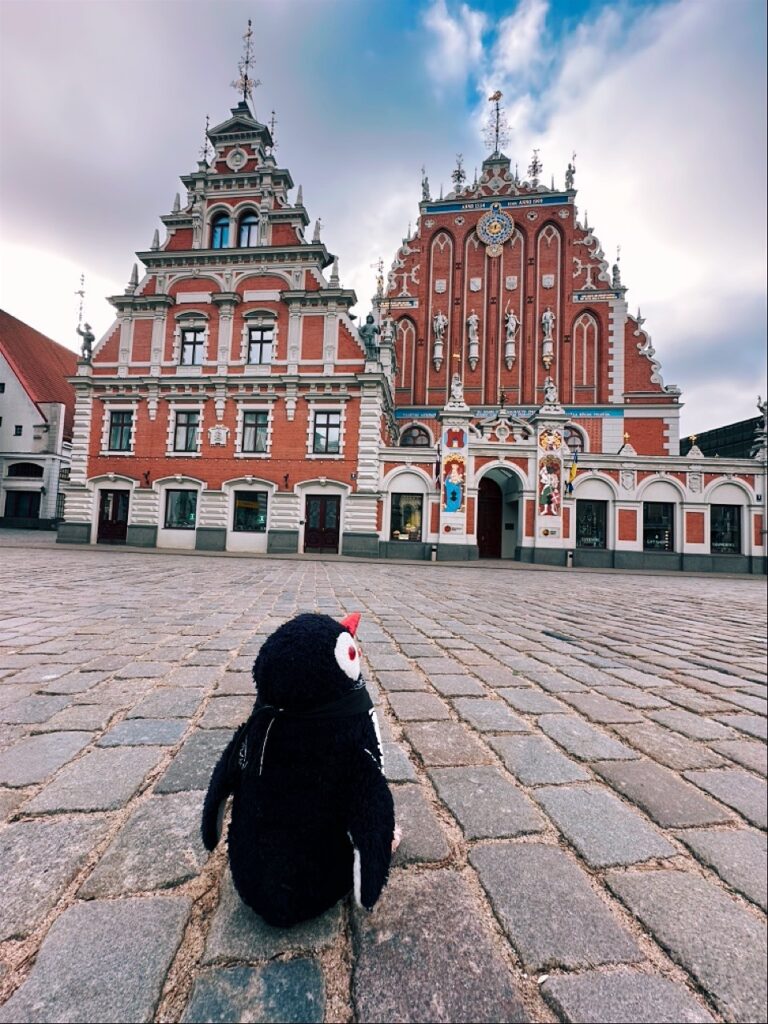
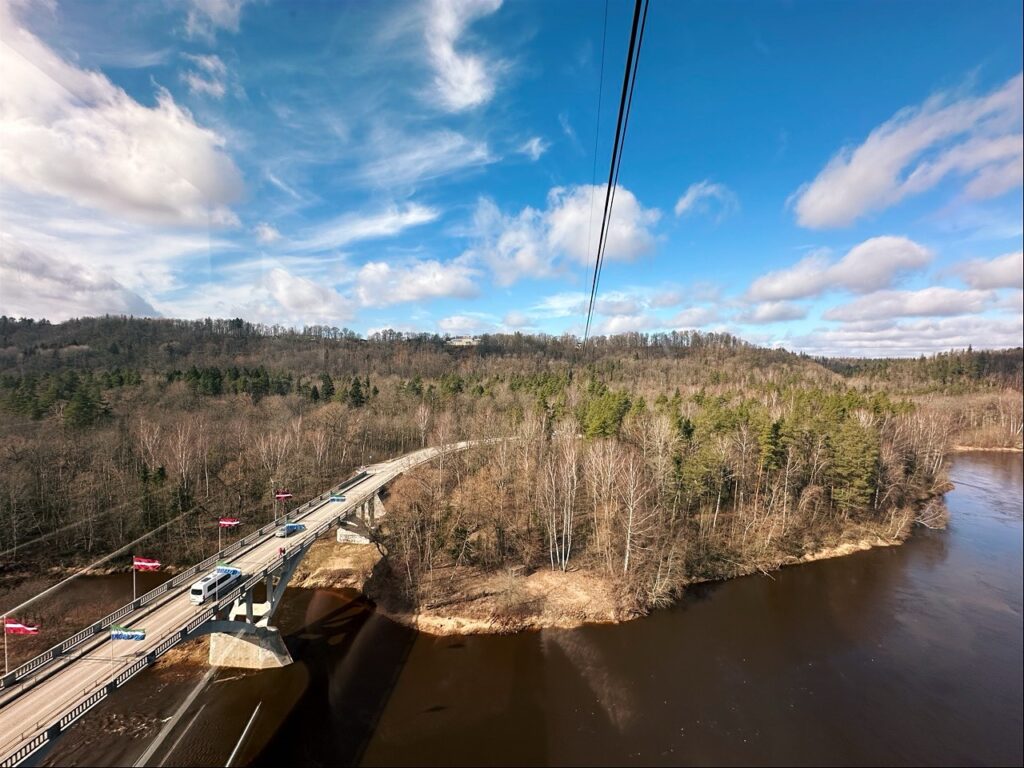
Latvia was our first real introduction to the Baltics, and perhaps that is partly why it feels like the quietest member of the trio in our memory.
Riga has plenty going for it. The historic center is beautiful, Art Nouveau architecture gives parts of the city a distinctly elegant character, and the enormous market inside the old Zeppelin hangars is the kind of place that makes you stop and look around. Outside the capital, Latvia opens into forests, rivers, castles and the landscapes of Gauja National Park.
We also loved our day in Sigulda, where castles, caves, cable cars and autumn landscapes turned the countryside into something completely different from Riga.
But Latvia had a certain calmness that sometimes worked for us and sometimes left us wanting a little more.
It is the quiet cousin at the party. Not unpleasant. Not boring. Just standing a little farther from the speakers.
And perhaps that is unfair, because travel is deeply personal. Another traveler could come to Latvia specifically looking for that slower rhythm and fall completely in love with it.
For us, though, the country left the softest impression.
Our Latvia Score
🔸 Vibes: 6/10
🔸 Penguin-Friendliness: 5/10
🔸 Scenery & City Life: 7/10
Total: 18/30
Latvia gave us a good introduction to the Baltics. It just did not quite steal the show.
Lithuania: The One We Didn’t See Coming
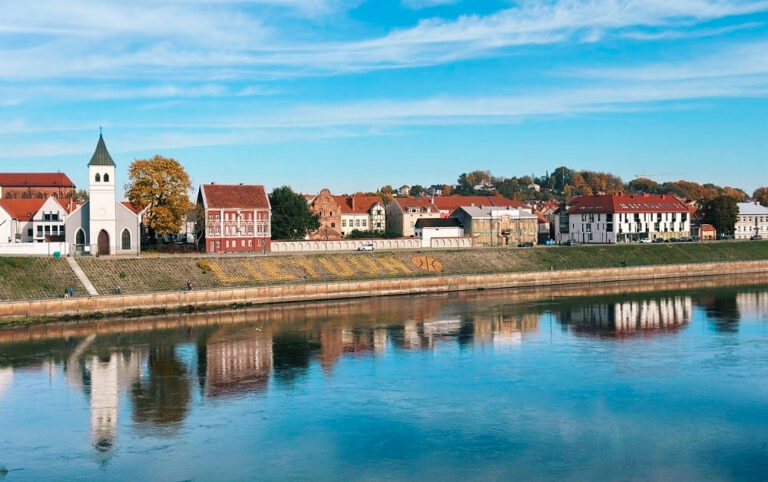

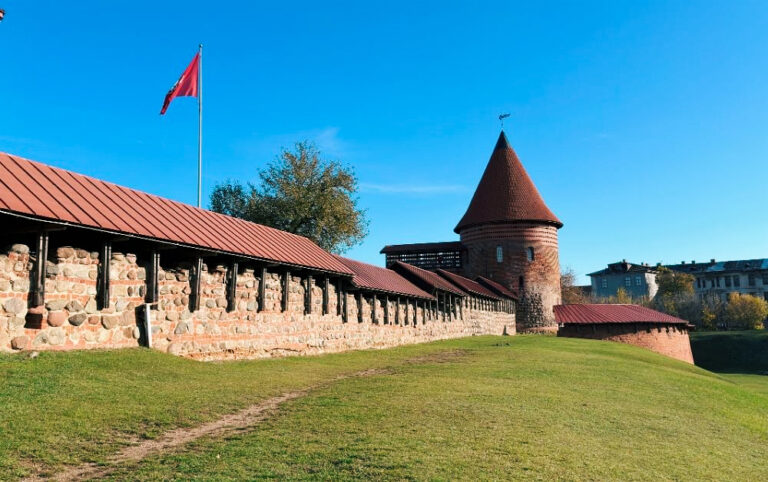
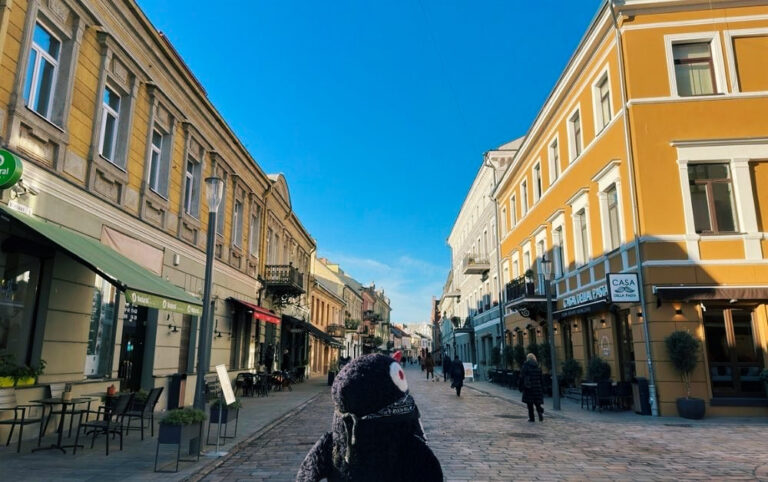
Lithuania was the surprise. We arrived with relatively modest expectations and only had two days, splitting our time between Vilnius and Kaunas. That is nowhere near enough time to understand an entire country, but sometimes even a short visit is enough to change your expectations.
Vilnius felt creative and slightly rebellious. Užupis has its deliberately unconventional personality; hidden courtyards appear behind historic streets, and the city constantly shifts between grand history and small, unexpected details. Then there was Kaunas, with its Modernist architecture and completely different rhythm. But what stayed with us was not one particular attraction. It was the feeling that Lithuania had more beneath the surface than we expected.
Its history is particularly layered. Medieval Lithuania was once at the center of the powerful Grand Duchy of Lithuania, while the country later experienced occupations, war, and Soviet rule. Today, traces of those different eras exist alongside a modern European identity. That mixture gives the country a depth that you notice gradually rather than all at once.
We also loved the autumn colors. Perhaps that sounds small, but the season changes a destination’s personality. Lithuania in late October was grey, chilly and sometimes cloudy, but the colors made the streets and parks feel almost theatrical.
And then there were the little moments.
The cat outside the shop.
The unexpected rules.
The ruins.
The feeling that we had only scratched the surface.
Lithuania did not arrive in our travel plans with a huge neon sign saying YOU WILL LOVE THIS.
It simply kept giving us reasons to pay attention.
Our Lithuania Score
🔸 Vibes: 7/10
🔸 Penguin-Friendliness: 6/10
🔸 Scenery & City Life: 8/10
Total: 21/30
Lithuania became our hidden gem of the three. And perhaps that is why it ranked so high.
Estonia: Cold, Clever and Completely Our Thing

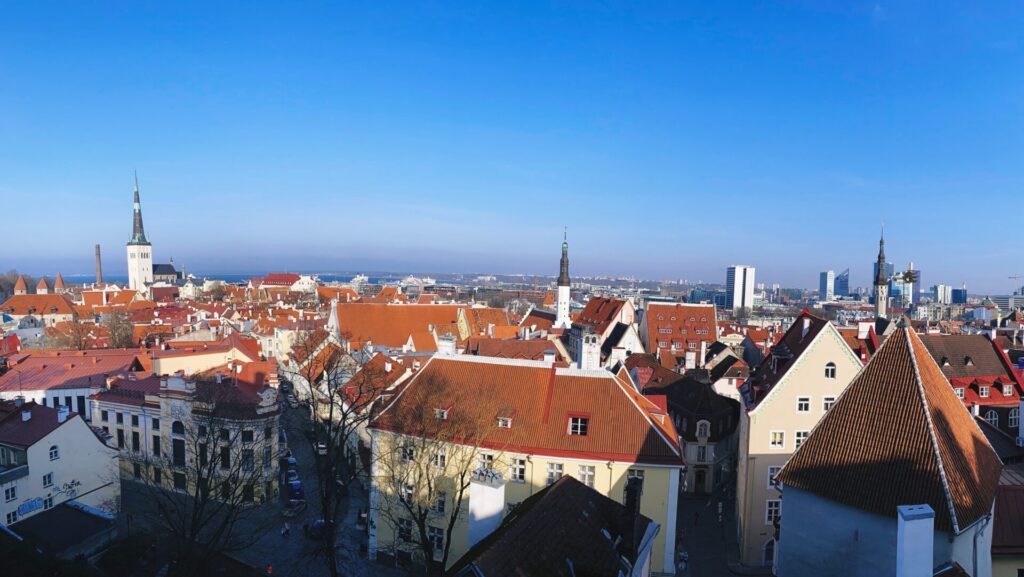
And then there is Estonia. Estonia somehow managed to combine several things we enjoy about traveling into one country: dramatic history, medieval architecture, nature, interesting design, technology and a slightly mysterious northern atmosphere. Tallinn immediately made an impression. The medieval Old Town feels almost improbably well preserved, with towers, defensive walls, narrow streets and viewpoints opening across the city. But walk beyond the postcard version of Tallinn and another Estonia appears: contemporary neighborhoods, design, cafés, creative spaces and a country that has developed a remarkably digital public life. Estonia is wonderfully contradictory.
You can stand beside a medieval stone tower and then use a highly digital service on your phone a few minutes later.
You can spend the morning wandering through centuries of history and the afternoon feeling like you have accidentally stepped into a futuristic Nordic design magazine.
And yes, it is cold.
But that works for us.
Something about a crisp northern landscape, layers of clothing, dark forests, old stone walls, and the Baltic Sea feels very close to our imaginary definition of penguin paradise.
Perhaps Estonia understood the assignment.
Our Estonia Score
🔸 Vibes: 9/10
🔸 Penguin-Friendliness: 10/10
🔸 Scenery & City Life: 9/10
Total: 28/30
Estonia takes the crown. Or, more appropriately, the penguin crown. 👑🐧
But Is Estonia Really “Better”
This is where rankings become dangerous. If we have learned anything from traveling, it is that the best destination is rarely the same for everyone. Someone looking for long beaches, forests, and a slower pace might connect more strongly with Latvia. Someone interested in history, creative neighborhoods, and unexpected discoveries might fall for Lithuania. Someone fascinated by medieval cities, technology, and northern landscapes might find Estonia irresistible.
Our ranking is simply a record of our experience so far in our travels. And rankings have another problem: they make a country look like a product on a shelf.
Lithuania is not 21 points.
Latvia is not 18.
Estonia is not 28.
Those numbers are a playful way to explain something much harder to measure: how a place made us feel.
What Traveling the Baltics Taught Us
There is a bigger lesson here, too. We often travel with expectations already installed in our heads. We think we know which city will be beautiful. Which country will be interesting? Which destination will be expensive? Which place will feel welcoming? Which attraction will be worth our time? And then we arrive.
Sometimes we are right. Often, we are not. Lithuania was a good reminder of that for us. We expected a short stop and left with a much longer list of places we wanted to return to. Estonia reminded us that a country can combine old and new without losing its identity. Latvia showed us that a quieter experience is not necessarily an unsuccessful one. That is probably why I like traveling without trying to turn every destination into a competition. You can have a favorite without declaring a loser. You can love one city more than another without deciding the other city isn’t worth visiting.
And sometimes the place that surprises you is the one you remember longest.
If You’re Visiting the Baltics for the First Time, Where Should You Start
If you are wondering which Baltic country to visit first, our ranking gives you a pretty clear answer: start with Estonia, then make your way to Lithuania, and leave Latvia for last. Estonia gave us the strongest overall impression, from Tallinn’s medieval streets and northern atmosphere to its mix of history, nature and modern life. Lithuania surprised us with how much character it packed into a relatively short visit, and it quickly became the country we wished we had more time to explore. Latvia came third for us, not because we disliked it, but because its quieter personality left less of an impression than the other two. Of course, this is our experience rather than a universal travel rule, but if you are planning your first Baltic adventure and want to know where we would begin, Estonia is where we would put the first pin on the map.
Buy Us a Ko-fi

Our Final Baltic Ranking
So, after our travels, our very unofficial, highly scientific and penguin-approved ranking looks like this:
🥇 Estonia 🇪🇪 – 28/30
Cold, clever, medieval and wonderfully northern. Our penguin paradise.
🥈 Lithuania 🇱🇹 – 21/30
Unexpected, layered, creative and full of discoveries. Our hidden gem.
🥉 Latvia 🇱🇻 – 18/30
Calm, beautiful and understated, with plenty more countryside for us to explore. Our quiet Baltic cousin.
But if there is one thing we would change about this ranking, it is the word ranking itself.
Because the Baltics are not three versions of the same destination competing for first place. They are three neighboring countries with overlapping histories and distinctly different personalities.
And perhaps that is exactly what makes traveling through all three worthwhile. You arrive thinking you are comparing countries. You leave realizing you were collecting three completely different experiences.
Travel Bold. Eat Well. Waddle Wild.

This post contains affiliate links. If you click and buy, I might earn a tiny commission, enough to help a penguin keep up its globe-trotting lifestyle. No extra cost to you, just more fish for me. Thank you for supporting the adventure!