Our Trip to Lithuania: Itinerary, Budget and Travel Tips
Two days in Lithuania might not sound like enough time to get under the skin of a country, and honestly, it wasn’t. We focused our trip on Vilnius and Kaunas, squeezing in as much as we could as we wandered historic streets, discovered unusual corners, chased viewpoints, sampled Lithuanian food, and got a feel for two cities with very different personalities.
In this guide, we’re sharing our Lithuania itinerary, what we actually spent, how we traveled between Vilnius and Kaunas, where we ate, what surprised us, and what we would do differently next time. We’re also answering the questions you have sent us on Instagram, so you can use our experience to plan your own Lithuanian adventure, whether you have two days or considerably longer.
- Do I Need a Visa to Visit Lithuania
- Is Lithuania Safe to Visit
- How Many Days Do You Need in Lithuania
- What Is the Best Time to Visit Lithuania
- Our 2-Day Lithuania Itinerary
- Vilnius vs Kaunas: What Is the Difference
- Is Two Days Enough for Vilnius and Kaunas
- How to Get Around Lithuania
- Is Lithuania Expensive
- How Much Money Do You Need Per Day in Lithuania
- How Much Did Our Trip to Lithuania Cost
- Where Did We Stay in Lithuania
- What We Would Do Differently Next Time
- Is Lithuania Worth Visiting
Lithuania Travel FAQs
Do I Need a Visa to Visit Lithuania
Lithuania is part of both the European Union and the Schengen Area, so the visa requirements depend on your nationality. EU citizens do not need a visa to visit Lithuania and can enter with a valid passport or national identity card. For travelers from outside the EU, Lithuania follows the common Schengen visa rules. Nationals of countries that require a Schengen visa generally need one for short stays of up to 90 days in any 180 days, while citizens of visa-exempt countries can generally visit for up to 90 days without a visa. For the most accurate requirements, check the rules for your specific nationality before traveling, as passport validity and other entry conditions can also apply.
Is Lithuania Safe to Visit
Yes, Lithuania is generally considered a safe destination for travelers. As in most European cities, the main thing to watch for is petty crime, particularly pickpocketing in busy tourist areas and on public transport. Official travel advice also recommends avoiding poorly lit streets and parks at night and using recognized taxi services or apps.
During our time in Vilnius and Kaunas, we felt comfortable waddling around and exploring the cities. For a short city break, normal precautions are generally all you need: keep an eye on your belongings, be aware of your surroundings and take a little extra care after dark.

Is English Spoken in Lithuania
English is widely used in tourist-facing businesses, particularly in Vilnius and Kaunas. You should have little difficulty communicating in hotels, restaurants, and major attractions.
How Many Days Do You Need in Lithuania
How long you need in Lithuania depends on how much of the country you want to see. Two days can work for a quick city break focused on Vilnius and Kaunas, while three to four days give you more time to explore both cities without rushing. If you want to add places such as Trakai, the Curonian Spit, Klaipėda, or more of Lithuania’s countryside and smaller towns, we would recommend at least five to seven days.
We had just two days in Lithuania, which we split between Vilnius and Kaunas. It was enough to see many of the main highlights, walk through the historic centers, explore some of the cities’ more unusual corners, and get our first taste of Lithuanian food. But it was a quick visit, and we left knowing we hadn’t had time to explore much more.
If we return, we would give Lithuania at least four to five days, allowing more time in both cities and adding some of the places we missed on this trip.
What Is the Best Time to Visit Lithuania
Lithuania experiences four distinct seasons, and the best time to visit depends on what you want from your trip. Late spring and summer, from May to August, bring the warmest weather, long daylight hours, and plenty of opportunities to explore the cities and countryside. September and October can be particularly beautiful, with autumn colors and fewer visitors, although temperatures become noticeably cooler. Winter is cold and days are short, but Christmas markets and snow can give Vilnius and Kaunas a completely different atmosphere.
- May–August: Best for warmer weather, long days and exploring outdoors.
- September–October: Cooler temperatures, autumn colors, and a generally quieter feel.
- November–March: Cold, dark and often snowy, but atmospheric if you enjoy winter city breaks.
- April: A transitional month, with spring arriving but changeable weather.
When Did We Visit Lithuania
We visited Lithuania at the end of October, and it was definitely on the colder side. Vilnius was often cloudy, and we ducked into shopping centers and cafés to escape the chill. The trade-off was the beautiful autumn colors, which gave the city a wonderful atmosphere and made wandering through Vilnius particularly scenic. For our next visit, we would probably choose a warmer month so we could spend more time outdoors and explore beyond the two cities.


Our 2-Day Lithuania Itinerary
With only two days, we kept things simple: one day in Vilnius and one day in Kaunas. This is a fast itinerary, but it works if your priority is getting a first impression of both cities rather than seeing every museum and attraction. Vilnius’ historic center is compact, and many of its main sights are within walking distance, while Kaunas works well as a day trip from Vilnius thanks to the direct train connection.


Vilnius vs Kaunas: What Is the Difference
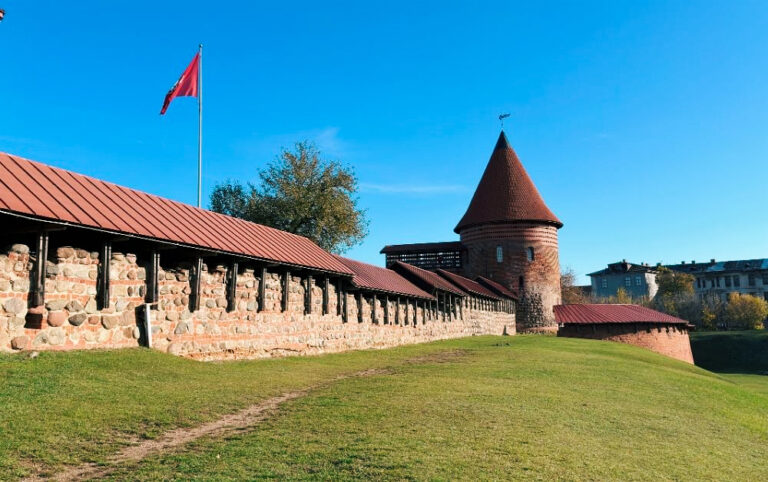
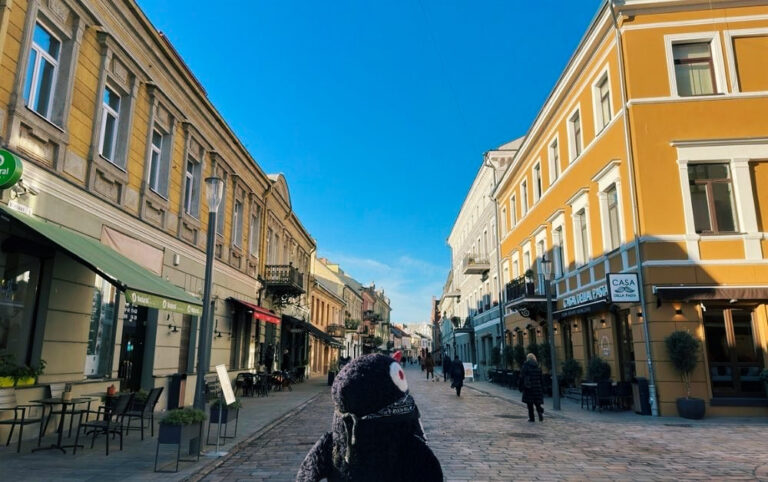
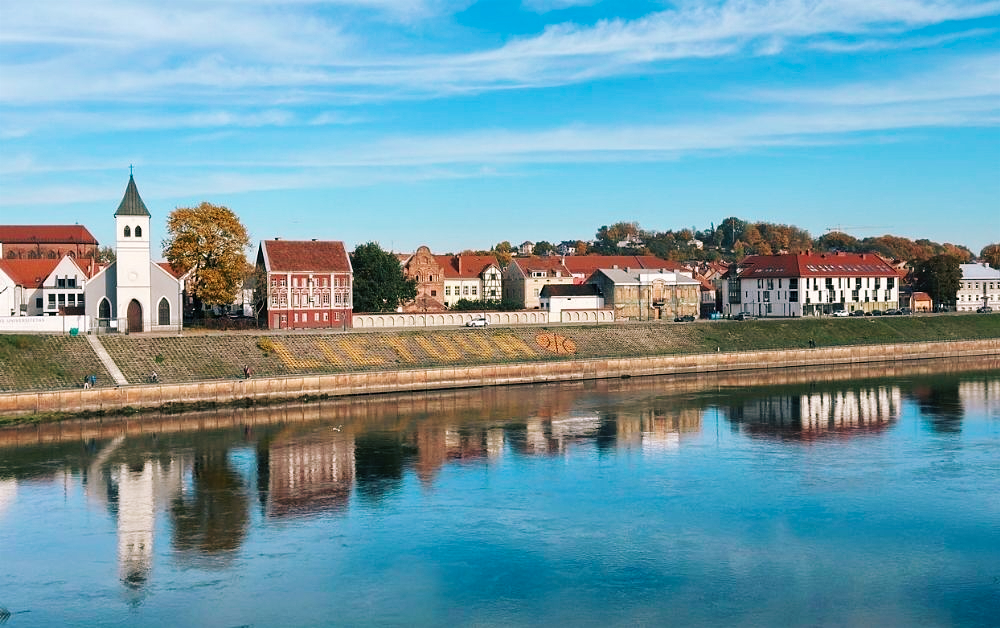
We spent only one day in each city, so this is more a first impression than an attempt to settle the question. Vilnius felt more historic and atmospheric to us. The Old Town, churches, courtyards, viewpoints, and Užupis give the city plenty of layers to explore, and it is particularly easy to spend a day simply walking between sights. Kaunas feels more modernist and creative, with its interwar architecture, street art, Laisvės Avenue, and a different urban rhythm. It has enough to fill a day, especially if you’re interested in architecture and contemporary culture.
If you have only two days, we think seeing both gives you a much better introduction to Lithuania than spending the entire time in one city. For a longer trip, however, we would give both cities more breathing room.
Is Two Days Enough for Vilnius and Kaunas
Yes, but expect a fast trip. We spent one day in Vilnius and one day in Kaunas and managed to see many of the main highlights. However, you will have to accept that you are getting an introduction rather than a deep exploration.
How to Get Around Lithuania
For this trip, we didn’t need a car. Vilnius is compact enough that you can cover much of the historic center on foot, while buses and trolleybuses connect the wider city. For the journey between Vilnius and Kaunas, the train is an easy option. Direct services connect the two cities, and you can buy tickets online. If you want to explore Lithuania beyond the main cities, particularly smaller towns, the countryside, and the Baltic coast, a car becomes more useful. For a Vilnius–Kaunas city break, though, you can manage without one.
Hotel search from Trip.comShows Trip.com’s own box, which can set Trip.com cookies.Search hotels on Trip.comTrip.com’s box can’t load on this device (an ad blocker often stops it). This opens Trip.com’s own hotel search.Open Trip.com
Is Lithuania Expensive
Lithuania isn’t one of Europe’s most expensive destinations, though prices in Vilnius restaurants and hotels can vary widely. You can keep costs lower with casual restaurants, public transport, and free sightseeing, while Michelin-starred restaurants and higher-end accommodation will naturally increase the budget.
How Much Money Do You Need Per Day in Lithuania
For a comfortable trip to Lithuania, we would budget around €60–€100 per person per day, excluding accommodation and international travel. This should cover meals, local transport, coffee and drinks, plus a few paid attractions. Budget travelers can get by on around €40–€60 per day, while nicer restaurants, several paid attractions, or more drinks can easily push the daily budget above €100. Vilnius tends to be slightly more expensive than smaller Lithuanian cities, although overall prices remain fairly manageable compared with many Western European destinations.
How Much Did Our Trip to Lithuania Cost
Our two-day trip to Lithuania cost us €623.27 in total, or €311.64 per person. That included our flights, accommodation, transportation, food, attractions, and even a few souvenirs. With such a short trip, we didn’t have many extra expenses, and we didn’t spend anything on drinks, gas, or parking.
| What | Cost |
| Flight Ticket | €126.30 |
| Accommodation | €175.88 |
| Transportation | €75.70 |
| Attraction | €12.00 |
| Restaurant | €155.57 |
| Grocery & Snacks | €20.51 |
| Souvenir | €55.51 |
| Others | €1.80 |
| TOTAL COST | €623.27 |
| PER PERSON | €311.64 |
The biggest expenses were accommodation, flights, and eating out, while transportation between our stops also added a noticeable amount. Our souvenir spending was unusually high compared with some of our other trips, but that is part of the fun of keeping a real travel spreadsheet. Overall, €311.64 per person for two days in Lithuania gave us a quick but memorable introduction to Vilnius and Kaunas.
Of course, our numbers reflect our particular trip and travel style, rather than what you should expect to spend. Stay somewhere cheaper, eat more casually, and skip some extras, and your Lithuania trip can cost considerably less. On the other hand, more nights, better hotels, and Lithuania’s growing fine-dining scene can quickly increase the budget.
Where Did We Stay in Lithuania
For our Lithuania trip, we based ourselves in Kaunas instead of changing hotels between the two cities. We stayed at the Best Western Santakos Hotel, a four-star hotel right on the edge of Kaunas Old Town. The location worked particularly well for us because we could walk into the historic center while still having a quieter base away from the busiest streets. The hotel is housed in a 100-year-old building and offers 92 rooms, breakfast, Wi-Fi, parking, and a pool and sauna.
The hotel was also a practical choice for a short trip because Kaunas Old Town is less than 100 meters away, while Laisvės Avenue is about 400 meters from the property. We have a separate, detailed review of the Best Western Santakos Hotel, where we share more about our room, breakfast, the facilities, and our overall experience, so head over there if you are considering staying here yourself.

What We Would Do Differently Next Time
Two days gave us a taste of Lithuania, but it also made it very obvious how much we left unexplored.
If we came back, we would:
- Spend longer in Vilnius. One day was enough for a first impression, but not enough to explore the city’s museums, neighborhoods, and food scene properly.
- Give Kaunas more time. We enjoyed the city’s architecture and creative atmosphere, and another day would allow us to explore more of its modernist heritage.
- Explore beyond the two cities. Trakai would be an obvious addition, while Lithuania’s Baltic coast and Curonian Spit would require a completely different itinerary.
- Eat more. This might be the most important one. Two days and three food stops barely count as a Lithuanian food tour.
Is Lithuania Worth Visiting
Our two days certainly did not give us enough time to answer that question for the whole country, but they gave us plenty of reasons to come back. Vilnius surprised us with how much it packs into its historic center, while Kaunas offered a completely different personality through its modernist architecture, street art, and creative atmosphere. Add Lithuania’s food scene, Baltic coastline, castles and countryside to the equation, and two days suddenly feel rather short.
We came to Lithuania for a quick look at two cities. We left knowing much more of the country was still waiting for us. Two days gave us a taste. Next time, we’re bringing a bigger itinerary.
Buy Us a Ko-fi

It was a short trip, but it reminded us that Lithuania deserves more than a quick stop on a Baltic itinerary. Next time, we’ll slow down, spend longer in both cities, explore beyond them, and, most importantly, leave plenty of room for more Lithuanian food. For now, this is everything we learned from our little two-day waddle through Lithuania.
Travel Bold. Eat Well. Waddle Wild.

This post contains affiliate links. If you click and buy, I might earn a tiny commission, enough to help a penguin keep up its globe-trotting lifestyle. No extra cost to you, just more fish for me. Thank you for supporting the adventure!