Getting Ready for Kaunas: Things to Know Before Your Trip
We base ourselves in Kaunas during our time in Lithuania, giving us the chance to see the city beyond a quick stop. As with every place we visit, a little context makes exploring more interesting, so here are a few facts and useful things to know about Kaunas before you set out to discover it.
- Basic Facts About Kaunas
- Why Kaunas Made It Onto Our Travel List
- Kaunas’s History in a Nutshell
- The Legend Behind Kaunas
- 15 Interesting Facts About Kaunas
- Practical Facts for Travelers Coming to Kaunas
- Best Time to Visit Kaunas
- How Much Time Do You Need in Kaunas
- Where to Stay in Kaunas
- How to Get Around Kaunas
Basic Facts About Kaunas
- Established: Kaunas is first mentioned in written sources in 1361.
- Population: Around 300,000 people live in Kaunas and its urban area.
- Area: Approximately 157 km² within the city limits.
- Location: Kaunas is in central Lithuania, where the Nemunas and Neris rivers meet.
- Time Zone: Eastern European Time, GMT+2, with daylight saving time in summer.
- Airport: Kaunas Airport is around 15 km northeast of the city center.
- Former Capital: Kaunas served as Lithuania’s temporary capital from 1920 to 1939, when Vilnius was under Polish control.
Why Kaunas Made It Onto Our Travel List
Kaunas was our base during our time in Lithuania, and the reason was simple: we had a direct flight there. Rather than flying into Vilnius, we chose the more convenient arrival point and used Kaunas as our starting point for exploring the country. It also turned out to be an interesting base in its own right, with its historic Old Town, striking interwar Modernist architecture and position where the Nemunas and Neris rivers meet. From Kaunas, we could easily explore the city itself while also making trips further into Lithuania.
Kaunas’s History in a Nutshell
- 1361. Kaunas is first mentioned in written sources, although the settlement is much older.
- 1408. Grand Duke Vytautas the Great grants Kaunas Magdeburg rights, helping the town develop as an important centre of trade and commerce.
- 15th–16th centuries. Kaunas grows as a trading town, helped by its location at the confluence of the Nemunas and Neris rivers.
- 1795. Kaunas becomes part of the Russian Empire following the Third Partition of the Polish-Lithuanian Commonwealth.
- 1918. Lithuania declares independence from Russia and Germany.
- 1920. Kaunas becomes Lithuania’s temporary capital, while Vilnius remains under Polish control.
- 1920s–1930s. The city experiences a major cultural, economic, and architectural boom, leaving behind the distinctive Interwar Modernist architecture Kaunas is known for today.
- 1939. Lithuania regains Vilnius, and Kaunas ceases to be the temporary capital.
- 1940. The Soviet Union occupies Lithuania, followed by Nazi German occupation from 1941 to 1944.
- 1944–1990. Kaunas remains under Soviet rule and becomes an important industrial center.
- 1990. Lithuania restores its independence.
- Today. Kaunas is Lithuania’s second-largest city and is particularly known for its Old Town, interwar Modernist architecture, museums, street art, and creativity.
The Legend Behind Kaunas
According to one Lithuanian legend, Kaunas owes its name to Kunas, the son of the Roman nobleman Palemonas. The story says that Palemonas travelled to Lithuania with his family and followers, eventually settling near the Nemunas and Neris rivers. His son Kunas chose the place where the two rivers meet, built a castle there and founded a settlement that became known as Kaunas.
There is also a much more mythical version of Kaunas’s origin. In this story, the goddess Aleksota fell in love with a young hunter named Dangerutis. Their son was called Kaunas, and people who settled around their home eventually took his name for their community.
Another fun Kaunas legend: locals have long told stories about a mythical beast sleeping beneath Kaunas Castle. According to the modern legend, you can supposedly hear its snoring underground, and even one of its teeth has become part of the city’s folklore.
15 Interesting Facts About Kaunas
#1: Kaunas Was Once Lithuania’s Temporary Capital
Between 1919 and 1939, Kaunas served as Lithuania’s provisional capital after Vilnius came under Polish control. The change transformed the city, bringing government institutions, diplomats, universities and cultural organizations to Kaunas and triggering a remarkable period of urban development.
#2: Kaunas Has a UNESCO Modernist Architecture District
Kaunas is home to one of Europe’s most distinctive collections of interwar Modernist architecture. The UNESCO World Heritage area includes around 1,500 buildings from 1919–1939, particularly in Naujamiestis and Žaliakalnis.
#3: The City Grew Seven Times Larger in Just Two Decades
Becoming the temporary capital triggered an extraordinary transformation. Between 1919 and 1939, Kaunas expanded its territory sevenfold, while its population grew to around 155,000. New government buildings, homes, schools, and cultural institutions appeared across the rapidly changing city.
#4: Kaunas Has a Mythical Beast
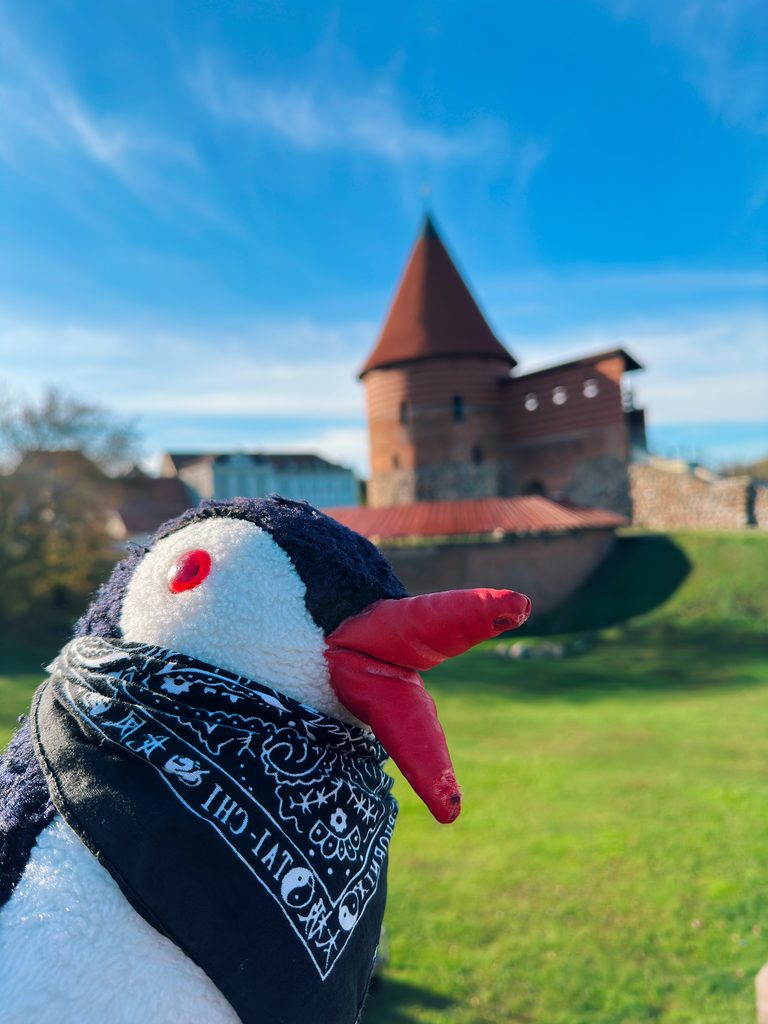
A rather unusual creature has become part of Kaunas folklore: the Mythical Beast of Kaunas. Legend says the beast sleeps beneath the city, particularly around Kaunas Castle, and sometimes even snores. Today, the creature has become a playful symbol of the city and was developed into a major artistic project during Kaunas’ European Capital of Culture year.

#5: There Is a Legend About How Kaunas Got Its Name
One old legend connects Kaunas’ origins to Palemonas and his descendants, including a son named Kunas. The story claims Kunas settled at the meeting point of the Nemunas and Neris rivers, and the settlement eventually took his name. The story is folklore rather than established history, and historians treat even the legendary foundation date of 1030 with caution.
#6: Kaunas Sits Where Two Rivers Meet
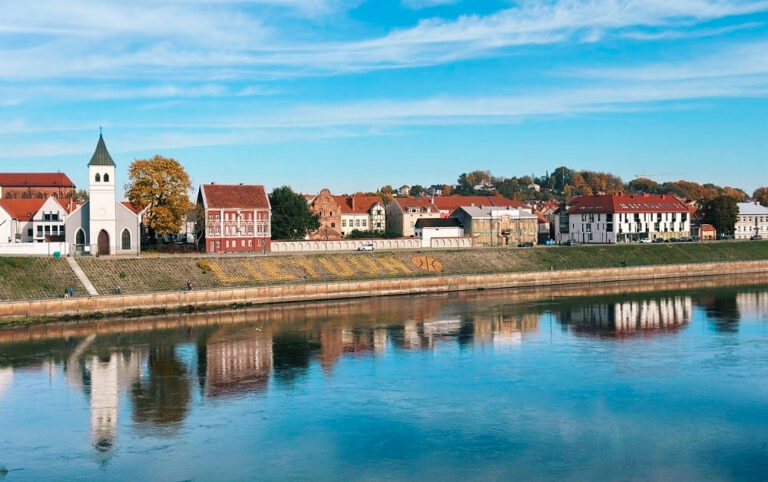
The Nemunas and Neris rivers meet in Kaunas, creating one of the city’s defining geographical features. The confluence is also closely tied to local legends about the city’s origins and lies beside Santaka Park and Kaunas Castle.
#7: Kaunas Is Closely Associated With Basketball
Basketball is deeply woven into Kaunas’ identity. The city is home to Žalgiris Kaunas, a club whose history dates back to 1944, while generations of Lithuanian basketball stars have come through the city. Arvydas Sabonis, Šarūnas Jasikevičius, and several other internationally recognized players have strong connections with Kaunas.
#8: Arvydas Sabonis Was Born in Kaunas
One of Lithuania’s most famous basketball players, Arvydas Sabonis, was born in Kaunas in 1964. He played for Žalgiris, represented Lithuania and the Soviet Union internationally, and later played in Spain and the NBA. Kaunas made him an honorary citizen in 1997.
#9: The City Gave the World Fluxus
Jurgis Mačiūnas, born in Kaunas in 1931, became a central figure in the international Fluxus art movement. The avant-garde movement challenged conventional ideas about art through performances, experiments, humor, and everyday objects. Kaunas now has a dedicated Fluxus collection connected with Mačiūnas at the Kaunas Picture Gallery.
#10: A Famous Lithuanian Artist Has a Museum Here
Kaunas is closely associated with Mikalojus Konstantinas Čiurlionis, one of Lithuania’s best-known artists and composers. The M. K. Čiurlionis National Museum of Art in Kaunas is dedicated to his work and offers a chance to see the unusual connection between his music and visual art.
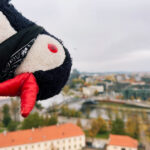
#11: Kaunas Has the World’s Only Devil’s Museum
Yes, you read that correctly. Kaunas is home to the Devil’s Museum, which Lithuania Travel describes as the world’s only museum of its kind. Its collection brings together representations of devils from Lithuania and around the world, making it one of the city’s more unusual attractions.
#12: Kaunas Castle Is the Oldest Castle of Its Kind in Lithuania
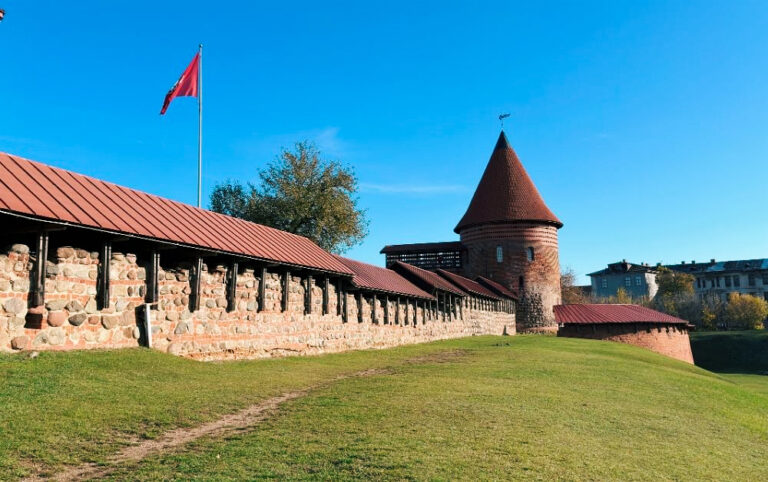
Kaunas Castle dates back to the 14th century and was built at the confluence of the Nemunas and Neris as part of the city’s defensive system. Today, its surviving ruins form one of Kaunas’ most recognisable historic landmarks.
#13: Kaunas Was a Hanseatic Trading Center
Kaunas became an important trading city during the late medieval period. In 1441, merchants from Hanseatic cities established a trading office in Kaunas, which remained active until 1532. Its position on the Nemunas connected the city to trade routes toward Western Europe.
#14: A 1972 Protest Became Part of Lithuania’s History
In 1972, Romas Kalanta set himself on fire in a public protest against Soviet rule in Kaunas. His death was followed by demonstrations involving thousands of people and became one of the most remembered acts of resistance during the Soviet period. Kaunas later named him an honorary citizen posthumously.
#15: Kaunas Was European Capital of Culture
In 2022, Kaunas became the European Capital of Culture, putting the city’s art, architecture, history and creative communities in the international spotlight. The programme also helped bring the Mythical Beast of Kaunas into the city’s contemporary cultural identity.
#16: Kaunas Town Hall Is Known as the “White Swan”
The historic Kaunas Town Hall has earned the charming nickname “The White Swan” thanks to its tall, elegant white façade and graceful silhouette. In the heart of Town Hall Square, the building is one of the city’s most recognizable landmarks and has been a focal point of Kaunas since the 16th century.
Hotel search from Trip.comShows Trip.com’s own box, which can set Trip.com cookies.Search hotels on Trip.comTrip.com’s box can’t load on this device (an ad blocker often stops it). This opens Trip.com’s own hotel search.Open Trip.com
#17: Kaunas Has a 1.6-Kilometre Pedestrian Boulevard
Laisvės Alėja, or Freedom Avenue, stretches about 1.6 kilometers through the center of Kaunas. The pedestrian boulevard is lined with linden trees, shops, cafés and restaurants, making it one of the city’s main places for strolling and people-watching.
#18: Kaunas Still Has Historic Funiculars
Kaunas is home to two historic funicular railways, the Žaliakalnis and Aleksotas funiculars. Both began operating in the 1930s and still carry passengers up the city’s steep hills, combining practical transport with a piece of Kaunas history.


Practical Facts for Travelers Coming to Kaunas
- Tap Water. Tap water in Kaunas is safe to drink, so you generally don’t need to buy bottled water.
- Getting Around. Kaunas is relatively compact, and the central areas are easy to explore on foot. Buses and trolleybuses cover the wider city.
- Waddling. The Old Town, Laisvės Alėja and many of the main sights are within walking distance of each other, although some attractions are located on the city’s hills.
- Public Transport Tickets. Public transport uses electronic ticketing, and you can buy tickets through the city’s transport system or mobile apps. Check the current options before traveling.
- Funiculars. The historic Žaliakalnis and Aleksotas funiculars are useful when exploring the city’s hills and are attractions in their own right.
- City Centre. Laisvės Alėja connects the New Town with the Old Town and is one of the easiest areas to use as a starting point for exploring Kaunas.
- Old Town. Kaunas Old Town is compact enough to explore comfortably on foot, with Town Hall Square, Kaunas Castle, churches, cafés and smaller streets close together.
- Hills. Kaunas is not completely flat. Some neighbourhoods and viewpoints involve steep streets or stairs, particularly around Žaliakalnis and Aleksotas.
- Cycling. Kaunas has cycling routes and bike-sharing options, although the infrastructure is more developed in some parts of the city than others.
- Cash or Card. Cards are widely accepted in shops, cafés and restaurants, while carrying a small amount of cash can still be useful for smaller purchases.
- Coffee and Cafés. Café culture is strong around the Old Town and Laisvės Alėja, with plenty of places to stop between sights.
- Restaurants. You will find everything from traditional Lithuanian food to international restaurants, particularly around the Old Town and city center.
- Opening Hours. Most major attractions have set opening days and hours, so check ahead, especially if you are visiting outside the main summer season.
- Weather. Kaunas can be cold, windy and wet outside summer, while summers can be pleasantly warm. Comfortable shoes and a waterproof layer are useful for exploring on foot.
- Airport Connection. Kaunas Airport is outside the city center, so allow extra time to get there when arriving or catching an early flight.
- Day Trips: Kaunas is also a useful base for exploring other parts of central Lithuania, with destinations such as Trakai and Vilnius accessible by road or public transport.
Best Time to Visit Kaunas
Kaunas is a year-round destination, but the experience changes considerably with the seasons. For walking through the Old Town, exploring its Modernist architecture and enjoying the city’s parks and riverside areas, the milder months are generally the most comfortable.
- Spring (March–May). Spring brings longer days and gradually warmer weather, with April and May offering a good balance for sightseeing. Trees and parks start turning green, cafés reopen their outdoor spaces, and the city feels noticeably livelier after winter.
- Summer (June–August). Summer is the warmest and busiest period in Kaunas. Long daylight hours make it easy to combine sightseeing with time outdoors, while the city’s parks, riverside areas and cafés are particularly enjoyable. July and August are usually the warmest months.
- Autumn (September–November). Early autumn is a beautiful time to explore Kaunas, particularly when the city’s trees turn golden. September can still feel relatively mild, while October brings cooler temperatures but excellent waddling conditions on clear days. By November, shorter days and colder weather become more noticeable.
- Winter (December–February). Winter brings short days, cold temperatures, and the possibility of snow. Kaunas can look particularly atmospheric around Christmas, when the city is decorated and festive events take place. Still, you will want warm clothing and should expect less comfortable conditions for long walks.
We visited Kaunas at the end of October and were incredibly lucky with the weather. While our time in Vilnius was marked by rain and grey skies, Kaunas gave us a beautiful autumn day with blue skies, crisp air and colourful trees. That contrast completely changed how the city felt, and based on our experience, we would happily recommend October for exploring Kaunas.
How Much Time Do You Need in Kaunas
For a first visit, we recommend spending at least two days in Kaunas, with three days giving you more time to explore at a slower pace. Two days let you see the Old Town, stroll along Laisvės Alėja, discover the city’s Modernist architecture, visit a few museums, and take in the views from the hills. With three days, you can slow down, explore more neighborhoods, and add a day trip to the surrounding area.
We stayed in Kaunas for one full day, and it was enough to get a good grasp of the city and see many of its main highlights. We could walk through the Old Town, explore the central streets, see the Modernist architecture, and experience the city’s atmosphere. That said, we still recommend at least two days if you want to experience Kaunas without rushing and have time to discover places beyond the main sights.
Where to Stay in Kaunas
Kaunas is fairly compact, so choosing where to stay mostly comes down to whether you want to be surrounded by historic streets, close to the main pedestrian boulevard, or somewhere quieter away from the center. For a first visit, the Old Town and New Town are the most convenient areas, while Žaliakalnis is worth considering if you prefer a quieter neighbourhood with a more residential feel.
- Old Town. The best choice if you want to wake up among Kaunas’s historic buildings, churches, cobbled streets and restaurants. Most of the main sights are within easy walking distance. Hotel options include Amberton Cozy Hotel Kaunas and Daugirdas, viešbutis-restoranas.
- New Town (Naujamiestis). A good option if you want to be close to Laisvės Alėja, shops, cafés, museums and the city’s interwar Modernist architecture. It also gives you easy access to both the Old Town and the rest of central Kaunas. Consider Viešbutis KAUNAS or Moxy Kaunas Center.
- Žaliakalnis. Set on the hill above the city center, Žaliakalnis is quieter and more residential, with plenty of interwar architecture and access to the historic Žaliakalnis funicular. It is a good choice if you do not mind being slightly farther from the Old Town. Hotel options include Perkūno namai and Babilonas Hotel.
- City Center around Laisvės Alėja. Staying around Freedom Avenue puts you in the middle of Kaunas’s cafés, restaurants, and shopping streets, while still within walking distance of the Old Town. Options include Kaunas City Hotel.
Where We Stayed: We stayed at Best Western Santakos Hotel, right on the edge of the Old Town and city center. The location worked particularly well for us because we could walk to the historic center and Laisvės Alėja while staying on a quieter street. The hotel is less than 100 metres from the Old Town and also offers free on-site parking, which was convenient for our trip.
Hotel search from Booking.comShows Booking.com’s own box, which can set Booking.com cookies.
How to Get Around Kaunas
Kaunas is compact, and getting around is straightforward, particularly if you plan to spend most of your time in the center. Many of the main sights are close enough to reach on foot, while public transport is useful for longer trips or when you want to tackle the city’s hills.
- Waddling. Waddling is the easiest way to explore central Kaunas. You can reach the Old Town, Town Hall Square, Laisvės Alėja, and many of the city’s Modernist buildings on foot.
- Buses and Trolleybuses. Kaunas has an extensive public transport network of buses and trolleybuses that connects the center with the wider city. They are useful for reaching areas such as Žaliakalnis and Aleksotas.
- Funiculars. Kaunas has two historic funiculars, Žaliakalnis and Aleksotas. They are a practical way to navigate the city’s steep hills while also offering a fun glimpse into the city’s transport history.
- Taxis and Ride-Hailing. Bolt is widely used in Kaunas and is a convenient option when you are traveling with luggage, heading to the airport, or don’t want to rely on public transport.
- From Kaunas Airport. Kaunas Airport is outside the city center and is connected to Kaunas by public transport. You can also use Bolt or a taxi if you prefer a direct journey to your accommodation.
Penguin Pro Tip: If you are staying in or around the Old Town, leave the car behind for most of your sightseeing. Kaunas is much more enjoyable when you explore its streets, courtyards, architecture, and hills on foot.
Buy Us a Ko-fi

Kaunas may have started as a convenient base for our time in Lithuania, but it quickly became a destination worth exploring in its own right. From its medieval Old Town and riverside setting to its colourful street art, interwar Modernist architecture and unexpected legends, the city has plenty to uncover. Give yourself time to wander beyond the main sights, because some of Kaunas’s most interesting details are found in the streets between them.
Travel Bold. Eat Well. Waddle Wild.

This post contains affiliate links. If you click and buy, I might earn a tiny commission, enough to help a penguin keep up its globe-trotting lifestyle. No extra cost to you, just more fish for me. Thank you for supporting the adventure!