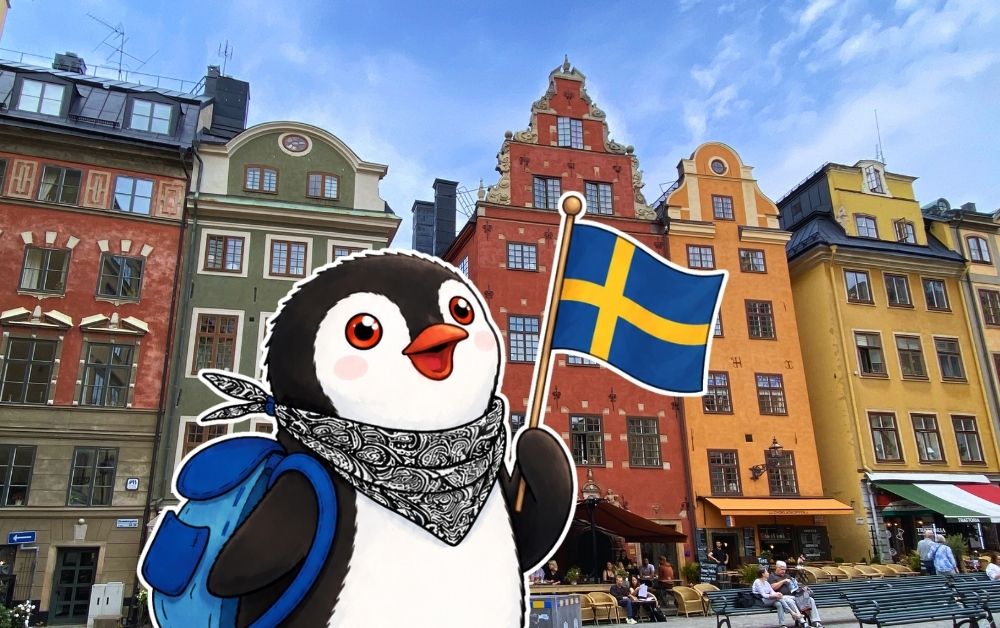
Sweden Travel Tips: Useful Things to Know Before You Go
Are you looking for interesting facts about Sweden before your trip? Then you’ve waddled to the right place. Sweden may be famous for IKEA, H&M, and meatballs, but there is so much more to this Nordic country than flat-pack furniture and good cinnamon buns. Before we visit a country, we always try to learn something about it. Officially known as the Kingdom of Sweden, the country is part of Scandinavia in northern Europe. It is covered in forests, dotted with over 100,000 lakes, and has around 24,000 islands waiting to be explored. Sweden is the fifth-largest country in Europe and the largest country in Scandinavia, so there is plenty to discover. From wild landscapes and cozy fika culture to surprising local habits, let’s look at the most interesting facts about Sweden before you visit.

Basic Facts About Sweden
- Name: Sweden (Sverige)
- Full Name: The Kingdom of Sweden (Konungariket Sverige)
- Capital: Stockholm (the largest city). The second-largest city is Gothenburg.
- Land area: 528,447 km² (172,754 square miles)
- Population: 10,416,585 (July 2021)
- Official language: Swedish
- Currency: Swedish krona
- Regions: Sweden is divided into 290 municipalities and 21 regions. But traditionally, it’s divided into three major “lands”, from north to south: Norrland, Svealand, and Götaland. These regions are called “landsdelar”.
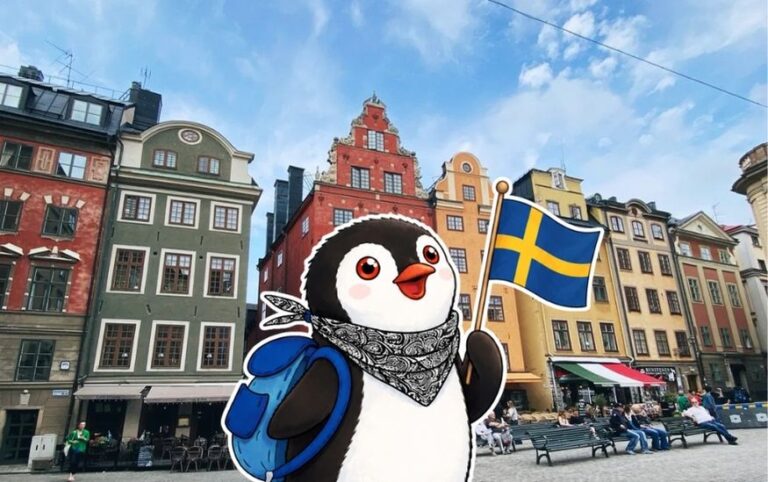
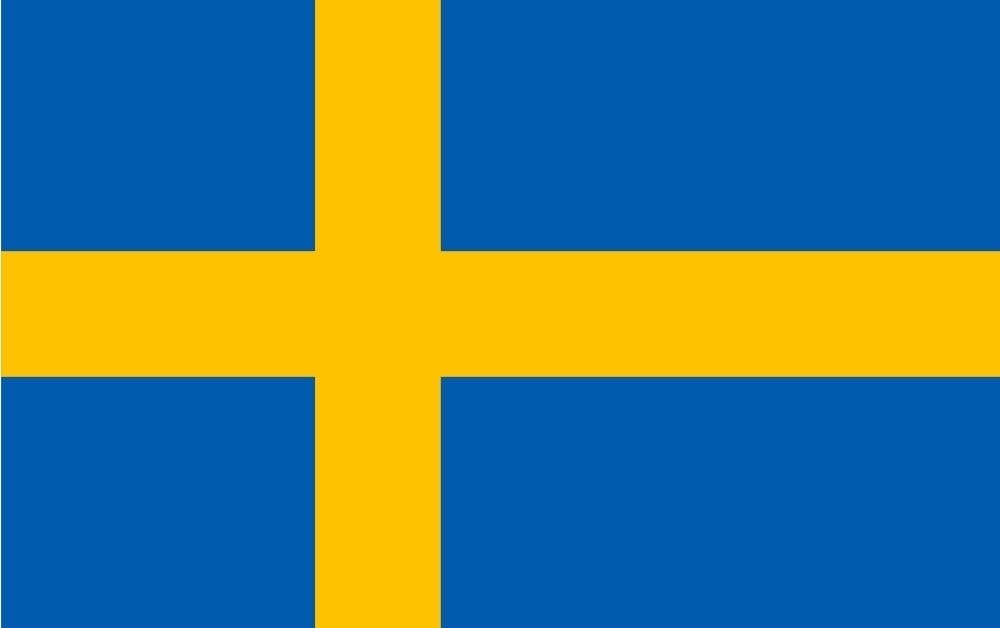
- The Swedish flag is a blue field charged with a yellow Nordic cross that extends to the edges; the vertical part of the cross is shifted to the hoist side. The meaning of the colors of the Swedish flag is quite simple. The blue represents justice, loyalty, truth, vigilance, and perseverance. The yellow or gold color used on the cross represents generosity.
A Brief History of Sweden
- The Viking Age shaped early Sweden. From the 8th to the 11th century, Swedish Vikings traveled, traded, and settled across Europe, especially around the Baltic Sea and along eastern trade routes.
- Sweden became a Christian kingdom. During the Middle Ages, Christianity spread across the country, and Sweden slowly developed into a united kingdom with stronger royal power.
- The Kalmar Union connected Sweden with Denmark and Norway. In 1397, Sweden became part of the Kalmar Union, which united the three Nordic kingdoms under a single monarch.
- Sweden broke away and became independent. In 1523, Gustav Vasa became king of Sweden, marking the end of Sweden’s Kalmar Union and the beginning of modern Swedish independence.
- Sweden became a major European power. During the 17th century, Sweden controlled large areas around the Baltic Sea and became one of the strongest military powers in Europe.
- The country later shifted toward peace and neutrality. After losing territory and influence in the 18th and early 19th centuries, Sweden moved away from major wars and became known for its long tradition of neutrality.
- Modern Sweden became known for welfare and innovation. In the 20th century, Sweden developed into a democratic, wealthy country with strong social systems, global brands, and a high quality of life.
- Today, Sweden is a constitutional monarchy. It has a royal family, but political power belongs to the elected parliament and government.


19 Things to Know About Sweden Before You Visit
#1: Forests cover most of Sweden. More than half of Sweden is covered in forest. More precisely, 2/3 of Sweden’s land area is covered by forest, with a total area of 280 650km2. Private people own half of the land, and private companies own 1/4. The biggest single owner is the state, Sveaskog AB. The forested area includes tree plantations. The Swedish Forestry Act regulates forest management in both production and environmental terms.
#2: Moose roam freely in the woods. With so much forest area, it is no wonder animals run freely. But with moose, we talk about 300,000 – 400,000 of them running freely in the woods. The moose is the most popular animal in Sweden. They are often referred to as the king of the Swedish forest. Each year, 100,000 moose are hunted in autumn, but at the same time, the same number are born in spring! So, the moose population becomes stable in the summer. Moose are the national pride of Sweden, but at the same time, they are a national delicacy.
#3: Allemansrätten, the right of public access. Allemansrätten invites everyone to roam free and explore the beauty of Sweden. As long as you do not disturb and do not destroy, you are welcome to enjoy nature as much as you want. The right of public access allows you to engage in almost any form of outdoor recreation – from hiking and riding to swimming and berry picking. It allows anyone to light a fire out in nature. But there are restrictions on safeguarding Sweden’s countryside.
#4: Coffee is very popular. “Fika” is a thing! Swedes drink a lot of coffee, which is fostered through a tradition called “fika” – where friends, family, or colleagues meet for coffee or tea, often with something sweet on the side. Most Swedes will enjoy at least one “fika” a day as an opportunity to bond. “Fika” is frequently translated as “a coffee and cake break.”
#5: Sweden is a master of pop music. Swedish-produced or Swedish-written songs, including top British and American hits, have dominated the charts for years. There are many artists you don’t even know who are from Sweden. Among the most popular ones is ABBA, which is still one of the world’s most famous bands in history, and when you travel abroad, it’s not uncommon for people to mention ABBA when they think about Sweden. But ABBA has also made it on the international music scene. Oh no. Among other famous ones are Zara Larsson, Avicii (R.I.P), Swedish House Mafia, Alesso, Robyn, Måns Zelmerlöv, and Lykke Li.
#6: Most Swedes live in urban areas. Sweden has three large cities – Malmö, Gothenburg, and the capital, Stockholm – and many smaller cities, such as Uppsala. The trend among Swedes is to live in cities rather than the countryside. Over 80% of the population lives in urban areas.
#7: Be Lagom. As the Danes have Hygge, the Swedes have Lagom. Loosely translated, the word lagom means “just enough,” “in moderation,” and “appropriate.” It is interpreted in many aspects of life, but when talking about societal behavior, it means blending in appropriately without extreme displays of emotion. Some will argue that lagom is a norm; some will say it’s something of a cliché.
#8: Sweden has the highest number of patents per capita in Europe. We thank Sweden for many inventions; we use many of them every day.
- GPS. Yep, the GPS we use daily. It was Hokan Lans who came up with it, and it soon became the world standard for shipping and civil aviation – and is the basis for the GPS we use on our phones and everywhere else today. He also invented the computer mouse.
- Adjustable wrench. It was invented by Johan Petter Johansson, who actually obtained more than 100 patents in his lifetime.
- Skype. Once again, yes, we are talking about the software developed by Niklas Zennström that lets us video call. Now we have many other apps providing such services, but Skype was at the beginning of it all.
- Tetra Pak. I am not sure about you, but for me, it’s hard to imagine a life without cardboard cartons. Invented by Eric Wallenberg during World War II.
- Nils Bohlin invented the three-point seatbelt for Volvo. It helped the car company cement its reputation for safety and, in the process, save lives around the world. What’s most impressive is that Volvo gave the invention away, putting the world’s safety ahead of profit.
- Zipper. Developed by Gideon Sundbäck, it was called the ‘separable fastener.’ It was patented in 1917.
- The nicotine replacement gum also originates in Sweden. The first product – Nicorette – was developed by Leo AB in Helsingborg.
And those are just a few innovations from Sweden. Among others is also Candy Crush. Well, not exactly an everyday invention, but a beloved game. With 500 million downloads and counting, Candy Crush is crushing it. It was created by the Swedish gaming company King.
Hotel search from Trip.comShows Trip.com’s own box, which can set Trip.com cookies.Search hotels on Trip.comTrip.com’s box can’t load on this device (an ad blocker often stops it). This opens Trip.com’s own hotel search.Open Trip.com
#9: Smacking is banned in Sweden. You are reading correctly. If you want to punish your children physically, don’t come to Sweden. (Also, don’t smack your children in general. They were the first country to ban smacking. You will face fines, arrest, anger management classes, and a whole lot more, including the scorn of society. Sweden banned hitting, smacking, or spanking children in 1979, and it’s beyond rare to hear about it happening these days. Everyone who meets a child is responsible for treating the child with respect.
#10: Sweden has five official minority languages. Sweden’s population is very diverse, resulting in five official national minority languages and hundreds of others spoken around the country daily. The five minority languages are Finnish, Sami, Romani, Yiddish, andMeänkieli (Tornedal Finnish). Other frequently spoken languages include Serbo-Croatian, Arabic, Spanish, Kurdish, German, and Farsi.
#11: There are a lot of McDonald’s. Sweden has the highest number of McDonald’s restaurants in Europe per capita. Even though it is not known for being unhealthy or obese, you can still find the highest number of McDonald’s in Europe here. It’s also interesting that in recent years, many fast-food chains have tried to establish themselves in Swedish cities, but most of them have failed. One has to wonder what the magic behind McDonald’s is.
#12: Recycling is on a different level. The Swedish people love to recycle. Only 1% of waste ends up in landfills, with 50% being recycled or composted and 49% being incinerated for energy. That’s impressive. That’s what I call recycling. One could not imagine this kind of recycling might cause a problem -there’s not enough waste left to keep the incinerators running. But there is a solution the Swedes came up with. They import waste from Norway and the UK to keep the lights on. And as a double bonus, the countries pay Sweden to take their waste away!
#13: Stockholm’s metro is like a gallery. Stockholm metro station. The architecture in Stockholm, Sweden’s capital, is stunning. However, if you want to see something extraordinary, you have to go underground. Around 90% of the Stockholm metro stations have been decorated. Together, they are forming one of the world’s most intriguing art galleries. More than 150 artists took part in the project that features mosaics, paintings, graffiti, installations, sculptures, and more.
Buy Us a Ko-fi

#14: North Korea owes a huge debt to Sweden. The debt is over 45 years old, and it’s owed to Volvo. It all happened when North Korea attempted to rebrand itself after the Korean War. They started some grand engineering projects using machinery bought from the West. Sweden was one of the first countries to jump aboard the hype and, in 1974, delivered 1000 Volvo 144GL luxury cars. But soon, it became clear that North Korea neither could nor wanted to pay for these vehicles. Instead, it was simply letting the bills pile up, and, to this day, the debt remains. Now, the debt stands at around €300m, and while the country knows there’s little chance of seeing the money, they’re making sure it never gets forgotten!
#15: Alcohol is a state-owned monopoly. You can buy and order alcohol and drinks in restaurants and bars as in any other place. However, if you want to buy a bottle for home, you can’t buy it in a grocery store like in many other countries. Here, the Swedes resemble the U.S., although for different reasons. To buy alcohol in Sweden, you must go to Systembolaget, a state-run liquor store.
#16: Sweden’s marketing is out of this world. Every country wants to attract tourists and visitors, and Sweden is no exception. But their marketing strategies are out of this world. The Swedish Tourist Association has two especially popular ideas. The first was Call a Swede phone line, where you called a random number, and a random Swedish citizen would pick up and answer your questions about Sweden. The second initiative was on Twitter, where each week, a new citizen would take over the account and tweet things that interested them about their country, life, and work. Tweeters would also interact with the public and answer questions about the country as they saw it. The initiative ran for seven years, and more than 350 Swedish citizens had the chance to represent their country to the world.
#17: The Midnight Sun. The midnight sun is a natural phenomenon that occurs in Sweden’s northernmost area from May to July. When the sun does not entirely sink below the horizon, 24 hours of daylight are created. So you are never in complete darkness. If you want to enjoy your sleep, don’t forget to bring a sleeping mask. It goes the other way around as well. As winter approaches, the days become shorter. How far north you travel determines the hours of darkness you will experience. And those months make for perfect aurora sightings.
#18: The Swedish royal family is not your typical royals. They were the first monarchy to change its rules of succession so that the monarch’s firstborn child is heir to the throne, regardless of gender. This amendment was passed by the Swedish Parliament in 1980, just 3 years after Crown Princess Victoria was born and 1 year after Prince Carl Philip was born. They are also known for their strong passion for the environment. The family also does a lot of environmental work internationally. Prince Carl Philip is known for being quite the athlete. For example, in 2003, he competed in the Vasaloppet, the longest cross-country ski race in the world. Note that Sweden is a parliamentary democracy, but it has a hereditary monarchy that acts in tandem with the government. Their role is ceremonial.
More Facts About Sweden, Good to Know
- Be punctual. Come to the meeting at the appointed time. What is fashionable in some countries is rude in Sweden.
- Business casual means jeans. Generally, people in Sweden dress down for work, wearing jeans and a sweater, but dress up more when going out in the evening.
- To tip or not to tip when eating out, well, it’s okay either way. It’s common to round up to the nearest big number to show your server some appreciation.
- People don’t do small talk in Sweden. A saying goes that Swedes are great friends but poor strangers. Swedes are generally helpful and welcoming to tourists, but you’ll rarely find them engaging in small talk with people they don’t know.
- Attractions can have strange opening hours. Many museums are open daily during the summer high season but switch to a six-day schedule in the off-season, typically with Monday as the day off.
- “Semlor” is very popular (and delicious). Swedes consume 20 million “Semlor” per year.
- Guadeloupe used to belong to Sweden.
- Swedes are informal with names. They will all address you by your first name and expect you to do the same in conversation.
- Tap water is alright to drink.
15 Travel Facts You Should Know Before Visiting Sweden
#1: Visa Requirements for Sweden. Sweden is part of the Schengen Area, so many travelers can visit visa-free for short stays of up to 90 days within 180 days. This usually applies to visitors from the EU, UK, US, Canada, Australia, New Zealand, and several other countries. Some nationalities need to apply for a Schengen visa before traveling, so always check the latest entry rules before your trip.
#2: Language in Sweden & English Usage. The official language is Swedish, but English is widely spoken, especially in Stockholm, Gothenburg, Malmö, hotels, restaurants, and tourist areas. You can travel quite easily without speaking Swedish, but learning a few words like hej for hello and tack for thank you is always appreciated.
#3: Best Time to Visit Sweden. The best time to visit Sweden depends on the trip you want. May to September is great for city trips, islands, hiking, and long summer days. December to March is better for snow, winter activities, Christmas markets, and the Northern Lights in Swedish Lapland.
#4: How Long to Stay in Sweden. For a first trip, 4 to 7 days is a good amount of time. With 4 days, you can focus on Stockholm and maybe a one-day trip. With a full week, you can add Gothenburg, Malmö, the archipelago, or even head north for a completely different Swedish experience.
#5: Currency, Cash Use & Card Payments in Sweden. Sweden uses the Swedish krona (SEK), not the euro. Sweden is also very cashless, so cards are accepted almost everywhere, even for small purchases. Some cafés, shops, and restaurants may not accept cash at all, so bring a card that works internationally.
#6: Tipping Culture in Sweden. Tipping in Sweden is appreciated but not expected. Service is usually included, so you do not need to tip unless you really want to. In restaurants, locals often round up the bill, for example, from 280 SEK to 300 SEK, or leave around 5–10% for great service.
#7: Mobile Internet in Sweden. Mobile internet in Sweden is generally fast and reliable, especially in cities and tourist areas. If you are visiting from outside the EU, an eSIM or local SIM card can be a good option to avoid roaming fees. Free WiFi is common in hotels, cafés, and public spaces, but mobile data is useful if you plan to explore islands, the countryside, or northern Sweden.
Tours and tickets from ViatorShows Viator’s own box, which can set Viator cookies.
Sweden is one of those countries that is easy to fall in love with. Whether you’re exploring Stockholm’s colorful streets, hiking through its endless forests, relaxing during a traditional fika, or chasing the Northern Lights in the north, there is something here for every type of traveler. We hope these travel tips and interesting facts have helped you feel more prepared for your adventure. Knowing a few local customs before you arrive will make your trip smoother and allow you to experience Sweden like a local. Happy travels, and don’t forget to waddle a little slower, you never know what hidden gem you’ll discover next!
Travel Bold. Eat Well. Waddle Wild.

This post contains affiliate links. If you click and buy, I might earn a tiny commission, enough to help a penguin keep up its globe-trotting lifestyle. No extra cost to you, just more fish for me. Thank you for supporting the adventure!