From Meatballs to Surströmming: Traditional Swedish Food Explained
Swedish cuisine is all about simple ingredients, seasonal produce, and comforting flavors. While Swedish meatballs may be the country’s most famous dish, they are only the beginning. From fresh seafood and hearty potato dishes to delicious pastries and unique fermented specialties, Sweden offers a surprising variety of traditional foods. Whether you’re visiting for a weekend or a longer adventure, these are the must-try Swedish dishes that will give you a true taste of the country.

Before we dive into the specific dishes, let’s prepare you for your first visit to the cold food section of a Swedish grocery store. In Sweden, tubes are not just for toothpaste. You will find all kinds of foods packed in them, from caviar and mayonnaise to mustard and other condiments. Squeezing food straight from a tube may feel strange at first, but it is very normal in Sweden, and you will probably end up doing it too.
And if unusual food experiences are your thing, you can also visit the Disgusting Food Museum in Malmö. It is definitely an interesting stop, especially if you are curious about some of the world’s strangest foods.
What Is Traditional Swedish Food Likebullar
Swedish food is simple, seasonal, and built around high-quality local ingredients rather than bold spices. Expect plenty of potatoes, rye bread, dairy, seafood, berries, mushrooms, and game meat, with comforting, balanced flavors. Since Sweden has a long coastline, fresh fish like salmon, herring, and shrimp play a big role in many traditional dishes. At the same time, the forests provide ingredients such as lingonberries, blueberries, chanterelles, and wild mushrooms.
You’ll also notice regional differences as you travel across the country. Southern Sweden is known for its fertile farmland, producing excellent vegetables and meats, while the west coast is famous for fresh seafood, especially shrimp, oysters, and mussels. Head north, and you’ll find more reindeer, Arctic char, and other dishes influenced by the Sámi people. No matter where you go, one thing stays the same: Swedish cuisine focuses on fresh, local ingredients and recipes that have been passed down through generations.
Traditional Swedish Foods Everyone Should Try
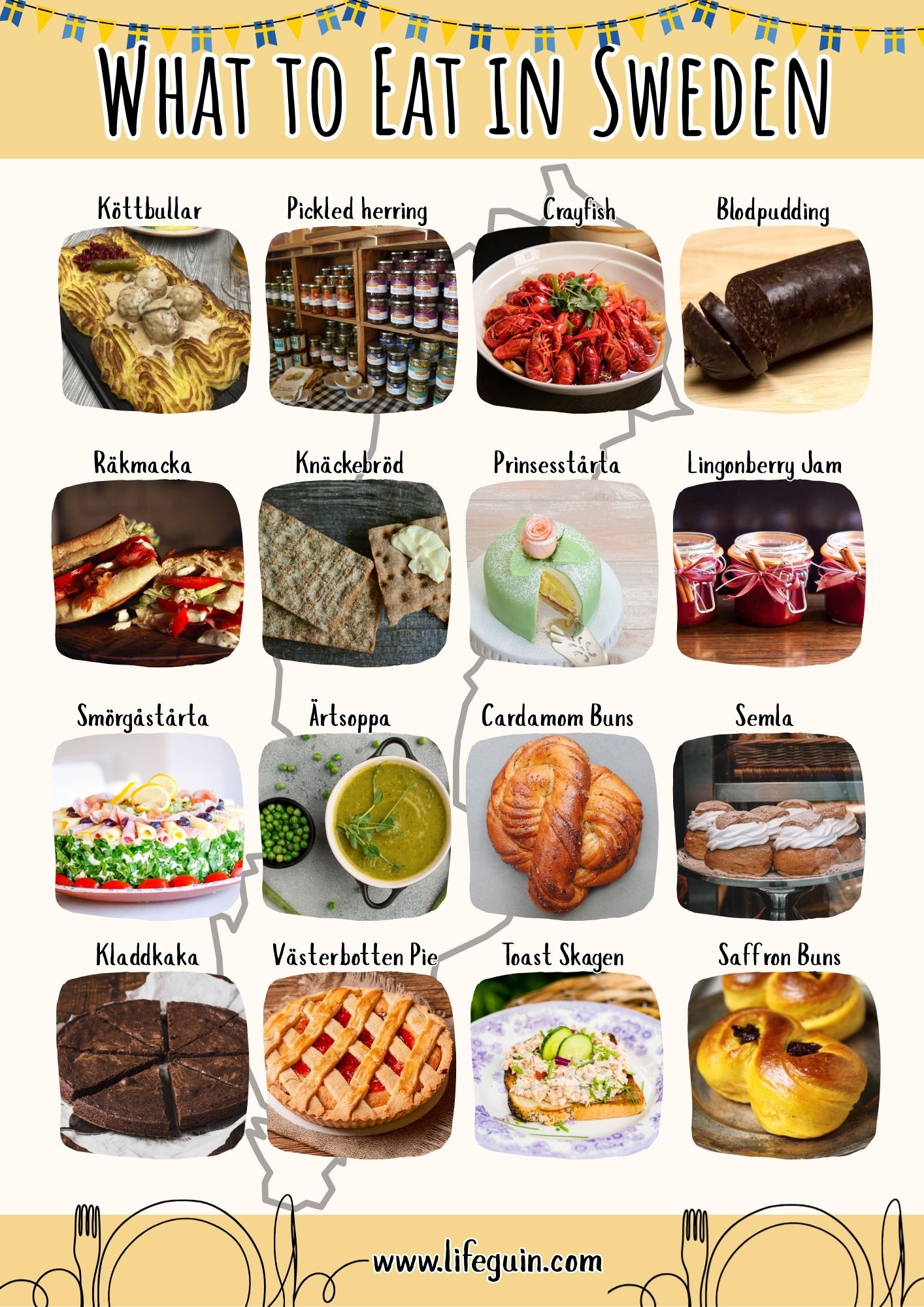
- Köttbullar (Meatballs). Köttbullar, the world-famous meatballs we all know, thanks to IKEA. It’s Sweden’s national dish, and it is also very easy to make. They consist of minced pork or beef, onion, egg, milk, and breadcrumbs, and are mixed and fried in a generous amount of butter. Traditionally, they are served with mashed potatoes, lingonberry jam, and brown cream sauce. As with most Swedish food, the meatballs are only lightly seasoned. Salt and pepper are considered enough. It is undoubtedly one of the country’s most popular dishes, especially among children, and you can find it everywhere.
- Pickled herring. The pickled herring is not for everyone, but it is a must at all kinds of Swedish celebrations. It is a real Swedish classic and dates back to a time when preserving was the way to make food last through the winter months. And winter is on a different level in Sweden, especially in the north. There are thousands of recipes to choose from, and many different flavors are added, such as mustard, garlic, onion, and herbs.
- Crayfish. Kräftor, or crayfish, are very popular, especially in August. There are even crayfish parties held in Sweden. The crayfish is freshly caught and boiled. Usually seasoned with dill and served as a whole. You must put in the effort to eat the meat out of the tails and claws. And it’s not easy to eat if you don’t know how. Here’s a video to help you.
- Blodpudding. Watch out, and don’t get fooled by the word pudding here. The Swedish name basically means “blood pudding,” and it’s close to what it sounds like. It’s made from pork blood, but it also contains milk, beer, rye flour, lard, syrup, and often raisins or apple pieces, and despite these ingredients, it’s found at restaurants and schools. It has a very sweet and spicy taste. Usually served with bacon, lingonberry jam or syrup, and a glass of milk. Yep, drink milk with it.

- Räkmacka. This is a similar dish to the Danish smørrebrød. Räkmacka is an open-faced sandwich, generally served on rye bread. It’s also called “shrimp sandwich” as it’s topped with lettuce, mayonnaise, egg, dill, caviar, and a generous amount of shrimp. You can have it as an appetizer or as a main dish.
- Knäckebröd. Knäckebröd or crispbread is essentially a flatbread that has been baked into a crisp cracker. It’s one of the most common sides served alongside the main course. It can be topped with staples like cheese and ham, but for Swedes, there’s nothing quite as delicious as eating it with caviar at breakfast. They are traditionally baked as large circles with a hole in the middle so they can be stored hanging from long poles in the ceiling.
- Prinsesstårta. Prinsesstårta, or “Princess Cake,” is a domed, layered sponge cake covered in near-fluorescent marzipan. The cake was originally called grön tårta (green cake) but was renamed prinsesstårta, or “princess cake,” because the princesses (the three daughters of Prince Carl, Duke of Västergötland) were said to have been especially fond of it.
- Lingonberry Jam. You will notice lingonberry jam is mentioned a lot. And when you are in Sweden, you are bound to try it. Lingonberry jam is widely used to accompany a variety of dishes, from meatballs and pancakes to porridge and black pudding (blodpudding). Note that the jam is rarely used on bread, despite its sweetness. Fine lingonberry jam is prepared with berries, sugar, and, optionally, a small amount of water. It is a staple in every Swedish household.
- Smörgåstårta. Smörgåstårta is a sandwich cake with salmon and shrimp. There are different varieties of Smörgåstårta, but the basics are the same: made in several layers of bread with different coatings and ingredients. You will not find it in restaurants, and it is not common to eat at home either. It is very typical for celebrations or large gatherings. It is also popular in Estonia, Finland, and Iceland.
- Ärtsoppa. Ärtsoppa, or pea soup, is a culinary classic that has been served in Sweden since the Middle Ages. It’s made from yellow peas, usually served with bacon. It’s a simple dish, and you can find it in every supermarket. It’s one of those dishes many dislike, especially the Swedes. The soup is served regularly in schools in Sweden, so many came to hate it. You probably also have a dish you hate because it was served at school too often.
Hotel search from Trip.comShows Trip.com’s own box, which can set Trip.com cookies.Search hotels on Trip.comTrip.com’s box can’t load on this device (an ad blocker often stops it). This opens Trip.com’s own hotel search.Open Trip.com
- Cardamom Buns (Kardemummabullar). While cinnamon buns often steal the spotlight, many Swedes will tell you that kardemummabullar, or cardamom buns, are the real bakery favorite. Instead of being dominated by cinnamon, these soft, twisted pastries are generously flavored with fragrant ground cardamom, giving them a warm, slightly citrusy, and aromatic taste. They are lightly sweetened, brushed with butter, and finished with crunchy pearl sugar. Like cinnamon buns, they are a staple of fika, Sweden’s cherished coffee break, and can be found in almost every bakery across the country; they are our personal favorites.
- Semla. A semla is one of Sweden’s most beloved seasonal pastries. It consists of a soft cardamom bun filled with almond paste and whipped cream, topped with a small “lid” dusted with powdered sugar. Traditionally, semlor were only eaten before Lent, but today they appear in bakeries shortly after Christmas and remain a favorite until Easter. They pair perfectly with a cup of coffee during fika.
- Kladdkaka. If you love chocolate, kladdkaka should be high on your list. This rich Swedish chocolate cake is intentionally underbaked, resulting in a gooey, fudgy center somewhere between a brownie and a molten lava cake. It is usually served with whipped cream or vanilla ice cream and fresh berries, making it one of Sweden’s most popular homemade desserts.
- Västerbotten Pie (Västerbottenpaj). This savory cheese pie is made with Västerbotten cheese, one of Sweden’s most famous cheeses, known for its rich, slightly nutty flavor. The pie is commonly served during celebrations such as Midsummer, Christmas, and crayfish parties. It is often enjoyed with sour cream, red onion, or fish roe, making it a great starter or light lunch.
- Toast Skagen. One of Sweden’s best seafood dishes, Toast Skagen consists of butter-fried bread topped with a creamy mixture of shrimp, mayonnaise, dill, lemon, and fish roe. Although it looks simple, the fresh shrimp and quality ingredients make it incredibly flavorful. You’ll find it on menus throughout Sweden, especially in seafood restaurants and along the west coast.
- Saffron Buns (Lussekatter). These bright yellow saffron buns are a Christmas tradition in Sweden. Their distinctive golden color comes from saffron, while raisins are usually added for sweetness. They are baked to celebrate St. Lucia Day on December 13, when families gather for candlelit processions, singing, and plenty of coffee. Even if you visit during the holiday season, they’re well worth trying at least once.
Swedish Dining Etiquette
Dining out in Sweden is generally relaxed, but there are a few local customs worth knowing. Service is friendly yet unobtrusive, so don’t expect your server to check on you constantly; they’ll usually let you enjoy your meal unless you ask for something. It is perfectly acceptable to get the server’s attention when you’re ready to order or pay.
Tipping is appreciated but not expected, as service charges are already included in restaurant prices and hospitality staff earn a regular wage. If you enjoyed the service, simply round up the bill or leave around 5–10% for exceptional service. Paying by card is the norm throughout Sweden, even for very small amounts, and many restaurants are completely cash-free. If you’re invited to someone’s home, it’s customary to wait until the host says “Varsågoda” (“Please, help yourselves”) before starting your meal. And if you’re dining with Swedes, don’t be surprised if everyone waits until all plates have arrived before taking the first bite.

Buy Us a Ko-fi
Whether you’re excited to try world-famous Swedish meatballs, curious enough to sample pickled herring, or simply looking forward to enjoying a fresh cardamom bun during fika, Sweden has plenty of delicious experiences waiting for you. We hope this guide has inspired you to step outside your comfort zone and discover the flavors that make Swedish cuisine so unique. Happy eating, and don’t forget to let us know which Swedish dish became your favorite!
Travel Bold. Eat Well. Waddle Wild.

This post contains affiliate links. If you click and buy, I might earn a tiny commission, enough to help a penguin keep up its globe-trotting lifestyle. No extra cost to you, just more fish for me. Thank you for supporting the adventure!