What to Eat in Estonia: A Guide to Traditional Estonian Food
If you’ve been following us for a while, you already know that food is one of our favorite parts of traveling. We believe the best way to experience a country truly is through its local cuisine. Every destination has its own flavors, traditions, and dishes worth discovering, and Estonia is no exception. We did the research, rounded up the must-try foods, and put together this guide to help you decide what to order during your trip. Of course, everyone’s taste is different, so take these as recommendations and find your own Estonian favorite along the way.


Exploring Estonia via food
Traditional Estonian food is simple, hearty, and built around fresh, locally sourced ingredients. Thanks to the country’s forests, lakes, coastline, and fertile farmland, the cuisine features plenty of fish, rye bread, potatoes, dairy, mushrooms, berries, and seasonal vegetables. Meat, especially pork, is a staple in many traditional dishes, while freshwater and Baltic Sea fish have long been an important part of the local diet.
If we had to describe Estonian cuisine in just a few words, we’d call it comfort food. The flavors are honest rather than complicated, with an emphasis on quality ingredients instead of heavy seasoning. Whether you’re enjoying a warming stew, freshly baked rye bread, or a homemade dessert, Estonian food feels wholesome, filling, and perfect after a day of exploring.
Best Traditional Estonian Food
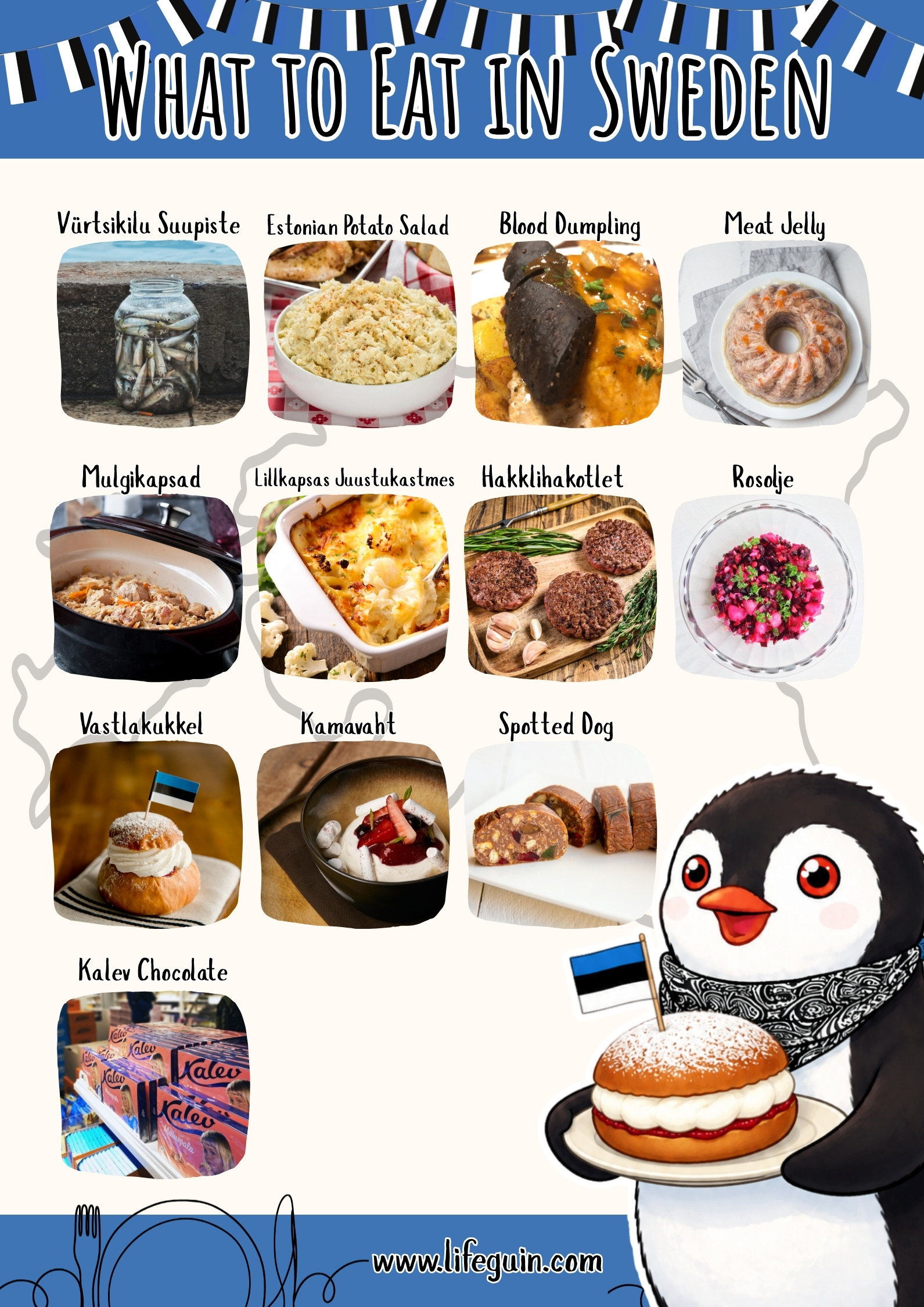
- Vürtsikilu Suupiste (Spicy Sprats Snack). As you might know, sprats are small oily fish, similar to sardines, and delicious. They are very popular here and can be found in many dishes. The sprats are served in various ways. If you want to buy them, no problem. All local food stores have them, and they come in many forms – smoked, canned, or pickled in a spicy brine. The vürtsikilu suupiste is a dish consisting of a sandwich and is commonly served with strong liquors; it reminds us of tapas, and you can get it with Estonian-made vodka.
- Eesti Kartulisalat (Estonian Potato Salad). In Europe, every country has its version of potato salad. Estonia is no exception. And as it goes, each country has its twist. In Estonia, the potato salad is prepared first by chopping boiled potatoes and carrots into bite-sized pieces. You add a grated boiled egg, cubed cucumbers, and smoked sausage. Then the sour cream and mayonnaise sauce bring the ingredients together. Canned peas are also commonly added. For a dash of sweetness, the final component is a sliced apple.
- Blood Dumpling Verikäkk (Blood Dumpling). Estonian blood dumplings can be found in shops during Christmas fairs, accompanied by sauerkraut (”hapukapsas”). The dumplings go with pickles, sour cream, and cranberry jam.
- Sült (Meat Jelly). Popular around Europe and usually done at home. It is prepared by boiling animal bones, then letting the mixture cool until natural gelatin forms and thickens the broth. Aromatics, chunks of meat, and slices of vegetables are added to the broth. It’s then left to cool, and it slowly starts to form a jelly. It is served during Christmas or Easter.
- Mulgikapsad (Sauerkraut with Pork and Barley). Finally, we made it to Estonia’s national dish. It is so beloved in the country that you can even find canned versions in stores and supermarkets! It is also easy to make. First, sauerkraut is put in a pot with barley and meat. Commonly, bacon or smoked pork products, rich in flavor, are used. The stew is then simmered, with care, until the sauerkraut and barley are tender. Mulgikapsad is often served with fried onions and slices of pork.

- Lillkapsas Juustukastmes (Cauliflower with Cheese). We put this dish on the list because we love cauliflower and cheese. It is very filling and extremely creamy. And again, easy to make. You make it by boiling cauliflower until tender. The sauce is made by mixing a small amount of flour with milk and grated cheese. You generously cover the cauliflower in layers of the delicious cheese sauce and enjoy the cheese’s heaviness.
- Hakklihakotlet (Estonian Ground Meat Patties). You will come across hakklihakotlet everywhere in Estonia. And you can prepare it yourself as well. It’s pretty simple. Mix equal amounts of beef, pork, and sometimes veal with eggs, breadcrumbs, chopped onions, and water, then fry in a pan.
- Rosolje (Beetroot Potato Salad). Rosolje is one of Estonia’s most popular traditional salads and a staple at family gatherings, holidays, and celebrations. It combines diced potatoes, beetroot, pickles, carrots, eggs, and herring or beef, all mixed in a creamy dressing made with sour cream and mayonnaise. The beetroot gives the salad its distinctive pink color, while the pickles add a pleasant tanginess. It is commonly served as a side dish, but many Estonians also enjoy it as a light meal with fresh rye bread.
Buy Us a Ko-fi

Traditional Estonian Desserts You Have to Try
Now let’s move on to our favorite category: desserts! If you have a sweet tooth as we do, you’re in for a treat. Estonian desserts are simple, comforting, and often made with locally grown ingredients, such as berries, apples, rye bread, dairy, and honey. You’ll find everything from rich cakes and fluffy pastries to light berry-based treats that have been enjoyed for generations. So, save a little room after your meal, because these traditional Estonian desserts are well worth trying.
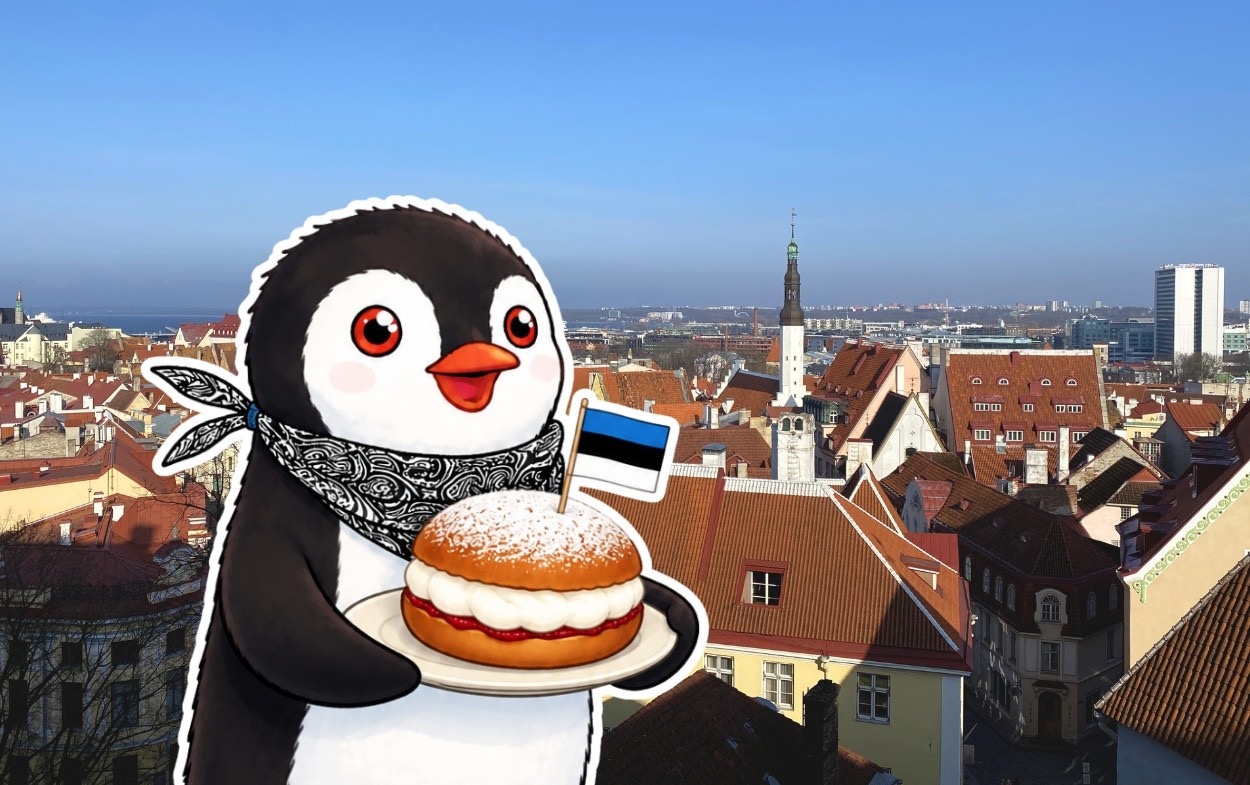
- Vastlakukkel (Semla). Semla is a traditional sweet roll popular in Scandinavia. The bun is spiced with cardamom, the top is cut off, and the inside is hollowed out. Then it is filled with sweetened whipped cream, and the cut-off top is powdered with sugar. You can also find it in Finland, known as ”laskiaispulla” and ”fastelavnsbolle” in Denmark.
- Kamavaht (Kama Foam). Kama is a dessert with a flour mixture of roasted rye, oat, pea, and barley flour. It’s traditional to Russian cuisine – ”толокно”, and Finnish cuisine – ”talkkuna”. Many eat it for breakfast or as a snack accompanied by milk. Sometimes whipped cream is added.
- Spotted Dog. The spotted dog is a dessert made of cookies, cacao powder, and marmalade with an additional hint of rum. It is a big brown chunk of biscuit dotted with colorful bits. The Kalev chocolate factory produces this dessert as a snack bar and a mini version of it as candy. You can find it in every grocery store in Estonia.
- Kalev Chocolate. One last tip. Kalev is an Estonian confectionery company. The company traces its origins back two hundred years. It is the biggest and oldest confectionery company in Estonia. You will find their chocolate on each corner, and it is excellent. We brought several chocolate tables back home with us.
Estonian Dining Etiquette
Dining in Estonia is relaxed and straightforward, much like the people themselves. In restaurants, you’ll usually wait to be seated in larger establishments, while smaller cafés often let you choose any available table. Service tends to be polite but not overly attentive, so don’t hesitate to catch your server’s eye when you’re ready to order or pay.
Tipping is appreciated but not expected, as service is generally included in the bill. If you enjoyed your meal and the service, leaving around 5–10% or simply rounding up the total is a nice gesture. Paying by card is the norm throughout Estonia, and you’ll be able to use contactless payments almost everywhere, from restaurants and cafés to bakeries and food markets.
Tap water is safe to drink across the country, and many restaurants will happily bring you a glass if you ask, although bottled water is often offered first. Bread is another important part of Estonian cuisine, especially the country’s famous dark rye bread, which is commonly served alongside meals. Finally, keep in mind that restaurants usually serve lunch between 12:00 and 3:00 p.m. At the same time, dinner service starts around 5:00 or 6:00 p.m. Booking in advance is recommended for popular restaurants, especially during the summer and on weekends.
Hotel search from Trip.comShows Trip.com’s own box, which can set Trip.com cookies.Search hotels on Trip.comTrip.com’s box can’t load on this device (an ad blocker often stops it). This opens Trip.com’s own hotel search.Open Trip.com
Estonian cuisine is a delightful mix of hearty dishes, local ingredients, and European and Scandinavian influences. There is a true home-cooked feeling to Estonian food, the kind that makes you slow down, warm up, and appreciate simple flavors done well. From spicy sprats and dark rye bread to comforting potato salad, sauerkraut dishes, and sweet traditional desserts, Estonia has much more to offer than you might expect. We hope this guide inspires you to try something new, order a dish you have never heard of before, and discover your own favorite Estonian flavor along the way.
Travel Bold. Eat Well. Waddle Wild.

This post contains affiliate links. If you click and buy, I might earn a tiny commission, enough to help a penguin keep up its globe-trotting lifestyle. No extra cost to you, just more fish for me. Thank you for supporting the adventure!