The Best Vilnius Attractions for First-Time Visitors
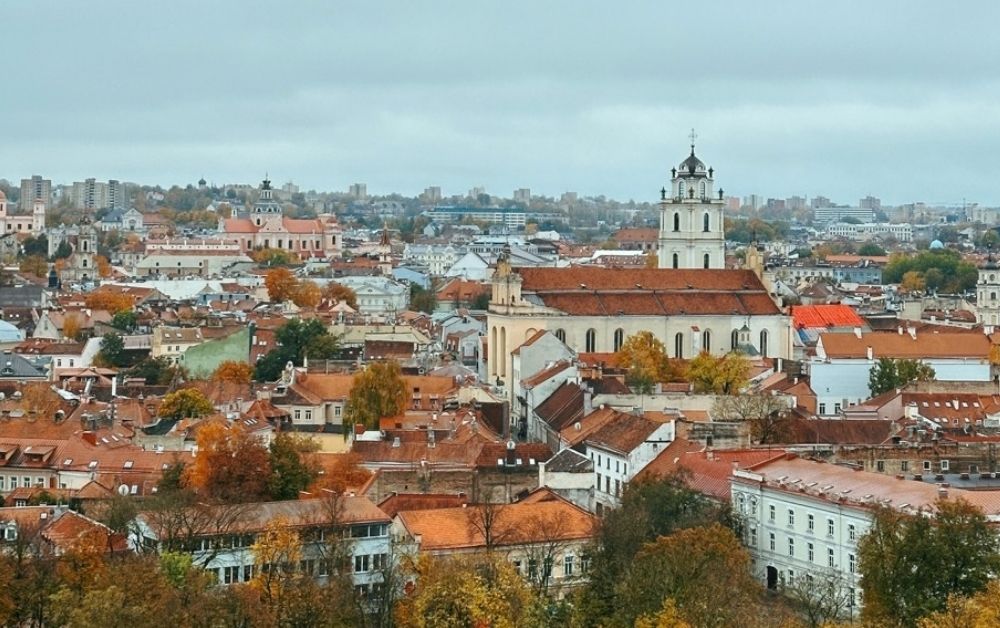
Vilnius has a funny way of making you slow down. The Lithuanian capital has a compact historic center filled with Gothic, Renaissance, Baroque, and Neoclassical buildings. Still, it never feels like you are simply moving from one monument to the next. One minute you are standing in a huge cathedral square; the next, you are wandering down a tiny cobbled street or crossing into the colorful Republic of Užupis. Vilnius Old Town is also a UNESCO World Heritage Site and is one of the largest surviving medieval old towns in the Baltic region.
We spent one day waddling around Vilnius, and even with limited time, we managed to see many of the city’s main sights. We also discovered plenty of smaller details along the way, which is exactly how we like to travel. If you are planning a trip to Lithuania’s capital, here are the top things to see and do in Vilnius, from famous landmarks to places worth slowing down for.
- Why Visit Vilnius
- Vilnius Things To See at a Glance
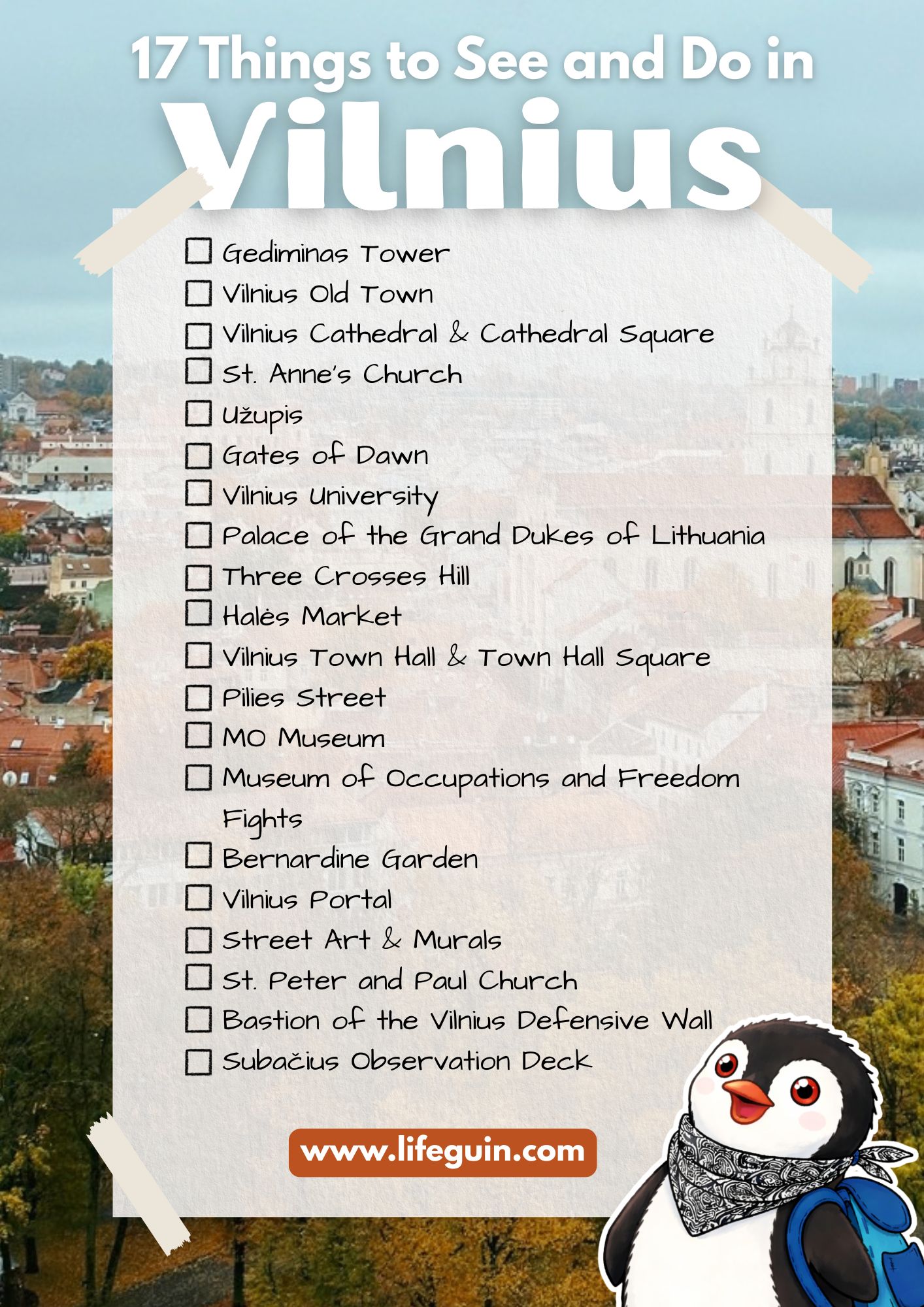
- 17 Places and Experiences in Vilnius You Shouldn’t Miss
- Our Favorite Spot: The View from Gediminas Tower
- How Many Days Do You Need in Vilnius
- When Is the Best Time to Visit Vilnius
- Getting Around Vilnius
- Our Map of Things to See and Do in Vilnius
- Take Time to Get Lost in Vilnius
Why Visit Vilnius
Vilnius blends grand historic sights with a relaxed, creative atmosphere. Wander through the UNESCO-listed Old Town, climb Gediminas Tower for sweeping city views, explore the quirky Republic of Užupis, and discover beautiful churches, courtyards, and cafés along the way. The city is compact enough to explore on foot, yet every turn seems to reveal another unexpected corner, from colorful street art to quiet cobbled lanes. This mix of history, architecture, and everyday discoveries makes Vilnius an enjoyable city to explore.

Vilnius Things To See at a Glance
Vilnius is compact enough to explore many of its main attractions on foot. Our route included the Old Town, Town Hall, Cathedral Square, Gediminas Tower, and St. Anne’s Church, with plenty of unplanned wandering in between.
17 Places and Experiences in Vilnius You Shouldn’t Miss
#1: Gediminas Tower
If there is one place we would make time for in Vilnius, it is Gediminas Tower. Sitting on Gediminas Hill above the Old Town, the tower is one of the city’s most recognizable symbols and one of the best places to understand Vilnius from above. The climb is part of the experience. Once you reach the top, the city opens up below you: red rooftops, church towers, narrow Old Town streets and the wider green landscape beyond. After spending hours waddling through those streets, seeing them from above gives you a completely different perspective.
For us, this was one of the highlights of our day in Vilnius.
Don’t miss: The panoramic view over the Old Town.
Penguin Pro Tip: Leave enough time here to actually enjoy the view instead of rushing back down.


#2: Vilnius Old Town
The best thing to do in Vilnius might be to get a little lost. Vilnius Old Town is the historic heart of the city, filled with cobbled streets, courtyards, churches and architectural details from different periods. Gothic, Renaissance, Baroque and Neoclassical buildings all appear within the same waddle. We deliberately left some space in our day for wandering, and some of our favorite moments came from places we hadn’t planned to see. Colorful street art, quiet alleyways and unexpected little corners kept pulling us away from our route. You do not need to follow a perfect itinerary here. Pick a direction and waddle.


#3: Vilnius Cathedral and Cathedral Square
Vilnius Cathedral and its huge square are hard to miss. The white Neoclassical cathedral stands at the foot of Gediminas Hill, with its separate Bell Tower beside it. The site has a complicated history, with earlier religious buildings occupying the location before the present cathedral took shape. Today, the open square contrasts dramatically with the narrow streets of the Old Town. Take a waddle around the square, look back towards the cathedral, and then up towards Gediminas Tower. You can actually see several of Vilnius’ most important landmarks from almost the same spot.
Don’t miss: The small Miracle Tile, or Stebuklas, in Cathedral Square, associated with the 1989 Baltic Way.


#4: St. Anne’s Church
We have seen plenty of beautiful churches on our travels, but St. Anne’s Church really makes an impression. Its elaborate red-brick Gothic façade looks almost too intricate to have been built from brick. Towers, arches, and decorative patterns cover the front, making it one of Vilnius’s most distinctive buildings. The church dates back more than 500 years and has become one of the city’s best-known Gothic landmarks. The famous story says that Napoleon was so impressed by it that he wanted to carry the church back to Paris in the palm of his hand. Whether Napoleon actually said it is another question, but standing in front of the church, it is easy to see why the story survived.
Don’t miss: Waddle around the exterior before going inside. The brickwork looks different from every angle.


#5: Užupis
Cross the river and suddenly Vilnius feels a little different. Užupis declared itself an independent republic in 1997 and has its own constitution, president, and wonderfully playful identity. The name itself means “beyond the river” in Lithuanian.
The neighborhood is filled with art, small galleries, cafés, sculptures and unexpected details. The famous Constitution of Užupis is displayed on plaques along Paupio Street and has been translated into numerous languages. This is somewhere to wander rather than rush through. Follow the river, read the constitution, and see what you discover.
Don’t miss: The Constitution of Užupis.
#6: Gates of Dawn
The Gates of Dawn are one of Vilnius’s most important historic landmarks and the only remaining city gate from the original defensive wall. The small chapel above the gate houses the famous Mother of Mercy icon. The gates are particularly interesting because they are not hidden away in a museum. They are part of everyday city life, standing along one of the routes into the Old Town.
Even if you are not particularly interested in religious history, the architecture and location make this a worthwhile stop.
#7: Vilnius University
Wander through the Old Town, and you will eventually reach Vilnius University, one of the city’s most historic institutions. Founded in 1579, the university complex has developed over centuries and includes a series of courtyards surrounded by historic buildings.
The courtyards are one reason to go inside rather than simply walk past. Each one has a slightly different atmosphere, and the complex feels like a small historic city hidden within Vilnius.
Don’t miss: The historic university courtyards.

#8: Palace of the Grand Dukes of Lithuania
Right beside Cathedral Square stands the Palace of the Grand Dukes of Lithuania, a reconstructed palace complex connected to the history of the Grand Duchy of Lithuania. Today, it houses historical exhibitions and archaeological material. The location makes it particularly easy to add to an Old Town walking route. Even if you don’t have time for the museum, the palace and surrounding castle complex are worth seeing from the outside.
If you have more than one day in Vilnius, this is one place you could spend more time.
#9: Three Crosses Hill
For another perspective over Vilnius, climb towards the Three Crosses Monument in Kalnų Park. The white crosses stand high above the city and provide another impressive viewpoint. Unlike Gediminas Tower, the view here puts the tower and the Old Town itself into the panorama. It is particularly atmospheric around sunset, when the rooftops begin to catch the changing light.
Don’t miss: The view back towards Gediminas Tower.


#10: Halės Market
Markets are one of our favorite places to glimpse everyday life, and Halės Market is an easy addition to a Vilnius itinerary. The historic market hall dates back to 1906 and remains a place where locals shop for food alongside newer cafés and food stalls.
We stopped here while walking from the railway station towards the Old Town. It was not a long visit, but it gave us a chance to see another side of Vilnius before continuing towards the main landmarks.
Don’t miss: Waddle through the market rather than simply photographing the building from outside.


#11: Town Hall and Town Hall Square
Vilnius Town Hall sits at the center of a large open square in the Old Town. The current Neoclassical building dates from the late 18th century, although the site has been associated with the city’s administration for much longer.
After spending time in the narrow streets, the openness of Town Hall Square makes it a natural place to stop and look around. We visited on a particularly cold day, so we didn’t linger, but even wrapped up in our coats, we enjoyed wandering across the square and taking in the architecture.


#12: Pilies Street
Pilies Street is one of the main pedestrian streets through the historic center and one of the easiest places to wander. Historic façades, cafés, shops and courtyards line the street, and Gediminas Tower often appears in the distance as you move through the Old Town.
This is not necessarily a place where you need a specific plan. Grab a coffee, browse the shops, or keep waddling until another interesting street catches your attention.
Penguin Pro Tip: Leave some unscheduled time for Pilies Street. The best parts are often the details you notice between the main sights.
#13: MO Museum
For a more contemporary look at Vilnius, head to the MO Museum.
The museum focuses on modern and contemporary Lithuanian art and is housed in a striking contemporary building. It offers a useful counterpoint to the churches, medieval streets, and Baroque architecture that dominate the historic center.
If you are staying for two or more days, this is an easy way to add some modern Lithuanian culture to your itinerary.
#14: Museum of Occupations and Freedom Fights
Vilnius’ history is not only medieval castles and Baroque churches. The Museum of Occupations and Freedom Fights, housed in the former KGB building, explores Lithuania’s 20th-century experience under Soviet and Nazi occupations.
The museum offers a much heavier experience than the colorful streets of the Old Town, but it provides important context for understanding modern Lithuania. Give yourself enough time here rather than trying to squeeze it into a rushed sightseeing schedule.
#15: Bernardine Garden
After so much architecture and history, Bernardine Garden offers somewhere to slow down. The park sits beside the Vilnia River near the Bernardine Church and St. Anne’s Church, making it an easy addition to a walking route through the Old Town. It is one of those places where you can stop for a while without having something specific to see.
Vilnius is known for its green spaces, and the garden is a good reminder that the city is not all cobbled streets and historic buildings.
#16: Vilnius Portal
When we visited Vilnius, the Vilnius Portal stood just outside the railway station, making it one of the first unexpected sights we encountered after arriving by train. The interactive installation creates a live connection with another European city, allowing people on both sides to see and wave to each other. The portal connects Vilnius with Lublin in Poland, creating a fun little window between the two cities. Its location has since changed, so check where the portal is currently installed before visiting.


#17: Street Art and Murals
Vilnius has plenty of street art hiding in plain sight, from large colorful murals to smaller pieces tucked into side streets. You do not really need a set route to find it. Just keep your eyes on the walls as you wander between the main sights. For us, these unexpected pieces added another layer to exploring the city, turning the walk itself into part of the sightseeing.


Our Favorite Spot: The View from Gediminas Tower
Standing at the top of Gediminas Tower was one of our favorite moments in Vilnius. After wandering through the Old Town, seeing the city from above suddenly put everything into perspective. Red rooftops, church towers, and green spaces stretch across the city, with the historic center unfolding below. We could have stayed much longer, simply taking in the view and spotting the places we had already walked through. It is the kind of viewpoint that makes you appreciate how beautifully Vilnius comes together.


How Many Days Do You Need in Vilnius
One day is enough for a first taste of Vilnius, particularly if you focus on the Old Town and walk between the main sights. That is exactly what we did. We arrived from Kaunas by train, spent the day waddling around the historic center, climbed Gediminas Tower, visited St. Anne’s Church, and still had time to stop for snacks and explore some unexpected corners.
But if you have two days in Vilnius, you can slow the pace considerably. You can add Užupis, museums, Three Crosses Hill, more churches and longer stops at places such as Vilnius University and the Palace of the Grand Dukes.
When Is the Best Time to Visit Vilnius
Vilnius changes considerably throughout the year.
- Spring brings greener parks and increasingly comfortable walking weather.
- Summer means long days, outdoor cafés and plenty of activity around the Old Town.
- Autumn brings colorful trees and a cozy atmosphere, although temperatures can already be chilly.
- Winter turns Vilnius into a colder, quieter city, with shorter days and a very different atmosphere.
We visited in late October, and it was definitely cold and cloudy. We occasionally ducked indoors to warm up, but the autumn colors around the city made the weather feel like part of the experience.
Getting Around Vilnius
The center of Vilnius is wonderfully walkable. Most of the sights in this guide are close enough to connect into one long walking route, although Gediminas Hill adds a little extra effort.
We spent our entire day walking, or as we like to call it, waddling. That gave us the chance to stop whenever something caught our attention, which turned out to be one of our favorite parts of visiting Vilnius. Public transport becomes more useful when you venture beyond the historic center.
Our Map of Things to See and Do in Vilnius
Take Time to Get Lost in Vilnius
Some of our favorite moments in Vilnius came when we were not following the map at all. Wander beyond the main streets, peek into courtyards, follow a colorful mural, or turn down a narrow cobbled lane and see what you find. The Old Town is compact enough that getting a little lost rarely takes you far from something interesting, and these unplanned discoveries give you a different feel for the city beyond its famous landmarks.
Buy Us a Ko-fi

Vilnius is a city best explored with a little curiosity and no strict plan. The grand landmarks are impressive, but we enjoyed the unexpected moments just as much, from colorful street art and quiet corners to wandering the Old Town and finding new views along the way. Whether you have one day or several, leave room to waddle around and see where the streets take you.
Travel Bold. Eat Well. Waddle Wild.

This post contains affiliate links. If you click and buy, I might earn a tiny commission, enough to help a penguin keep up its globe-trotting lifestyle. No extra cost to you, just more fish for me. Thank you for supporting the adventure!