Japan Has Figured Out the Little Things. Why Haven’t We?
Things That Make Sense in Japan (And That Other Countries Should Copy)
Japan makes everyday life feel easier without making a big deal out of it. From plastic food that looks suspiciously delicious to train seats that turn in the direction of travel, the country is full of small, thoughtful details that make you wonder why they are not standard everywhere else.
During our trip, we kept spotting things that made us stop, smile, take a photo, or quietly add another item to our mental list of things the rest of the world should adopt. None of them required a revolutionary invention or a billion-dollar investment. Some were as simple as a place to put an umbrella. Others showed just how much thought can go into the most ordinary parts of daily life.
These are the things that made us think, “Well, that makes sense.” Once you notice them, it becomes surprisingly hard to understand why we put up with anything less.
- Convenience Stores That Actually Deserve the Name
- Vending Machines Everywhere, Except They Somehow Make Sense
- Plastic Food That Looks Better Than the Real Thing
- Umbrella Holders Outside Shops and Restaurants
- Umbrella Cleaners That Deal With the Dripping Mess
- Queues That Actually Tell You Where to Stand
- Staircases That Tell You Which Side to Use
- Restaurants Where Eating Alone Feels Completely Normal
- Little Holders for Umbrellas, Bags and Canes
- Train Seats That Turn to Face the Direction of Travel
- Cute Food That Tastes as Good as It Looks
- Bar Stools with Built-In Storage for Your Bags
- Chairs Outside Restaurants for People Waiting for a Table
- Baby Seats in Women’s Toilets
Convenience Stores That Actually Deserve the Name
In many countries, a convenience store is where you go for milk at an inconvenient hour, a questionable sandwich, or something you will regret in about three minutes.
Japan has a rather different interpretation. Known locally as konbini, Japanese convenience stores such as 7-Eleven, Lawson, and FamilyMart are practically institutions. You pop in for a quick breakfast, a late-night snack, or a bottle of water, only to realize you could probably solve half of life’s minor emergencies there.
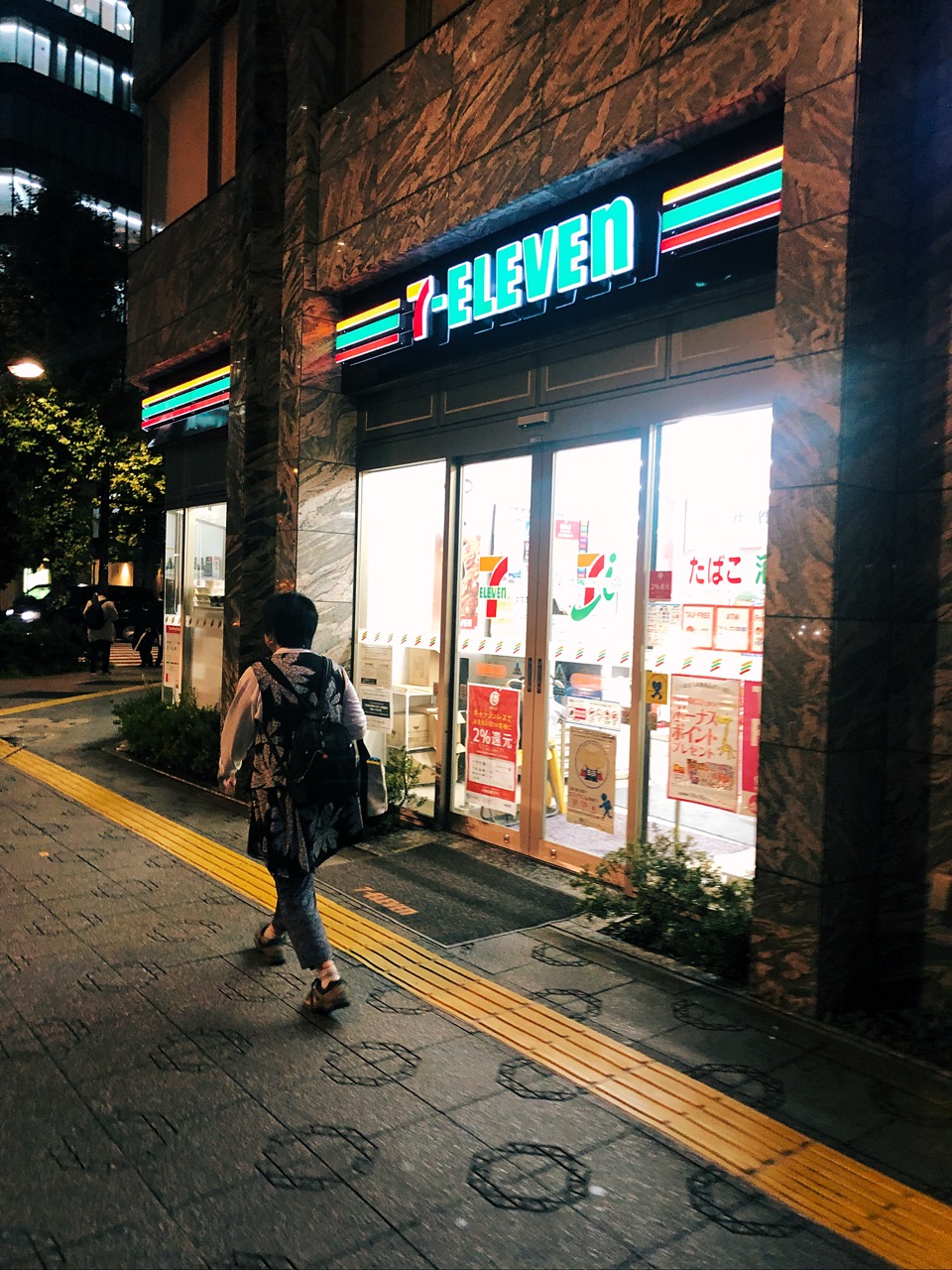
The food selection alone deserves appreciation. Entire refrigerated sections are dedicated to ready-made meals, sandwiches, onigiri rice balls, salads, and desserts. Hot snacks, freshly brewed coffee, and, depending on the store, meals make grabbing dinner on the way back to your hotel surprisingly easy.
You can even find surprisingly good options when you need something more substantial than a packet of crisps. Breakfast becomes a simple transaction rather than a desperate search for a café that opens before your sightseeing itinerary begins.
But the real magic of Japanese convenience stores extends far beyond food.
Forgot to pack socks? Need a fresh pair of underwear? Spilled coffee on your shirt before an important meeting? Depending on the store, you might find clean socks, undergarments, T-shirts, and other basic clothing essentials. Some even stock office-appropriate shirts, making them a lifesaver if you need to change before work or an unexpected appointment. Suddenly, that forgotten packing item isn’t a holiday crisis.
Then there are the toiletries, tissues, umbrellas, phone chargers, batteries, face masks, and other everyday essentials. Need cash? Many stores have ATMs. Need to pay a bill, collect a parcel, or send one? Selected branches offer those services, too. The exact selection varies, but the principle remains the same: a konbini can reasonably help with whatever small problem interrupts your day.
Of course, not every item is a culinary masterpiece, and not every branch stocks the same products or offers the same services. But the sheer range of things you can buy in one place is impressive.
Japan has somehow transformed the humble convenience store into a mini supermarket, a takeaway counter, a pharmacy-adjacent essentials shop and an emergency supply station for people who have forgotten how to pack. Meanwhile, elsewhere, buying something decent to eat after 8 p.m. can feel like an expedition.
In Japan, you can pick up dinner, replace your missing socks, and buy an umbrella before heading back to your hotel. All in one stop, without reorganizing your entire evening around it. Now that is convenience.
Vending Machines Everywhere, Except They Somehow Make Sense
Japan’s vending machines are almost impossible to ignore. They appear beside railway stations, on quiet streets, near tourist attractions, and in places where you might wonder who would ever need a drink.
Then, after a summer afternoon exploring a city, you realize you’ve been walking for hours and suddenly understand the whole concept.
Cold drinks are readily available without needing to find an open shop, join a queue, or interrupt your plans. Depending on the machine, you might find water, tea, coffee, juice, and soft drinks, and some machines offer hot beverages in colder weather.
The experience is refreshingly straightforward. Choose your drink, pay, collect it, and keep going.


What we appreciated most about Japan’s vending machines was not just how many there were, but how they seemed to appear exactly when we needed them. They were everywhere, tucked into streets, beside railway stations, and even in places where you wouldn’t expect to find a shop nearby. Even on Mount Inari, where finding a hot drink can feel like a small miracle.
During our time in Japan, we started feeling sick, and a hot milk tea from a vending machine was exactly what we needed for our sore throat. That little can of warmth felt like it had saved the day. When you are cold, exhausted, and not feeling your best, you suddenly understand why having drinks available without needing to find an open café is such a brilliant idea.
Of course, vending machines are not always perfectly positioned, and their prices and selections vary. But Japan makes buying a drink remarkably straightforward, even when you are far from the nearest convenience store. We came to appreciate them far more than we ever expected. Sometimes the best travel discoveries aren’t famous landmarks or spectacular views, but a hot drink that appears at just the right moment.
Plastic Food That Looks Better Than the Real Thing
One of the most entertaining things about Japanese restaurants is the food displayed outside. Forget photographs on a menu. In Japan, you can inspect an entire meal through a glass window before deciding whether to step inside, thanks to remarkably realistic food replicas known as shokuhin sampuru (食品サンプル), literally “food samples.” And when we say realistic, we mean realistic enough to make you briefly forget you are looking at something you absolutely cannot eat.
A bowl of ramen sits in its display case, complete with noodles, toppings, and what looks like a perfectly balanced broth. Tempura looks impossibly crisp, sushi glistens under the lights, and spaghetti twirls around a fork as if someone paused dinner for the sake of advertising. The craftsmanship is so convincing that you might wonder whether the restaurant has somehow found a way to keep lunch permanently fresh.


There is a practical reason behind this wonderfully Japanese tradition. The displays began appearing in the early twentieth century, when restaurants and department-store dining halls wanted to show customers exactly what they could order. In 1923, Tokyo’s Shirokiya department store famously used food replicas in its dining hall to help customers choose their meals visually. When color food photography was not readily available, a three-dimensional model was a brilliant alternative. It also helped diners understand unfamiliar dishes without deciphering a menu.
The craft became commercially established in the 1930s, with entrepreneur Takizo Iwasaki playing a major role in popularising the industry. Early replicas were made of wax, carefully molded and colored to resemble real dishes. Over time, manufacturers shifted to more durable materials, including synthetic resin and PVC, allowing the models to retain their colors and intricate details for much longer.
These aren’t simply mass-produced plastic plates with a few bits glued on top. Many are painstakingly handcrafted, with artisans paying attention to everything from the golden-brown edges of fried food to the delicate transparency of a slice of fish. Some models are made specifically for individual restaurants, so the display reflects the actual dishes served inside. In other words, somebody really does spend hours making a fake bowl of noodles look delicious. We admire the dedication.
For travelers, shokuhin sampuru are particularly useful. You can compare dishes, gauge portion sizes, and point to what you want when the menu presents a linguistic challenge. No guessing whether you have accidentally ordered a bowl of soup, a plate of intestines, or something that is best left unexplored until you have had coffee.
The whole arrangement is also theatrical. Japan has turned the humble restaurant menu into a miniature exhibition of edible-looking art. Some replicas are so convincing that you almost feel cheated when you discover they are not real. Others are available as tiny souvenirs, including sushi keychains, ramen magnets, and miniature food accessories. Apparently, the only thing better than Japanese food is Japanese food that can live on your keys without ever going moldy.
The only downside? The plastic version sometimes looks so spectacular that the actual meal has an unreasonable amount to live up to. Still, when a menu makes you hungry before you even enter the restaurant, you have to admit the marketing department did an excellent job.
Japanese Toilets: Why Are We Still Sitting on Cold Seats?
Few things make you question everyday standards as much as using a Japanese toilet for the first time. Heated seats? Wonderful. Adjustable water sprays? Surprisingly luxurious. Temperature controls, built-in deodorizing functions, and buttons that play sounds to provide a little privacy? Suddenly, going to the toilet feels less like a basic human necessity and more like checking into a five-star hotel. And then there is the control panel.
For the uninitiated, the buttons can look like spaceship controls. Some symbols you recognize, some you think you recognize, and at least one you absolutely do not touch until you know what it does. Naturally, this is all happening while you are already sitting down and committed to the experience.


The technology is often associated with the Washlet, the name Japanese manufacturer TOTO uses for its electronic bidet toilet seats. Although modern Japanese toilets vary considerably, more advanced models can offer warm-water cleansing, adjustable spray settings, heated seats, and warm-air drying.
But the real question is not why Japan has such sophisticated toilets. It is why the rest of us have accepted cold seats as an entirely reasonable state of affairs.
Of course, not every public toilet in Japan is a high-tech masterpiece. You will still encounter basic facilities, traditional squat toilets, and restrooms with far less impressive amenities. Yet the widespread presence of thoughtful toilet technology has become one of those distinctly Japanese experiences that visitors remember long after the trip.
We could probably leave this one out of the list. After all, a heated toilet seat won’t transform the global economy. But once you have experienced one on a cold morning, you may wonder why comfort has been treated as an optional extra for so long.
Japan, we have a question for the rest of the world: what exactly is stopping us?
Umbrella Holders Outside Shops and Restaurants
Rain is one of those minor travel inconveniences that becomes surprisingly annoying when you are moving between attractions, shops and restaurants.
Japan has a simple answer in many places: umbrella stands or dedicated umbrella lockers near the entrance.
Depending on the establishment, you might leave your umbrella in a shared stand or place it in a numbered locker. Either way, the idea is to keep wet umbrellas from dripping all over the floor and making entrances slippery. Some locations have individual plastic sleeves for umbrellas, allowing you to carry the dripping thing inside without leaving a trail behind you. It is not the most glamorous piece of public infrastructure, but it solves a very ordinary problem.
And ordinary problems are exactly where thoughtful design earns its keep. There is something satisfying about entering a shop, dealing with your umbrella in seconds and getting on with your day. Nobody needs a complicated system. Just a designated place for the thing that is currently making a mess. We would happily see this become more common elsewhere, especially in countries where rainy weather is hardly unusual.
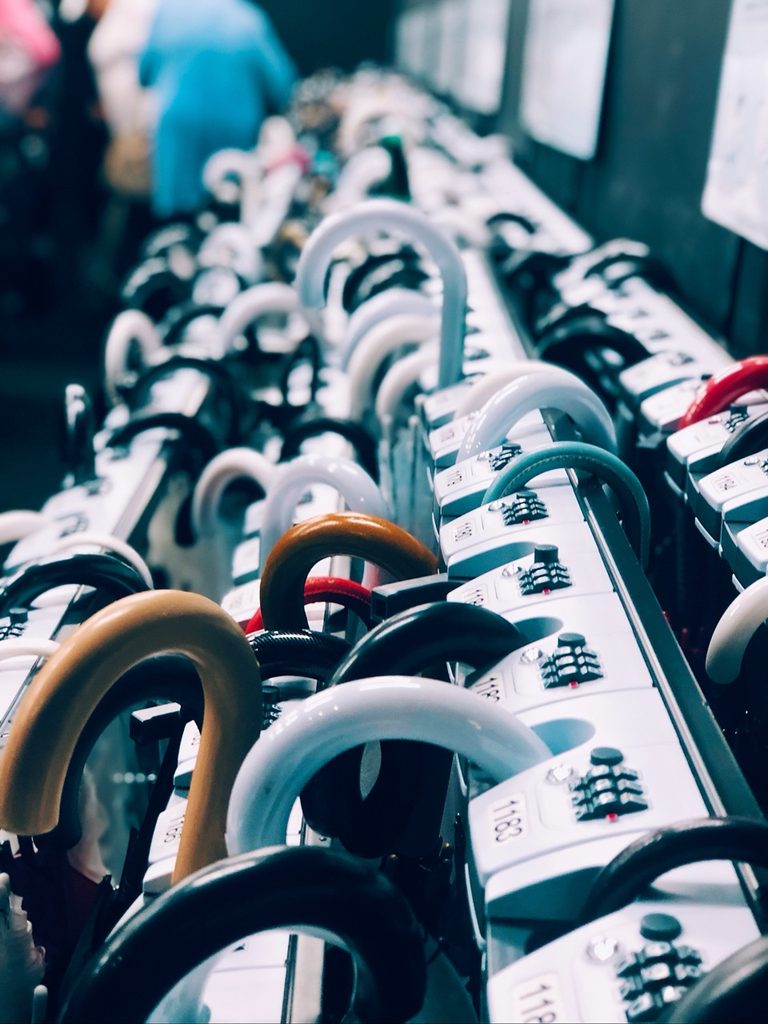


Umbrella Cleaners That Deal With the Dripping Mess
Some places in Japan have umbrella cleaners at the entrance, where you can quickly shake off rainwater before heading inside. It’s a simple idea, but after spending half the day dodging showers, you really appreciate not having to carry a dripping umbrella around a shop or leave a puddle wherever you stop.
And if there is no umbrella cleaner? No problem. You will often find long, narrow plastic sleeves near the entrance, designed to slip over your wet umbrella. Just pop your umbrella inside, and you can take it with you without soaking the floor or accidentally showering the person standing next to you. Some places also provide umbrella stands or lockers where you can leave it while you shop.
We loved these little touches because they solve a problem we all know too well. You arrive somewhere out of the rain, only to realize that your umbrella is now the wettest thing in the building. In Japan, someone has usually thought of a way to make that situation a little less annoying.
It might not sound like much, but after a few rainy days of sightseeing, you start to appreciate it. Sometimes, all you need is a place to put your umbrella without making a mess.


Queues That Actually Tell You Where to Stand
Japanese railway stations can be busy, particularly during rush hour. Yet at many platforms, clear markings show where passengers should queue for the arriving train doors.
The lines, arrows, and designated boarding positions help organize the flow of people. Passengers wait to the sides of the doors, letting people off before the next group boards. It sounds obvious. It also sounds like it shouldn’t need explaining.
And yet, anyone who has stood on a crowded platform elsewhere, surrounded by people gradually forming an amorphous human obstacle directly in front of the doors, will appreciate the difference.
Of course, not every queue in Japan is perfectly orderly, and busy stations can still feel hectic. The markings do not magically create more space or eliminate crowds. They simply provide a shared understanding of what everyone is supposed to do. That small amount of structure makes a surprisingly big difference.
The next time you find yourself boarding a train somewhere else, watching passengers try to get on before anyone has managed to get off, you may wish for a few painted lines on the floor.


Staircases That Tell You Which Side to Use
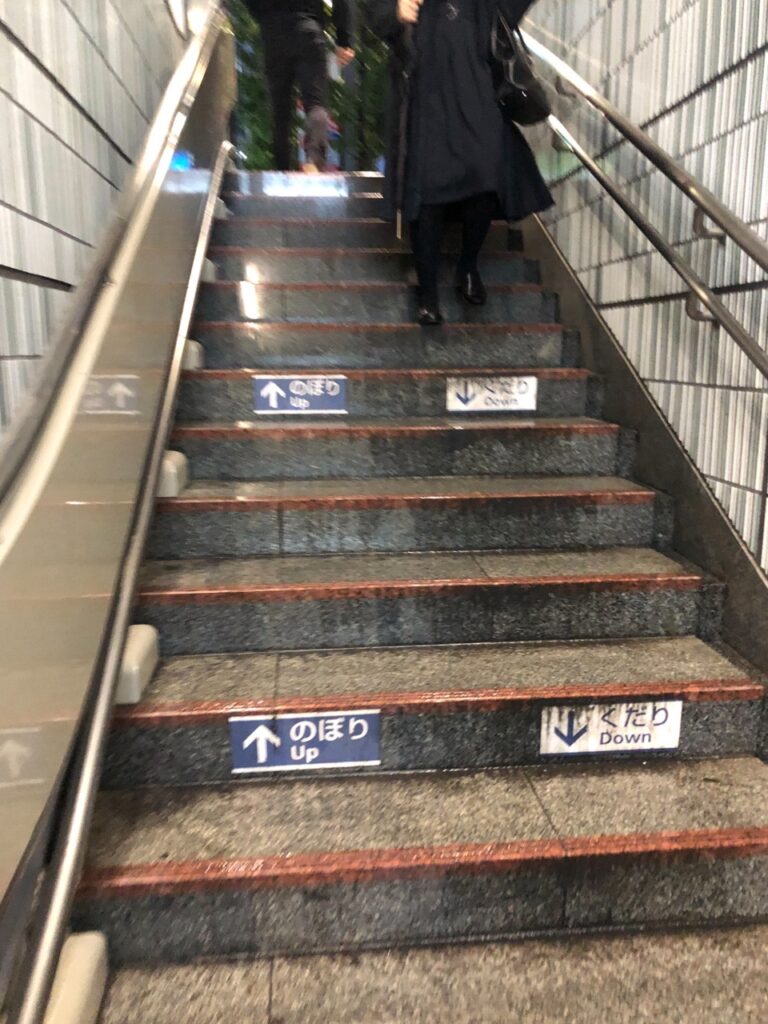
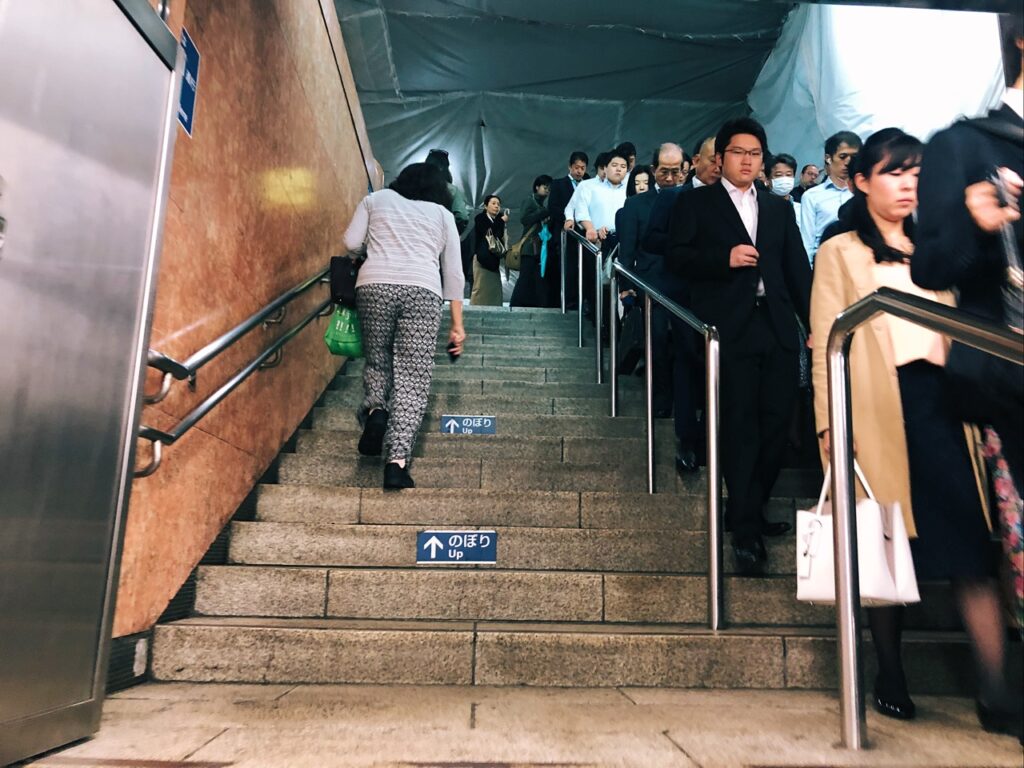
Directional markings on staircases are nothing unique to Japan. You will find arrows and signs telling people which side to use in railway stations around the world. However, the difference we noticed in Japan was how consistently people followed them.
Even during rush hour, when commuters hurry to catch trains and staircases are packed, most seem to stick to their designated side. No one constantly weaves through oncoming pedestrians, no one pushes past someone coming the other way, and far less of that awkward dance where everyone tries to guess who should move first.
Of course, Japan is not immune to crowds or the occasional rule-breaker. But what impressed us was the collective effort to make the system work. The markings provide the instructions; people bring them to life. When thousands of commuters share the same space, that small act of consideration makes a noticeable difference.
The lesson? Good signage helps, but it only works when people respect it. And that is something we could all take home.
Restaurants Where Eating Alone Feels Completely Normal
Traveling alone can be wonderful until lunchtime, when you suddenly realize how many restaurants assume every customer arrives with at least one companion. Japan offers plenty of alternatives, from counter seating at ramen shops to compact restaurants designed around individual diners.
At some places, you can order through a ticket machine, take a seat at the counter, and concentrate entirely on your meal. Some ramen restaurants even use individual booths or partitions for a little extra privacy, though the setup varies by chain and location.
You don’t need to wait for a table for two, pretend to be busy on your phone, or feel like you are taking up space a larger group could use. You are there to eat. The restaurant is there to serve you. Everyone can get on with their day.
For solo travelers, this is particularly liberating. You can stop when you are hungry, choose the restaurant that appeals to you, and enjoy a proper meal without organizing your sightseeing schedule around finding someone to eat with.
And if you want to spend the entire meal thinking about absolutely nothing except your ramen, nobody needs to make it a social event.
Sometimes the greatest luxury is being left alone with your noodles.


Little Holders for Umbrellas, Bags and Canes
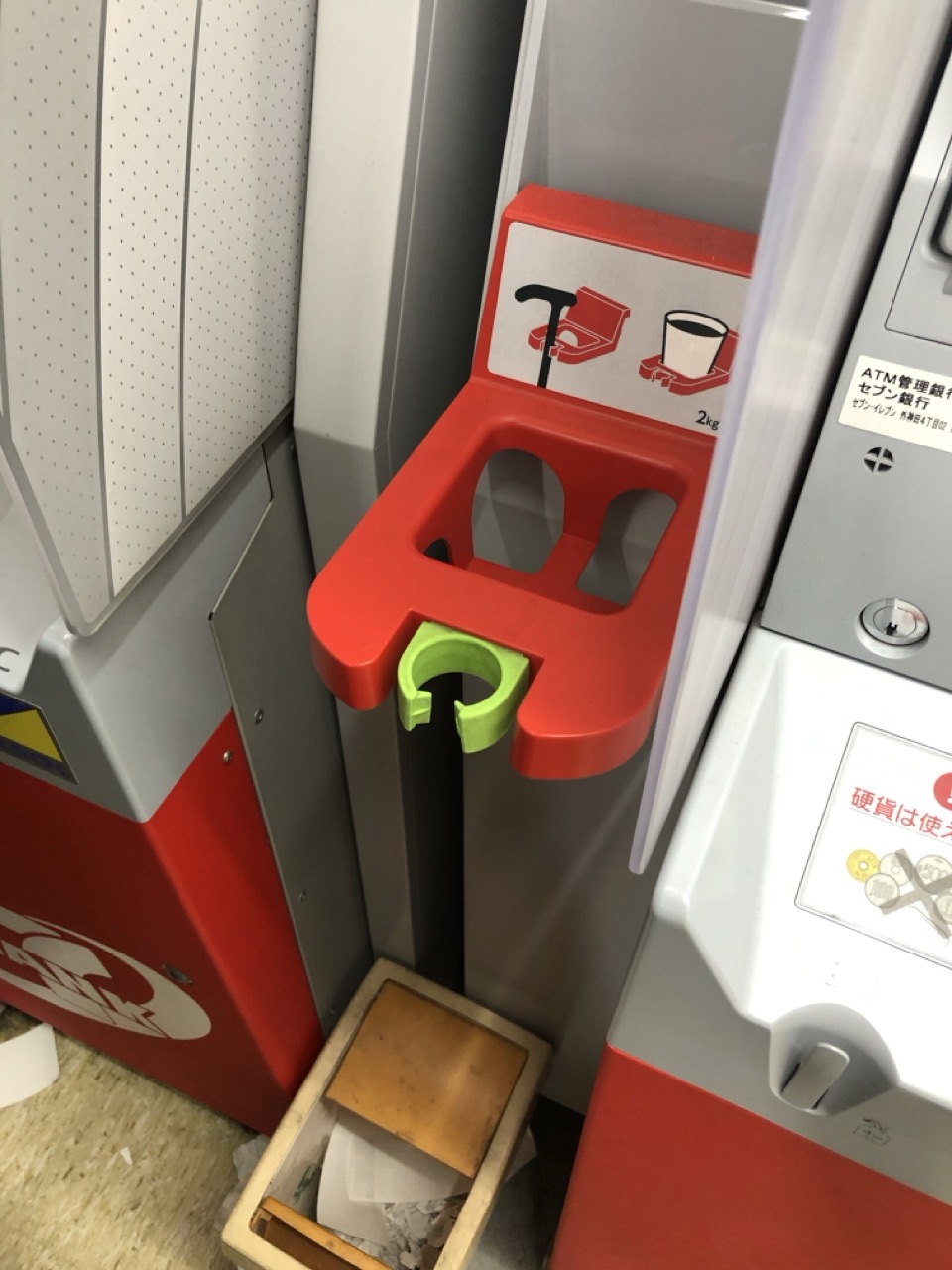
Sometimes, the things that impress us most while traveling are the ones we would barely notice at home. Until, of course, we need them.
We stepped into a convenience store and spotted something next to the ATM that made us stop for a moment. It was a small holder where you could place your cup and umbrella while using the machine. Nothing fancy, nothing particularly high-tech. Just a little space for what you were carrying, so you could use both hands without juggling your belongings.
And honestly, why don’t we have these everywhere?
Think about it. You have a coffee in one hand, an umbrella in the other, perhaps a bag hanging off your shoulder, and now you need to withdraw cash. Somewhere along the way, something is likely to end up on the floor. In Japan, someone had thought about this exact situation and provided a simple solution before it became your problem.
It was such a small detail that we might have walked straight past it if we hadn’t needed to use the ATM. Yet it perfectly captured something we kept noticing throughout our trip: the thought given to everyday situations that most of us simply accept as inconvenient.
Of course, not every ATM or convenience store has these holders. But when you encounter one, you appreciate it immediately.
Good design does not always mean inventing something extraordinary. Sometimes, it is simply recognizing that people have two hands, several belongings, and an irritating tendency to need all of them at once. A little holder might not change the world, but it can certainly make withdrawing money while carrying a coffee and an umbrella considerably less ridiculous.
Train Seats That Turn to Face the Direction of Travel
Japan’s trains already have a reputation for efficiency, but some longer-distance services offer another thoughtful detail: seats that can rotate so passengers can face the direction of travel.
On certain trains, including many limited express services, staff can turn the seats around between journeys, or passengers can adjust them where permitted. This lets groups face one another or individual seats face forward, depending on the carriage layout.
Why does it matter? Because not everyone enjoys travelling backwards.
For some passengers, facing the direction of travel feels more comfortable. For groups, turning seats toward one another makes conversation easier. And when a train reverses direction at a terminal, rotating the seats can help keep everyone facing forwards on the next journey. The mechanism varies by train, and not every Japanese train has rotating seats. Local commuter trains often use entirely different seating arrangements.
Still, the concept is delightfully practical. The seats adapt to the journey instead of expecting the passengers to adapt to the seats. It is one of those details that makes you wonder how many supposedly complicated problems you could solve by simply asking what would make the experience more comfortable.
Cute Food That Tastes as Good as It Looks
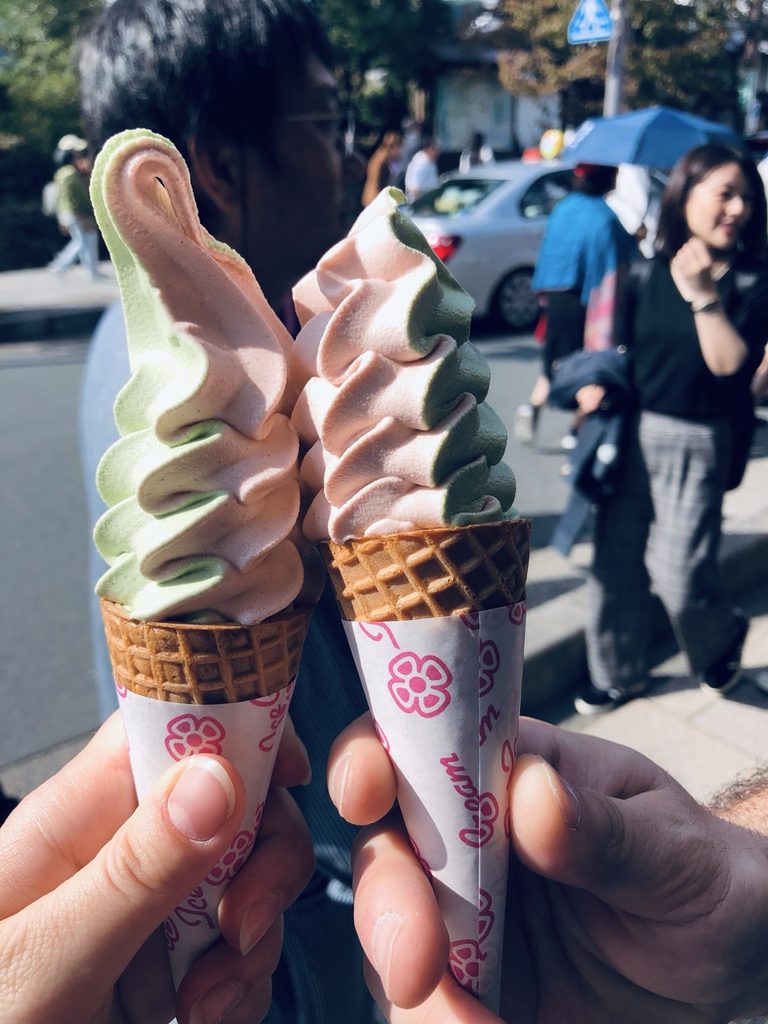
Japan has a remarkable talent for making food look almost too adorable to eat. From animal-shaped pastries and colorful mochi to character-themed desserts and beautifully arranged bento boxes, even a simple snack can look like a miniature work of art. You might find a fluffy bear-shaped bun, a doughnut decorated like a cartoon character, or a dessert with a tiny face smiling back at you. And when you start feeling guilty about taking the first bite, you discover that it actually tastes good, too. In Japan, apparently, looking ridiculously cute isn’t enough. The food also has to deliver on flavor. We lost count of how many times we stopped to admire something in a bakery window, took far too many photographs, and then promptly ate it. Sorry, little bear. You were delicious.

Bar Stools with Built-In Storage for Your Bags
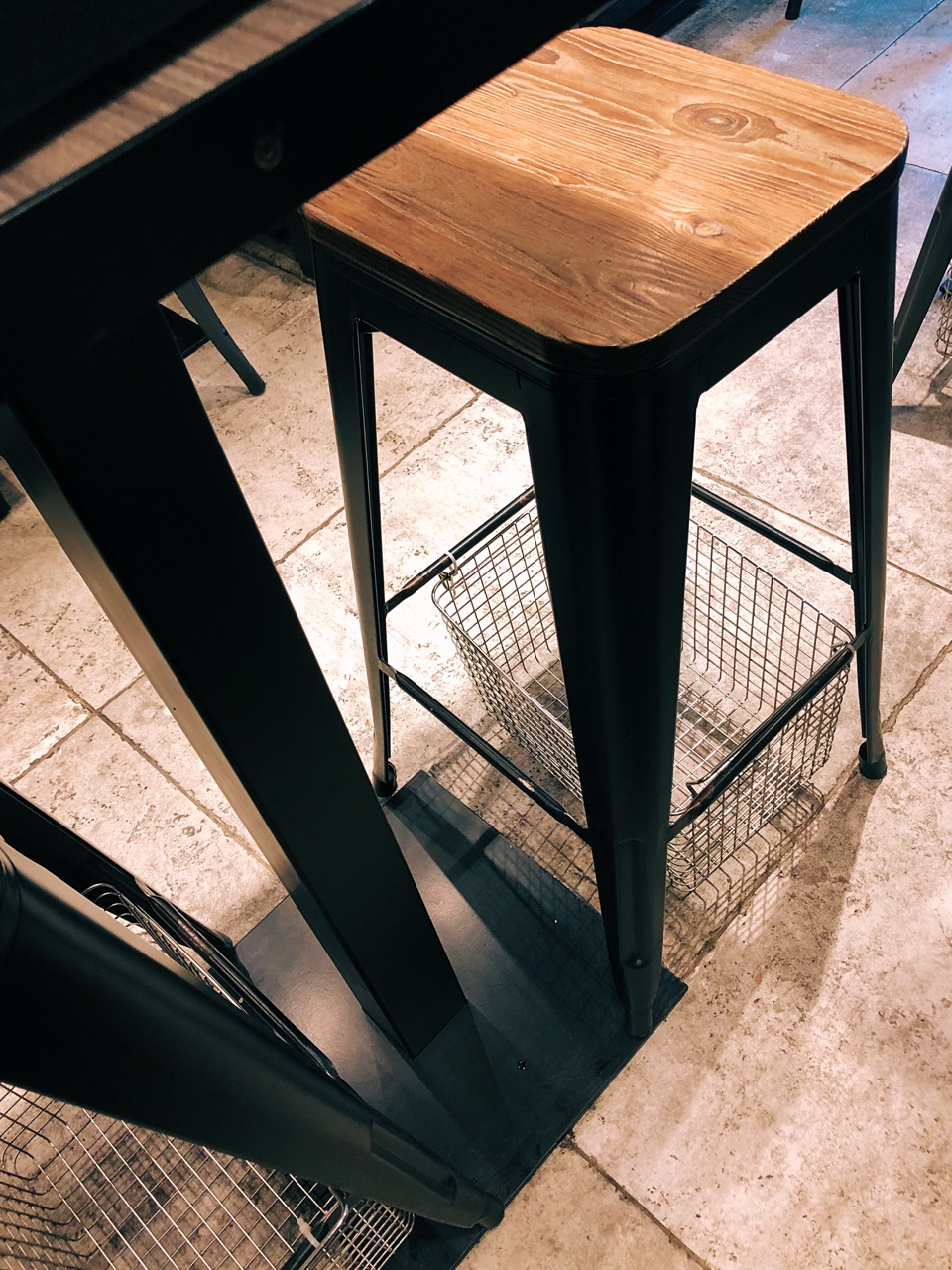
This was probably one of our favorite little discoveries in Japan. We spotted these tall bar stools with wire baskets underneath the seats, giving you a dedicated place to put your bag while you eat or enjoy a drink. No balancing your handbag on your lap, squeezing it between your feet, or leaving it awkwardly on the floor where someone might trip over it.
Just a simple basket, exactly where you need it. It is such a small detail, yet it makes sitting down much more comfortable, especially after a day of exploring with a backpack or shopping bags. We kept wondering why this is not more common elsewhere. After all, if a stool can have a footrest, why shouldn’t it have somewhere for your stuff, too?
Chairs Outside Restaurants for People Waiting for a Table
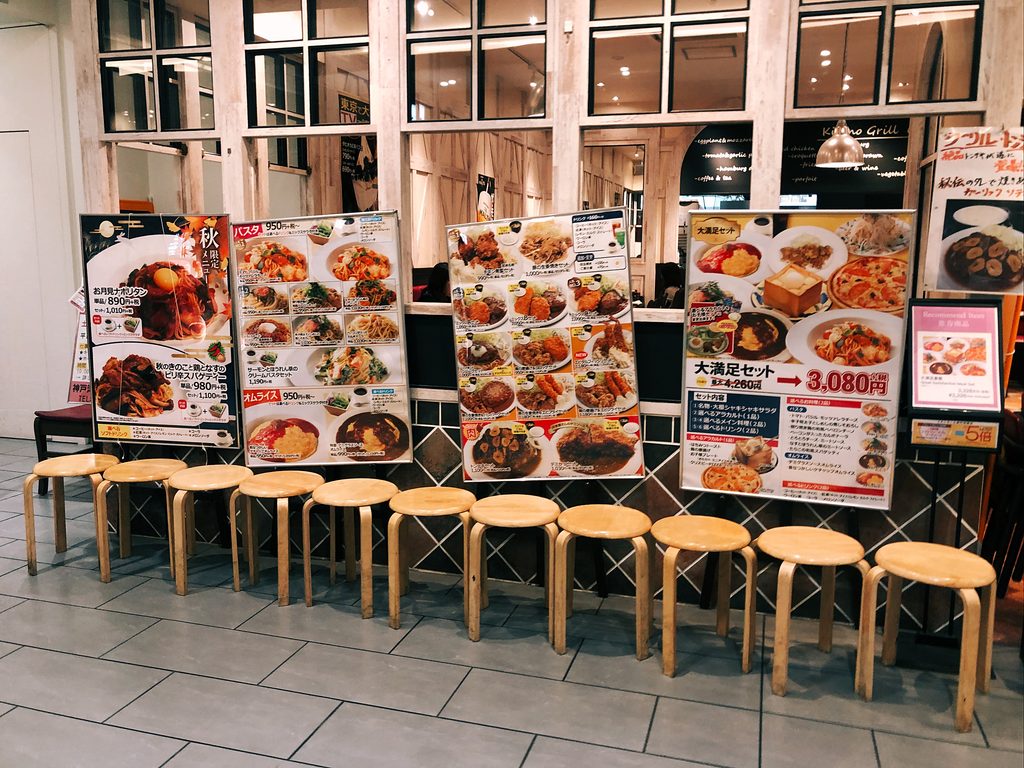
One small detail we particularly appreciated in Japan was finding stools outside restaurants where people could sit while waiting for a table. It sounds almost ridiculously simple, yet how often do we find ourselves standing in a queue outside a popular restaurant, shifting our weight from one foot to the other and wondering how much longer it will take? In Japan, some restaurants make the wait a little more comfortable by offering a place to sit. After a full day of sightseeing, when your feet have already clocked more kilometers than you care to admit, even a basic stool feels like a luxury. It is a thoughtful gesture that reminds businesses everywhere of something simple: customers don’t stop being human just because they are waiting. And honestly, if we are going to queue for a good meal, we might as well do it sitting down.
Baby Seats in Women’s Toilets
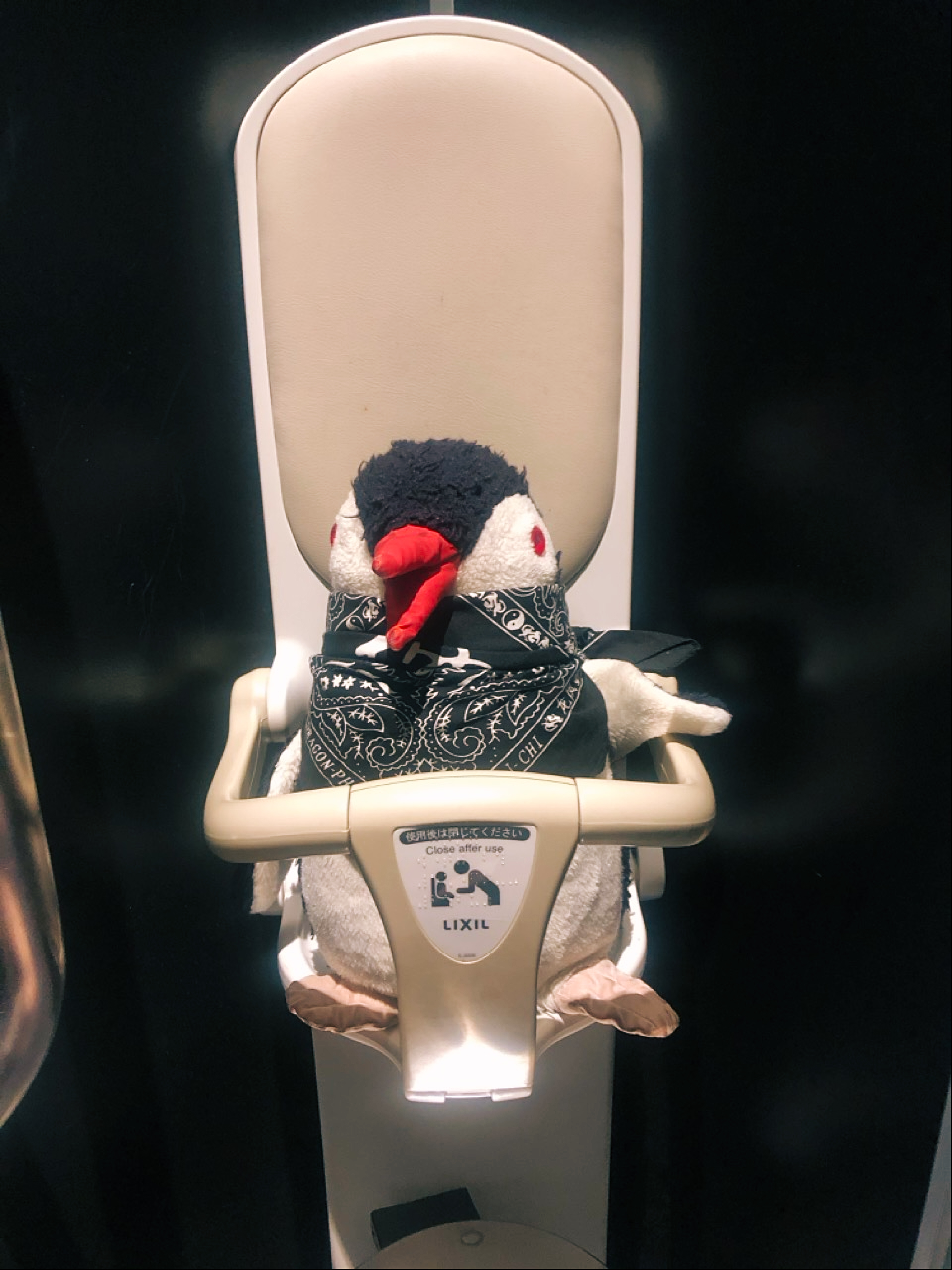
Traveling with a baby means even the simplest things, like going to the toilet, can become a logistical challenge. Japan has thought about that, too. In some women’s restrooms, we found small, built-in baby seats that let you safely secure your little one while you use the facilities. No balancing a baby on your hip, no hoping they will patiently wait in a pushchair outside, and no need to bring someone along just to take a bathroom break. The seat folds away when you don’t need it, making it a practical addition that doesn’t take up much space. This detail might go unnoticed if you are not traveling with children, but for parents, it can make a real difference. Japan seems to understand that public spaces should work for the people who use them, even the smallest ones. And honestly, making a basic human necessity easier for parents is the kind of everyday innovation we would happily welcome everywhere.
And these are just a few of the little things we noticed during our time in Japan. From clearly marked queues and designated areas on station platforms to thoughtful touches in convenience stores, restaurants, and public toilets, it was often the smallest details that made the biggest impression on us. We also appreciated how many of these ideas were supported by people who respected the systems around them, making everyday spaces feel more organized and comfortable. Of course, Japan has its frustrations, too, and not every clever feature is available everywhere. But that is precisely what made these discoveries so interesting. We were not looking at futuristic inventions or expensive technology, but at simple solutions to problems most of us have learned to tolerate. And perhaps that is the biggest lesson we brought home: making everyday life better does not always require a grand plan. Sometimes, all it takes is a basket under a stool, a place to park a wet umbrella, or a little seat for a baby. Now, if only the rest of the world would take note.
Buy Us a Ko-fi

Convenience That Starts Before You Even Need It
What connects so many of these Japanese details is the feeling that someone has thought about the next step.
The umbrella stand is waiting before your wet umbrella becomes a problem. The queue markings are already there before the train arrives. The food replicas help you decide what to order before you enter the restaurant. The vending machine provides a drink without requiring you to search for an open shop.
These are small examples of anticipating what people might need and making it easier for them to act.
Of course, Japan is not perfect. Some stations are confusing, some streets are crowded, and not every public facility is accessible or convenient for every traveler. Thoughtful design does not eliminate every frustration.
But it does make you notice the difference between a place that merely provides a service and a place that considers how people will actually use it.
That distinction matters, particularly when you spend your days navigating an unfamiliar country.
The Little Details That Make You Want to Bring Japan Home
After spending time in Japan, you may remember the spectacular temples, the city skylines, the mountain views, and the food. Those are the obvious highlights, and they deserve their place in any itinerary.
But you may also find yourself remembering the heated toilet seat, the orderly queue at a railway platform, the plastic bowl of ramen outside a restaurant or the small hook that saved you from dropping your umbrella.
These details rarely appear on postcards. They are not usually the reason people book their flights. Yet they become part of what makes traveling through a country feel enjoyable.
What impressed us most was not that Japan had invented an extraordinary solution to every ordinary problem. It was that so many everyday experiences seemed to have received a little extra thought.
And that is what makes these things worth talking about.
Other countries do not need to copy Japan in every detail. Different places have different needs, infrastructure, and cultural habits. But we could certainly borrow a few ideas.
A proper place for wet umbrellas would be a start. Clearer queues would help. So would more comfortable options for solo diners and a few more hooks where people need them.
None of this requires reinventing modern life.
Just paying a little more attention to it.
And if you ever find yourself standing in a railway station wondering why the rest of the world cannot manage to organize a queue, remember: sometimes the things that make a country feel extraordinary are the ones that barely seem worth mentioning.
Until you experience them, of course.
Travel Bold. Eat Well. Waddle Wild.

This post contains affiliate links. If you click and buy, I might earn a tiny commission, enough to help a penguin keep up its globe-trotting lifestyle. No extra cost to you, just more fish for me. Thank you for supporting the adventure!