Visiting Prizren Fortress: What to Know Before You Climb
There are places you visit, take a few pictures of, and slowly forget. Prizren Fortress is not one of them. The waddle up might leave you slightly out of breath, but once you reach the top and see Prizren spreading out below, with its rooftops, minarets, church towers, and the Šar Mountains in the distance, it is a view that is hard to unsee and even harder to forget. For us, climbing to the fortress became one of those simple travel moments that stayed with us long after we waddled back down.
- Prizren Fortress Quick Facts
- Getting to Prizren Fortress
- Prizren Fortress Opening Hours, Admission & Guided Tours
- Facilities & Amenities
- A Brief History of Prizren Fortress
- The Legend of Prizren Fortress
- Our Waddle Up to Prizren Fortress
- How Much Time Do You Need at Prizren Fortress
- Best Time to Visit Prizren Fortress
Prizren Fortress Quick Facts
- Location: Hilltop above the historic center of Prizren, Kosovo
- Also Known As: Kalaja e Prizrenit
- Origins: Fortifications on the site date back to Late Antiquity
- Used By: Byzantine, medieval Serbian, and Ottoman rulers over different periods
- Entry Fee: Free
- Opening Hours: Open-air historical site; access can vary
- Best For: City views, history, photography, and sunset
- Waddle to the Fortress: Around 15–20 minutes uphill from the historic center
- Difficulty: Short but fairly steep in places
- Time Needed: Around 45 minutes to 1.5 hours, including the walk and time at the top
-
Best View: Panoramic views across Prizren, the Lumbardhi River valley, and the Šar Mountains
Getting to Prizren Fortress
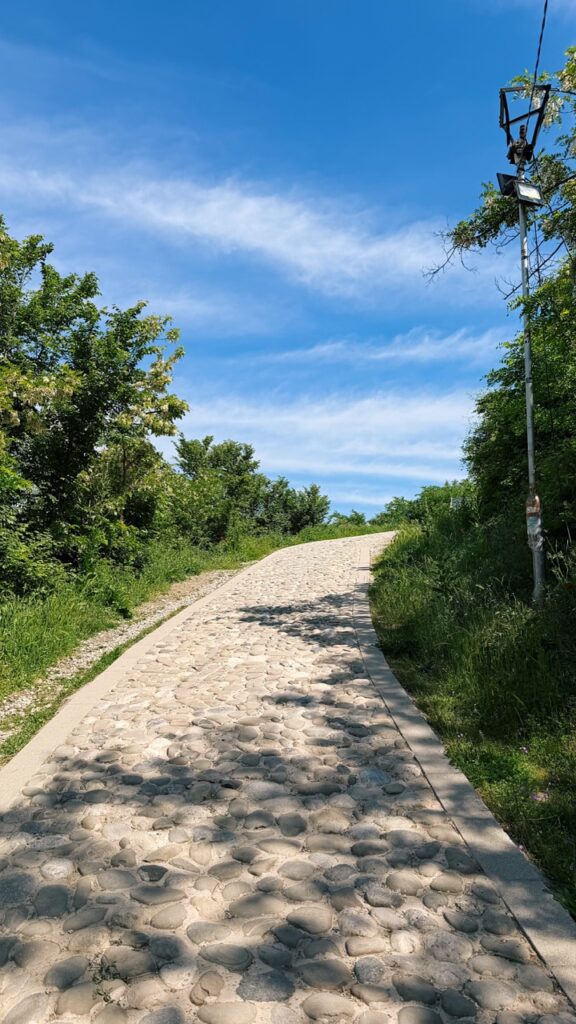
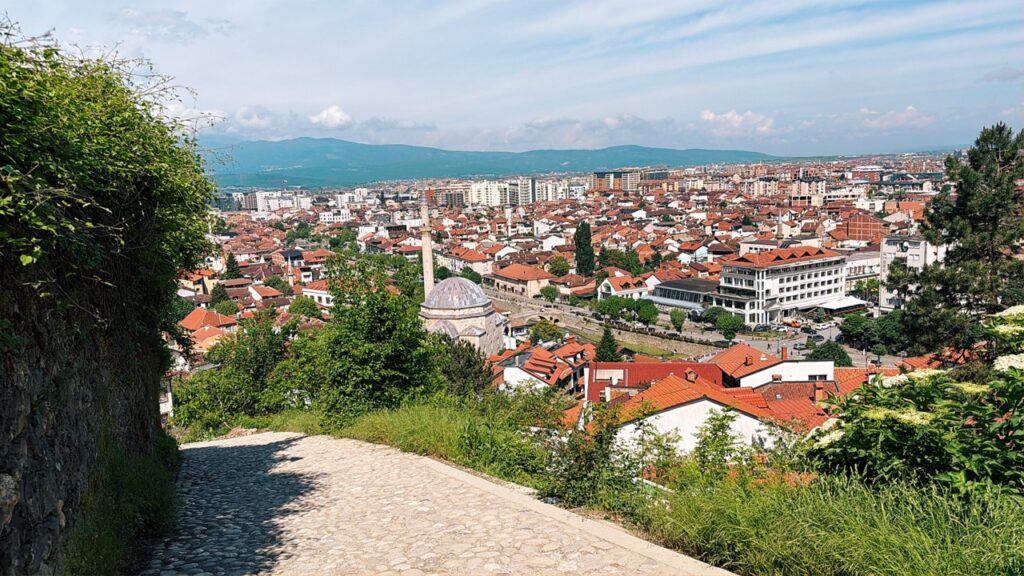
Getting to Prizren Fortress is pretty straightforward: you have to waddle up the hill overlooking the city. The walk from the historic center takes around 15–20 minutes, depending on your pace, and yes, it is uphill pretty much the entire way, so be prepared for a little workout. The good news is that you do not have to wait until the fortress to enjoy the reward. The views start opening up as you climb, giving you plenty of excuses to stop, catch your breath, take a few pictures, and watch more and more of Prizren appear below you.
Prizren Fortress Opening Hours, Admission & Guided Tours
Opening Hours. Prizren Fortress is normally open Tuesday to Saturday from 10:00 AM to 4:00 PM, according to the official visitor information. The hours can change depending on the season, conservation work, or temporary closures, so we recommend checking the official website shortly before your visit.
Admission. The best part is that entrance to Prizren Fortress is currently completely free. Admission to the Archaeological Museum inside the fortress is also free, so you can explore both without purchasing a ticket.
Guided Tours. If you want to learn more about what you are actually looking at rather than simply wandering around the ruins, guided visits can also be arranged. The fortress asks organized groups and school visits to arrange their visit in advance so that guided programs can be prepared.
Good to Know. At the moment, the fortress is temporarily closed from 24 August to 7 September 2026 while emergency safety measures and infrastructure improvements are carried out. If you are visiting around these dates, check for the latest reopening information before making the waddle uphill. Always check the official website before your visit.
Hotel search from Trip.comShows Trip.com’s own box, which can set Trip.com cookies.
Facilities & Amenities
Prizren Fortress is a historic archaeological site rather than a developed tourist attraction, so facilities are quite limited, which is something we have noticed at quite a few fortress sites around the Balkans.
- Toilets. Don’t count on public toilets at the fortress, so itis best to use one in the city before you walk up.
- Food & Drinks. There are no proper cafés or restaurants inside the fortress. Grab something in Prizren before or after your visit and bring water for the climb, especially in summer.
- Seating. You can stop and rest around the site, but don’t expect much dedicated seating.
- Accessibility. Because of the steep uphill approach, uneven surfaces, steps, and historic terrain, the fortress can be challenging for visitors with reduced mobility.
- Photography. You can take photos around the fortress, and you will definitely want to. The panoramic views over Prizren are one of the main reasons to make the climb.
- Lockers. There are no lockers, so avoid bringing anything you do not want to carry uphill.
- Shops. There is no proper souvenir shop at the fortress itself. You will find plenty of places for souvenirs once you return to the historic center.
A Brief History of Prizren Fortress
Prizren Fortress is much more than a viewpoint above the city. People have used and fortified this strategic hilltop for centuries, with different rulers rebuilding, expanding, and adapting it over time. Its position made perfect sense for defense, offering clear views across Prizren, the surrounding valley, and important routes through the region.
-
- Late Antiquity. Archaeological evidence suggests that a fortified settlement existed here as early as the 4th–6th centuries, making the site much older than much of the Prizren you see below today.
- Byzantine Period. The fortress remained strategically important under Byzantine rule, protecting the settlement and routes through the surrounding region.
- Medieval Period. During the Middle Ages, Prizren became an important political, commercial, and religious center. Medieval Serbian rulers strengthened the fortress and used it, particularly during the Nemanjić period.
- Ottoman Period. Following the Ottoman conquest of Prizren in 1455, the fortress was expanded and modified. Ottoman forces used it as an important military stronghold for centuries.
- 17th–19th Centuries. Additional defensive structures and buildings were constructed as the fortress continued to serve a military and administrative role above the growing city.
- 19th Century. As warfare and military technology changed, the fortress gradually lost its strategic importance and eventually stopped functioning as a major military stronghold.
- Modern Era. Archaeological excavations and conservation projects have helped uncover the fortress’s different historical layers, allowing visitors to explore the remains today.
The Legend of Prizren Fortress
Like many old fortresses in the Balkans, Prizren Fortress comes with its own local legends. One well-documented story is connected to the Upper Fortress, known locally as Kalaja e Vashës, or “Girls’ Fortress.” According to local tradition, young women who served the Ottoman military were accommodated in this part of the fortification, which is said to be how the place earned its unusual name. Whether every detail of the story is historical is difficult to prove, but it is one of those pieces of folklore that adds another layer to a fortress already shaped by thousands of years of human presence.
Our Waddle Up to Prizren Fortress
First things first, we knew Prizren Fortress sat on a hill, but we weren’t quite prepared for how steep it would feel once we started climbing. The path keeps going up, and there were definitely a few moments when our casual walk turned into a proper uphill waddle. But this is also what makes the climb so enjoyable. With every few steps, a little more of Prizren appears below you, from the red rooftops and winding streets to the minarets and surrounding mountains. We kept stopping along the way, partly for photos and partly to catch our breath, and by the time we reached the top, the views had already made the climb completely worth it.
It took us around 20 minutes to reach the fortress, and somehow the path seemed to get steeper the closer we got to the top. By that point, the sun was absolutely brutal, and there was very little shade along the way. You do pass beneath a few trees here and there, which suddenly feel like the greatest trees you have ever seen, but much of the climb is completely exposed. Definitely keep that in mind if you are visiting on a hot or sunny day and bring plenty of water. When the entrance to Prizren Fortress appeared ahead of us, we were genuinely very happy to see it. Reaching those old stone walls felt like a small victory, and before exploring anything, we happily claimed a little patch of shade by the entrance, caught our breath, and recovered from our uphill waddle.
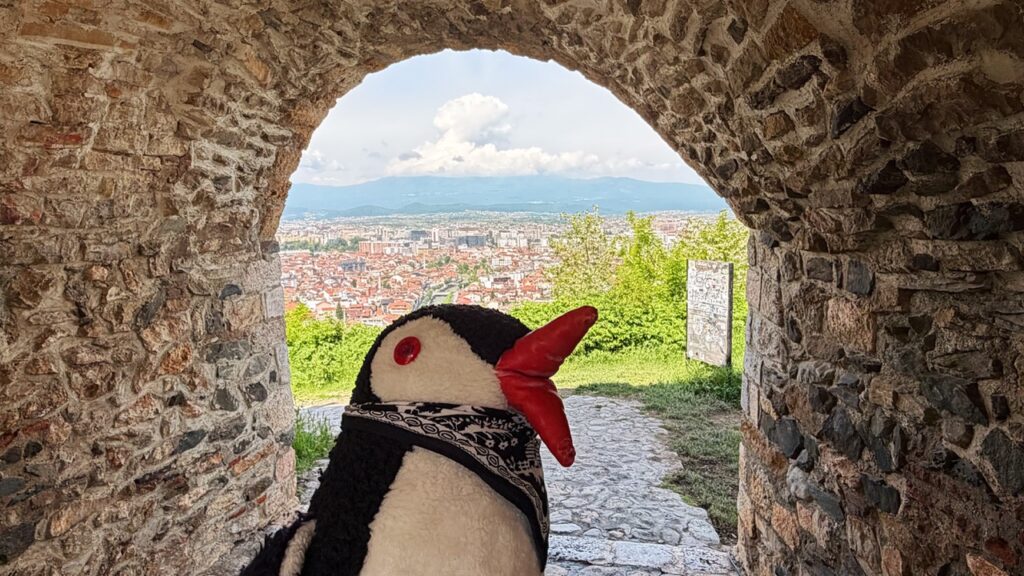
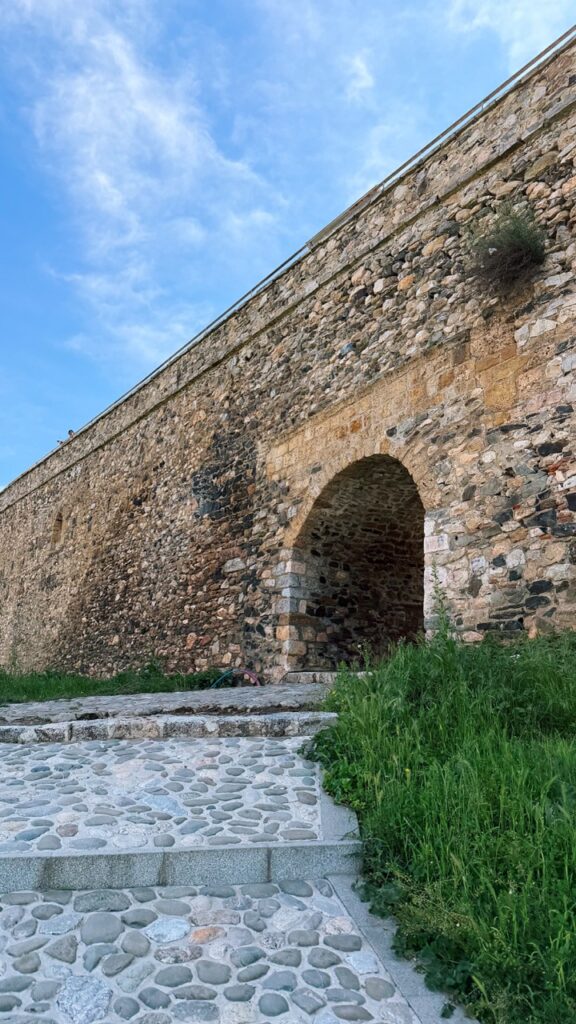
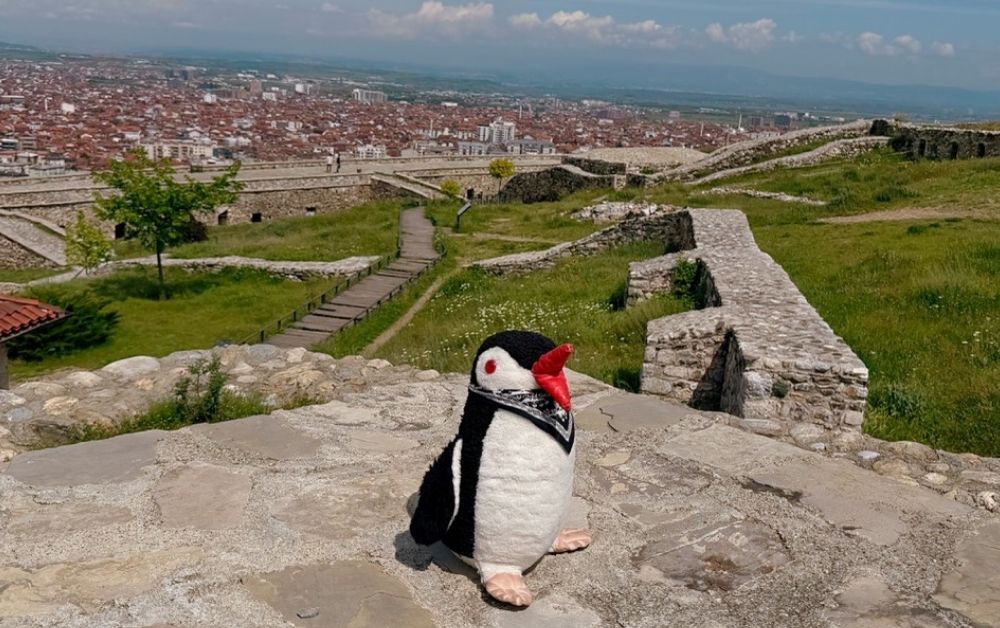
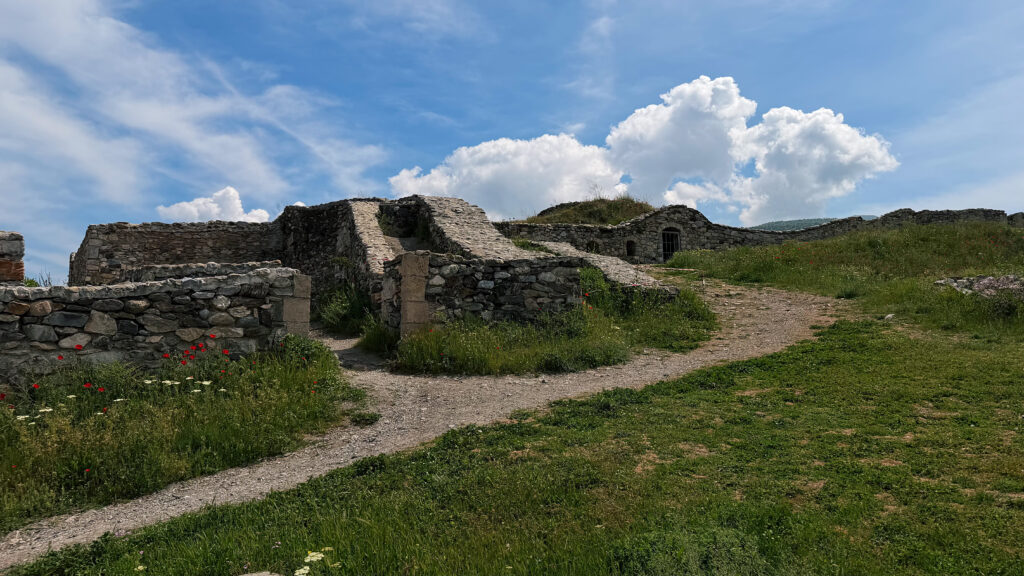
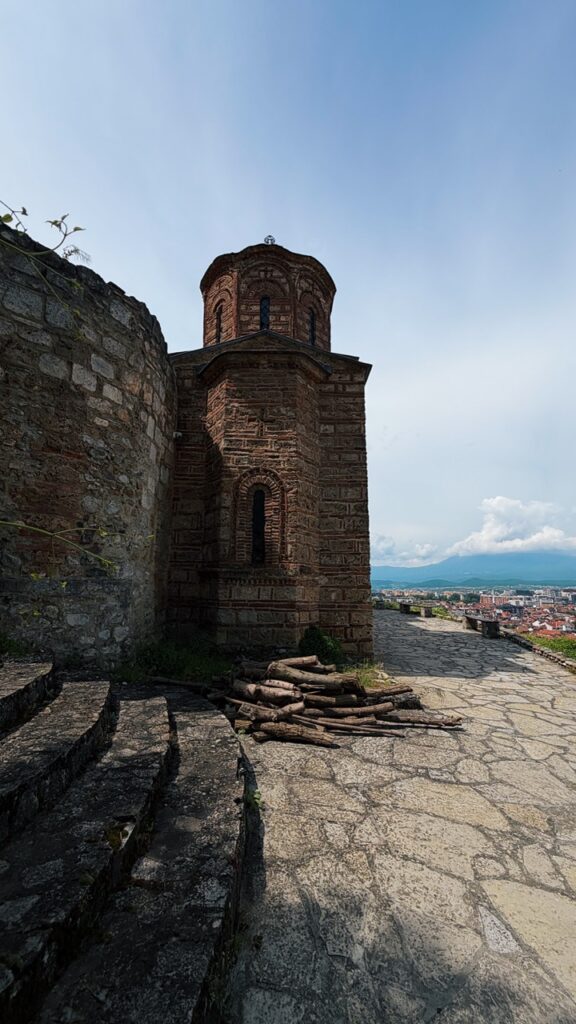
Once we had recovered in the shade, we finally headed inside Prizren Fortress, and this is where it is worth adjusting your expectations a little. This is more of an archaeological site than a picture-perfect castle, so don’t expect grand halls, towering keeps, or perfectly preserved defensive walls. Instead, you are wandering between excavated remains, old stone foundations, sections of walls, and traces of the different periods that shaped the fortress. And after that climb, we had one priority before looking at any of it properly: the viewpoints. We headed straight towards the edges of the fortress to finally see the panorama we had been catching little glimpses of all the way up.
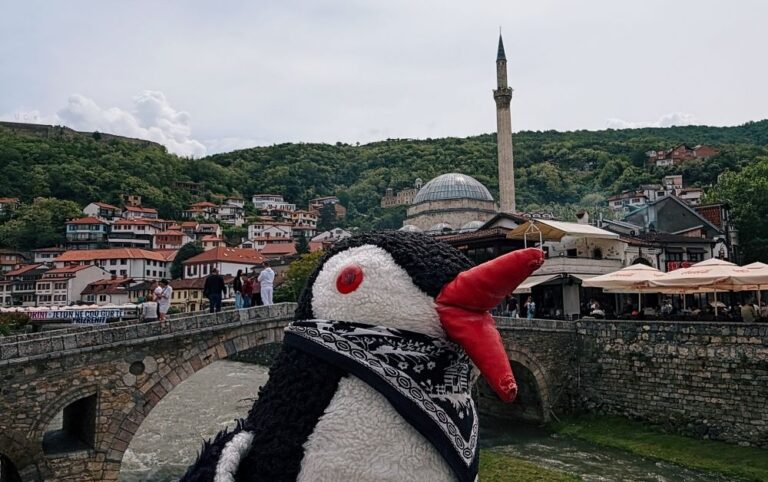
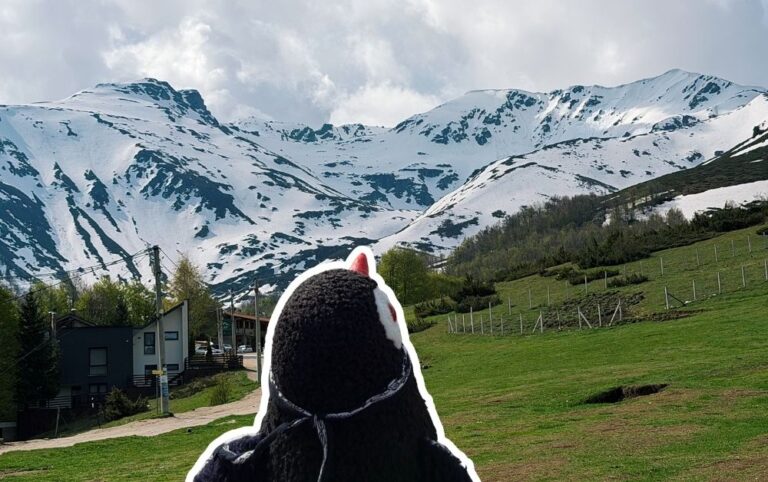
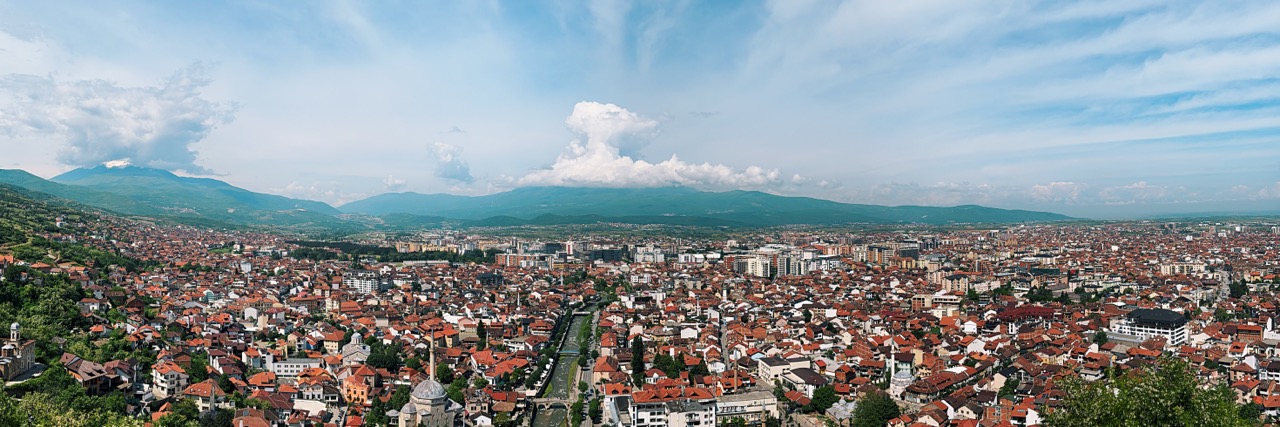
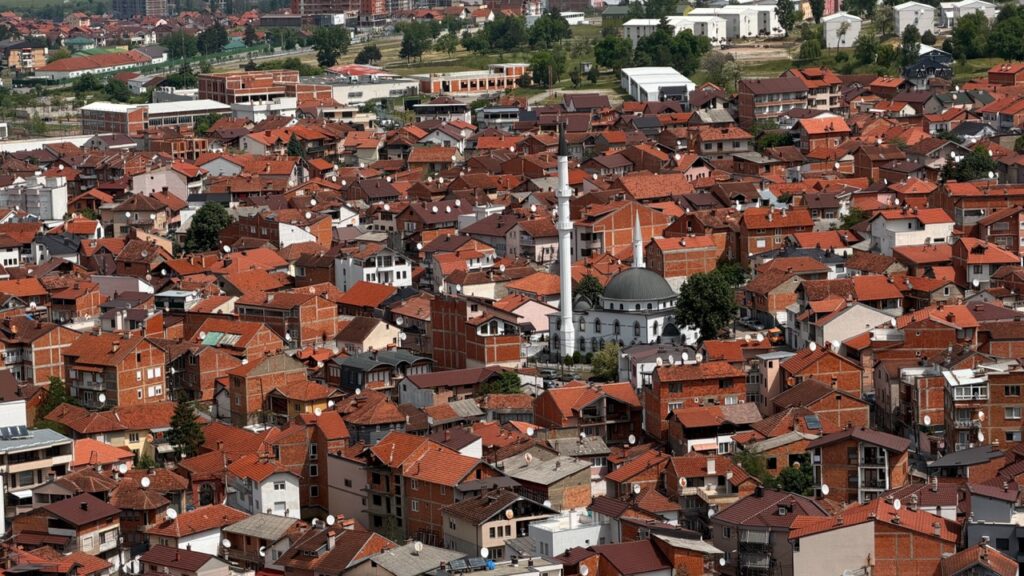
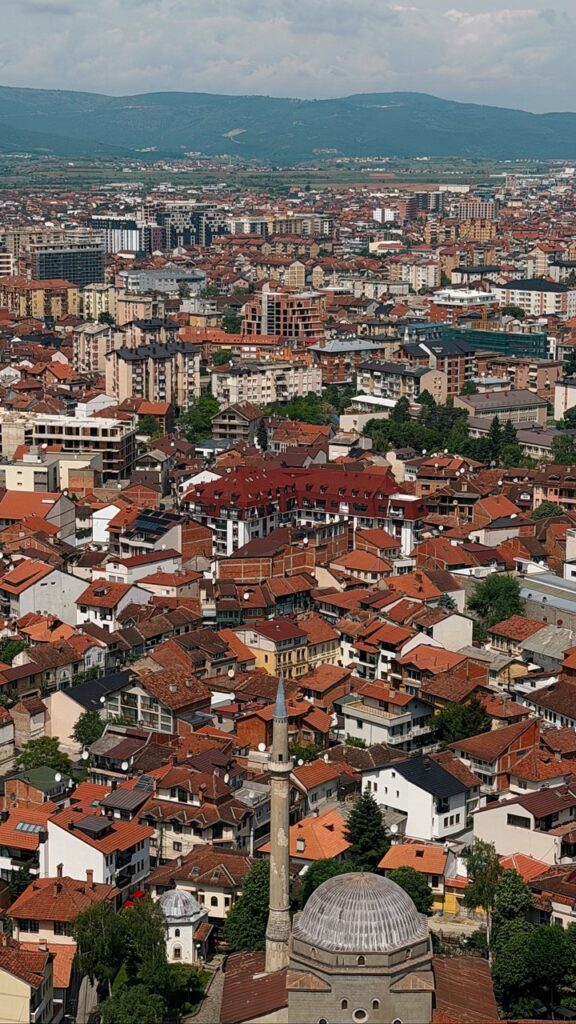
Reaching the viewpoint, we could understand why the views alone are enough to convince people to climb to Prizren Fortress. Seeing Prizren from up here is simply amazing. The city spreads out beneath you, with the Lumbardhi River cutting through the center, the Stone Bridge tucked between the rooftops, and minarets and church towers rising above the streets. At the same time, the Šar Mountains create a dramatic backdrop in the distance. You can also spot the large UÇK sign on the hillside, referring to the Ushtria Çlirimtare e Kosovës, or Kosovo Liberation Army (KLA). The KLA was an ethnic Albanian armed organization that fought Serbian and Yugoslav forces during the Kosovo conflict of the late 1990s, and symbols
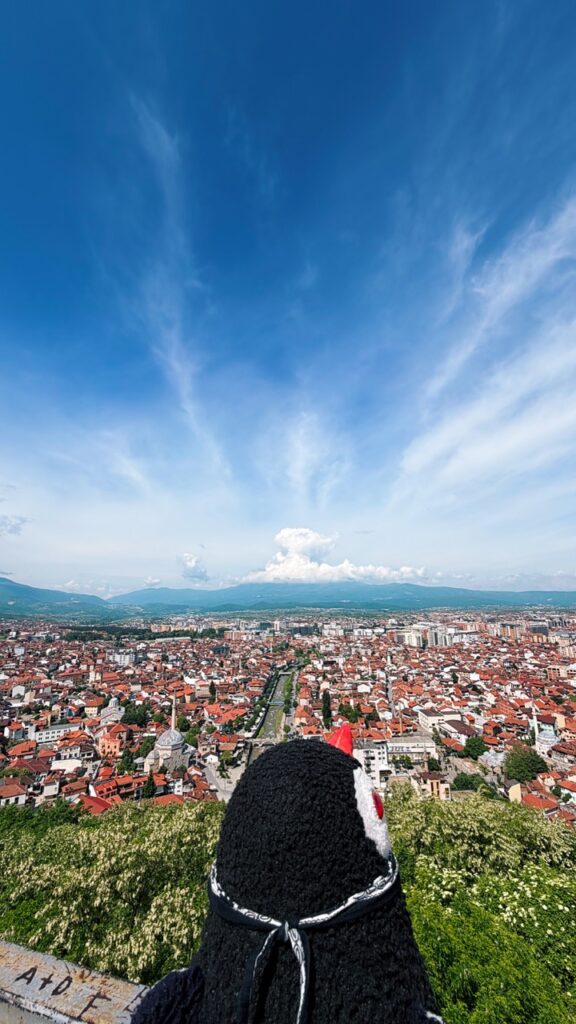
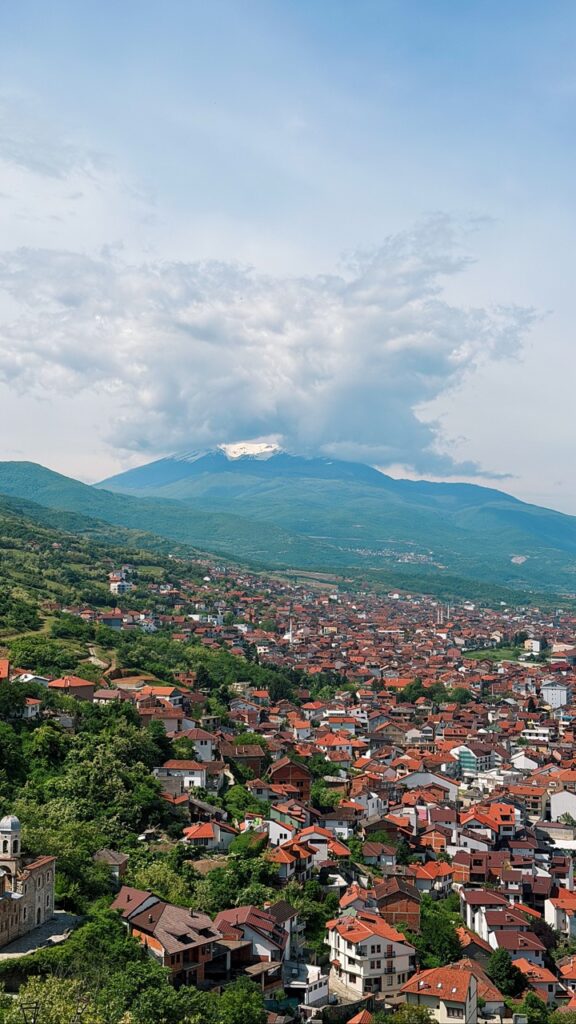
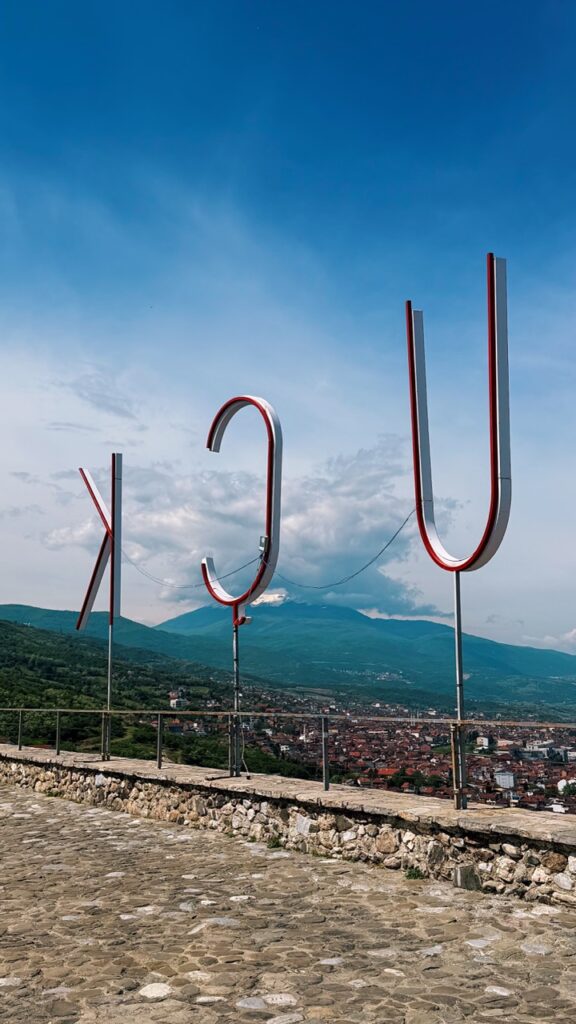
We stayed up here much longer than we expected. The sun still beat down on the fortress walls, but somehow we didn’t want to leave. From above, Prizren felt completely different, with the rooftops packed tightly beneath us, minarets and church towers breaking through the skyline, and the Šar Mountains fading into the distance. Every time we thought we had taken enough photos, we spotted another angle and stopped again. After the hot, steep waddle to get here, standing above the city with that huge panorama in front of us felt like the kind of travel moment you want to stretch out for a little longer.
Eventually, we managed to pull ourselves away from the panorama and turned our attention to the fortress itself. Beyond the viewpoints, Prizren Fortress feels like an open-air archaeological site, with old stone walls, gateways, foundations, defensive structures, and building remains that reveal themselves as you wander through the complex. Some sections are little more than outlines in the ground, so you need a bit of imagination to picture what once stood here, while others still give you a real sense of the fortress’s scale. We wandered without much of a plan, following walls, peeking through openings, stopping at the information boards, and somehow repeatedly ending up at another viewpoint over Prizren. Not that we were complaining.
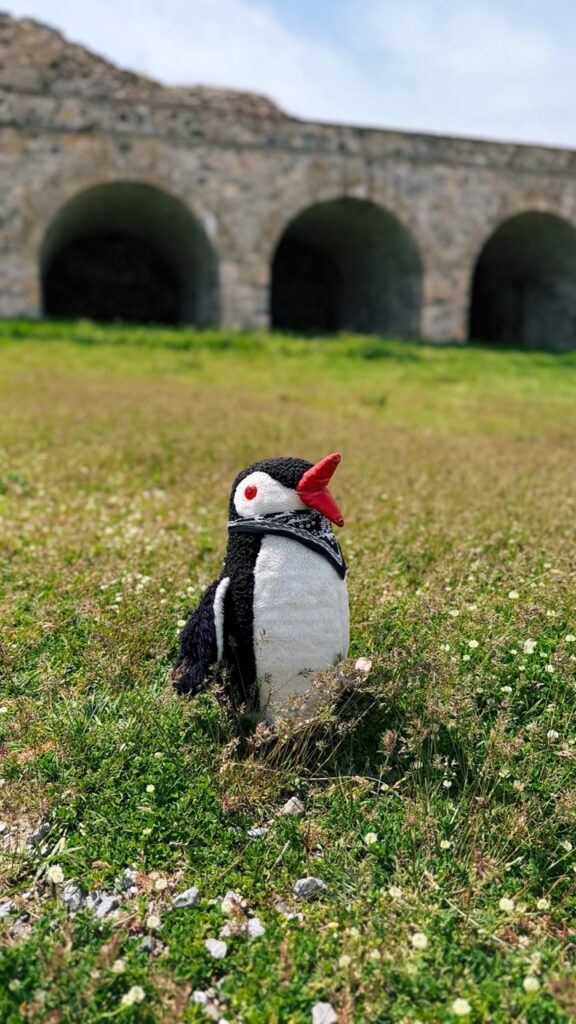
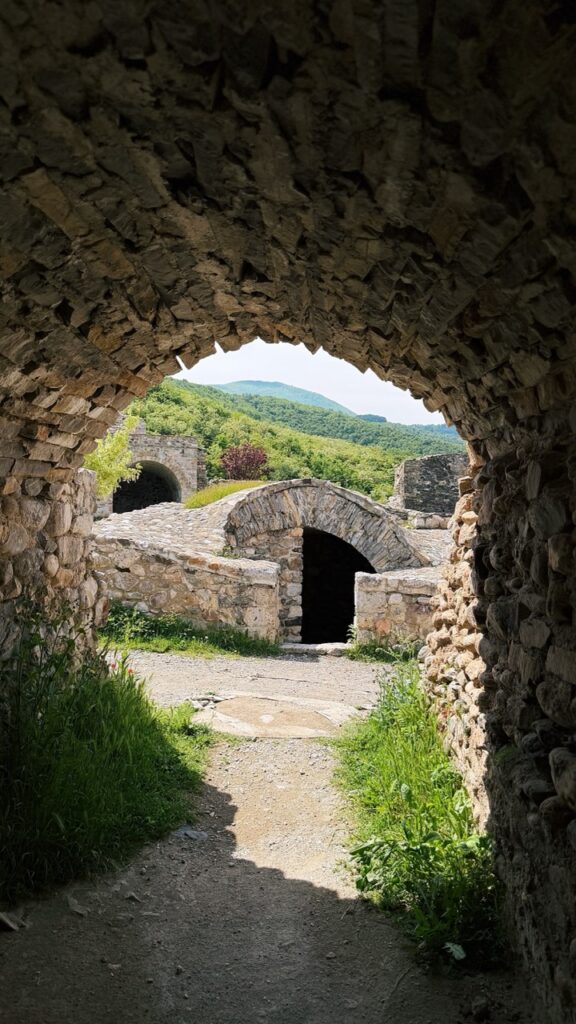
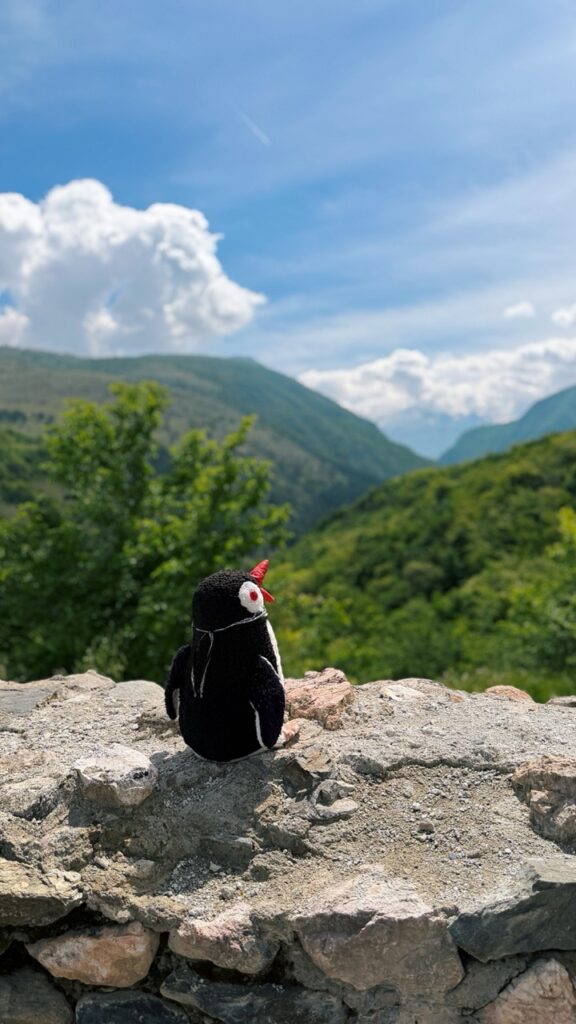
The fortress grounds are much bigger than they first appear, and exploring them turned into a little adventure of its own. We followed paths between the ruins, climbed across uneven sections, and crossed a few wooden walkways and bridges that had definitely seen better days. Some of the boards looked quite worn and damaged, so this is one of those places where you really want to watch where you put your feet rather than walk while staring at the view. It all adds to the fortress’s slightly rugged feel, but good shoes are definitely a smart idea. And with the sun still beating down on us and very little shade across much of the site, we quickly realized that exploring Prizren Fortress involves a bit more waddling than simply reaching the top and taking in the panorama.
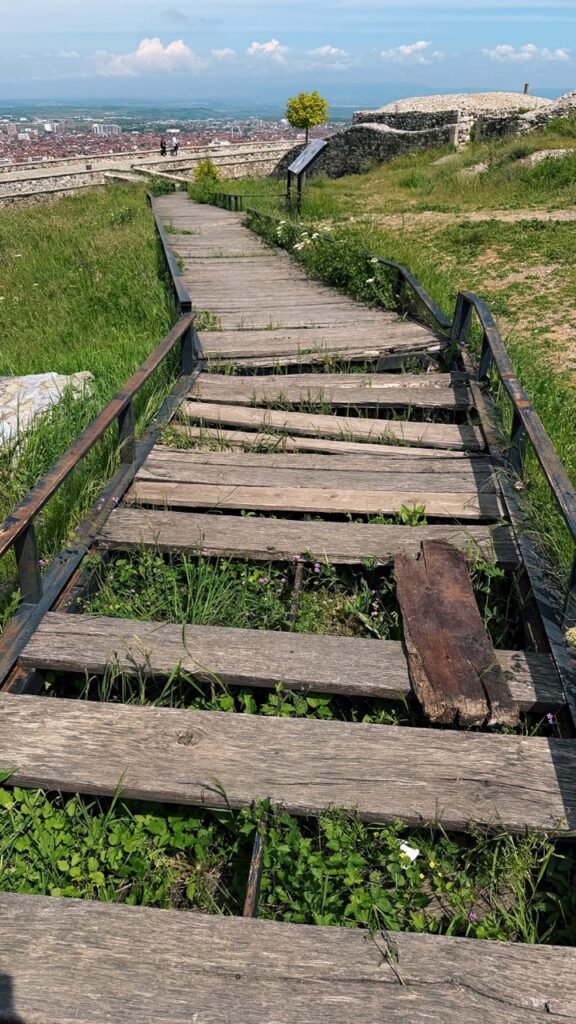
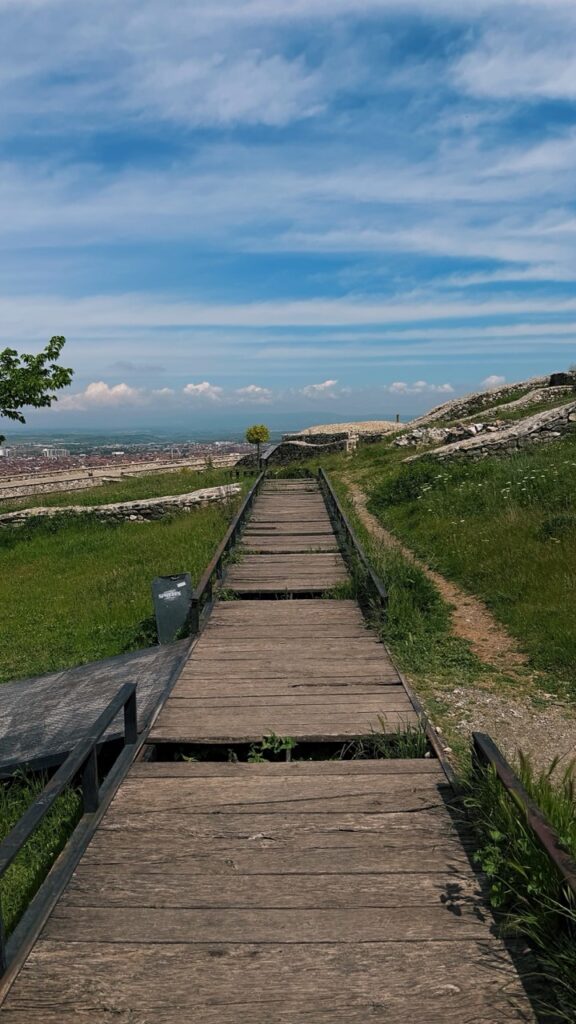
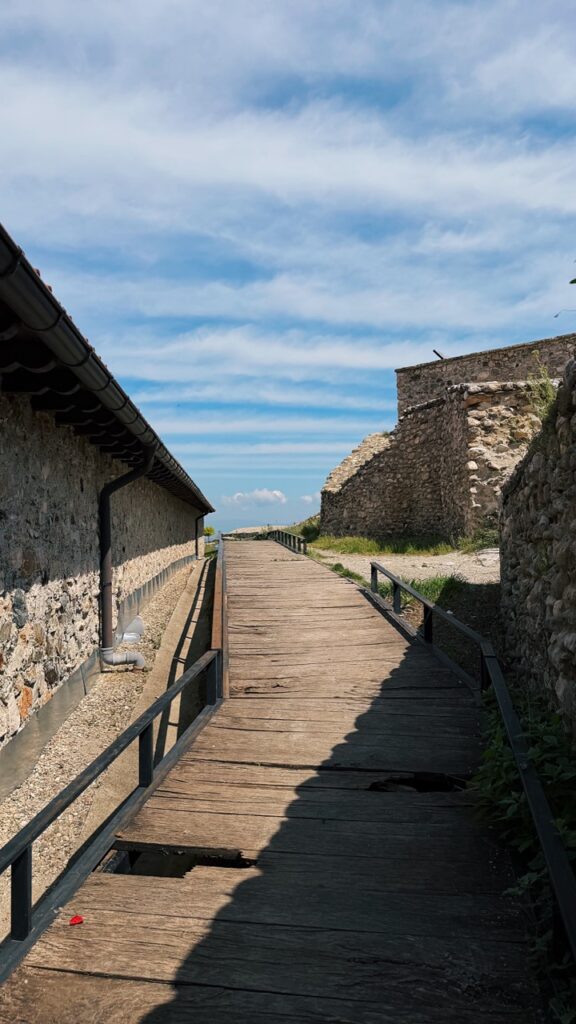
Despite those wooden walkways doing their best to test the strength of our ankles, waddling around the fortress grounds was actually really enjoyable. The complex is surprisingly large, covering roughly 1.5 hectares, so there is much more space to explore than you might expect when looking up at it from Prizren below. We more or less made a full circle around the archaeological site, wandering between the old walls, ruins, foundations, and open sections of the fortress before eventually finding ourselves right back where we started, at the viewpoint overlooking the city. And naturally, we stopped for another look. With a view like that, once was never going to be enough.
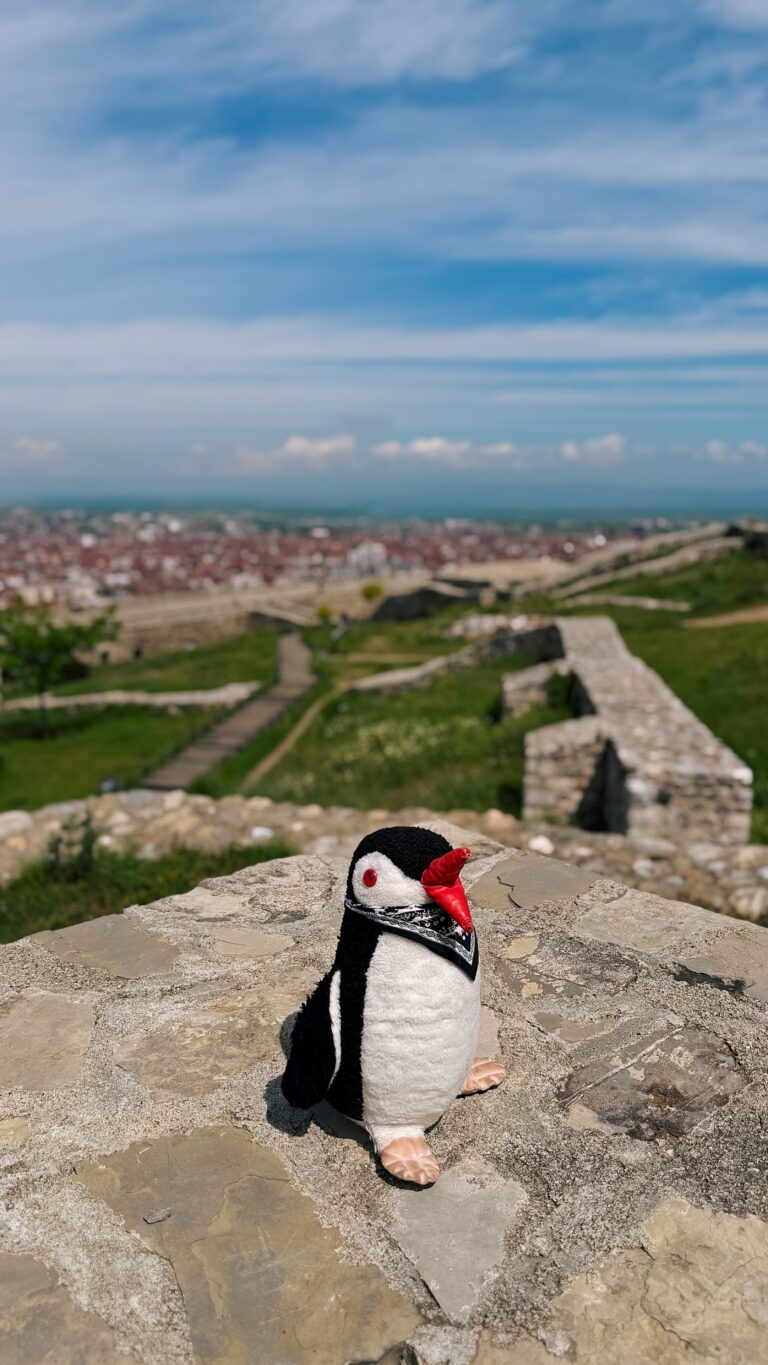
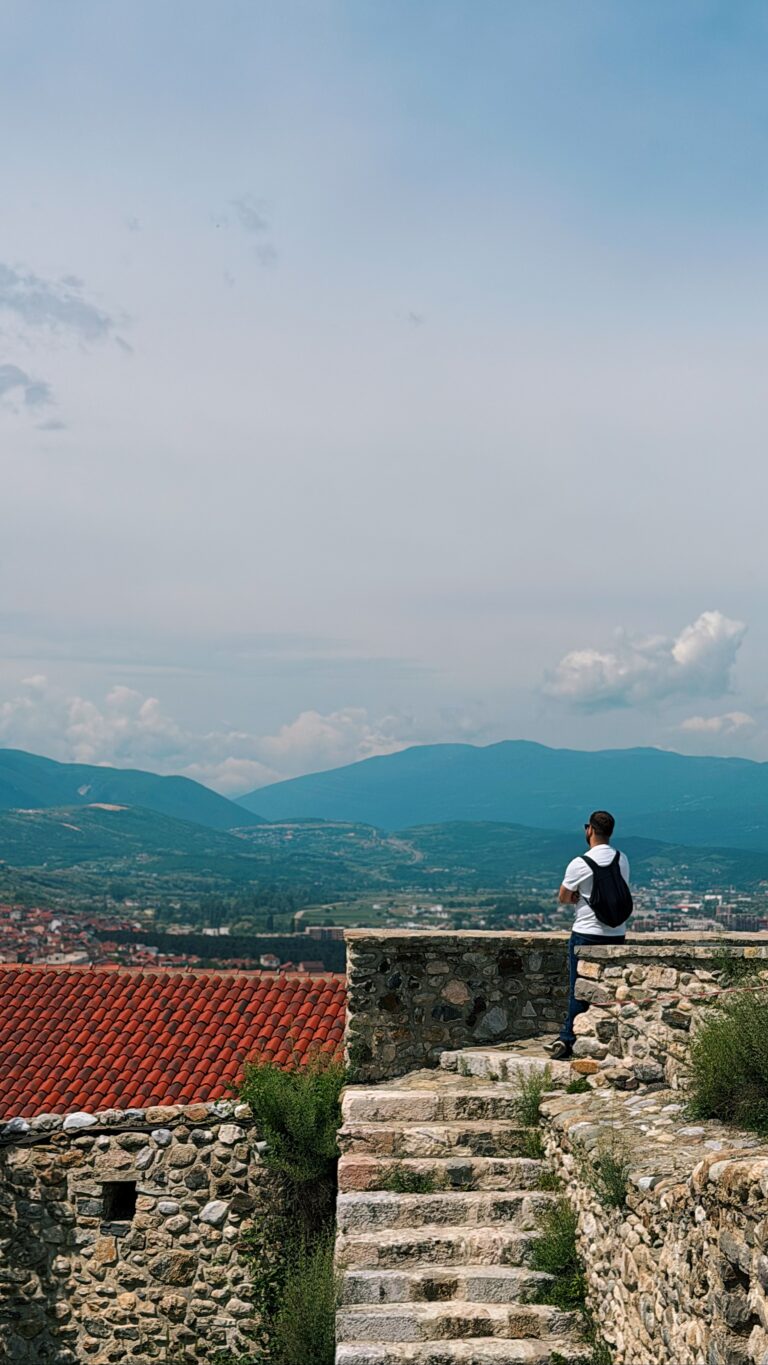
Our little loop around the fortress brought us right back to where we had started, at the main viewing platform, and there was no way we were leaving without enjoying those views one more time. Of everything we explored inside Prizren Fortress, this was easily our favorite spot. We stood there for a few more minutes, with Prizren stretched out beneath us and the mountains rising beyond the city, spotting the streets and landmarks we were about to explore next. It felt like the perfect place to finish our waddle around the fortress, especially knowing that from here, the only way left to go was downhill.
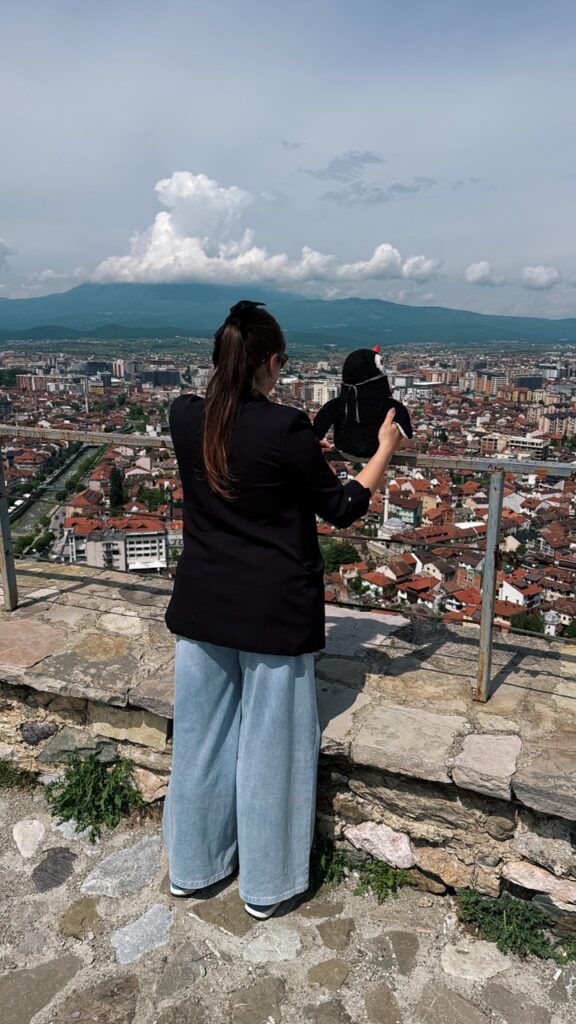
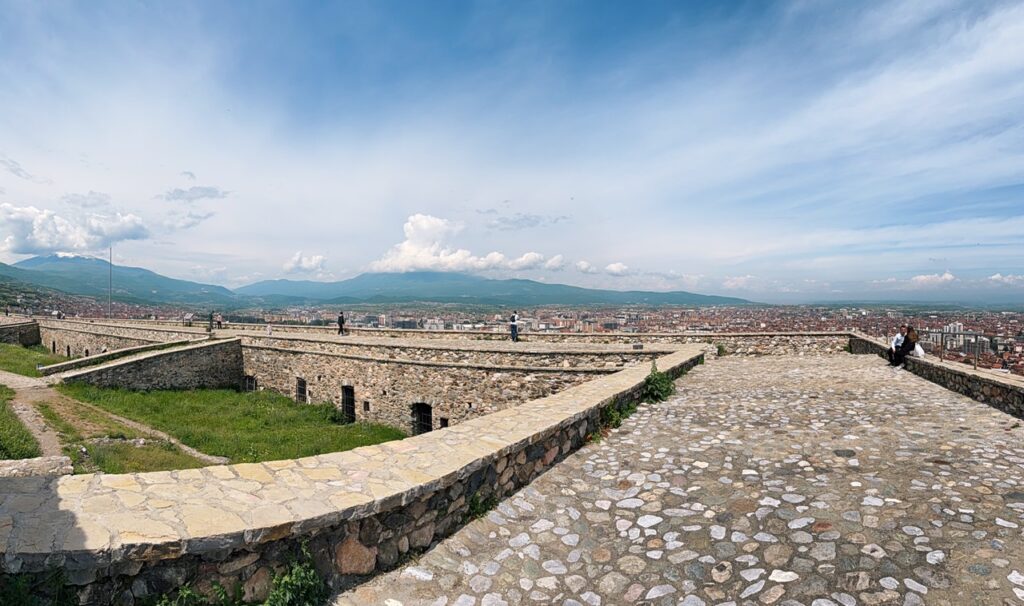
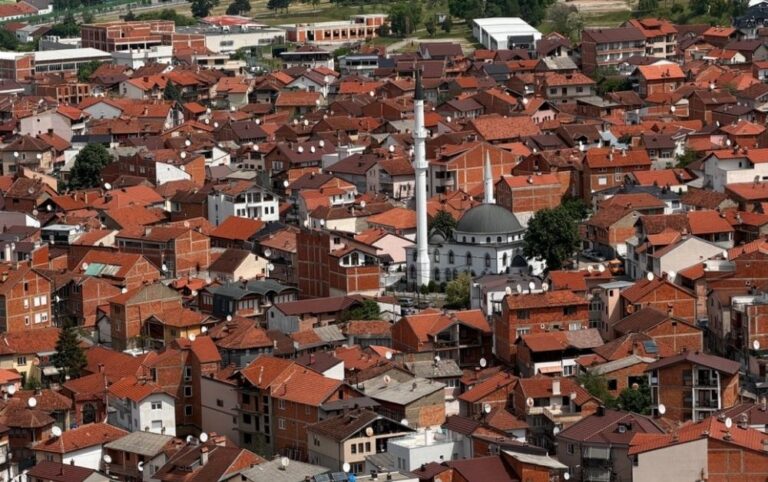
What really surprised us from up here was how many red rooftops there are in Prizren. From street level, you do not quite notice them in the same way, but from the fortress they seem to spread across the entire valley, with minarets and church towers poking through the sea of terracotta and the mountains rising behind it all. The tiled, pitched roofs are part of a broader architectural tradition shaped over centuries, including the city’s long Ottoman period and later Balkan influences, rather than something that appeared during one particular chapter of Prizren’s history. With the sunlight catching all those warm-colored tiles, it was one of those little details we didn’t expect to notice, but that became such a distinctive part of the view.
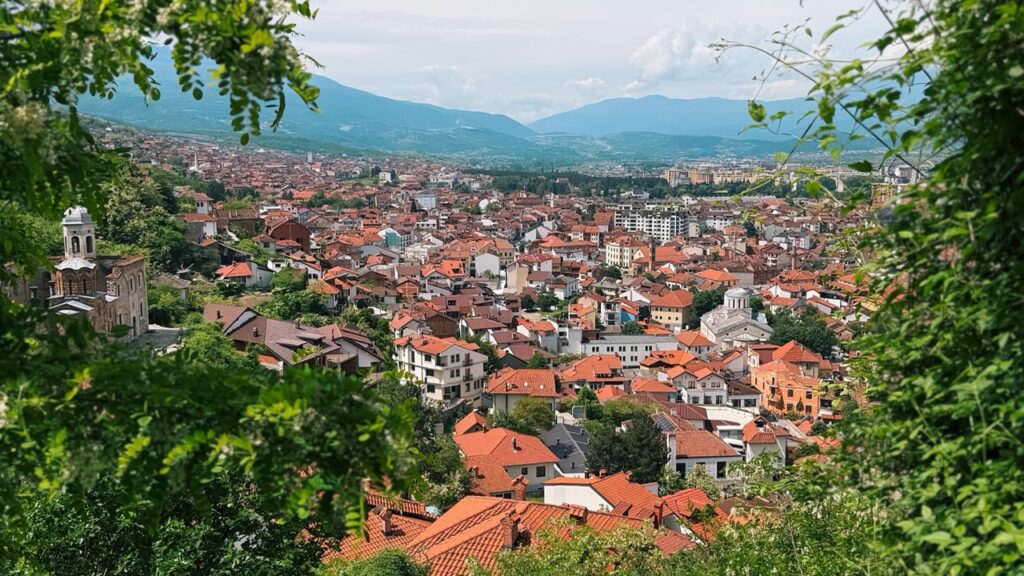
Eventually, it was time to waddle back down into Prizren, retracing the same steep path that had made us work so hard on the way up. Going downhill was certainly easier on the lungs, although the slope still kept us watching our steps. The best part was that the views did not disappear the moment we left the fortress. Prizren stayed in front of us for much of the descent, appearing between the trees and rooftops as we made our way lower. Every few minutes, the perspective changed, and the city seemed to come a little closer, until we were finally back among the streets we had just been looking down on from above.
How Much Time Do You Need at Prizren Fortress
We would recommend setting aside around two hours for Prizren Fortress altogether, including the waddle up, exploring the grounds, and getting back down. For us, the climb took roughly 20 minutes, and you will probably want at least 45 minutes to an hour at the top to wander around the archaeological site and properly enjoy the viewpoints. Add another 15–20 minutes for the walk back down, plus all those inevitable photo stops along the way.
That said, this is a place where you can slow things down if you have the time. We saw people sitting in the shaded corners of the fortress, simply relaxing and enjoying the view, and we could easily imagine bringing a book and staying up here for a while. No need to rush through the site. Find some shade, sit down, let your legs recover from the climb, and enjoy having Prizren spread out beneath you. If you like traveling at a slower pace, you could easily turn those two hours into a much longer fortress break.
Buy Us a Ko-fi

Best Time to Visit Prizren Fortress
If we were planning our visit again, we would pay much more attention to what time of day we climbed to Prizren Fortress. The path is steep and much of both the climb and the fortress itself is exposed, so around midday the sun can make that relatively short waddle feel considerably harder. We experienced exactly that, and while a few patches of shade exist beneath the trees, they aren’t enough to escape the heat for long.
For a more comfortable climb, early morning is probably your best option. You get cooler temperatures, softer light over Prizren’s red rooftops, and potentially fewer people at the viewpoints. The fortress currently opens from 8:00 AM, making it easy to visit before the hottest part of the day.
Late afternoon is another great choice, especially if photography is important to you. As the sun gets lower, the light becomes softer across the rooftops and surrounding Šar Mountains, and the viewpoint is particularly popular around sunset. Just check the seasonal closing time before planning a sunset visit, as daylight and fortress hours change throughout the year.
Personally, we would avoid the middle of a hot, sunny day if you have the flexibility. We still loved our visit despite the brutal sunshine, but an early-morning waddle followed by coffee and breakfast back in Prizren sounds like a much smarter plan.

Prizren Fortress made us work a little for the reward, but that steep, sunny waddle was absolutely worth it. Between the centuries of history, slightly adventurous wooden walkways, endless red rooftops, and the Šar Mountains stretching across the horizon, this was easily one of our favorite stops in Prizren. Come for the fortress, stay far too long for the views, and bring water. Your legs can complain on the way up. They will forgive you at the top.
Travel Bold. Eat Well. Waddle Wild.

This post contains affiliate links. If you click and buy, I might earn a tiny commission, enough to help a penguin keep up its globe-trotting lifestyle. No extra cost to you, just more fish for me. Thank you for supporting the adventure!