Things to Know About Tokyo Before You Visit
Tokyo can feel overwhelming before you even set foot in Japan. Planning a trip here means navigating an enormous city, unfamiliar customs, countless neighborhoods, a famously complex transport network, and an almost endless list of things to see. We like to know a little about a place before we arrive, so we did plenty of research before our trip. But as it often happens with travel, some of the most interesting things about Tokyo are details we discovered only once we were there. Here are some fascinating facts about Tokyo we learned before and during our visit.
Basic Facts About Tokyo
- Founded: Became Japan’s capital in 1868, when Edo was renamed Tokyo.
- Population: Around 14 million in Tokyo Metropolis and over 37 million in the greater metropolitan area.
- Area: Approximately 2,194 km² (847 sq mi).
- Time Zone: Japan Standard Time (GMT +9).
- Climate: Hot, humid summers and cool winters, with mild spring and autumn.
- Airports: Haneda (HND) and Narita (NRT).
- Former Name: Edo, the city’s name until 1868.
- Name Meaning: Tokyo (東京) means “Eastern Capital.”
Tokyo has not always been Japan’s capital. For more than 1,000 years, Kyoto served as the imperial capital, from 794 until 1868. Tokyo, then known as Edo, was a powerful political and commercial center but was not yet the seat of the emperor. Everything changed during the Meiji Restoration in 1868, when Emperor Meiji moved the imperial court to Edo and the city was renamed Tokyo, meaning “Eastern Capital.” From that moment, Tokyo began its transformation into the modern capital we know today.


Tokyo’s history stretches much further back than its modern skyline suggests. Edo grew from a small settlement into a major city under the Tokugawa shogunate, eventually becoming one of the world’s largest cities. Today, traces of that history remain alongside glass towers, busy railway stations and neon-lit streets. Places such as Asakusa, Senso-ji Temple, the Imperial Palace and the city’s traditional neighborhoods offer glimpses of an older Tokyo. At the same time, areas like Shibuya and Shinjuku represent the city’s fast-moving modern identity. Waddling through Tokyo can feel like moving between different chapters of Japanese history, sometimes on the same street.
19 Interesting Things to Know About Tokyo
Choosing just a handful of interesting facts about Tokyo is not easy. With a city this enormous, layered, and endlessly surprising, there always seems to be another story worth telling. So, rather than trying to cover everything, we picked some of the facts that caught our attention most, from Tokyo’s history and hidden corners to the little details we discovered while exploring the city ourselves.
#1: Tokyo Was Almost Destroyed During World War II
Tokyo had already endured the devastating Great Kanto Earthquake of 1923 when another catastrophe struck just two decades later. During the final months of World War II, the city was bombed 102 times, with the most devastating attack taking place on 10 March 1945. Much of Tokyo was reduced to ruins, and by October that year, the city’s population had fallen to around 3.49 million, roughly half its 1940 level. Yet Tokyo did not remain in ruins for long. Post-war reconstruction began almost immediately, with the Tokyo Metropolitan Government drawing up a major reconstruction plan in 1946. Roads, railways, and neighborhoods were rebuilt, and the city began growing again at remarkable speed. Within about a decade, Tokyo had regained much of its vitality, laying some of the foundations for the enormous metropolis we see today.
#2: Some Tokyo Neighborhoods Still Follow the Layout of Edo
Tokyo may look like a city built for the future, but parts of its street plan reach back to the Edo period (1603–1868). When Tokugawa Ieyasu established his shogunate in Edo, the city was deliberately planned around Edo Castle, with streets, neighborhoods, and waterways arranged to meet the needs of a growing castle town. Areas were designated for samurai residences, temples and shrines, and merchant communities, while major roads connected Edo with the rest of Japan. Even after Edo became Tokyo, this historical framework did not simply disappear. Tokyo’s metropolitan government notes that the urban pattern formed during the Edo period became the foundation for what is now Tokyo’s central ward area. Some of today’s neighborhoods, roads, and landmarks therefore follow lines established centuries ago. Nihonbashi, for example, was the starting point of Edo’s five major highways and remains an important reference point in modern Japan.
#3: Tokyo Is One of the World’s Largest Urban Areas
Tokyo is enormous, but it is not technically just one city. Tokyo Metropolis covers a vast area that includes 23 special wards, as well as cities, towns and villages stretching far beyond the central urban area. Around 14 million people live within the metropolis, while the wider Greater Tokyo area is home to more than 37 million people, making it one of the largest urban areas in the world. Each of Tokyo’s 23 special wards has its own local government and distinct personality, from the bright energy of Shibuya and Shinjuku to the traditional atmosphere of Asakusa. And Tokyo does not end on the mainland. The metropolis also includes remote islands scattered across the Pacific, meaning that the Tokyo on the map is far bigger and more varied than the city most visitors imagine.
#4: Tokyo Includes Remote Islands in the Pacific Ocean
Tokyo may bring to mind skyscrapers, crowded crossings and endless city streets, but Tokyo Metropolis stretches far beyond the mainland. Its administrative boundaries include two groups of islands in the Pacific, the Izu Islands and the Ogasawara Islands. Some are surprisingly remote: the Ogasawara Islands, including Chichijima and Hahajima, lie about 1,000 kilometers south of central Tokyo. The islands are home to subtropical landscapes, unique wildlife, and crystal-clear waters, and have been recognized as a UNESCO World Natural Heritage Site since 2011. Tokyo even includes Okinotorishima and Minamitorishima, Japan’s southernmost and easternmost border islands. Suddenly, Tokyo feels much bigger than the city we usually picture.


#5: Shibuya Crossing Is One of Tokyo’s Most Famous Sights
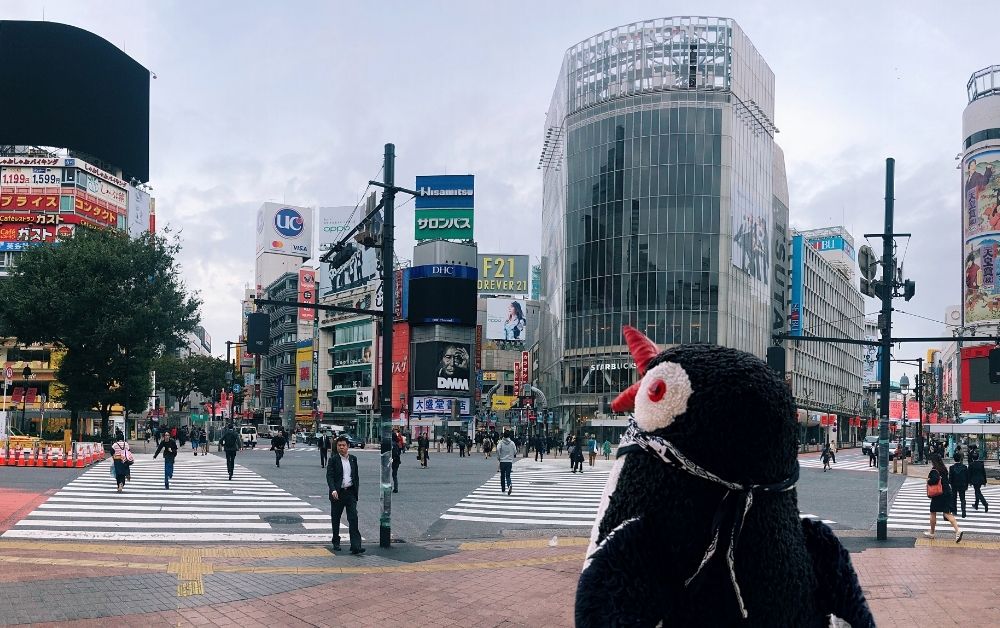
Few images of Tokyo are as instantly recognizable as Shibuya Crossing, where crowds stream across the intersection from multiple directions whenever the lights turn red. At its busiest, thousands of people can cross during a single light cycle, creating the wonderfully chaotic scene that has become synonymous with Tokyo. The name Shibuya itself is much older than the famous crossing and is closely connected to the area’s railway history and the Shibuya Station district. Today, the crossing is more than a transport junction. Surrounded by giant screens, department stores, cafés, and some of Tokyo’s most recognizable buildings, it has become one of the places where the city’s scale and energy are impossible to miss.
#6: Hachiko Became a Symbol of Loyalty
Just outside Shibuya Station stands one of Tokyo’s most beloved meeting points: the Hachiko Statue, dedicated to a Japanese Akita dog whose story became famous worldwide. Hachiko’s owner, Professor Hidesaburō Ueno, died suddenly in 1925, but Hachiko continued returning to Shibuya Station, waiting for him for almost nine years until his own death in 1935. His remarkable loyalty captured the public’s imagination, and Hachiko became a symbol of faithfulness and devotion in Japan. Today, the bronze statue remains one of Shibuya’s best-known landmarks and one of Tokyo’s most popular meeting spots. At the same time, Hachiko’s story continues to give this busy corner of the city a surprisingly emotional connection to the past.
#7: Tokyo Has Vending Machines Everywhere
One of the easiest things to notice while exploring Tokyo is just how many vending machines are scattered around the city. They appear outside train stations, beside quiet residential streets, near temples and in tiny corners where you might not expect to find a shop at all. Most famously, they sell drinks, often offering both hot and cold options from the same machine, depending on the season. But Tokyo’s vending machines can also sell snacks, ice cream, umbrellas, cigarettes, and a surprising variety of other everyday items. They are a small but fascinating part of Tokyo’s culture, combining convenience, technology, and Japan’s love of efficiency in one very ordinary-looking machine.


#8: Tokyo Has More Michelin-Starred Restaurants Than Any Other City
Tokyo takes food seriously. The city currently has 160 Michelin-starred restaurants, more than anywhere else in the world, according to the MICHELIN Guide Tokyo 2026. The latest selection includes 12 three-star restaurants, 26 two-star restaurants, and 122 one-star restaurants. What makes the number even more fascinating is the incredible variety behind it, from sushi and kaiseki to French, Italian, and innovative modern cuisine. With such a vast and competitive dining scene, Tokyo has earned its reputation as one of the world’s great food capitals.
#9: Tokyo’s Salarymen Sometimes Fall Asleep on the Streets
After a long evening of work, food, and drinks, it is not unusual to see salarymen and other office workers asleep on benches, outside stations, or even on the pavement in Tokyo. The sight is especially common in the city’s busy nightlife districts, where workers head out for drinks with colleagues after work. Areas such as Shinbashi are packed with izakaya and bars that fill with office workers in the evenings, and reports have documented salarymen among people who become visibly intoxicated in the streets.
The phenomenon is partly connected to Japan’s long-standing culture of after-work socializing, where drinking with colleagues or business contacts can be part of professional life. Tokyo’s late-night drinking culture also intersects with the city’s extensive railway system: missing the last train can mean waiting until morning for services to resume.
#10: Tokyo Has Public Toilets That Became Architectural Attractions
In Tokyo, even a public toilet can become a piece of architecture worth seeking out. THE TOKYO TOILET project transformed 17 public toilets in Shibuya with designs by 16 internationally recognized creators, including architects Tadao Ando, Kengo Kuma, Toyo Ito and Shigeru Ban. The aim was not simply to make the facilities look beautiful, but to create public spaces that are clean, safe and comfortable for everyone, regardless of age, gender or disability. Some look like little wooden villages, others resemble mushrooms or modern sculptures, turning something as ordinary as a public toilet into an unexpected part of Tokyo’s design scene. The project became so distinctive that it even inspired Wim Wenders’ film Perfect Days, which follows a Tokyo toilet cleaner and features several of the redesigned facilities.
#11: Tokyo Is Surprisingly Green for Such a Huge Metropolis
Tokyo may first appear to be a city of concrete, glass and neon, but spend a little time exploring and another side begins to emerge. Parks, gardens, tree-lined streets and pockets of greenery are woven throughout the metropolis, from the vast grounds of the Imperial Palace to places such as Shinjuku Gyoen, Yoyogi Park and traditional Japanese gardens. Tokyo’s 2023 survey found that 52.1% of the Tokyo mainland was covered by what the city defines as “greenery,” including vegetation, parks, and water. However, the figure varies considerably between the densely urbanized 23 wards and the greener Tama area.
What makes Tokyo’s greenery particularly surprising is where you find it. A peaceful shrine garden or leafy park can appear just minutes from a packed railway station or a wall of skyscrapers. The city currently has thousands of parks across its metropolitan area, showing that Tokyo’s relationship with nature is much more complicated than its futuristic image might suggest.
Tours and tickets from KlookShows Klook’s own box, which can set Klook cookies.Tours and tickets in Tokyo on KlookKlook’s box can’t load on this device (an ad blocker often stops it). This opens Klook’s own page.Open Klook
#12: Tokyo’s Quiet Shrines Hide Among the Skyscrapers
This is one of the things we loved most about Tokyo. One moment, we were surrounded by towering skyscrapers, busy roads, and streams of people; a few minutes later, we could step through a torii gate into a quiet shrine surrounded by trees. Tokyo is full of these unexpected contrasts, with small Shinto shrines tucked between office buildings, shops, and residential streets. Places such as Hie Shrine and Meiji Jingu offer a completely different atmosphere from the busy city around them. This ability to move from the noise and energy of modern Tokyo into a peaceful corner of tradition almost instantly is what makes exploring the city so fascinating.
#13: You Can See Mount Fuji From Tokyo on a Clear Day
Tokyo may be a huge metropolis, but on a clear day, Mount Fuji can appear on the horizon, rising dramatically beyond the city’s buildings. Japan’s highest mountain stands around 100 kilometers southwest of central Tokyo, and you can see its snow-capped summit from several places across the city, including observation decks, parks, and even some train routes. Winter often brings the clearest conditions, when colder, drier air improves visibility. Seeing Mount Fuji towering behind Tokyo’s modern skyline is one of those moments that makes the contrast between Japan’s ancient landscape and its futuristic capital particularly striking.
#14: Tokyo Tower Was Inspired by the Eiffel Tower
Standing above the Tokyo skyline in its familiar white and orange-red frame, Tokyo Tower was partly inspired by one of Europe’s most recognizable landmarks: the Eiffel Tower in Paris. Completed in 1958, Tokyo Tower was designed by architect and engineer Tachū Naitō, who drew inspiration from the Eiffel Tower but adapted the design to Japan’s need for greater earthquake resistance. At 333 meters, Tokyo Tower was taller than the Eiffel Tower when it opened and became a powerful symbol of Japan’s post-war recovery and rapid modernization. Today, it remains one of Tokyo’s most recognizable landmarks, even after the much taller Tokyo Skytree joined the skyline.
#15: Tokyo Has Its Own Statue of Liberty
Yes, Tokyo has a Statue of Liberty, although it is much smaller than the famous original in New York. Standing on Odaiba, the replica was created in 1998 as a temporary symbol of friendship between Japan and France, inspired by the Statue of Liberty on Paris’s Île aux Cygnes. The temporary statue became so popular that a permanent replica was later installed in Odaiba in 2000. Today, the statue stands with Tokyo’s skyline and Rainbow Bridge in the background, creating one of the city’s more unexpected views. It is one of those Tokyo moments that makes you look twice and wonder whether you have somehow crossed continents without leaving Japan.


#16: Most Streets in Tokyo Do Not Have Names
One thing that can make Tokyo feel wonderfully confusing to first-time visitors is that most streets don’t have names. Instead, addresses are generally organized by area, block, and building number, with the numbers often reflecting the order in which buildings were registered rather than their position along a street. This means that two buildings with consecutive numbers may not actually sit next to each other. Add Tokyo’s maze of narrow lanes, tiny alleys, and buildings tucked away from the main road, and finding an address can become an adventure in itself. That’s why maps and landmarks are often more useful than street names when navigating Tokyo.
#17: Tokyo’s Train Network Runs on Precision You Can’t Ignore
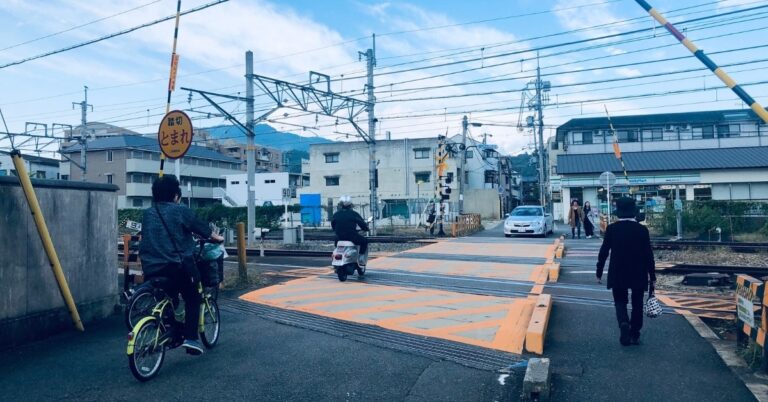
Tokyo’s train network is one of the city’s most impressive feats, moving millions of passengers every day through an enormous web of railway and subway lines. What makes it particularly remarkable is its precision. Japanese railway operators are famous for their punctuality, and even a small delay can be considered significant enough to warrant an announcement or apology. During our time in Tokyo, the trains became more than just a way to get around. They were the city’s pulse, carrying an endless flow of people from one neighborhood to another with a level of organization that can feel almost surreal at first.
#18: Many Tokyo Museums Close on Mondays
Planning a museum day in Tokyo? Check the calendar first. Many of the city’s major museums traditionally close on Mondays, including the Tokyo National Museum, the National Museum of Western Art and the National Museum of Modern Art, Tokyo. Some museums are exceptions, and when a Monday falls on a public holiday, they adjust their schedule and close the following day instead. This small detail can save you from arriving at one of Tokyo’s museums only to find the doors closed.
#19: Tokyo Has Neighborhoods Dedicated to Specific Interests
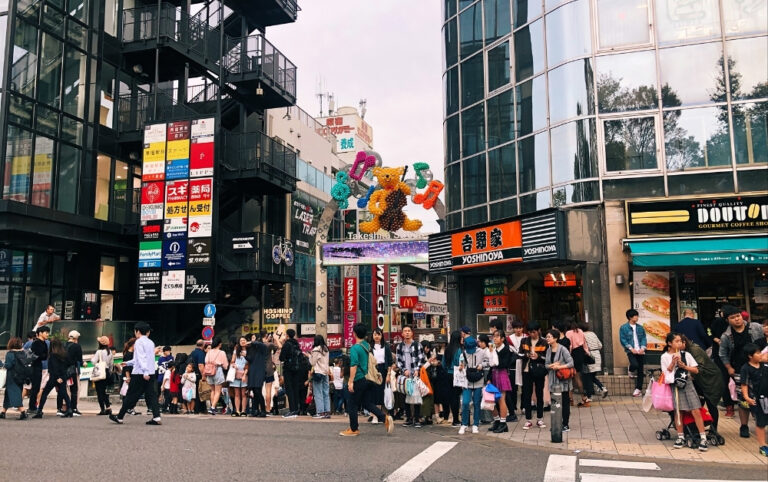
One of the most fascinating things about Tokyo is how entire neighborhoods can develop their own identities around a particular interest, culture, or way of life. Akihabara is the obvious example, with its electronics shops, anime, manga, gaming, and pop-culture stores, but it is far from the only one. Harajuku became synonymous with youth fashion and street style, Kappabashi is known for kitchenware and restaurant supplies, Jimbocho is famous for its bookshops, and Ningyocho is closely connected to traditional crafts and old Tokyo culture. Instead of having one shopping street for everything, Tokyo often feels like a collection of specialized worlds, where you can choose a neighborhood based almost entirely on what you are looking for.
Practical Facts for Travelers Coming to Tokyo
- Cards: Credit and debit cards are widely accepted, but carry some cash for smaller shops and restaurants.
- Transport: Tokyo has an extensive train and subway network. A Suica or PASMO IC card makes getting around much easier.
- Google Maps: Works well in Tokyo and is useful for public transport directions and train platforms.
- Taxis: Taxis are reliable but can be more expensive than trains.
- Tipping: Tipping is not customary in Japan.
- Convenience Stores: Konbini are everywhere and are useful for snacks, drinks, ATMs, and quick meals.
- Wi-Fi: Pocket Wi-Fi or an eSIM can help with navigation and translation.
- Shoes: Be prepared to remove your shoes when entering certain temples, traditional restaurants, and other establishments.
- Quiet on Trains: Keep conversations quiet and avoid phone calls on public transport.
- Rush Hour: Avoid traveling during the busiest morning and evening commuter periods if you can.
- Rubbish Bins: Public rubbish bins can be surprisingly difficult to find, so be prepared to carry your rubbish with you.
- Earthquakes: Japan is earthquake-prone. Familiarise yourself with basic emergency procedures when you arrive.
- Wear Comfortable Shoes: You will likely waddle much farther than you expect, even with Tokyo’s excellent public transport.
Things to Avoid in Tokyo
- Speaking loudly on trains: Keep conversations quiet and avoid phone calls, especially on crowded trains.
- Eating while walking: It is generally considered more polite to eat at the shop, restaurant, or designated area rather than while wandering through the streets.
- Blocking the pavement: Tokyo can be crowded, so avoid stopping in the middle of busy walkways or at the top of escalators.
- Ignoring queues: Japanese people generally queue patiently, whether waiting for a train, restaurant, or shop.
- Standing on the wrong side of the escalator: Follow the local flow and leave space for people who need to pass.
- Taking photos where it is prohibited: Respect signs, particularly at temples, shrines, shops and restaurants.
- Touching things in shops without permission: This is especially important in small traditional stores and markets.
- Forgetting to remove your shoes: Some restaurants, temples, accommodations, and traditional establishments require you to remove your shoes.
- Tipping: Don’t feel obliged to tip. It is not customary in Japan and can sometimes be confusing.
- Littering: Public bins can be surprisingly difficult to find, so keep your rubbish with you until you find somewhere appropriate to dispose of it.
- Smoking outside designated areas: Smoking on the street is restricted in many parts of Tokyo, so look for designated smoking areas.
- Being noisy late at night: Even busy neighborhoods have residential areas, so keep your voice down when leaving bars or restaurants.
- Standing on the wrong side of the train doors: Follow the markings and the flow of passengers at busy stations.
Best Time to Visit Tokyo
Tokyo is a year-round destination, but each season brings a very different experience.
- Spring (March to May) is one of the most popular times to visit, especially during cherry blossom season, when parks and gardens fill with pink blooms. The weather is generally mild, although popular spots can be extremely busy.
- Summer (June to August) is hot, humid, and rainy, with the rainy season usually arriving in June and summer heat building through July and August. It can be a challenging time for long days of sightseeing, but summer festivals and fireworks bring a different energy to the city.
- Autumn (September to November) brings cooler temperatures and colorful foliage, making it a lovely season to explore Tokyo on foot. We visited in October, and the weather was comfortable for sightseeing overall. We did, however, have one particularly heavy rainy day, so a small umbrella or waterproof jacket is definitely worth packing.
- Winter (December to February) is generally cold but relatively dry, with plenty of crisp, clear days. It is also a good season for city views, and you often have a better chance of seeing Mount Fuji from Tokyo when the air is clear.
For us, October was a great time to experience Tokyo, especially because the temperatures were comfortable enough for all the waddling between neighborhoods, temples, shops, and train stations.
How Much Time Do You Need in Tokyo
How long do you need in Tokyo? As long as you can manage. This isn’t a city where you arrive, tick off five famous sights, and confidently announce that you have “done Tokyo.” Tokyo is enormous, and every neighborhood seems to have another street to waddle down, another tiny restaurant to investigate, another shrine hiding between skyscrapers and another train line you somehow need to understand. You could spend three days seeing the major highlights, but five to seven days gives you much more breathing room to explore different neighborhoods without feeling like you are permanently racing the next train. And if you have even longer, Tokyo will happily accept the extra days. We could probably spend a month here and still have a suspiciously long list of places we had not waddled to yet.
Hotel search from Booking.comShows Booking.com’s own box, which can set Booking.com cookies.
Where to Stay in Tokyo
Choosing where to stay in Tokyo can feel almost as complicated as choosing what to see. The city is enormous, and staying in one neighborhood can completely change your trip’s character. Rather than looking for one “best” area, think about what kind of Tokyo experience you want and how close you want to be to the train network. Here are some of the most popular neighborhoods to consider:
- Shinjuku. A lively, incredibly convenient base, surrounded by skyscrapers, department stores, restaurants, bars, and nightlife. It is also one of Tokyo’s biggest transport hubs, making it easy to explore the rest of the city.
- Shibuya. Perfect if you want to stay surrounded by Tokyo’s youthful energy. Expect fashion, shopping, restaurants, cafés, neon lights and, of course, the famous Shibuya Crossing.
- Asakusa. A great choice for a more traditional atmosphere. You will be close to Senso-ji Temple, old streets and traditional shops, while still having good transport connections.
- Ginza. Elegant, central and more upscale, with luxury boutiques, department stores, excellent restaurants and easy access to Tokyo Station.
- Tokyo Station / Marunouchi. Particularly convenient for transport and sightseeing, with excellent connections to other parts of Tokyo and beyond. The area around Marunouchi is polished and business-oriented.
- Ueno. A practical, generally more relaxed base, close to museums, parks, Ueno Zoo, and the lively Ameyoko shopping area.
- Akihabara: Ideal for anime, manga, gaming and electronics enthusiasts. The area is colorful, energetic, and very different from traditional Tokyo.
- Harajuku. A good option if you want to be close to youth fashion, cafés, shopping and Meiji Jingu, while also having easy access to Shibuya and Shinjuku.
- Roppongi. Known for nightlife, international restaurants, contemporary art museums and impressive city views. It has a more international feel than many other Tokyo neighborhoods.
- Odaiba. A futuristic waterfront area with modern architecture, shopping, entertainment, and views across Tokyo Bay. It’s farther from central Tokyo, so transport connections are worth considering.
Buy Us a Ko-fi

Before you arrive in Tokyo, a little preparation can make exploring this enormous city much easier. From navigating giant train stations to knowing when to book restaurants and where to find cash, these small details can save time and make your trip smoother. Here are a few more things worth knowing before you waddle into Tokyo.
Travel Bold. Eat Well. Waddle Wild.

This post contains affiliate links. If you click and buy, I might earn a tiny commission, enough to help a penguin keep up its globe-trotting lifestyle. No extra cost to you, just more fish for me. Thank you for supporting the adventure!