Interesting Facts About Oslo, Norway: History, Culture & More
Oslo is one of those cities where you can wander around, take in the sights, and still leave with a lot of questions about the stories behind them. In this post, we’re looking beyond the usual landmarks and collecting some of the interesting and lesser-known facts about Oslo, from its history and unusual symbols to the stories behind some of the places you see around the city.
Basic Facts About Oslo
- Population: Around 729,000
- Area: 454 km²
- Location: Oslofjord, southeastern Norway
- Known for: Fjord, forests, museums, skiing, and design
- Nickname: The Tiger City
- Founded: Around 1050
- Time zone: Central European Time (CET)
History of Oslo in a Nutshell
- Around 1000. Oslo begins developing as a town, with archaeological evidence showing settlement before the traditional founding date.
- Around 1050. Traditionally associated with the founding of Oslo under King Harald Hardråde.
- 1299. King Håkon V becomes the first Norwegian king to live permanently in Oslo and begins building Akershus Fortress.
- 1349. The Black Death reaches Oslo, causing major population and economic decline.
- 1624. A huge fire destroys most of medieval Oslo. King Christian IV orders the city to be moved across Bjørvika, where it is rebuilt under Akershus Fortress as Christiania.
- 1814. Norway adopts its Constitution, and Christiania becomes the country’s capital.
- 1854. Norway’s first railway opens between Christiania and Eidsvoll, helping the city grow and connect with the rest of the country.
- 1877–1897. The city’s name gradually changes from Christiania to Kristiania in official use.
- 1925. The city officially gets its old name Oslo back.
- 1948. The municipality of Aker is incorporated into Oslo, significantly expanding the city.
- 1960s onward. Oslo goes through major redevelopment, transforming from an industrial city into the modern capital we see today.
Things That Sound Made Up but Are Actually True About Oslo
#1: Oslo Has a Tiger, but There Are No Wild Tigers
Oslo is nicknamed “The Tiger City”, which is why you find a giant bronze tiger outside Oslo Central Station. The nickname comes from a 19th-century poem by Norwegian poet Bjørnstjerne Bjørnson, in which a tiger represents the dangerous city and a horse represents the safer countryside. The 4.5-meter bronze tiger was installed in 2000 for Oslo’s 1,000th anniversary.


#2: Oslo Is Around 1,000 Years Old
Oslo dates back roughly 1,000 years, but the city has not always stood where it does today. After a major fire in 1624, King Christian IV ordered the city to be rebuilt on the other side of Bjørvika, near Akershus Fortress. The new city became known as Christiania.
#3: Oslo Has Had Several Names
The city has been known as Oslo, Christiania, and Kristiania over the centuries. The name Kristiania was used officially until the city returned to the name Oslo on January 1, 1925.
#4: Oslo Sits Between a Fjord and a Forest
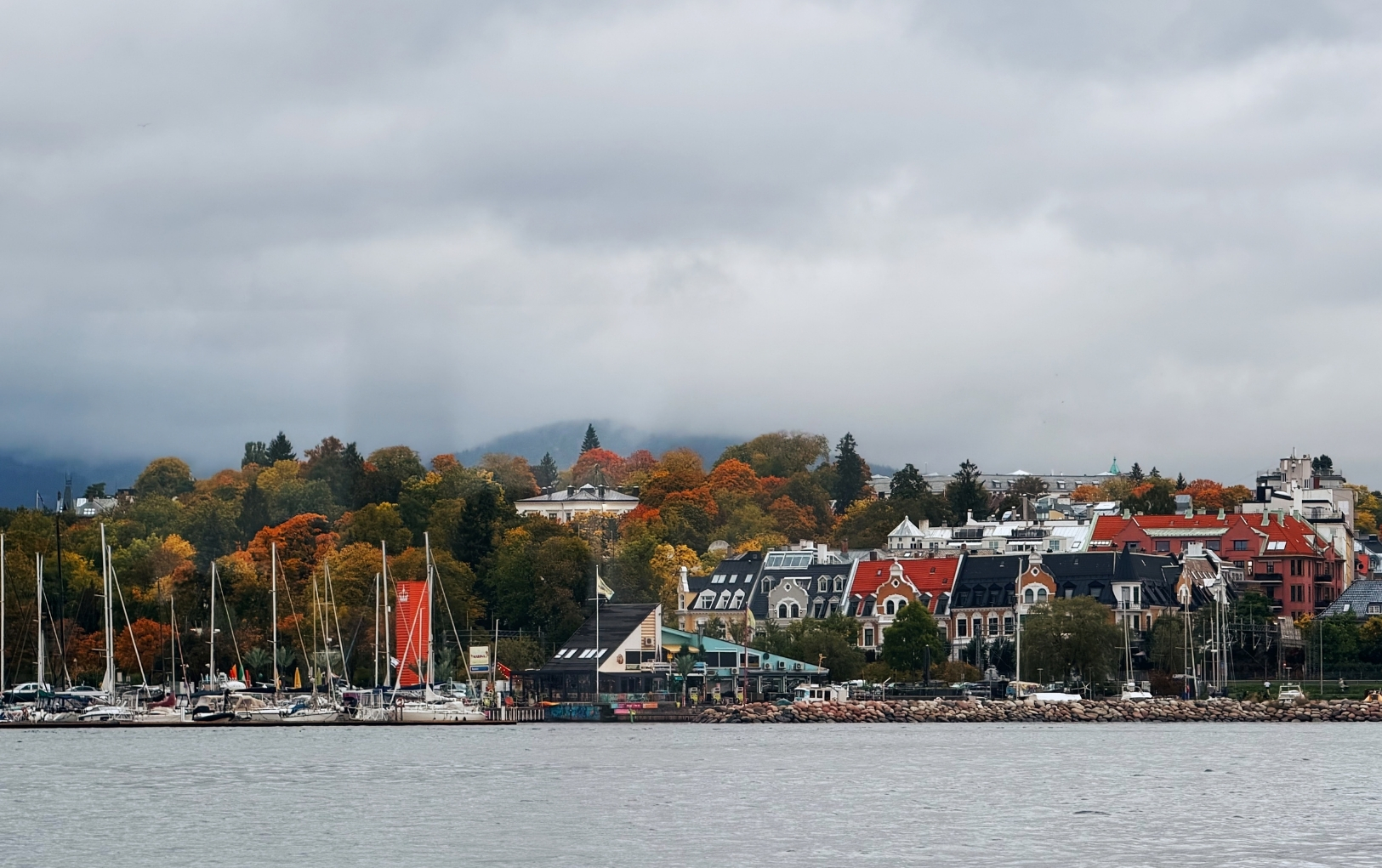
Oslo is surrounded by nature. The city sits beside the Oslofjord, while the huge forested area known as Marka stretches around the city to the north, east, and west. You can go from the city center to forests, lakes, and hiking trails without traveling far.
#5: You Can Walk on the Roof of the Oslo Opera House
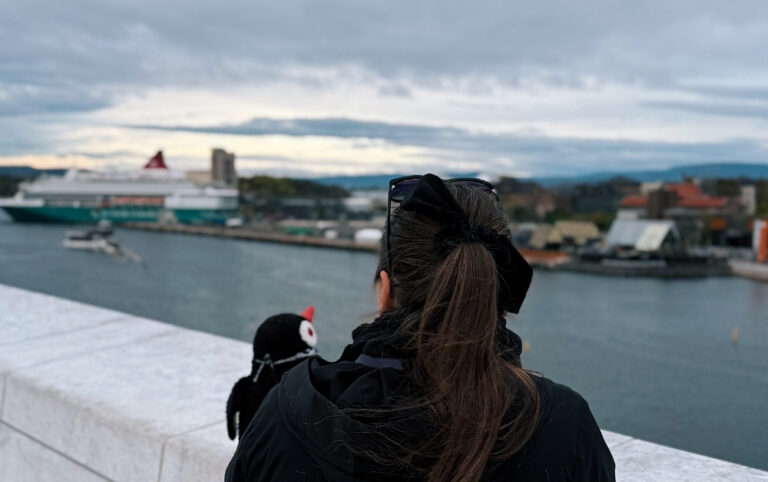
The white roof of the Oslo Opera House is also a public space. Designed by Snøhetta, it slopes down towards the waterfront so people can walk across it and enjoy views over the fjord.


#6: The Nobel Peace Prize Is Awarded in Oslo
While the other Nobel Prizes are awarded in Stockholm, the Nobel Peace Prize is awarded in Oslo. The ceremony takes place at Oslo City Hall every December 10, the anniversary of Alfred Nobel’s death.
#7: Vigeland Park Has More Than 200 Sculptures
Vigeland Park contains more than 200 sculptures by Norwegian artist Gustav Vigeland. It is one of the world’s largest sculpture installations created by a single artist, and the works represent more than four decades of his career.
#8: Oslo Is a City Surrounded by Nature
Oslo isn’t just a capital filled with museums and buildings. The city blends urban life with forests, lakes, islands, and the fjord, making it easy to switch from sightseeing to outdoor activities without leaving the city.
#9: The Oslo Metro Can Take You Into the Forest
The T-Bane doesn’t just connect Oslo’s neighborhoods. Some lines continue beyond the city center to forests, lakes, and ski areas, making it possible to get from the city to nature by public transportation.


#10: You Can Take a Sauna on the Oslofjord
Floating saunas have become part of Oslo’s waterfront culture. At places like KOK, you can sit in a wood-fired sauna on the fjord and then jump straight into the water. Some saunas also offer fjord trips.
#11: Holmenkollen Has Hosted Ski Jumping Since 1892
The Holmenkollen ski jump has been part of Oslo’s sporting life since the first competition there in 1892. The hill has been rebuilt 18 times over the years, and during the 1952 Winter Olympics, around 120,000 spectators packed in to watch the ski jumping competition. That attendance record still stands.
#12: Oslo Hosted the Winter Olympics in 1952
Oslo hosted the 1952 Winter Olympics, with 694 athletes from 30 countries. The Games featured 22 events across four sports, and Holmenkollen was one of the main venues.
#13: Oslo Has the World’s Oldest Specialized Ski Museum
The Ski Museum at Holmenkollen was established in 1923 and is considered the world’s oldest specialized ski museum. Its collection covers around 5,000 years of skiing history, including equipment from Norway’s famous polar expeditions.
#14: The Spray Can Was Invented by Someone From Oslo
The aerosol spray can has an Oslo connection. Norwegian inventor Erik Rotheim, who was born in Kristiania, developed the spray-can principle and applied for a patent in 1926. The patent was granted in 1929.
#15: The Scream Has an Oslo View Behind It
Edvard Munch was not born in Oslo, but the city played a huge role in his life and work. He grew up in Oslo, and he allegedly got the inspiration for The Scream while walking in the hills of Ekeberg. The view of Oslo and the fjord in the background is still recognizable today, although the exact spot Munch stood cannot be confirmed with certainty.


#16: Fridtjof Nansen Was Born Near Oslo
One of Norway’s most famous explorers, Fridtjof Nansen, was born in 1861 at Store Frøen near Oslo. He became a polar explorer, scientist, and humanitarian and received the Nobel Peace Prize in 1922. He was also an accomplished skier, which feels particularly fitting for a Norwegian born near Oslo.
#17: Sonja Henie Was Born in Oslo and Became a Hollywood Star
Sonja Henie was born in Kristiania, today’s Oslo, in 1912. She became a three-time Olympic figure-skating champion, won ten consecutive World Championships, and later became a Hollywood film star.
#18: Oslo Has a Very Famous Angry Boy
One of the most recognizable sculptures in Vigeland Park is The Angry Boy, or Sinnataggen. The small bronze boy has become so popular that visitors constantly touch his hand, leaving it noticeably shinier than the rest of the sculpture. The sculpture was installed on the bridge in 1940.
#19: Oslo Sends London a Christmas Tree Every Year
Since 1947, Oslo has given London a Norwegian Christmas tree for Trafalgar Square. It is a thank-you gift for Britain’s support of Norway during World War II and has become a symbol of friendship between the two cities. The tree is selected from the forests around Oslo.
#20: Oslo City Hall Has 49 Giant Bells
Look up at Oslo City Hall, and you might notice the tower. Inside is a carillon with 49 bells, and the largest weighs a huge 4,000 kilograms. The bells play every hour from 7 a.m. until midnight, with everything from classical music to modern pop songs.
#21: Thorbjørn Egner, the Man Behind Karius and Baktus, Was From Oslo
Norwegian children’s author and illustrator Thorbjørn Egner was born in Oslo in 1912 and grew up in the Kampen neighborhood. He created some of Norway’s best-known children’s stories, including Karius and Baktus, The Animals of Hakkebakkeskogen, and People and Robbers of Cardamom Town.
#22: The Holmenkollen Ski Jump Has Been Rebuilt 18 Times
The ski jump you see today is not the original Holmenkollen hill. Since the first competition in 1892, the facility has been modified or rebuilt 18 times, with major changes made for events including the 1952 Olympics and the 2011 World Ski Championships.
#23: Oslo Has Some Very Unusual Clocks
You may notice quite a few interesting clocks while waddling around Oslo. One of the most famous is the astronomical clock on Karl Johans gate, decorated with the zodiac signs and installed in 2010 as a piece of public art. Oslo City Hall also has a huge astronomical clock showing the time, moon, sun, and zodiac, while its other tower contains a 49-bell carillon that plays music every hour. And there is another fun connection: Henrik Ibsen used to check the clock in the window of the University building on Karl Johan to make sure he was on schedule during his daily walks through the city.


#24: Oslo Has a Giant Red Santa in the Middle of a Roundabout
Oslo has a six-meter-tall red Santa Claus sculpture standing in the middle of a roundabout. Created by American artist Paul McCarthy, the bright red sculpture is definitely not the usual Christmas decoration. It is part of Oslo’s collection of playful outdoor art, so don’t be surprised when Christmas appears in the middle of traffic.
#25: You Can Visit a Toilet That Plays World War II Speeches
Yes, a public toilet in central Oslo is also an art installation. Liberté, located near the Norwegian Parliament, consists of three French street toilets painted in the colors of the French flag. While using them, you can listen to recordings of speeches by Franklin D. Roosevelt, Charles de Gaulle, and King Haakon VII. Probably not the historical museum experience you were expecting.
#26: Oslo Has a Three-Meter-Tall Kate Moss Doing Yoga
One of Oslo’s more unexpected sculptures is Sphinx, a three-meter-tall sculpture of supermodel Kate Moss holding an impressive yoga pose. It stands in Folketeaterpassasjen, and the sculpture has even been the subject of efforts to have it removed from the historic building complex.
#27: There Is a Fairytale Bridge in the Middle of Oslo
Cross Anker Bridge and you will find four bronze sculptures inspired by Norwegian fairy tales. They decorated the bridge with them in 1937, earning it the nickname Fairy Tale Bridge. So yes, you can literally cross a bridge decorated with trolls, mythical characters, and figures from Norwegian folklore while walking through the city.
#28: Oslo’s River Once Powered Much of the City’s Industry
The Akerselva River runs for about eight kilometers through Oslo, from Maridalsvannet to the Oslofjord. Along the river, more than twenty waterfalls once powered Oslo’s industrial development. Today, you can walk along the same river past parks, old factories, street art, and cafés.
#29: Oslo Has a Museum With 53,000 Miniature Bottles
The Mini Bottle Gallery in Oslo has a collection of around 53,000 miniature bottles. The bottles are displayed in some rather unusual ways, including inside chandeliers, tables, and other installations, making this one of the city’s more unexpected museum collections.
#30: A Museum Is Hidden Inside a Huge Fresco-Covered Room
The Emanuel Vigeland Museum is hidden inside a dark, vaulted building filled with enormous, gloomy frescoes. Artist Emanuel Vigeland designed the space as both a museum and a tomb, and its unusual atmosphere makes it one of Oslo’s more mysterious cultural spaces.
#31: Oslo Has More Than 300 Lakes
Oslo is much more than a capital surrounded by forests and fjords. The city is dotted with more than 300 lakes, from tiny forest ponds to larger bodies of water where locals swim, paddle, fish, or escape the city for a while. Many are tucked into Nordmarka, Oslo’s vast forested area, making it surprisingly easy to swap city streets for a lakeside trail within minutes.
Best Time to Visit Oslo
There is no single best time to visit Oslo. Each season gives the city a completely different feel, so it really depends on what you want to do.
- Spring (March–May): The city starts waking up after winter, with longer days and fewer visitors. April and May can still be chilly, but parks and outdoor spaces become much more enjoyable.
- Summer (June–August): The warmest and busiest time of year. You get long daylight hours, lively waterfront areas, open-air activities, and the best conditions for exploring the fjord and surrounding nature.
- Autumn (September–November): Oslo becomes quieter, with colorful foliage and crisp weather. September and early October are especially nice for walking around the city.
- Winter (December–February): Cold, dark, and often snowy, but perfect if you want the classic Norwegian winter atmosphere, Christmas markets, skiing, and snowy landscapes.
Late spring to early autumn, especially May, June, September, and early October, when you can enjoy Oslo outdoors without dealing with the coldest winter weather or the busiest summer crowds.
Buy Us a Ko-fi

We hope these interesting and lesser-known facts gave you a slightly different perspective on Oslo. They might even help you see the city a little differently when you visit, because once you know the stories behind the places you see, they become more than just another stop on your itinerary. So add a few of these to your Oslo plans, keep your eyes open as you explore, and see how many you can spot for yourself.
Travel Bold. Eat Well. Waddle Wild.

This post contains affiliate links. If you click and buy, I might earn a tiny commission, enough to help a penguin keep up its globe-trotting lifestyle. No extra cost to you, just more fish for me. Thank you for supporting the adventure!