Busan 2 Day Itinerary: Ultimate Travel Guide to Things to Do, See, and Eat
We came to Busan basically for a quick weekend escape from Seoul and stayed for two nights. While it is a great city for a short trip, it quickly became clear that two days are not enough to explore everything Busan has to offer properly. There is simply too much going on, from coastal views and beaches to food markets and cultural spots, to experience it all in such a short time. That said, even within this brief stay, we still managed to see quite a lot and get a solid feel for the city. It definitely left us wanting more, and we will be back for sure. Read on to find out what we managed to fit into our Busan 2-day itinerary.
Tours and tickets from GetYourGuideShows GetYourGuide’s own box, which can set GetYourGuide cookies.
Overview of Our Busan 2 Day Itinerary
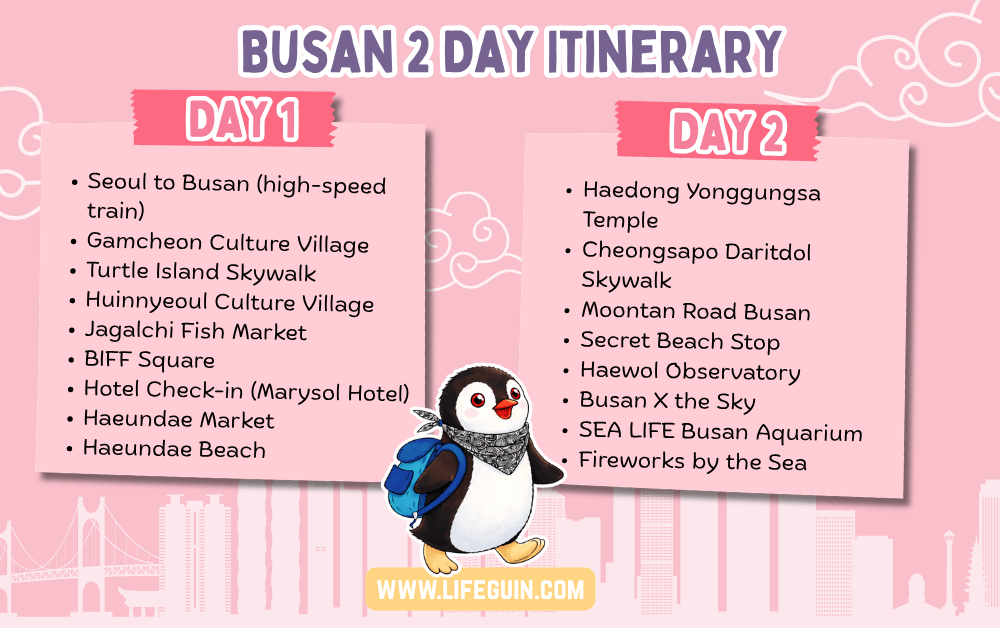
Okay, let’s take a closer look at how these two days in Busan can realistically look. It’s important to understand thatBusan is quite a widespread city, and getting from one area to another often takes more time than you might expect. Even places that look close on the map can require longer subway rides, bus connections, or waddling between and because of this, planning your route logically really matters if you want to make the most of your time. That said, even with the travel time between spots, it is absolutely possible to fit in a lot in just two days and still get a great feel for the city’s beaches, culture, and food scene.
Day 1 in Busan: Beaches, Culture, and Coastal Views
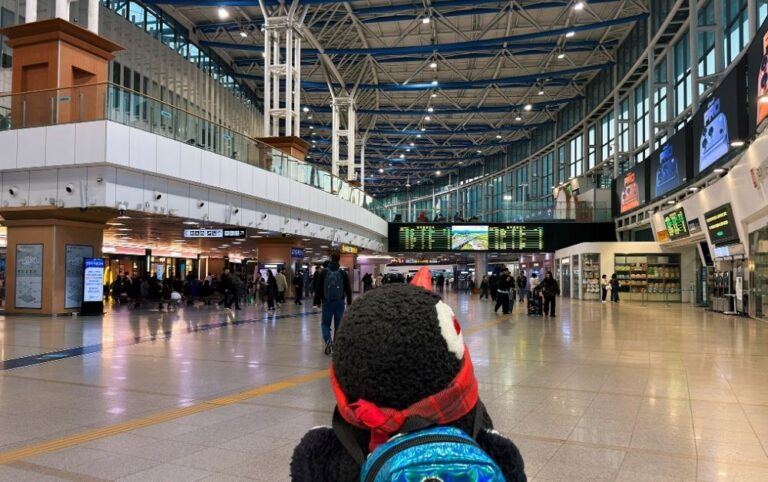
Day one in Busan basically started with our arrival from Seoul. We caught an early high-speed train, so the journey from Seoul to Busan was quick and smooth, taking about 2.5 hours. As soon as we arrived, we knew we wanted to start exploring right away instead of wasting time. So, without much delay, we hopped on a local green bus and headed straight to our first stop to begin discovering the city right away.
#1: Gamcheon Culture Village
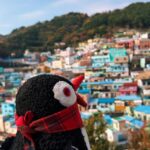
Our first stop was the Gamcheon Culture Village, a hillside neighborhood known for its brightly painted houses, winding alleys, and creative art installations that give it a unique, almost maze-like atmosphere. For a more in-depth overview, check out our blog post: Gamcheon Village Busan Travel Guide: Everything You Need to Know Before Visiting.


#2: Turtle Island Skywalk
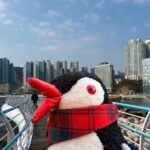
From Gamcheon Culture Village, we decided to be more efficient and took an Uber down to Turtle Island Skywalk,where we wanted to experience one of Busan’s famous skywalks. It was actually one of three skywalks we visited during our time in the city, and it was an incredible experience walking above the ocean with sweeping views, including striking contrasts between the sea and the nearby high-rise buildings. For a deeper look at all the skywalks we explored, check out our blog post: Busan Skywalks: Best Glass Walkways with Ocean Views.


#3: Huinnyeoul Culture Village
Next, we headed to the Huinnyeoul Culture Village, another scenic cultural village located on a small coastal island. Our original plan was to waddle there via the Namhang Bridge, but we quickly realized it would take too long, so we opted for an Uber again to stay efficient and make the most of our day. Unfortunately, when we arrived, the main cliffside walking path with the colorful houses was closed due to construction, so we could only explore the upper area. Even so, the views over the coastline were still absolutely beautiful and made the stop worth it.

#4: Jagalchi Fish Market
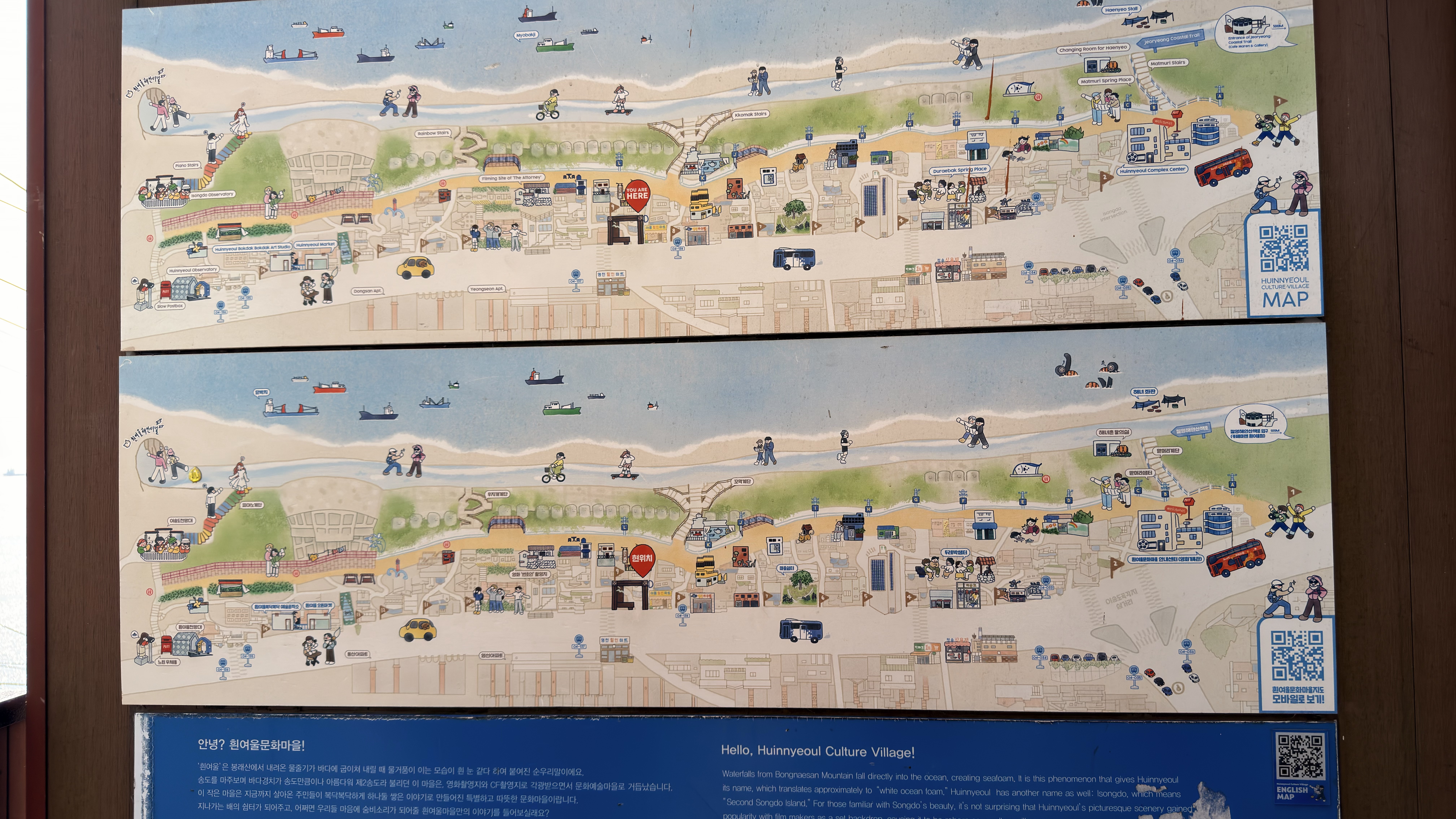
From Huinnyeoul Culture Village, we took a bus back closer to the city center and made our way to the Jagalchi Fish Market, one of the most famous seafood markets in Korea. You could smell the market before you even saw it, with rows of stalls offering an incredible variety of fresh seafood right by the waterfront. It’s a lively, sensory overload kind of place where you can really see local life in action. If you want to learn more about it, check out our blog post: Waddling Through Jagalchi Market: Busan’s Famous Seafood Hub.


#5: BIFF Square
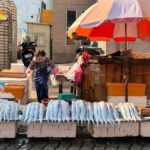
From the Jagalchi Fish Market, we walked over to the famous BIFF Square, an area connected to the Busan International Film Festival and best known for its endless street food stalls. This is where we had our first hotteok, and honestly, we immediately regretted not trying it sooner in Korea because it was that good. Busan even has its own version of hotteok, which quickly became one of our favorite desserts in the country. We also tried a few other snacks, so it ended up being our lunch stop while exploring the area. If you want a deeper look at whether it’s worth visiting, check out our blog post: BIFF Square Busan: Tourist Trap or Must-Visit Spot?
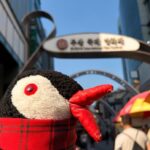


After BIFF Square, we first went back to the train station to pick up our backpacks from the lockers, since we had left them there earlier in the day. From there, we hopped on the subway and headed towards the Haeundae area, home to Busan’s most famous beach. This is where we checked into our hotel, the Marysol Hotel, and finally had a chance to slow down and freshen up after a full day of exploring. If you want a more detailed look at our stay, you can also read our review here: Review of Marysol Hotel in Busan, South Korea.
#6: Haeundae Market
After checking in at the Marysol Hotel and dropping off our stuff, we headed straight back out again. Luckily, we didn’t have to go far at all because the Haeundae Traditional Market was right next to the hotel and actually visible from our window.
We basically went in for a quick look, but it turned into a full snack run. Even after already eating at BIFF Square, we couldn’t resist grabbing more street food to try while wandering through the market. We took a short waddle, then went back again for even more snacks, making it a proper, relaxed evening of eating our way through the stalls. If you want to know exactly what we recommend trying there, check out our blog post: What To Eat At Haeundae Traditional Market In Busan.



#7: Haeundae Beach
We finished our first day with an evening walk along Haeundae Beach, one of Busan’s most famous beaches. It’s well known for its long stretch of soft sand, lively atmosphere, and skyline views, making it especially popular both day and night. It’s a place where the city and the sea meet in a really memorable way, especially at sunset. If you want to explore more beaches in the area, we also have a separate blog post you can check out: Busan’s Most Beautiful Beaches You Should Not Miss.
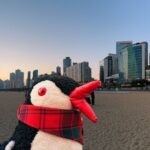


That was our first day in Busan, and of course, there is still so much more to see in the city. We deliberately didn’t try to fit everything in to avoid it feeling rushed or overwhelming, especially since this was also our arrival day. Instead, we focused on a few key highlights and enjoyed the experience at a comfortable pace.
There were still quite a few places we didn’t manage to visit, but that only gives us more reason to come back and explore Busan properly next time.
What we had planned on day 1 and didn’t manage:
- Busan Tower in Yongdusan Park offers one of the best panoramic views of the city and harbor. Entry costs around ₩12,000 for adults. Plan to spend about 30 to 60 minutes here, enough time to enjoy the observation deck, take photos, and relax in the surrounding park before continuing your exploration.
- Bosu Book Street, this charming alley is lined with vintage bookstores and secondhand bookshops, a must for book lovers and nostalgic explorers.
- ARTE MUSEUM Busan is an immersive digital art space filled with stunning light, sound, and projection displays. It’s located in the Museum of Contemporary Art Busan area and is a great spot for creative photos and a calm indoor experience. Plan to spend about 1 to 1.5 hours exploring the exhibitions. Tickets: around ₩17,000 for adults.
- Hwangnyeongsan Mountain is an ideal choice for a light, refreshing trek. Easily reachable from downtown Busan near Geumnyeonsan Station (Line 2), it’s suitable even for beginners, with well-marked trails leading up to the 427-meter summit. From the top, you’re rewarded with a breathtaking panorama of the city’s glittering skyline — one of the best night views in Busan. We wanted to finish our day here, but didn’t manage.

Day 2 in Busan: Temples, Views, and Penguins
On day two in Busan, we started a little earlier than the previous day to try to beat the crowds at some of the popular spots. Once again, it turned into a full day packed with activities from morning until night, covering a lot of ground across the city. Even though the schedule was quite full, it never felt rushed, and we still had plenty of time to enjoy each stop properly and take everything in at a relaxed pace.
#1: Haedong Yonggungsa Temple
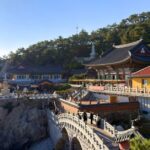
At around 8 a.m. on day two, we were already in an Uber on our way to the Haedong Yonggungsa Temple. We wanted to beat the crowds that usually start arriving closer to 9 a.m., when tour buses begin to fill the area. We highly recommend visiting early in the morning, as that’s when you get the most serene, peaceful temple experience, just like we did.
We actually missed the direct bus to the temple, and since the next one wasn’t coming very often, we decided not to wait and took an Uber, which turned out to be a very convenient choice. If you want to read more about the experience, check out our separate blog post: Experience the Magic of Haedong Yonggungsa Temple.


#2: Cheongsapo Daritdol Skywalk
From the Haedong Yonggungsa Temple, we once again took an Uber to continue our morning and made our way to the Cheongsapo Daritdol Skywalk. This glass-bottomed skywalk extends out over the sea, giving you the feeling of walking above the water while watching the waves crash below. It’s a fairly quick stop, but a really fun one, especially if you enjoy coastal views and a bit of a thrill from looking straight down into the ocean. Expect short walking paths, open sea views, and a relaxed atmosphere that’s perfect for a light sightseeing break along Busan’s coastline.


Close by to the Cheongsapo Daritdol Skywalk is one of the most photogenic stops in the area: the Cheongsapo Station, which is part of the famous Haeundae Blue Line Park. This is the iconic spot you often see on social media, where small coastal trains slowly pass along the tracks with the ocean stretching out in the background. It’s a very scenic viewpoint and a popular photo stop, offering that perfect mix of moving train, coastal cliffs, and sea views all in one frame.


#3: Moontan Road
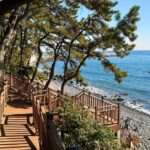
From Cheongsapo, we had two options for heading back to Haeundae: either take the popular Sky Capsule, which is very iconic but, in our opinion, quite overpriced, or choose a more scenic walking route, as we did. We went for Moontan Road, a coastal path that runs just below the Sky Capsule tracks.
It turned out to be one of the highlights of the day. The waddle is peaceful and shaded, especially on a sunny day, and you constantly see the Sky Capsules gliding above you while you follow the coastline below. Along the way, we even stumbled upon a little “hidden” beach spot, which made it feel even more special. Overall, it’s a much more relaxed and scenic alternative, and we would highly recommend it over the Sky Capsule. If you want to read more about it, check out our blog post: Moontan Road Busan: The Most Scenic Coastal Walk in Korea.


#4: Haewol Observatory
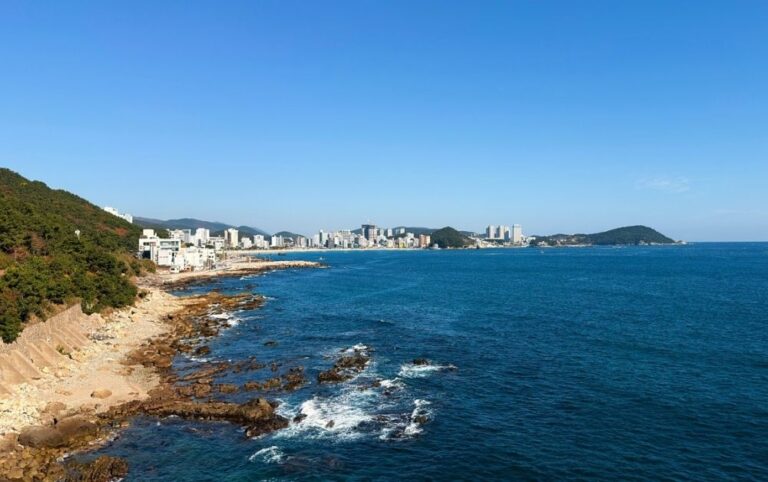
Next along the way on Moontan Road, we stopped at the Haewol Observatory. This small viewpoint is perfectly placed along the coastal walking route, making it an easy and natural stop while you follow the trail above the shoreline. From here, you get wide-open views over the sea and coastline, which makes it a great place to pause and take in the scenery for a moment. It’s not overly crowded, which adds to its charm, and it offers one of those simple but memorable panoramic views that really highlight Busan’s coastal beauty.


Extra Penguin Tip
We stopped at the Dongbaek Dessert Café and highly recommend it. Think creamy, perfectly sweet desserts paired with a good cup of coffee and front-row seats to the coastline. What made it even better was the view. From the café, you can sit and watch the Sky Capsules from Haeundae Blueline Park glide along the tracks above the shoreline, which honestly might be the best way to see them. When you are inside the capsule, you miss the full picture, but from here you can see everything at once: the capsules, the sea, the railway, and the entire coastal setting. For us, it was the perfect break after the Moontan Road walk.


#5: Busan X the Sky
Right after our coffee and dessert break, we continued to our next stop, Busan X the Sky. We had already seen it from below the day before, but this time we finally went up to the observation deck. As a rule, we always try to find at least one viewpoint in every city to see everything from above, and this one was perfect for Busan. Located on the 100th floor, it offers incredible panoramic views of the coastline, beaches, and city skyline. We really enjoyed taking in the scale of Busan from up there, especially after exploring so many places at ground level. If you want a deeper look at the experience, check out our separate blog post: Busan X The Sky Observation Deck: Everything You Need To Know.



#6: SEA LIFE Busan Aquarium
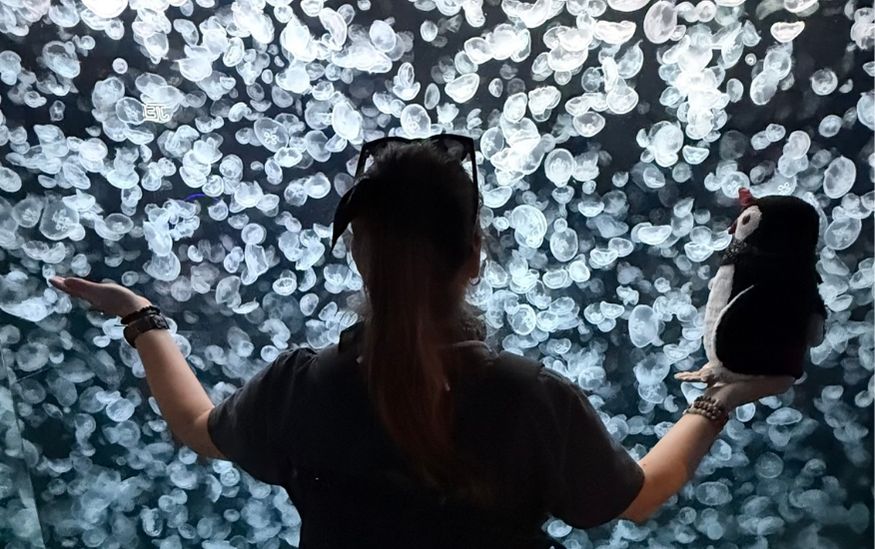
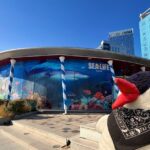
From Busan X the Sky, we headed straight to the SEA LIFE Busan Aquarium, mainly to see the penguins, but also to explore the wider underwater world. Compared to the aquarium in Seoul, we actually enjoyed this one even more, as it felt more immersive and engaging. It’s also very conveniently located right in the Haeundae area, making it an easy stop between other attractions. We definitely recommend it if you are in the area. If you want to read more, check out our separate blog post: Exploring SEA LIFE Busan: Penguins, Sharks & Ocean Magic.


#7: Fireworks by the Sea
After visiting SEA LIFE Busan Aquarium, we grabbed a late lunch, something between lunch and dinner, which is usually our go-to after a full day of exploring. But the real highlight came at the very end of day two: the fireworks by the sea. We finished our Busan trip with the fireworks festival, a spectacular coastal show that felt like the perfect closing moment to our two days in the city. The atmosphere, the reflections over the water, and the energy along the beach made it an unforgettable finale. If you want more details about the event, we’ve written a separate post about it as well: Busan Fireworks Festival in November.

As on the first day, we didn’t manage to fit everything in on day two either. Busan is very spread out, and both getting between places and actually doing each activity takes time. We focused on what we could realistically enjoy without rushing, which meant a couple of things had to stay on our “next time” list.
Here are the two main spots we didn’t get to visit this time:
- Spa Land Centum City. One of the largest jjimjilbang (Korean spa and sauna complexes) in Busan, located inside Shinsegae Centum City, is often described as one of the world’s biggest shopping centers. It’s known for its various themed sauna rooms, hot baths, and relaxation spaces.
- Shinsegae Centum City. A massive shopping complex often referred to as the world’s largest department store, featuring luxury brands, restaurants, entertainment, and even an ice rink and spa facilities inside.

Buy Me a Ko-fi
Where to Stay in Busan
If you are visiting Busan for the first time, choosing the right area to stay in can make a big difference to your experience. The city is quite spread out, so where you base yourself will affect how easy it is to explore different attractions, from beaches and markets to cultural villages and viewpoints. Below is a simple breakdown of the best areas for first-time visitors, along with what kind of stay you can expect in each, whether you prefer a beachfront vibe or a more central city location
When deciding where to stay in Busan, it usually comes down to two main options: beachfront or city.
- A beachfront stay, such as in Haeundae or Gwangalli, is perfect if you want ocean views, sunset walks, and a relaxed holiday atmosphere with plenty of cafés and beach access right on your doorstep. It does tend to be more touristy and can come with higher seasonal prices, but the coastal experience is hard to beat.
- On the other hand, a city stay in areas like Seomyeon or Nampo is better if you want to explore multiple districts more efficiently. You get a more local feel, often cheaper accommodation, and excellent transport connections, although you trade the sea views for practicality and convenience.
Best Areas for First-Time Visitors in Busan (Hotel Guide)
Haeundae Area (Best Overall for First Timers)
-
- Most popular area for first visits
- Direct access to Haeundae Beach, restaurants, and nightlife
- Easy transport links and lots of attractions nearby
- Hotel ideas: Marysol Hotel (where we stayed), Paradise Hotel Busan, Shilla Stay Haeundae
Gwangan / Gwangalli Area (Best for Views & Vibe)
-
- Famous for Gwangalli Beach and night views of Gwangan Bridge
- More relaxed than Haeundae but still lively
- Great cafés and sunset spots
- Hotel ideas: Kent Hotel Gwangalli, Hotel Aqua Palace
Seomyeon (Best for City Life & Transport Hub)
-
- Central location between the north and the south of Busan
- Best for shopping, nightlife, and metro connections
- Less touristy, more local city vibe
- Hotel ideas: Lotte Hotel Busan, Arban Hotel, Toyoko Inn Seomyeon
Nampo / Jagalchi Area (Best for Culture & Markets)
-
- Close to Jagalchi Fish Market, BIFF Square, and Gamcheon access
- Great for street food and traditional atmosphere
- More “old Busan” feeling compared to the beach areas
- Hotel ideas: Aventree Hotel Busan, GNB Hotel
Best Time to Visit Busan
The best time to visit Busan really depends on the kind of experience you are looking for, but overall, it’s a city that stays pleasantly warm for most of the year. Even outside of peak summer, the weather can be surprisingly mild. For example, we visited in November and were still walking around comfortably in shorts and a t-shirt, so it can easily feel like late summer even in the middle of autumn. This makes Busan a great year-round destination, whether you prefer beach days, sightseeing, or a more relaxed off-season atmosphere.
- Spring (April – June). Spring is one of the best times to visit Busan. The weather is mild and pleasant, perfect for waddling along the coast or exploring outdoor attractions. Cherry blossoms and spring flowers also add a beautiful touch to the city, especially around parks and temple areas.
- Summer (July – August). Summer is peak season in Busan, mainly because of its beaches. Haeundae and Gwangalli become very lively with festivals, beach events, and nightlife. However, it can get hot, humid, and very crowded, so expect a more energetic but busier experience.
- Autumn (September – November). Autumn is another ideal time to visit. The weather is comfortable, the skies are often clear, and the city becomes less crowded after summer. It’s great for sightseeing, coastal walks, and photography thanks to the softer light and seasonal colors.
- Winter (December – March). Winter is the quietest season in Busan. While it’s colder, it rarely gets extreme, making it still possible to explore comfortably. It’s a good time for a more relaxed, less touristy experience, and you’ll find lower hotel prices compared to peak seasons.
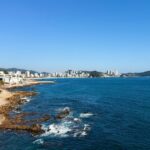
We hope this itinerary helped you get a clear idea of how to plan your own two days in Busan. As you can see, the city is quite spread out, but even in a short amount of time, we managed to experience a lot across different areas without ever feeling rushed. It’s definitely a destination where good planning makes a big difference, allowing you to enjoy both the highlights and the atmosphere at a relaxed pace.
So pack your bags and explore Busan.

This post contains affiliate links. If you click and buy, I might earn a tiny commission, enough to help a penguin keep up its globe-trotting lifestyle. No extra cost to you, just more fish for me. Thank you for supporting the adventure!