
Haedong Yonggungsa Temple: A Journey Through Korea’s Most Beautiful Seaside Sanctuary
Busan is one of those cities where everything is a little bit spread out. Beaches on one side, colorful villages on the other, temples somewhere far in between. And yes, getting around can take time. But if there is one place that is absolutely worth the journey, even if it looks far on the map, it is Haedong Yonggungsa Temple.
We almost hesitated because of the distance, but we are glad we went. The moment we started waddling down toward the sea with the sound of waves crashing against the rocks, we knew this was something special. There is just something about a temple sitting right on the coastline that instantly slows you down. It feels peaceful, grounding, and a little magical at the same time. Out of everything we saw in Busan, this one stole our hearts.
- Why You Should Visit Haedong Yonggungsa Temple
- Quick Facts About Haedong Yonggungsa Temple
- How To Get To Haedong Yonggungsa Temple
- Practical Information For Visiting Haedong Yonggungsa
- History Of Haedong Yonggungsa Temple
- Our Experience At Haedong Yonggungsa Temple In Busan
- Best Time To Visit Haedong Yonggungsa Temple
- Facilities And Amenities At Haedong Yonggungsa
- How Much Time Do You Need At Haedong Yonggungsa
- Pro Penguin Tips For Visiting Haedong Yonggungsa
- Is Haedong Yonggungsa Temple Worth Visiting
Why You Should Visit Haedong Yonggungsa Temple
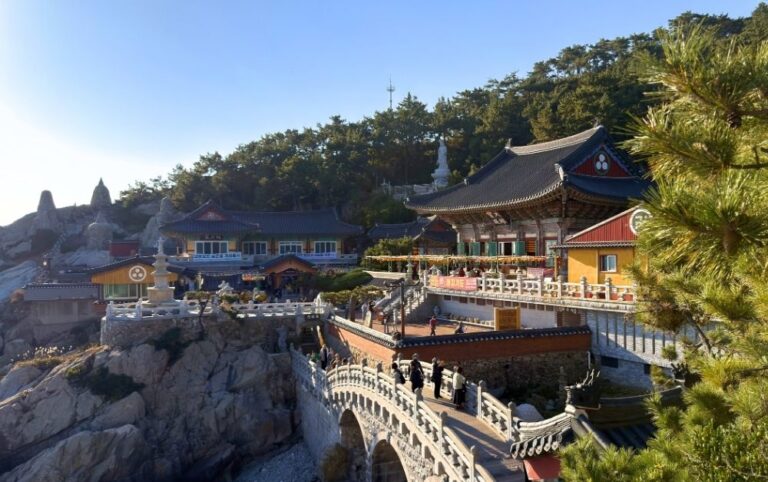
Busan has several temples, but if you have time for only one, make it Haedong Yonggungsa. What makes it special is its location. Unlike most Korean temples that sit quietly in the mountains, this one is right on the rocky coastline, with waves crashing below and endless sea views in front of you. The waddle down alone feels like an experience, with stone lanterns, statues, and ocean breeze guiding you all the way. It is peaceful yet powerful. You get culture, nature, and those wow coastal views all in one place. It is not just another temple stop. It feels different. And that is exactly why it stays with you long after you leave.


Quick Facts About Haedong Yonggungsa Temple
- Location: Northeastern Busan, in the Gijang area, about 30 to 45 minutes from Haeundae Beach by car and around 1 to 1.5 hours by public transport from central Busan.
- Established: Originally built in 1376 during the Goryeo Dynasty by the Buddhist teacher Naong.
- Setting: One of the very few temples in Korea located directly on the coast rather than in the mountains.
- Main Highlight: The impressive seaside Buddha statues and the Haesu Gwaneum Daebul, the Goddess of Mercy, overlooking the sea.
- Best Time to Visit: Sunrise is especially popular, as the temple faces east and catches beautiful morning light.
- Entrance Fee: Free to enter.
- Atmosphere: A mix of peaceful temple energy and dramatic coastal scenery, making it both spiritual and visually stunning.
How To Get To Haedong Yonggungsa Temple
📍 Address: 86 Yonggung-gil, Gijang-gun, Busan, South Korea
Haedong Yonggungsa is a little further from the center of Busan, whatever the center of Busan actually is, because in this city, every neighborhood feels like its own little downtown. That is part of Busan’s charm, but it also means you need to plan a bit when heading to the temple.
The temple is in the Gijang area, northeast of Haeundae. If you are using public transport, the closest metro stop is Haeundae Station on Line 2. From there, you need to transfer to a local bus, usually bus 181, which takes you close to the temple entrance. From the bus stop, it is still a short waddle downhill to reach the main gates. Altogether, expect around 1 to 1.5 hours from central Busan, depending on connections.
If you prefer something easier, taxis and Uber work very well in Busan and can save you a lot of time, especially if you want to arrive early.
We did not want to waste time figuring out connections or combining multiple stops that day, so we ordered an Uber from Haeundae Beach, where we were staying. It took about 40 minutes by taxi, so yes, it is quite far, as I mentioned, but for us it was totally worth it. We wanted to maximize our morning, get there early, and enjoy the calm before the crowds. The taxi ride cost us around 12,500 KRW, and since this was our first stop of the day, it felt like the perfect, stress-free way to start our temple waddle.
Practical Information For Visiting Haedong Yonggungsa
One of the best things about visiting Haedong Yonggungsa is that there is no entrance fee. There are also no strict opening hours in the classic sense, as the temple grounds are generally open from early morning until evening. That flexibility makes it easy to fit into your Busan itinerary.
That being said, this is one of those places where we cannot stress this enough: go early. If you can make it for sunrise, it is magical with the soft light hitting the sea and the temple slowly waking up. But even if sunrise feels too ambitious, anything before 9 in the morning is perfect. After that, tour buses start arriving, and the narrow stairways can get crowded. We arrived early, around 8 am, and had moments where it felt calm and almost peaceful, which made the whole experience even more special. Trust us on this one, set the alarm, and thank yourself later.
History Of Haedong Yonggungsa Temple
- Founded in 1376. Built during the Goryeo Dynasty by the Buddhist monk Naong, who believed the sea goddess appeared to him in a dream.
- Original Name. Bomun Temple, later becoming known as Haedong Yonggungsa.
- Japanese Invasion. The temple was destroyed during the Japanese invasions of Korea in the late 16th century.
- Reconstruction. It remained in ruins for centuries before being rebuilt in the 1930s by the monk Ungang.
- Modern Development. Many of the current halls and statues were added or restored in the 20th century, shaping the temple into what visitors see today.
- Sea Goddess Connection. The temple is dedicated to the Goddess of Mercy, believed to answer sincere prayers at this coastal site.
Our Experience At Haedong Yonggungsa Temple In Busan
We came by taxi and arrived around 8 to 8:30 in the morning, which was a good decision. The light was still that soft golden morning glow, the kind that makes everything look calmer and a little bit magical. The air was fresh, and we could smell the sea. There were already a few people around, but honestly, it was just a handful, nothing that would disturb the vibe. After the driver dropped us off almost right in front, we waddled through a short little street lined with souvenir and snack shops, slowly waking up for the day. And then we reached the first gate. Even before stepping fully inside, we looked at each other and just knew. Okay. This is going to be worth that long ride.


As soon as we passed through the Iljumun Gate, the very first entrance gate of the temple, everything shifted. Iljumun literally means “One Pillar Gate,” and from the side it appears to be supported by a single column. Symbolically, it represents leaving the ordinary world behind and stepping onto the path of spiritual awakening. And honestly, that is how it felt. The moment we walked through, it was like entering another realm.


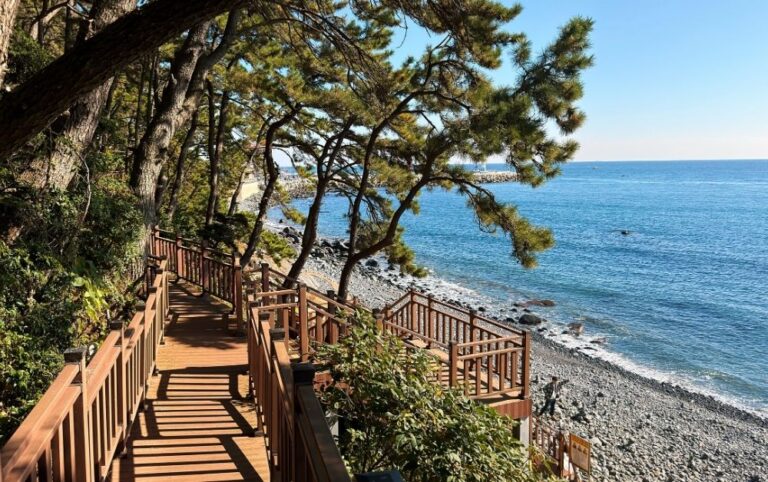
From there, the long staircase began, guiding us down toward the sea. With every step, our excitement grew. Our hearts were throbbing as we caught our first tiny peek of the temple rooftops between the trees, the ocean sparkling. The anticipation made it even more special. You do not see everything at once. It reveals itself little by little.
Before waddling all the way down, we actually turned left to one of the viewpoints. And wow, what a decision. From there, you get that iconic view of the temple dramatically sitting on the rocks with waves crashing around it. We took our photo together right there, soaking in the moment. Only after that did we continue down the stairs, making our way into the heart of the temple grounds.


Our first little stop was on the stone bridge that connects the lower entrance area with the main temple complex. The bridge sits right beside one of the most photographed spots in the temple, the small golden Laughing Buddha statue near the stairs.
Here, you will see visitors tossing coins toward the statue. The tradition is simple and sweet. If you manage to land a coin inside the bowl the Buddha is holding, it is said to bring good luck and blessings. Of course, we had to try. A few attempts, a lot of hopeful aiming, and not a single coin made it into the bowl. Close, but not quite penguin-level lucky that morning.
After laughing at ourselves, we continued toward the main temple grounds. That is where the real magic unfolds. Every corner feels like it holds its own little secret, a statue tucked between rocks, a quiet prayer spot overlooking the sea, or another staircase leading you somewhere new. It is one of those places where you want to keep exploring without rushing a single step.


Before continuing deeper into the complex, we stopped at the stone dragon statue. Dragons in Korean Buddhism are powerful protectors, often connected to water and the sea, which makes perfect sense at this coastal temple. We paused there for a quiet moment and made a small prayer before moving on. Just a few steps further, we spotted two giant golden pigs, shining in the morning light. They symbolize wealth and prosperity, and yes, we could not resist rubbing them a little for extra luck. It was such a fun and unexpected detail to find tucked into the temple grounds.


As we waddled on, we came across rows of colorful lanterns hanging overhead. These are traditional Buddhist prayer lanterns. You can purchase one, write your name or a wish on a tag, and hang it as a prayer for health, happiness, or good fortune. The lanterns are especially common around Buddha’s Birthday, but you will see them throughout the year. The bright colors made the whole place feel even more magical and alive.
Beyond the lanterns, we also noticed other small traditions happening all around us. People bow three times in front of the main hall as a sign of respect. Visitors stack small stones on top of each other to make personal wishes. Others light incense and place it gently into the burners before whispering a prayer. It is these little rituals that make the temple a living, breathing place of faith.


We continued to waddle deeper into the temple complex, peeking inside every building we could. Haedong Yonggungsa has several prayer halls and shrines spread across the cliffs, but the main hall is Daeungjeon Hall, the primary prayer hall dedicated to the Buddha. This is where you will see visitors and locals bowing on cushions and offering quiet prayers.


Nearby, there is also the Yongwangdang Shrine, dedicated to the Dragon King of the Sea, which feels especially fitting given the dramatic ocean setting. Altogether, there are multiple smaller pavilions and prayer spaces scattered around the grounds, each with its own purpose and energy, which makes exploring feel like a slow treasure hunt.


Next to the main prayer hall, we spotted the beautiful golden seated Buddha statue, calmly sitting and smiling over the temple grounds. Many touch or rub the statue, especially around the belly, as it is believed to bring good fortune and happiness. The golden color shines even brighter in the morning light, and there is something about that peaceful smile that instantly makes you slow down. We stood there for a moment, just taking it in. It felt warm, welcoming, and quietly powerful, like a gentle reminder to breathe and be present. But of course, we also took several pics.


As we waddled around the grounds, it was beautiful to see the mix of visitors and locals. Some were tourists with cameras in hand (as us), while many others came for the early morning prayers. You could see them bowing, lighting incense, standing still with their eyes closed for just a moment longer. The soft murmur of whispers, the distant sound of waves crashing below the cliffs, and the faint scent of incense in the air created such a serene atmosphere.
Even as more people arrived, it never felt chaotic. The morning light was still soft, the breeze from the sea cool against our faces, and somehow the temple seemed to absorb the noise, turning it into calm. It invited you to slow down. To pause. To look around properly instead of rushing. To stand there for a second and take it


We also stopped to admire and, of course, photograph this impressive statue of Haesu Gwaneum Daebul, the golden statue of the Goddess of Mercy. She stands about 10 meters tall and overlooks the ocean, symbolizing compassion and protection for those who pray here. Fun fact: the statue was added in 1974 and faces the sea, as many believe that prayers made here are carried out across the water. Standing below her, with the waves crashing in the background, felt incredibly powerful yet peaceful. It was the perfect, almost final moment of our temple waddle.


At many Buddhist temples (especially popular ones like Haedong Yonggungsa), people leave small offerings — such as coins, beads, bracelets, or little figures — at altars, statues, or rocky nooks as symbolic gestures of prayer, remembrance, or wish-making. These acts aren’t always official temple rituals, but they stem from the same tradition of making an offering or leaving a token with the intention or hope. Offerings like coins or small tokens are commonly associated with wishes for good luck, health, or protection, similar to other coin-tossing spots in the complex. Even if this isn’t a formal temple tradition, it reflects the very real desire to leave a piece of themselves, their wish, or their memory behind in a meaningful place, and that’s exactly what we saw while wandering between the cliffs and stones. And we also left a little penguin secret behind. 😉


As we waddled around the grounds, we spotted an information table that pointed out specific spots and the flow of the temple complex, and something interesting caught our eye. While Haedong Yonggungsa isn’t literally built in the shape of a dragon winding through the rocks, the temple’s name and spiritual origins are tied to dragon imagery. The name Haedong Yonggungsa literally means “Korean Dragon Palace Temple,” referencing Yongwang, the Dragon King of the Sea, and the mythical dragon palace believed to lie beneath the East Sea. This connection comes from the temple’s foundational legend: the monk Naong had a dream involving the Sea God riding a dragon, which is part of why the temple was built in this dramatic seaside spot.
While wandering the cliffs and stone paths, that dragon energy almost feels present, from the way the steps wind down toward the sea to how the statues and altars seem to echo the mythic blend of water, spirit, and protection.
We were already on our way out of the temple when we noticed a small staircase leading down. Of course, curiosity won, so we waddled down to see where it goes. It felt like we were going underneath the temple itself, tucked into the rocks below. Down there, we found a small, quiet room with a Buddha statue and a simple altar where visitors could leave small offerings. It was not grand or dramatic like the cliffside views above, but that is exactly what made it special. A small, peaceful surprise at the very end of our visit, almost like the temple giving us one last quiet moment before we stepped back outside.


By the time we made our way out, after spending a little over an hour there, it was already past 10 am. And you could really feel the shift. More and more people started gathering, tour groups arriving, and the stairways getting busier by the minute. That is when we looked at each other and said, ” Okay, perfect timing. And again, we cannot stress this enough: go early in the morning if you want that calm, peaceful experience.
On our way out, we waddled through a small bamboo grove, which felt like a gentle transition back to the outside world. We also passed a small food corner with snacks and drinks, which is good to know if you plan to stay longer or make it a slower half-day visit. When we reached the parking lot, everything suddenly made sense. Dozens of buses were parked there. Dozens. That explained the growing crowds.
Since we wanted to make the most of our day, we called another Uber and headed off to our next stop. But Haedong Yonggungsa truly stayed with us. It was peaceful, dramatic, spiritual, and scenic all at once. A place that feels worth the effort, especially if you catch it in those quiet morning hours.


Best Time To Visit Haedong Yonggungsa Temple
Haedong Yonggungsa is beautiful year-round, and each season gives it a slightly different mood. Spring brings cherry blossoms and soft pastel colors around the temple grounds. Summer feels vibrant and green, with bright blue skies over the ocean. Autumn adds warm golden tones and crisp air, which makes walking around even more pleasant. Winter can be quieter and more dramatic, especially if you are lucky enough to see a light dusting of snow against the sea.
That being said, while the season matters, the time of day matters even more. We recommend focusing on going early in the morning. Sunrise is the absolute best if you can manage it. Watching the first light hit the temple rooftops and the ocean is something special. Some people also recommend coming in the evening for sunset views, which can also be beautiful. But anything after around 9:30 in the morning starts getting noticeably crowded, especially with tour buses arriving. If you want a peaceful, slow-waddle kind of experience, set that alarm and go early. You will not regret it.
Facilities And Amenities At Haedong Yonggungsa
- Restrooms. Located near the entrance and parking area, before you walk down to the main temple complex.
- Coffee and Snack Stalls. Small stands near the entrance where you can grab drinks or light snacks.
- Souvenir Shops. Lined along the short street before the first gate, selling Buddhist bracelets, small Buddha statues, lucky charms, and temple-themed keepsakes.
- Prayer Lanterns. Available for purchase so you can write your wish and hang it within the temple grounds.
- Incense and Donation Areas. Several altars allow visitors to light incense or leave small monetary offerings.
- Parking Area. Large parking lot at the top, often filled with tour buses later in the morning.
Accessibility
Accessibility is one of the few challenges here. The temple is built on cliffs, which means many stairs, uneven stone paths, and steep sections. While some upper areas near the entrance are easier to navigate, reaching the main temple grounds requires walking down and back up a long staircase. Visitors with limited mobility or strollers may find parts of the visit physically demanding, so it is something to keep in mind when planning your trip.

Buy Me a Ko-fi
How Much Time Do You Need At Haedong Yonggungsa
To plan your Busan itinerary, we recommend setting aside at least 1 to 1.5 hours for Haedong Yonggungsa Temple. That is about how long we stayed, and it gave us enough time to explore the different halls, walk down to the viewpoints, take photos, pause for a quiet moment, and soak it all in without rushing.
That said, you could spend two hours or more here, especially if you arrive early and want to move slowly, light incense, hang a lantern, or sit and enjoy the sea views. It is not a huge complex compared to some mountain temples, but because of the layout, stairs, and viewpoints, you will naturally move at a slower pace. If you love photography or peaceful travel moments, give yourself extra time.
Pro Penguin Tips For Visiting Haedong Yonggungsa
- Go Early. Before 9 am is ideal. Sunrise is even better for soft light and fewer crowds.
- Allow At Least 1.5 Hours. More if you love photography or slow exploring.
- Take A Taxi If You Can. It saves time and energy, especially in the morning.
- Wear Comfortable Shoes. There are many stairs and uneven stone paths.
- Turn Left For The Iconic Viewpoint. Before heading fully down, stop for that classic temple and ocean photo.
- Bring Small Cash. For lantern wishes, incense, or small donations.
- Explore Every Corner. Do not just visit the main hall; there are hidden shrines and even a small underground altar.
- Expect Crowds After 9:30. Tour buses arrive fast, and the paths get busy.
- Check The Parking Lot On Arrival. If you see dozens of buses, prepare for crowds.
- Slow Down. This is not a rush stop. Pause, listen to the waves, and take it all in.
Is Haedong Yonggungsa Temple Worth Visiting
From our own experience, this temple is worth the effort. The dramatic coastal location alone makes it different from most temples in South Korea. Instead of mountain backdrops, you get waves crashing against cliffs, salty sea air, and panoramic ocean views. Add to that the beautiful prayer halls, golden statues, colorful lanterns, and the peaceful morning atmosphere, and it becomes more than just another sightseeing stop. It feels like a moment. A slow one. The kind that makes you pause and actually take it all in. If you love scenic viewpoints, cultural depth, and places that feel special, this one delivers.
That said, if you dislike stairs, crowds, or traveling outside the main city areas, this might not be your favorite stop. It takes time to get there, and later in the morning, it can get quite busy with tour groups. If you are short on time and prefer central, easy-access attractions, you may skip it. But if you plan it well and go early, it is one of the highlights of Busan.

Haedong Yonggungsa reminded us why we love traveling the way we do. Slow mornings. Ocean air. A little bit of culture, a little bit of adventure, and a whole lot of perspective. It is not just about ticking off another temple from your list; it is about standing on those cliffs, listening to the waves, and feeling small in the best possible way.
If you are planning your Busan itinerary, give this one the time it deserves. Go early, wander slowly, and let the place unfold step by step.
Pack your bag and waddle through the grounds of Haedong Yonggungsa.
Save This Pin for Your Busan Adventure!

This post contains affiliate links. If you click and buy, I might earn a tiny commission, enough to help a penguin keep up its globe-trotting lifestyle. No extra cost to you, just more fish for me. Thank you for supporting the adventure!