
A Traveler’s Guide to Japan’s Konbini Culture
Japan has a special talent for turning everyday things into memorable experiences, and its convenience stores are a perfect example. Known locally as konbini (コンビニ), these little shops are practically everywhere, often open 24 hours a day and stocked with an impressive selection of food, drinks, snacks, and everyday essentials.
But forget everything you know about convenience stores back home. In Japan, you can pick up freshly prepared rice balls, good sandwiches, crispy fried chicken, beautifully packaged desserts, and even a complete meal, all under one roof. Whether we are looking for a quick breakfast before a day of sightseeing, a late-night snack after exploring Tokyo, or something to take on a long train journey, a konbini rarely disappoints.
You’ll encounter three major chains throughout Japan: 7-Eleven, FamilyMart, and Lawson. Each has its own specialties, and choosing a favorite is almost part of the adventure. Here is what to buy, what is worth trying, and everything you need to know before your first Japanese convenience store visit.

Japanese Convenience Stores: Meet the Big Three
Japan has more than 55,000 convenience stores, making them an essential part of everyday life. You will find them on busy city streets, in quiet residential neighborhoods, near railway stations, and even in some unexpected places.
The three biggest names are 7-Eleven, FamilyMart, and Lawson. Although their shelves look similar at first glance, each chain has a few products worth a closer look.
7-Eleven Japan
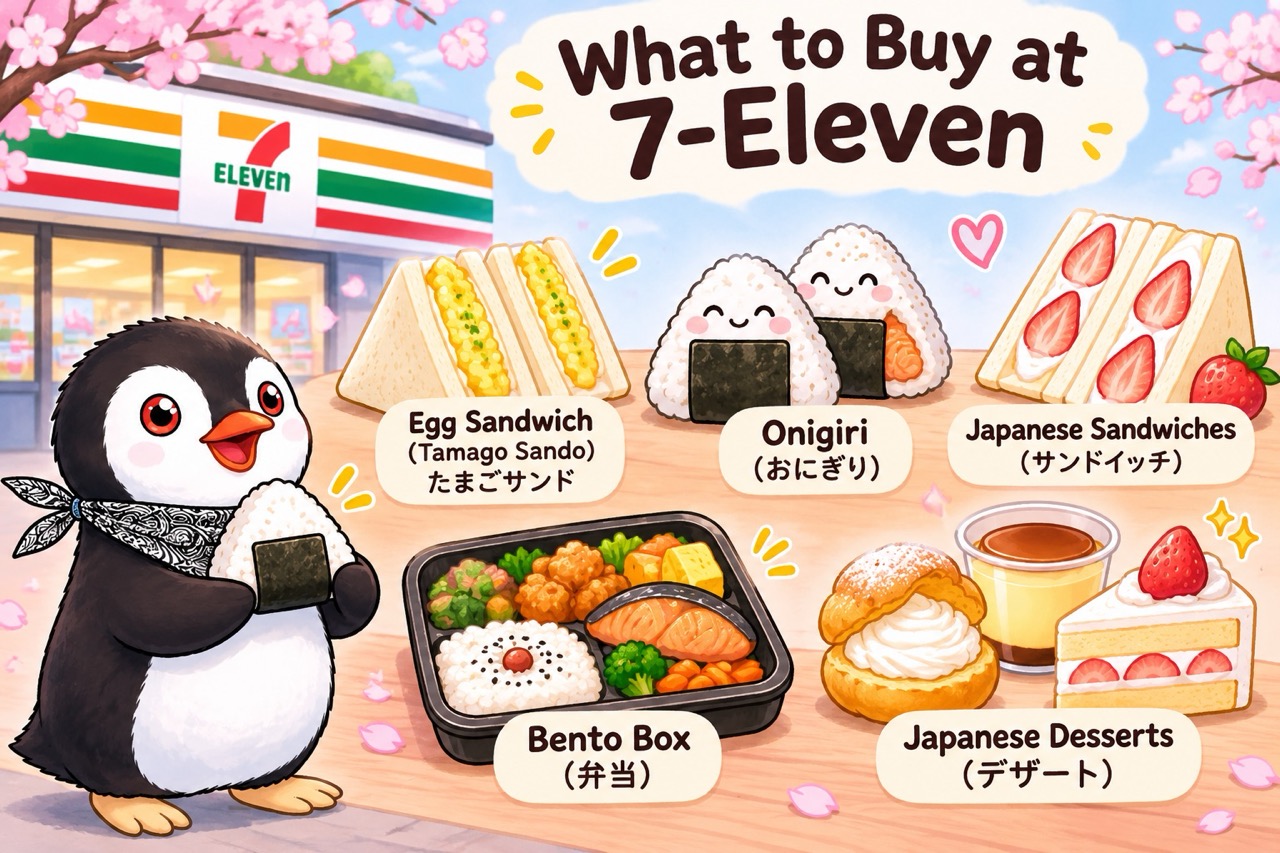
7-Eleven is Japan’s largest convenience store chain, with about 21,500 locations nationwide. If you only have time to visit one convenience store, 7-Eleven is an excellent place to start. Its food selection is extensive, especially for sandwiches, rice balls, ready-made meals, and breakfast options.
What to buy at 7-Eleven
- Egg sandwiches (Tamago Sando). One of the most popular Japanese convenience store sandwiches. Soft, fluffy white bread is filled with a creamy egg salad. Simple, but surprisingly delicious.
- Onigiri. Japanese rice balls with different fillings, wrapped in nori seaweed. Classic options include tuna mayonnaise, salmon, and pickled plum.
- Japanese sandwiches. Look out for chicken, ham, fruit, and other seasonal varieties.
- Bento boxes. A convenient way to try Japanese-style meals without visiting a restaurant. Options range from rice and grilled fish to fried chicken and noodle dishes.
- Japanese desserts. Check the refrigerated shelves for cream-filled pastries, puddings, cakes, and seasonal sweets.
Penguin Pro Tip: Try the classic egg sandwich at least once. It might look unremarkable, but it is one of those little Japanese food experiences that stays with you.
FamilyMart Japan
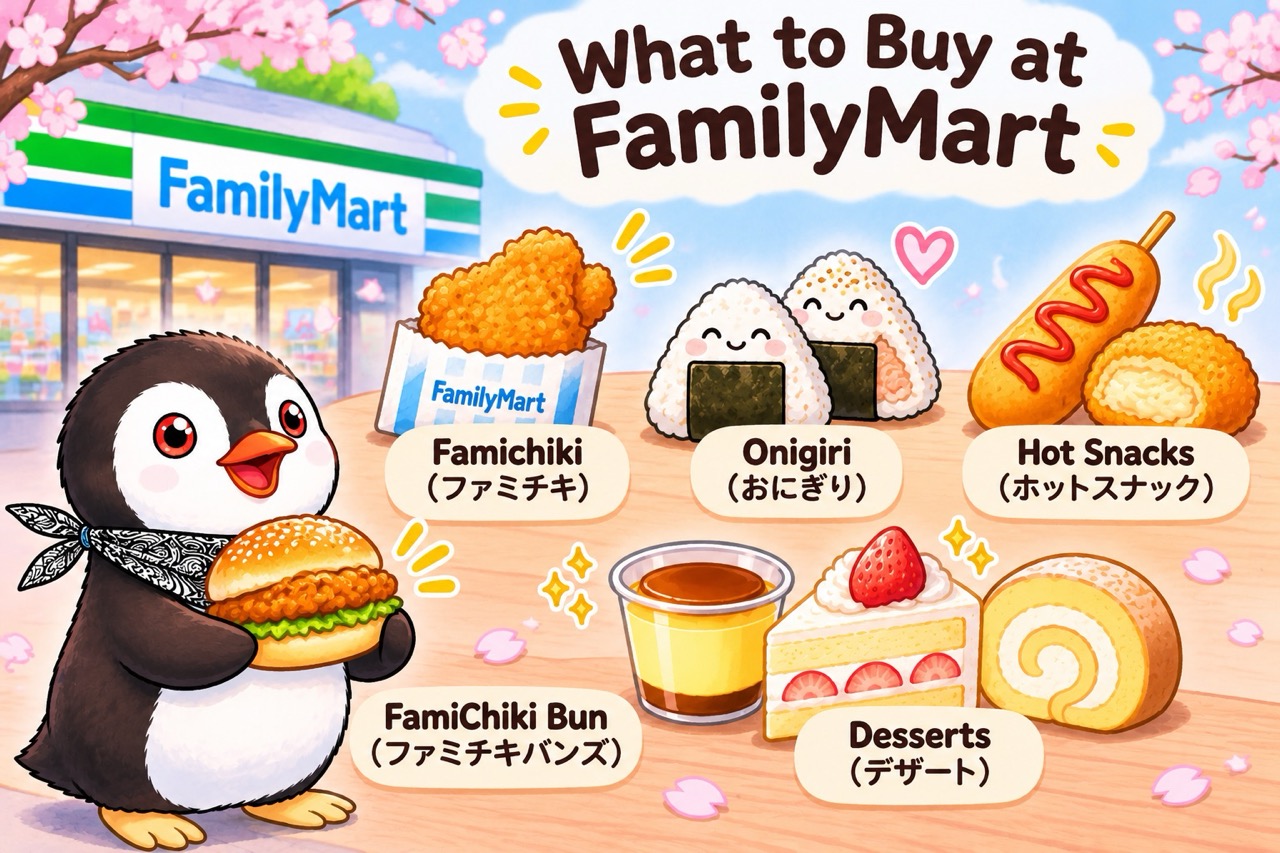
With approximately 16,000 locations, FamilyMart is another familiar sight throughout Japan. Its most famous offering is undoubtedly Famichiki, a boneless fried chicken piece with a cult following.
What to buy at FamilyMart
- Famichiki. The chain’s signature fried chicken, served hot and ready to eat. It has a crispy coating and a juicy center. Expect to pay around ¥200, depending on the product and location.
- FamiChiki Buns. If you spot them, grab a bun and make your own Famichiki sandwich.
- Onigiri. FamilyMart has a good selection of rice balls, including classic and seasonal fillings.
- Hot snacks. Look beyond the fried chicken for other savory options at the counter.
- Desserts. The refrigerated section is worth exploring for cakes, puddings, and sweet treats.
Penguin Pro Tip: If you are hungry between sightseeing stops, Famichiki makes an excellent little snack. It is also a good introduction to Japan’s hot food counter culture.
Lawson Japan
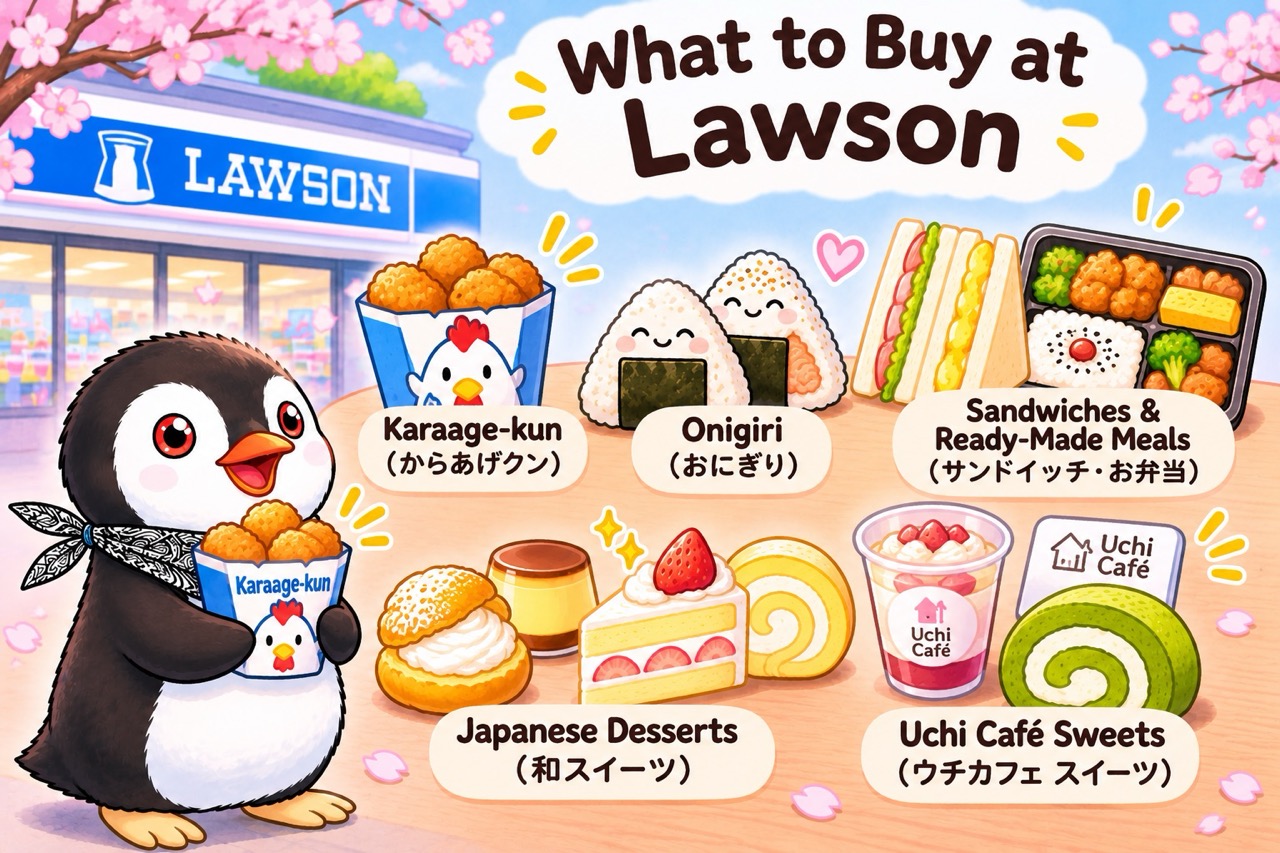
Lawson is popular with travelers who enjoy Japanese sweets and savory snacks. Its blue-and-white storefronts are easy to recognize, and its food selection offers plenty of reasons to step inside.
What to buy at Lawson
- Karaage-kun. Small bite-sized pieces of Japanese fried chicken sold in a convenient carton. They come in different flavors, so look out for seasonal varieties.
- Japanese desserts. Lawson is particularly well known for its sweet selection, including cream puffs, roll cakes, puddings, and seasonal desserts.
- Uchi Café sweets. Look for this Lawson dessert range when browsing the refrigerated shelves.
- Onigiri. Another good place to try different rice ball fillings.
- Sandwiches and ready-made meals. Perfect for a quick breakfast or lunch.
Penguin Pro Tip: Save a little room for dessert when visiting Lawson. The sweet selection is one reason we would happily return.
What to Buy at Japanese Convenience Stores
Waddling into a Japanese konbini for the first time can feel a little overwhelming. The shelves are packed with colorful packaging, unfamiliar flavors, and products we might never have come across before. Where do you even start?
We were lucky enough to have a local friend join us as our very own convenience store guide. Instead of wandering around guessing what everything was, we explored the aisles together, learned about local favorites, and, of course, filled our basket with plenty of things to try. It was such a fun way to discover a little more about everyday life in Japan.
So, if you do not have a local friend to guide you around, don’t worry. We have put together some of our favorite Japanese convenience store finds to help you know what to look for on your next visit.
Onigiri: The Japanese Rice Balls
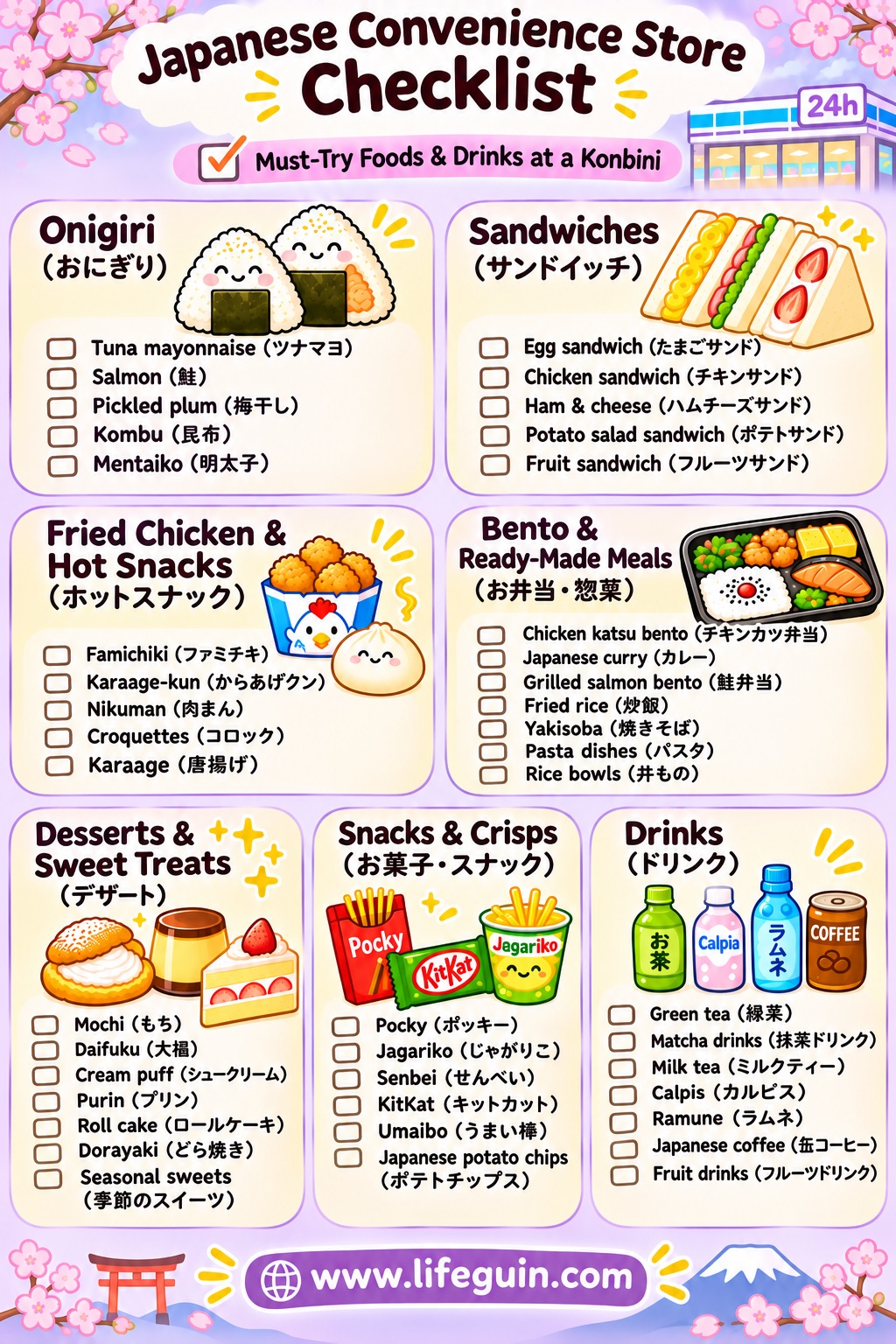
If there is one thing we recommend buying at a Japanese convenience store, it is onigiri. These triangular or rounded rice balls are made with seasoned or plain rice and usually contain a savory filling. They are often wrapped in a sheet of nori seaweed, with special packaging that keeps the seaweed separate until you open it.
This keeps your nori crisp instead of softening while it sits on the shelf.
Some popular fillings include:
- Tuna mayonnaise (ツナマヨ). A creamy tuna filling and an excellent starting point for first-timers.
- Salmon (鮭). A classic Japanese filling with a savory taste.
- Pickled plum (Umeboshi). A tangy, salty, and slightly sour option.
- Kombu. Seasoned kelp with a distinctive savory flavor.
- Mentaiko. Spicy cod roe, especially popular with seafood lovers.
Onigiri are affordable, easy to carry, and perfect for breakfast, a quick lunch, or a train journey where eating is permitted.
Japanese Sandwiches
Japanese convenience store sandwiches deserve their own section. The bread is incredibly soft, the fillings are generous, and the selection changes regularly. The famous egg sandwich, or tamago sando, is the obvious choice. It combines fluffy white bread with a creamy egg filling, sometimes with a particularly rich and silky texture.
But do not stop there. Look for chicken sandwiches, ham-and-cheese combinations, potato salad sandwiches, and seasonal fruit sandwiches. Fruit sandwiches are especially interesting. They combine fresh fruit, such as strawberries, kiwi, or peaches, with lightly sweetened whipped cream between two slices of soft white bread. They look almost like little cakes and make a lovely afternoon treat.
Japanese Fried Chicken and Hot Snacks
Japanese convenience stores have hot food counters, usually near the checkout. This is where you will find some of the most tempting snacks.
Our recommendations include:
- Famichiki. FamilyMart’s famous boneless fried chicken.
- Karaage-kun. Lawson’s bite-sized fried chicken.
- Nikuman. Steamed buns filled with pork or other savory fillings, especially popular in colder months.
- Croquettes. Crispy potato-based snacks, sometimes filled with meat or vegetables.
- Karaage. Japanese-style fried chicken, available in different variations.
Some items are seasonal, so the selection depends on when you visit. If you are unsure what to choose, point at the item you want. The staff will usually understand.
Bento Boxes and Ready-Made Meals
Not every meal in Japan needs to be a restaurant experience. One of the biggest surprises for first-time visitors is just how extensive the ready-made meal selection can be. Bento boxes are useful when you need something filling without spending too much time deciding where to eat.
Depending on the store, you might find:
- Chicken katsu with rice.
- Japanese curry.
- Grilled salmon with rice.
- Fried rice.
- Yakisoba noodles.
- Pasta dishes.
- Various rice bowls and side dishes.
Staff can heat many of these meals in the microwave at the checkout. Just remember to ask if you need chopsticks or a spoon. We bought a Bento Box while traveling from Tokyo to Kyoto, and it was a lifesaver.
Japanese Desserts and Sweet Treats
Now for the fun part. Japanese convenience stores have an impressive dessert selection, and we would recommend leaving a little room for something sweet.
Look for:
- Mochi. Soft rice cakes with different fillings.
- Daifuku. Mochi filled with sweet red bean paste or other fillings.
- Cream puffs (Shū cream). Light pastry filled with custard or cream.
- Purīn. Japanese custard pudding, usually topped with caramel.
- Roll cakes. Soft sponge cake filled with whipped cream.
- Dorayaki. Two small pancakes sandwiched around sweet red bean paste.
- Seasonal sweets. Limited-edition desserts featuring seasonal ingredients such as strawberries, matcha and sweet potato.
If you enjoy matcha, keep an eye out for green tea-flavored cakes, ice creams and biscuits. The dessert selection is one of the best reasons to visit different chains rather than sticking to just one.
Japanese Snacks and Crisps
The snack aisle can get a little overwhelming. Dozens of options range from familiar potato crisps to unusual Japanese flavors.
Some products worth looking for include:
- Pocky. Biscuit sticks coated in chocolate or other flavored coatings.
- Jagariko. Crunchy potato sticks sold in small cups.
- Senbei. Traditional Japanese rice crackers, available in sweet and savory varieties.
- KitKat. Japan is famous for its unusual KitKat flavors, including matcha and seasonal varieties.
- Umaibo. Inexpensive corn-based snack sticks available in several flavors.
- Japanese potato chips. Look for seaweed, soy sauce, wasabi, and other Japanese-inspired flavors.
You will also find plenty of regional and limited-edition products, making the snack aisle a good place to pick up something unusual.
Japanese Drinks
Do not forget the drinks section. Japanese convenience stores have an impressive selection of bottled beverages, and many are worth trying.
Our recommendations include:
- Green tea (Ryokucha). Unsweetened Japanese green tea, usually served cold in a bottle.
- Matcha drinks. A sweeter option for anyone who enjoys matcha.
- Milk tea. A popular bottled drink, often available in sweetened varieties.
- Calpis. A milky, slightly tangy Japanese soft drink.
- Ramune. A traditional Japanese carbonated drink with its distinctive marble bottle.
- Japanese coffee. Look for canned coffee, including both hot and cold options.
- Fruit drinks. Seasonal fruit juices and flavored beverages.
One thing to remember: not every bottled tea is sweet. Many Japanese green teas are unsweetened, so check the packaging if you prefer something sweeter.
How to Pay at Japanese Convenience Stores
Paying at a Japanese convenience store is straightforward, even if you do not speak Japanese. Most major chains accept cash, international credit cards, and Japanese transportation IC cards.
Here are the most convenient options.
- Cash. Japanese yen is always useful. Place your money in the designated payment tray or hand it to the cashier, depending on the store.
- Credit and debit cards. Major international cards such as Visa and Mastercard are widely accepted at large convenience store chains. Participating locations also offer contactless payments.
- Transportation IC cards. If you have a Suica, PASMO, or ICOCA card, you can usually use its stored balance to pay for convenience store purchases. Tell the cashier you want to pay with your IC card and tap it on the payment reader when prompted. It is convenient if you already use the same card for public transport.
- Cashless smartphone payments. Some convenience stores support additional electronic and QR-code payment services. However, not every international mobile wallet works in Japan, so it is best to have another payment option available.
What Happens at the Checkout
The process is simple, but a few details are worth knowing.
- Put your shopping on the counter or designated checkout area.
- Wait while the cashier scans your items.
- Choose your payment method.
- Pay using your card, cash, or IC card.
- Take your receipt and shopping.
You may also be asked whether you need a shopping bag. Plastic bags generally cost a small fee in Japan, so bringing a reusable bag is a good idea. If you purchase a bento or another meal, the cashier might ask whether you want it heated.
You can answer:
- Hai, onegaishimasu: Yes, please.
- Daijōbu desu: No, thank you / That’s fine.
It is also worth asking for chopsticks (hashi) or a spoon (supūn) if you need them.
Need Cash? Use a 7-Eleven ATM
Although cashless payments are becoming increasingly common in Japan, it is still useful to carry some Japanese yen. We appreciated and used this several times: withdrawing cash at the convenience store.
It’s one of the easiest places to withdraw cash is a 7-Eleven. Most stores have a Seven Bank ATM, and these machines support a range of international bank cards.
A few things to know before withdrawing money:
- The ATM interface offers several language options, including English.
- Foreign-issued cards have a withdrawal limit of up to ¥100,000 per transaction.
- The actual limit can be lower depending on your card and the type of transaction.
- ATM service fees may apply, depending on the card and transaction.
- Your own bank may also charge an international withdrawal or currency conversion fee.
Penguin Pro Tip: When the ATM asks whether you want to complete the transaction in Japanese yen or your home currency, choosing Japanese yen will let your card issuer handle the currency conversion. This can help you avoid unfavorable dynamic currency conversion rates.
You can find more information and ATM locations on the official Seven Bank website.
A Few Things to Know Before Visiting a Japanese Konbini
Japanese convenience stores are easy to use, but a few local customs are worth knowing.
Do Not Expect Public Rubbish Bins Everywhere. Japan has relatively few public rubbish bins, which can surprise first-time visitors. Some convenience stores have rubbish bins near the entrance or inside the shop, usually separated into categories such as cans, bottles, and other waste. However, not every branch has them, and some bins are intended only for rubbish from products purchased at that particular store.
If you cannot find a bin, keep your rubbish with you until you find an appropriate place to dispose of it.
- Avoid Eating While Waddling. Although it might be tempting to open your snack immediately after leaving the store, eating while walking is generally discouraged in many parts of Japan. Some convenience stores have small seating areas, often called eat-in spaces, where you can enjoy your purchase. Otherwise, take your food back to your accommodation or find an appropriate place to sit and eat. A little consideration goes a long way, especially in busy shopping streets.
- Staff Can Heat Your Food. If you buy a bento, pasta or another suitable ready-made meal, the cashier may ask whether you want it heated. You do not need to find a microwave yourself. In many stores, staff will heat it for you at the checkout. Just remember that not every product is suitable for heating, so follow the packaging instructions.
- Ask for Chopsticks, spoons, and Napkins. When buying food, you can ask for chopsticks, a spoon, or a wet towel (oshibori). Staff may offer them automatically, but it depends on the store and what you buy. If you need something, ask. A few basic Japanese words can make the interaction easier.
- Keep Your Receipts for Tax-Free Shopping. Japan’s tax-free shopping system changed on 1 November 2026. International visitors now pay the tax-inclusive price at participating tax-free shops. Eligible purchases can then qualify for a consumption tax refund after customs confirms the goods are leaving Japan when you depart. This mainly applies when shopping at designated tax-free retailers, not when buying everyday snacks and drinks at a regular convenience store. If you are planning a larger shopping trip, keep your receipts and check the requirements before leaving Japan.
Our Favorite Finds at Japanese Convenience Stores
One of our favorite things about Japanese convenience stores was that we could pick almost anything off the shelves, and it would turn out delicious. We tried quite a few things, but the Japanese egg sandwiches (tamago sando) were definitely among our favorites. That incredibly soft bread and creamy egg filling were everything we hoped for and more!
We also bought a bento box, which came in particularly handy during our journey from Tokyo to Kyoto. And then there were the sweet snacks. Oh, the sweet snacks! We picked up several different desserts, cakes, puddings, and little treats, and somehow everything tasted amazing. We also experimented with different drinks and yogurts, often choosing things simply because the packaging looked interesting or we had never seen them before.
One of our funniest discoveries was an orange-flavored drink that we picked up thinking it was juice. Turns out, it was orange-flavored milk! You might wonder whether orange and milk really belong together, but trust us, it was surprisingly good.
And that pretty much sums up our entire konbini experience: whatever we bought, we loved it! Even the things we had absolutely no idea what to expect from. So our biggest advice is to be adventurous, pick something unfamiliar, and give it a try. You never know what your next favorite Japanese snack might be!
Buy Us a Ko-fi

Japanese convenience stores are so much more than places to grab a quick snack. From the famous egg sandwiches and crispy fried chicken to bento boxes, unexpected drinks, and delicious sweet treats, there is always something new to try. We loved our konbini adventures, and our biggest advice is simple: be adventurous, pick something unfamiliar, and enjoy the surprise! You might discover your new favorite Japanese snack. Happy waddling!
Travel Bold. Eat Well. Waddle Wild.

This post contains affiliate links. If you click and buy, I might earn a tiny commission, enough to help a penguin keep up its globe-trotting lifestyle. No extra cost to you, just more fish for me. Thank you for supporting the adventure!