St. John’s Co-Cathedral, Malta: A Guide to Valletta’s Baroque Masterpiece
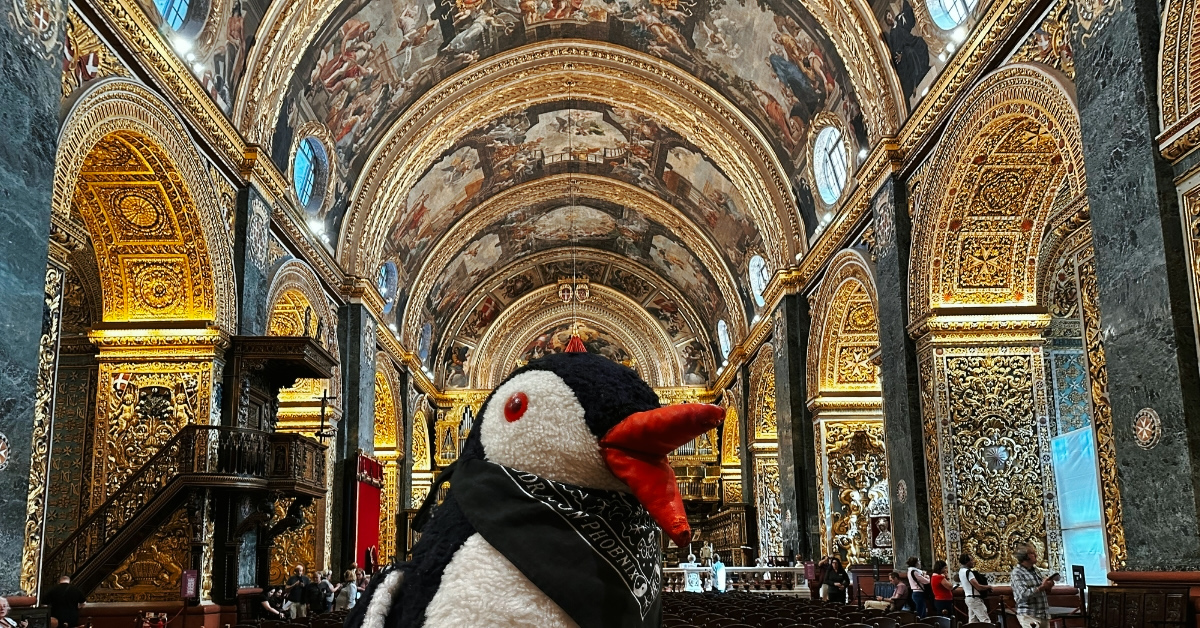
We had barely started to waddle around Valletta when St. John’s Co-Cathedral caught our attention. It sat right along our route and felt like a natural place to start exploring Malta’s capital. Little did we know what awaited us behind those doors. As our first stop in Valletta, it delivered a proper “what are we looking at?” moment. moment. We stepped inside expecting a historic church and found ourselves surrounded by an explosion of gold, intricate carvings, colorful marble, and extraordinary artwork. The contrast between the relatively understated exterior and the lavish interior left us speechless. If this was our first stop in Valletta, we could already tell the city had some great surprises up its sleeve.
Quick Facts
📍 Location: St John’s Co-Cathedral, St John’s Square, Valletta, Malta
🕒 Opening Hours: Monday to Saturday, 9:00 AM to 4:45 PM. Last admission at 4:00 PM. Closed on Sundays and public holidays
🎟️ Tickets: Adults €15 and are available online or at the entrance
⏱️ Time Needed: Approximately 1 hour 45 minutes
🌐 Website: stjohnscocathedral.com
How to Get to St. John’s Co-Cathedral
If you are staying in Valletta, you can reach St. John’s Co-Cathedral on foot. The city is compact, and most of its main attractions are within walking distance. From City Gate, it takes around 5–10 minutes to waddle there, while the Upper Barrakka Gardens are about 5 minutes away. If you arrive at Valletta Waterfront by cruise ship, expect around 20–25 minutes on foot, including the uphill route into the city. Alternatively, take the Barrakka Lift to the Upper Barrakka Gardens, then continue on foot to the cathedral.
Opening Hours and Tickets
Opening Hours
St. John’s Co-Cathedral is open Monday to Saturday, 9:00 AM to 4:45 PM, with last admission at 4:00 PM. It is closed to visitors on Sundays and public holidays. However, this is an active place of worship, and Mass takes place throughout the week, including Sundays and feast days. If you plan to attend a service, check the official website for the schedule and any changes to visiting hours before your visit.
Tickets
You need a ticket to enter St. John’s Co-Cathedral. The admission fee includes an audio guide to help you explore the cathedral and its artwork.
- Adults: €15
- Seniors: €12
- Students: €12
- Children: Free for children under 12 when accompanied by an adult.
- Plushies: Free entry
Before you go, check the official website for the latest ticket prices and opening hours, as these may change.
We didn’t plan this visit and bought our tickets at the entrance. Luckily, there was no queue when we arrived. However, during peak season, lines can get long, so buying tickets online beforehand may save you time.


Facilities and Amenities
- Audio guides are included with admission and available in multiple languages.
- Wheelchair access is available, though some areas are restricted.
- No lockers available for bags or luggage.
- Toilets and other visitor facilities: check the official website for availability.
- Photography permitted without flash.
- A prayer area is available for visitors who wish to pray.
A Brief History of St. John’s Co-Cathedral
- 1565. The Great Siege of Malta. After the Ottoman siege, the Knights of St John began developing Valletta as their new fortified capital, with a church at its center.
- 1572. Construction begins. Grand Master Jean de la Cassière commissioned the church, designed by Maltese architect Girolamo Cassar, as the Order’s conventual church.
- 1577–1578. The church is completed and consecrated. Dedicated to St John the Baptist, it serves as the Knights of St John’s principal church in Valletta.
- 1607–1608. Caravaggio arrives in Malta. The Italian artist paints The Beheading of Saint John the Baptist, now housed in the cathedral’s oratory. The painting is his largest known canvas and the only work bearing his signature.
- The 17th century. The interior is transformed. Grand Master Nicolas Cotoner commissions a major redecoration, and artist Mattia Preti paints scenes from the life of St John the Baptist across the ceiling. The church takes on the Baroque appearance visitors see today.
- 1740. The oratory receives marble decoration. The work contributes to the interior’s later appearance.
- 2001. The St John’s Co-Cathedral Foundation is established. The foundation conserves and restores the cathedral and its artworks.
- 2024. The Caravaggio Center is launched. The new visitor experience explores the artist’s life in Malta and his connection to the cathedral.
What We Found Inside St. John’s Co-Cathedral
As we started to waddle around Valletta, St. John’s Co-Cathedral caught our attention. We spotted the entrance, noticed there was no queue, and thought, why not take a look? We hadn’t planned this visit, nor had we checked online what the cathedral was all about. We bought our tickets and stepped inside. And what a surprise that turned out to be! We had no idea what awaited us behind those doors, and our first reaction was a genuine “wow.
Why Does the Cathedral Look Like This
The first thing we noticed inside St. John’s Co-Cathedral was the gold. It covered the walls, framed the paintings, and caught our attention everywhere. But the interior wasn’t always like this.
When the Knights of St John completed their church in 1577, the interior was much more restrained. The Order had built it as its conventual church, dedicated to its patron saint, John the Baptist. Over the next century, the Knights transformed it into a display of religious devotion, artistic patronage, and their position in Malta. Grand Masters and members of the Order contributed artworks and funded the decoration.


Much of the transformation took place in the 17th century, when Baroque art favored movement, drama, and elaborate detail. Italian artist Mattia Preti played a major role in the project. Arriving in Malta in 1659, he took on decorating the vaulted ceiling, painting scenes from the life of St John the Baptist. Between 1661 and 1666, he created a series of eighteen episodes across the ceiling, using color, perspective and shadow to give the scenes depth.
Look beyond the paintings, and you’ll find carved stonework covered in gilded foliage, flowers, angels and other motifs. The walls became part of the artwork, with the decoration designed to work alongside the ceiling rather than compete with it. The result is an interior where paintings, sculpture and gold form one continuous composition.
And that’s what makes the first few minutes inside so striking. From the outside, the cathedral gives little away. Inside, the decoration tells a different story, shaped by the Knights, who wanted their church to reflect their faith, resources, and artistic ambitions.


Look Up: The Painted Ceiling
As we looked around, we realized we had spent most of our time staring at the walls. Then we looked up. The vaulted ceiling tells the story of St John the Baptist through a series of painted scenes, and we were glad the audio guide explained what we were seeing.
Mattia Preti, an Italian painter, arrived in Malta in 1659. The Knights of St John commissioned him to decorate the ceiling, and he worked on the project between 1661 and 1666. Across six sections of the vault, he painted eighteen episodes from the life of the Baptist, turning the ceiling into a sequence of scenes rather than one continuous picture. What makes the paintings worth a closer look is how Preti played with perspective. Figures seem to emerge from the architecture, while light and shadow give the scenes depth. Some figures beside the columns can even look like statues at first glance. Look again, and you realize that the three-dimensional effect comes from paint, not carved stone.
Our tip? Don’t just glance up and move on. Give your neck a break, then look at the ceiling in sections. Follow the scenes and use the audio guide to understand what is happening in each one. With eighteen episodes above you, you’ll notice more than you might at first glance.


Look Down: The Marble Floor
After spending time looking up at the ceiling, we turned our attention to the floor. We could have easily missed another detail if we had kept our eyes on the walls. The entire floor is covered with marble tombstones commemorating members of the Knights of St John. There are almost 400, each with its own design, inscription, and story.
The tombstones date from the early 17th to the late 18th century and feature coloured marble arranged into intricate patterns. Look closer, and you’ll spot coats of arms, armor, flags, and Latin inscriptions describing the knights’ virtues and achievements. Some feature skeletons, skulls, sickles, and hourglasses, symbols reminding visitors that death comes to everyone and time keeps passing. Others use crowns and angels to represent status, honor, and fame.
The floor is worth a closer look because these aren’t decorative panels meant to match the interior. They mark the resting places of the people commemorated beneath them. Each tombstone was individually designed, turning the floor into a record of the Knights, their identities, and how they wanted to be remembered.
Our tip? Take a moment to look down as you move through the nave. After all, in a cathedral where the ceiling competes for your attention, it’s easy to miss the stories beneath your feet.


The Side Chapels: A Competition in Art and Wealth
As we continued exploring the cathedral, we noticed that the main nave wasn’t the only place covered in decoration. Along both sides, eight chapels each tell a different story. These belonged to the langues, the regional and linguistic divisions of the Knights of St John, which brought together members from different parts of Europe. Each group had its own chapel, dedicated to a saint, and its own place within the cathedral.
The chapels were more than places to pray. They also reflected the identity and standing of the groups they represented. The Knights came from noble families, and their chapels became a way to demonstrate their devotion, resources, and status. Look at the altarpieces, marble columns, coats of arms, and carved details. Each chapel has its own arrangement, and the differences become easier to spot as you move from one to the next.
Decoration grew more elaborate in the 17th century, when the cathedral’s interior was transformed in the Baroque style. Paintings, sculptures, and gilded stonework brought the chapels into the church’s wider design while still giving each group its own space.
Our tip? Don’t rush past the side chapels on your way to the main altar or Caravaggio’s paintings. Take a moment to look at the details and compare them. Once you know each chapel represents a different group within the Order, the cathedral feels less like one large room and more like a collection of stories brought together under one roof.


The Oratory: Where We Found Caravaggio
The oratory holds one of the main highlights of our visit: Caravaggio’s The Beheading of Saint John the Baptist. Painted in Malta in 1608, the Knights of St John commissioned the work for the oratory of their patron saint, John the Baptist. Measuring 3.6 by 5.2 meters, the painting fills much of the wall. Look at how Caravaggio uses light against the dark background to draw your attention to the figures and the moment unfolding before them. Then look closer at the blood beneath St John’s neck. Caravaggio signed it here, making it the only signed work known among his surviving paintings.
Don’t leave without looking for Saint Jerome Writing, another Caravaggio painting displayed in the cathedral complex. Smaller and quieter in composition, it offers a different view of the artist’s work. We recommend taking time with both paintings rather than focusing only on the famous one.


The Details We Almost Missed
With so much happening inside St. John’s Co-Cathedral, it’s easy to focus on the ceiling, the marble floor, and Caravaggio’s paintings. But we appreciated the smaller details most: carved angels, leaves and flowers, gilded ornaments, and inscriptions tucked between the larger works of art.
The contrast between the gold decoration and the coloured marble also caught our attention. Everywhere we looked, another detail seemed to appear, from coats of arms to carefully carved patterns.
This is where the audio guide made a difference. Instead of looking at the interior as one enormous work of art, we began to understand the stories behind individual details and why they were there. Our advice? Slow down, look closer, and give yourself time to notice what you might otherwise waddle past.


Why We Recommend the Audio Guide
We picked up the audio guide with our tickets, and it was one of the best decisions we made during our visit. With so much to see inside St. John’s Co-Cathedral, it helped us understand the stories behind the artwork rather than admire the gold and marble.
We learned about the Knights who commissioned the decoration, Mattia Preti’s ceiling paintings, and the details we might otherwise have missed. The stories helped us better understand why the cathedral looks the way it does and what its artworks represent.
Our advice? Take your time and listen to the audio guide as you explore. No need to rush from one section to the next. Look up at the ceiling, examine the marble floor, and spend time in the oratory. We enjoyed the visit much more once we understood what we were looking at.
We appreciated the freedom to explore at our own pace the most. You buy your ticket, pick up the audio guide, and decide how you want to waddle around the cathedral. You can spend more time admiring the ceiling, pause at the marble tombstones, or listen to the stories behind Caravaggio’s paintings. You don’t need to follow a group or rush through each section. We could stop whenever something caught our attention and move on when we were ready. With so much to see, having that flexibility made the visit much more enjoyable.
How Much Time Should You Set Aside
How long you spend inside St. John’s Co-Cathedral depends on how much you want to explore. You can have a quick look around, but with the ceiling paintings, marble tombstones, side chapels and Caravaggio’s works, there is plenty to keep you occupied. We recommend allowing around 1.5 to 2 hours if you want to use the audio guide and take your time. The best part is that you can waddle around at your own pace, spend more time on the details that catch your attention, and move on whenever you’re ready.


Best Time to Visit St. John’s Co-Cathedral
Spring and autumn are good seasons to visit Valletta, with milder temperatures for exploring the city on foot. Summer brings more visitors, so expect busier streets and potentially longer queues at popular attractions. Winter is another option if you prefer fewer tourists, although opening hours may change around public holidays.
For the best time of day, aim for the morning, soon after the cathedral opens, to give yourself time to explore before it gets busier. Late morning and early afternoon also work, but check the last admission time before you plan your visit.
We visited in December, arriving at around 10 AM, and found it a good time to explore. No queue when we arrived, and we could take our time inside without feeling rushed.
What to See Near St. John’s Co-Cathedral
Valletta is compact, so you can combine your cathedral visit with several other sights on foot.
- Grand Master’s Palace. A short walk away, this palace tells the story of the Knights of St John and Malta’s government.
- National Museum of Archaeology. Explore Malta’s prehistoric past and archaeological finds in the former Auberge de Provence.
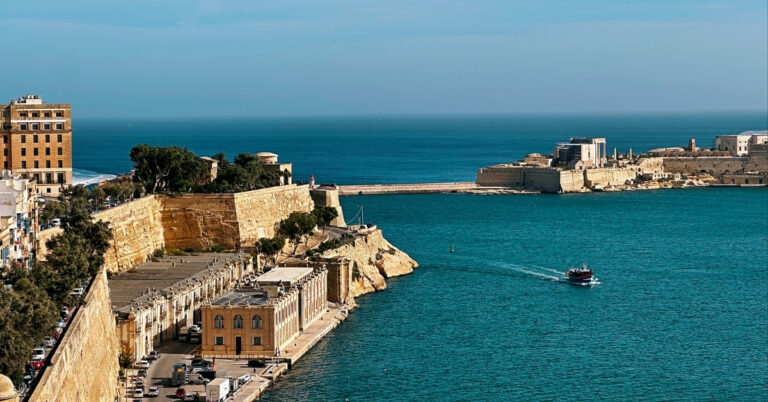
- Upper Barrakka Gardens. Waddle to the gardens for views across the Grand Harbor toward the Three Cities.
- Saluting Battery. Visit the historic artillery battery below the gardens. If your timing works, you can watch the ceremonial cannon firing.
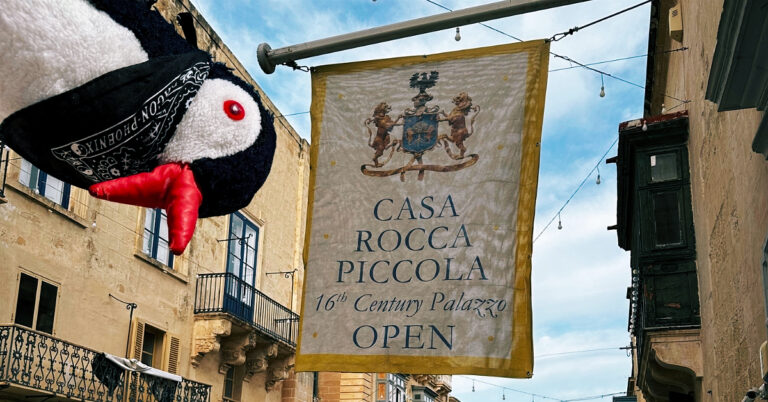
- Casa Rocca Piccola. Visit this historic residence to see how a Maltese noble family lived.
- Fort St Elmo and the National War Museum. Continue towards the tip of the peninsula to explore the fort and learn about Malta’s military history.
Buy Us a Ko-fi

St. John’s Co-Cathedral deserves a spot on your Valletta itinerary. We arrived with no idea what to expect and left impressed by the artwork, marble tombstones, and Caravaggio’s masterpiece. Whether you enjoy art, history, or exploring places that surprise you, set aside time to step inside. Just remember to look beyond the gold, use the audio guide, and give yourself time to notice the details.
Travel Bold. Eat Well. Waddle Wild.

This post contains affiliate links. If you click and buy, I might earn a tiny commission, enough to help a penguin keep up its globe-trotting lifestyle. No extra cost to you, just more fish for me. Thank you for supporting the adventure!