
Things to Know Before Visiting Vilnius: Essential Travel Tips
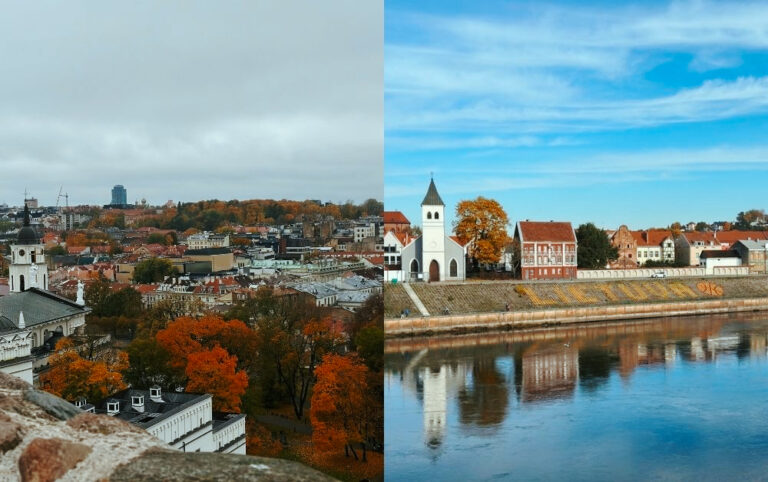
Vilnius surprises you slowly. At first, there is the grand Cathedral Square, the red roofs of the Old Town, and the towers rising above the city. Then you turn down a quieter cobbled street, discover a hidden courtyard, cross the bridge into Užupis, or climb a hill for a completely different view.
We quickly realized Vilnius is best explored without rushing. The historic center is compact, many of the main sights are within waddling distance, and some of the most interesting moments happen when you leave the obvious route behind. Before our own waddle through Lithuania’s capital, there were a few things we wish we had known. From how easy it is to get around to what makes Užupis so unusual, here’s what’s worth knowing before visiting Vilnius.
- Basic Facts About Vilnius
- The Legend of Vilnius’ Founding
- 19 Interesting Facts to Know Before Visiting Vilnius
- Practical Travel Things to Know Before Visiting Vilnius
- When Is the Best Time to Visit Vilnius
- How Many Days Do You Need in Vilnius
- Where to Stay in Vilnius
- How to Get Around Vilnius
- Is Vilnius Expensive
Basic Facts About Vilnius
- Population: Around 600,000 people live in Vilnius and its surrounding urban area.
- Area: Approximately 401 km² (155 sq mi) within the city limits.
- Location: Vilnius is in southeastern Lithuania, close to the country’s borders with Belarus and Poland.
- Time Zone: Eastern European Time, GMT+2, with daylight saving time in summer.
- Currency: Lithuania uses the euro (€).
- Language: Lithuanian is the official language. English is widely understood in tourist areas.
- Airport: Vilnius Airport is only a few kilometers from the city center.
- Old Town: Vilnius Historic Center is a UNESCO World Heritage Site.
- Nickname: Vilnius is sometimes known as the Jerusalem of the North because of its historic Jewish heritage.
- Famous Neighborhood: Užupis is one of the city’s most unusual districts and famously declared itself an independent republic.
- Symbol: Gediminas’ Tower is one of Vilnius’s most recognizable symbols.
The Legend of Vilnius’ Founding
One of Vilnius’ most famous stories begins with Grand Duke Gediminas. According to legend, he was hunting in the forests near the Neris River when he stopped for the night on a hill. During the night, he dreamed of an enormous iron wolf standing on the hill and howling so loudly that its voice could be heard for miles. Gediminas asked a pagan priest to interpret the dream. The priest said he should build a castle and a city on the hill, creating a settlement whose fame would spread far beyond Lithuania. Whether you believe the legend or not, the Iron Wolf remains closely connected with Vilnius. Today, Gediminas’ Tower stands above the Old Town, and the story has become one of the city’s most memorable founding myths.

19 Interesting Facts to Know Before Visiting Vilnius
#1: Vilnius Has One of the Largest Old Towns in the Baltics
Vilnius Old Town is not just a small collection of pretty streets around a central square. The historic center is extensive and packed with churches, courtyards, narrow lanes, old houses, and hidden corners. It is also the largest historic center in the Baltic States and has been a UNESCO World Heritage Site since 1994. Give yourself time to wander rather than simply ticking off the main landmarks. Some of our favorite moments came from streets that were not even on our original itinerary.
#2: Vilnius Is Surprisingly Walkable
One of the best things about Vilnius is that you can see a lot of it on foot. Cathedral Square, Vilnius Cathedral, Gediminas’ Tower, the Gates of Dawn, Town Hall Square, St. Anne’s Church, and Užupis can all be combined into a walking route. Most main attractions are concentrated in a relatively small area, with many sights reachable within 15 to 20 minutes on foot. Just remember that the Old Town is full of cobblestones, and some routes involve hills and stairs.
#3: Užupis Really Does Call Itself a Republic
Cross the bridge into Užupis, and you enter one of Vilnius’ most unusual neighborhoods. Užupis declared itself an independent republic on April 1, 1997. It has its own constitution, flag, president and even an unofficial army. Of course, Lithuania and the rest of the world do not recognize it as an actual independent country. The joke is part of the neighborhood’s identity. The area is artistic, relaxed and deliberately eccentric, with galleries, sculptures, cafés and the famous Užupis Constitution displayed along Paupio Street. Take your time here. It is not somewhere we would rush through to say we have been.
#4: Vilnius Is a City of Churches
Churches appear everywhere in Vilnius. You will find Gothic, Baroque, Renaissance, and Neoclassical architecture within a surprisingly small area. St. Anne’s Church, the Church of St. Peter and Paul, Vilnius Cathedral, and the Church of the Holy Spirit are just a few of the places worth seeing. Even if you are not particularly interested in religious buildings, they are an important part of understanding the city’s architecture and history.


#5: Gediminas’ Tower Gives You the Classic Vilnius View
If you have seen photographs of Vilnius, you have probably seen the red rooftops stretching towards Gediminas’ Tower. The tower stands on Gediminas Hill and is one of the city’s most recognizable landmarks. From above, you can see the Old Town, the Neris River, and the newer parts of the city. It is one of those places where it is worth stopping for a few minutes rather than immediately moving on to the next attraction.


#6: Vilnius Has a Strong Jewish History
Vilnius was once home to a large and influential Jewish community and became known as the Jerusalem of the North. The city’s Jewish heritage is particularly important when exploring the former Jewish Quarter and the streets around the Old Town. The Holocaust devastated the community during the Second World War, and today several memorials and museums help tell this part of Vilnius’ history. This side of the city is easy to miss if you follow the standard sightseeing route, but it adds an important historical layer to a visit.
#7: The Gates of Dawn Are More Than Just an Old City Gate
The Gates of Dawn, or Aušros Vartai, are among Vilnius’s best-known landmarks. They are the only remaining city gate from Vilnius’s original defensive walls, but their importance goes beyond architecture. The gate contains a famous image of the Virgin Mary and remains an important pilgrimage site. Even if you are only sightseeing, it is worth stopping to appreciate how much history this relatively small structure holds. The Gates of Dawn originally led towards another town, Medininkai.
#8: Vilnius University Is Worth Exploring
Vilnius University is one of the oldest universities in the Baltic region and occupies a beautiful collection of historic buildings in the heart of the Old Town. The university complex is particularly interesting because it isn’t a single large building. It includes historic courtyards, architectural details, and different sections developed over centuries. Waddle through the area and look up. Some of the most interesting details are easy to miss at street level.
#9: The City Has a Strong Baroque Character
Vilnius is sometimes called a Baroque city because of the many Baroque buildings and churches throughout the historic center. The style is particularly visible in the Church of St. Casimir and the Church of St. Peter and Paul, although Baroque details appear throughout the Old Town. The combination of ornate churches, pastel facades, narrow streets, and red rooftops gives Vilnius a very different architectural character from nearby Riga.
#10: There Is a Republic Hidden in the Middle of the City
Užupis is not the only thing that makes Vilnius feel slightly unexpected. The neighborhood has its own constitution, which is displayed on plaques in multiple languages. Instead of serious political rules, the articles contain playful and philosophical statements about happiness, freedom, dogs, cats, and simply being yourself. The constitution has become a symbol of Užupis and a perfect example of the neighborhood’s unusual sense of humor.
#11: Vilnius Is Very Green
For a European capital, Vilnius has an impressive amount of greenery. Parks, wooded hills and tree-lined streets are scattered throughout the city. Even around the historic center, you can quickly escape the busiest streets and find somewhere quieter. This is one reason Vilnius feels less hectic than some larger European capitals. You can spend the morning exploring churches and museums and still find yourself surrounded by trees a few minutes later.


#12: The City Has a Cold War Story Too
Vilnius is more than medieval churches and Baroque architecture. The Museum of Occupations and Freedom Fights, housed in the former KGB building, explores Lithuania’s 20th-century history, including the Soviet occupation and the repression that followed. The building also contains the former KGB prison. It is a much heavier experience than wandering through the Old Town, but it provides important context for understanding Lithuania’s recent history.
#13: You Can Visit Trakai From Vilnius
If you have more than two days, consider adding Trakai to your itinerary. The historic town is famous for Trakai Island Castle, a medieval castle surrounded by water and one of Lithuania’s best-known sights. Trakai works particularly well as a day trip from Vilnius rather than something to squeeze into a busy city itinerary. Current Vilnius tourism guidance also recommends treating Trakai as a separate half-day or full-day trip.
#14: Keep an Eye Out for Street Art
As you waddle through Vilnius, keep looking beyond the grand churches and historic facades. The city has a lively street-art scene, with colorful murals and large-scale works appearing on walls throughout the center and neighborhoods such as Užupis. Some pieces are tucked away on quiet streets, while others are impossible to miss. One of the best-known is the Trump mural, created by artist Mindaugas Bonanu, which became a memorable piece of Vilnius street art. The fun is not necessarily in following a strict street-art route. Keep your eyes open as you wander, because you never quite know what you will find around the next corner.


#15: Vilnius Has a Street Where Writers Are Turned Into Art
Literatų Street is one of those places you can easily walk past without realizing what you are looking at. Its walls are covered with more than 200 small artworks dedicated to writers, poets, and cultural figures. The pieces are made from materials including metal, glass, ceramics, and wood, and each one is different. The street also connects to Adam Mickiewicz, one of the most important poets of Polish Romanticism, who lived here.


#16: A Futuristic-Looking “Portal” Connects Vilnius With Another City
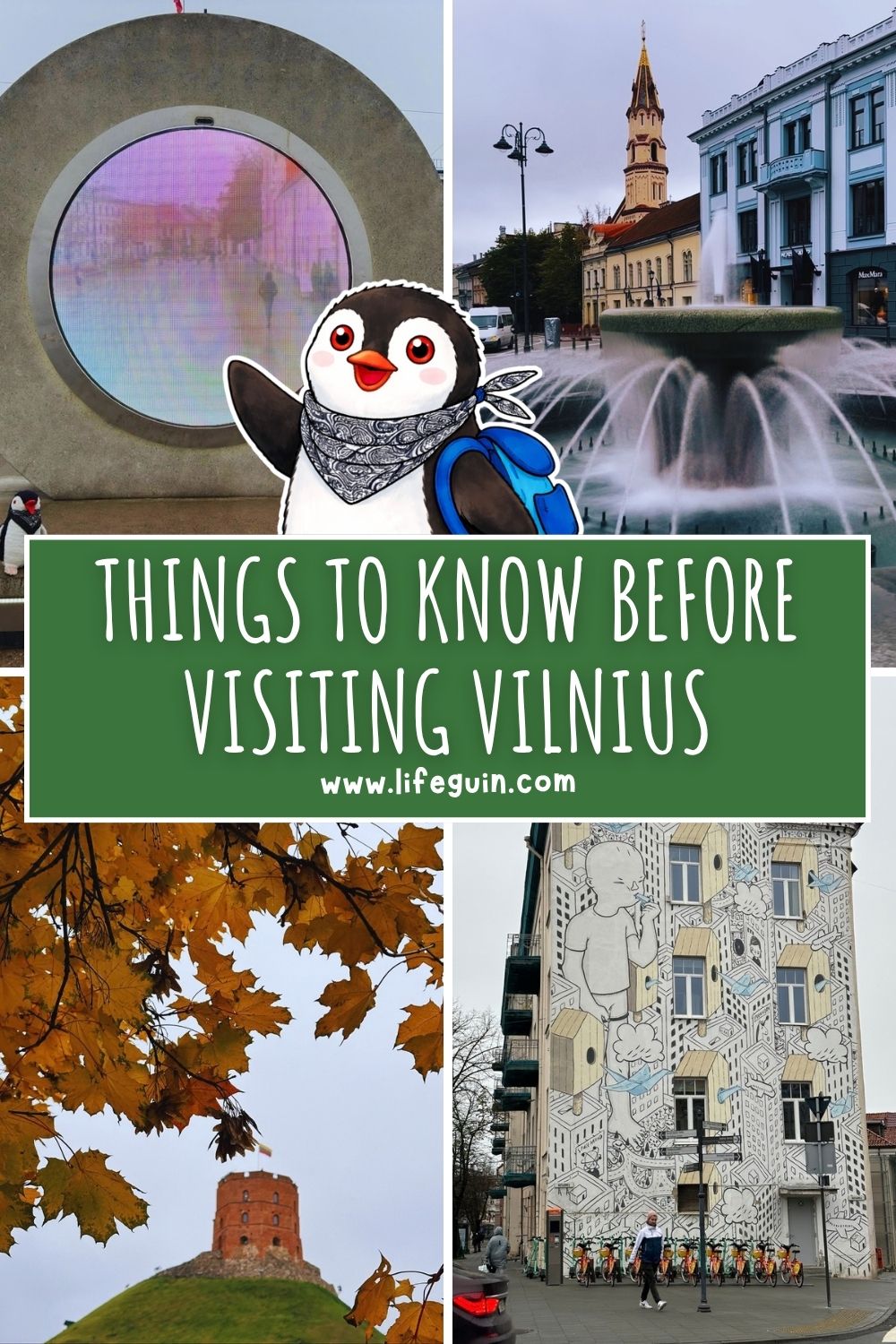
As you waddle through Vilnius, you might come across a strange circular installation that looks like something from a science-fiction film. This is the Portal, a futuristic-looking sculpture installed in the city to create a symbolic connection between Vilnius and another city. The installation uses a large circular screen to show a live image of what is happening at a matching Portal in the other city, creating the illusion of a doorway between two places thousands of kilometers apart. It was designed to remind people that cities can feel connected even when they are physically far apart. The Vilnius Portal has connected the Lithuanian capital with cities including Lublin, Poland, and later Philadelphia, USA.


#17: You Can See the Same Historic Gate in Another Lithuanian Town
The connection with Medininkai is particularly interesting because the old road through the Gates of Dawn led towards Medininkai, a historic town about 30 kilometers from Vilnius. The gate’s name itself preserves this old connection between the capital and the town. If you visit Medininkai Castle, you are essentially following the historic route that once began at one of Vilnius’ city gates.
#18: Hot Air Balloons Can Fly Over Vilnius
Hot Air Balloons: Vilnius is one of the few European capitals where hot-air balloons are permitted to fly directly over the city. On the right day, you can look up from the Old Town and see colorful balloons floating above the red rooftops, churches, and historic center. It is an unusual way to see a capital city, and Vilnius is particularly known for its ballooning culture.
#19: The Vilnia River Turns Green for St. Patrick’s Day
Green River: Every year on St. Patrick’s Day, the Vilnia River turns bright green as part of a colorful celebration in Vilnius. The tradition began in 2010 and has become one of the city’s more unusual annual events. The dye used is environmentally friendly and harmless to the river, creating a striking green ribbon through the city for the celebration.
Practical Travel Things to Know Before Visiting Vilnius
Vilnius is an easy city to explore, but knowing a few local details before you arrive can make your trip smoother. The historic center is compact, the airport is close to town, and you can cover many of the main sights without relying on transport. Here are the practical things we found most useful when traveling around Vilnius.
- You Can Waddle Most Places. Vilnius Old Town is compact, and many of the main sights are close together. You can reach Cathedral Square, Gediminas’ Tower, St. Anne’s Church, Literatų Street, the Gates of Dawn, and Užupis on foot. For a city break, you may barely need public transport.
- Public Transport Is There When You Need It. If your accommodation is outside the Old Town or you want to reach attractions further away, Vilnius has buses and trolleybuses. The Trafi app helps you check routes and departure times.
- The Airport Is Close. Vilnius Airport is only about 6 kilometers from the city center, so you don’t need to budget a long transfer after landing. You can reach the city by bus, train, or taxi. The Airport Train Is Extremely Quick. If you are staying near Vilnius Railway Station, the airport train is worth knowing about. The journey takes only about seven minutes, making it one of the quickest airport-to-city transfers we have come across.
- Tap Water Is Safe to Drink. You can fill your water bottle straight from the tap. You don’t need to buy bottled water throughout your stay.
- Wear Comfortable Shoes. Vilnius is a walking city, and the Old Town has plenty of cobblestones, uneven surfaces, and hills. Comfortable shoes will make a noticeable difference by the end of the day.
- Tipping Is Appreciated, But Not Mandatory. In restaurants, tipping is not generally compulsory. If you receive good service, leaving around 5–10% is a nice gesture, but you don’t need to feel obliged to tip just because a service charge is suggested.
- Užupis Is Easy to Combine With the Old Town. You do not need to dedicate a separate day to Užupis. It sits right next to the historic center, so you can cross the bridge and explore it as part of your Old Town walk.
- Look Up as You Waddle. Vilnius is particularly good for spontaneous discoveries. Street art, small courtyards, unusual sculptures, and architectural details are scattered around the Old Town, so don’t spend the entire walk staring at your map.
- Allow More Time for Hills Than the Map Suggests. Vilnius may look compact on a map, but Gediminas Hill and some streets around the historic center involve climbs. A route that looks short on your phone can feel considerably longer when you are walking uphill.
- Save Some Time for Wandering. Vilnius is not a city where you need to move from attraction to attraction all day. Leave gaps in your itinerary. Some of the most interesting details, from Literatų Street to unexpected murals and courtyards, are discovered simply by waddling around.
- Use Bolt Rather Than Hailing a Taxi. Taxis are widely available in Vilnius, but the city’s official tourism site specifically warns that some taxi drivers may unfairly raise prices for unsuspecting visitors. Using Bolt or another taxi app lets you see the price before the journey and avoids this problem.
- Watch Your Bill in Tourist-Focused Places. As with any European city, check your restaurant bill before paying, especially if you are eating right beside a major attraction. Also check whether a service charge is already included before adding a tip.
When Is the Best Time to Visit Vilnius
Vilnius is a four-season city, and each season changes the way the capital feels. Summer brings long days and outdoor life; spring fills the parks with fresh green; autumn turns the city golden; and winter adds a quieter, almost magical atmosphere. The city is particularly green, with parks and green spaces making up a significant part of Vilnius, so the seasonal changes are very noticeable.
- Spring (March–May). Spring brings milder temperatures, blossoming trees and fresh greenery to Vilnius. March can still feel very wintry, while April is more changeable. May is generally one of the nicest spring months for walking around the city, when everything is turning green.
- Summer (June–August). Summer is ideal for long days of sightseeing and wandering. July is usually the warmest month, while June and August can offer a slightly more comfortable balance between warm weather and sightseeing. This is also a great time to enjoy Vilnius’ parks, outdoor cafés, and green spaces.
- Autumn (September–November). Autumn is particularly beautiful in Vilnius because the city stays green. September can still feel mild, while October brings the spectacular autumn colors. By November, temperatures drop noticeably and the days become much shorter.
- Winter (December–February). Winter brings short days, cold temperatures, and the possibility of snow. December is particularly atmospheric because of the Christmas decorations and festive events, while January and February are generally the coldest part of the year.
We visited Vilnius at the end of October, and while the weather was cloudy and a little colder than we would have preferred, the autumn colors more than made up for it. Vilnius is such a green city that autumn transforms it completely. Trees line the streets, fill the parks and cover the hills around the Old Town, so everywhere you look, there are shades of yellow, orange and red. For us, those autumn colors were definitely worth putting on a warmer jacket for.
How Many Days Do You Need in Vilnius
We recommend spending two full days in Vilnius. The historic center is compact and very walkable so that you can see the major sights in a day. Still, a second day gives you time to explore Užupis, visit a museum or two, see more of the city’s street art, and enjoy Vilnius without rushing.
- 1 Day: You can see a surprising amount in one day. Focus on the Old Town, Cathedral Square, Gediminas’ Tower, St. Anne’s Church, Literatų Street, the Gates of Dawn, and Užupis. It will be a full day, but the compact center makes this possible.
- 2 Days: This is our recommendation for a first visit. You can slow down, explore the Old Town properly, spend more time in Užupis, visit some of Vilnius’ museums, and discover the city’s street art and viewpoints without constantly watching the clock.
- 3 Days: With three days, you can explore beyond the main center or dedicate half a day to Trakai, home to the famous island castle. Go Vilnius also recommends Trakai as a day-trip option from the capital.
We actually visited Vilnius as a one-day trip, and it was enough to get a good taste of the city. We spent the day wandering through the Old Town, taking in the main sights and simply enjoying the atmosphere. Because Vilnius is so compact, we never felt that we were constantly rushing from one attraction to another. That said, if we were planning the trip again, we would definitely stay at least one night. An extra evening and morning would give us more time to slow down, explore places we missed, and experience Vilnius after the day-trippers have left.
Where to Stay in Vilnius
For a first visit, we would stay in or very close to the Old Town. Vilnius is compact, and staying centrally means you can walk to most major sights instead of spending your trip worrying about transport. The Old Town also offers the atmosphere that makes Vilnius special, with cobbled streets, historic buildings, courtyards, cafés, and restaurants right outside your door.
There are three areas we would consider:
- Vilnius Old Town. This is the easiest choice for a first visit, especially if you are only staying for one or two nights. You can waddle to Cathedral Square, Vilnius University, the Gates of Dawn, St. Anne’s Church, and many of the city’s restaurants and cafés. For a historic stay, consider NARUTIS Hotel or Artagonist Art Hotel, both in the Old Town.
- City Center. Staying around Gedimino Avenue gives you a slightly more modern side of Vilnius while keeping the Old Town within walking distance. It is a good option if you want more shops, restaurants, and larger modern hotels nearby. Hilton Garden Inn Vilnius City Centre and Radisson Blu Hotel Lietuva are two options to consider.
- Užupis. Stay here if you want something a little more alternative. Užupis is known for its artistic atmosphere, galleries, cafés and riverside setting, while the Old Town is still only a short walk away. Accommodation is more limited here, but Angel Wing Apartamentai and Paupys lofts are options worth checking.
For a short city break, we would personally choose the Old Town. Since we only had one day in Vilnius, staying centrally would have made it even easier to maximize our time, step outside, and start waddling.
How to Get Around Vilnius
Vilnius is one of those cities where your feet should be your main mode of transport. The Old Town is compact, and many major sights connect into one long walking route. For longer distances, Vilnius has buses and trolleybuses. The official tourism site recommends using the Trafi app to plan journeys, while JUDU provides information about the city’s public transport system. Taxis and ride-hailing services such as Bolt are also available. If you are arriving at the airport, you can choose between bus, train, taxi, or ride-hailing depending on where you are staying and how much luggage you have.
Is Vilnius Expensive
Vilnius is still relatively affordable for a European capital, although it is no longer the ultra-cheap destination it may have been a few years ago. In 2026, you can expect to pay around €6–9 for a weekday lunch menu, €20–35 for a main-course dinner in a mid-range restaurant, €2.50–4.50 for a cappuccino, and around €4–6 for a local craft beer. A quick Lithuanian snack such as a kibinas can cost just €2–3, while museum and attraction tickets are generally around €5–17. For souvenirs, small items such as magnets, badges, or keyrings cost around €3–6, while something more substantial, such as a T-shirt, is around €20. Accommodation makes the biggest difference to your overall budget: a mid-range double room can start at roughly €55–110 per night, while higher-end hotels start around €130. For a comfortable city break, Vilnius offers a good balance of price and quality, especially if you walk most places and take advantage of inexpensive lunch menus.
Buy Us a Ko-fi

Vilnius is worth visiting, especially if you enjoy cities that reveal themselves as you wander rather than presenting everything on a single postcard. We loved the mix of grand churches, colorful Old Town streets, hidden courtyards, unexpected street art, and the wonderfully quirky atmosphere of Užupis. Even though we spent only one day in the city, we left feeling there was much more to discover, and if we return, we would definitely stay at least one night.
Our biggest tip is simple: don’t rush Vilnius. Waddle down the little streets, look up at the buildings, peek into courtyards, stop for coffee, and follow the streets that look interesting. You will see the famous sights along the way, but the unexpected details often make the city memorable. And with Trakai and the rest of Lithuania so accessible from the capital, Vilnius makes an excellent starting point for a bigger Lithuanian adventure.
Travel Bold. Eat Well. Waddle Wild.
Save This Pin for Later!
This post contains affiliate links. If you click and buy, I might earn a tiny commission, enough to help a penguin keep up its globe-trotting lifestyle. No extra cost to you, just more fish for me. Thank you for supporting the adventure!