

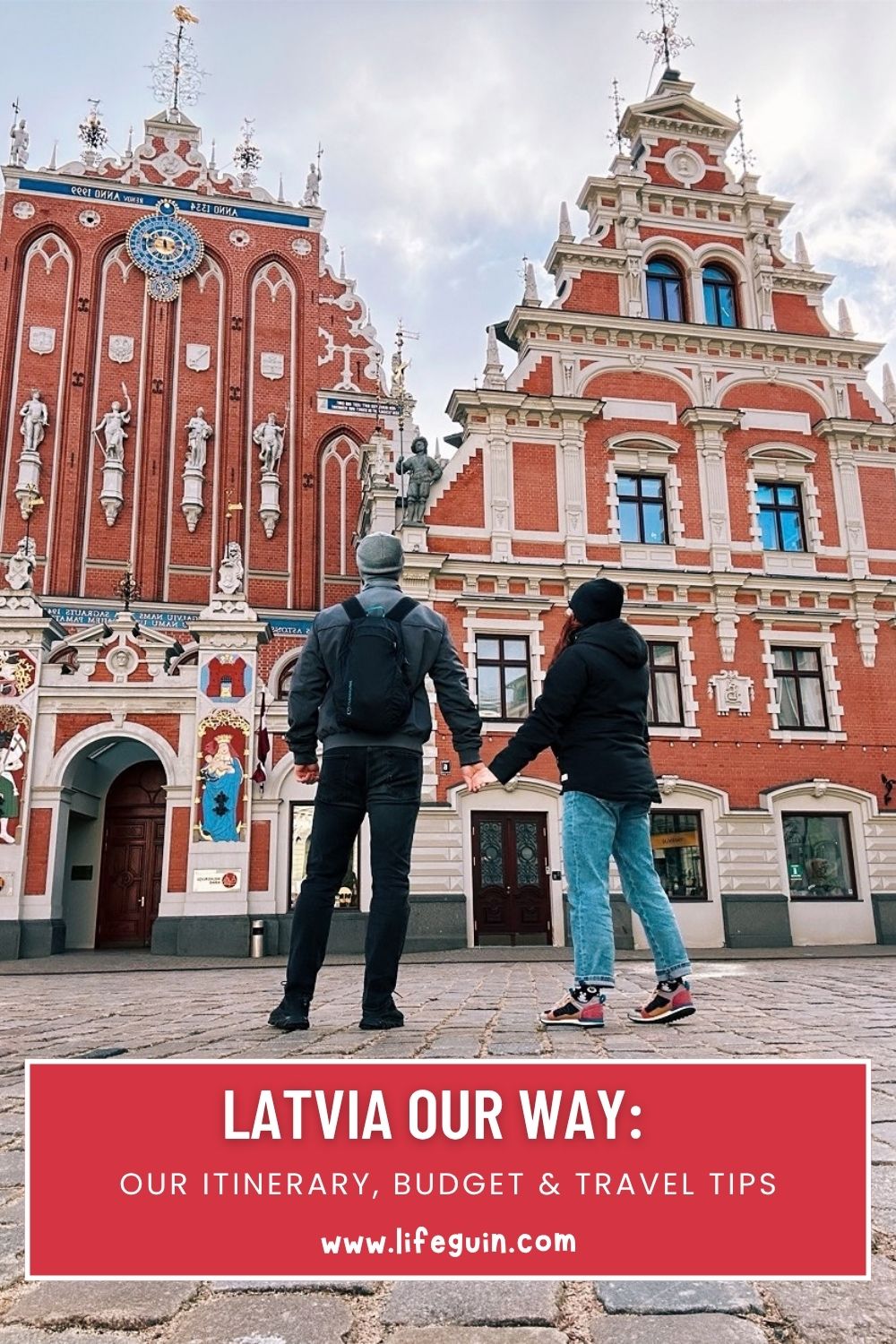
Latvia Our Way: Our Itinerary, Budget & Travel Tips
Latvia surprised us by rewarding curiosity. One moment we were wandering through Riga’s grand Art Nouveau streets and historic squares, the next we were standing beneath the towers of medieval Sigulda, looking out over the Gauja Valley. Between the major sights, there were markets to explore, local dishes to try, quiet streets to wander, and plenty of small discoveries that never make it onto the standard itinerary.
This guide is a practical record of how we traveled through Latvia: where we went, what we saw, how we got around, and what we actually spent. We have broken down our route, shared the costs, collected the places worth adding to your own itinerary, and noted what we would do differently if we planned the trip again.
Think of it as our Latvia travel notebook, with the useful details left in. From Riga and its historic center to day trips and places beyond the capital, we’re sharing what worked, what surprised us, and what is worth knowing before you go. We’re also answering some of the questions you’ve sent us on Instagram, so you can spend less time on logistics and more time enjoying your own Latvian adventure.
- Do I Need a Visa to Visit Latvia
- Is Latvia Safe to Visit
- Is Latvia Expensive to Visit
- How Long Do You Need in Latvia
- How Did We Get Around Latvia
- Do You Need to Rent a Car in Latvia
- Is Riga Walkable
- Can You Drink Tap Water in Riga
- Is English Spoken in Latvia
- What Is the Best Time to Visit Latvia
- What Day Trips Can You Take From Riga
- Is Latvia Good for a Weekend Trip
- What Is a Good Latvia Itinerary
- Where Did We Stay in Riga
- How Much Did Our Trip to Latvia Cost? A Full Breakdown
- What Surprised Us About Latvia
- What Would We Do Differently Next Time
- Is Latvia Worth Visiting
Latvia Travel FAQs
Do I Need a Visa to Visit Latvia
It depends on your nationality. Latvia is part of the Schengen Area, so citizens of EU/EEA countries and Switzerland can travel to Latvia without a visa. Nationals of many other countries can also enter visa-free for short stays, while travelers from countries outside the visa-exempt list may need a short-stay Schengen visa. For visa-exempt travelers, the standard Schengen limit is 90 days within any 180 days. Always check the requirements for your nationality before booking your trip.
Keep an eye on ETIAS. As of September 2026, ETIAS is still not operational, and applications are not currently being accepted. It will eventually be required for travelers from visa-exempt countries visiting Latvia and other participating European countries. The EU says it will announce the exact launch date several months in advance.
Is Latvia Safe to Visit
For most, yes, Latvia is a straightforward destination to explore. As with any European city, the main risk is petty crime rather than serious violence. Pickpocketing and bag snatching can happen in busy areas of Riga, particularly around the Old Town, Central Market, the central train station, and the bus station. Watch your belongings in crowded places, and avoid poorly lit streets and parks late at night.
There are also occasional reports of tourist scams and drink spiking, particularly around bars and nightclubs in Riga. Check prices before ordering drinks, keep your card in sight when paying, and never leave a drink unattended.
If you are driving around Latvia, take normal road-safety precautions and be particularly careful in winter, when snow and freezing temperatures can make roads more challenging.
Our experience: We felt comfortable traveling around Latvia and had no safety issues during our trip. As always, sensible precautions go a long way. Latvia is a country where you can enjoy exploring independently without spending your entire trip worrying about safety.
Is Latvia Expensive to Visit
Latvia is relatively affordable by European standards, although how much you spend depends heavily on your travel style and where you eat and stay. Riga, in particular, offers plenty of ways to keep costs under control, from inexpensive public transport and casual restaurants to free parks, historic streets and outdoor attractions.
According to recent traveler-spending data, a mid-range trip to Latvia averages around €134 per person per day, including accommodation, food, transport and sightseeing. Budget travelers can spend considerably less, while luxury trips can quickly push the daily cost above €300.
Riga remains particularly good value for a European capital. In the 2025 City Costs Barometer, Riga was the least expensive of 38 European cities surveyed, with a typical tourist basket costing €297 for two people. That included two nights in a three-star hotel, dinner, drinks, public transport, and museum visits.
What Can You Expect to Pay
As a rough guide:
- Budget travel: around €50–60 per person per day
- Mid-range travel: around €120–135 per person per day
- Luxury travel: €300+ per person per day
- Public transport: generally just a few euros per day
- Museums and attractions: many are in the €3–10 range
- Car rental: approximately €30–70 per day, depending on the vehicle and insurance
Of course, these are averages, not a prescription for your trip. We found that where you eat makes a noticeable difference, particularly in Riga’s Old Town, where restaurants in the most tourist-heavy areas can be considerably more expensive than places a few streets away.
For us, Latvia felt like a destination where you could eat well, see plenty, and explore without constantly checking your wallet. It isn’t the ultra-cheap European destination some older travel guides might suggest, but with a little planning, it offers plenty of room for a comfortable trip without a huge budget. Read on as we share our exact costs later.
How Long Do You Need in Latvia
We recommend spending at least 4 to 5 days in Latvia to get a proper taste of the country without rushing from one attraction to the next. This gives you enough time to explore Riga, take a day trip to Sigulda, and still leave room for wandering, eating, and discovering places not on your itinerary.
Suppose you have a week; even better. You can slow down the pace and venture further beyond Riga, exploring more of Latvia’s towns, countryside and coastline.
For a shorter city break, 3 days can work well for Riga alone, especially if you focus on the Old Town, Art Nouveau district, Central Market and the city’s main museums and landmarks. But if you want to see more of what makes Latvia interesting beyond its capital, we would recommend at least 5 days.
Our Recommendation
- 2–3 days: Riga city break
- 4–5 days: Riga + Sigulda and a little more of Latvia
- 6–7 days: A more relaxed trip with additional destinations
- 10+ days: Time to explore Latvia well beyond Riga and travel at a slower pace
For our trip, we found that giving ourselves time to wander was just as valuable as ticking attractions off the list. Riga has plenty to see, but some of our favorite moments came from waddling without a strict plan, stopping for food and letting the city unfold around us.
How Did We Get Around Latvia
Getting around Latvia was easier than we expected, and we didn’t need to rent a car for our trip. We used a combination of waddling, public transport and trains, depending on where we were heading. Riga was particularly easy to explore on foot, while trains and buses made it possible to get beyond the capital without driving.
Within Riga, we waddled most of the time. The historic center is compact, and many of the main sights are close together, so walking was often quicker and more enjoyable than figuring out transport. When we needed to travel further, Riga’s network of buses, trams and trolleybuses was easy to use.
For trips outside Riga, trains were particularly useful. We used public transport to reach Sigulda and the Gauja Valley, which made for an easy day trip without a car. Buses also connect Riga with many towns and destinations around Latvia.
If you’re planning to explore more remote areas, smaller towns or the Latvian countryside, renting a car can give you much more flexibility. But if your itinerary is mainly Riga with a few popular day trips, we found there was no real need for one.
For us, skipping the rental car also meant one less thing to think about. We could waddle out of the hotel, catch a train when we wanted to leave Riga, and spend our time looking out the window rather than worrying about parking.
Do You Need to Rent a Car in Latvia
No, you don’t need to rent a car for a trip to Latvia, especially if your main focus is Riga. The capital is easy to explore on foot, and its public transport network includes buses, trams and trolleybuses, making it straightforward to get around without driving.
Latvia also has a good network of trains and buses connecting Riga with other towns and cities, so you can reach several popular destinations without having your own vehicle. For example, Sigulda is an easy day trip from Riga by train, so you can explore the Gauja Valley without dealing with parking or unfamiliar roads.
That said, a car becomes useful if you want to explore rural Latvia, visit smaller towns, or build a road trip around the country. Having your own wheels gives you much more flexibility, especially when traveling to places with less frequent public transport connections.
For our trip, we didn’t rent a car and found we could get around comfortably using public transport and our own two feet. If you’re planning a Riga-based trip with a few day trips, we’d skip the rental car and put that money towards more Latvian food instead.
Is Riga Walkable
Yes, Riga is very walkable, especially if you stay in or near the city center. Many of the city’s main sights are close enough to reach on foot, and walking is actually one of the best ways to experience Riga.
The Old Town is compact and pedestrian-friendly, with major landmarks, historic streets, cafés and restaurants packed into a relatively small area. From there, you can easily continue towards the Freedom Monument, Latvian National Opera, Central Market and the Art Nouveau district.
We spent a lot of our time simply walking around Riga without rushing from one attraction to another. Some of the most interesting details are found between the famous sights: colorful buildings, quieter streets, unexpected courtyards and small cafés.
For anything further away, Riga has an extensive network of trams, buses and trolleybuses, so you don’t need to rely on taxis.
Our tip: Wear comfortable shoes. Riga’s Old Town has plenty of cobblestones, and once you start exploring on foot, you will probably cover more ground than you expect.
Can You Drink Tap Water in Riga
Yes, you can drink tap water in Riga. The city’s water supplier, Rīgas ūdens, says Riga has a sufficient supply of high-quality drinking water and encourages residents and visitors to choose tap water over bottled water.
Rīgas ūdens regularly tests and monitors the supply, conducting daily quality checks and sampling across the city’s distribution network. In 2025, the company reported that 355 drinking-water samples from Riga’s water network were tested as part of the Health Inspectorate’s monitoring program.
So you don’t need to buy bottled water during your Riga trip. Bring a reusable bottle, fill it from the tap, and save both money and plastic waste.
Our tip: If you’re staying in an older building and notice an unusual taste or smell, let the tap run briefly before filling your bottle.
Is English Spoken in Latvia
Yes, English is widely spoken in Latvia, particularly in Riga and in places that regularly welcome international visitors. Latvia’s official tourism board notes that English is widely used in everyday communication, alongside Latvian and Russian. Tourism-sector staff are also described as fluent in English.
In Riga, you should have little trouble communicating in English at hotels, restaurants, cafés, museums and tourist attractions. You will also find English information and signage in many places.
Outside Riga, English may be less consistently spoken, particularly among older residents or in smaller, more rural areas. Still, we found that communication was generally easy during our trip.
Our tip: You don’t need to learn Latvian to travel around Latvia, but knowing a simple paldies (thank you) never hurts.
What Is the Best Time to Visit Latvia
The best time to visit Latvia depends on what you want from the trip. Summer brings the warmest weather and long daylight hours, making it ideal for exploring Riga, visiting the coast and spending time outdoors. Spring and autumn are quieter, with cooler temperatures and fewer visitors, while autumn brings beautiful colors to places such as the Gauja Valley. Winter is cold and days are short, but Riga takes on a completely different atmosphere, particularly around the Christmas season.
We visited Latvia in March, so we experienced the country during the colder, quieter part of the year. Riga was chilly, but the crisp weather didn’t stop us from walking around and exploring. If you are happy to wrap up and don’t mind cooler temperatures, March can still be a good time for a city break, particularly if you want to experience Riga without the summer crowds.
What Day Trips Can You Take From Riga
Riga makes a convenient base for exploring more of Latvia. Several interesting destinations are within roughly an hour or two of the capital, and you can reach some of them easily by public transport.
- Sigulda: Probably the easiest choice for a day outside Riga. Located in the Gauja National Park, Sigulda combines castle ruins, viewpoints, forests and the Gauja River valley. You can reach it by train from Riga in around 1 hour 10 minutes.
- Jūrmala: Head to the Baltic coast for a completely different atmosphere. The resort town has a long sandy beach, pine forests, and Jomas Street. It is only around 30 minutes by train from Riga, making it one of the simplest day trips.
- Cēsis: A good option for medieval history and a smaller-town atmosphere. The main draw is Cēsis Castle, but the old town and surrounding Gauja National Park are worth exploring too.
- Rundāle Palace: If grand architecture is more your thing, head to this impressive Baroque and Rococo palace and its gardens. It is easier to visit by car or organized tour, as public transport involves a change in Bauska.
- Saulkrasti: For another dose of Latvian coastline, Saulkrasti offers beaches and the 3.6 km White Dune walking route through the coastal landscape.
- Jelgava: Visit for Jelgava Palace and the city’s historic sights. It is another option if you want to explore Latvia beyond the capital without committing to a longer journey.
For our trip, we chose Sigulda, and it worked particularly well as a day trip from Riga. If you have several extra days, you could easily turn some of these destinations into an itinerary of their own rather than trying to squeeze everything into one day.
Is Latvia Good for a Weekend Trip
Yes, Latvia works very well for a weekend trip, especially if you focus on Riga and add one day trip outside the capital. Two or three days give you enough time to explore Riga’s historic center, see its Art Nouveau architecture, visit the Central Market, and enjoy the city’s restaurants without feeling like you’re constantly rushing. If you have an extra day, use it to explore Sigulda and the Gauja Valley for a change of scenery.
What Is a Good Latvia Itinerary
If you only have two days in Latvia, we recommend splitting your time between Riga and the Gauja Valley. Spend your first day discovering Riga’s historic center, Art Nouveau architecture, markets, and main landmarks, then head out of the capital on day two to explore Sigulda and the surrounding Gauja Valley. It gives you a taste of both sides of Latvia, combining city, history and nature without trying to squeeze too much into a short trip.
For the full day-by-day breakdown, including what we saw, where we ate, and how we got around, check out our guide:
👉 2 Days in Latvia: Exploring Riga and the Gauja Valley
It’s our practical itinerary for making the most of a short trip while still leaving enough time actually to enjoy the places you visit.
Where Did We Stay in Riga
For our time in Riga, we stayed at Wellton Centrum Hotel & SPA, a 4-star hotel right in the heart of Riga’s Old Town. Its location at 33 Kaleju iela made it an easy base for exploring the city on foot, with many of Riga’s main sights just a short walk away.
The hotel has 144 rooms, a spa with a pool, jacuzzi, sauna, and Turkish steam bath, and the Melnā Bite restaurant serving contemporary Latvian and European cuisine. Breakfast is included for hotel guests.
For us, the location was the biggest advantage. We could leave the hotel and immediately find ourselves in the middle of Old Riga, rather than spending time commuting into the center every morning.
Our tip: If you’re planning to explore Riga primarily on foot, staying in or around the Old Town makes a lot of sense. It puts many of the city’s highlights within easy walking distance and also means you can pop back to the hotel whenever your feet need a break.
How Much Did Our Trip to Latvia Cost? A Full Breakdown
Here is where we open the spreadsheet and show you what our Latvia trip actually cost. We have included everything from flights and accommodation to restaurants, attractions, snacks, and souvenirs. We also tracked the €198 we saved and deducted it from our overall spending.
| What | Cost |
| Flight Ticket | €173.60 |
| Accommodation | €68.00 |
| Transportation | €62.30 |
| Attractions | €42.00 |
| Restaurants | €148.70 |
| Groceries & Snacks | €41.00 |
| Drinks | €21.00 |
| Souvenirs | €103.39 |
| Saved | -€198.00 |
| TOTAL COST | €461.99 |
| PER PERSON | €231.00 |
Our total cost for the trip was €461.99, or about €231 per person. Flights and food made up a significant part of our spending, while our accommodation was surprisingly reasonable. We also spent €103.39 on souvenirs, which, let’s be honest, is not exactly an essential travel expense but is always part of our travel budget. Once we factored in our €198 in savings, Latvia turned out to be a fairly affordable European adventure.
One important detail behind these numbers: we saved quite a bit on accommodation because our stay at Wellton Centrum Hotel & SPA was part of a collaboration with the hotel. The €68 shown in the table reflects what we actually paid, rather than the hotel’s full standard room rate. Without the collaboration, our accommodation costs would have been higher, so keep that in mind when using our total as a reference for planning your own Latvia trip.
What Surprised Us About Latvia
Our biggest surprise was how much there is to see in Riga. We expected to cover the city fairly quickly, but the architecture, museums, churches, markets, and beautiful streets kept us wandering for longer than planned. We also loved how walkable the city felt and how affordable many things were compared with other European capitals. Then we headed to Sigulda and discovered a completely different side of Latvia, with forests, castles, and the Gauja Valley.
What Would We Do Differently Next Time
If we were planning the trip again, we would give Latvia more time. Riga deserves more than a quick stop, and there are plenty of places beyond the capital that we didn’t get to explore. We’d also slow down the itinerary a little, leaving more time for spontaneous wandering, meals, and those small discoveries that don’t appear on a map.
Is Latvia Worth Visiting
Absolutely. Latvia surprised us, particularly Riga. We arrived expecting a relatively compact European capital we could cover in a couple of days, but there was far more to see than we expected.
Riga has an impressive mix of medieval streets, Art Nouveau architecture, historic churches, markets, museums, parks, and lively neighborhoods, and we kept finding another street, building, or small corner worth stopping for. Even after seeing the major landmarks, we still felt like there was more to explore.
And Riga is only part of the story. Once you venture beyond the capital, Latvia opens up into forests, castles, beaches, small towns, and the landscapes of Gauja National Park. Our trip to Sigulda gave us a completely different perspective on the country and showed us why it is worth looking beyond Riga.
What we particularly enjoyed was that Latvia never felt like a destination where we had to rush from one famous sight to the next. There was plenty to see, but also plenty of room to slow down, wander, and let the destination surprise us.
So, did Latvia surprise us? Yes, in the best possible way. We went in with fairly modest expectations and came away feeling that we had only scratched the surface, especially in Riga. If you are looking for a European destination with plenty of history, architecture, nature, and good food without the scale of some of Europe’s busier capitals, Latvia is worth putting on your list.
Buy Us a Ko-fi

Latvia surprised us with just how much there is to discover. Riga alone kept us busy far longer than we expected, with its historic streets, beautiful architecture, museums, markets and plenty of places to eat and wander. Add a day trip to Sigulda, and there is even more to explore beyond the capital. We hope our itinerary, costs, and practical tips help you plan your own trip and, perhaps, discover a side of Latvia that surprises you too.
Travel Bold. Eat Well. Waddle Wild.
Save This Pin for Later!
This post contains affiliate links. If you click and buy, I might earn a tiny commission, enough to help a penguin keep up its globe-trotting lifestyle. No extra cost to you, just more fish for me. Thank you for supporting the adventure!