

The Stories Left Behind: Visiting Riga’s Ghetto and Holocaust Museum
While exploring Riga, the Riga Ghetto and Latvian Holocaust Museum was not specifically on our bucket list. We came across it while wandering around the city and decided to step inside. Learning the history of the places we visit matters to me, especially when they tell stories that shouldn’t be forgotten, so we took time to explore the museum and learn more about Latvia’s Jewish community and the Holocaust.
- Quick Facts About the Riga Ghetto and Latvian Holocaust Museum
- How to Get to the Riga Ghetto and Latvian Holocaust Museum
- Tickets and Opening Hours
- Facilities and Amenities
- What You Actually See at the Museum
- Inside the Riga Ghetto and Latvian Holocaust Museum
- How Long Do You Need at the Museum
- Best Time to Visit
- Jewish Heritage Sites Around Riga
Quick Facts About the Riga Ghetto and Latvian Holocaust Museum
- Location: Lastādijas iela 14A, Riga, Latvia
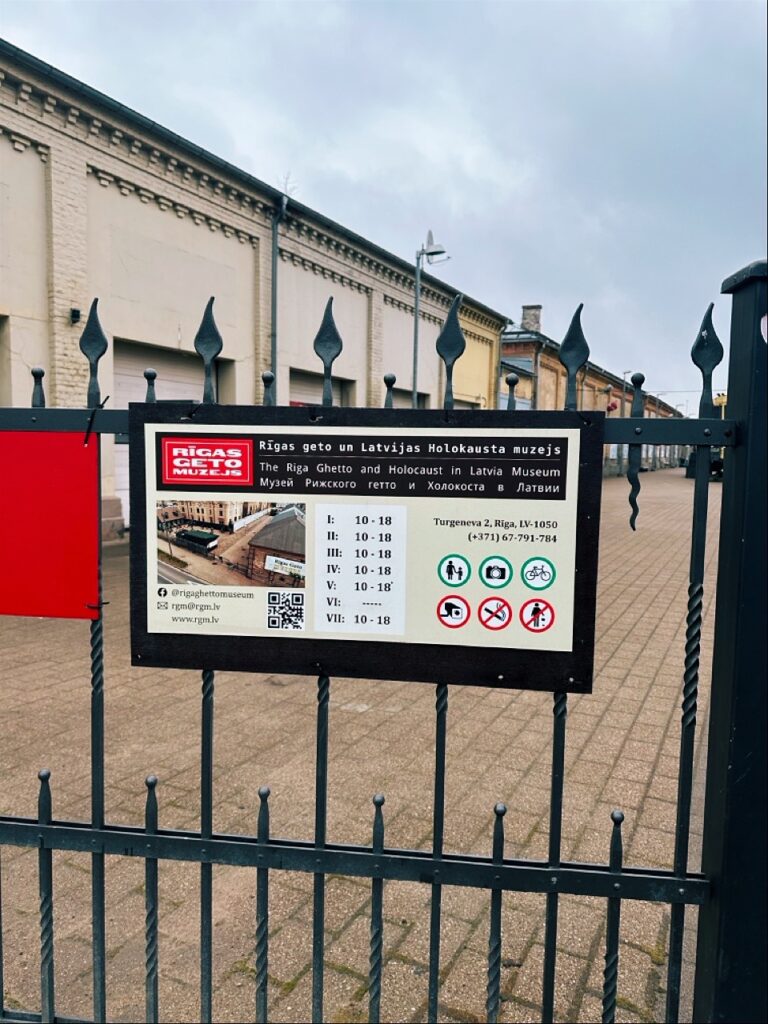
- Opening hours: Sunday–Friday, 10:00–18:00. Closed Saturdays.
- Tickets: €5 for adults, €3 for students, pupils, and pensioners.
- Accessibility: mostly an outdoor museum, so bring weather-appropriate clothing.
- Time needed: around 30–60 minutes.
- Type: Mainly outdoor exhibitions documenting the history of Riga’s Jewish community and the Holocaust.
- Guides: Guided tours are available
- Website: Riga Ghetto
How to Get to the Riga Ghetto and Latvian Holocaust Museum
The museum is at Lastādijas iela 14A, with the entrance from Krasta iela, in the Maskavas Vorstadt district. It is within waddling distance of central Riga. You can also reach the area by public transport, with several tram and bus routes stopping nearby, including trams 2, 3, 5, 7 and 9 and buses 13, 20, 23, 26 and 39. From the Old Town, you can also waddle to the museum as we did.
Tickets and Opening Hours
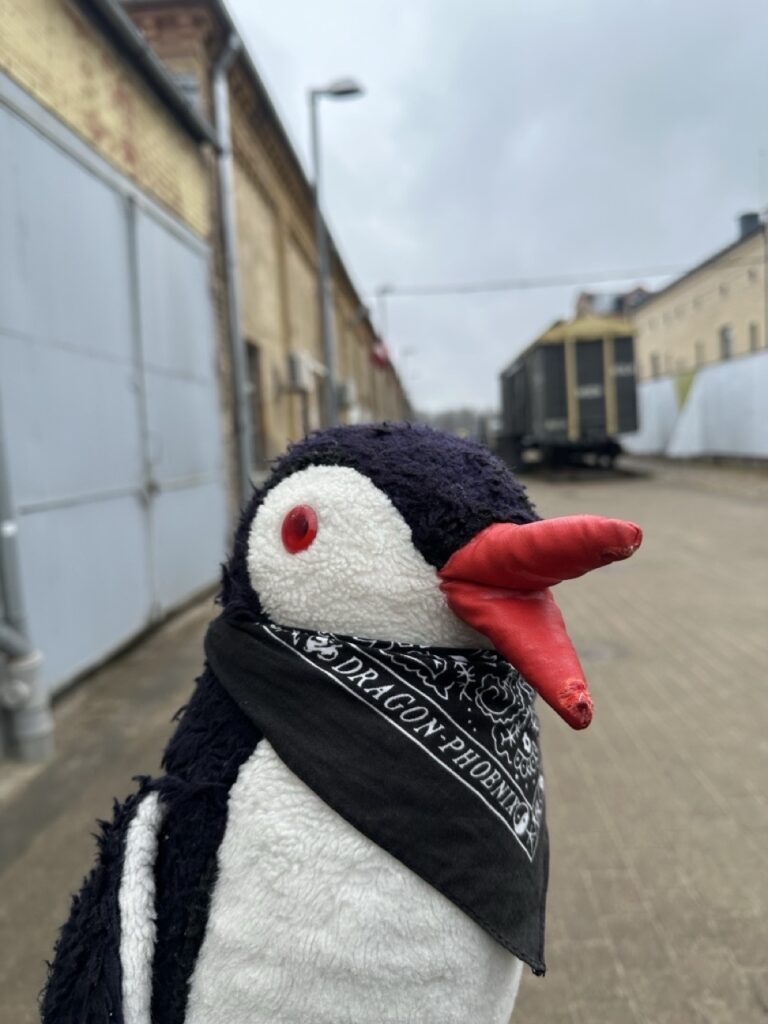
The Riga Ghetto and Latvian Holocaust Museum is open Sunday to Friday from 10:00 AM to 6:00 PM and is closed on Saturdays. Admission costs €5 for adults and €3 for pupils, students, and pensioners. Plushies have free entry. The museum also welcomes additional financial support, so you can leave a voluntary donation on top of the entrance fee if you wish to help support its work.
Facilities and Amenities
- Information boards. Exhibits with historical information.
- Guided tours. Available for visitors.
- Souvenir shop. Museum-related souvenirs are available.
- Restrooms. Available for visitors.
- Donations. Visitors can make an additional voluntary donation.
- Outdoor exhibits. Most of the museum is outdoors, so dress for the weather.
What You Actually See at the Museum
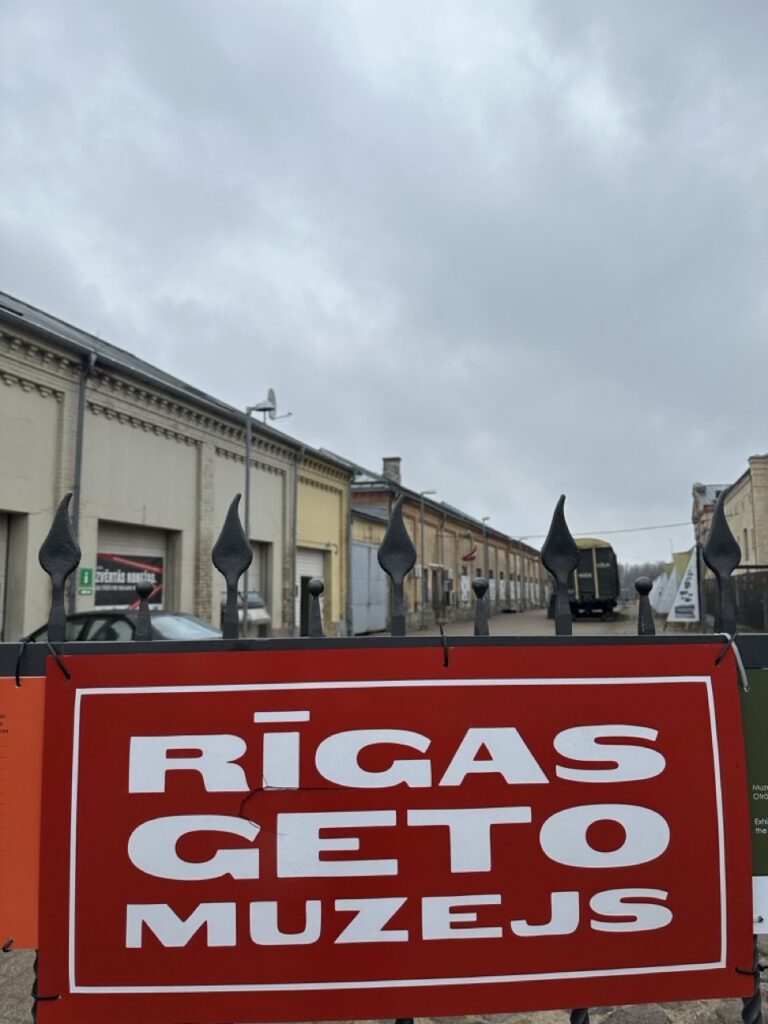
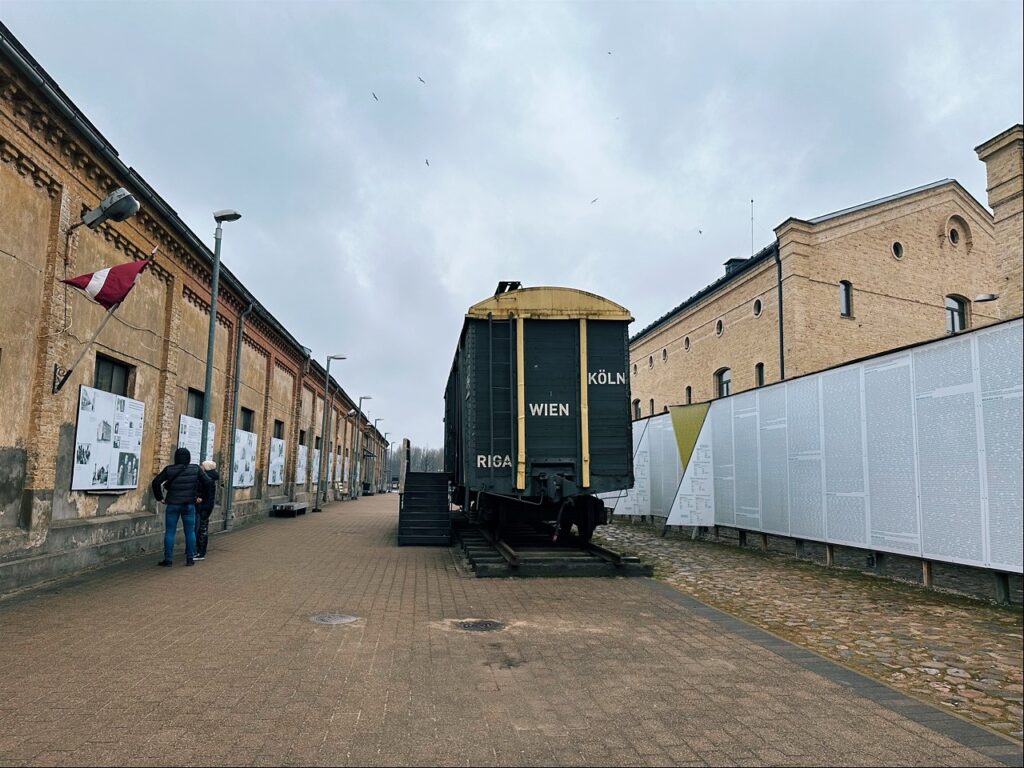
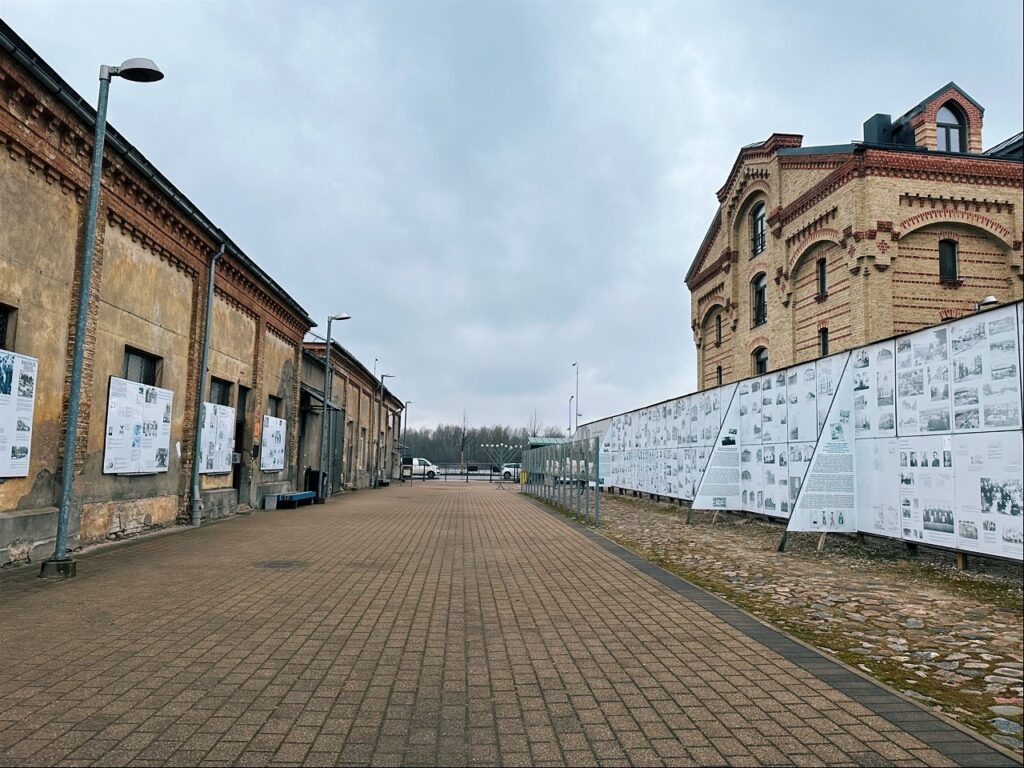
The Riga Ghetto and Latvian Holocaust Museum is mainly an open-air museum, with exhibits spread throughout the former ghetto area.
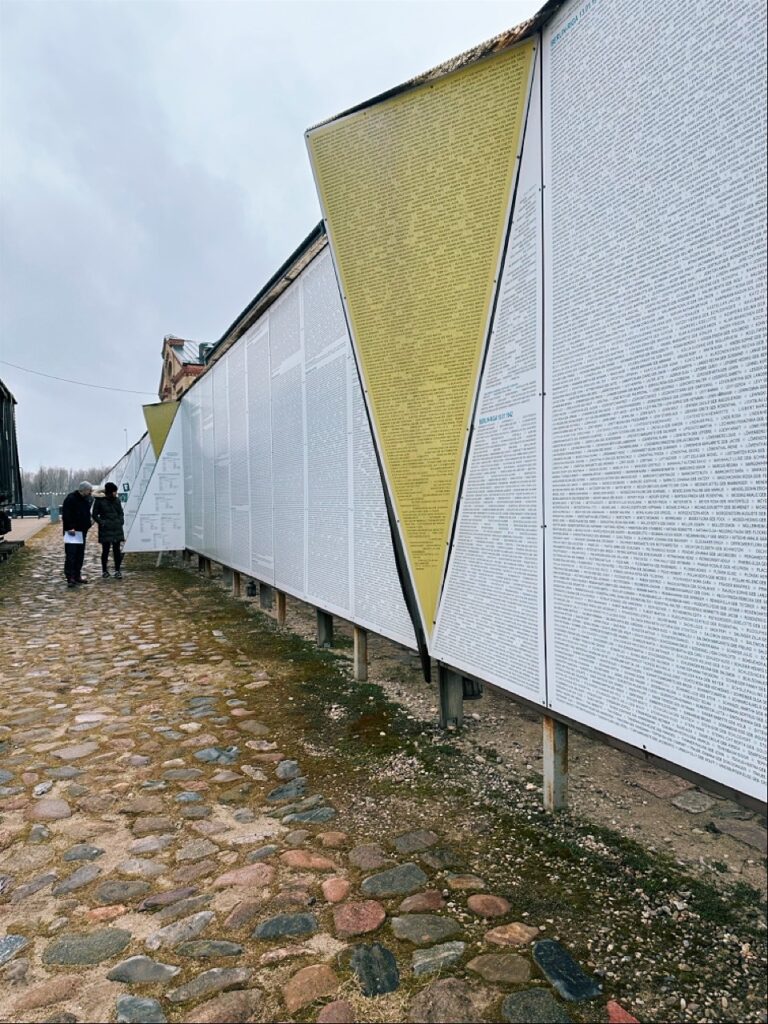
- Memorial Wall. A memorial featuring the names of people murdered during the Holocaust.
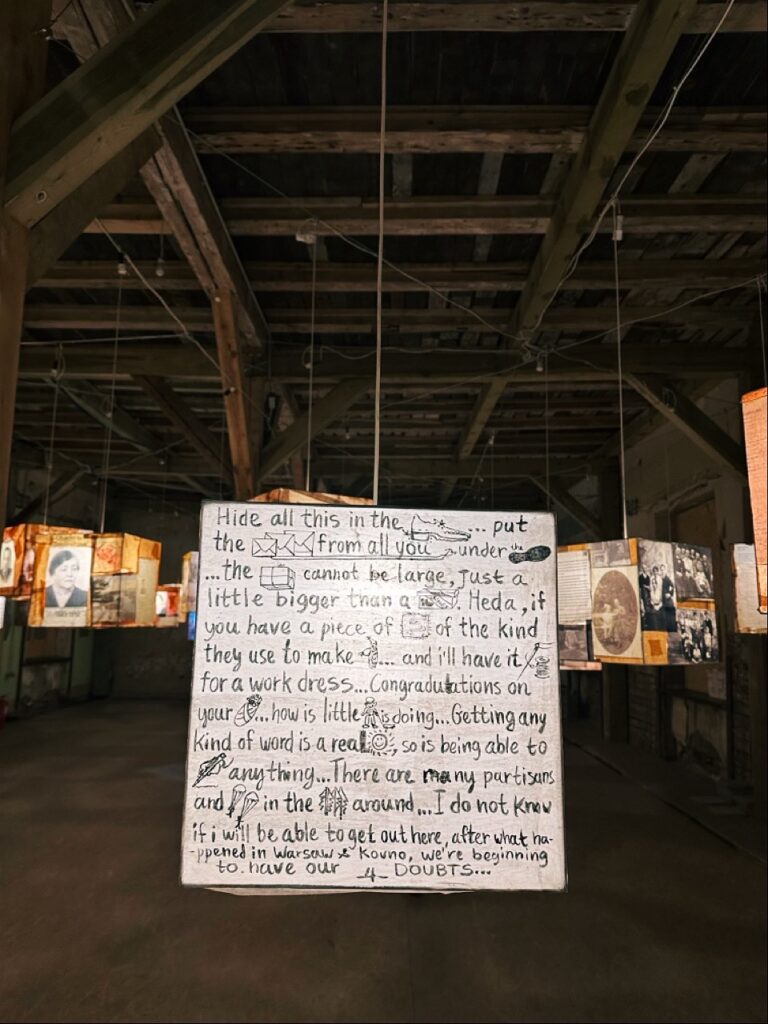
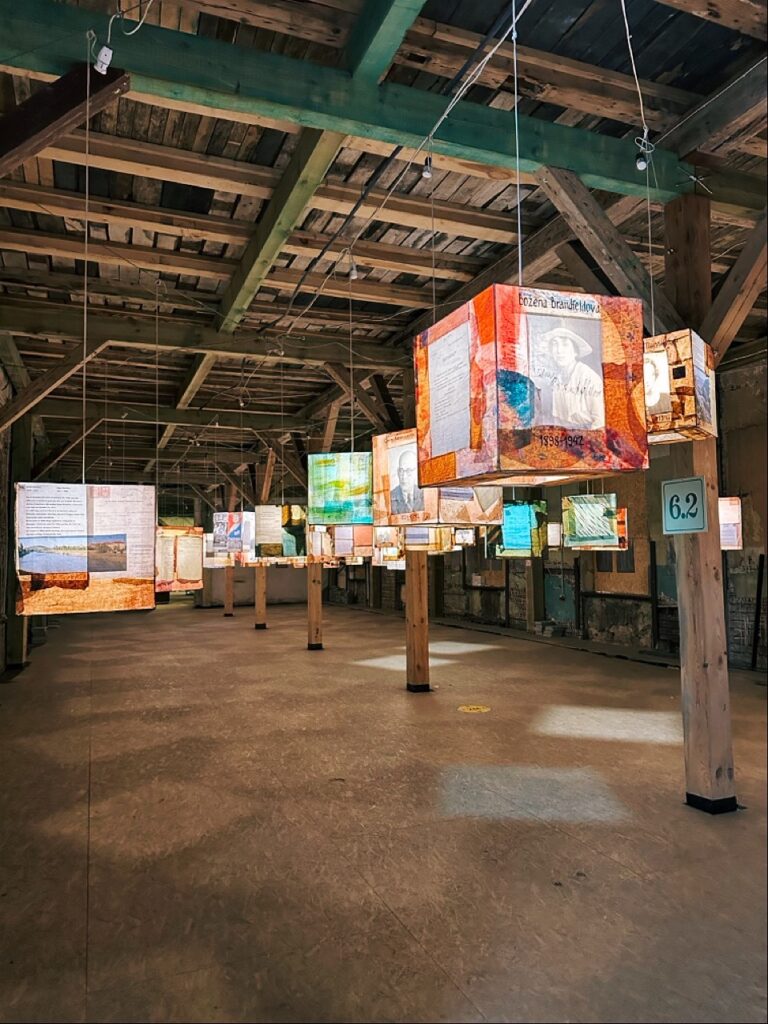
- Names and Personal Stories. Names and details that help put individual lives behind the historical statistics.
- Photographs. Historical photographs documenting Jewish life and the Holocaust in Riga.
- Information Panels. Exhibits explaining the history of Riga’s Jewish community, the ghetto, and the Holocaust.
- Historical Documents. Archival material and other historical records.
- Former Ghetto Area. The museum is located in the neighborhood where the Riga Ghetto once existed.
- Memorials. Several memorial elements throughout the site commemorate the victims.
- Guided Information. Guides are available to provide additional historical context and answer questions.
Inside the Riga Ghetto and Latvian Holocaust Museum
The Riga Ghetto and Latvian Holocaust Museum was not on our original Riga itinerary. We came across it almost by chance while wandering through the city, and something about the site made us stop. We decided to step inside and take some time to learn about the history presented here. For me, understanding the history of the places we visit is an important part of traveling. Cities are more than their beautiful buildings, lively squares, and popular attractions. They also carry stories that are difficult, painful, and important to remember. We did not plan this visit, but sometimes the places you discover along the way become the ones that stay with you long after you leave.
Stepping Into Riga’s Jewish History
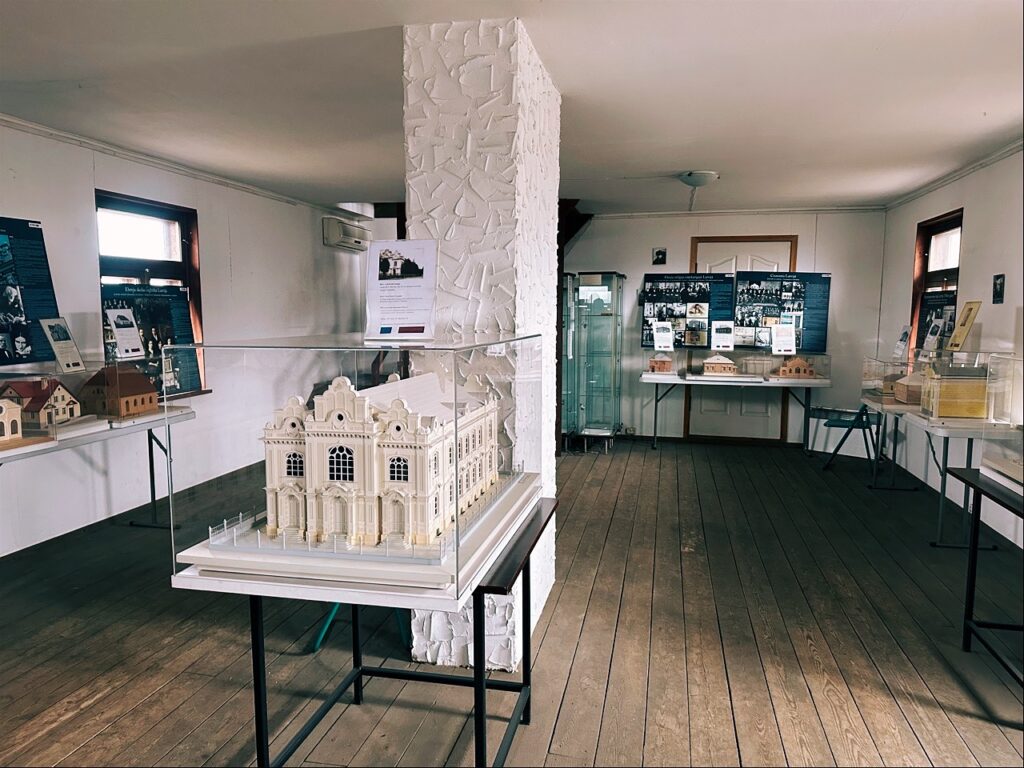
The Riga Ghetto and Latvian Holocaust Museum documents a deeply painful chapter in the history of Riga and Latvia. The museum tells the story of the country’s Jewish community, from life before the Second World War to the persecution, deportation, and murder of Latvian Jews during the Holocaust. Walking through the site, the history feels connected to Riga’s streets rather than confined to a distant textbook. The exhibits, photographs, documents, and memorials help put individual lives and a once-thriving community at the center of the story, while also preserving the memory of those who were killed.
The Ghetto That Once Stood Here
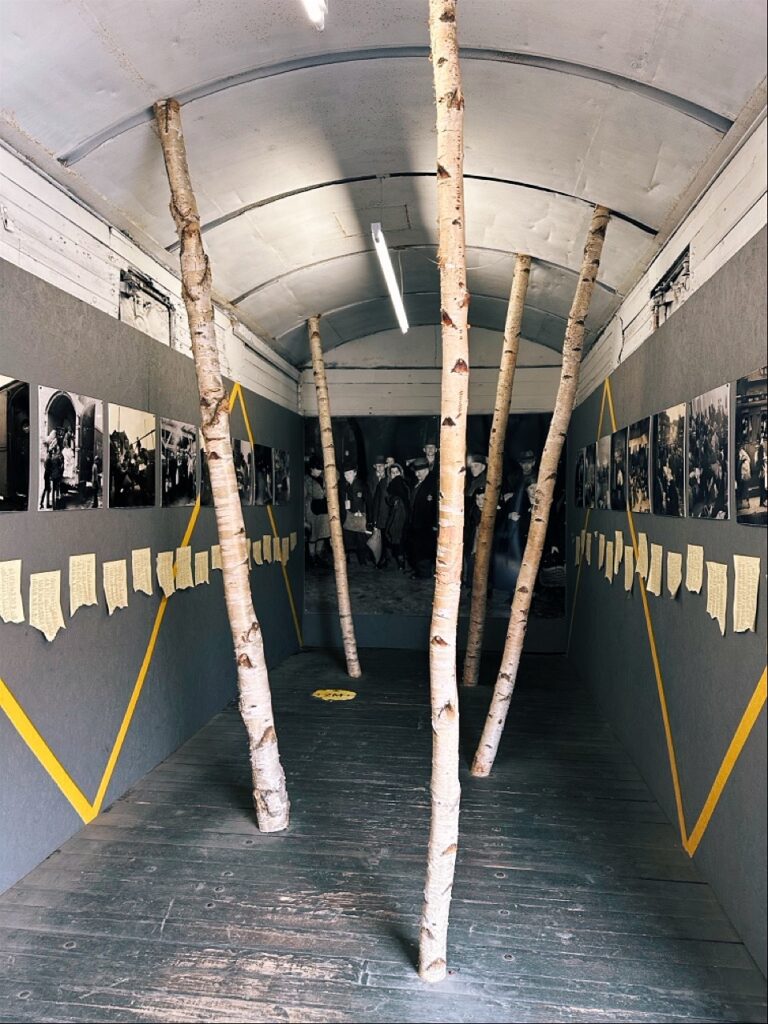
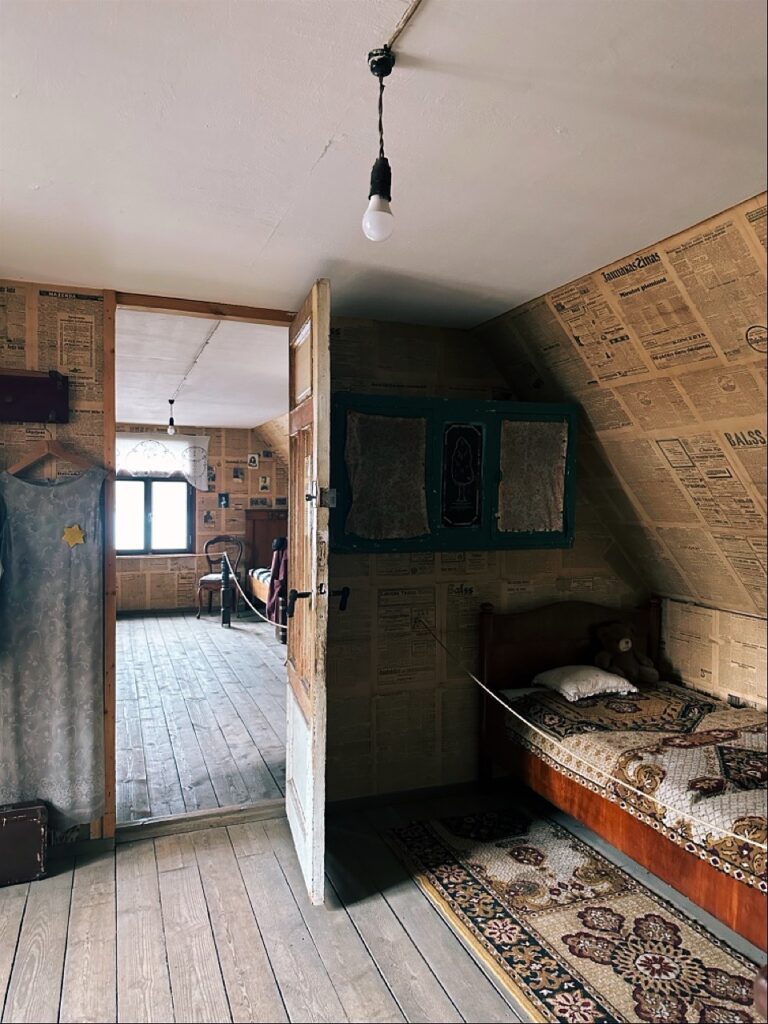
The Riga Ghetto was established by Nazi German authorities in 1941 in Maskavas Forštate, an area of Riga that had been home to a large Jewish population. German forces occupied Riga on 1 July 1941, and persecution of the city’s Jews began almost immediately. By 25 October 1941, the ghetto had been sealed, confining around 30,000 Jewish people behind barbed wire. The area was severely overcrowded. Nearly 30,000 people were forced into a neighborhood where only around 11,000 people had lived before, with families often confined to a single room and residents subjected to forced labor.
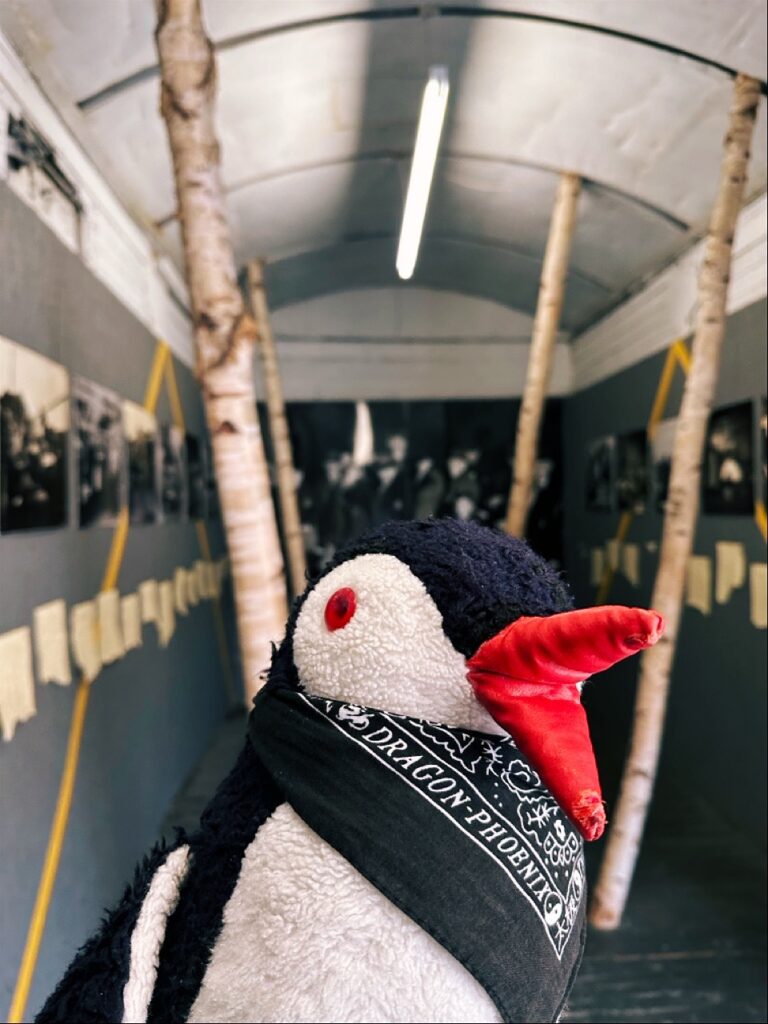
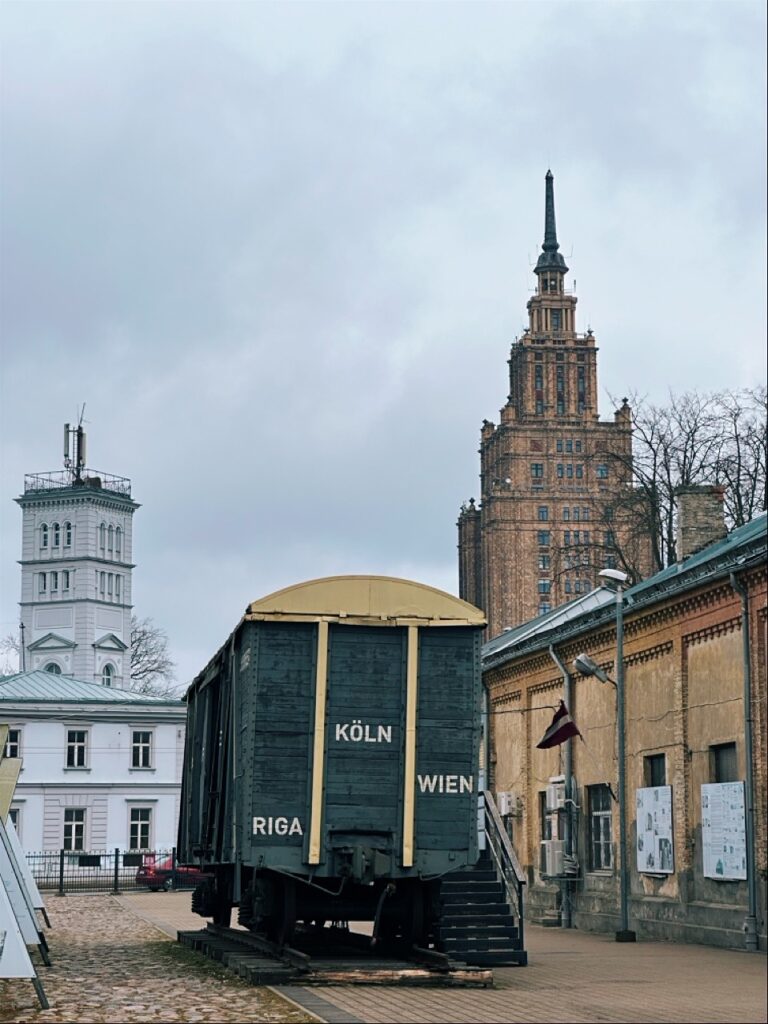
The ghetto existed in its original form for only a matter of weeks. On 30 November and 8 December 1941, German SS and police units, assisted by Latvian auxiliaries, carried out mass shootings in the Rumbula Forest outside Riga. At least 25,000 Jews from the Riga Ghetto were murdered during these operations. Survivors were concentrated in a smaller section of the ghetto. At the same time, thousands of Jews deported from Germany, Austria, and the Protectorate of Bohemia and Moravia were subsequently brought to Riga.
What Happened After the Rumbula Massacres
After the mass shootings at Rumbula, the remaining Jewish prisoners were confined to a much smaller section of the ghetto. Thousands of Jews were also deported to Riga from Germany, Austria, and the Protectorate of Bohemia and Moravia. In 1943, many of those still imprisoned in the ghetto were transferred to the Kaiserwald concentration camp and its subcamps. The Riga Ghetto was ultimately dissolved in December 1943. When Soviet forces entered Riga on 13 October 1944, the city was liberated, but the Jewish community that had existed before the war had been almost destroyed.
Standing in this part of Riga today, it is difficult to imagine the crowded streets and forced restrictions that once defined everyday life here. Yet that is precisely what makes the museum important. It places the history back into the neighborhood itself, reminding visitors that the people confined here were not simply numbers in a historical record. They were families, workers, children, and neighbors whose lives had existed in Riga long before the ghetto was created.
Names That Refuse to Be Forgotten
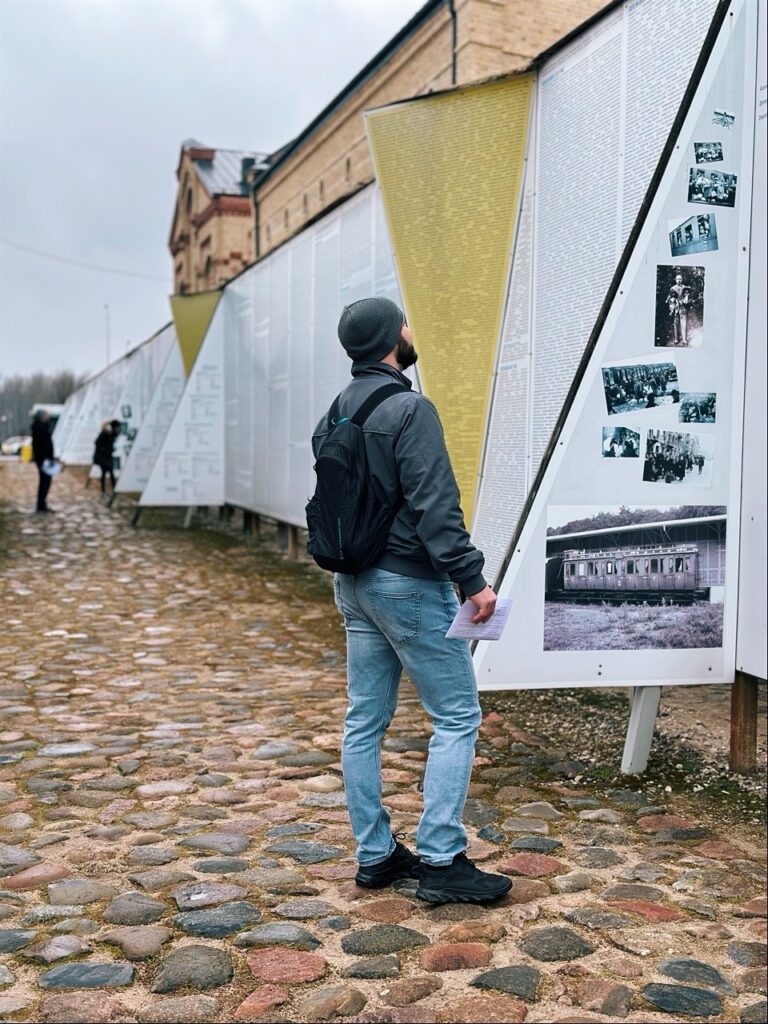
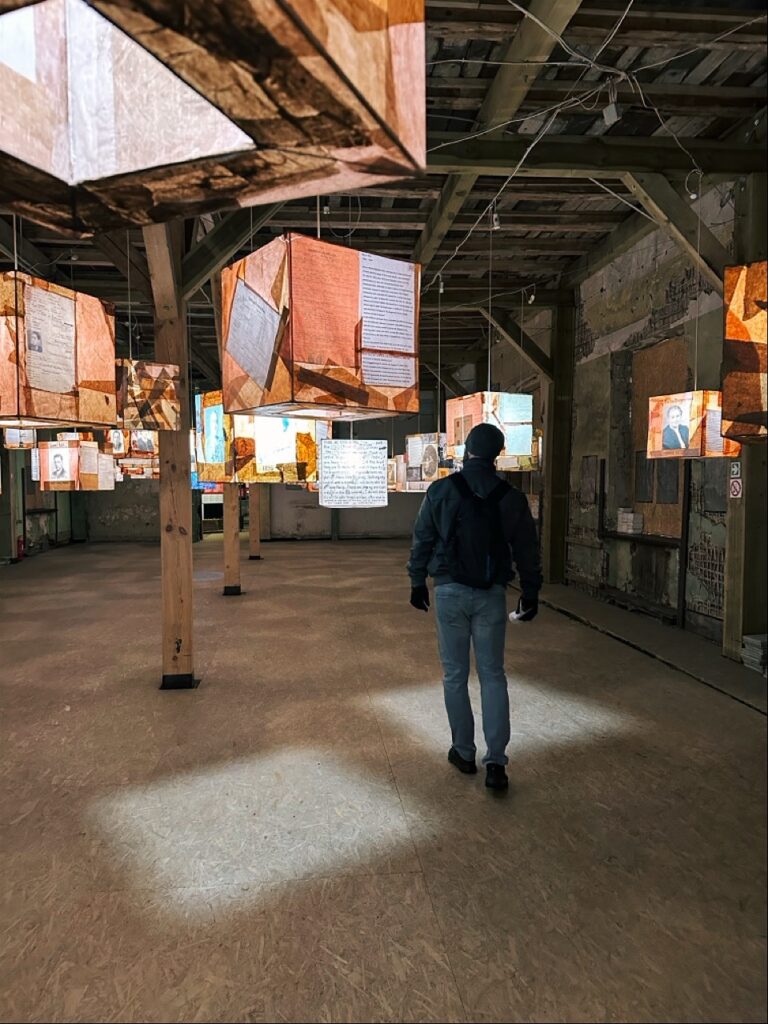
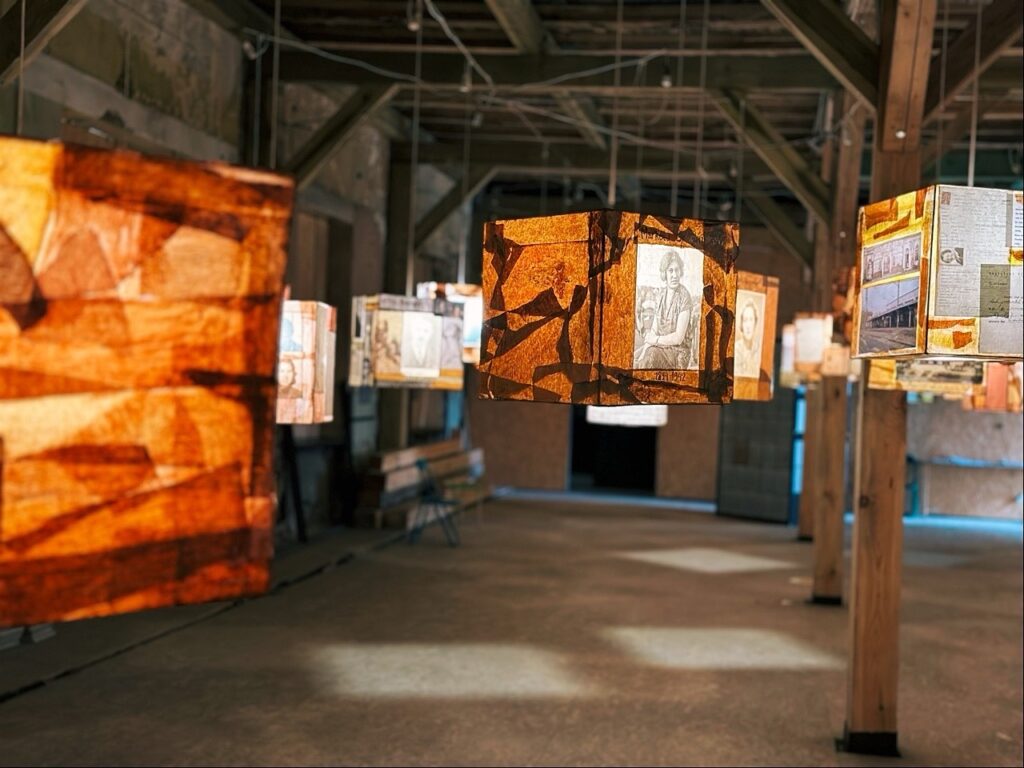
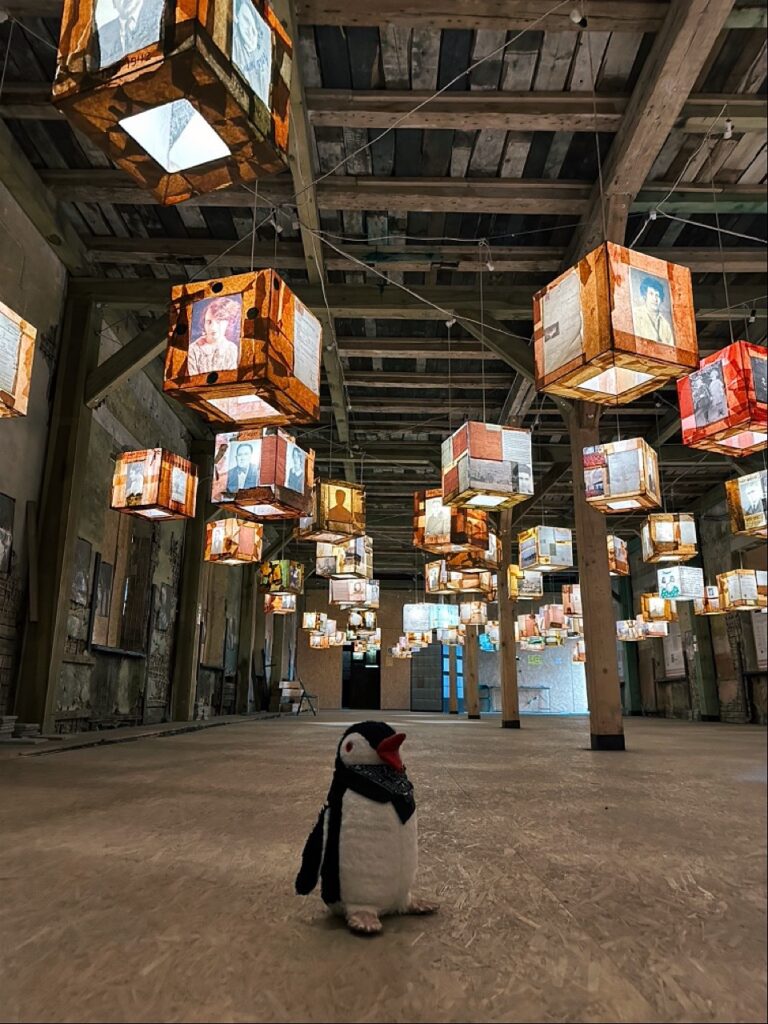
One of the most striking parts of the museum is the memorial wall covered with the names of people who were murdered during the Holocaust. Seeing individual names changes the way you take in the history. Instead of thinking only about numbers, you are reminded that every name belonged to a person with a family, a home, and a life in Riga or elsewhere in Latvia. Some names are accompanied by dates and other details, giving a small glimpse into the lives behind the statistics. Standing in front of the wall, the scale of what happened becomes difficult to separate from the individuals who experienced it. The names turn an enormous historical tragedy into something deeply human and personal, while ensuring that those who were murdered are remembered as individuals rather than forgotten as numbers.
Remembering Riga’s Jewish Community
Before the Holocaust, Riga was home to a large and established Jewish community with its own schools, synagogues, businesses, cultural organizations, and neighborhoods. By the late 1930s, about 95,000 Jews lived in Latvia, including about 44,000 in Riga. Jewish life was central to the city, with families working, studying, worshipping, and building their lives here across generations. The Holocaust did not simply destroy a population. It disrupted an entire community and the everyday life that had developed over decades. Remembering that life is essential to understanding what was lost. The museum therefore tells more than the story of persecution and murder. It also helps preserve the memory of the people and community that existed before the Holocaust.
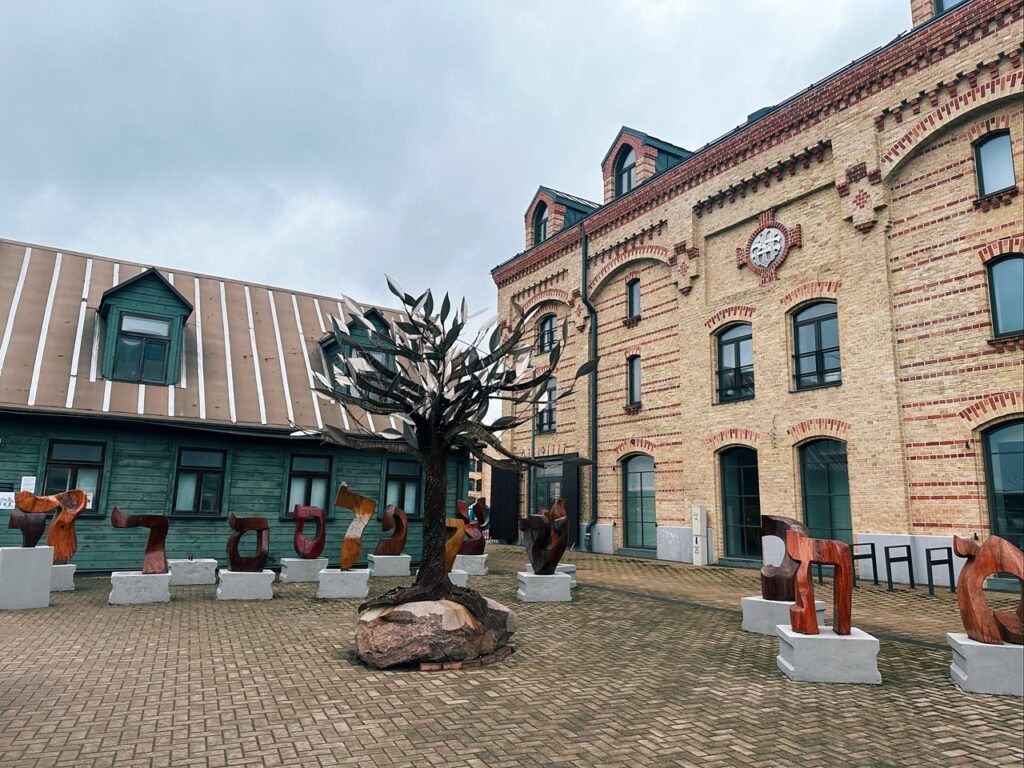
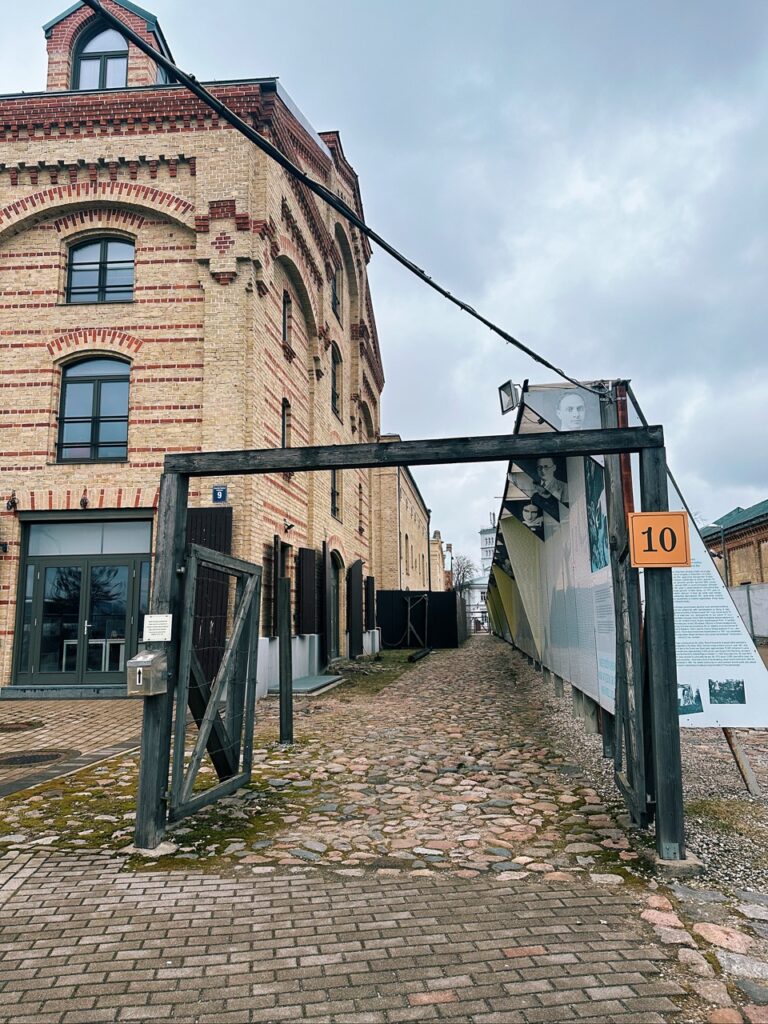
The Riga Ghetto and Latvian Holocaust Museum is unlike a traditional museum where you move from room to room. Much of the site is an outdoor exhibition, spread across the historic area of the former Riga Ghetto. As you waddle through it, you encounter information panels, photographs, historical documents, memorials, and displays explaining the history of Riga’s Jewish community and the Holocaust in Latvia. The open-air setting makes the experience especially powerful because you stand in the neighborhood where these events took place. Take your time to read the exhibits, look at the photographs, and pause at the memorials. There is a lot of information to take in, so even though the museum is relatively compact, it is worth allowing enough time to absorb what you are seeing properly.
Why We Stopped
We did not set out that morning with the Riga Ghetto and Latvian Holocaust Museum on our itinerary. We came across it while waddling through Riga, and decided to stop. What started as an unplanned visit quickly became one of those moments when traveling feels less about seeing another attraction and more about understanding the place around you. Waddling through the outdoor museum, reading the names, looking at the photographs, and learning about the Jewish community that once lived here made us pause and reflect on how much history these streets carry. We took time to take it all in, knowing this wasn’t an easy story to read, but an important one to remember. Sometimes the places you discover by chance are the ones that make you stop, look closer, and leave with a deeper understanding of the city you came to explore.
Penguin Pro Tip
If you are exploring Riga on foot, keep an eye out for places like this. Some of the most meaningful stops are not necessarily the ones you put on your original itinerary. And if you visit during the colder months, dress warmly. The museum is mostly outdoors, so you’ll spend much of your time outside while exploring the exhibits and memorials.
How Long Do You Need at the Museum
How long you spend at the Riga Ghetto and Latvian Holocaust Museum really depends on how deeply you want to explore the exhibits. The museum is rather small, and some visitors report spending around 45 minutes there. Or you can spend up to 60–90 minutes if you want to read the information panels, look through the photographs, and take your time with the memorials.
We spent about an hour, so we did not have to rush through it. If you enjoy reading historical information in detail, you could easily spend longer. Ultimately, there is no right amount of time. Take as long as you need to understand the exhibits and reflect on what you are seeing. The museum itself is largely outdoors, so remember that the weather can also affect how long you want to stay.
Best Time to Visit
We visited the museum in March, and while the experience was meaningful, we would personally recommend coming in a warmer month if you have the choice. Much of the museum is outdoors, and Riga can feel surprisingly cold in March, especially when you are standing outside reading the exhibits. As for the time of day, you do not need to plan your visit around a particular hour. The museum tends to be relatively quiet, so any time during opening hours should work well.
Buy Us a Ko-fi

Jewish Heritage Sites Around Riga
To understand Riga’s Jewish history beyond the former ghetto, several other sites around the city help complete the picture.
- Great Choral Synagogue Memorial. At Gogoļa iela 25, this marks the site of Riga’s former Great Choral Synagogue, which was destroyed on 4 July 1941 during the German occupation. The memorial incorporates remains of the former synagogue.
- Peitav-Shul Synagogue. At Peitavas iela 6/8, this is the only synagogue in Riga to have survived the Holocaust and remains an active synagogue today. The building dates to 1905 and remains an important link to Riga’s Jewish religious heritage.
- Rumbula Forest Memorial. Outside central Riga, this is the site where thousands of Jews from the Riga Ghetto were murdered in mass shootings in 1941. It connects directly to the history you learn about at the ghetto museum.
- Žanis Lipke Memorial. This tells the story of Žanis Lipke and other people who helped rescue Jews during the Holocaust, adding another perspective to the history of Riga’s Jewish community.
Together, these places show that Riga’s Jewish history is not limited to the story of the ghetto and its destruction. There was a community here before the Holocaust; there are places that remember those who were murdered, and there are also stories of survival and rescue.

The Riga Ghetto and Latvian Holocaust Museum was not on our original itinerary, but it became a meaningful stop during our time in Riga. We recommend it to everyone who wants to learn more about the city’s Jewish history and the events that shaped Riga during the Second World War. Allow around an hour for a visit, or longer if you want to read the exhibits in detail. Remember that the museum is mostly outdoors, so dress warmly in colder months and be prepared to spend time outside. Most importantly, come prepared to slow down and give the history the attention it deserves. This is not simply another attraction to tick off in Riga, but a place of remembrance.
Travel Bold. Eat Well. Waddle Wild.
Save This Pin for Later!
This post contains affiliate links. If you click and buy, I might earn a tiny commission, enough to help a penguin keep up its globe-trotting lifestyle. No extra cost to you, just more fish for me. Thank you for supporting the adventure!