We Waddled Silberkarklamm and Here’s What We Think
We first stopped at Silberkarklamm on our way to the hotel, hoping to squeeze in a quick visit. We didn’t make it through the entrance in time, though, so we added it back to our itinerary and returned a few days later. This time, we waddled the entire gorge from the entrance to the top and back down, giving us a chance to experience the trail properly before sharing our thoughts.
Silberkarklamm Gorge at a Glance
- Location: Ramsau am Dachstein, Styria, Austria
- Trail Length: 4 km round trip
- Elevation Gain: 270 m
- Highlight: Wooden walkways, waterfalls, and the 70 m Schleierfall
- Visit Duration: 1.5–2 hours
- Opening Hours: Daily, mid-May to late October (typically 8:00 AM–6:00 PM)
- Tickets: Adults from around €7 (cash at the entrance)
- Parking: Free
- Family-Friendly: Yes, for children who are comfortable walking; not stroller or wheelchair accessible
- Dogs: Allowed on a leash; dogs should be comfortable with steep wooden stairs.
How to Get to Silberkarklamm Gorge
We visited Silberkarklamm by car, which is by far the easiest way to get there. The gorge is easy to find with Google Maps, and once you arrive, you’ll see several parking areas along the access road. One thing to know before you park: some parking lots are free, while others require payment, so it’s worth checking the signs before leaving your car. We parked in one of the free parking areas and walked just a few minutes to the entrance.
Driving from Vienna
If you’re coming from Vienna, the drive takes around 3.5 hours (about 300 km), depending on traffic. Most visitors combine Silberkarklamm with a trip to the Schladming-Dachstein region rather than visiting it as a day trip, which is exactly what we did.
Hotel search from Trip.comShows Trip.com’s own box, which can set Trip.com cookies.
Can You Get There by Public Transport?
Yes, it’s possible, although having a car gives you much more flexibility. Take a train to Schladming, then hop on the regional bus towards Ramsau am Dachstein and get off at Ramsau Lodenwalker (or the Silberkarklamm stop on some services). From there, it’s about a 15-minute walk to the gorge entrance.
Silberkarklamm Gorge Opening Hours & Ticket Prices
Opening Hours
Silberkarklamm is open daily during the summer season, usually from mid-May until the end of October, with opening hours from 8:00 AM to 6:00 PM. The exact opening and closing dates depend on weather conditions and the amount of snow left over from winter, so it’s always worth checking before your visit if you’re traveling at the beginning or end of the season.
We’d also recommend arriving early in the morning, especially on weekends and during the summer holidays. The trail is much quieter; you’ll have a better chance of finding a free parking spot, and you’ll be able to enjoy the waterfalls without waiting for people on the narrow wooden walkways.


Tickets & Entrance Fee
Unlike some of Austria’s more famous gorges, Silberkarklamm is very affordable. During our visit, adult tickets cost €5.50, while children aged 6–14 paid €3.50. If you’re visiting as part of a group of 15 or more people, you can get a small discount on the entrance fee.
One thing that’s easy to miss: you can only pay in cash. There are no card payments at the entrance, so make sure you have a few euros with you before you arrive. We almost overlooked the sign, but luckily had enough cash in our wallets. As the entrance fee helps maintain the wooden walkways and the gorge, we found it to be good value for the experience.
Facilities & Amenities
- Toilets are available at the Silberkarhütte at the top of the gorge for visitors stopping at the hut.
- Restaurant / Mountain Hut. The Silberkarhütte serves homemade Austrian food, cakes, drinks, and has a sunny terrace with views over the valley.
- Picnic Spots. There are several nice places to take a break along the trail, especially near the Schleierfall waterfall.
- Drinking Water. No dedicated drinking fountains along the trail, so bring your own water. Fresh mountain streams are plentiful but are not designated as drinking water.
- Parking. Multiple parking areas are available near the entrance; some are free, while others are paid.
- Payment. Entrance tickets are cash only, so bring a few euros with you.
- Dogs. Allowed on a leash. Dogs should be comfortable walking on steep wooden stairs.
- Accessibility. The gorge is not suitable for strollers or wheelchairs due to the numerous stairs and narrow wooden walkways.
- Mobile Signal. Mobile coverage is generally available near the entrance but can be patchy deeper inside the gorge.
The Legend of Silberkarklamm Gorge
Unlike many of Austria’s gorges, Silberkarklamm isn’t known for a famous local legend or mythical creature. Instead, its story is closely tied to the people who made it accessible. In 1928, local farmer Matthias Erlbacher saw the potential of the narrow gorge and built the first wooden walkways by hand so visitors could safely explore it. Back then, the entrance fee was just 2 Kreuzer, and the same family still owns and maintains the gorge today, making it the only privately owned gorge in Austria.
Nature has also shaped the history of Silberkarklamm. Over the years, floods, landslides, and avalanches have repeatedly damaged or destroyed the wooden paths, which have always been rebuilt. Walking through the gorge today, it’s easy to see why you’re surrounded by steep rock walls, rushing water, and a landscape that still reminds you who’s really in charge.
Our Waddle Through the Silberkarklamm Gorge
Before you even reach the entrance to Silberkarklamm, you’ll come across a small dam with a gentle waterfall. We couldn’t resist stopping here for a few minutes before starting the hike. The water is crystal clear, and although it’s freezing cold, it’s the perfect place to dip your feet after a drive, or once you’ve finished the trail. We gave it a try, and while we could only keep our feet in for a short time, it was incredibly refreshing. If you have a few extra minutes, we’d definitely recommend making a quick stop here, either before or after your walk through the gorge.


After parking the car, the hike actually begins with a short uphill walk to the entrance. It’s a bit steeper than we expected, but only takes a few minutes and is a good warm-up before heading into the gorge. At the entrance, we bought our tickets with cash, passed through the small ticket booth, and stepped onto the first wooden walkways. From here, the sound of rushing water quickly takes over, and it already feels like you’re leaving the road behind and entering a completely different world.
Our Waddle in Silberkarklamm Gorge
- Waddle Duration: 1.5–2 hours
- Distance: 4 km (2.5 miles) round trip
- Route: Out-and-back (same trail there and back)
- Difficulty: Moderate
- Elevation Gain: 270 m (886 ft)
- Things to See: Wooden walkways. Waterfalls. Schleierfall waterfall (70 m). Narrow rock walls. Crystal-clear mountain stream. Small bridges. Silberkarhütte mountain hut. Scenic mountain views at the top.
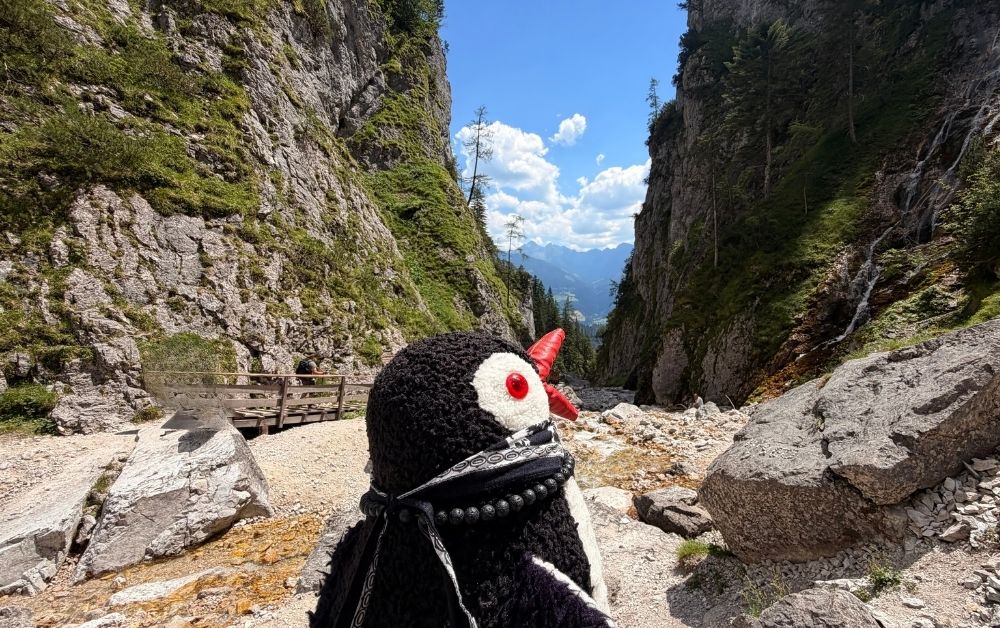
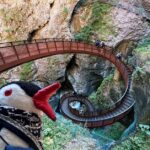
Once you enter, the trail changes character. The wide gravel path disappears, and you’re soon walking along narrow wooden walkways built into the rock walls above the Silberkarbach (also known as the Torbach). The rushing water is never far away, and the sound of the river follows you almost the entire way through the gorge.
One thing we really appreciated was that much of the trail is shaded by the steep rock walls and surrounding forest. Even on a warm summer day, it feels pleasantly cool, making Silberkarklamm a great hike when the temperatures climb. Now and then, the trees open up, letting in more sunlight and giving you a different view of the gorge before you head back into the shade.


As you make your way higher into the gorge, the scenery keeps getting better. The trail follows a series of wooden walkways, bridges, and countless wooden stairs built into the rock walls, taking you past rushing waterfalls and narrow sections of the gorge. The climb is continuous, so you’ll definitely feel it in your legs, but we never found it overwhelming. There are plenty of opportunities to stop, catch your breath, and enjoy the views, making the ascent feel much easier than the elevation gain might suggest. By the time you reach the upper part of the gorge, you’ll have experienced one of the most scenic stretches of the entire hike.


Although it was a hot summer day, the gorge never felt unbearably warm. The constant sound of the rushing water seemed to cool everything around us, and even just listening to it felt refreshing. Every now and then, we stopped on one of the many wooden benches along the trail to take it all in. Sitting there, surrounded by steep rock walls, fresh mountain air, and the roar of the waterfalls, was just as enjoyable as the hike itself.
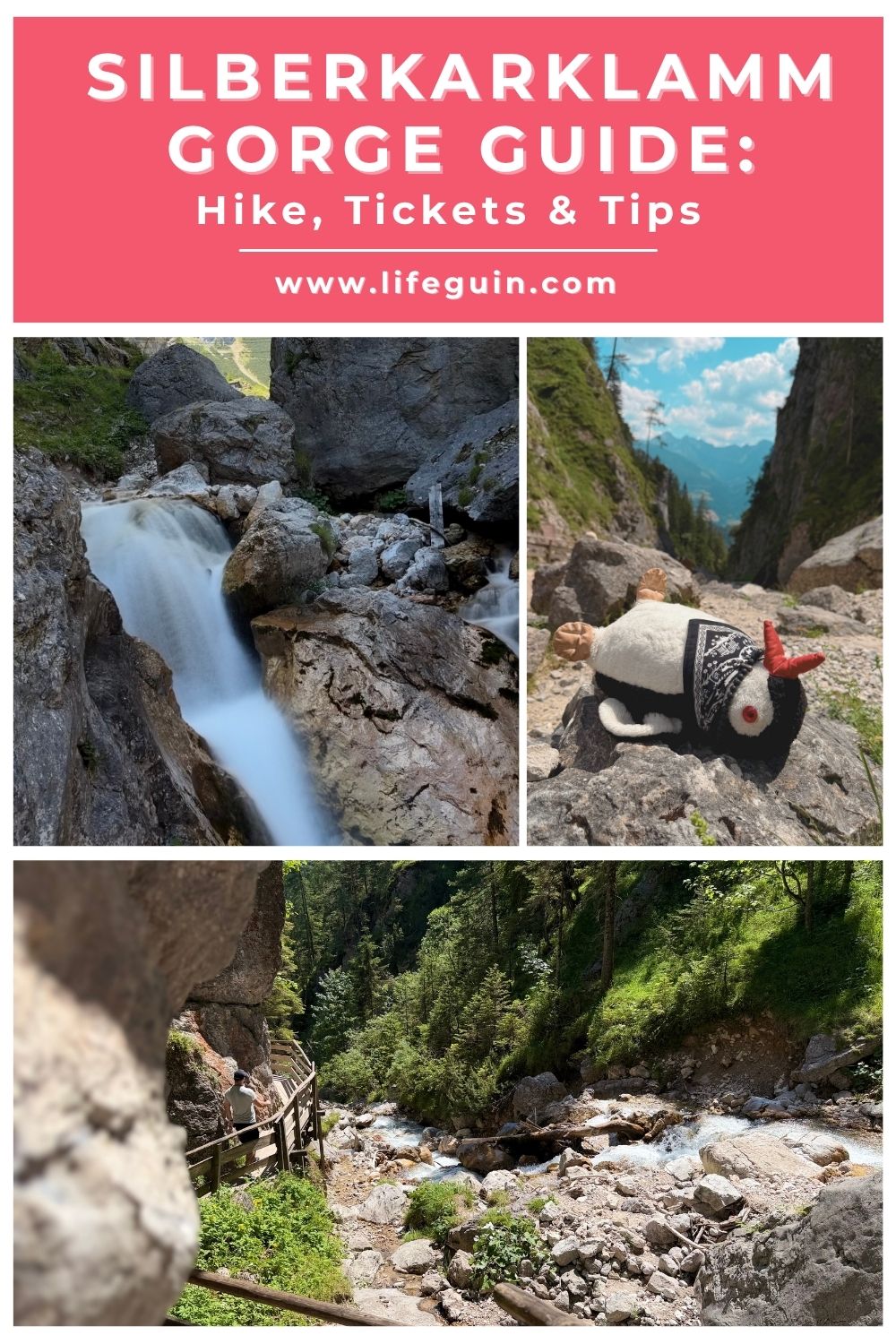
At the upper end of the gorge, you’ll reach its main highlight: the 70-meter-high Schleierfall, the largest waterfall in Silberkarklamm. Watching the water plunge down the rock face is a great reward after the steady climb. We took a break here, enjoyed the views, listened to the roar of the waterfall, and of course searched for the hidden penguin stone before continuing our adventure. If you’ve packed a snack, this is one of the best places along the trail to slow down for a few minutes and enjoy the surroundings.


From here, you can continue for another 10–15 minutes to the Silberkarhütte, a traditional mountain hut sitting at around 1,230 meters above sea level. It’s a popular place to stop for homemade Austrian food, cake, or a drink before continuing on one of the area’s longer hiking trails. We thought about it, but after our break at the waterfall, we decided to turn around and head back through the gorge instead. Waddling the same route in the opposite direction gave us a completely different perspective, and we noticed plenty of details we had missed on the way up.


How Long Do You Need for Silberkarklamm Gorge
We spent around 1 hour and 20 minutes walking through Silberkarklamm and back at a relaxed pace. That included plenty of photo stops, a break at the waterfall, dipping our feet in the icy water near the entrance, and, of course, hidding penguin stone.
If you’re simply hiking through without many stops, you can comfortably complete the round trip in 1.5 hours. If you plan to have lunch at the Silberkarhütte or continue on one of the longer hiking trails above the gorge, allow 2.5–4 hours or more, depending on your route.
Our advice? Don’t rush it. The waterfalls, wooden walkways, and viewpoints are what make Silberkarklamm special, and it’s worth slowing down to enjoy them.
Buy Us a Ko-fi

Best Time to Visit Silberkarklamm Gorge
The best is between late May and early October, when the gorge is open and the waterfalls are flowing. If you can, plan your visit in late spring or early summer. The snowmelt makes the waterfalls even more powerful, and everything around the trail is lush and green.
No matter when you visit, we’d recommend arriving early in the morning. We got there shortly after opening and had long stretches of the trail almost to ourselves. On busy summer weekends, the narrow wooden walkways can become crowded, so an early start makes the experience much more enjoyable.
If you’re visiting on a hot summer day, Silberkarklamm is a great choice. Much of the trail stays in the shade of the gorge, and the rushing water keeps the air noticeably cooler than outside. Even on one of the warmest days of our trip, the hike felt comfortable from start to finish.
If you enjoy photography, the morning also offers the softest light and the best chance of capturing the waterfalls without too many people in your shots.
Nearby Attractions
-
- Dachstein Skywalk. One of Austria’s most famous viewpoints with panoramic mountain views.
- Dachstein Ice Palace. Walk through ice tunnels and sculptures inside the Dachstein Glacier.
- Dachstein Suspension Bridge. A dramatic bridge suspended high above the valley.
- Dachstein Glacier Cable Car. Ride to the top of the Dachstein massif for year-round alpine scenery.
- Riesach Waterfall Trail (Riesachfälle). A scenic hike featuring waterfalls, bridges, and forest paths.
- Schladming. A lively alpine town with restaurants, cafés, and plenty of outdoor activities.
- Ramsau am Dachstein. A picturesque mountain village known for hiking, cross-country skiing, and traditional alpine scenery.
- Silberkarhütte. A traditional mountain hut just above the gorge, perfect for lunch or continuing into the Dachstein hiking area.
- Sattelberg & Wilde Wasser Trail. Another beautiful hiking area with waterfalls and mountain streams.
- Hidden Penguin Stone. Don’t forget to look for the hidden penguin stone while exploring Silberkarklamm!
We really enjoyed our time at Silberkarklamm. It’s the kind of hike that’s easy to fit into your itinerary but still feels like a proper adventure. The waterfalls, wooden walkways, and cool air make it a great escape, especially on a warm summer day. We also liked that it never felt too difficult; you can simply take your time, stop on one of the benches, and enjoy the views along the way. If you’re staying around Schladming or Ramsau am Dachstein, we’d recommend adding Silberkarklamm to your list. It’s a fun couple of hours in nature, and if you’re anything like us, you’ll probably leave feeling refreshed… especially if you brave the icy water at the entrance before heading back to the car.
Travel Bold. Eat Well. Waddle Wild.
Save This Pin for Later!
This post contains affiliate links. If you click and buy, I might earn a tiny commission, enough to help a penguin keep up its globe-trotting lifestyle. No extra cost to you, just more fish for me. Thank you for supporting the adventure!