What to Eat in Malta: From Pastizzi to Rabbit Stew
Malta may be famous for its turquoise waters, honey-colored limestone buildings, and historic cities, but it also offers plenty to discover on the plate. Maltese cuisine reflects the islands’ position in the Mediterranean, where European, Arab, and North African influences meet. Add centuries of Sicilian connections and a legacy of British rule, and you get a distinctly Maltese food culture.
Expect flaky pastries, crusty bread, fresh fish, slow-cooked meat, hearty pasta dishes, local cheeses, and sweets filled with dates, almonds, and honey. Some foods are perfect for a quick bite between sightseeing stops, while others deserve a leisurely meal around a restaurant table. Here are the traditional Maltese foods we recommend looking for when visiting Malta.
At a Glance
Must-try dishes: Pastizzi, ħobż biż-żejt, ftira, stuffat tal-fenek and lampuki pie
Must-try dessert: Imqaret
Must-try drink: Kinnie
Best food experiences: Local bakeries, village restaurants, traditional eateries and seaside fish restaurants
What to Expect from Maltese Cuisine
Maltese cuisine is Mediterranean at heart, but it has its own personality. Italian and Sicilian influences show up in pasta, ricotta-filled pastries, and baked dishes, while Arabic and North African traditions add to the broader culinary heritage. British influence also shows up in some everyday food habits.
Seafood naturally plays an important role on an island surrounded by the Mediterranean. Lampuki, a seasonal fish also known as mahi-mahi, is particularly associated with Malta, while octopus, squid and other fish feature on restaurant menus. Rabbit is another key ingredient, and stuffat tal-fenek, a slow-cooked rabbit stew, is one of Malta’s best-known traditional dishes.
Bread deserves its own mention. From the crusty Maltese loaf to ħobż biż-żejt and the traditional ftira, bread is much more than a side dish. It can be the main event, topped or filled with tomatoes, olive oil, tuna, olives, capers, and other ingredients.
And then there are the pastries. Pastizzi are practically an institution, with flaky layers surrounding either ricotta or a savory pea filling. For something sweet, look out for imqaret, date-filled pastries that are particularly satisfying when served warm. Overall, Maltese food is hearty, unfussy and full of character. You do not need to book an expensive restaurant to experience it. Some of the most memorable bites come from small bakeries, local food shops and traditional eateries.
Regional Differences in Maltese Cuisine
Malta is a small archipelago, but you’ll still find interesting differences across the islands.
- Malta: The main island offers the widest variety of traditional food experiences, from pastizzi bakeries and casual street food to rabbit dishes, fish restaurants and historic cafés. Valletta, Rabat and the fishing village of Marsaxlokk are all useful places to explore the local food scene.
- Gozo: The quieter sister island has strong ties to local agriculture, cheese, and traditional baking. Look for ġbejniet, small local cheeselets, and Gozitan ftira, a distinctive bread dish you can top with potatoes, tomatoes, cheese, and other ingredients.
- Coastal villages: Seafood is a natural choice near the water. In Marsaxlokk, for example, look for seasonal fish and traditional dishes, including lampuki when it is in season.
- Village bakeries and local eateries: These are excellent places to find everyday favorites such as pastizzi, qassatat, and traditional bread. They also offer a glimpse of how people eat beyond the menus designed primarily for visitors.
If you are traveling across both Malta and Gozo, do not limit yourself to restaurant meals. Visit a bakery in the morning, try local cheese on Gozo, and look for seasonal fish on the coast. Small culinary discoveries are part of the fun.
Traditional Maltese Foods You Should Try
Maltese cuisine offers dishes worth adding to your itinerary. Some are everyday staples, others are tied to family meals or specific seasons, and a few might be completely new to you. Here are the traditional foods we would look out for.
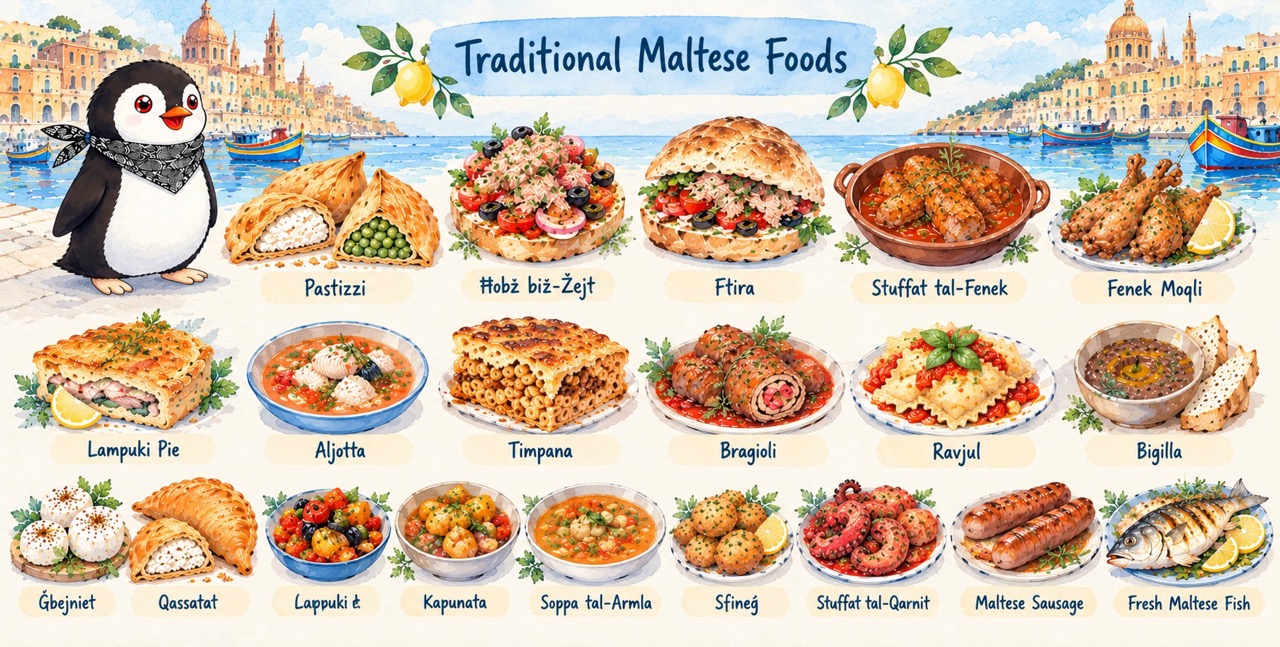
- Pastizzi. These are among Malta’s most recognizable foods. These small, diamond-shaped pastries have crisp, flaky layers and a savory filling, most commonly ricotta or a seasoned pea mixture. The pastry shatters slightly as you bite into it, revealing a warm, soft center. You can buy them in pastizzerias and bakeries throughout the islands, and they make an easy breakfast, snack, or quick lunch while sightseeing. We recommend trying both traditional fillings to see which you prefer. Eat them fresh and warm, ideally before the pastry loses its crispness.
- Ħobż biż-Żejt. This traditional Maltese bread dish combines crusty bread, olive oil, and savory toppings. People often rub tomato into the bread or add it as a layer, while tuna, olives, capers, onion, and other ingredients turn it into a satisfying meal. The charm lies in the contrast between the crunchy crust and the juicy, flavourful topping. It is a good choice for lunch when you want something lighter than a full restaurant meal but still distinctly local.
- Ftira. Ftira is a traditional Maltese bread with a chewy interior and a substantial crust. Depending on the style, you can serve it as a filled sandwich or with toppings. Common ingredients include tomatoes, olive oil, tuna, olives, capers, and local cheese. Gozo has its own distinctive ftira tradition, with versions that resemble a rustic, open-faced bread dish topped with ingredients such as potatoes, tomatoes, and cheese.
- Stuffat tal-Fenek. Rabbit stew is one of Malta’s best-known traditional dishes and a must-try for adventurous eaters. Stuffat tal-fenek is typically made by slowly cooking rabbit with wine, garlic, tomatoes, and herbs until the meat becomes tender and the sauce develops a deep flavor. It is hearty, comforting food rather than an elaborate restaurant creation. Some rabbit-centered meals, known as fenkata, involve several courses and are traditionally enjoyed as a social occasion. If you want to experience Maltese cooking beyond its famous pastries, look for this dish on a traditional restaurant menu.
- Fenek Moqli. If stew is not your preferred way to eat rabbit, look for fenek moqli, or fried rabbit. The meat is typically marinated or seasoned before frying, with garlic and herbs often adding to its flavor. Compared with the stew, this preparation can have a firmer texture and a more pronounced savory finish. It is another important part of Malta’s rabbit-eating tradition and offers a different experience from slow-cooked dishes.
- Lampuki Pie. Lampuki pie is a traditional Maltese fish pie made with lampuki, a seasonal fish also known as mahi-mahi. The fish is combined with a pastry crust and may be accompanied by ingredients such as tomatoes, olives, capers, spinach or other vegetables. The result is a substantial savory pie with flaky pastry and a filling that balances the fish with Mediterranean flavors. It is especially worth seeking out during the lampuki season, generally associated with late summer and autumn. Availability varies, so ask whether it is freshly prepared when you visit.
- Aljotta. Aljotta is a traditional Maltese fish soup with Mediterranean flavors. Garlic, tomatoes, herbs, and fish form the foundation, while rice is often added to make the soup more substantial. Lemon can provide a bright finish. It is a lovely option for seafood lovers who want something warming without ordering a heavy main course. Recipes vary by kitchen, but a well-made aljotta should let the fish’s flavor shine through.
- Timpana. Timpana is Malta’s answer to an indulgent baked pasta dish. It typically consists of macaroni mixed with a rich meat-based sauce, often with tomato, cheese, and other ingredients, then enclosed or topped with pastry and baked. The pastry develops a golden crust, while the pasta inside becomes rich and comforting. This isn’t the dish to order if you are looking for a light snack. Instead, consider it when you want a filling meal that reflects Malta’s Italian culinary connections.
- Bragioli. Bragioli, sometimes called beef olives, are thin slices of beef wrapped around a savory filling, often containing minced meat, herbs, and breadcrumbs. The rolls are then slowly braised in a sauce, commonly tomato-based. Despite the name, traditional versions don’t necessarily include olives. The dish features tender beef, a flavourful filling, and a rich sauce that pairs well with potatoes or other sides. It is a good choice when you want to explore traditional Maltese home cooking.
- Ravjul. Ravjul are Maltese ravioli, commonly filled with ricotta and served with a tomato sauce. The pasta is tender, while the creamy filling offers a mild, milky contrast to the sauce’s acidity. The dish reflects the close culinary relationship between Malta and Sicily, but it has its own place in Maltese food culture. If you enjoy Italian pasta, ravjul is an easy introduction to the islands’ traditional cuisine.
- Bigilla. Bigilla is a traditional Maltese broad-bean dip, typically made with dried beans, garlic, olive oil, herbs, and seasoning. It has a thick, rustic texture and a savory flavor that pairs well with bread or crackers. You might find it on a platter of local dips and appetizers. It is a good option for sharing, particularly if you want to try several Maltese flavors before moving on to a main course.
- Ġbejniet. Ġbejniet are small traditional cheeselets especially associated with Gozo, though they are found across the Maltese islands. They are usually made from sheep’s milk or goat’s milk and come in different forms, including fresh, dried, and seasoned varieties. Fresh ġbejniet are soft and milky, while dried versions are firmer and more concentrated in flavor. Some are seasoned with pepper or herbs. Try them with bread, olives, or a platter of local ingredients to appreciate the differences between the varieties.
- Qassatat. Qassatat are small savory pastries with a thicker, more substantial crust than pastizzi. Fillings can include ricotta, peas, or other savory ingredients, depending on the bakery. They are a practical snack for a day of exploring, particularly if you want something filling to take away. If you spot both qassatat and pastizzi in a bakery, try one of each to compare their pastry and texture.
- Kapunata. Kapunata is Malta’s version of a Mediterranean vegetable dish related to caponata. It commonly features aubergine, tomatoes, peppers, and other vegetables, with olive oil, herbs, and sometimes capers or olives adding depth. It is a good option for anyone who wants to balance the richer meat dishes and pastries with something vegetable-based. Recipes vary, and you can serve it as a side dish, appetizer, or part of a larger meal.
- Soppa tal-Armla. Soppa tal-armla, meaning widow’s soup, is a traditional Maltese vegetable soup. Versions often include seasonal vegetables, potatoes, beans, and other simple ingredients, sometimes with local cheese or egg added. It is comforting, rustic food that reflects the importance of using available ingredients. The exact recipe varies, but it is worth looking for if you want to discover the everyday side of Maltese cooking rather than focusing exclusively on famous restaurant dishes.
- Sfineġ. Sfineġ are traditional Maltese fish fritters, often associated with anchovies or other small fish. The fish is combined with a batter and fried until golden, creating a crisp exterior and a savory center. They are a good choice for seafood lovers who enjoy fried appetisers. Depending on where you order them, the recipe and size can vary, so treat them as an opportunity to explore a local preparation rather than expecting the same version everywhere.
- Stuffat tal-Qarnit. Stuffat tal-Qarnit is a slow-cooked octopus stew. The octopus simmers with ingredients such as tomatoes, garlic, herbs, and wine until tender, and the sauce develops a rich seafood flavor. It’s especially appealing if you enjoy Mediterranean seafood and want something beyond grilled fish. Look for it in traditional restaurants, especially those with a strong seafood selection.
- Imqarrun il-Forn. Imqarrun il-Forn is a baked macaroni dish that combines pasta with a savory meat-and-tomato sauce, then bakes it until the top forms a golden crust. Recipes can include eggs, cheese, and other ingredients that help bind the mixture. It is another example of Malta’s fondness for substantial baked dishes. If you enjoy lasagne or baked pasta, this is an easy addition to your list.
- Maltese Sausage. Maltese sausage, or zalzett Malti, is a traditional sausage typically made from pork and seasoned with a mixture of herbs and spices. Depending on the recipe, ingredients can include coriander, garlic, pepper, and other seasonings. People often grill it or cook it as part of a savory meal. If you see it on a local menu or in a butcher’s shop, it offers a straightforward way to sample the islands’ meat traditions.
- Fresh Maltese Fish. With the Mediterranean surrounding the islands, fish is an important part of the local food scene. Beyond lampuki, you may find sea bream, sea bass, swordfish, tuna, and other catches, depending on the season and restaurant. In a coastal village, ask what is fresh rather than automatically choosing a familiar fish. Preparation may be simple, with grilling, olive oil, lemon, and herbs letting the natural flavor come through.
Traditional Maltese Desserts
Maltese desserts draw on Mediterranean ingredients such as almonds, honey, citrus, dates, and pastry. Some are tied to festive occasions, while others appear in bakeries year-round. Here are a few sweet specialties to look for.
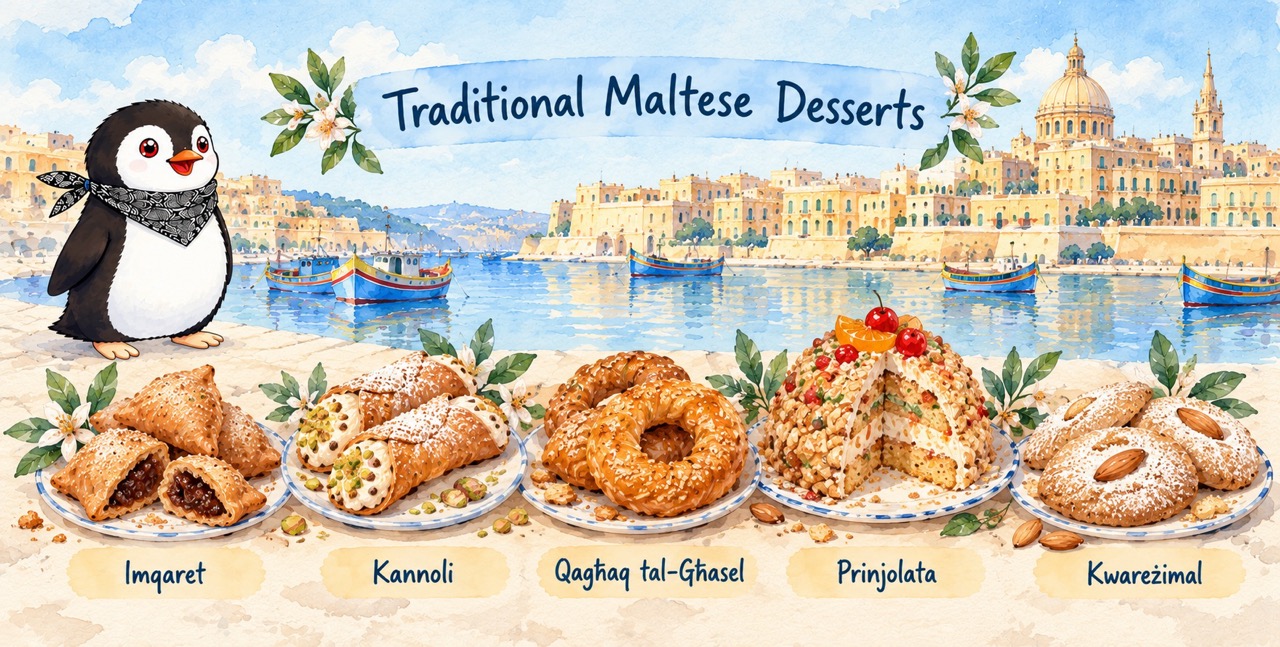
- Imqaret. Imqaret are deep-fried pastries filled with a spiced date mixture. They get their name from their distinctive diamond shape, and the contrast between the crisp pastry and soft, sweet filling makes them especially satisfying when served warm. You may find them at bakeries, food stalls, and local events. They are a lovely treat to enjoy while wandering through a historic town, especially if you prefer sweet desserts without cream or chocolate.
- Kannoli. Maltese kannoli are closely related to the better-known Sicilian cannoli. They consist of crisp pastry tubes filled with a sweet ricotta-based filling, sometimes flavored or decorated with chocolate, candied fruit, or nuts. The shells should provide a satisfying crunch against the creamy filling. They are worth trying if you enjoy Italian pastries, though recipes and fillings vary by bakery.
- Qagħaq tal-Għasel. Qagħaq tal-għasel, often translated as honey rings, are traditional Maltese pastries filled with a sweet mixture that may include honey, treacle, citrus peel, spices, and other ingredients. Despite the name, recipes can use different sweeteners. The pastry is often shaped into a ring and filled with a rich mixture of warm spices and citrus. These pastries are particularly associated with traditional celebrations and the festive season, although availability varies.
- Prinjolata. Prinjolata is a traditional Maltese cake associated especially with Carnival. It is a rich, dome-shaped dessert that can include sponge cake, biscuits, nuts, candied fruit, cream, and other sweet ingredients, with recipes varying considerably. It is more of a celebratory treat than an everyday pastry. If you visit Malta during Carnival and see prinjolata in a bakery, it is an interesting seasonal specialty to try.
- Kwareżimal. Kwareżimal is a traditional Maltese biscuit associated with Lent. It is commonly made with ground almonds, flour, citrus zest, and spices, and is often topped with nuts or other garnishes. Unlike rich cream-filled desserts, it has a denser texture and a flavor built around almonds and warming spices. Look for it around Lent, when traditional bakeries may prepare it.
Traditional Maltese Drinks
Maltese drinks range from a distinctive local soft drink to coffee and traditional alcoholic beverages. Here are a few options to look for while exploring the islands.
- Kinnie. Malta’s best-known soft drink is made with bitter oranges and aromatic herbs. Its bittersweet flavor is quite distinctive, with citrus notes and a gentle herbal bitterness. Try it chilled to sample a drink genuinely associated with Malta.
- Maltese Coffee. People enjoy coffee widely across the islands. Traditional versions can be spiced with cloves or anise, though recipes and serving styles vary. Ask a local café whether it offers a traditional Maltese preparation.
- Local Wine. Malta has a small but interesting wine industry, with local grape varieties and wines produced on the islands. Look for wines made from indigenous varieties such as Ġellewża and Girgentina to explore local production.
- Cisk Beer. Cisk is a well-known Maltese beer brand. A chilled lager pairs well with a casual meal, especially when enjoying seafood or a platter of traditional snacks.
- Bajtra Liqueur. Bajtra is a prickly-pear liqueur associated with Malta. It is typically sweet and fruity and is often enjoyed as a digestif or used in cocktails. Check the label and serving style, as products vary.

Practical Tips for Dining in Malta
Eating out in Malta is generally relaxed, with everything from inexpensive bakery snacks to leisurely seafood dinners overlooking the Mediterranean. Maltese cuisine combines local traditions with Italian and other Mediterranean influences, so there is plenty to try beyond the familiar tourist menus. A little planning helps, particularly if you want to sample seasonal specialties or explore smaller villages and Gozo.
- Reservations. Book ahead for popular restaurants, especially in Valletta, Sliema, St Julian’s and Marsaxlokk during busy periods. For casual cafés, bakeries and pastizzerias, you can usually waddle in without a reservation.
- Meal times. Lunch is generally served from 12:00–14:30, while dinner often starts around 19:00. Tourist areas may offer more flexible hours, but smaller restaurants may have limited opening times.
- Prices. Malta offers options for different budgets. Bakeries and pastizzerias are usually among the most affordable places to eat, while waterfront restaurants and seafood establishments can be considerably more expensive. Check menus before sitting down, particularly in busy tourist areas.
- Tipping. Tipping is not compulsory, but leaving around 5–10% for good service is customary in some restaurants. Check whether the bill already includes a service charge.
- Water. Tap water is generally safe to drink, though desalination and mineral content can affect its taste. Restaurants commonly serve bottled water. If you prefer tap water, ask whether it is available.
- Start with a pastizzi. Visit a local bakery and try both the ricotta and pea-filled versions. These flaky pastries are ideal for breakfast or a quick snack between sightseeing stops.
- Look beyond restaurant menus. Bakeries, pastizzerias, and local food shops are essential parts of the Maltese food experience. Do not reserve every meal for a sit-down restaurant. Some of the most memorable local bites come from a simple bakery counter.
- Try rabbit if you eat meat. Stuffat tal-fenek, the traditional rabbit stew, is one of Malta’s signature dishes. Ask how it is prepared and whether the restaurant offers a traditional fenkata, a meal centered on rabbit dishes.
- Look for seasonal fish. Lampuki, also known as mahi-mahi, is especially popular in late summer and autumn. Availability depends on the season, so ask what is fresh when you visit, especially at coastal restaurants.
- Leave room for pastries. Imqaret, kannoli and qagħaq tal-għasel offer very different flavors and textures. A bakery stop is an easy way to sample traditional Maltese sweets, although some specialties are more seasonal than others.
- Explore Gozo’s specialties. Look for ġbejniet, traditional local cheeselets, and Gozitan ftira. These offer a slightly different experience from the everyday food you will find on Malta’s main island.
- Ask about ingredients. Traditional recipes vary from kitchen to kitchen, and dishes may contain dairy, gluten, nuts, fish, meat, or alcohol. Ask the restaurant about ingredients if you have allergies or dietary requirements.
- Check opening hours. Small bakeries and traditional restaurants may follow different schedules from larger, tourist-facing establishments, particularly outside the busiest areas. Check ahead if you have a particular place in mind.
- Do not assume every dish is available year-round. Seasonal fish, festive sweets and certain traditional specialties are worth seeking out at the right time of year. If something catches your eye on a menu, ask whether it is available during your visit.
- Consider where you eat. Restaurants in prime waterfront locations often charge more than neighborhood eateries. If you want to experience everyday Maltese food, venture off the busiest tourist streets and look for places locals frequent.
- Plan food stops around your itinerary. If you are exploring Mdina, Rabat, or Gozo, check where you can eat before you set off. Opening hours and dining options can be more limited in quieter areas, particularly outside peak season.
- Enjoy the local drinks. Try Kinnie, Malta’s distinctive bittersweet orange-and-herb soft drink, or explore local wines if you enjoy wine. Cisk is a well-known Maltese beer, while bajtra is a prickly-pear liqueur traditionally associated with the islands.
The 5 Maltese Foods You Should Try
If you do not have time to work your way through the entire Maltese food scene, these are the five specialties we would prioritize. Together, they give you a taste of the islands, from everyday bakery favorites to traditional home cooking and local seafood.
- Pastizzi: Start with Malta’s iconic flaky pastry. Try both the ricotta and pea fillings while they are fresh and warm.
- Ħobż biż-Żejt: This traditional bread topped with olive oil, tomato, and savory ingredients is a simple introduction to everyday Maltese food.
- Stuffat tal-Fenek: If you eat rabbit, try this traditional stew for a taste of Malta’s hearty home cooking.
- Lampuki Pie: Try it when the seasonal fish is available. The pastry and savory fish filling make it one of the island’s distinctive dishes.
- Imqaret: Finish with a warm, date-filled pastry. It is an easy and delicious way to explore Malta’s traditional sweets.
Buy Us a Ko-fi

Maltese cuisine is one of the pleasures of exploring the islands. From flaky pastizzi eaten straight from a bakery to slow-cooked rabbit, seasonal fish, local cheeses and sweet date pastries, there is plenty to discover beyond the familiar Mediterranean restaurant menu.
We recommend approaching Maltese food with curiosity. Try the everyday snacks as well as the traditional dishes, ask what is in season, and leave room for something sweet. Malta may be small, but its culinary traditions have plenty of character, and eating your way around the islands is another way to understand the place.
Travel Bold. Eat Well. Waddle Wild.

This post contains affiliate links. If you click and buy, I might earn a tiny commission, enough to help a penguin keep up its globe-trotting lifestyle. No extra cost to you, just more fish for me. Thank you for supporting the adventure!