Visiting Ġgantija Archaeological Park: A Guide to Gozo’s Ancient Temples
Another place we wanted to visit during our time in Gozo was Ġgantija Archaeological Park. After exploring the island’s coastal landscapes, small villages, and historic streets, we wanted to see a different side of its history. Ġgantija offered exactly that: a glimpse into a past that stretches back thousands of years, long before the pyramids of Egypt or even Stonehenge. We wanted to see how these enormous stone structures had survived for so long and learn more about the people who built them. It turned out to be quite a different kind of stop on our Gozo itinerary, one that takes us far beyond the island’s more familiar sights and into its prehistoric past.
Quick Facts
📍 Location: Xagħra, Gozo, Malta – Google Maps
🕒 Opening Hours: Daily, 09:00–18:00 (seasonal hours apply)
🎟️ Tickets: Adults €10. Includes admission to Ta’ Kola Windmill
⏱️ Time Needed: 1–1.5 hours
🌐 Website: Heritage Malta – Ġgantija
How to Get to Ġgantija Archaeological Park
Ġgantija Archaeological Park is in Xagħra, in the center of Gozo, and is easy to reach by car or public transport.
- By Bus: Take bus 307 from Victoria towards Xagħra and get off at the Tempji stop, approximately a 2-minute waddle from the entrance. Bus 322 also serves the area.
- By Car: Follow the signs towards Xagħra and Ġgantija Archaeological Park. Parking is available near the site.
- By Taxi: Taxis are available from Victoria and Mġarr Harbor.
Check the Malta Public Transport Journey Planner for updated bus routes and timetables, especially when planning your return journey.
Opening Hours and Tickets
Opening Hours
Ġgantija Archaeological Park is open daily from 10:00 to 18:00 between March and December, with the last admission at 17:30. During January and February, it operates from 09:00 to 17:00 and closes on Tuesdays.
Tickets
The admission ticket is a combination ticket covering both Ġgantija Archaeological Park and Ta’ Kola Windmill. The current prices are:
- Adults (18+): €10
- Youths (12–17): €8
- Senior citizens (60+): €8
- Students and concessions: €8
- Children (6–11): €6
- Infants (1–5): Free
- Heritage Malta members and Passport holders: Free
- Plushies: Free entry
Opening hours and ticket prices may change, so always check the official Heritage Malta website before visiting.
You can purchase tickets online in advance or directly at the entrance, with cash and card payment options available. We didn’t book anything beforehand. We hopped off the bus, headed to the ticket office, and bought our tickets on the spot. The process was easy, and we were soon ready to explore the ancient temples.
Hotel search from Trip.comShows Trip.com’s own box, which can set Trip.com cookies.Search hotels on Trip.comTrip.com’s box can’t load on this device (an ad blocker often stops it). This opens Trip.com’s own hotel search.Open Trip.com
Ġgantija History in a Nutshell
- Around 3600–3200 BC: The Ġgantija temples were built during the Neolithic period.
- Over 5,500 years old: They are among the oldest free-standing stone structures in the world, predating Stonehenge and the Egyptian pyramids.
- Two temples: The site includes two megalithic temples surrounded by a massive boundary wall.
- Megalithic construction: The temples were built using enormous limestone blocks, some weighing several tonnes.
- UNESCO World Heritage Site: Ġgantija forms part of the Megalithic Temples of Malta, recognized by UNESCO in 1980.
- The name: Ġgantija comes from the Maltese word ġgant, meaning giant. Local legends suggest that giants built the temples.
Stepping Back 5,500 Years: Our Visit to Ġgantija
We continued our Gozo adventure with a visit to Ġgantija Archaeological Park, another stop on our hop-on hop-off bus route. The bus drops you right outside the archaeological park, making it an easy addition to a day exploring the island. We hadn’t booked our tickets in advance, so we hopped off, bought them at the entrance, and started our visit in the Interpretation Center.


The indoor exhibition is a good place to begin before heading outside to the actual temples. It introduces the prehistoric people who lived on Gozo, their everyday lives, beliefs, and building techniques. We could see archaeological finds, including pottery, tools, and objects discovered at the site, alongside displays explaining how these enormous stone structures might have been built. It gives you a little more context before you come face to face with the monuments themselves.


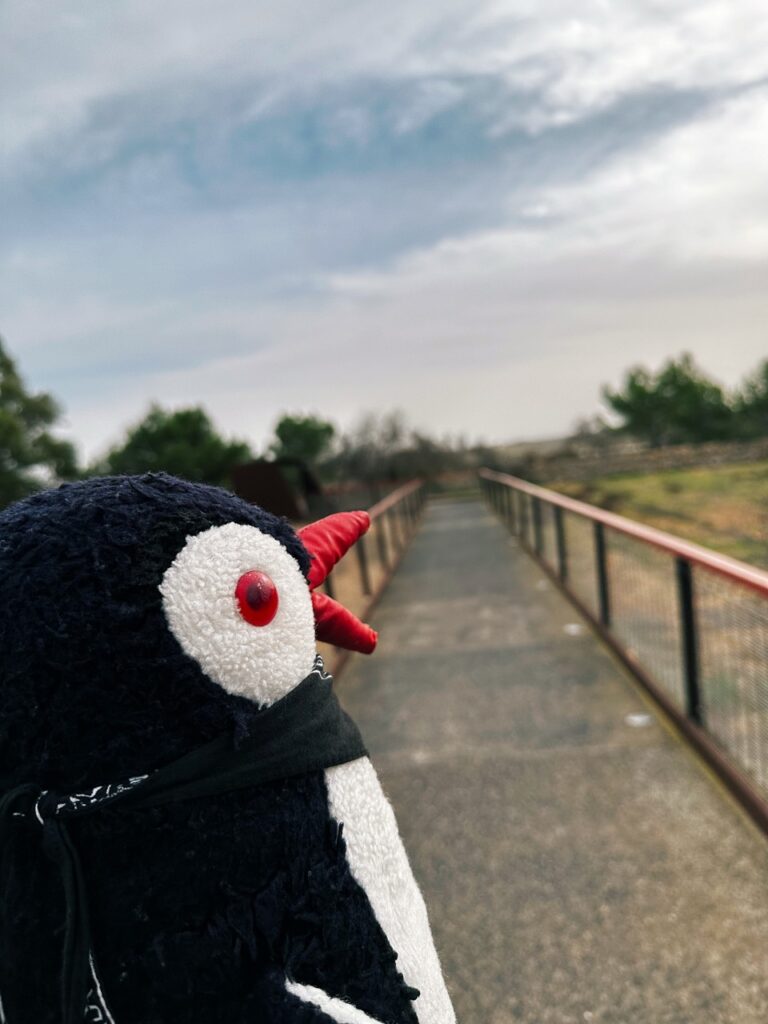
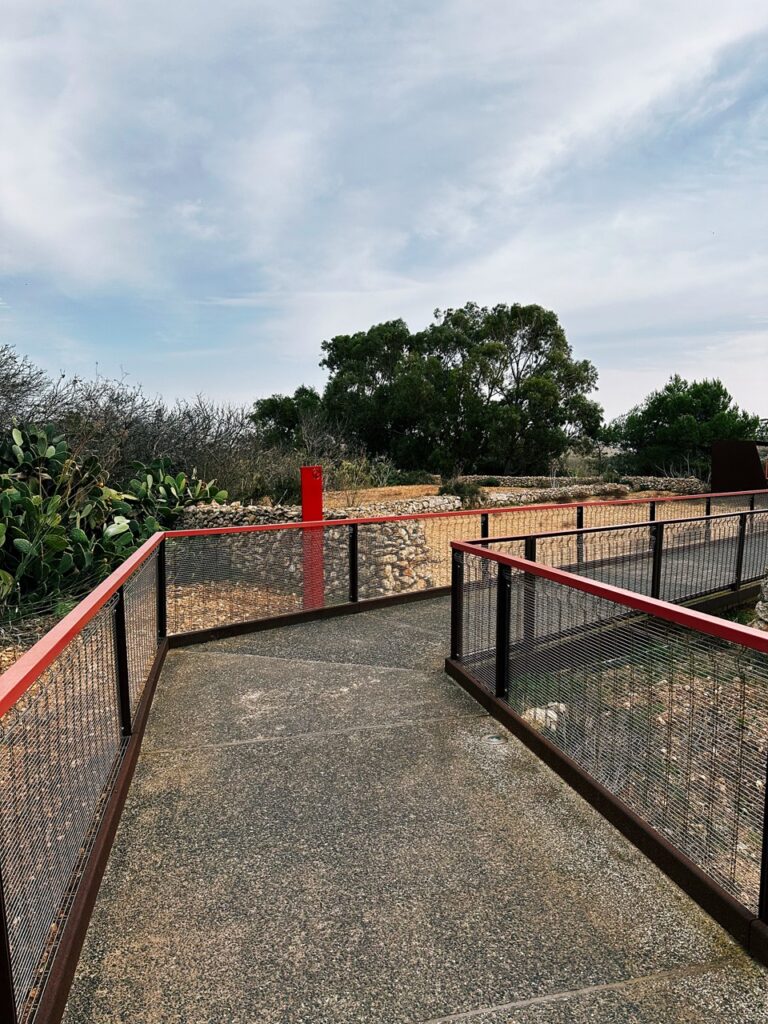
By the time we finished exploring the exhibition, it was time to head outdoors. An elevated pathway connects the Interpretation Center with the archaeological site, and the closer we got, the more the monument’s scale sank in. We visited in December, and the weather couldn’t have been better. It was a pleasant day, neither too hot nor too cold, perfect for taking our time and exploring the grounds.
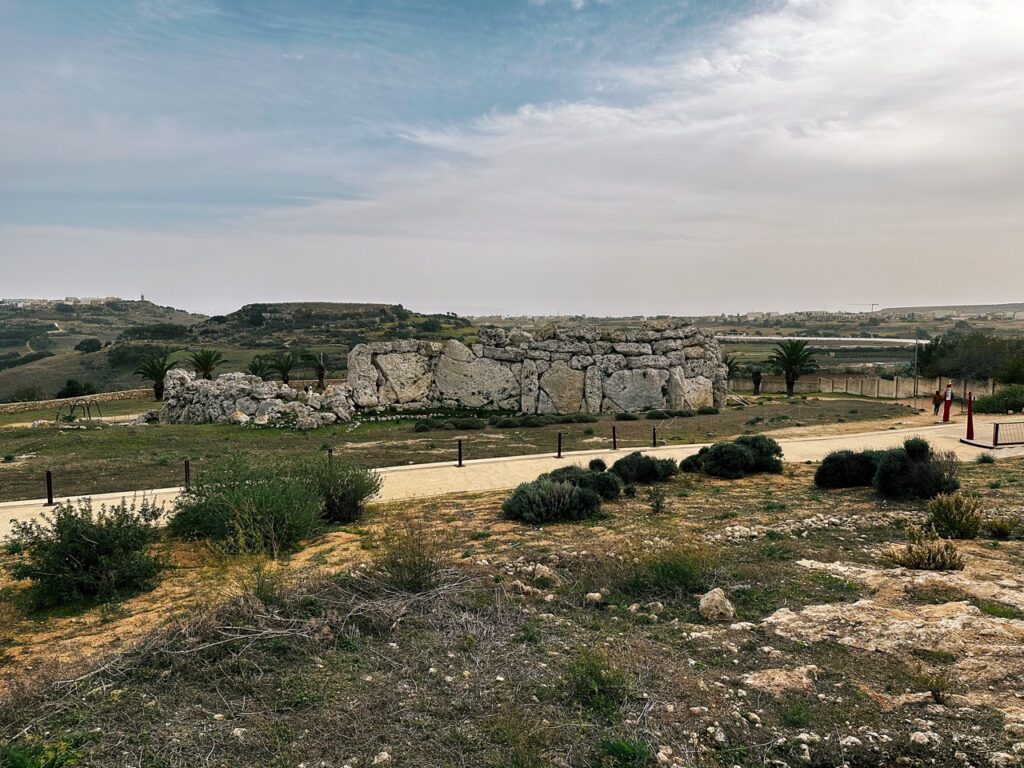
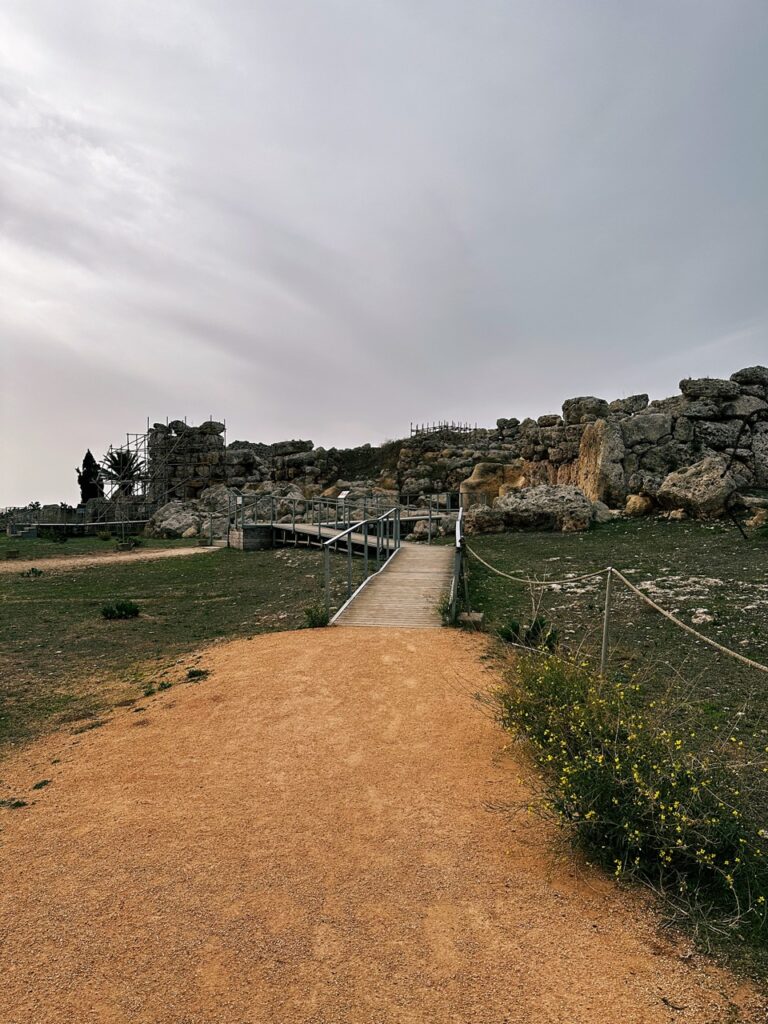
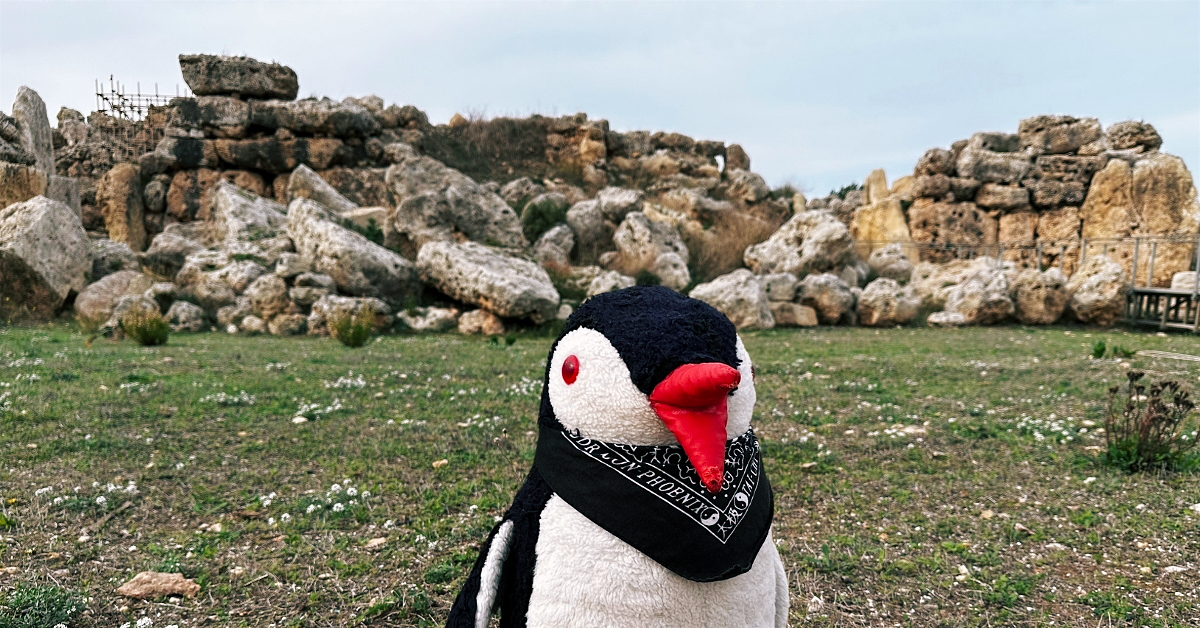
And then there they were: the Ġgantija Temples. Dating back to around 3600–3200 BC, these two prehistoric structures are among the oldest free-standing stone buildings in the world. At first, it may look like a collection of enormous rocks, but take a closer look, and you’ll see much more. The massive limestone blocks form curved chambers, known as apses, arranged around central corridors. You can also spot doorways, stone altars, and other architectural details that give you an idea of how carefully the temples were constructed. Some of the megaliths are enormous, weighing several tonnes, and it is fascinating to think about how people moved and positioned them thousands of years ago, long before modern machinery existed.


One detail we enjoyed was learning about the local legend behind the name Ġgantija. According to Gozitan folklore, a giantess built the temples while carrying her baby on her shoulder. The story says she survived on broad beans and honey and used the enormous stones to create a place of worship. Whether the legend is true, it certainly adds another layer of imagination to an already fascinating place.
Inside the temples, the experience becomes even more interesting. We followed the raised walkways, which allow visitors to explore the structures while protecting the ancient stone floors. As we moved from one chamber to another, we started noticing details that are easy to miss at first glance. The curved walls, enormous limestone blocks, narrow entrances, and stone thresholds all tell a story of careful construction. Some inner spaces feel almost enclosed, with high stone walls surrounding you and framing small glimpses of the sky above. It is quite something to stand there and imagine people gathering in these very spaces more than 5,000 years ago.


As you explore, look out for the different chambers, or apses, arranged around a central corridor. The two temples are not identical, and each has its own layout and architectural details. You can also spot doorways, altars, and decorative stone features. Archaeologists have even found traces suggesting that the interior walls were once plastered and painted with red ochre. It is fascinating to think that what we see today as bare, weathered limestone may once have looked quite different. Take your time, look closely, and read the information panels along the route. Ġgantija is not simply a collection of ancient stones. It is a glimpse into the beliefs, skills and daily lives of a prehistoric community.
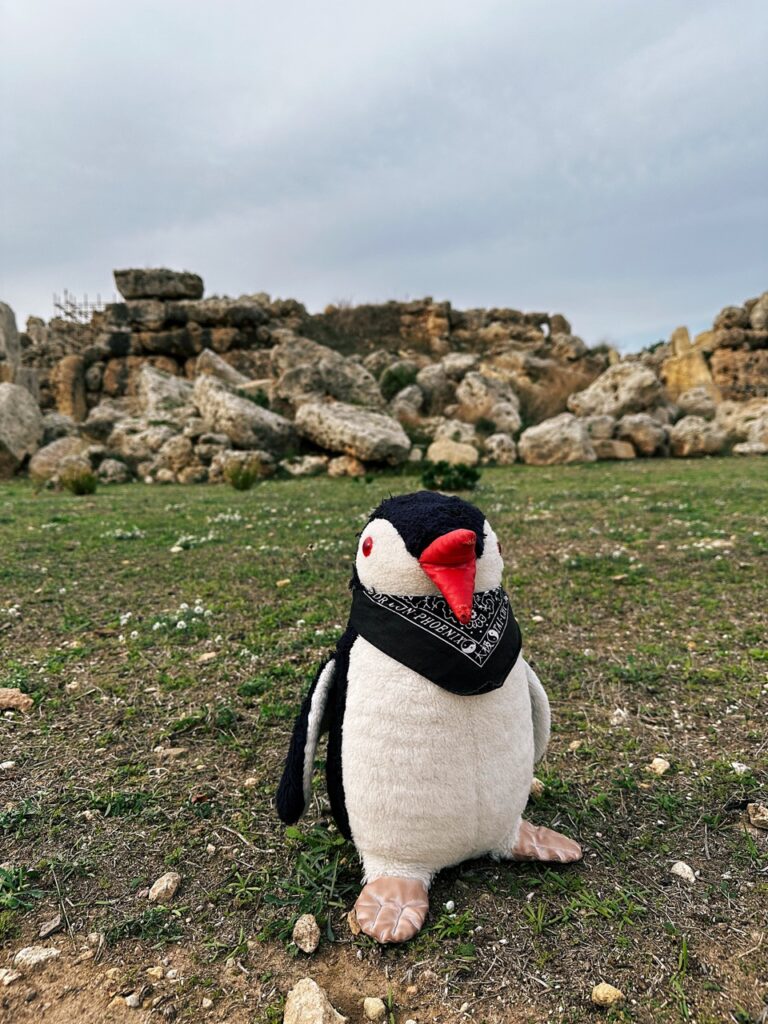
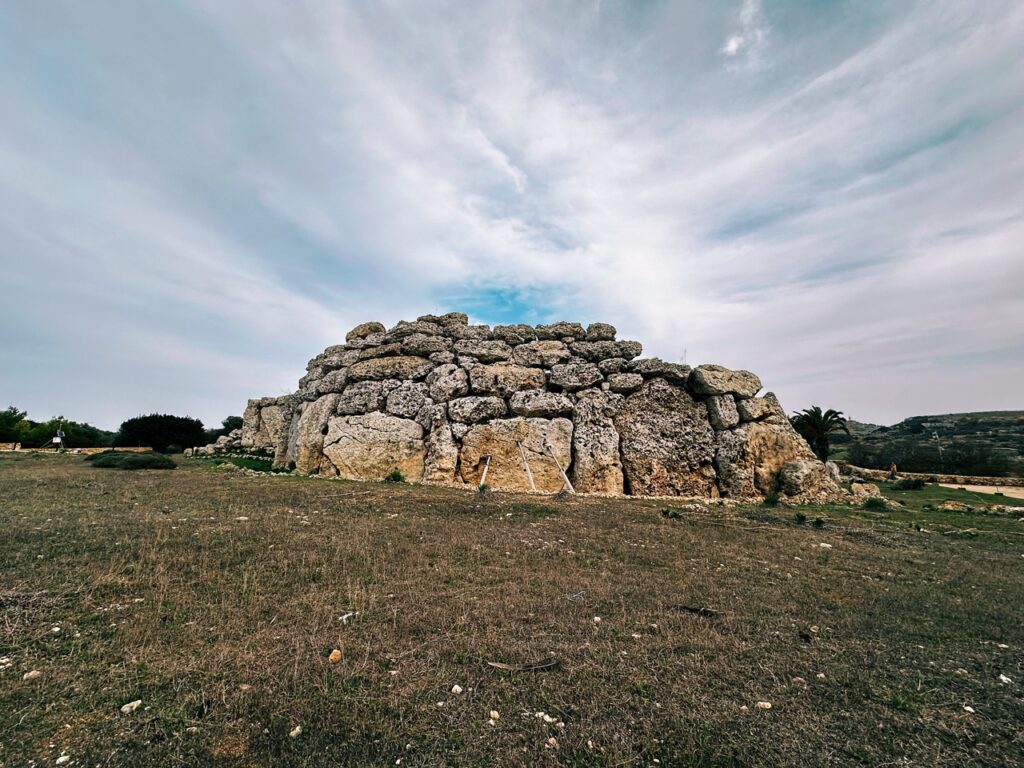
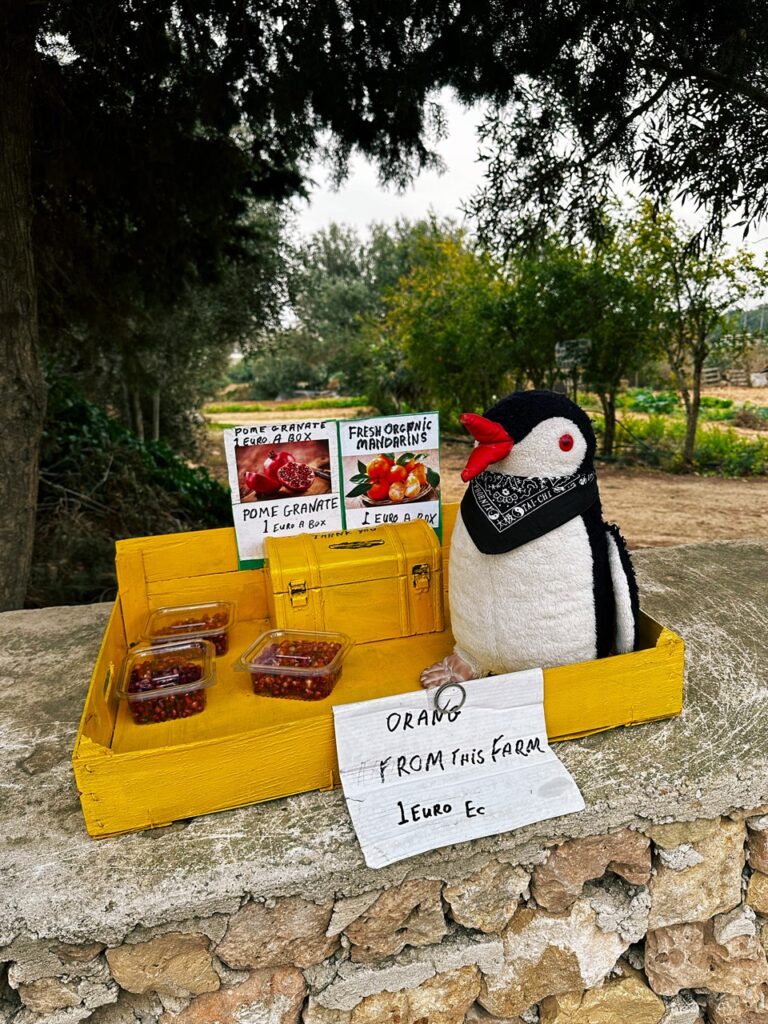
We spent some more time wandering around the grounds, looking at the stone structures from different angles and taking in the surrounding landscape. It is one of those places where the more you read and observe, the more you appreciate what you’re actually seeing. After stepping back thousands of years into Gozo’s prehistoric past, it was time to head out, hop back on the bus, and keep exploring the island.
How Much Time Do You Need
We recommend setting aside around 1 to 1.5 hours for Ġgantija Archaeological Park. This gives you enough time to explore the Interpretation Center, read about the temples’ history, and wander around the archaeological site outside. We spent our time moving between the indoor exhibitions and the ancient stone structures, stopping to admire the details and take photographs. If you’re interested in archaeology or prehistoric history, you might want to allow a little longer. It’s not a huge site, but there is plenty to take in if you slow down and look beyond the enormous stones.
Best Time to Visit Ġgantija Archaeological Park
The best time to visit Ġgantija Archaeological Park is during spring or autumn, when temperatures are mild and comfortable for exploring the outdoor ruins. Summer can get quite hot, so arriving early in the morning is particularly important to avoid the midday heat. We visited in December and can highly recommend a winter visit too. The weather was perfect, neither too hot nor too cold, and we could explore the temples at a relaxed pace. Whatever season you choose, we’d suggest arriving early in the morning, when the site is quieter, and you have more time to appreciate these remarkable ancient structures.

What to See Near Ġgantija, Archaeological Park
If you have extra time in Xagħra, add a few interesting places to your Gozo itinerary.
- Ta’ Kola Windmill. Just a short stroll from Ġgantija, this 18th-century windmill offers a glimpse into traditional Gozitan life. Explore the original milling machinery and the rooms where the miller’s family lived. The best part? Admission is included in your Ġgantija combination ticket.
- Xerri’s Grotto. Venture underground to discover a limestone cave filled with stalactites and stalagmites. Hidden beneath a private house in Xagħra, it makes for an interesting short stop.
- Xagħra Parish Church. Head towards the village square to see the Basilica of the Nativity of Our Lady, one of Xagħra’s main landmarks. Take a moment to admire its architecture and enjoy the atmosphere of this traditional Gozitan village.
- Ramla Bay. If you’re ready for some time by the sea, head to Ramla Bay, famous for its reddish-golden sand and clear Mediterranean water. It is one of Gozo’s best-known beaches and a lovely place to relax.
- Calypso’s Cave. Above Ramla Bay, this legendary cave is linked to the nymph Calypso in Homer’s Odyssey. Although the cave itself remains closed to visitors, the surrounding viewpoint offers lovely views over the bay.
Buy Us a Ko-fi

Ġgantija Archaeological Park was a fascinating stop on our Gozo adventure and a reminder of just how much history this small Mediterranean island holds. From the informative museum to the enormous prehistoric temples, it offered something quite different from the beaches and coastal landscapes we had explored elsewhere. If you’re visiting Gozo, we’d definitely recommend adding Ġgantija to your itinerary. It might not be the biggest attraction on the island, but its history is certainly larger than life!
Travel Bold. Eat Well. Waddle Wild.

This post contains affiliate links. If you click and buy, I might earn a tiny commission, enough to help a penguin keep up its globe-trotting lifestyle. No extra cost to you, just more fish for me. Thank you for supporting the adventure!