
What to Do in Kotor: A Complete Guide to the Best Sights
Kotor had been sitting on our bucket list for what felt like forever, and finally making it there felt a bit surreal. We had a rough idea of what we wanted to see, like the Old Town and those famous views from above, but we didn’t overplan it. And that’s what made it so good.
We spent most of our time just wandering, getting a little lost in the narrow streets, stopping for coffee, and constantly looking up at the mountains wrapping around the bay. It’s one of those places that doesn’t need a packed itinerary to feel memorable. So if you’re heading there, here are the spots and experiences you really shouldn’t miss.
Kotor is a small coastal town in southwestern Montenegro, set right at the end of the stunning Bay of Kotor along the Adriatic Sea. Surrounded by steep, dramatic mountains that drop straight into the water, its location feels almost unreal when you first arrive. It sits not far from the border with Croatia, making it an easy stop if you’re exploring the Balkans or doing a coastal road trip. Despite its small size, Kotor’s setting is what really makes it stand out, with that mix of mountains, sea, and medieval charm all packed into one place.
15 Best Things to Do and See in Kotor
#1: Kotor Old Town: A Walk Through the Heart of Kotor
Kotor Old Town is compact, but that’s exactly what makes it so special. Enclosed by massive stone walls that climb up the hillside, the historic center covers only about 0.4 square kilometers, yet it feels like a maze of history packed into every corner. Inside, you’ll find narrow cobblestone streets, small squares, churches, and centuries-old buildings that all tell part of the town’s story. What’s interesting is that the Old Town is also a UNESCO World Heritage Site,recognized for its well-preserved medieval architecture and unique layout shaped by both Venetian and local influences. Despite its small size, it once served as an important trading and maritime hub on the Adriatic. Today, it’s more about wandering, getting a little lost, and noticing the details, like hidden courtyards, old stone staircases, and cats lounging in the sun as if they own the place.


#2: Views Over Bay of Kotor
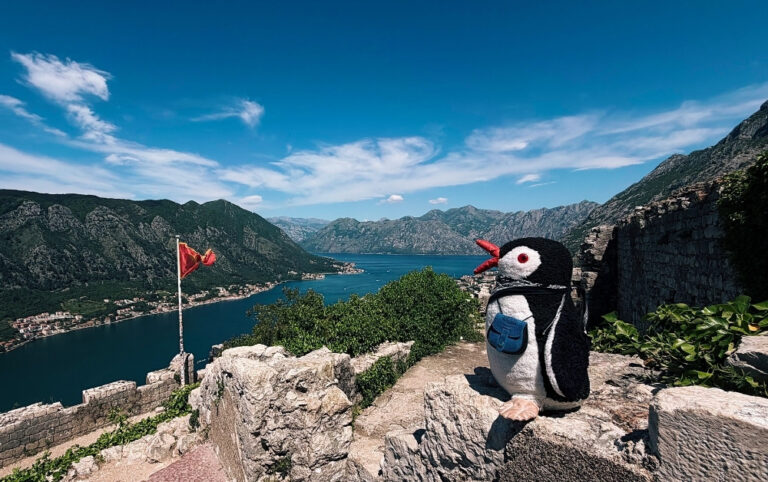
The Bay of Kotor is one of the most dramatic and beautiful coastal landscapes in Europe, often mistaken for a fjord because of its deep, winding shape and steep surrounding mountains. In reality, it’s a submerged river canyon, but whatever you call it, the scenery is unforgettable. The bay stretches inland from the Adriatic Sea, creating calm, deep blue waters framed by towering limestone cliffs and small historic towns dotted along the shoreline. The landscape constantly changes as you move around it. One moment you’re looking at peaceful waterfront villages, and the next you’re surrounded by almost vertical mountain walls rising straight from the sea. The whole area feels like a mix of nature and history, where you can just as easily spend time on the water as you can exploring ancient streets and viewpoints above it.


#3: Kotor Town Walls
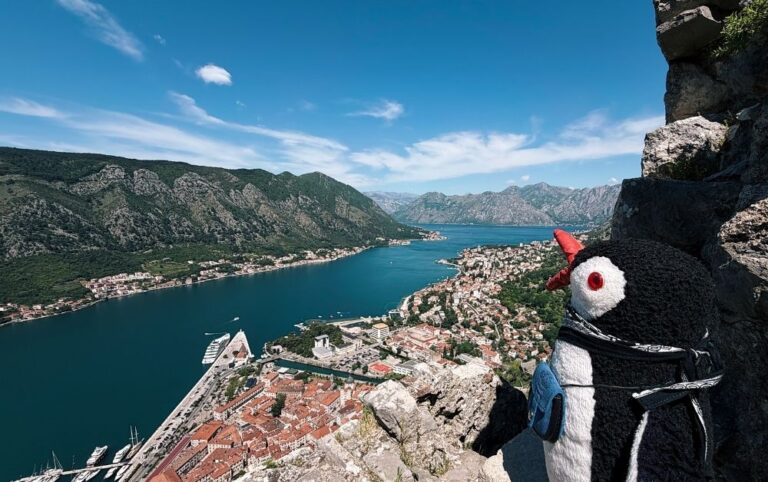
Kotor Town Walls are among the most impressive features of the city, wrapping around the Old Town and rising steeply up the mountainside behind it. In total, the walls stretch for about 4.5 kilometers, and they rise to around 260 meters above sea level at their highest point near the San Giovanni Fortress. From below, they look almost impossible, like they’ve been carved directly into the rock. The fortifications date back to the early medieval period, but most of what you see today was built and expanded during the Venetian rule between the 15th and 18th centuries. Their main purpose was to protect the city from invasions, and they did so for centuries, making Kotor one of the best-preserved fortified towns on the Adriatic coast. Today, climbing the walls is one of the most popular activities in Kotor. It’s a steep and sweaty walk, but the reward is the panoramic view over the bay, the red rooftops of the Old Town, and the dramatic mountains that surround everything.


#4: Kotor Fortress
The Kotor Fortress, often referred to as San Giovanni Fortress, sits high above Kotor and is the final point of the famous climb along the town walls. It rises to about 260 meters above sea level, offering one of the most dramatic viewpoints over the entire Bay of Kotor. From the top, you get a sweeping view of the Old Town below, the winding coastline, and the steep mountains that surround the bay like a natural amphitheater.
The fortress dates back to medieval times and was heavily fortified during the Venetian period, when Kotor was an important defensive and trading stronghold on the Adriatic. Its thick stone walls, bastions, and ruins still reflect its original military purpose, even though much of it is now in ruins rather than a fully intact structure.
Reaching the fortress involves climbing more than 1,300 steps along the ancient walls, which makes it a bit of a challenge, especially in the heat. But once you’re up there, the combination of history and scenery makes it one of the most rewarding spots in Kotor.


We also wrote a whole separate blog post dedicated to the Kotor Fortress itself, including the climb, practical information, and the viewpoints over the bay. You can read it here: Kotor Fortress and the Citadel Views.
#5: Kotor Clock Tower
The Kotor Clock Tower is in the main square of Kotor Old Town and is one of the first landmarks you notice when you enter. Built in the early 17th century during the Venetian period, it originally served both practical and symbolic roles, marking time for the town and serving as a central meeting point in daily life.
The tower has a slightly uneven, almost leaning look today, which is actually the result of centuries of earthquakes that have affected the region. Despite this, it has remained standing and remains one of the most recognizable structures in the Old Town. Beneath it, you’ll also find the “pillory,” which was historically used for public punishment, giving a glimpse into how justice was once carried out here.


#6: The Churches of Kotor
The churches of Kotor are some of the most atmospheric parts of the Old Town, each reflecting a different layer of the city’s long and mixed history. From Roman Catholic heritage to Orthodox tradition, they sit just a short walk apart, quietly telling the story of how cultures and influences have shaped the town over the centuries.
- Saint Luke’s Church is one of the most interesting churches in Kotor because it represents both Catholic and Orthodox traditions. Built in 1195, it originally served as a Roman Catholic church, but later became shared by both communities. This dual use is still visible today, with both Catholic and Orthodox altars inside. Its simple stone exterior contrasts with the rich cultural symbolism it holds, making it a small but powerful reminder of Kotor’s layered religious history.


- Saint Tryphon’s Cathedral is the most important Catholic landmark in Kotor. Built in 1166, it is one of the oldest cathedrals on the Adriatic coast and is dedicated to the town’s patron saint. Over the centuries, it has been rebuilt and restored, especially after earthquakes, but it still retains its Romanesque character. Inside, you’ll find relics of Saint Tryphon, beautiful stone carvings, and a peaceful interior that reflects its long-standing religious significance.


- Saint Nicholas’ Church is the main Serbian Orthodox church in Kotor. It was completed in the early 20th century, following a fire that destroyed an earlier building on the same site. With its distinctive twin domes and striking façade, it stands out among the Old Town’s architecture. Inside, it’s richly decorated with icons, gold details, and candlelight, creating a calm and spiritual atmosphere that contrasts with the busy streets just outside.

#7: Sea Gate: The Main Entrance to Kotor Old Town
The Sea Gate is the main and most iconic entrance into the Old Town of Kotor. Built in 1555 during the Venetian period, it was designed as a fortified gateway facing the sea, welcoming merchants, sailors, and visitors arriving by boat. Even today, it remains the busiest and most recognizable entry point into the historic center. Above the gate, you’ll notice carved details including the Venetian lion and inscriptions that reflect Kotor’s long history under Venetian rule. Waddling through it feels like stepping directly into the past, as you immediately enter the maze of cobbled streets, squares, and stone buildings that define the Old Town.
Despite its defensive origins, the Sea Gate today feels more like a symbolic threshold than a fortress structure. It marks the transition from the modern waterfront promenade into one of the best-preserved medieval towns on the Adriatic coast, setting the tone for everything inside.


#8: Our Lady of the Rocks: A Unique Island Church on the Bay of Kotor
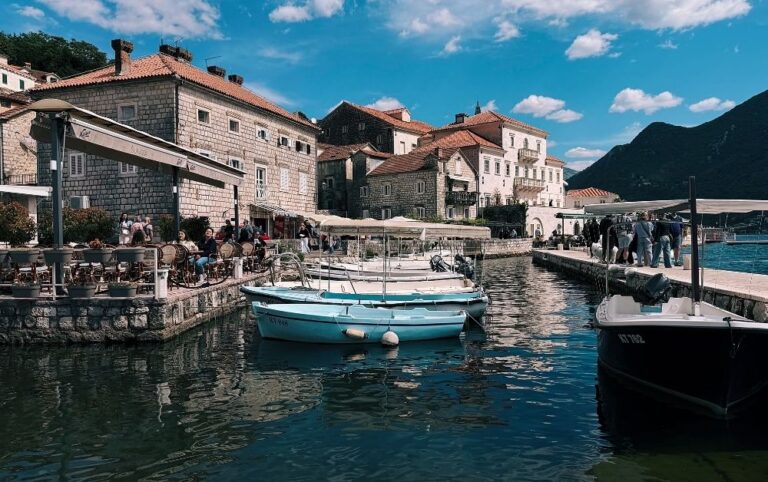
Our Lady of the Rocks is one of the most unique and memorable places in the Bay of Kotor, located on an artificial island near the town of Perast. According to local legend, the island was created over centuries by sailors who, after finding an icon of the Virgin Mary on a rock, began dropping stones and sinking old ships at the site to build the foundation. Today, it’s one of two small islands just off the coast, and the only one that is artificial.
The church itself dates back to the 17th century and is a Roman Catholic sanctuary filled with detailed artwork, silver votive tablets, and maritime relics donated by local sailors. Inside, you’ll also find a richly decorated interior that reflects the strong connection between the sea and the people who lived along the bay.
What makes it especially special is the setting. Surrounded by calm blue water and framed by dramatic mountains, it feels peaceful and almost timeless. You can only reach it by boat, which adds to the experience and makes the visit feel like a small journey in itself.


#9: Kotor Serpentine: The Winding Road Above Kotor
The Kotor Serpentine is one of the most spectacular mountain roads above Kotor, famous for its sharp hairpin bends and incredible views over the Bay of Kotor. Also known as the Kotor switchbacks, the road climbs dramatically from sea level up into the mountains, revealing a completely different perspective of the coastline with every turn.
Built in the early 20th century during the Austro-Hungarian period, the road was originally designed for military access, connecting the coast with the interior of Montenegro. Today, it’s one of the most scenic drives in the region, with over 25 tight bends that twist up the mountainside. The higher you go, the more impressive the views become, with the bay stretching out below like a deep blue fjord surrounded by cliffs.
It’s not just about the drive itself, but also the viewpoints along the way, where you can stop and take in panoramic views of Kotor, the Old Town, and the entire bay. It’s one of those experiences that really shows just how dramatic and unique this landscape is.
#10: Kampana Tower
Kampana Tower is one of the most impressive parts of the old fortification system in Kotor, standing at the edge of the Old Town where it meets the sea. Built during the Venetian period, mainly in the 15th century, it was designed as part of the defensive walls to protect the town from attacks coming from the water and nearby hills.
The tower is connected to the rest of the town walls, which once formed a complete protective ring around Kotor. Its thick stone structure, arrow slits, and strategic position show just how important defense was for the town, especially when Kotor was a key maritime stronghold on the Adriatic coast.
#11: Museums in Kotor
The museums in Kotor might be small, but they give a really interesting look into the town’s history, culture, and even its more unusual sides. From maritime heritage to quirky collections, they’re a nice way to understand the stories behind the Old Town beyond just walking its streets.
- The Cat Museum is one of the most unusual stops in Kotor. It’s a small, quirky museum dedicated to cats, inspired by the town’s long-standing love for stray cats that roam the Old Town. Inside, you’ll find postcards, posters, coins, and artworks donated from around the world, all themed around cats. It’s light-hearted and fun, and fits perfectly with Kotor’s relaxed atmosphere.
- Maritime Museum is one of the most important cultural sites in Kotor, reflecting its strong naval and trading history. Housed in a former Baroque palace, it showcases models of ships, old navigation tools, portraits of sailors, and artifacts from Kotor’s seafaring past. It tells the story of how the town once played a key role in maritime trade along the Adriatic.

#12: Stroll Along the Waterfront in Dobrota
Just outside Kotor, the waterfront in Dobrota is one of the most relaxing places to slow down and take in the bay.This long stretch along the coast follows the edge of the Bay of Kotor, with calm water on one side and old stone houses, small piers, and mountain views on the other.
Unlike the busier Old Town, Dobrota feels more open and quiet, making it perfect for an easy waddle, especially in the evening when the light softens over the water. You’ll pass little swimming spots, boats gently rocking in the bay, and cafés where you can stop for a drink right by the sea. It’s not about big sights here, but more about the atmosphere. A simple walk along this stretch offers a different perspective on Kotor and shows just how peaceful life by the bay can be.
#13: The Views from Mt Lovćen
Above Kotor, the views from Mt Lovćen are some of the most dramatic you can experience in the whole region. Rising above the landscape surrounding the Bay of Kotor, the mountain offers a completely different perspective of the coast, where the deep blue water, winding roads, and cliffs come together in a wide panoramic scene.
The drive up is part of the experience itself, especially as you leave the coastline behind and climb into cooler mountain air. At the top, one of the main highlights is the viewpoint near the mausoleum of Petar II Petrović-Njegoš, where you can see far across Montenegro on clear days, sometimes even stretching towards the Adriatic and inland mountain ranges. What makes Mt Lovćen special is the contrast. One moment you’re down by the sea in a historic coastal town, and the next you’re standing high above it all, looking down at how the bay curves through the landscape. It’s one of those views that really puts the scale and beauty of the area into perspective.
#14: Kotor Cable Car
The Kotor Cable Car is one of the newest and most exciting ways to experience the landscapes above Kotor. It takes you from the coastal area up into the mountains in just a few minutes, offering uninterrupted views over the Bay of Kotor as you rise above the cliffs and winding roads below. As you ascend, the scenery changes quickly from the tight medieval streets of the Old Town to wide-open mountain views. The ride is especially impressive on a clear day, when you can see the full shape of the bay, with its deep blue water and dramatic coastline stretching far into the distance. At the top, there are viewpoints, waddling paths, and places to sit and take in the landscape. It’s an easy way to reach the mountains without hiking the steep Serpentine road, and it offers a completely different perspective on Kotor that feels both peaceful and vast.
#15: Riding the Alpine Coaster in Kotor
Riding the Alpine Coaster above Kotor is one of those unexpected, fun experiences that adds a bit of adrenaline to all the sightseeing. It is in the mountains above the town, and it offers a fast, scenic ride with views stretching over the Bay of Kotor, combining speed with seriously impressive surroundings.
The coaster winds down a mountain track, twisting through curves and gentle drops as you control the speed of your cart.It’s not extreme, but it’s just thrilling enough to make you feel like you’re flying above the landscape while still taking in the views around you. What makes it special is the contrast: one moment you’re surrounded by quiet mountain air, and the next you’re racing down with the bay opening up in the distance. It’s a short experience, but definitely one of the more memorable and playful ways to see Kotor from above.
Whether you spent your time climbing up to viewpoints, wandering through stone streets, or just sitting by the water, Kotor has a habit of turning simple moments into the ones you remember most.

Buy Me a Ko-fi
How Long Do You Need in Kotor
If you’re really short on time, 1 day is enough to explore the Old Town, walk the main streets, and maybe hike up to the fortress for the classic viewpoint over the bay. It will feel a bit rushed, but you can still see the highlights.
Within 2 to 3 days, things start to feel much more balanced. You have time to explore the Old Town slowly, enjoy cafés and restaurants, take the fortress hike without rushing, and even do a short boat trip or visit nearby spots like Perast. This is honestly the sweet spot for most travelers.
If you stay for 4 days or more, Kotor becomes a more relaxed base. You can explore the wider bay area, go on day trips, and still have time to sit by the water and enjoy the atmosphere without constantly moving around.
Where to Stay in Kotor
When it comes to staying in Kotor, the experience can vary significantly depending on the location. You can go for the full Old Town atmosphere, something right by the bay, or a quieter base just outside the center. Here are some solid options to help you choose:
- Hotel Hippocampus. A stylish boutique hotel inside the Old Town, perfect if you want to stay right in the middle of the historic streets and wake up surrounded by history.
- Hotel Villa Duomo. A charming boutique stay in a renovated historic building, known for spacious rooms and a very central Old Town location.
- Hotel Vardar. A classic 4-star hotel on the main square, ideal if you want comfort, convenience, and easy access to everything.
- Boutique Hotel Astoria. A luxury stay inside a historic palace with unique design rooms and a great restaurant, right in the heart of the Old Town.
- Hotel Galia. A more budget-friendly option just outside Kotor with stunning bay views and a quieter atmosphere away from the crowds.
- Hotel Bokeljski Dvori. A small coastal hotel known for panoramic bay views, perfect if you want something scenic and peaceful slightly outside the center.
Hotel search from Booking.comShows Booking.com’s own box, which can set Booking.com cookies.
Kotor is a place that really rewards you when you slow down and take it easy. Between the mountain views, the winding streets of the Old Town, and the calm of the Bay of Kotor, it’s not somewhere you need to rush through or try to tick everything off quickly. Instead, Kotor is best enjoyed at a relaxed pace. Waddle without too much of a plan, sit down for coffee when you feel like it, and just let the atmosphere guide your day. It’s a town that’s easy to take in, but even easier to appreciate when you give yourself time to really notice the details.
Pack your bags and waddle around Kotor!

This post contains affiliate links. If you click and buy, I might earn a tiny commission, enough to help a penguin keep up its globe-trotting lifestyle. No extra cost to you, just more fish for me. Thank you for supporting the adventure!