
How Much Our South Korea Trip Cost: Full Budget Breakdown
The South Korea travel guide you’ve been waiting for is finally here. We break down how much our trip really cost, what places are worth adding to your itinerary, and how to plan your own South Korea adventure without feeling overwhelmed. During our trip, we explored busy Seoul neighborhoods, quiet temples, local markets, mountain viewpoints, themed cafés, and places that showed us both the fast and slower side of the country. Whether you’re visiting for the food, culture, shopping, cherry blossoms, skincare, cafés, or K-pop atmosphere, this guide has you covered. Keep reading to discover the best things to do in South Korea, how to get around, how expensive things actually are, and what we honestly think is worth your time. We’re also answering the most common questions we received on Instagram, so you know exactly what to expect before your own trip begins.
- Do I need a visa to visit South Korea
- Is South Korea Safe for Tourists
- Can you travel to South Korea without speaking Korean
- Should You Use cash or Card in Korea
- Is Google Maps working in Korea
- What is the best time to visit South Korea
- How many days do you need in Seoul
- How Many Days Do You Need in South Korea
- What Was Our South Korea Itinerary
- Is South Korea Good for First-Time Asia Travelers
- What Is the Best Area to Stay in Seoul
- Where Did We Stay in Seoul
- How Much Did Our South Korea Trip Cost
- Would We Go Back to South Korea
- Quick FAQs About South Korea

FAQ about traveling to South Korea
Do I need a visa to visit South Korea
For many countries, you can enter visa-free for short tourist stays. Citizens from many European countries usually do not need a traditional tourist visa for trips up to 90 days. South Korea previously required many travelers to apply for a K-ETA electronic travel authorization before arrival. Still, this requirement has currently been temporarily waivedfor several countries until the end of 2026. Still, entry rules can change, so we highly recommend checking the official Korean embassy or K-ETA website before booking your trip to make sure you have the latest information for your passport.
Make sure to also check out our blog post Things to Know Before Visiting South Korea: Meet the Country Behind Hallyu, where we share useful travel tips, cultural differences, apps worth downloading, transport advice, and small things we wish we knew before arriving.
Is South Korea Safe for Tourists
South Korea is generally considered a very safe destination for tourists, even for solo travelers and first-time visitors to Asia. During our trip, we often saw people leaving their phones, bags, or laptops unattended in cafés, which still surprised us. Public transport felt safe, the streets were active late into the evening, and we rarely felt uncomfortable while exploring. Of course, basic travel awareness still applies, especially in crowded tourist areas, but overall, South Korea felt very safe throughout our trip.
Can you travel to South Korea without speaking Korean
Yes, you can absolutely travel around South Korea without speaking Korean, as we did during our trip. We learned a few basic words like hello and thank you, which people always seemed to appreciate, but most of the time we relied on translation and navigation apps to get around. In bigger cities like Seoul and Busan, many signs are also written in English, especially in subway stations and tourist areas. We still highly recommend downloading a few useful apps before your trip, so make sure to check out our blog post Must-Have Apps for Traveling in South Korea where we share the apps that helped us navigate, translate, and move around much more easily.
Should You Use cash or Card in Korea
During our trip, we mostly paid by card because South Korea is very card-friendly, even for small purchases like convenience store snacks or subway top-ups. Still, we definitely recommend carrying some cash with you because smaller markets, street food stalls, recharge machines, or older local places may sometimes prefer cash. We usually kept a bit of Korean won on hand just in case. Overall, though, paying by card in South Korea felt much easier than in many other countries we’ve visited.
Is Google Maps working in Korea
Google Maps is finally starting to improve in South Korea after the government approved Google’s access to more detailed map data in early 2026, which should enable more accurate walking and driving navigation in the future. That said, during our trip and even now, many still rely mainly on Naver Maps or KakaoMap because they tend to be more accurate for local businesses, walking routes, public transport, and real-time navigation inside Korea. Google Maps is becoming more usable than before, especially for searching for places and reading reviews, but local apps still usually offer a smoother overall experience. We also created two Google Maps for Seoul and Busan to help you plan your trip. Feel free to check them out.
What is the best time to visit South Korea
The best time to visit South Korea is usually during spring and autumn. Spring is famous for cherry blossoms, milder temperatures, and parks full of flowers, while autumn brings colorful leaves, cooler weather, and better conditions for walking around cities and hiking. Summer can be very hot and humid, especially in Seoul, and winter can be surprisingly cold, with snow in some areas. We personally think spring and autumn give the best balance for sightseeing, café hopping, exploring neighborhoods, and enjoying the overall atmosphere without dealing with extreme weather.
How many days do you need in Seoul
We spent 9 days in Seoul and still felt like there was more left to explore. You can see many of the main attractions within 4 to 5 days, but if you also want time for cafés, shopping, day trips, themed places, slower mornings, and exploring different neighborhoods without rushing, we think around a week or more is a much better experience. Seoul is one of those cities where every area feels completely different, so extra days never really felt wasted. If you want to see exactly how we organized our trip, check out our full Seoul itinerary, where we share everything we did day by day.
How Many Days Do You Need in South Korea
- Seoul Only: 5 to 7 Days. Seoul is much bigger than we expected and every neighborhood feels different. You can technically see the main attractions in 4 to 5 days, but if you also want café hopping, shopping, slower mornings, themed places, viewpoints, and day trips, we think at least a week feels much more realistic.
- Seoul + Busan: Around 10 to 14 Days. Our full South Korea trip lasted 11 days in total, with 9 days in Seoul and the remaining time in Busan. For us, this felt like a good balance because we did not want to rush every day. Busan also gave a completely different atmosphere compared to Seoul, especially around the coast.
Realistic Pacing Matters. One thing we quickly realized is that South Korea can become exhausting if you try to pack too much into each day. Subway transfers, walking, crowds, cafés, shopping streets, and attractions take more time than expected. Some days we walked over 20,000 steps without even realizing it.
What We Would Do Differently. Looking back, we would probably add a few extra days outside Seoul next time. While we loved Seoul, we also wish we had more time for Busan or even another smaller city to experience a slower side of South Korea beyond the capital.


What Was Our South Korea Itinerary
Our South Korea trip lasted 11 days in total and was divided between Seoul and Busan. We spent 9 days exploring Seoul, then headed to Busan for the rest of the trip to experience a completely different side of the country.
- Seoul: 9 Days. Most of our trip was focused on Seoul, where we explored neighborhoods like Hongdae, Myeongdong, Gangnam, and Ikseon-dong, as well as many café streets, markets, viewpoints, themed attractions, and shopping areas. Some days were packed with sightseeing, while others were slower, focused more on cafés, food, and wandering through different districts.
- Busan: 2 Days. Busan felt much more relaxed compared to Seoul. We spent time along the coastline, on beaches, in colorful streets, at viewpoints, and in seafood areas. The atmosphere there felt very different from the capital, and we are really glad we included it in our itinerary.
Transportation Between Cities. We mainly used the subway system while staying in Seoul because it was affordable and surprisingly easy once we got used to it. For traveling between Seoul and Busan, we used the high-speed KTX train, which made the journey much faster and smoother.
Favorite Areas. Some of our favorite areas in Seoul were Hongdae for its atmosphere, Ikseon-dong for its cafés and smaller streets, and Myeong-dong for its energy and food options. In Busan, we loved the coastal views and slower pace compared to Seoul.
If you want to see our full routes and exactly how we planned each day, check out our blog posts Realistic Seoul 9-Day Itinerary: A Practical Day-by-Day Travel Plan and 2 Days in Busan Itinerary: Best Things to Do and See.
Feel free to check out the personal itinerary we created from our own trip below. And if you would like help planning your own South Korea adventure, let us know, because we also create custom travel itineraries tailored to your trip style, budget, and interests.
Is South Korea Good for First-Time Asia Travelers
Yes, South Korea is a great destination for first-time Asia travelers. Public transport is organized, the cities feel safe, many signs are written in English, and getting around becomes much easier once you download the right apps. At the same time, South Korea still feels very different from Europe, so you get that exciting culture shock without feeling completely overwhelmed. There were definitely moments where things felt unfamiliar, especially with navigation apps, restaurants, or local customs, but overall, we found South Korea quite approachable for a first trip to Asia.
What Is the Best Area to Stay in Seoul
Choosing where to stay in Seoul can shape your entire trip, as the city is massive and each neighborhood has a distinct atmosphere. Some areas are better for nightlife and cafés, others for shopping, sightseeing, food, or easier transportation connections. During our trip, we quickly realized that staying in the right area saved us a lot of time and energy, especially after long days of walking around the city. If you are visiting Seoul for the first time and feel overwhelmed by all the neighborhood options, make sure to check out our blog post Honest Advice: Where to Stay in Seoul for First-Time Visitors where we break down the pros, cons, and vibe of the most popular areas.
Where Did We Stay in Seoul
During our time in Seoul, we stayed at Le Mong Hotel, which turned out to be a practical base for exploring different parts of the city. The location made it easier for us to use the subway to get around, grab food nearby, and return after long sightseeing days without wasting too much time commuting. Like every stay, there were things we liked and a few things we would mention honestly as well, so if you want to see our full experience, make sure to check out our detailed review of Le Mong Hotel in Seoul, South Korea.
How Much Did Our South Korea Trip Cost
One of the questions we received the most during and after our trip was how expensive South Korea actually is. In this section, we break down our real travel expenses, including flights, hotels, food, transportation, attractions, cafés, and all the small daily costs that quickly add up during a trip. Some things ended up being cheaper than we expected, while others definitely surprised us.
- Flights to South Korea. Our flights to South Korea cost us €1,307 in total for two people. We traveled from November 10 to November 21, 2025, and decided to book direct flights from Vienna to Seoul via Korean Air and a direct return flight home. For us, avoiding long layovers was worth paying a bit more because the journey is already quite long and exhausting. Having a direct connection made the trip much smoother, especially on the way back after almost two weeks of nonstop exploring.
Hotel search from Booking.comShows Booking.com’s own box, which can set Booking.com cookies.
- Accommodation in South Korea. For accommodation during our South Korea trip, we stayed both in Seoul and Busan. Most of our trip was based in Seoul at Hotel Lemong, while in Busan we stayed at Marysol by Haeundae Beach for a few nights near the coast.
-
-
- Hotel Lemong, Seoul. November 10 – 21, 2025. €994.00 (approximately ₩1,644,709)
- Marysol by Haeundae Beach, Busan. November 14 – 16, 2025
- €304.64 (approximately ₩504,000).
- Total Accommodation Cost: €1,298.64 (approximately ₩2,148,709)
-
-
Overall, accommodation was one of the trip’s bigger expenses, especially because we wanted locations with good transport links and easy access to the neighborhoods we planned to explore.
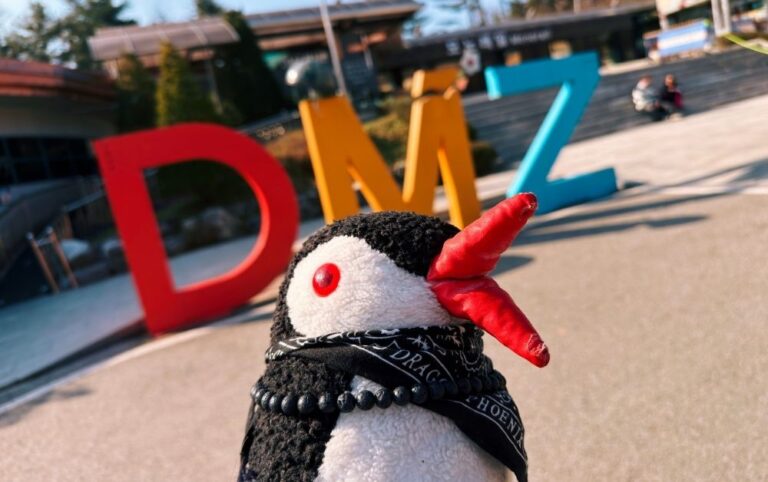
- Attractions & Activities. For attractions, experiences, and tickets during our South Korea trip, we spent approximately₩528,000 (around €318 / $365 USD). This included a mix of sightseeing, cultural experiences, observation decks, and themed attractions throughout Seoul and Busan (DMZ Tour, SEA LIFE Busan Aquarium, Deoksugung Palace, BUSAN X the SKY, Lotte World Tower, Palace & Secret Garden, and more). Many attractions in South Korea are reasonably priced individually, but once you start adding tours, palaces, observation decks, and activities over multiple days, the total can grow much.
-
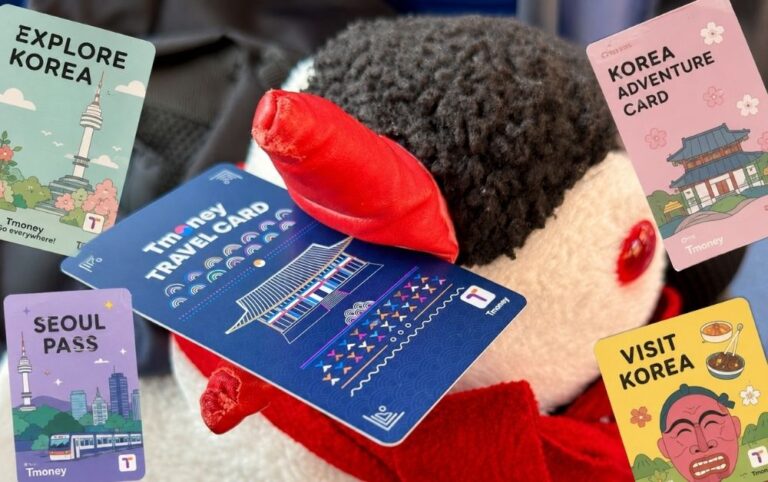
Transportation. For transportation during our South Korea trip, we spent approximately ₩450,000 (around €271 / $311 USD). This included both international and local transportation costs throughout the trip (KTX train to Busan, T-money cards and top-ups, subway rides, airport transport, Ubers in Busan, buses, and transport between Bratislava and Vienna Airport). Public transportation in South Korea was one of the biggest positives of the trip. Once we figured out the subway system and started using our T-money cards regularly, getting around Seoul became much easier and surprisingly affordable compared to many other major cities.
- Restaurants & Food. For restaurants and food during our South Korea trip, we spent approximately ₩409,000 (around €246 / $282 USD). This included everything from Korean BBQ and local restaurants to smaller meals, cafés, snacks, and convenience store food throughout Seoul and Busan. One thing that surprised us was that food in South Korea could be both very affordable and unexpectedly expensive, depending on where and what you eat. Convenience stores and smaller local places were usually budget-friendly, while trendier cafés and certain restaurants added up much faster.
- Grocery & Snacks. For groceries, snacks, drinks, convenience store runs, and random food purchases throughout the trip, we spent approximately ₩580,000 (around €348.85 / $400 USD). This category honestly added up much faster than we expected because South Korea is full of convenience stores, bakeries, cafés, vending machines, and small snacks that are hard to resist while exploring the city. Many evenings ended with another quick convenience store stop for banana milk, ramen, desserts, or drinks before heading back to the hotel.
- Souvenirs & Shopping. For souvenirs, skincare, beauty products, gifts, stationery, and random shopping throughout the trip, we spent approximately ₩1,723,000 (around €1,036.91 / $1,190 USD). A large part of this budget went toward Olive Young and Korean beauty products because it is honestly very hard not to get tempted once you start browsing skincare stores in Seoul. Besides that, we also bought souvenirs for family and friends, stationery items, postcards, Daiso finds, penguin-themed souvenirs, snacks, accessories, and small keepsakes from both Seoul and Busan. This was definitely one of the categories where we intentionally spent more because South Korea has so many unique stores and products that are difficult to resist once you start exploring shopping streets and underground malls.
Tours and tickets from KlookShows Klook’s own box, which can set Klook cookies.Tours and tickets in Seoul on KlookKlook’s box can’t load on this device (an ad blocker often stops it). This opens Klook’s own page.Open Klook
- Other Expenses. For miscellaneous expenses during our South Korea trip, we spent approximately ₩1,491,000 (around €897.38 / $1,030 USD). This category included items that did not really fit anywhere else but were still part of the overall travel budget. Some of the bigger expenses included eSIM data plans, skincare and beauty purchases from Olive Young, a professional skin analysis and treatment session, hair treatment, hotel laundry, lockers in Busan, and a few smaller practical purchases during the trip. This category shows how quickly random extra expenses can add up during longer travels, especially in a country like South Korea, where beauty treatments, skincare, and convenience services are everywhere.
| Category | Korean Won (Approx.) | Euro (€) | USD ($ Approx.) |
|---|---|---|---|
| Flights | ₩2,166,000 | €1,307.00 | $1,500 |
| Accommodation | ₩2,148,709 | €1,298.64 | $1,490 |
| Attractions & Activities | ₩528,000 | €318.00 | $365 |
| Transportation | ₩450,000 | €271.00 | $311 |
| Restaurants & Food | ₩409,000 | €246.26 | $282 |
| Grocery & Snacks | ₩580,000 | €348.85 | $400 |
| Souvenirs & Shopping | ₩1,723,000 | €1,036.91 | $1,190 |
| Other Expenses | ₩1,491,000 | €897.38 | $1,030 |
| Total Trip Cost | ₩9,495,709 | €5,723.04 | $6,568 |
When adding up all our expenses, our entire South Korea trip cost approximately ₩9,495,709 (€5,723 / around $6,568 USD) for two people over 11 days. That means the trip came to roughly ₩4,747,854 (€2,861 / around $3,284 USD) per person.
Of course, this number can vary depending on your travel style and priorities. We included direct flights, hotels in both Seoul and Busan, attractions, shopping, skincare, souvenirs, cafés, beauty treatments, and plenty of spontaneous purchases throughout the trip. If you travel more budget-friendly, skip shopping, or focus mostly on free attractions and convenience store meals, you could definitely spend much less. On the other hand, South Korea also makes it very easy to spend more once you start exploring cafés, skincare stores, themed attractions, and shopping streets.
Would We Go Back to South Korea
Yes, absolutely. Even after spending 11 days in South Korea, we still felt like there was so much more left to explore. Seoul alone felt endless, and Busan offered a completely different atmosphere from the capital. There were also many places we did not have enough time for, including smaller cities, nature spots, and seasonal experiences we would love to see in the future. At the same time, South Korea was one of those destinations that constantly kept surprising us. One moment we were exploring busy shopping streets filled with cafés and neon signs, and the next we were walking through quiet palace areas or coastal viewpoints. We definitely left with the feeling that this was not a one-time trip for us.


Quick FAQs About South Korea
- Did We Use eSIM or SIM Cards? Yes, we used eSIMs during the trip, and they worked very well for navigation, translation apps, and staying connected throughout South Korea.
- Is South Korea Easy to Travel Around? Yes, once you understand the subway system and download the right apps, traveling around South Korea becomes surprisingly easy and efficient.
- How Much Money Do You Need Per Day in Korea? This depends on your travel style, but as a rough estimate, we would say budget travelers could manage around ₩70,000–120,000 ($50–90 USD / €45–80) per person per day, while a more comfortable trip with cafés, attractions, shopping, and restaurants can easily reach ₩200,000+ ($145+ USD / €130+) per day. South Korea can be surprisingly affordable in some areas, but trendy cafés, skincare shopping, and attractions add up very quickly.
- Are Convenience Stores Really That Good? Honestly… yes. We ended up visiting convenience stores almost every single day for snacks, ramen, banana milk, drinks, and quick meals.
- Is Korean BBQ Expensive? It can be. Some places are affordable, but Korean BBQ can quickly become one of the more expensive meals, especially in tourist areas or when ordering premium meat.
- What Are the Biggest Mistakes Tourists Make in Korea? Trying to do too much in one day, relying only on Google Maps, underestimating walking distances, and not downloading local apps before arrival.
- Is Korea More Expensive Than Japan? For us, South Korea felt slightly cheaper overall than Japan in some categories, especially transportation and certain food options, but shopping and cafés added up very quickly.
- Is Skincare in Korea Really Cheaper? Yes, especially compared to many European prices. Olive Young stores were a budget risk for us.
- Is South Korea Crowded? Popular areas in Seoul can feel extremely crowded, especially evenings and weekends, but quieter neighborhoods and parks still exist if you want slower moments.
- What Are the Best Day Trips From Seoul? Some of the most popular ones include the DMZ, Nami Island, Suwon, and smaller mountain or temple areas outside the city.
- Can You Drink Tap Water in Korea? Yes, tap water in South Korea is generally safe to drink, although many locals still prefer filtered or bottled water.
- What Cultural Differences Surprised You? The café culture, the fast pace of the cities, how quiet public transport often feels, and how common skincare and beauty treatments are for both men and women.
- What Should Tourists Avoid in Korea? Avoid blocking sidewalks, being overly loud on public transport, and assuming international apps will always work properly.
- Is Korea Good for Couples? Definitely, South Korea has many cafés, themed experiences, viewpoints, shopping streets, and activities that make it a really fun couples destination.
- Is Korea Good for Solo Travelers? Yes, especially because it feels safe and public transport is excellent, though some restaurants are better suited to groups than to solo dining.
- What Are the Most Overrated Places in Seoul? Some extremely viral Instagram spots honestly looked better online than in reality, especially certain overcrowded cafés and shopping streets.
- What Should You Book Before Arriving? Flights, accommodation, eSIMs, some popular attractions, and possibly train tickets if you plan to travel between cities during busy seasons.

Buy Me a Ko-fi
South Korea was one of the most memorable trips. Between the food, cafés, shopping streets, palaces, coastal views, and nonstop atmosphere of the cities, it constantly felt like there was something new to experience. We hope this guide helped you better understand the real costs of traveling around South Korea and what to expect before your own trip. And if you are planning your own adventure, make sure to check out our other South Korea itineraries, hotel reviews, and travel tips as well.
Pack your bags and explore South Korea!

This post contains affiliate links. If you click and buy, I might earn a tiny commission, enough to help a penguin keep up its globe-trotting lifestyle. No extra cost to you, just more fish for me. Thank you for supporting the adventure!