Krampus in Salzburg: Everything to Know About the Krampus Run
The Krampus run has been on our bucket list for as long as we can remember. Something about this centuries-old Alpine tradition fascinates us: Christmas cheer meets a much darker kind of folklore. So, we finally decided it was time to head to Salzburg and witness these legendary creatures for ourselves. Forget the friendly elves and cheerful Christmas characters. In Salzburg, the streets come alive with horned figures, terrifying wooden masks, heavy bells, and elaborate costumes as the Krampus take over the festive season. Often described as Saint Nicholas’s rather frightening companions, these mythical creatures bring a completely different atmosphere to the Austrian Christmas celebrations.
If you are planning to experience the Krampus run in Salzburg, here is everything you need to know, from the origins of the tradition and what happens during the parade to where to watch, how to prepare, and what to expect when these legendary figures come running through the streets.
- Quick Facts About the Krampus in Salzburg
- Not Your Typical Christmas Character: The Story of Krampus
- The Legend of Krampus: The Dark Companion of Saint Nicholas
- The Origins of the Krampus Tradition in Austria
- The Art of Becoming Krampus: Masks, Fur and Heavy Bells
- Krampus Quick Facts Behind the Costume
- What Is a Krampuslauf
- Our Experience at the Salzburg Krampus Run
- Expectation vs Reality: Is the Salzburg Krampus Run Worth It
- Visiting the Krampus Run in Salzburg: Practical Guide
- Salzburg Goes All In on Krampus!
- Where Else Can You Watch a Krampus Run in Austria
Quick Facts About the Krampus in Salzburg
- Event: Salzburg Krampus Run (Krampuslauf)
- Location: Salzburg Old Town, Austria
- Main locations: Festspielhaus, Getreidegasse, Alter Markt, Domplatz, and Residenzplatz
- Admission: Free to watch
- Tradition: Alpine folklore celebrating the frightening companion of Saint Nicholas
- What to expect: Horned figures, hand-carved wooden masks, fur costumes, bells, chains, and traditional Krampus groups
- Best for: Christmas enthusiasts, folklore lovers, photographers, and curious travelers
Not Your Typical Christmas Character: The Story of Krampus
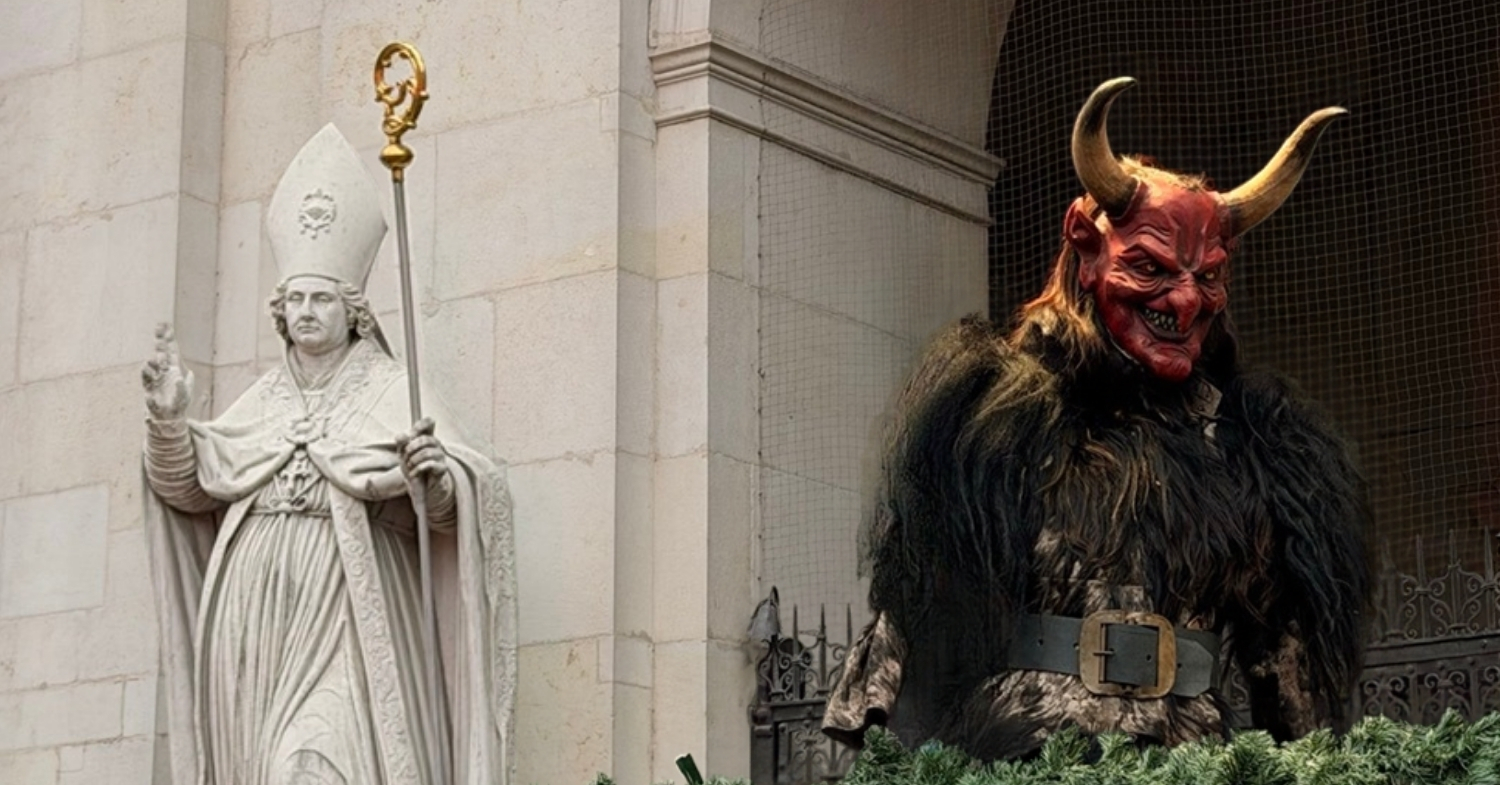
Imagine strolling through a Christmas market, a mug of mulled wine in hand, surrounded by twinkling lights and the familiar sounds of festive music. Then, out of the darkness, comes a towering figure with twisted horns, a snarling face, long fangs, and heavy bells rattling around its waist. It is not a character from a Christmas horror film. It is Krampus, one of the most recognizable and unsettling figures in Alpine folklore.
Often nicknamed the Christmas Devil, Krampus is a mythical creature from Central European traditions, particularly Austria, Bavaria, and the wider Alpine region. His name is believed to derive from the Old High German word krampen, meaning claw. Unlike the cheerful figures who populate modern Christmas celebrations, Krampus represents the darker side of the festive season.
In traditional folklore, Krampus accompanies Saint Nicholas, whose feast day falls on 6 December. While Saint Nicholas rewards well-behaved children with sweets and small gifts, Krampus takes on the less pleasant task of frightening those who misbehave. In some versions of the legend, he carries a bundle of birch branches, known as Ruten, to threaten or symbolically punish naughty children. Older, more frightening tales even describe him carrying troublesome children away in a basket or sack.


There is little about Krampus that resembles the friendly characters of a traditional Christmas celebration. His appearance varies between Alpine regions and individual groups, but several features are almost universal.
His face is usually hidden behind a hand-carved wooden mask, often featuring exaggerated expressions, sharp teeth, a long tongue, and imposing horns. Some masks look almost animal-like, while others have an unmistakably demonic appearance. The horns are typically inspired by goats or other horned animals, reinforcing his association with the wilderness and the supernatural.
His body is traditionally covered in dark animal fur, giving him a wild, almost untamed appearance. Around his waist hangs a collection of large cowbells, which announce his arrival long before he appears around the corner. Chains, birch branches, and other accessories complete the costume.
Every detail has a purpose. The horns and frightening face establish his demonic character, the fur gives him an animalistic appearance, and the bells create the unmistakable sound associated with a Krampus procession. Together, they turn the creature into something that seems to have stepped straight out of an Alpine legend.
Why is Krampus called the Christmas Devil
The nickname is easy to understand once you see him. With his horns, fangs, dark fur, and threatening appearance, Krampus bears a striking resemblance to traditional depictions of the devil. However, he is not simply another name for Satan.
Krampus occupies a particular place in Alpine Christmas folklore. He is a companion and counterpart to Saint Nicholas, representing punishment and mischief, while the saint represents generosity and reward. The two figures embody opposing sides of the traditional celebration: good behavior and bad behavior, reward and consequence.
This contrast is what makes the tradition so unusual. Christmas in the Alpine world has never been exclusively about cheerful decorations, presents, and festive markets. It also has a darker folkloric side, where frightening creatures remind people that winter brings its own mysteries and old beliefs.
Is Krampus the same as other Christmas creatures
Not quite. European winter folklore is full of unusual characters, and several of them are easily confused with Krampus. Although they share certain characteristics, their origins, roles, and traditions differ.
| Character | Origin | Role in folklore |
| Krampus | Austrian and Alpine traditions | Accompanies Saint Nicholas and frightens naughty children |
| Perchten | Alpine regions, particularly Austria | Figures associated with winter customs, seasonal rituals and driving away evil spirits |
| Belsnickel | German-speaking folklore | A fur-clad Christmas visitor who tests children’s behavior |
| Knecht Ruprecht | German folklore | Saint Nicholas’s companion who questions or disciplines children |
| Zwarte Piet | Netherlands | Historical companion of Saint Nicholas, with a complex and contested modern history |
The Legend of Krampus: The Dark Companion of Saint Nicholas
In Alpine folklore, Saint Nicholas and Krampus make an unlikely Christmas pair. While Saint Nicholas rewards well-behaved children with sweets and small gifts, his horned companion has a different job: frightening those who misbehave. The tradition centers around two dates. On 5 December, known as Krampusnacht, Krampus figures take to the streets in elaborate costumes, while on 6 December, Saint Nicholas Day, they celebrate the generous bishop who brings gifts to children.
Krampus carries birch branches, known as Ruten, to threaten naughty children. Some darker versions of the legend even describe him carrying troublesome children away in a basket or sack.
The exact origins of Krampus remain uncertain, although the tradition is deeply rooted in Alpine folklore and became closely associated with the Catholic celebration of Saint Nicholas. Today, it lives on through traditional processions, known as Krampusläufe, where elaborately dressed figures bring centuries-old folklore to life. What began as a seasonal tale about good behavior has become one of Austria’s most distinctive Christmas traditions, preserving a fascinating blend of folklore, craftsmanship, and community celebrations.
The Origins of the Krampus Tradition in Austria
Alpine folklore, winter customs, and a fair amount of mystery surround the origins of Krampus. Popular stories often trace the horned creature back to pre-Christian pagan rituals, when people supposedly dressed as frightening figures to drive away evil spirits during the darkest days of winter. However, historians have found no conclusive evidence linking today’s Krampus tradition to ancient pagan celebrations.
Better documented is the long history of masked winter customs across the Alpine region. Perchten figures, dressed in animal skins and elaborate masks, appeared in seasonal processions, with some traditions associated with chasing away evil spirits and welcoming the changing seasons.
Over time, these regional customs became intertwined with Christian celebrations of Saint Nicholas. The frightening horned companion gradually developed into the Krampus we recognize today, appearing alongside the saint to frighten naughty children.
By the nineteenth century, Krampus had become an established part of Christmas folklore in Austrian and Bavarian Alpine communities. Illustrated Christmas postcards helped popularise his image, while local groups continued to develop their elaborate costumes, carved masks, and processions.
Today, Krampus runs remain an important part of Austria’s Advent season, bringing generations-old Alpine folklore into the streets. The exact origins may remain uncertain, but the tradition itself is very much alive.


The Art of Becoming Krampus: Masks, Fur and Heavy Bells
Behind every terrifying Krampus is impressive craftsmanship. These costumes are far more than fancy dress. They are carefully assembled pieces of Alpine folk art, often created by specialist artisans and worn by members of local Krampus groups, known as Passen.
The Masks: Hand-Carved Faces of the Alpine Devil
The most recognizable part of any Krampus costume is the wooden mask, traditionally called a Larve. Usually carved from wood such as Swiss stone pine (Zirbe), each mask has its own character, featuring twisted horns, sharp teeth, exaggerated eyes, and sometimes a long, protruding tongue.
No two handcrafted masks are exactly alike. Creating one is a time-consuming process that involves carving, sanding, painting, and attaching the horns, eyes, and fur. Depending on the design and level of detail, a skilled artisan typically spends 30–40 hours making a single mask.
And this is not an inexpensive piece of craftsmanship. An original, hand-carved Krampus mask generally costs around €700–€1,000, although particularly elaborate designs and unusual horns can push the price considerably higher. Some exceptional masks have even sold for €10,000.
The result is much more than a costume accessory. Each Larve is an individual piece of Alpine folk art, often reflecting the personality and imagination of its maker.


Fur, Bells and Chains
The mask is only the beginning. A traditional costume usually includes heavy animal fur, often sheepskin or goatskin, covering the performer’s body. The result is a wild, imposing figure that looks as though it has emerged from the Alpine forests. Around the waist, Krampus wears a leather belt fitted with large cowbells. Their deep, distinctive sound announces the procession’s arrival, sometimes before the creatures even come into view. Chains are another familiar accessory, adding to the intimidating appearance and theatrical performance.
The Birch Branches: What Are Ruten?
Another traditional accessory is the Rute, a bundle of birch branches carried by Krampus. In folklore, these switches symbolize punishment and are associated with the creature’s role in frightening naughty children. During modern Krampus runs, performers often wave them around as part of the spectacle. Their use and the level of interaction with spectators vary by group and event.
Krampus Quick Facts Behind the Costume
- Mask weight: Usually around 2–5 kg, depending on the wood and design.
- Mask material: Traditionally hand-carved wood, often with real animal horns.
- Time to get ready: Approximately 20–40 minutes to put on a full costume.
- Costume weight: Can reach 20–30 kg or more, including fur, bells, and accessories.
- Costume material: Traditionally sheepskin or goatskin.
- Mask name: A traditional Krampus mask is called a Larve.
- Birch branches: Known as Ruten, they symbolize punishment in folklore.
- Krampus groups: Local groups are called Passen.
- Craftsmanship: Individual masks can take days or even weeks to carve.
What Is a Krampuslauf
A Krampuslauf, literally translated as a “Krampus run,” is a traditional Alpine procession in which groups of costumed Krampus figures take to the streets to bring local folklore to life. The performers belong to groups known as Passen, each with its own costumes, masks and traditions. As they move through the crowds, the sound of heavy bells, rattling chains, shouting, and playful intimidation creates an unmistakable atmosphere. Some processions feature encounters between different groups, while others follow organized routes through town squares and streets. Unlike commercial Krampus shows, traditional Krampusläufe are rooted in local customs and community participation, with each group preserving its own interpretation of the tradition.
Our Experience at the Salzburg Krampus Run
We arrived in Salzburg one day before the official Krampus run, excited to finally tick this rather unusual experience off our bucket list. We researched the parade route, where the groups would gather, and which streets they would take over. In hindsight, that made our first encounter even more unexpected.
It happened on the very evening we arrived, while we were waiting outside a restaurant. We could already hear something unusual in the distance. The unmistakable ringing of heavy bells, followed by shouting and the occasional roar, was getting closer. We looked around, trying to figure out what was happening, when suddenly a Krampus appeared right in front of us. And when we say close, we mean really close!
A towering figure covered in dark fur, with enormous horns, a terrifying wooden mask, and bells rattling around its waist, suddenly lunged towards us. We nearly jumped out of our skin! One moment we were standing there, thinking about dinner, and the next we were face-to-face with one of Salzburg’s most legendary Christmas creatures. That first encounter gave us a little taste of what was waiting for us the following evening. And, needless to say, we were even more excited for the main event.
Up Close with the Creatures: The Night Salzburg Belongs to Krampus
The main Krampus celebrations take place on the evening of 5 December, the night before Saint Nicholas Day. This is when different Krampus groups gather and make their way through Salzburg’s streets, following various routes toward the historic center. One of the things we particularly liked was that there were several opportunities to encounter the groups rather than just one single procession. You could move between the streets, find a good viewing spot, and wait for the next group to appear.
As the evening approached, we found ourselves on one of Salzburg’s shopping streets, waiting for the creatures to arrive. At first, you hear them before you see them. A distant ringing gradually grows louder, chains start rattling, and the crowd’s excited voices fill the street. Then, suddenly, the first figures emerge. Tall, covered in thick fur, with enormous horns and incredibly detailed wooden masks, they look almost unreal. Some are so lifelike that, for a moment, you genuinely wonder whether you are looking at a costume or something straight out of an Alpine legend.
And they don’t simply march past. Some Krampus stop to interact with spectators, playfully scare people, dance with them, and pose for photographs. Others make quite an entrance, shaking their bells, swinging their chains, and getting right into the atmosphere. The performers are remarkably expressive despite their masks, and every group seems to have its own personality.


The Atmosphere: A Little Frightening, A Lot of Excitement
Salzburg feels completely different during the Krampus run. The streets are packed with spectators, cameras are everywhere, children watch with a mixture of fascination and fear, and the sound of hundreds of bells creates an almost overwhelming atmosphere. There is excitement, laughter, and occasionally a few genuine screams when a Krampus gets a little too close.
What we enjoyed most was seeing just how different the individual Krampus figures were. Some looked terrifying, with enormous horns and snarling expressions, while others were surprisingly playful. Watching them interact with the audience, dance, and pose for photographs made the experience even more memorable.
We also loved the fact that you never quite knew what was coming next. Every new group brought different costumes, characters, and surprises. It was not simply a parade to watch from a distance; it was an experience you could really become part of.
After watching several groups make their way down the shopping street, we decided to move a little closer towards the main square to find another viewing spot. One thing we quickly learned is that when people start gathering along a particular stretch of the street, something is usually about to happen. Before the larger group arrives, a first Krampus often comes through, helping to clear a path and create an aisle for the procession. That is your little signal that you’ve found the right spot! Soon after, the rest follow, sometimes around 50 Krampus figures in one group, giving you the chance to see the costumes, masks, and all those frightening details up close. It is worth finding a good position and staying there for a while, as you never quite know which group will appear next.
Expectation vs Reality: Is the Salzburg Krampus Run Worth It
When it comes to the costumes, our expectations were absolutely met, if not exceeded. The craftsmanship is extraordinary. From the hand-carved wooden masks and elaborate horns to the layers of fur, heavy bells, and the smallest decorative details, every Krampus seems to have its own personality. Some look genuinely terrifying, while others are almost works of art. Seeing them up close gives you a much better appreciation of the time, effort, and creativity that go into bringing these Alpine creatures to life.
However, there is another side to the experience that is worth knowing before you go: the crowds! The Salzburg Krampus run is very popular, and the number of spectators can be overwhelming. Our first viewing spot along the shopping street was comfortable. We watched a smaller group pass by, had enough space to enjoy the costumes and could actually see what was happening.
Things changed considerably as we moved closer to the main square. The crowds became much denser, people pushed to get a better view, and finding a comfortable spot was no longer easy. At times, the atmosphere felt less magical and more stressful.
So, while the Krampus run itself absolutely lived up to our expectations, the crowd experience was a different story. Our advice? Don’t automatically head for the busiest square. Sometimes a quieter spot along the procession route offers a much better opportunity to appreciate the creatures, take photographs and enjoy the tradition without spending the evening squeezed between hundreds of other spectators.
Our verdict: The Krampus run is absolutely worth experiencing, especially if you love folklore, unusual traditions and extraordinary costume craftsmanship. Just remember that the reality includes very large crowds, plenty of noise, and a little pushing alongside all the Christmas magic.


Another thing that surprised us most happened later in the evening, when we stopped for dinner at a local restaurant. We certainly didn’t expect the Krampus to come knocking there, but apparently, no place is off-limits during Krampus night! Some of the creatures made their way inside, giving diners a little fright, putting on a spontaneous show and interacting with everyone around. But there was a lovely side to these visits, too. The groups were also collecting donations for charitable causes, including support for local orphanages, depending on the group. It was a wonderful reminder that behind all those frightening masks and intimidating bells, there is a strong sense of community and generosity. A rather unexpected combination: getting scared over dinner while helping a good cause!


Visiting the Krampus Run in Salzburg: Practical Guide
Planning to see the Krampus run in Salzburg? There are a few things worth knowing before you pack your winter coat and head to Austria. From event dates and parade routes to the best viewing spots and what to expect from the crowds, here is our practical guide to experiencing one of Salzburg’s most unusual Advent traditions.
When Is the Krampus Run in Salzburg in 2026
The main Krampus celebrations in Salzburg take place on Saturday, 5 December 2026, the evening before Saint Nicholas Day. Several groups and events take place across the city, with two major processions in the historic Old Town during the evening.
Traditional Krampus Run at Salzburg Christkindlmarkt
19:00–20:30 – Domplatz and Residenzplatz. Several Krampus groups meet at the Christmas market for a traditional procession and performances.
Where Does the Krampus Run Take Place in Salzburg
The main celebrations take place across Salzburg’s historic Old Town, with several streets and squares hosting different groups.
The main locations to know are:
- Festspielhaus: Starting point of the Salzburg Falkenpass procession.
- Bürgerspitalplatz: One of the parade route stops.
- Getreidegasse: A beautiful historic shopping street where you can watch the Krampus pass relatively close.
- Alter Markt: Another central viewing location.
- Sigmund-Haffner-Gasse: Part of the Falkenpass route.
- Domplatz and Residenzplatz: The location of the evening Krampus event at the Christmas market.
The Falkenpass procession follows a circular route, starting and finishing at Festspielhaus.
Where Is the Best Place to Watch the Krampus Run
This is one of the most important decisions if you want to enjoy the experience. Based on our experience, we particularly enjoyed watching the groups along the shopping streets. You can see the costumes up close, hear the bells approaching, and sometimes interact with the performers.
The main square around the cathedral is another option, especially if you want to experience the larger gathering of Krampus groups. However, be prepared for considerably bigger crowds. If you want a good viewing position, don’t arrive just as the procession begins.
We recommend arriving at least 30–45 minutes beforehand, particularly if you want to stand near the main square or along the narrower shopping streets.
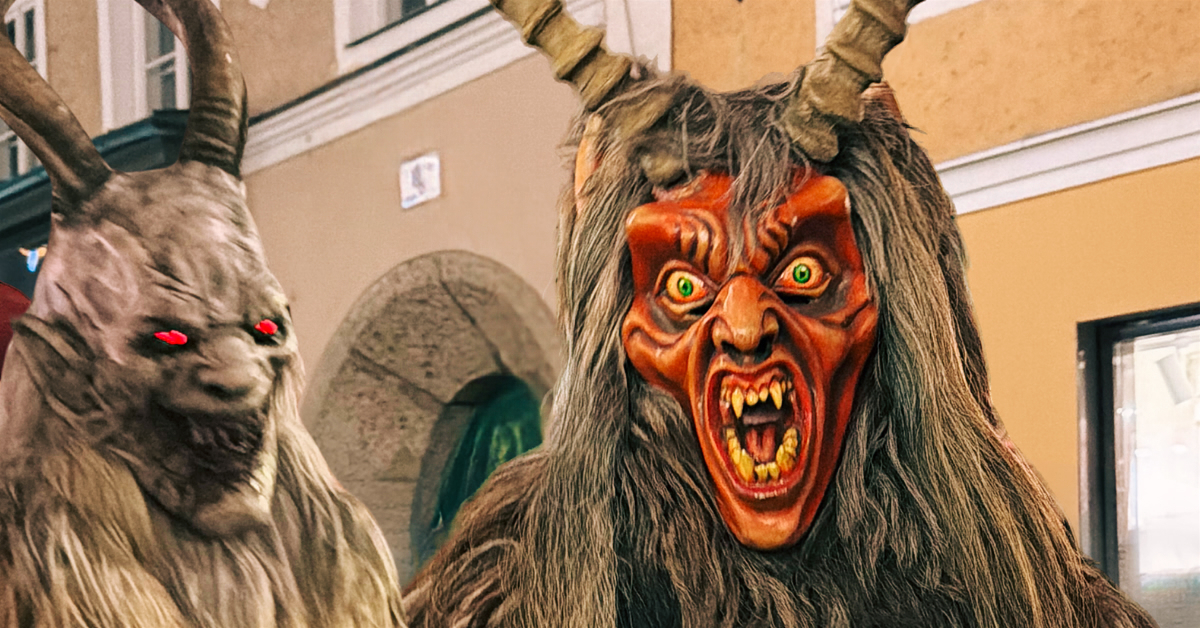
Salzburg Goes All In on Krampus!
This is one of the most important decisions if you want to enjoy the experience.
Based on our experience, we particularly enjoyed watching the groups along the shopping streets. You can see the costumes up close, hear the bells approaching, and sometimes interact with the performers. The main square around the cathedral is another option, especially if you want to experience the larger gathering of Krampus groups. However, be prepared for considerably bigger crowds.


Where Else Can You Watch a Krampus Run in Austria
Although Salzburg is one of the best-known destinations for experiencing Krampus, the tradition stretches across much of Austria and the wider Alpine region. From large city processions to smaller village celebrations, there are plenty of opportunities to encounter these horned creatures during the Advent season. Here are a few other places worth considering:
- Innsbruck: One of the best alternatives to Salzburg, with Krampus and Saint Nicholas celebrations in the Old Town.
- Lienz: Hosts several days of Krampus celebrations, making it a great destination for folklore enthusiasts.
- Graz: Its large Krampus parade takes place in November, earlier than the traditional December celebrations.
- Klagenfurt: Known for its impressive, large-scale Krampus procession, which attracts thousands of spectators.
- Mariazell: Combines its famous Advent atmosphere with a traditional Krampus run around the end of November.
- Seefeld: Hosts a Krampus run and Saint Nicholas procession at the beginning of December.
If you are traveling specifically for the tradition, consider exploring smaller Alpine villages as well. Their celebrations can feel more intimate and offer a different perspective on local Krampus customs.
Buy Us a Ko-fi

Despite the crowds, the noise and the occasional squeeze between fellow spectators, the Salzburg Krampus Run was an experience we are happy to have ticked off our bucket list. There is something quite magical about seeing these centuries-old Alpine traditions come to life against the backdrop of Salzburg’s beautifully decorated Christmas streets. The craftsmanship, the atmosphere, the ringing bells, and the sheer variety of Krampus characters make it a Christmas experience unlike any other.
Would we recommend it? Absolutely! Just be prepared for large crowds, arrive early to secure a good viewing spot, and consider watching from one of the quieter streets if you prefer a little more breathing room. Before traveling, check the official Salzburg tourism website for the latest event program, procession routes and timings, as arrangements can change.
And if you have ever wondered what happens when Christmas gets a little darker, Salzburg in early December is the place to find out. We certainly won’t forget our encounter with these legendary creatures anytime soon!
Travel Bold. Eat Well. Waddle Wild.

This post contains affiliate links. If you click and buy, I might earn a tiny commission, enough to help a penguin keep up its globe-trotting lifestyle. No extra cost to you, just more fish for me. Thank you for supporting the adventure!