What to Know Before Visiting Košice, Slovakia
Košice does not take long to surprise you. Slovakia’s second-largest city has a medieval heart, a layered history, and a distinctly eastern Slovak character that sets it apart from Bratislava. Waddle along Hlavná, and centuries of history unfold between cafés, churches, courtyards, and busy streets. But Košice has more than its postcard center. Here’s what you should know before you arrive, from the city’s unusual past to the practical details that make exploring it easier.
Hotel search from Trip.comShows Trip.com’s own box, which can set Trip.com cookies.Search hotels on Trip.comTrip.com’s box can’t load on this device (an ad blocker often stops it). This opens Trip.com’s own hotel search.Open Trip.com
Quick Facts About Košice
- Location: Eastern Slovakia, in the Košice Basin near the Hornád River
- Region: Košice Region
- Population: Around 230,000 residents
- Old Town Location: Centered around Hlavná Street, the city’s historic main artery
- First Written Mention: 1230
- City Status: Košice received its first known town privileges in the 13th century and a royal coat of arms in 1369
- Elevation: About 208 meters above sea level in the city center
- Language: Slovak
- Currency: Euro (€)
- Nearest Major Cities: Prešov (about 35 km away) and Budapest (about 260 km away)
- Nearest Airport: Košice International Airport
- Known For: St. Elisabeth Cathedral, its medieval Old Town, Hlavná Street, cultural scene, and strong sporting traditions
- Famous For: Being Slovakia’s second-largest city and the largest city in eastern Slovakia
- Nickname: Often described as the metropolis of eastern Slovakia
Brief History of Košice
- 1230. Košice first appears in written records as Villa Cassa.
- 1290. Košice receives important town privileges, helping establish its status as a medieval trading center.
- 1369. King Louis I grants Košice its own coat of arms, the first known municipal coat of arms granted to a city in Europe.
- 15th century. Košice becomes one of the most important cities in the Kingdom of Hungary and a major trade center.
- 1502. Construction of the monumental St. Elisabeth Cathedral reaches its final medieval form.
- 1657. A university is established in Košice, strengthening the city’s role as a center of education.
- 1920. After the dissolution of Austria-Hungary, Košice becomes part of Czechoslovakia.
- 1938. The First Vienna Award transfers Košice to Hungary.
- 1945. Košice returns to Czechoslovakia after the Second World War, and the Košice Government Program is adopted here.
- 1993. Košice becomes part of the newly independent Slovak Republic.
- 2013. Košice is named European Capital of Culture, bringing major cultural investment and international attention to the city.

Interesting Facts About Košice
#1: Košice Has Europe’s Oldest Known Municipal Coat of Arms
In 1369, King Louis I of Hungary granted Košice its own coat of arms, making it the oldest known municipal coat of arms granted to a city in Europe. The distinction reflects Košice’s importance in medieval Central Europe and remains one of the city’s most unusual historical claims.
#2: Košice Is Slovakia’s Second-Largest City
With around 230,000 residents, Košice is Slovakia’s second-largest city after Bratislava and the largest urban center in the country’s east. Its size helps the city feel more like a regional capital than a small historic town. Beyond its medieval center, Košice has universities, theatres, galleries, shopping districts, major industrial sites, and a busy cultural scene. The city also serves as an important economic and transport hub for eastern Slovakia, with connections reaching towards Hungary, Ukraine, and Poland.
#3: St. Elisabeth Cathedral Is Slovakia’s Largest Church
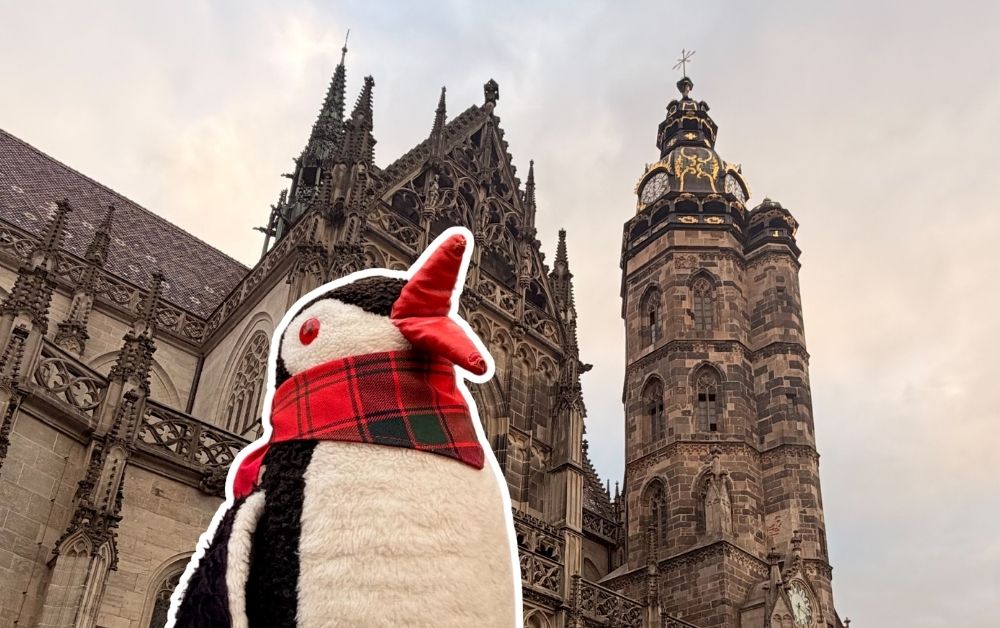
At the center of Hlavná Street, St. Elisabeth Cathedral is Slovakia’s largest church and one of Košice’s defining landmarks. Construction began around 1378 and continued for more than a century, with the cathedral reaching its present Gothic form in the 15th century. The building is about 60 meters long and 39 meters wide, while its northern tower rises to approximately 59 meters. Inside, one of its most notable features is the 15th-century double spiral staircase, one of only a few surviving examples of its kind in Europe.


#4: Košice Still Follows Its Medieval Street Plan
Košice’s historic center retains much of the layout established during the Middle Ages, making the city surprisingly easy to read on foot. Hlavná Street forms the main north-south axis, with many important buildings, churches, former townhouses, and public spaces gathered along it. The elongated shape of the old center reflects the medieval town that developed here between the 13th and 15th centuries, while later buildings were added around the original urban framework. Walking through central Košice today, you are often following streets that have been part of the city for centuries.
#5: Košice Was Once Part of the Kingdom of Hungary
For centuries, Košice belonged to the Kingdom of Hungary, a period that shaped much of the city’s architecture, trade, and political importance. From the Middle Ages until the end of the Austro-Hungarian era in 1918, Košice grew into an important town in the kingdom’s north. Its position on trade routes linking Central Europe with regions further east brought merchants, artisans, and different communities to the city. Many of the historic buildings you see around the Old Town today date from periods when Košice was part of this wider Hungarian kingdom.
#6: Košice Was a Major Medieval Trading Center
Košice’s location made it an important trading hub in medieval Central Europe. The city stood along routes connecting the Kingdom of Hungary with Poland and other parts of Central and Eastern Europe, bringing merchants, goods, and new ideas through its gates. From the 13th century onward, trade helped Košice grow in wealth and influence, while its town privileges gave local merchants important economic advantages. The city’s medieval importance remains visible in the historic center, where grand merchant houses and churches reflect the prosperity Košice accumulated through centuries of trade.
#7: Košice Once Had a Large Jewish Community
Jewish life became an important part of Košice’s history, particularly during the 19th and early 20th centuries. By 1938, around 11,500 Jews lived in Košice, making up roughly 16% of the city’s population. The community had several synagogues, schools, shops, and other institutions, making it a visible part of everyday life in the city. The Holocaust devastated this community, with thousands of Košice’s Jews deported in 1944. Today, surviving synagogues, the former Jewish cemetery, and other sites around the city preserve traces of a community that once played a significant role in Košice’s cultural and economic life.
#8: The Košice Government Program Was Adopted Here
Košice played an important political role at the end of the Second World War. In April 1945, representatives of the newly forming Czechoslovak government adopted the Košice Government Program here. The document outlined the political direction of post-war Czechoslovakia, including plans for the country’s reconstruction and its relationship with the Soviet Union. The program takes its name from Košice, where the government was based briefly after the city was liberated.
#9: Košice Has a Singing Fountain
In the middle of Hlavná Street, the Singing Fountain turns one of Košice’s main public spaces into a small outdoor performance. Installed in 1986, it combines hundreds of water jets with music and colored lighting, and its program changes throughout the day. Its location, between St. Elisabeth Cathedral and the State Theatre, makes it one of the easiest landmarks to stumble upon while exploring the historic center.


#10: Košice Is Home to Europe’s Oldest Marathon
Every October, runners take over Košice’s streets for the Košice Peace Marathon, a tradition dating back to 1924. That makes it Europe’s oldest marathon and the second-oldest in the world, after the Boston Marathon. The race has been held almost continuously throughout its history, becoming one of the city’s defining sporting traditions. The course starts and finishes near the historic center, so visitors can see a very different side of Košice as the city turns into a running track for the day.
#11: Košice Has a Medieval Underground
Beneath today’s Hlavná Street lies part of Košice’s medieval fortification system. The Lower Gate was one of the main entrances through the city walls and dates back to the 13th century. Archaeological excavations in the 1990s uncovered remains of the gate, walls, and defensive structures, now preserved underground. Visitors can descend below street level to see the remains and glimpse what Košice looked like as a fortified medieval town.
#12: Franz Liszt Performed in Košice
Košice is connected to one of Europe’s most celebrated composers and pianists, Franz Liszt. He performed in the city in 1846, during one of his famous European concert tours. Liszt played at the former Reduta, then an important cultural venue in Košice. His visit became part of the city’s long musical history, which continues today through its theatres, concerts and festivals.
#13: Košice Is a Medieval City with a Steel Industry
Košice’s story is not only about Gothic churches and medieval merchant houses. In the 1960s, the construction of the East Slovak Ironworks, now known as U. S. Steel Košice, transformed the city into one of Slovakia’s major industrial centers. The steelworks became one of the region’s largest employers and brought rapid population growth, new housing estates, and major changes to the city’s economy. Today, Košice has an unusual contrast: a historic center shaped over centuries sits alongside an industrial landscape that helped define the city during the second half of the 20th century.
#14: Košice Has a UFO-Like Lookout Tower
On Hradová Hill, just outside the historic center, the Hradová Lookout Tower rises above the trees with a distinctive structure that looks a little like a UFO. Built in 1909 and later rebuilt into its current form, the tower stands about 21.5 meters high. Climb to the viewing platform for a broad view across Košice, the surrounding Košice Basin, and the hills beyond. It is a simple reminder that the city stretches well beyond its postcard-perfect Old Town.
#15: Košice’s Historic Center Is Made for Walking
Košice is one of those cities where you can cover much of the historic center without constantly checking a map. Hlavná Street, the main pedestrian zone, runs through the heart of the Old Town and brings together many of the city’s best-known sights, including St. Elisabeth Cathedral, the State Theatre and the Singing Fountain. Step away from the main street, however, and smaller lanes, passages and historic courtyards reveal another layer of the city, with old doorways, façades and tucked-away spaces that are easy to miss if you follow the main route.
#16: Košice Has a Connection to Andy Warhol
One of the region’s most unexpected cultural connections leads to Andy Warhol, whose parents were from the Carpathian Rusyn community in what is now eastern Slovakia. About 120 kilometers from Košice, the town of Medzilaborce is home to the Andy Warhol Museum of Modern Art, opened in 1991. The museum explores Warhol’s work as well as his family background and Rusyn heritage, giving visitors another reason to look beyond Košice itself when exploring eastern Slovakia.
Other Lesser-Known Facts About Košice
- A Košice-born engineer helped design the Corinth Canal: Vojtech Gerster, born on Hlavná Street, designed the Corinth Canal and also helped design the Panama Canal.
- Sándor Márai was born in Košice: The Hungarian writer, one of the city’s best-known literary figures, was born here in 1900. His former home and a memorial exhibition are still in Košice.
- Košice once had its own Golden Treasure: In 1935, a remarkable medieval coin hoard was discovered in the city. The Košice Golden Treasure contains more than 2,900 gold coins and is one of Europe’s largest medieval coin hoards.
- The city was once a center of manufacturing: During the 19th century, Košice had factories and workshops producing everything from sugar and soap to matches, playing cards, and tobacco products.
- An Olympic legend once ran here: In 1961, Ethiopian Olympic champion Abebe Bikila won the Košice marathon. Around 30,000 spectators watched his victory in a city that then had only about 80,000 residents.
- Košice inspired a marathon after the Paris Olympics: Vojtech Bukovský attended the 1924 Olympic Games in Paris, where he watched the marathon. Just three months later, he helped organize the first Košice marathon.
- The historic center is Slovakia’s largest urban heritage reserve: Košice’s protected historic center is the largest municipal heritage reserve in Slovakia.
- Košice was named a UNESCO Creative City: In 2017, Košice joined the UNESCO Creative Cities Network as a City of Media Arts, recognizing its work in contemporary art, technology, and creative projects.
- The city was once fortified: Košice’s historic center was surrounded by defensive walls and fortifications until the 18th century. You can still explore parts of these medieval defenses today.
- Košice has been a university city for centuries: A university was founded here in 1657, giving the city a long connection with higher education and intellectual life.
- The city has an unusual concentration of royal history: Košice became a free royal town in the 14th century and received additional privileges in 1342 and 1347, helping establish it as one of medieval Hungary’s leading cities.
- The marathon survived the Second World War: Despite the war, the Košice marathon maintained its continuity, making its century-long history particularly unusual in European sport.


Useful Travel Tips for Košice
- Getting Around: Košice’s historic center is compact, and most major sights are within easy walking distance. Use trams and buses when heading further out.
- Public Transport: Buy your ticket before boarding or use the available electronic ticket options. Always validate a paper ticket when required.
- Parking: Parking in the historic center can be limited, and some areas have regulated parking. If you are staying centrally, walking or public transport is often easier.
- Currency: Slovakia uses the euro (€). Cards are widely accepted, although carrying some cash is useful for smaller cafés, markets and local businesses.
- Language: Slovak is the main language. English is commonly understood in hotels, restaurants and tourist attractions, particularly among younger people.
- Tipping: Tipping is customary but not compulsory. Around 10% is a reasonable amount for good restaurant service, while smaller tips are common for cafés and bars.
- Opening Hours: Shops and attractions generally follow standard daytime opening hours, but museums and smaller sights may close on Mondays. Check opening times before making a dedicated trip.

- Restaurants: Popular restaurants can fill up, particularly on Friday and Saturday evenings. Booking ahead is useful if you have a specific place in mind.
- Best Area to Stay: The Old Town is the most convenient base if you want to explore Košice on foot and stay close to the main sights.
- Waddling: Wear comfortable shoes. The center is easy to explore on foot, but you will spend much of the day walking between sights, cafés, and side streets.
- Day Trips: Košice makes a useful base for exploring eastern Slovakia, with destinations such as Spiš Castle, Slovak Paradise and Tokaj within reach by car or organized excursion.
- Weather: Summers can be warm, while winters are cold and sometimes snowy. Spring and autumn can change quickly, so layers are useful.
- Safety: Košice is generally straightforward to explore, but use the same precautions you would in any city, particularly around busy transport hubs and crowded events.
- Marathon Weekend: If you visit during the Košice Peace Marathon, expect significantly more activity in the center and temporary road closures. Book accommodation early if your trip coincides with race weekend.


Best Time to Visit Košice
Košice is a year-round destination, but each season changes the city’s character. Spring and autumn are particularly comfortable for exploring the historic center on foot, while summer brings longer days and a livelier atmosphere. Winter is quieter, with colder weather but fewer visitors and a different feel around the Old Town.
- Spring (March–May): Temperatures gradually rise, trees and parks turn green, and the city becomes comfortable for long walks. April and May are good months for combining sightseeing with time outdoors.
- Summer (June–August): Expect the warmest weather and the longest daylight hours. Outdoor cafés, events, and the pedestrian center are lively, although July and August can bring hotter days.
- Autumn (September–November): A good time for walking and photography, with cooler temperatures and autumn colors. October also hosts the Košice Peace Marathon, bringing a major sporting event to the city.
- Winter (December–February): The coldest and quietest period. December can be especially atmospheric, with Christmas markets and seasonal decorations filling the historic center, while January and February suit museums, cafés, and indoor attractions.
How Long Do You Need in Košice
Košice works well as a weekend city break, but the ideal length depends on whether you want to explore only the historic center or use the city as a base for eastern Slovakia. Most main sights are concentrated around the Old Town, so you can see a lot on a short visit without rushing.
- 1 Day: Enough for the highlights. Walk Hlavná Street, visit St. Elisabeth Cathedral, see the Singing Fountain, explore the historic center, and stop for lunch or coffee.
- 2 Days: Ideal for a weekend trip. You can explore the Old Town at a relaxed pace, visit museums and galleries, discover quieter streets and courtyards, and enjoy Košice’s restaurant and café scene.
- 3 Days: Gives you time to go beyond the center. Add Hradová Lookout Tower, Košice Zoo, or another local attraction without packing your days.
- 4–5 Days: Useful if Košice is part of a wider eastern Slovakia itinerary. You can combine the city with day trips to places such as Slovak Paradise, Spiš Castle, or the Tokaj wine region.
- 1 Week: Best suited to travelers who want to use Košice as a base and explore more of the surrounding region rather than spending an entire week sightseeing in the city itself.
Where to Stay in Košice
For most visitors, Staré Mesto (Old Town) is the most practical area to stay. Košice’s historic center is compact, and staying around Hlavná Street puts you within walking distance of St. Elisabeth Cathedral, the Singing Fountain, the State Theatre, restaurants, and cafés.
- Staré Mesto (Old Town). Best for first-time visitors and weekend trips. Most sightseeing happens here, so you can leave the car behind and explore on foot.
- Hlavná Street. Best for being in the middle of the action. You are close to the cathedral, restaurants, cafés, and evening entertainment, although rooms directly on the pedestrian street can be livelier at night.
- Around the Railway Station and Mestský Park. Best for short stays and easy transport connections. You are still within walking distance of the Old Town while staying conveniently close to trains and buses.
- Juh. Best for better-value accommodation and longer stays. This residential district is south of the historic center and has good public transport connections.
- Sever. Best for a quieter stay and access to greenery. It also puts you closer to Hradová and the city’s northern edge.
- Bankov. Best for a peaceful, nature-focused stay. This forested area north of the center feels more like a retreat than a city break, but you will need transport to reach the Old Town.
Hotel search from Booking.comShows Booking.com’s own box, which can set Booking.com cookies.
Hotels We Would Consider
For a central city break, here are some options worth considering.
- Boutique Hotel Slávia. A boutique option directly on Hlavná Street, close to the cathedral. It currently has a 9.3/10 Booking.com guest score from more than 1,400 reviews.
- Hotel Zlaty Dukat. A historic-center option on Hlavná Street, convenient if you want to be right in the Old Town.
- DoubleTree by Hilton Kosice. A full-service option at the southern end of Hlavná Street, useful if you prefer an international hotel brand while staying centrally.
- Hotel Michael’s Palace. Located north of the main historic core, offering a quieter base while remaining within walking distance of the center.
- Hotel Bankov Košice. A good choice if you would rather wake up surrounded by greenery than in the middle of the Old Town.
For a first visit, we would stay in or around the Old Town. It makes the most sense for a weekend because Košice is very walkable, and you can spend your time exploring rather than commuting between your hotel and the sights.
Buy Us a Ko-fi

Košice is the kind of city that grows on you as you waddle. At first, the Gothic cathedral, Hlavná Street, and the colorful historic center catch your attention. Then you start noticing the old courtyards, cafés, street art, hidden corners, and the stories behind the grand façades. Add a strong food scene, a lively student population, and the mountains and villages of eastern Slovakia just beyond the city, and a weekend suddenly feels rather short. Košice may not be the first place that comes to mind for a Slovak city break, but that is part of its charm.
Travel Bold. Eat Well. Waddle Wild.

This post contains affiliate links. If you click and buy, I might earn a tiny commission, enough to help a penguin keep up its globe-trotting lifestyle. No extra cost to you, just more fish for me. Thank you for supporting the adventure!