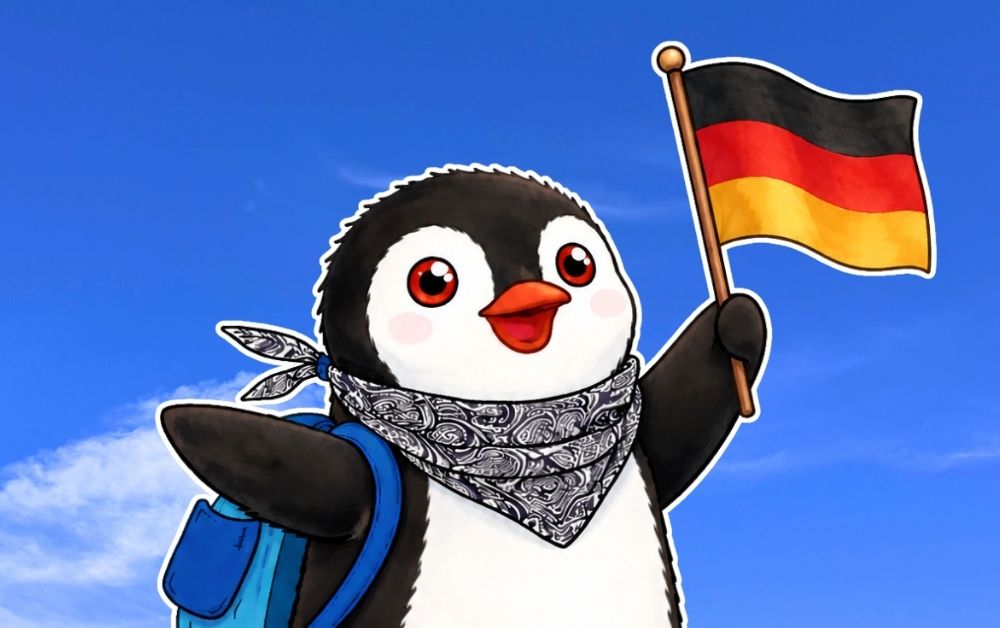
A Few Things to Know Before You Waddle Through Germany
Before you start exploring Germany, it helps to know a little more than just where to go and what to see. From fascinating facts and everyday quirks to practical details that make traveling easier, here are a few things worth knowing before you waddle through the country. Think of it as a little introduction to Germany, with a few surprises along the way.
Basic Facts About Germany
- Official name: Federal Republic of Germany (Bundesrepublik Deutschland)
- Capital: Berlin
- Land area: approximately 353,260 km²
- Population: approximately 83.5 million
- Official language: German
- Currency: Euro (€)
- Government: Federal parliamentary republic
- Administrative divisions: 16 federal states (Bundesländer)
- Time zone: Central European Time (CET), Central European Summer Time (CEST) during daylight saving time
- Driving side: Right
- EU member: Yes
- Schengen Area: Yes
- Religion: Germany has no state religion. Christianity is the country’s largest religious affiliation, alongside a significant share of people with no religious affiliation.
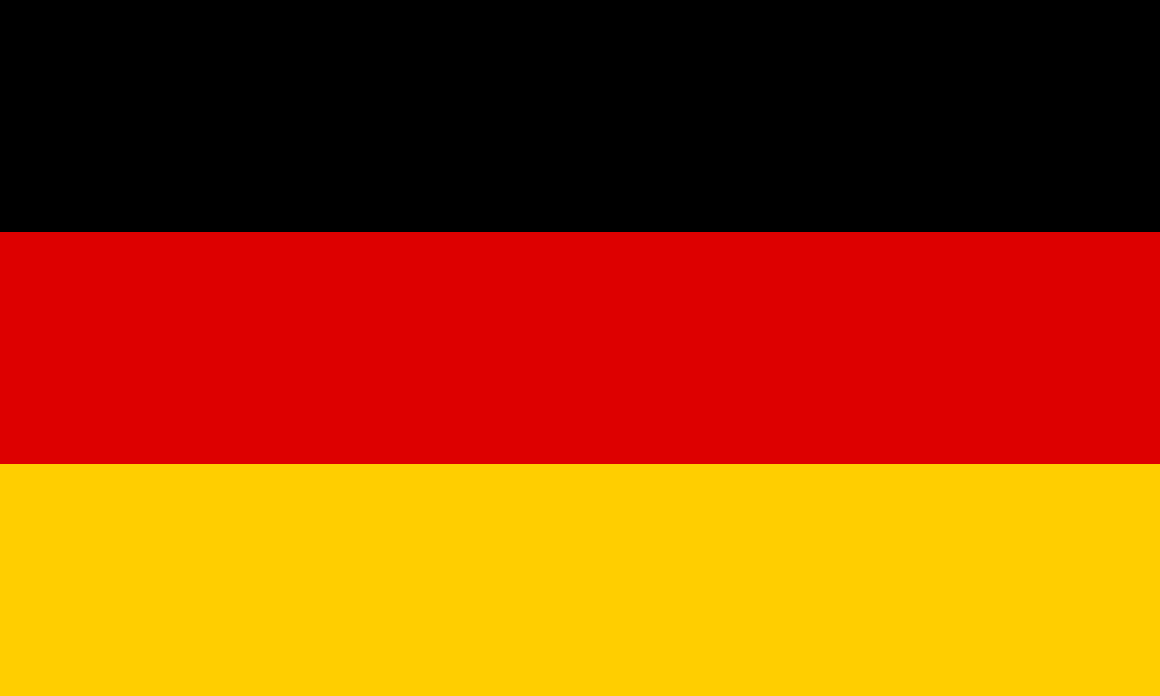
- Flag of Germany: Three horizontal stripes of black, red, and gold. The colors have historical roots in Germany’s democratic and national movements and are now established as the national colors of the Federal Republic of Germany.
Why Visit Germany
Germany rewards curiosity. One moment, you are wandering through a medieval old town; the next, you are standing beneath the soaring roof of a Gothic cathedral, exploring the remains of a Cold War past, or watching a train disappear into a landscape of forests and rolling hills. Beyond its famous cities and fairytale castles, Germany has a fascinating mix of history, culture, food, architecture, and everyday traditions waiting to be discovered. Add excellent connections between cities, beautiful countryside, and plenty of unexpected details, and you’ll find much more to Germany than meets the eye.
Germany’s History in a Nutshell
Germany’s history is long, complicated, and deeply connected to Europe’s wider story. For travelers, even a quick understanding of the major turning points can add another layer to the castles, monuments, museums, and cities you encounter along the way.
- 962. Holy Roman Empire. The coronation of Otto I is traditionally associated with the beginning of the Holy Roman Empire, which lasted for centuries across much of Central Europe.
- 1806. End of the Holy Roman Empire. The empire was dissolved during the Napoleonic Wars, reshaping the political map of German-speaking Europe.
- 1871. German unification. The German Empire was established, bringing many previously separate German states together under a single nation-state.
- 1919. Weimar Republic. Following Germany’s defeat in the First World War, the monarchy ended, and the democratic Weimar Republic was established.
- 1933. Nazi dictatorship. Adolf Hitler came to power, beginning the Nazi dictatorship and a period of persecution, terror, and expansion that led to the Second World War.
- 1945. End of the Second World War. Germany surrendered in May, and the country was divided into four Allied occupation zones.
- 1949. Germany divides. The Federal Republic of Germany was established in the West, while the German Democratic Republic was established in the east.
- 1961. Berlin Wall. The East German government built the Berlin Wall, physically dividing East and West Berlin and becoming the most recognizable symbol of Germany’s Cold War division.
- 1989. The Berlin Wall falls. After months of peaceful protests and growing pressure in East Germany, the Wall opened on 9 November.
- 1990. German reunification. On 3 October, East Germany joined the Federal Republic, formally ending more than four decades of division.
- Today. Modern Germany is a federal parliamentary republic made up of 16 federal states, with Berlin as its capital.
29 Interesting Facts About Germany
Germany is a country where history, inventions, language, food, and geography seem to turn up everywhere. Here are some facts worth knowing before you start exploring.
#1: Germany Has Nine Neighboring Countries
Germany sits at the heart of Europe and shares land borders with Denmark, Poland, Czechia, Austria, Switzerland, France, Luxembourg, Belgium, and the Netherlands. No other EU member state has as many neighboring countries. Its central location has made Germany an important crossroads for European trade, travel and culture for centuries. It also means you can cross into a surprisingly large number of different countries on a road trip from Germany.
#2: Germany Has Two Seas
Germany has a coastline on both the North Sea and the Baltic Sea, giving the country a surprising seaside side. Its northern coast is dotted with beaches, islands, dunes and traditional seaside towns, including popular destinations on the North Sea islands and the Baltic coast.
#3: Germany’s Highest Mountain Is the Zugspitze
At 2,962 meters, the Zugspitze is Germany’s highest mountain. It rises in the Bavarian Alps near the Austrian border and is a popular destination for mountain views, hiking and winter sports. On a clear day, the summit offers spectacular views across the Alps.
#4: Around One-Third of Germany Is Covered by Forest
Around one-third of Germany is covered by forest, making nature an important part of the country’s landscape. Germany is also home to thousands of lakes, major rivers such as the Rhine, Danube, and Elbe, and 16 national parks. From the Black Forest to the Bavarian Forest, there is plenty of woodland to explore.
#5: English and German Are Linguistic Relatives
English and German may sound quite different today, but they share a common linguistic family. Both belong to the West Germanic branch of the Germanic languages, alongside Dutch and Frisian. That is why you can sometimes spot surprisingly familiar words and expressions when comparing English and German.
#6: Germany Was Once Part of the Holy Roman Empire
Long before modern Germany existed, much of the territory belonged to the Holy Roman Empire. It lasted for almost a thousand years, from the 10th century until its dissolution in 1806. Despite its name, the empire was neither a modern nation-state nor simply a continuation of the ancient Roman Empire.
#7: Martin Luther Helped Start the Protestant Reformation
In 1517, Martin Luther challenged certain Catholic Church practices with his famous 95 Theses. His actions helped trigger the Protestant Reformation, one of the major religious and political transformations in European history. Today, you can visit places connected to Luther across Germany, particularly in Saxony-Anhalt and Thuringia.
#8: Modern Germany Was Founded in 1871
Germany as a unified nation-state is relatively young. The German Empire was established in 1871, bringing together numerous previously independent German states. Before unification, the region was made up of kingdoms, duchies, principalities and free cities.
#9: Gutenberg Changed the Way the World Read
Johannes Gutenberg, born in Mainz, revolutionized printing in the 15th century with his movable-type printing system. His famous Gutenberg Bible became a landmark work of early European printing. His invention helped make book production faster and more widespread.
#10: The Modern Automobile Has German Roots
In 1886, Karl Benz patented his Motorwagen, widely regarded as one of the first practical automobiles powered by an internal combustion engine. Around the same time, Gottlieb Daimler developed his own motorized vehicles. Together, their work helped establish Germany’s long association with the automobile industry.
#11: Bertha Benz Took the First Long-Distance Car Journey
In 1888, Bertha Benz made history by driving roughly 100 kilometers from Mannheim to Pforzheim in her husband’s automobile. Her journey demonstrated that the new invention could be used for more than short experimental trips. She also reportedly had to solve practical problems along the way, including finding fuel and making repairs.
#12: Rudolf Diesel Gave His Name to the Diesel Engine
German engineer Rudolf Diesel developed the engine that would eventually bear his name during the 1890s. His design was more fuel-efficient than many existing engines and went on to transform transport, industry, and agriculture worldwide.
#13: MP3 Has German Origins
Researchers at Germany’s Fraunhofer Institute developed the technology behind the MP3 audio format. Work on the technology began in the 1980s and eventually changed the way people stored and listened to digital music. The format became particularly important during the rise of digital music and portable players.
#14: Aspirin Has German Roots
In 1897, German chemist Felix Hoffmann produced a stable form of acetylsalicylic acid at Bayer. The company later marketed it as Aspirin, which became one of the world’s best-known medicines. The familiar little tablet therefore has a distinctly German chapter in its history.
#15: Germany Played an Important Role in the Development of the Electric Tram
German inventor Werner von Siemens developed an early electric tram system in the 19th century. His experimental electric railway showed how electricity could power urban transport. Berlin hosted the demonstration of his electric railway in 1879.
#16: Germany Takes Its Bread Seriously
German cuisine is about much more than sausages and beer. The country has a remarkable bread culture, with countless regional varieties of Brot and Brötchen, from dense rye loaves to crusty bread rolls. Bread is such an everyday staple that visiting a traditional German bakery can be a small cultural experience in itself.
#17: Potatoes Are a German Kitchen Staple
Potatoes appear in German cuisine in almost every form imaginable. They can be mashed, roasted, fried, turned into pancakes or dumplings, and served alongside everything from sausages to traditional regional dishes. The potato became particularly important in Germany from the 18th century onwards.
#18: Germany Has a Long Beer-Brewing Tradition
Germany’s beer culture dates back centuries, and the 1516 Bavarian Beer Purity Law, known as the Reinheitsgebot, became one of the country’s most famous brewing regulations. Today, different regions have their own beer styles and traditions. Beer is closely connected with many German festivals, including Munich’s famous Oktoberfest.


#19: Black Forest Cake Really Comes From Germany
Schwarzwälder Kirschtorte, known in English as Black Forest cake, is one of Germany’s most famous desserts. The classic version combines chocolate cake, cherries, cream, and Kirschwasser, a cherry spirit associated with the Black Forest region. Despite its international popularity, its exact origins are still debated.
#20: Germany Has 13 Wine-Growing Regions
Germany is also a wine country, with 13 official wine-growing regions. The vineyards along the Rhine and Moselle are particularly famous, producing varieties such as Riesling that have become closely associated with German wine. The country’s vineyards are also some of its most scenic landscapes, especially when viewed from river valleys and hilltop castles.
#21: Germany Produced Some of Europe’s Greatest Composers
Germany has an extraordinary musical heritage. Johann Sebastian Bach, Ludwig van Beethoven, and Johannes Brahms were all born in what is now Germany and left an enormous mark on classical music. Their music is still performed in concert halls worldwide.
#22: Albert Einstein Was Born in Germany
One of the world’s most famous physicists, Albert Einstein, was born in Ulm in 1879. He later developed the theories of relativity that transformed our understanding of space, time, and gravity. Germany remembers his connection through museums, monuments, and places tied to his early life.
#23: Goethe Was One of Germany’s Great Literary Figures
Johann Wolfgang von Goethe, born in Frankfurt, was a writer, poet, philosopher, and thinker whose influence extended far beyond Germany. His works, particularly Faust, remain central to German literature. Goethe also had interests ranging from science and politics to art and philosophy.
#24: Germany Was Divided Into Two Countries After the Second World War
In 1949, the Federal Republic of Germany was established in the West, while the German Democratic Republic was established in the East. This division shaped German and European history for the next four decades. Berlin itself was also divided, despite being located deep inside East Germany.
#25: The Berlin Wall Stood for 28 Years
The Berlin Wall was built in 1961 to separate East and West Berlin. It became one of the Cold War’s most powerful symbols before opening on 9 November 1989. Today, you can still explore sections of the Wall and its former route across Berlin.
#26: Germany Reunified in 1990
On 3 October 1990, the former East Germany joined the Federal Republic of Germany. The date is now celebrated every year as German Unity Day, Germany’s national holiday. Reunification formally ended more than four decades of political division.
#27: Germany Has More Than 50 UNESCO World Heritage Sites
Germany’s cultural and natural heritage is remarkably diverse, with more than 50 UNESCO World Heritage Sites. They include historic city centers, castles, cathedrals, industrial sites, and extraordinary natural landscapes. From Cologne Cathedral to the Wadden Sea, the list reflects the country’s remarkable variety.
#28: Germany Is Home to One of the World’s Oldest Fast-Food Restaurants
The Historische Wurstkuchl in Regensburg, beside the Danube, has been serving sausages for centuries. It is often described as the world’s oldest continuously operating fast-food restaurant. Its history stretches back to the Middle Ages, making it a particularly tasty piece of Regensburg’s past.
#29: The Modern Caravan Has German Roots
In the early 1930s, Arist Dethleffs built a mobile living and working space so he could travel with his family while working as a salesman. His invention helped lay the foundations for the modern recreational caravan. What began as a practical solution eventually became part of Germany’s long-running caravan and camping culture.
Practical Facts for Travelers Coming to Germany
- Visa and entry requirements. Germany is part of the Schengen Area. EU citizens do not need a visa to visit Germany, while visa requirements for non-EU travelers depend on nationality and the purpose and length of the trip. For short stays, the Schengen 90-days-in-180-days rule generally applies to eligible travelers.
- Passport and ID. EU citizens can travel to Germany with a valid national identity card or passport. Travelers from outside the EU should check the passport validity requirements before departure.
- Currency. Germany uses the euro (€). Cards are widely accepted, particularly in larger cities, but carrying some cash is still useful for smaller businesses, markets, and other places where card payment may not be available.
- Credit and debit cards. Visa and Mastercard are widely accepted, while American Express is less common. It is worth having a card and some cash as a backup.
- Plugs and electricity. Germany uses Type F sockets as the standard, and Type C Europlugs are also common. The mains voltage is 220 V. Travelers from countries using different plugs will need an adapter.
- Public transport. Germany has an extensive network of trains, regional trains, buses, trams and underground systems. Its rail network covers around 40,000 kilometers and connects cities and regions across the country.
- Deutsche Bahn. Deutsche Bahn is Germany’s main railway operator and is particularly useful for traveling between cities. A mix of transport companies operates regional and local transport.
- The Deutschlandticket. The Deutschlandticket provides travel on local and regional public transport throughout Germany, although it generally does not cover long-distance ICE, IC, or EC trains. Check the current conditions before purchasing.
- Driving. Germany drives on the right-hand side of the road. A valid driving license and appropriate vehicle documents are required, and speed limits vary by road.
- The Autobahn. Germany’s Autobahn network is famous for sections without a general speed limit, but many stretches still have speed limits. Always follow road signs and temporary limits.
Hotel search from Trip.comShows Trip.com’s own box, which can set Trip.com cookies.Search hotels on Trip.comTrip.com’s box can’t load on this device (an ad blocker often stops it). This opens Trip.com’s own hotel search.Open Trip.com
- Cycling. Cycling is extremely popular in Germany, and the country has an extensive network of cycle routes. In cities, pay attention to marked cycle lanes and always check before stepping into one.
- Shop opening hours. Shops generally have more limited opening hours than visitors from some countries may expect, particularly on Sundays and public holidays. Supermarkets and shops are usually closed on Sundays, although exceptions include some shops at railway stations and airports.
- Tipping. Tipping is customary in restaurants, cafés, bars and for some services, but it is generally not calculated in the same way as in the United States. A common approach is to round up or leave around 5–10% for good service.
- Tap water. Tap water in Germany is generally safe to drink, so bringing a reusable water bottle can save you from buying bottled water.
- Emergency numbers. Call 112 for an ambulance or fire emergency and 110 for the police.
- Public holidays. Germany has national public holidays as well as holidays that vary by federal state. Museums, attractions, shops and restaurants can have different opening arrangements on holidays, so check locally when planning your day.
- Germany is cash-friendly, but not cash-only. Card and contactless payments are common, especially in cities, but Germany still has a stronger cash culture than some other European destinations. Having a small amount of euros in your wallet is therefore useful.
- Recycling is taken seriously. Germany has an extensive recycling system, and you can return bottles and cans with a Pfand deposit for a refund. Look for the deposit symbol when buying drinks.
- Bakeries are part of everyday life. Traditional bakeries are common throughout Germany and are a great place to try regional breads, rolls, cakes and pastries without needing to sit down for a full meal.
- Sunday can feel very quiet because many shops close; city centers and residential areas can feel noticeably slower. Restaurants, cafés, museums and tourist attractions may still operate, but opening hours vary.
Best Time to Visit Germany
Germany is a year-round destination, but the best time to visit depends on what you want from the trip. Spring and autumn are particularly pleasant for exploring cities, historic towns and countryside, with milder temperatures and fewer visitors than the busiest summer months. Summer brings longer days, outdoor festivals, beer gardens and ideal conditions for exploring Germany’s lakes, coast and mountains, although popular destinations can be busy. Winter has its own charm, especially if you want to experience Germany’s famous Christmas markets, festive decorations and Alpine winter landscapes.
- Spring (March–May). A lovely time for city breaks and countryside adventures, with blooming gardens and gradually warmer weather.
- Summer (June–August). The warmest and busiest period, ideal for hiking, road trips, festivals, lakes, and Germany’s northern coastline.
- Autumn (September–November). Cooler temperatures, autumn colors, and harvest season make this a beautiful time to explore Germany, particularly wine regions and forests.
- Winter (December–February). Expect colder weather, shorter days, and a festive atmosphere, with Christmas markets making December especially popular. The Bavarian Alps also become a winter sports destination.
How Much Time Do You Need in Germany
How long you need in Germany really depends on what kind of trip you are planning. You can spend a long weekend in one city, using three or four days to explore Berlin, Munich, Hamburg, or another destination at a relaxed pace. Give yourself a week or two, and you can combine several cities with castles, historic towns, and countryside along the way. With a month or more, Germany opens up even further, from road trips through different regions to hiking in the Alps, exploring the forests and discovering the country’s coastline. Even one day can work if Germany is part of a longer European itinerary. There is no single perfect length of stay; you can shape your trip around anything from a quick city break to a slower adventure.
Buy Us a Ko-fi

Germany reveals itself slowly. Beyond the famous cities, castles and landmarks, there are layers of history, regional traditions, unexpected inventions, hearty food and landscapes that stretch from the Alps to the sea. Knowing a few of these facts before you arrive can make the journey a little more meaningful, helping you understand not only what you are seeing, but why it matters. So pack your curiosity, leave a little room for the unexpected, and get ready to waddle your way through Germany.
Travel Bold. Eat Well. Waddle Wild.

This post contains affiliate links. If you click and buy, I might earn a tiny commission, enough to help a penguin keep up its globe-trotting lifestyle. No extra cost to you, just more fish for me. Thank you for supporting the adventure!