Ultimate Guide to the Best Things to Do in Mostar
Mostar may look like a small city at first, especially around the historic old town area, but once you start exploring, there is actually a lot more to do than we expected. Beyond just crossing Stari Most and taking the classic photo, you will find viewpoints, cafés by the river, hidden streets, local food spots, historic buildings, markets, and nearby places worth visiting. Even during our short visit, we realized that Mostar is the kind of place where you can easily spend much longer just wandering around without really having a strict plan.
Hotel search from Trip.comShows Trip.com’s own box, which can set Trip.com cookies.Search hotels on Trip.comTrip.com’s box can’t load on this device (an ad blocker often stops it). This opens Trip.com’s own hotel search.Open Trip.com


Mostar is one of the oldest and most important cities in Herzegovina, with history going back hundreds of years. The city first appears in written records in the 1400s during the Ottoman period, but the area around the Neretva River was settled even earlier due to its strategic river crossing. Today, Mostar is best known for Stari Most, the old stone bridge that has become the symbol of the city, but there is actually much more history hidden in the streets, mosques, old houses, and markets nearby. One interesting thing is that the city’s name comes from the “mostari,” the bridge keepers who once guarded the river crossing.
13 Best Things to Do and See in Mostar
#1: Visit the Crooked Bridge (Kriva Ćuprija)
Kriva Ćuprija is a smaller stone bridge located just a few minutes from Stari Most, but many people completely miss it while rushing through the old town. The bridge was built in the 1500s during the Ottoman period and actually resembles a mini version of Stari Most, which is why many people believe it served as a practice model before building the city’s main bridge. Whether that is fully true or not is still debated, but the story stuck around and became part of Mostar’s local lore. Compared to the crowds around Stari Most, this area feels much calmer, with small cafés, stone houses, and river views. Honestly, it turned out to be one of the spots where Mostar suddenly felt a bit slower and easier to enjoy.


#2: Visit Stari Most (Old Bridge)
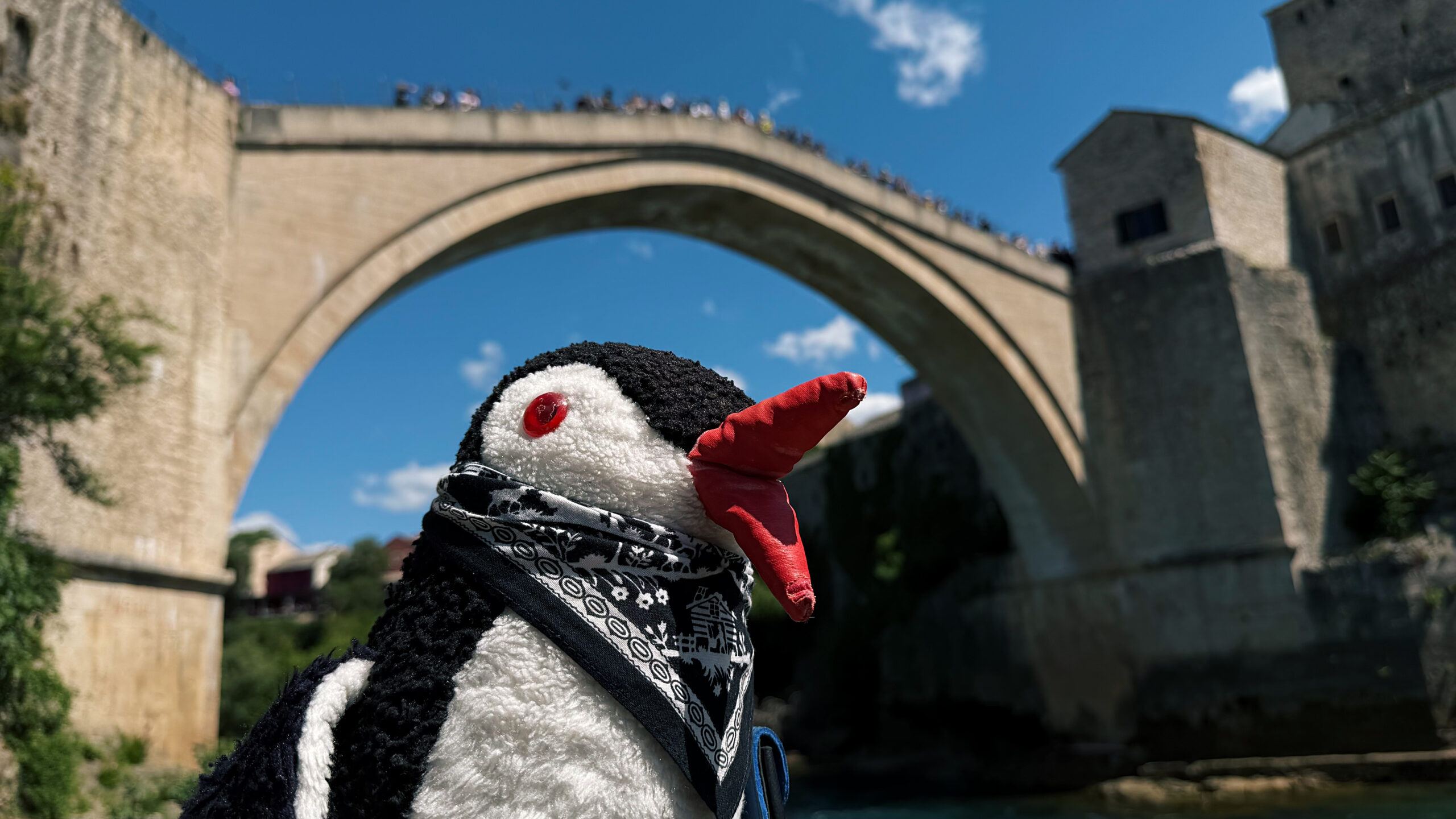
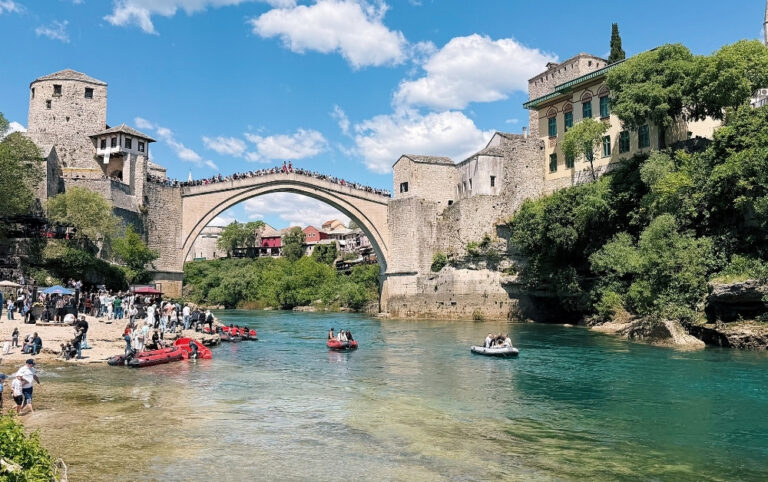
Stari Most is the main symbol of Mostar and probably the reason why most people visit the city in the first place. The bridge was originally built in the 1500s during the Ottoman Empire and connected the two sides of the city across the Neretva River. Even if you have already seen hundreds of photos online, seeing it in person still feels different once you stand there yourself above the river.
One thing we did not fully expect was just how busy the area around the bridge gets during the day, especially with tours arriving from Dubrovnik and Split. At times, it became difficult to even properly stop on the bridge itself. Still, the atmosphere around it, with cafés, stone streets, souvenir shops, and the sound of the river below, is what really makes this place feel like Mostar.


#3: Watch the Bridge Divers Jump into the Neretva River
One of the most known things to watch in Mostar is the bridge divers jumping from Stari Most into the Neretva River below. The jump is around 24 meters high, and considering how cold the river already looks from above, watching someone jump down feels a bit unreal in person. The divers are professionals and many of them have trained for years, because this is not something you can just try yourself.
During the day, you will usually notice one diver collecting money from people standing on the bridge while another waits below near the river. Once they collect enough, usually from small tips of one or two euros from visitors, the diver climbs onto the edge and eventually jumps. Depending on the crowds, this can happen roughly every 20 to 30 minutes, but there is no exact schedule since it really depends on how quickly they gather enough money.
Mostar is also known for hosting diving competitions, including Red Bull cliff diving events, which brought even more international attention to the bridge and diving tradition.


#4: Walk Along the Neretva River
Even though most people stay mainly in the old town and around Stari Most, walking along the Neretva River was one of the nicest parts of our visit to Mostar. Once you move a little away from the busiest streets, the atmosphere changes quite quickly and you start noticing quieter corners, cafés by the water, small bridges, stone houses, and different views back toward Stari Most itself. The river is also impossible to ignore because of its color. Depending on the light, the Neretva can look almost unreal with shades of turquoise and green running through the city. At the same time, the water remains extremely cold year-round because it comes from nearby mountain sources.


#5: Explore the Bazaar Streets and Souvenir Shops
Around Stari Most and the old town, you will find lots of small bazaar style streets filled with souvenir shops, cafés, local crafts, and market stands. The area still reflects strong Ottoman influence, so waddling through these narrow stone streets honestly feels very different from that in many other Balkan cities. Even if you are not planning to buy anything, it is still fun to wander around and look at all the handmade items displayed outside the shops. Some of the most traditional souvenirs to look for are copper coffee sets, handmade trays, džezvas for Bosnian coffee, hand-woven carpets, local ceramics, and small bridge-themed decorations from Mostar. We also noticed many shops selling handmade jewelry, wooden items, and bottles of rakija. One thing that surprised us was how affordable many souvenirs still were compared to other European tourist cities, especially once you step a little away from the main bridge area.


#6: Explore Mostar Old Town
Mostar’s old town is where you will spend most of your time. It is very easy to just wander around without any real plan. The area is filled with stone streets, small staircases, souvenir shops, cafés, mosques, restaurants, and old Ottoman era buildings packed closely around Stari Most and the river. Around almost every corner, there is another viewpoint, a hidden alley, or a place selling Bosnian coffee and local food.
At the same time, the old town is not particularly large, making it easy to explore on foot in just a few hours. Still, because of all the small side streets and crowds around the bridge area, it somehow feels larger once you are walking through it. We also noticed that simply moving one or two streets away from the main tourist path suddenly made the atmosphere feel much calmer.
Tours and tickets from ViatorShows Viator’s own box, which can set Viator cookies.
#7: Climb the Koski Mehmed Pasha Mosque Minaret
If you want one of the best views over Mostar, climbing the minaret of the Koski Mehmed Pasha Mosque is honestly worth it. The mosque itself dates back to the 1600s during the Ottoman period, but most people come here mainly for the view from the top overlooking Stari Most, the Neretva River, and the old town rooftops.
The climb up is quite narrow and steep, especially near the top, so it can feel a little uncomfortable if you are not good with tight spaces. But once you reach the viewing area, you get one of the clearest panoramic views in the city. Compared to the crowds directly on the bridge, it also feels much calmer up there. We think this is one of the best spots in Mostar if you want to see how the old town and the river fit together from above.
#8: Visit the Sniper Tower Ruins
One of the more unusual places to see in Mostar is the abandoned Sniper Tower, a damaged building left behind from the Bosnian War. During the war in the 1990s, the tower was reportedly used by snipers because of its position overlooking parts of the city, which is where the nickname comes from today. Even now, the building still stands covered in graffiti, broken windows, and visible war damage.
The place feels very different from the postcard atmosphere around Stari Most and honestly gives a much more direct reminder of the city’s recent history. While some people explore inside, it is important to be careful because the structure is abandoned and not officially maintained as a tourist attraction. Even just seeing it from outside already tells a lot about Mostar’s past and how much the city went through during the war.
#9: Franciscan Church and Monastery of St. Peter and St. Paul
The Franciscan Church and Monastery of St. Peter and St. Paul is one of Mostar’s most noticeable landmarks, thanks to its massive bell tower rising above the city skyline. The tower stands at around 107 meters, making it the tallest church bell tower in Bosnia and Herzegovina. No matter where you walk around Mostar, you will probably spot it at some point above the rooftops. The church complex belongs to the Franciscan order and has become an important religious and cultural center in the city. Compared to the crowded old town around Stari Most, this area feels much calmer and gives a different perspective on Mostar beyond just the Ottoman side of the city’s history.


#10: Visit the Museum of War and Genocide Victims
The Museum of War and Genocide Victims in Mostar focuses on the Bosnian War of the 1990s and shares personal stories, photographs, videos, and objects connected to the conflict. Compared to many other attractions in Mostar, this is definitely one of the heavier and more emotional places to visit. However, it also provides much more context for the city and the visible war damage you still see around it today.
The museum talks not only about Mostar itself but also about the wider war across Bosnia and Herzegovina, including the impact on civilians and daily life during the conflict. Some parts were difficult to see and read, but honestly, after visiting, we understood the city very differently than before.

#11: Cross to the Other Side of Stari Most
Most people stop around the main bridge area, take a few photos, and then head back, but it is definitely worth crossing Stari Most and exploring the other side as well. Once you pass the bridge, you will still find cafés, small souvenir shops, restaurants, and stone streets, but the atmosphere feels a little less crowded than on the main entrance side of the old town. This is also where you get some of the nicest views back toward the bridge itself, especially from the river paths and smaller terraces below. During our visit, the crowds were honestly so intense that we did not manage to explore this side the way we wanted to, which is actually one of the reasons we want to return to Mostar someday with more time.


#12: Try Traditional Bosnian Food
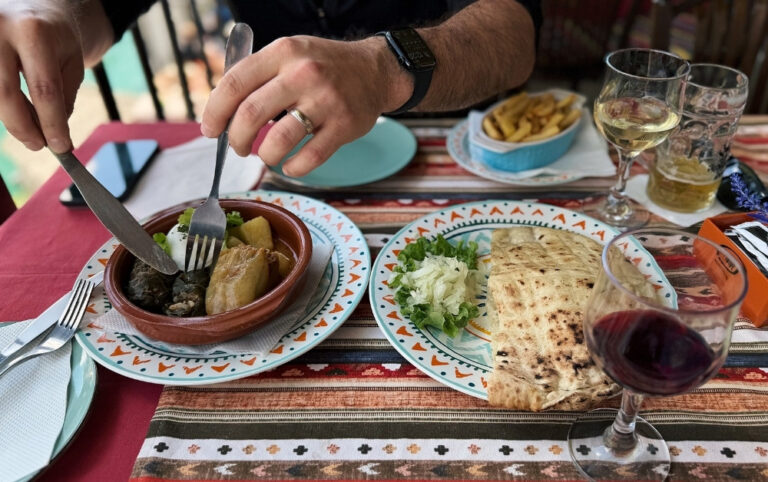
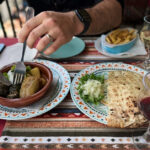
Trying the local food is honestly one of the best things to do in Mostar because the city is full of restaurants serving traditional Bosnian and Herzegovinian dishes like ćevapi, burek, grilled meat, soups, local desserts, and Bosnian coffee. Even if you are only visiting for a few hours, sitting down for a proper meal really feels like part of the experience here.
During our visit, we ate at Restaurant Lagero and can honestly only recommend it. The restaurant sits right by the river, the portions were huge, and it turned out to be one of our favorite food stops during the trip. It was also one of those moments where we realized very quickly that ordering too much food in Bosnia and Herzegovina is extremely easy.


#13: See the Bullet Marked Buildings Around the City
While Mostar is famous for its bridge and old town, you will also quickly notice another side of the city that many visitors do not fully expect before arriving. In different parts of Mostar, especially once you move a little away from the tourist center, you can still see buildings marked by bullet holes, damaged facades, and visible scars left behind from the Bosnian War in the 1990s. Some buildings were rebuilt, others remain abandoned, and in certain places the damage is still very visible decades later. Honestly, seeing this in person gives a completely different perspective on the city compared to just looking at photos online. It also makes places like Stari Most feel even more meaningful once you understand what Mostar actually went through not that long ago.

Visit Mostar in the Evening After the Day Crowds Leave
One thing we quickly realized during our visit is how different Mostar feels once the large day tours start leaving the city. During the middle of the day, especially around Stari Most, the crowds can get very intense, with people constantly moving through the old town as organized tours arrive from Dubrovnik and Split. But later in the evening, the atmosphere changes a lot.
Around sunset and after dark, the streets become calmer, restaurants start filling with people sitting down for dinner, and walking around the bridge area suddenly feels much more relaxed. Honestly, this is probably the version of Mostar we wish we had more time to experience ourselves. If you can, staying at least one night in the city is definitely worth it just for this quieter atmosphere alone.
Where to Stay in Mostar
- Shangri-La Mansion. It offers unique views from its rooftop terrace.
- Old Town Nest is a small accommodation located close to Mostar’s old town, making it a practical base if you want to stay within walking distance of Stari Most, restaurants, cafés, and the main historic streets, without needing transport around the city.
- Vila Lucac is a family-run accommodation located close to Mostar’s old town and Stari Most, offering a quieter stay while still within walking distance of the main sights, restaurants, and cafés in the historic center.
- Hotel-Restaurant Kriva Ćuprija is located right in Mostar’s old town, near the famous Crooked Bridge, combining traditional Bosnian-style architecture with a restaurant serving local dishes, making it a convenient place to stay if you want to explore the historic center mostly on foot.
- Pansion Villa Nur is a guesthouse located near Mostar’s old town and river area, offering views toward the surrounding historic part of the city while staying within easy walking distance of Stari Most, restaurants, cafés, and the main sightseeing spots.

Buy Me a Ko-fi
Best Day Trips and Nearby Places to Visit from Mostar
Even though Mostar already has a lot to see on its own, one of the best things about the city is how many interesting places are nearby. From waterfalls and historic villages to monasteries built into cliffs and one of the most scenic train rides in the Balkans, there are plenty of places you can easily combine with a visit to Mostar.
- Take a Day Trip to Kravica Waterfalls. Kravica Waterfalls are among the most famous natural attractions near Mostar, known for their large cascades surrounded by greenery. During summer, people come here for swimming, relaxing, and spending the day near the water. The waterfalls are about 40 km from Mostar and are among the most popular day trips from the city.
- Visit Blagaj Tekke Near Mostar. Blagaj is a small village located near Mostar, best known for the Dervish monastery built directly beside the Buna River spring and cliffs. It is one of the most photographed places in Bosnia and Herzegovina and feels completely different from Mostar itself. The area is calmer, with riverside restaurants, mountain scenery, and walking paths around the spring.
- Explore Počitelj Village. Počitelj is a historic stone village filled with Ottoman architecture, staircases, towers, and views over the river valley below. Walking through it honestly feels a bit like stepping into an open air museum. The village is small but very photogenic and is often combined with Mostar and Blagaj during day tours around Herzegovina.
- Ride the Scenic Train Between Sarajevo and Mostar. The train ride between Sarajevo and Mostar is considered one of the most scenic railway journeys in the Balkans. The route follows the Neretva River through mountains, tunnels, and small villages, offering constantly changing views from the window. Many travelers actually take the train mainly for the scenery, not just for the transport between the two cities.
Mostar may be one of the most visited places in Bosnia and Herzegovina, but after spending time there ourselves, we completely understand why. Beyond the famous bridge, the city has layers of history, local food, riverside views, nearby villages, and stories that make it feel much more than just a quick photo stop. Even though our own visit was far too short, Mostar still ended up being one of the places that stayed with us the most after the trip. If there is one thing we would recommend, it is giving yourself more time than you think you need. Slow down, explore beyond Stari Most, try the local food, and let yourself get a little lost in the old stone streets. That is honestly when Mostar feels most special.
Pack your bags and waddle more!

This post contains affiliate links. If you click and buy, I might earn a tiny commission, enough to help a penguin keep up its globe-trotting lifestyle. No extra cost to you, just more fish for me. Thank you for supporting the adventure!