Interesting Facts About Finland
Finland is a northern European country with a rich history, strong traditions, and a deep connection to nature. Known for its clean design, technological innovation, and quiet way of life, it often surprises first-time visitors in the best possible way. If you are planning a trip to Finland, there are a few things worth knowing in advance to make your visit smoother and more enjoyable.
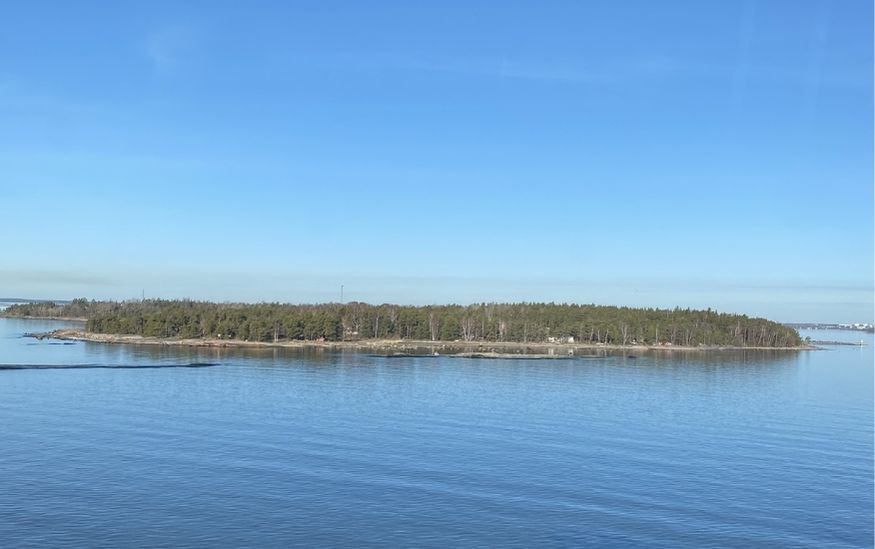
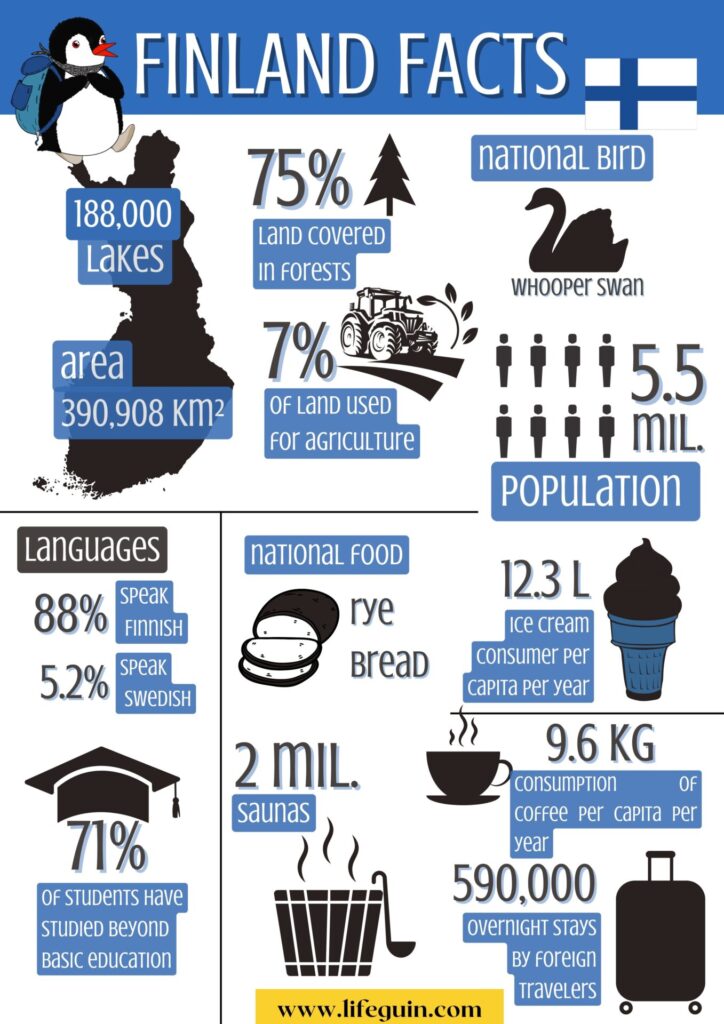
Here is what we learned about Finland through a mix of working with a Finnish company and traveling across the country ourselves. Finland aims to become carbon neutral by 2035, regularly tops the World Happiness Report, and is a true nature powerhouse. Around 75% of the country is covered by forests, and Finland is also home to the world’s largest archipelago, comprising tens of thousands of islands. These facts are not just impressive on paper; you feel them everywhere, from the cities to the quiet countryside.
Basic Facts about Finland
- Name: Republic of Finland (Finland, Suomi – Suomi)
- Capital: Helsinki
- Land area: 338,455 km²
- Population: Approx. 5.6 million (2023)
- Official languages: Finnish and Swedish (Sámi languages are officially recognized in northern regions)
- Official currency: Euro (€)
- Regions of Finland: Finland is divided into 19 areas (maakunnat), which are further grouped into six Regional State Administrative Agencies.
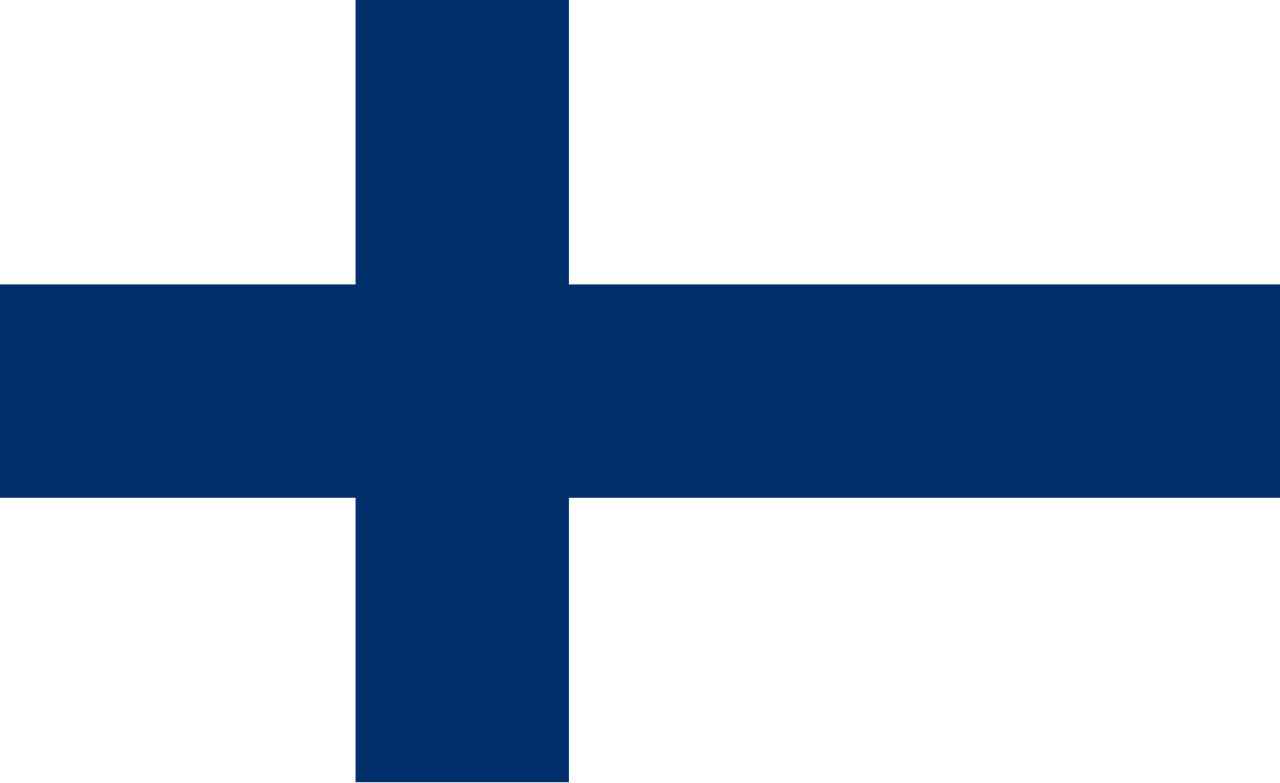
- Flag of Finland: The national flag, known as the Blue Cross Flag, features a deep blue Nordic cross on a white background. The white symbolizes snow and purity, while the blue represents Finland’s thousands of lakes and the sky. The Nordic cross design reflects Finland’s cultural and historical ties to other Nordic countries.
A Brief Overview of Finland’s History
-
- Prehistory and early settlement. Finland has been inhabited since the end of the last Ice Age, around 9000 BC, with early communities relying on hunting, fishing, and later farming.
- Swedish rule (12th century–1809). For several centuries, Finland was part of the Kingdom of Sweden. During this time, Christianity, Swedish law, and administration were introduced, shaping Finnish society and governance.
- Russian Grand Duchy (1809–1917). After the Finnish War, Finland became an autonomous Grand Duchy within the Russian Empire. This period allowed Finland to develop its own institutions, currency, and a strong national identity.
- Independence (1917). Finland declared independence from Russia on 6 December 1917, a date now celebrated annually as Independence Day.
- Civil War (1918). Shortly after independence, Finland experienced a brief but violent civil war between the Reds and the Whites, leaving a lasting impact on the nation.
- World War II years (1939–1945). Finland fought the Winter War and Continuation War against the Soviet Union, followed by the Lapland War against German forces. Despite heavy losses, Finland maintained its independence.
- Post-war rebuilding and neutrality. After the war, Finland focused on reconstruction and adopted a policy of neutrality during the Cold War, balancing relations between East and West.
- Modern Finland: Finland joined the European Union in 1995, later adopted the euro, and today is known for its strong education system, innovation, sustainability efforts, and high quality of life.
Interesting & Fun Facts About Finland
A Country Covered in Forests
Around 74% of Finland is covered in forests, which means trees are not just something you see on hikes; they are part of everyday life. Finland has more forests than any other country in Europe, and you really feel it the moment you leave the city. Even short drives turn into green tunnels, and quiet forest paths seem to appear everywhere.
Then there is Lapland, Finland’s northernmost region and one of the last truly untamed places in Europe. This vast area is known for its wild landscapes, wide open spaces, and deep connection to nature. It is also home to Europe’s largest lake district, endless forests, and some of the cleanest air you will ever breathe. Whether you visit in summer under the midnight sun or in winter surrounded by snow and silence, Lapland shows just how deeply nature shapes life in Finland.
No Small Talk
Finns are generally not big on small talk, and silence in conversation is considered entirely normal and comfortable. Communication tends to be direct and honest, and people usually mean exactly what they say. If someone suggests meeting for lunch sometime soon, you can expect a follow-up message or call.
Modesty is highly valued in Finnish culture, and humor is often subtle and self-deprecating rather than loud or exaggerated. This straightforward approach can feel reserved at first, but it is usually a sign of respect and sincerity rather than distance.
The Finnish Language
The official language of Finland is Finnish, which is often considered challenging for non-native speakers. It belongs to the Uralic language family, making it very different from most European languages. Hungarian is its closest well-known relative, which explains why Finnish sounds so unique.
The good news is that most Finns speak excellent English, especially in larger cities and tourist areas, so getting around is rarely a problem. Still, learning a few basic Finnish words goes a long way. Simple phrases like “kiitos” (thank you) and “moi” (hello) are always appreciated and show respect for the local culture.
Swedish Is Learned in Schools
All Finns study Swedish at secondary school, as it is one of Finland’s two official languages alongside Finnish. While Finnish itself is not a Scandinavian language, Swedish plays an important role in the country’s history, culture, and public life.
Swedish is mainly spoken along the western and southern coasts, and around 5% of the population considers it their native language. On top of that, Finns also learn English at school, which explains why communication in Finland is usually very easy for visitors.
Coffee Is a Huge Thing
You might expect Europe’s coffee capital to be Italy or France, but it is actually Finland. Finns consume more coffee per capita than any other country in Europe and the world. Yes, the world.
In Finland, coffee is part of everyday life, not a special occasion. Drinking six to eight cups a day is completely normal, and coffee breaks are built into the work culture. Whether at home, in the office, or at a roadside café, there is almost always a pot of coffee on the go.
Lakes, Lakes, and More Lakes
Finland is often called the Land of a Thousand Lakes, but the reality is far more impressive. There are 187,888 lakes spread across the country, shaping both the landscape and everyday life.
Around 57,000 of these lakes are larger than 10,000 square meters, which means you are never far from water. Lakes are used for swimming, boating, fishing, ice skating in winter, and, of course, cooling off after a sauna. In Finland, lakes are not just scenery; they are a way of life.
Moomins
Swedish-speaking Finnish illustrator and writer Tove Jansson created the beloved, hippo-like characters known as the Moomins. The series includes nine novels, five picture books, and a long-running comic strip, and has since expanded into numerous television adaptations and other media. Today, the Moomins are a cultural icon in Finland and loved by generations around the world.
Saunas Everywhere
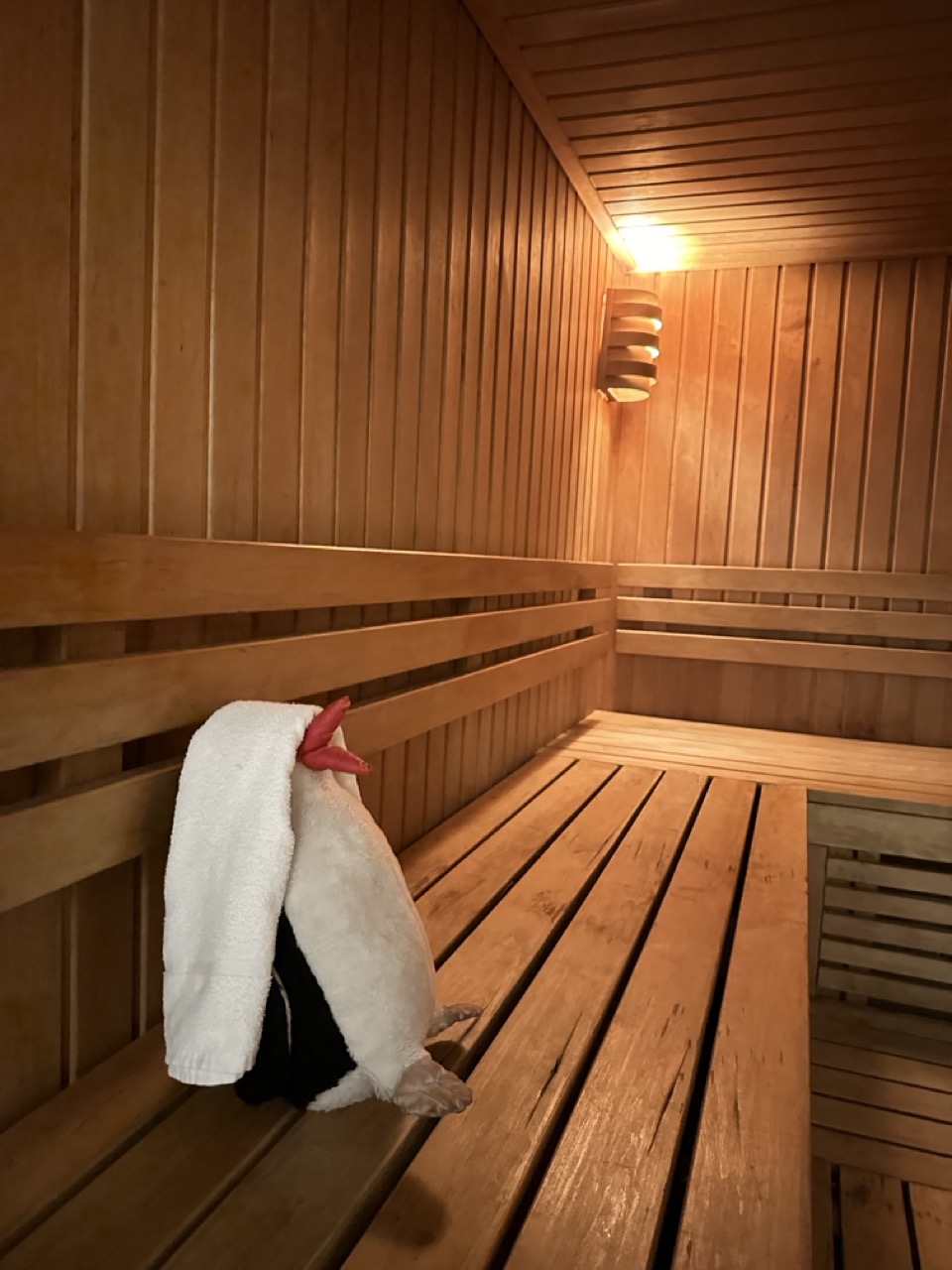
The sauna is an essential part of Finnish culture and a must-try experience when visiting the country. It is a place to relax, unwind, socialize, and enjoy the many health benefits of heat and steam. For Finns, sauna time is not a luxury; it is a regular part of everyday life.
There is a simple etiquette to follow. Always shower before entering, sit on a towel, and respect the calm atmosphere. And yes, the numbers are real. Finland has more saunas than people, which says everything about just how deeply this tradition is woven into Finnish culture.
Sauna Basics
- Shower before entering the sauna to keep the space clean and comfortable for everyone
- Sit on a towel, even if you plan to stand or move around
- Respect the calm atmosphere, keeping voices low and phones away
A Nation Powered by Technology
Finland is home to some of the world’s most influential technology companies, including Nokia and Rovio, the creators of Angry Birds. The country is known for its highly advanced telecommunications network and has long been a global leader in mobile and digital innovation.
Technology is integrated into everyday life, from fast and reliable internet to innovative public services. In cities like Helsinki, you will notice how smoothly tech blends into daily routines, with new gadgets, digital solutions, and forward-thinking design visible almost everywhere you go.
Lapland: Finland’s Wild North
Lapland is Finland’s northernmost region and one of the last true wilderness areas in Europe. Known for its vast forests, open fells, and incredibly clean air, Lapland offers a very different pace of life from the south. In winter, it is famous for the Northern Lights, snowy landscapes, encounters with reindeer, and winter activities such as husky sledding and cross-country skiing. In summer, the Midnight Sun lights up the landscape for weeks, creating endless days for hiking, lake swims, and quiet moments in nature. Remote, peaceful, and deeply connected to the natural world, Lapland is one of the most unforgettable parts of Finland to experience.
Inventors & Innovations
Finland has played a major role in shaping the modern digital world. It is the birthplace of Linux, created by Finnish software engineer Linus Torvalds. Today, Linux powers everything from servers and smartphones to supercomputers worldwide.
Finland also contributed to the everyday communication we know today. The modern text message (SMS) was developed in Finland, laying the foundation for how billions of people connect daily. These innovations highlight Finland’s long-standing influence in technology and digital communication.
Wife Carrying World Championship
One of Finland’s most unusual and entertaining traditions is the Wife Carrying World Championship, held every year in Sonkajärvi. What started as a local curiosity has grown into an international event, attracting competitors from around the world.
The goal is simple but demanding: carry your partner through a challenging obstacle course as fast as possible. While the rules are surprisingly strict, the atmosphere is lighthearted and fun, making it a favorite for both participants and spectators.
Travel Facts & Practical Tips for Visiting Finland
Cashless Society
Finland is one of the most cashless countries in the world. Credit and debit cards are accepted almost everywhere, including on public transport, in cafés, and in small shops. Carrying cash is rarely necessary, but having a contactless card is essential.
Dress for the Weather, Always
The weather in Finland can change quickly, even in summer. Layers are key. In winter, proper thermal clothing, waterproof boots, and a warm jacket are a must. In summer, pack light layers and a rain jacket, especially if you plan to spend time outdoors.
Respect Nature and Public Rules
Finns have a deep respect for nature, and visitors are expected to do the same. Thanks to Everyman’s Right, you can freely walk, hike, and enjoy nature almost anywhere, as long as you do not disturb others or damage the environment. Always clean up after yourself and follow local guidelines.
Punctuality Matters
Being on time is taken seriously in Finland. Trains, meetings, and tours usually run exactly on schedule. Arriving late is considered rude, so plan a bit of extra time, especially when using public transport or joining guided activities.

English Is Widely Spoken
You do not need to worry about language barriers. Most Finns speak excellent English, particularly younger people and those working in tourism. Still, using a few basic Finnish words is always appreciated.
Tipping in Finland
Tipping is not expected in Finland, as service charges and fair wages are already included in prices. In restaurants, cafés, taxis, and hotels, you are not required to leave a tip, and no one will think less of you if you do not. If you receive exceptional service, rounding up the bill or leaving a small extra amount is appreciated but entirely optional. Overall, tipping in Finland is relaxed and straightforward, making it one less thing to worry about while traveling.
Buy Me a Ko-fi
Finland is a fascinating and beautiful country, offering unique experiences. From the wild landscapes of the Finnish wilderness and the magic of the Northern Lights to everyday traditions like sauna culture and thoughtful design, there is something here for every type of traveler. By keeping these essential things in mind before visiting Finland, you will be well prepared to travel with confidence and fully enjoy what the country has to offer.
So pack your bags, learn a few Finnish phrases, and get ready for an unforgettable adventure in Finland.
This post contains affiliate links. If you click and buy, I might earn a tiny commission, enough to help a penguin keep up its globe-trotting lifestyle. No extra cost to you, just more fish for me. Thank you for supporting the adventure!