Valletta, Malta: The Ultimate Guide to Its Best Attractions and Hidden Gems
Valletta may be one of Europe’s smallest capitals, but it packs centuries of history, remarkable architecture and Mediterranean charm into its compact streets. A UNESCO World Heritage Site, the city invites you to wander past honey-colored limestone buildings, discover ornate churches, admire Grand Harbor views, and stumble upon little cafés tucked between historic façades. Whether you’re interested in history, culture, architecture, or simply soaking up the atmosphere, Valletta offers plenty to explore, often just a short waddle from one attraction to the next.
Why Visit Valletta
Valletta may be one of Europe’s smallest capitals, but it packs centuries of history, remarkable architecture and Mediterranean charm into its compact streets. A UNESCO World Heritage Site, the city invites you to wander past honey-colored limestone buildings, discover ornate churches, admire views of the Grand Harbor, and stumble upon little cafés tucked between historic façades. Whether you’re interested in history, culture, architecture, or simply soaking up the atmosphere, Valletta offers plenty to explore, often just a short waddle from one attraction to the next.
Top Things in Valletta at a Glance
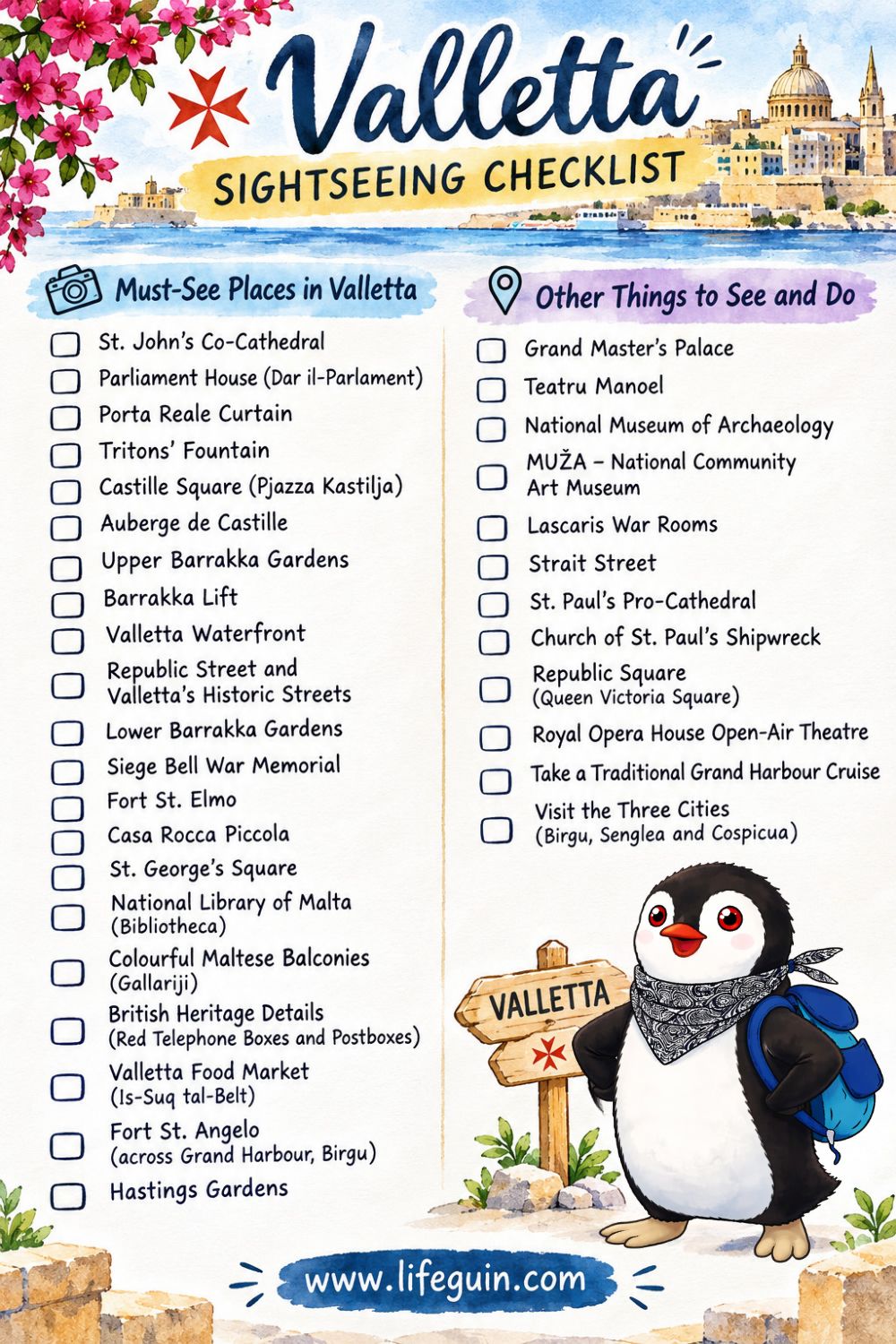
15 Best Things to Do and See in Valletta
#1: Visit St. John’s Co-Cathedral
One of Valletta’s most remarkable landmarks, St. John’s Co-Cathedral is a masterpiece of Baroque architecture. Built in the 16th century for the Knights of St. John, its rather restrained exterior hides an extraordinary interior filled with gilded details, elaborate carvings, and intricate marble tombstones. Don’t miss the Oratory, home to Caravaggio’s The Beheading of Saint John the Baptist, his largest and only signed painting. Allow around an hour to appreciate the cathedral and its remarkable collection. Read more about our visit here: Gold, Marble and Masterpieces: Stepping Inside St. John’s Co-Cathedral.


#2: Admire Parliament House (Dar il-Parlament)
Located just inside Valletta’s City Gate, Parliament House is a striking example of contemporary architecture set against the capital’s historic limestone surroundings. Designed by renowned Italian architect Renzo Piano, the building forms part of the City Gate project, which also includes the redesigned entrance to the city and the open-air theatre at the Royal Opera House ruins.
Completed in 2015, Parliament House is home to Malta’s House of Representatives. Its distinctive stone façade, made up of honeycomb-like blocks, creates an interesting contrast with Valletta’s traditional Baroque architecture. Even if you don’t go inside, it is worth stopping to admire the building as you enter or leave the city.


#3: Waddle Through Porta Reale Curtain
Porta Reale Curtain is part of Valletta’s landward fortifications and marks the historic entrance to the city. This massive defensive wall once housed Valletta’s main gateway, protecting the capital from potential attacks. Its stonework and imposing scale offer a glimpse into the military engineering of the Knights of St. John. Valletta’s main City Gate has been rebuilt five times throughout its history. The original Porta San Giorgio was completed in 1569 and later renamed Porta Reale, while subsequent versions reflected the city’s changing architectural styles and needs. The fifth and current entrance, designed by Renzo Piano, opened in 2014. It is worth remembering that these are five successive versions of the main entrance, rather than five gates standing side by side. As we explored this part of Valletta, the imposing fortifications reminded us of Dubrovnik in Croatia. There is something similar about approaching a historic walled city, passing through its monumental defenses.


#4: Admire the Tritons’ Fountain
Located just outside Valletta’s City Gate, the Tritons’ Fountain is one of the capital’s most recognizable landmarks. Designed by Maltese sculptor Vincent Apap and completed in 1959, it features three bronze figures representing mythological sea creatures supporting a large circular basin. Interestingly, the fountain collapsed in 1978, damaging two of its figures, and remained out of operation for years before a major €4 million restoration was completed in 2018. Today, it makes a lovely photo stop, particularly when illuminated after dark.


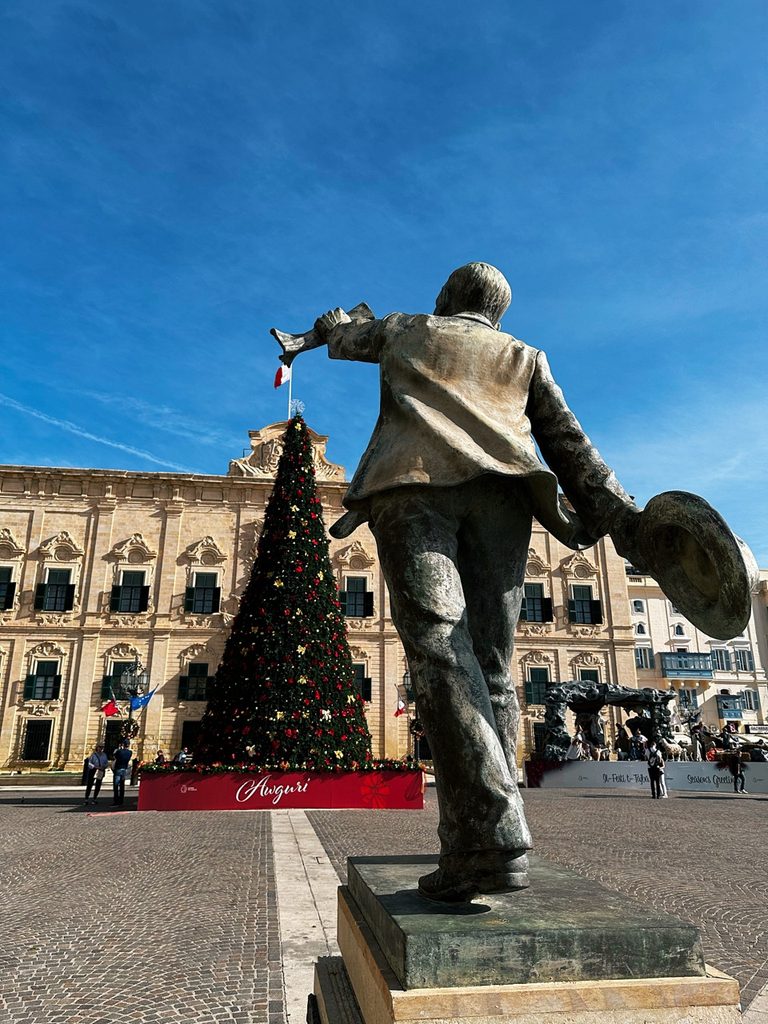
#5: Explore Castille Square and See the Manwel Dimech Statue
Castille Square (Pjazza Kastilja) is one of Valletta’s most important historic squares, telling the story of Malta’s political and military past. Its most prominent landmark is the magnificent Auberge de Castille, once the residence of the Knights of St. John from Castile, León and Portugal, and today the office of Malta’s Prime Minister. Take a moment to look around the square and find the bronze statue of Manwel Dimech, a Maltese social reformer, journalist, writer and poet. His life was far from ordinary: after spending around 20 years in prison early in life, he educated himself and later became an influential voice for social and political reform. The statue was unveiled in 1976 and moved to its present position during the square’s redevelopment in 2015.

#6: Upper Barrakka Gardens
If there is one viewpoint you shouldn’t miss in Valletta, it is Upper Barrakka Gardens. Perched high above the Grand Harbor, this peaceful green space offers sweeping views of the Three Cities and the impressive fortifications across the water. With its elegant arches, shaded pathways and beautiful surroundings, it is also a welcome escape from the busy streets of the capital.
We enjoyed exploring these gardens and have dedicated a separate article to them, A Quiet Escape in Valletta: Exploring the Barrakka Gardens, where we share more details about their history, highlights, and what to see during your visit. Don’t miss the historic Saluting Battery just below the gardens, where the traditional cannon-firing ceremony takes place daily at noon and 4 pm.


#7: Take the Barrakka Lift
We took the Barrakka Lift from Upper Barrakka Gardens down to the waterfront, and it turned out to be a rather convenient way to get around. Standing an impressive 58 meters tall, this modern panoramic lift connects the gardens with Lascaris Wharf at Grand Harbor, saving you from navigating the steep streets and long flights of stairs. The ride takes approximately 23 seconds, so it is over almost as soon as it begins, but it is still an interesting experience. The current lift opened in December 2012, replacing an earlier one that operated between 1905 and 1973. It has two cabins, each carrying up to 21 passengers. The standard same-day return fare is €1, making it an affordable shortcut to explore both the upper part of Valletta and the waterfront.


#8: Experience the Valletta Waterfront
Down by Grand Harbor, the Valletta Waterfront offers a completely different perspective of the capital. Its row of colorful historic warehouses dates back to the 18th century, when the buildings served as maritime stores.
Today, many house restaurants, cafés and bars with outdoor seating overlooking the harbor. Come for lunch, enjoy a coffee by the water or return in the evening when the illuminated buildings create a particularly atmospheric setting.


#9: Waddle Through the Streets of Valletta
Sometimes, the best way to discover Valletta is to put the map aside and waddle through its streets. Beyond the main attractions, the capital is full of narrow lanes, honey-colored limestone buildings, colorful traditional balconies, and little details that are easy to miss when you’re rushing from one landmark to another. Look out for charming doorways, old street signs, hidden courtyards, and tiny cafés tucked between historic façades. We loved the contrast between the grand architecture and the quieter residential streets. Don’t be afraid to take a detour or turn down an unfamiliar alley. You never know what little gem you might find around the next corner.


#10: Find a Quiet Corner at Lower Barrakka Gardens
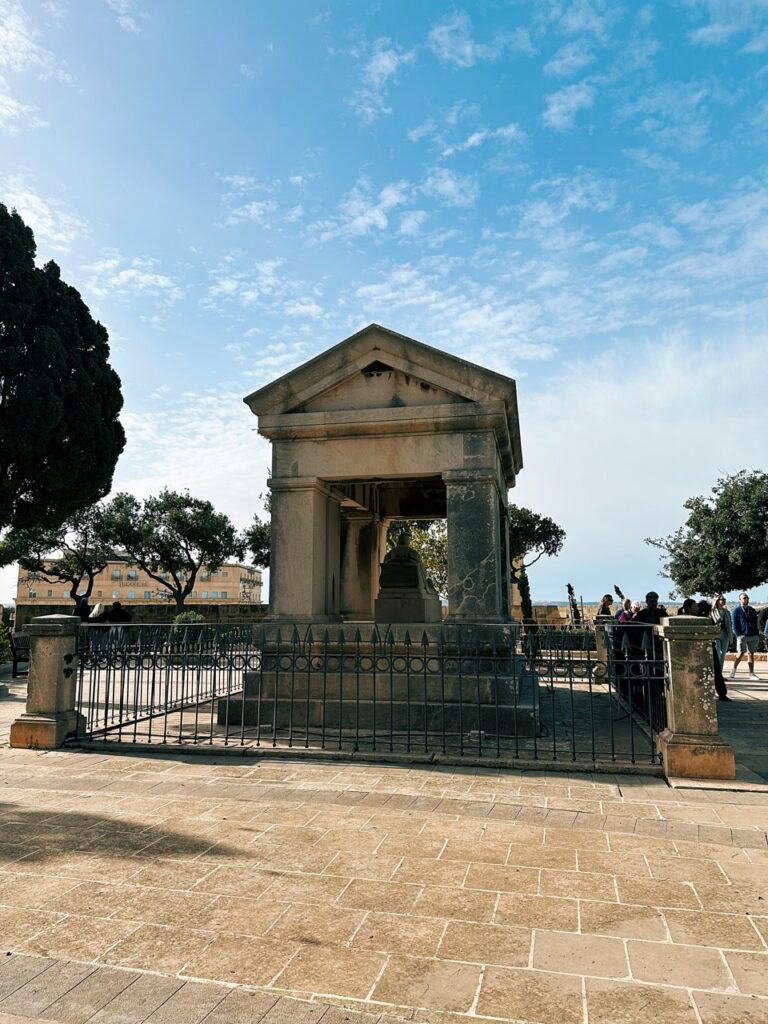
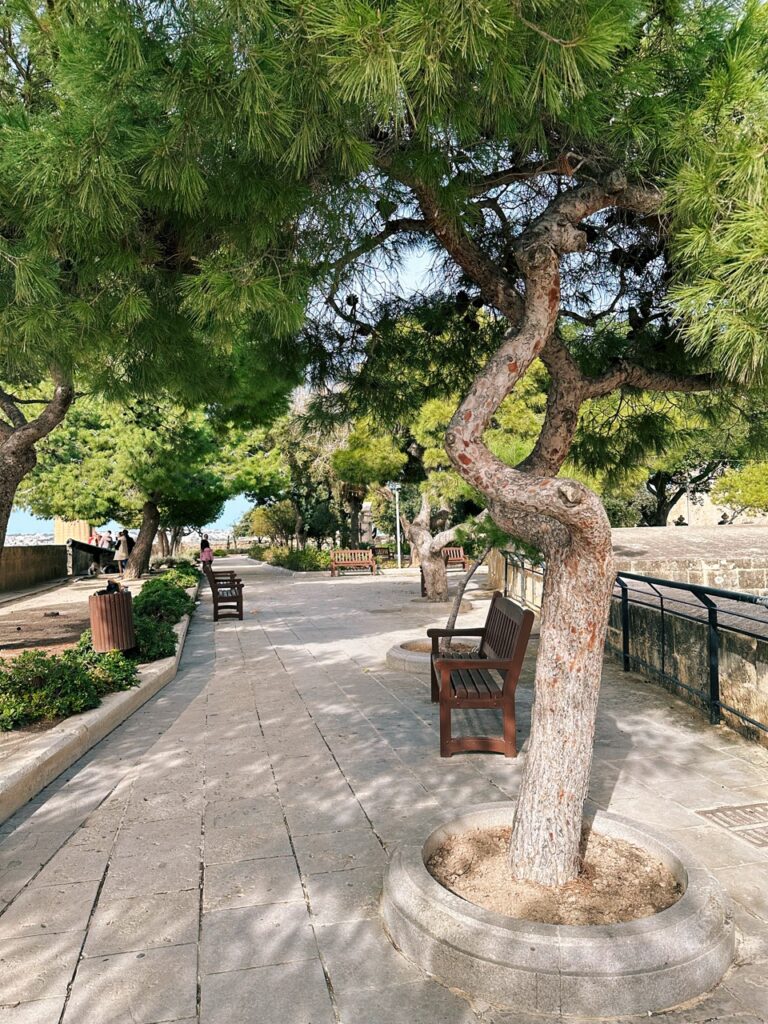
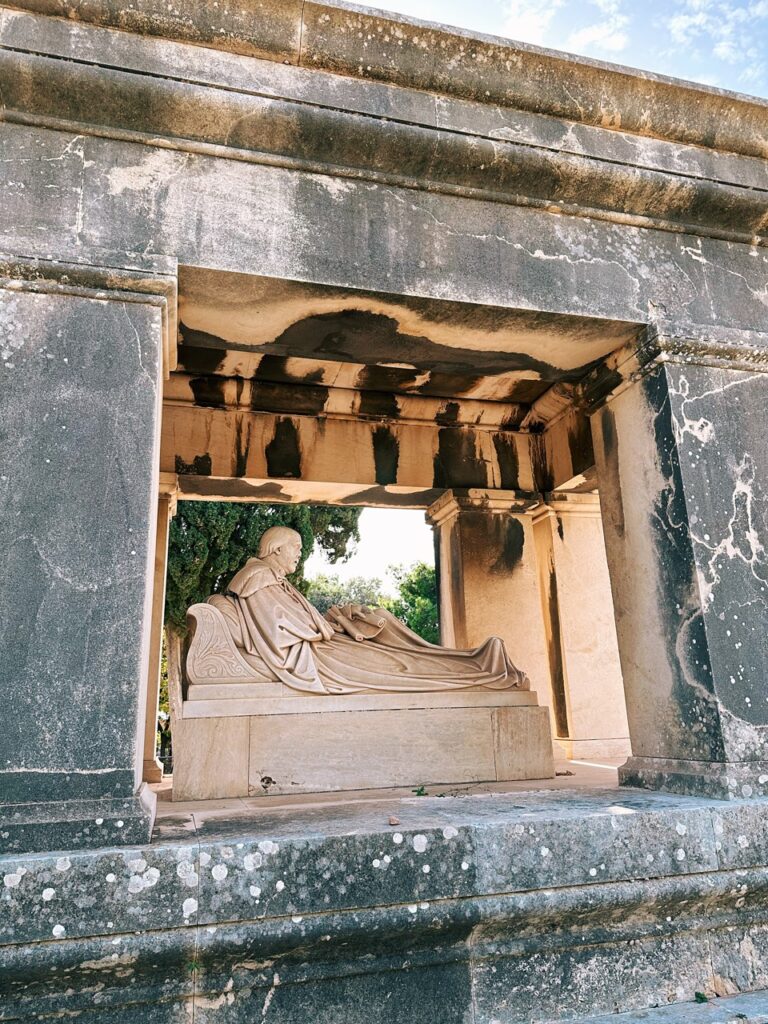
While Upper Barrakka Gardens often steal the spotlight, Lower Barrakka Gardens deserves a place on your Valletta itinerary too. Perched on the city’s bastions overlooking the entrance to Grand Harbor, this smaller and quieter garden offers beautiful waterfront views and a welcome break from sightseeing. Its most recognizable feature is the neoclassical Doric temple monument dedicated to Sir Alexander Ball, a British admiral and Malta’s first Civil Commissioner. Take a moment to enjoy the peaceful surroundings, admire the historic architecture and look out towards the imposing harbor fortifications. Nearby, you’ll also find the Siege Bell Memorial, commemorating those who lost their lives during the Second World War.


#11: Visit the Siege Bell War Memorial
Overlooking the Grand Harbor, the Siege Bell War Memorial is one of Valletta’s most moving landmarks. Unveiled in 1992 by Queen Elizabeth II, the memorial commemorates the estimated 7,000 people who lost their lives during the Siege of Malta in the Second World War. Its impressive bronze bell hangs inside a neoclassical stone structure, overlooking the sea. Interestingly, the bell weighs around 10 tonnes and is rung daily at noon in remembrance of those who died. Even if you only stop for a few minutes, its history, solemn atmosphere, and panoramic harbor views make this a worthwhile visit.


#12: Discover Fort St. Elmo
At the tip of the Valletta peninsula stands Fort St. Elmo, a star-shaped fortress closely connected to the Great Siege of Malta in 1565. Its strategic position made it an important defensive stronghold, and today it houses the National War Museum. Inside, you’ll find military artifacts, uniforms, weapons, and exhibits covering different periods of Maltese history. Even if museums aren’t usually your thing, the fortress itself is worth exploring for its architecture and spectacular coastal views.


#13: Step Inside Casa Rocca Piccola
For a glimpse into Malta’s aristocratic past, visit Casa Rocca Piccola, a 16th-century palace that remains the de Piro family’s private residence. This historic townhouse offers a fascinating look at how Maltese nobility lived, with beautifully furnished rooms, family collections, antique furniture, and a charming courtyard. Guided tours take you through the palace’s history and reveal stories behind its interiors. It is a lovely contrast to Valletta’s grand public landmarks. Read more about our experience in our blog post, Inside Casa Rocca Piccola, the Valletta Palace Where History Is Still Being Lived.


#14: Spend Some Time at St. George’s Square
Located in the heart of Valletta, St. George’s Square (Misraħ San Ġorġ) is one of the capital’s most important public spaces. Surrounded by impressive historic buildings, including the Grand Master’s Palace, the square has been a gathering place for centuries and remains a lively spot for visitors and locals alike. Take a moment to admire the palace’s grand façade, watch the fountains, and enjoy the open space between sightseeing stops. Interestingly, the square has witnessed many important moments in Malta’s history, including public ceremonies and national celebrations. During warmer months, it is also a popular place to pause and enjoy the city’s atmosphere.


#15: Visit the National Library of Malta
On Republic Street, overlooking St. George’s Square, the National Library of Malta (Bibliotheca) is a fascinating stop for anyone interested in history, books and architecture. Established in 1776, the library houses an extraordinary collection of historical documents, manuscripts, maps and books, including archives belonging to the Knights of St. John. Its elegant neoclassical building was completed in 1796 and designed by Polish-born architect Stefano Ittar. One particularly interesting fact is that the library holds records of the Order of St. John dating back to the 12th century. Even if you don’t have time to explore its collections, the impressive façade makes it worth stopping by while wandering through Valletta.


#16: Find Valletta’s Famous Colorful Balconies
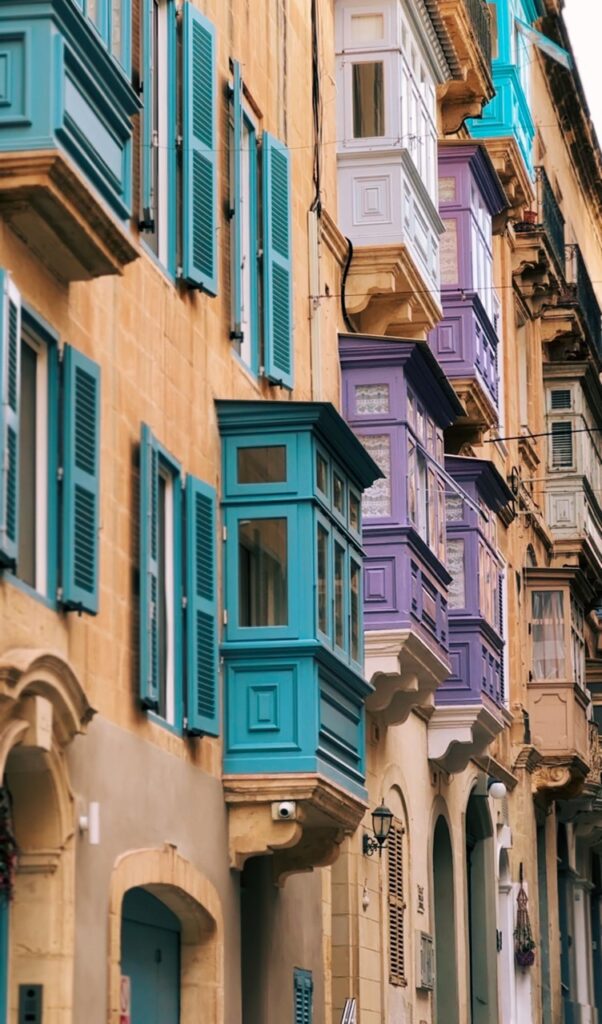
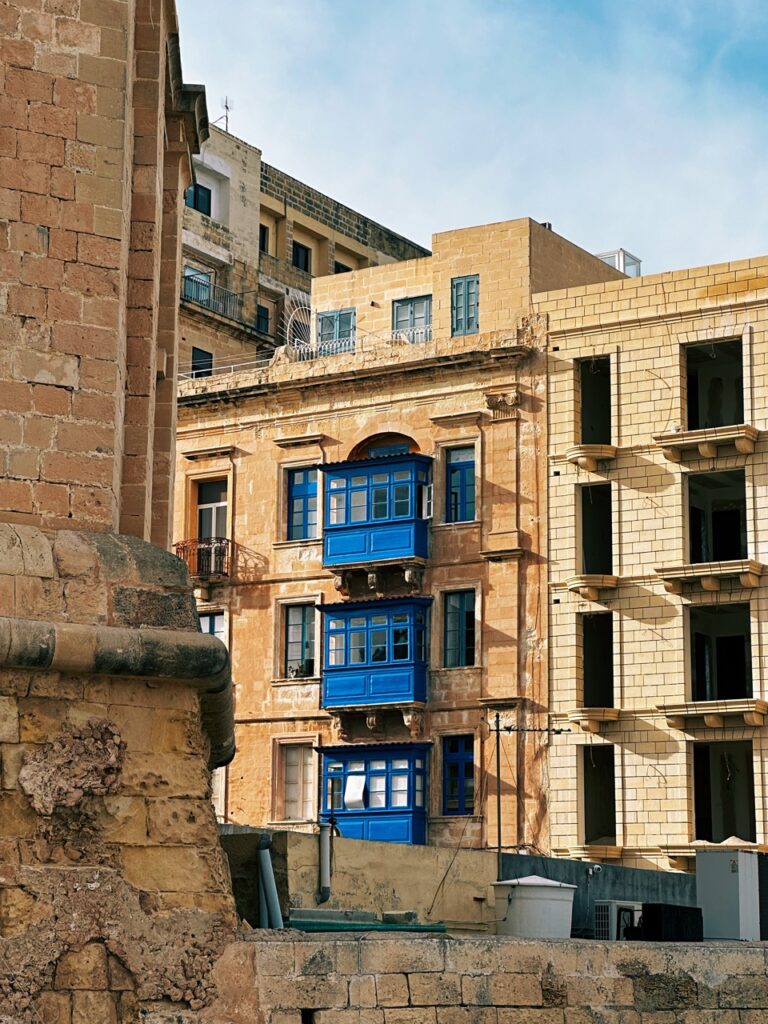
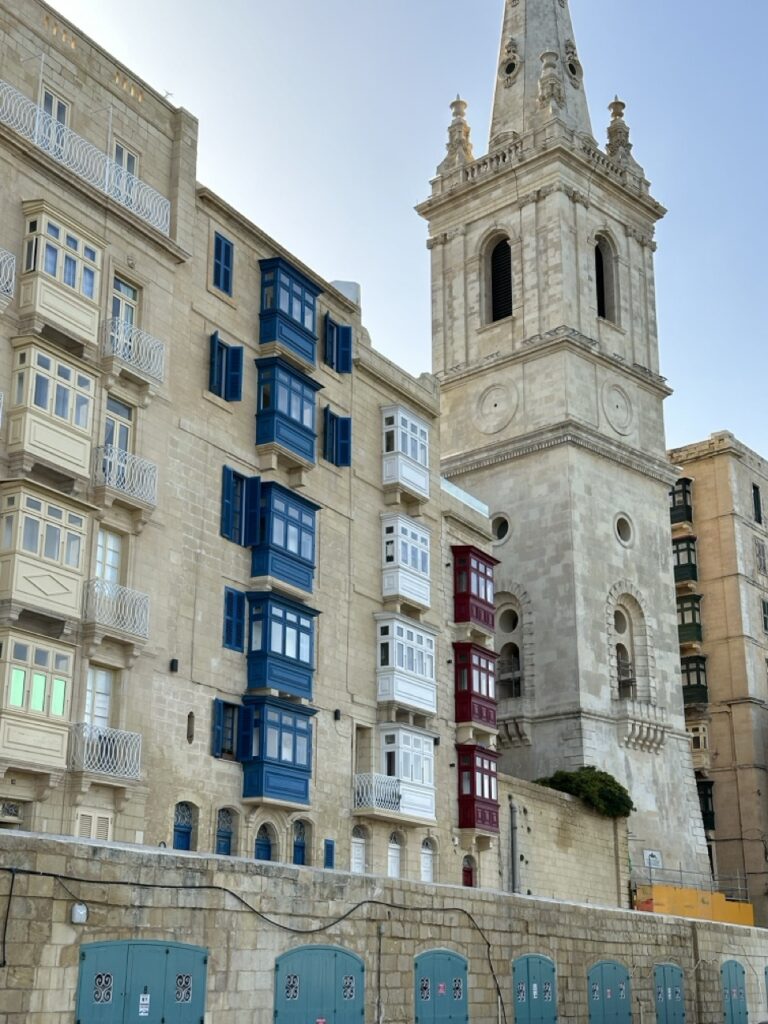
One detail that makes Valletta so photogenic is its colorful wooden balconies, locally known as gallariji. Painted in shades of red, green, blue, and yellow, they stand out against the warm limestone façades and give the city much of its character. Rather than sticking to the main streets, wander into the smaller lanes and look up. Old Mint Street and St Lucia Street are particularly lovely places to spot these architectural details and capture a few photographs.
#17: Spot the British Influence Around Valletta
As you waddle through Valletta, keep an eye out for little reminders of Malta’s British colonial past. Although the island has a distinctly Mediterranean character, British influence is still visible in some rather unexpected places. Look for the iconic red telephone boxes, traditional red postboxes, and street signs featuring British-style details. You might also notice British-style road markings, driving on the left-hand side of the road, and familiar electrical sockets with three rectangular pins. Even the Maltese love of tea and certain English expressions reflect this shared history. These small details create an interesting contrast with Valletta’s Baroque architecture and make exploring its streets even more fun.


#18: Get a bite at Valletta’s Food Market (Is-Suq tal-Belt)
If you want a break from sightseeing, head to Is-Suq tal-Belt, Valletta’s historic covered food market. Originally built in the 19th century during British rule, this elegant iron-and-glass market has been transformed into a lively food hall filled with different food stalls, local specialties, and international flavors. The restored building is worth a look in itself, with its beautiful industrial-style architecture and open interior. Stop for a traditional Maltese bite, grab a coffee, or wander around and soak up the atmosphere. It’s also a great place to experience a more modern side of Valletta while staying within its historic center.


#19: Admire Fort St. Angelo Across the Grand Harbor
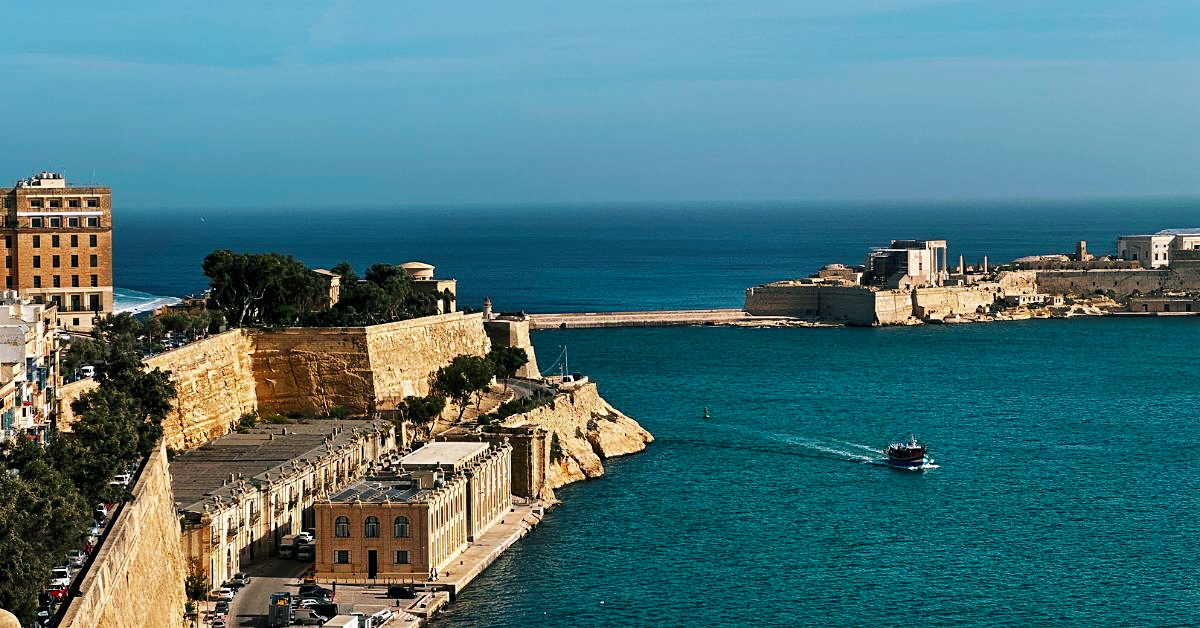
Although Fort St. Angelo is not technically in Valletta, you can’t miss this impressive fortress when looking across the Grand Harbor toward Birgu, one of the Three Cities. With origins dating back to the medieval period, the fort became an important stronghold for the Knights of St. John and played a significant role during the Great Siege of Malta in 1565. Interestingly, it later served as the headquarters of the British Royal Navy in the Mediterranean and was known as HMS St Angelo. Today, visitors can explore its historic bastions, courtyards, and exhibitions while enjoying wonderful views back towards Valletta. If you have extra time, consider taking the ferry across the harbor to explore the fortress up close.


#20: Take a Break at Hastings Gardens
Perched atop St. John and St. Michael’s Bastions, Hastings Gardens is one of Valletta’s quieter green spaces and a lovely spot to escape the busy streets. Located near City Gate, the gardens offer beautiful views across Marsamxett Harbor, Manoel Island, Sliema and parts of the surrounding coastline. Created in 1811 and named after the British Governor, Francis Rawdon-Hastings, the gardens also contain a monument dedicated to his memory. Unlike the more popular Barrakka Gardens, Hastings Gardens often feels less crowded, making it a pleasant place to pause, enjoy the views, and catch your breath before continuing your Valletta adventure.
Other Things to See and Do in Valletta
If you have more time to explore Malta’s capital, several other historic landmarks, cultural attractions, and hidden corners are worth adding to your itinerary.
- Grand Master’s Palace: Explore the former residence of the Knights of St. John, with its magnificent State Rooms, historic courtyards, and Palace Armory.
- Teatru Manoel: Step inside one of Europe’s oldest working theatres, dating back to 1731, and admire its beautifully decorated Baroque auditorium.
- National Museum of Archaeology: Discover Malta’s prehistoric past through an impressive collection of ancient artifacts, sculptures and figurines, including the famous Sleeping Lady.
- MUŻA – National Community Art Museum: Visit this art museum, housed in Auberge d’Italie, which showcases Maltese and international artworks across different periods.
- Lascaris War Rooms: Go underground and explore the network of tunnels and chambers that served as a secret Allied military headquarters during the Second World War.
- Strait Street: Wander along Valletta’s former entertainment district, once popular with sailors and musicians and now home to restaurants, bars and cultural venues.
- St. Paul’s Pro-Cathedral: Admire the distinctive Anglican cathedral, recognizable by its tall spire and very different architectural style from Valletta’s Catholic churches.
- Church of St. Paul’s Shipwreck: Visit one of Malta’s oldest and most important churches, dedicated to the shipwreck of St. Paul, an event closely connected to Maltese religious history.
- Republic Square (Queen Victoria Square): Take a break in this lively square, admire the statue of Queen Victoria and enjoy a coffee at one of the surrounding cafés.
- Royal Opera House Open-Air Theatre: See the remains of Valletta’s former opera house, destroyed during the Second World War and transformed into an open-air performance venue by architect Renzo Piano.
- Take a Traditional Grand Harbor Cruise: See Valletta’s impressive fortifications, historic waterfront and the Three Cities from the water.
- Visit the Three Cities: Take a short ferry ride across Grand Harbor to Birgu, Senglea and Cospicua, three historic towns with plenty of character and maritime heritage.
How Long Do You Need in Valletta
We recommend setting aside at least one full day to explore Valletta’s main attractions, wander through its charming streets and enjoy a few stops along the way. If you want to visit museums, step inside historic palaces and take a harbor cruise, two days would be even better. We didn’t have as much time as we would have liked, but even a shorter visit was enough to fall for the charm of Malta’s capital and leave us wanting to return.
Our Map of Things to See and Do in Valletta
Buy Us a Ko-fi

Valletta may be small, but there is plenty to discover beyond its famous landmarks. From grand Baroque churches and historic fortifications to colorful balconies, hidden streets and harbor views, every corner has a story to tell. We didn’t manage to see everything during our visit, which gives us another reason to return. To make your sightseeing easier, we’ve brought all the places mentioned in this guide together on one map, with Miško the Penguin helping you find your way around Malta’s charming capital. Happy waddling!
Travel Bold. Eat Well. Waddle Wild.

This post contains affiliate links. If you click and buy, I might earn a tiny commission, enough to help a penguin keep up its globe-trotting lifestyle. No extra cost to you, just more fish for me. Thank you for supporting the adventure!