Gozo Travel Guide: Everything to Know Before You Visit
While Valletta was our main base during our time in Malta, we also wanted to explore at least one of the surrounding islands. Gozo, Malta’s second-largest island, was an obvious choice. Before setting off, we wanted to learn a little more about what to expect, from getting there and finding our way around to discovering what makes the island special. Here are the interesting facts and practical things to know before visiting Gozo, so you can plan your own Mediterranean adventure.
Quick Facts About Gozo
- Location: Part of the Maltese archipelago in the Mediterranean Sea.
- Founded: The Ġgantija Temples on Gozo date back to approximately 3600–3200 BC, making them among the world’s oldest freestanding stone structures.
- Population: Approximately 41,000 residents.
- Area: Approximately 67 km².
- Time Zone: CET (UTC+1) / CEST (UTC+2).
- Climate: Mediterranean, with hot summers and mild winters.
- Nearest Airport: Malta International Airport (MLA), on Malta’s main island.
- Capital: Victoria, also known locally as Rabat.
- Known For: The Ġgantija Temples, the Citadel in Victoria, Ramla Bay’s red sand, and the dramatic Wied il-Mielaħ rock arch.
- Character: More rural and generally quieter than Malta, with a slower pace of life.
Why Visit Gozo
Gozo may be Malta’s second-largest island, but it has plenty of character of its own. History lovers can explore the Ġgantija Temples, prehistoric stone structures dating back more than 5,000 years, while the Citadel in Victoria offers a glimpse into the island’s fortified past. Nature lovers can spend time at Ramla Bay, known for its distinctive reddish sand, admire the dramatic coastal scenery around Wied il-Mielaħ, or explore traditional villages and peaceful countryside. With its blend of ancient heritage, beautiful beaches, and a slower pace of life, Gozo offers a different perspective on the Maltese Islands.
Gozo’s History in a Nutshell
- 3600–3200 BC. The Ġgantija Temples were built, making them among the world’s oldest freestanding stone structures.
- Phoenician and Roman periods. Gozo became part of the wider Mediterranean trading network and later the Roman world.
- Middle Ages. The island came under various rulers, including the Arabs and the medieval rulers of Sicily.
- 1530. The Knights of St. John arrived in Malta, bringing Gozo under their rule.
- 1551. Ottoman forces raided Gozo and took much of its population into slavery, a devastating event in the island’s history.
- 17th century. The Citadel in Victoria was strengthened to help protect the island from further attacks.
- 1798. French forces took control of Malta and Gozo, but Gozo briefly established its own independent government later that year.
- 1814. Gozo became part of the British Crown Colony of Malta.
- 1964. Malta gained independence from Britain, and Gozo became part of the independent Maltese state.
- 2003. The Ġgantija Temples became part of the UNESCO-listed Megalithic Temples of Malta World Heritage Site.
The Legend of Calypso’s Cave: Was Gozo Homer’s Mythical Island
According to local legend, Gozo is the mythical island of Ogygia described in Homer’s ancient Greek epic The Odyssey. The story says Odysseus, the Greek hero returning home after the Trojan War, was shipwrecked on the island and met Calypso, a beautiful nymph who lived in a cave overlooking the sea. She fell in love with him and kept him on the island for seven years, offering him immortality and comfort if he stayed. Odysseus, however, longed to return to his wife and homeland, and the gods eventually ordered Calypso to release him. Today, Calypso’s Cave, overlooking the reddish sands of Ramla Bay, is associated with this legendary tale. Whether Gozo really was Homer’s Ogygia remains a mystery, but the story adds a touch of Greek mythology to the island’s dramatic landscape.
15 Interesting Facts About Gozo
#1: Its ancient temples are older than the Pyramids
The Ġgantija Temples date to around 3600–3200 BC, making them older than Egypt’s Great Pyramid of Giza and Stonehenge. The UNESCO-listed complex consists of two prehistoric temples built from enormous limestone blocks.
#2: A Giantess Supposedly Built the Temples
The name Ġgantija comes from the Maltese word for giant. Local folklore says a giantess named Sansuna built the temples while carrying her baby on her shoulder. This legendary explanation helps explain how people could have moved such enormous stones thousands of years ago.
#3: Gozo Has Its Own Red-Sand Beach
Ramla Bay, also known as Ramla l-Ħamra, stands out for its distinctive reddish-golden sand. Unlike the pale beaches many visitors associate with the Mediterranean, its warm color makes this northern Gozo bay particularly recognizable.
#4: The Azure Window Collapsed Into the Sea
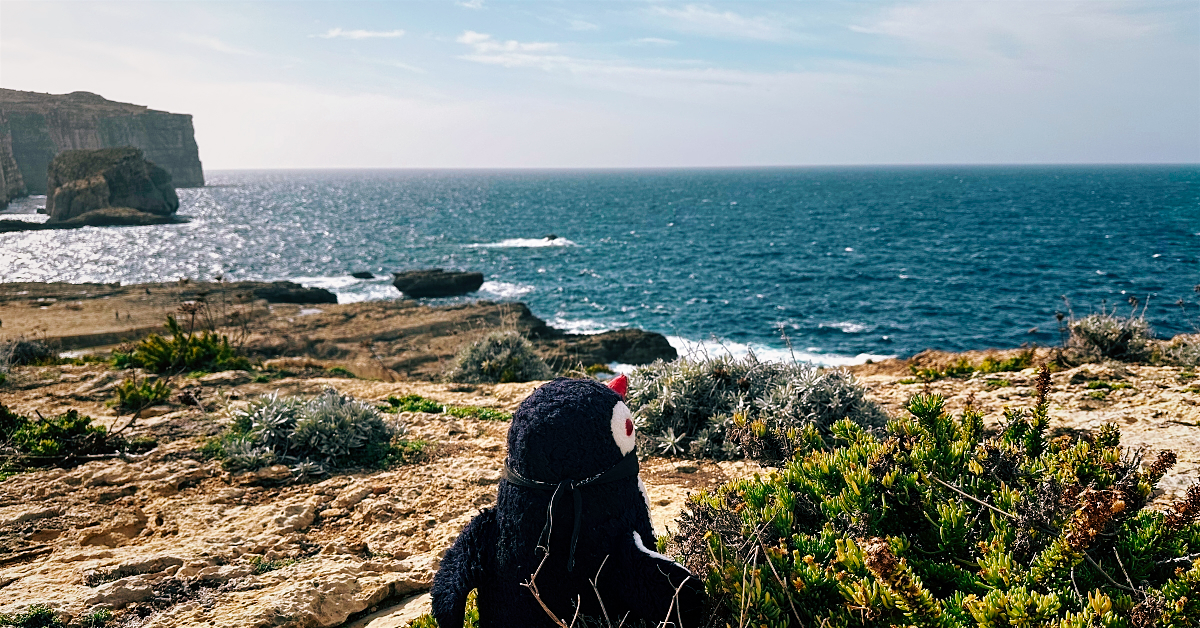
Gozo once had one of the Mediterranean’s most recognizable natural landmarks, a towering limestone arch known as the Azure Window. It collapsed during a storm on 8 March 2017, but the surrounding Dwejra coastline remains famous for its dramatic rock formations and deep blue waters.


#5: Gozo Still Produces Sea Salt the Traditional Way
Along the northern coast near Xwejni Bay, a checkerboard pattern of rock-cut salt pans stretches for approximately three kilometers. Local families have harvested salt here for generations, using the summer sun to evaporate seawater and leave behind salt crystals.
#6: Some of Gozo’s Caves Are Hidden Inside Private Homes
Ninu’s Cave and Xerri’s Grotto in Xagħra are underground limestone caves accessed through residential properties. Inside, visitors can see stalactites and stalagmites formed over thousands of years, making these geological wonders particularly surprising discoveries in an ordinary village setting.
#7: A Small Chapel Became Gozo’s Church of Miracles
In 1883, a local woman named Karmni Grima reported hearing the voice of the Virgin Mary at a small chapel that later became the Ta’ Pinu Sanctuary. Stories of miracles attracted pilgrims, and people eventually built a much larger basilica around the original chapel.
#8: Gozo’s Old Windmill Dates Back to the Knights’ Era
Ta’ Kola Windmill in Xagħra was built in 1787, replacing an earlier windmill constructed in 1725. Today, it serves as a museum where visitors can see the traditional milling equipment and learn how local families once ground grain into flour for their daily bread.
#9: Gozo’s Capital Has Two Names
The island’s capital is officially Victoria, but many locals still call it Rabat. Locals adopted the name Victoria in 1887 in honor of Queen Victoria, while Rabat remains deeply rooted in local usage. At its heart stands the Citadel, a fortified historic center with sweeping views across the island.
#10: Gozo Has a Coastline Made for Divers
The island is known for scuba diving, with underwater caves, reefs, dramatic rock formations, and shipwrecks to explore. One of its best-known sites is the Blue Hole at Dwejra, a natural rock formation that attracts experienced divers and underwater photographers.
#11: Gozo’s Villages Have Their Own Distinct Characters
Nadur, whose name comes from a Maltese word meaning “to keep watch,” sits on a high plateau with views across Gozo and beyond. It is especially famous for its unusual Carnival celebrations, when spontaneous street festivities and creative disguises transform the village.
#12: Gozo Has a Distinctly Rural Character
Despite being just a short ferry ride from Malta, Gozo is known for its countryside, terraced fields, stone farmhouses and small village squares. Traditional farming remains an important part of the island’s identity, and its landscape feels noticeably different from Malta’s more built-up areas.
#13: An Ottoman Raid Changed Gozo Forever
In 1551, Ottoman forces raided Gozo and carried away a large part of its population into slavery. The event became one of the most traumatic episodes in the island’s history and helps explain why fortified places like the Citadel mattered, as residents once sought protection there.
#14: Gozo’s Carnival Has a Wild Side
The village of Nadur is famous for its spontaneous Carnival, known locally for its irreverent atmosphere and unusual costumes. Unlike more formal parades, some celebrations feature improvised characters, dark humor, and satirical disguises, making it one of the island’s most distinctive annual traditions.
#15: Gozo Has Its Own Honey, Carob Syrup and Unusual Jams
Beyond its beaches and historic sites, Gozo has a strong tradition of local food production. Look for honey, carob-pod syrup, and preserves flavored with prickly pear, figs, and other Mediterranean fruits. They make delicious souvenirs and offer a taste of the island’s agricultural heritage.
#16: Gozo’s Cheeselets Were Traditionally Dried on Rooftops
The island’s famous ġbejniet are small cheeses traditionally made from sheep’s or goat’s milk. In the past, some were placed in reed baskets and left to dry on ventilated rooftops. Today, you can find them fresh, salted, dried, or coated in pepper, each with a different texture and flavor.
#17: Gozo Has Its Own Traditional Lace-Making Heritage
Gozo is particularly famous for its intricate handmade bobbin lace, a craft passed down through generations. Artisans create the patterns by wrapping threads around small wooden bobbins and working them over a pinned pillow. You can still find artisans making lace by hand, and visit Ta’ Dbieġi Artisan Village to see traditional crafts in action.
Practical Facts for Travelers Coming to Gozo
- Getting There: Take the Gozo Channel ferry from Ċirkewwa in northern Malta to Mġarr Harbor, or a passenger fast ferry from Valletta.
- Getting Around: Public buses connect Victoria with major villages and attractions, but a rental car gives you more flexibility to explore remote beaches and coastal spots.
- Driving: Roads can be narrow and winding, particularly in rural areas, so allow extra time between stops.
- How Long to Stay: A day trip covers a few highlights, but staying one or two nights gives you time to explore the beaches, villages and countryside without rushing.
- Ferry Planning: Check the latest ferry schedules before traveling, especially if you have a car or plan to return late in the evening.
- Public Transport: Gozo has 15 bus routes. Most run hourly, while route 301 between Victoria and Mġarr Harbor runs every 30 minutes.
- Best Base: Victoria is a convenient base for reaching different parts of the island, while Xlendi and Marsalforn suit travelers who prefer staying by the sea.
- Remote Spots: Some coastal attractions require a walk down uneven paths or steps, so comfortable shoes are useful.
- Day Trip to Comino: Operators offer boat trips to Comino and the Blue Lagoon from Gozo, depending on sea conditions.
- Tap Water: Tap water in Gozo is safe to drink, although its mineral and chlorine taste may differ from what you are used to. Many visitors prefer filtered or bottled water.
- Language: Both Maltese and English are official languages. English is widely spoken and understood, so it’s generally easy to communicate with locals.
- Cash and Cards: Many hotels, restaurants, and shops accept cards, but it helps to carry cash for small purchases at village shops and local markets.
Hotel search from Booking.comShows Booking.com’s own box, which can set Booking.com cookies.
Best Time to Visit Gozo
Gozo is a year-round destination, but the best time to visit depends on whether you want to explore historic sites and coastal trails or swim and relax on the beach. Spring and autumn offer a comfortable balance of pleasant weather and fewer crowds, while summer suits beach lovers who don’t mind the heat.
- Spring (March to May): The countryside turns green, and wildflowers brighten the landscape. Temperatures are comfortable for exploring Victoria, visiting the Ġgantija Temples and hiking along the coast.
- Summer (June to August): Expect hot, sunny days and very little rain. This is the main season for swimming, boat trips and beach visits, but the heat can make sightseeing and walking more tiring.
- Autumn (September to November): The sea stays warm into early autumn, while temperatures gradually become more comfortable. September and October are lovely for combining beach time with sightseeing, though rain becomes more likely later in the season.
- Winter (December to February): Gozo is quieter, with milder temperatures than much of Europe. Expect some rainy and windy days, but there are still plenty of opportunities to explore villages, historic sites and coastal scenery between weather changes.
We visited Gozo in early December, and the weather was perfect for the kind of trip we wanted. It was mild enough to explore the island, wander through historic villages and enjoy the coastal scenery without feeling exhausted by the heat. Although we had some cooler moments, the conditions were comfortable for sightseeing. Personally, we would choose spring, autumn or early winter over the height of summer, when temperatures can climb above 35°C and spending hours outdoors becomes less enjoyable. If swimming is your priority, however, late spring through early autumn is a better choice, with the sea generally warmest in late summer and early autumn.
Where to Stay in Gozo
- Victoria (Rabat): Best for First-Time Visitors. Central location, restaurants, shops, and easy bus connections. Hotel: The Duke Boutique Hotel.
- Xlendi: Best for Couples. A scenic seaside village with cliffs, swimming spots, and waterfront restaurants. Hotel: Cesca Boutique Hotel.
- Marsalforn: Best for Beach Lovers. A lively seaside resort with swimming spots, seafood restaurants, and nearby salt pans. Hotel: Murella Living.
- Xagħra: Best for History and Beaches. Close to the Ġgantija Temples and Ramla Bay’s red sand. Hotel: Cornucopia Hotel.
- Għarb and San Lawrenz: Best for Peace and Nature. Traditional villages near the dramatic Dwejra coastline, ideal for a countryside escape. Hotel: Mood Farmhouse B&B.
Buy Us a Ko-fi

Gozo may be small, but it offers plenty of reasons to stay a little longer, from prehistoric temples and hidden caves to red-sand beaches and peaceful villages. Whether you visit for a day or spend a few nights exploring at a slower pace, knowing a few local facts and practical tips will help you make the most of your trip. We certainly think this little island deserves a spot on your Malta itinerary.
Travel Bold. Eat Well. Waddle Wild.

This post contains affiliate links. If you click and buy, I might earn a tiny commission, enough to help a penguin keep up its globe-trotting lifestyle. No extra cost to you, just more fish for me. Thank you for supporting the adventure!