Getting Around Oslo: Complete Guide to Trams, Buses, Metro & Ferries
Getting around Oslo is easy. The city is quite compact, so you’ll probably find yourself waddling from one place to another more often than you expect, especially around the center. But when your feet need a break, Oslo has an excellent public transport network, from trams and buses to the metro and ferries across the fjord. We used a bit of everything during our time in Oslo, and here’s what you need to know to get around the city without the hassle.
- Oslo Public Transportation Quick Facts
- How Does Public Transportation in Oslo Work
- Your Main Options for Getting Around Oslo
- How Much Are Tickets For Oslo Public Transport
- Oslo Metro
- Oslo Metro
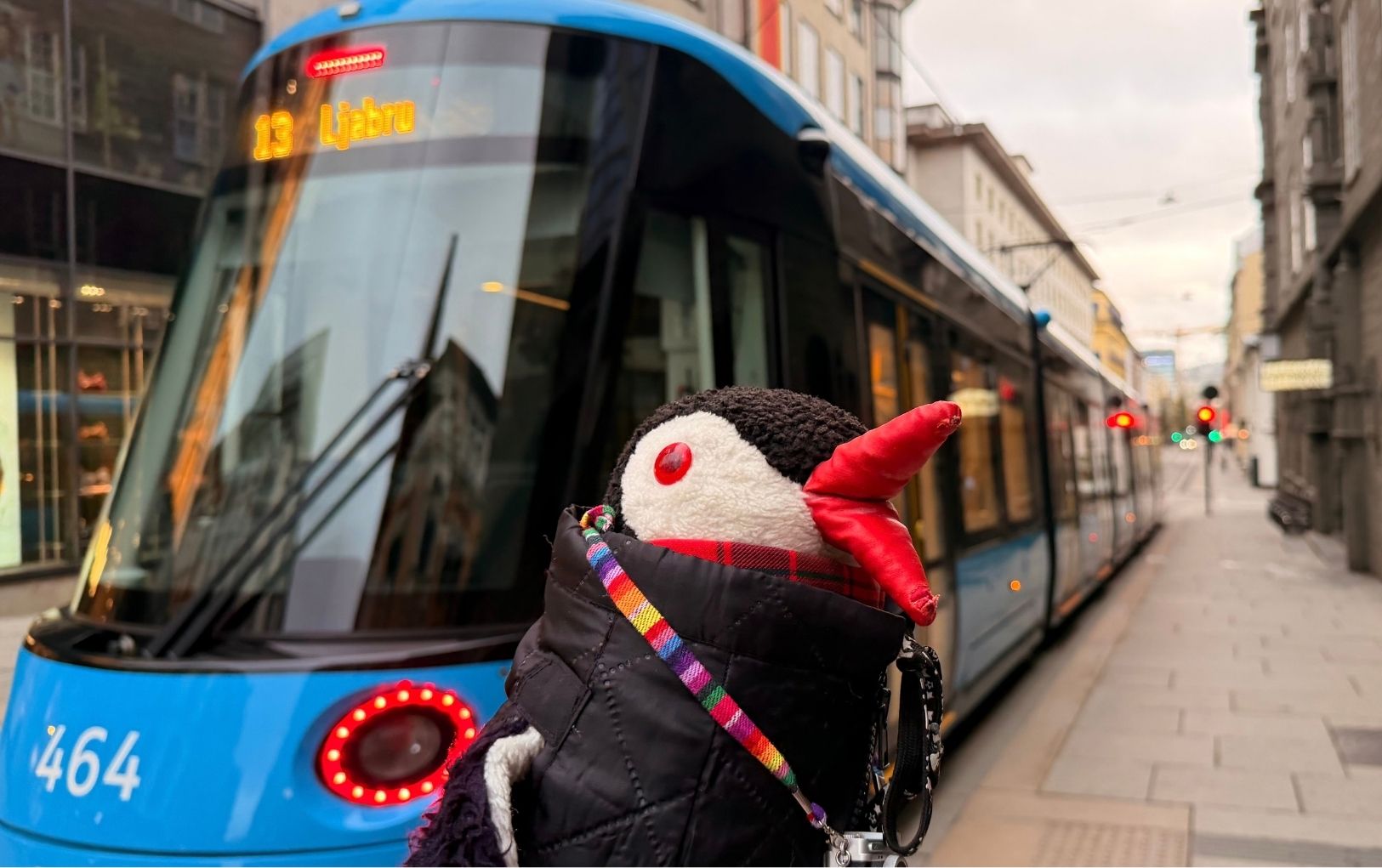
- Oslo Trams
- Oslo Buses
- Oslo Ferries
- Walking Around Oslo
- Tips for Using Public Transportation in Oslo
- Oslo Public Transportation Comparison Table
- Oslo Pass
- Oslo Airport to Oslo City Center
- Our Experience Getting Around Oslo
Oslo Public Transportation Quick Facts
- Public transport operator: Ruter
- Main transport: metro, tram, bus, and ferry
- Best app: Ruter app (Google Play or App Store)
- Tickets: Single tickets, 24-hour, 7-day, and other options
- Oslo Pass: Includes public transportation within the covered zones
- Easy to use: Clear routes and frequent connections
- Reliable: Regular services throughout the day
- Contactless: Easy to pay without cash
- Accessible: Most services are designed with accessibility in mind
How Does Public Transportation in Oslo Work
Public transportation in Oslo is operated mainly by Ruter, which makes getting around the city pretty simple. The same ticketing system covers several types of transport, so you can easily combine the metro, trams, buses, and eligible ferries during your trip.
The system is based mainly on zones and ticket validity, rather than buying a separate ticket for each vehicle. This means one valid ticket can often be used across different types of public transport within the time and zones it covers.
For most, Zone 1 is all you need. It covers central Oslo and most of the city’s main tourist attractions, so if you are staying and sightseeing around the center, you can usually stick with a Zone 1 ticket.
You may need additional zones when you travel outside central Oslo. If you are planning trips farther from the city center, check the Ruter app before buying your ticket. It shows which zones your journey covers and helps you choose the right ticket.
The easiest way to plan your journey and buy tickets is through the Ruter app. If you have an Oslo Pass, public transportation is included within the zones covered by your pass, so you can use the city’s public transport network without buying separate tickets for each journey.
Your Main Options for Getting Around Oslo
- 🚇 Metro (T-Bane): Great for longer journeys and reaching areas outside the city center.
- 🚋 Tram: One of the easiest ways to move around central Oslo while still seeing the city along the way.
- 🚌 Bus: Useful for routes that aren’t covered by the metro or tram, with extensive coverage across Oslo.
- ⛴️ Ferry: A fun and practical way to reach Oslo’s islands and explore the fjord.
- 🚶 Walking: Oslo is compact, and many of the main sights are close enough to reach on foot.
- 🚕 Taxi: More expensive, but useful when you want door-to-door transport, have lots of luggage, or are traveling in a group.


How Much Are Tickets For Oslo Public Transport
| Ticket Type | Price | Validity |
| Single ticket, Zone 1 | NOK 46 | 90 minutes |
| 24-hour ticket, Zone 1 | NOK 137 | 24 hours |
| 7-day ticket, Zone 1 | NOK 379 | 7 days |
| Oslo Pass | Included | Public transport within covered zones |
Zones: Most central Oslo sightseeing falls within Zone 1. If you travel outside Zone 1, you may need a ticket covering additional zones, which costs more.
Good to know: A single Ruter ticket is valid across the metro, tram, and bus during its validity period, so you can change between them without buying another ticket.
Buying Tickets on Public Transport
You generally need to buy your ticket before boarding. The easiest option is the Ruter app, but you can also use ticket machines and selected sales points. You cannot simply board and expect to buy a ticket from the driver.
Do You Need to Validate Your Ticket
If you have a paper ticket, you may need to validate it using the ticket validator before or when boarding. If you use the Ruter app, make sure your ticket is activated and valid before you board. Ticket inspectors can check your ticket during the journey, so keep it ready.
Oslo Metro
The Oslo Metro, known locally as the T-Bane, is Oslo’s underground and urban rail system. It is one of the easiest ways to get around when you want to travel a little farther than you would comfortably waddle. While some parts run underground, the metro also travels above ground as it reaches the neighborhoods around Oslo. The system has several lines that connect the city center with different parts of the city.
Where Does the Metro Go
Most visitors will use the T-Bane from one of the central stations, including Jernbanetorget, Stortinget, Nationaltheatret, and Majorstuen. These stations make it easy to connect with many popular parts of Oslo.
The metro is particularly useful if you want to reach places farther from the center, including Holmenkollen, where you can visit the famous ski jump, or Frognerseteren, which offers views over Oslo and the fjord. For central sightseeing, however, many attractions are close enough to reach by foot or tram, so you may not need the metro for every journey.


Key Facts & Network Overview
- Lines: 5 active lines, numbered 1 through 5, which run through a shared central section known as the Common Tunnel.
- Stations: 101 stations covering around 85 kilometers.
- Coverage: The network serves 14 of Oslo’s 15 boroughs and also extends into Bærum municipality, reaching areas such as Kolsås and Østerås.
- Above Ground: Despite being a metro system, most of the network runs above ground, taking you through residential neighborhoods and onward to forests, lakes such as Sognsvann, and ski areas including Holmenkollen on Line 1.
- Airport Access: The T-Bane does not connect directly to Oslo Airport (Gardermoen). For the airport, use the Flytoget Airport Express or regional trains from Oslo Central Station (Oslo S).
Tickets & Fares
- Cost: A single Zone 1 ticket costs NOK 46 and is valid for 90 minutes across the metro, tram, and bus.
- Tickets: You must buy tickets before boarding.
How to Buy Metro Tickets
- Ruter App: The easiest option. Download the Ruter app, select your journey and ticket, and purchase it directly on your phone.
- Ticket Machines: Available at metro stations. You can select your ticket and pay before entering the metro.
- Convenience Stores: You can also buy tickets at selected stores such as Narvesen and 7-Eleven.
- Oslo Pass: If you have an Oslo Pass, public transportation within the zones covered by your pass is already included, so you don’t need to purchase a separate metro ticket.


Our Experience
We used the Oslo Metro during our time in the city, and it was a really nice experience. One of our favorite rides was when we took the T-Bane out toward the forest and watched the city gradually disappear as the metro climbed up and out of the center. Along the way, you get views of the surrounding neighborhoods, forests, and the Holmenkollen ski slope, which makes the journey feel like part of the adventure rather than just a way to get from A to B.
The metro itself was very clean, comfortable, and straightforward to use. You need to study the map a little before you set off so you know which line and direction you need. Once you understand the network, getting around is easy. We really enjoyed the experience and would definitely recommend taking the T-Bane, especially if you want to see a different side of Oslo beyond the city center.
Oslo Trams
The Oslo tram, known locally as trikken, is one of the most convenient ways to get around the city center and nearby neighborhoods. Unlike the metro, the trams run mainly above ground, so you get to see Oslo as you travel. They are especially handy for shorter journeys when you don’t feel like waddling all the way to your next stop.
Where Does the Tram Go
The tram network connects central Oslo with several surrounding neighborhoods, making it useful for both sightseeing and getting around like a local. You’ll find tram stops close to many popular areas and attractions, including Aker Brygge, Grünerløkka, Majorstuen, Frogner, and the Royal Palace.
Because trams run through city streets, they can be a great option when you want to see more of Oslo along the way. For some central attractions, however, walking can still be quicker than waiting for a tram.


Key Facts & Network Overview
- Lines: 6 tram lines: 12, 13, 15, 17, 18, and 19, connecting central Oslo with surrounding neighborhoods.
- Network: The tram is part of Oslo’s Ruter public transportation network, so you can use the same Ruter ticket across trams, buses, and the metro.
- Above Ground: Trams run through the city streets, giving you a chance to see Oslo as you travel instead of disappearing underground.
- Useful for Tourists: The tram is particularly handy for reaching areas such as Grünerløkka, Frogner, Majorstuen, and Kjelsås.
- Easy Connections: You can easily combine the tram with the metro or bus without buying a separate ticket, as long as your ticket is valid for the journey.
- Airport Access: The tram does not connect directly to Oslo Airport (Gardermoen). For the airport, use the Flytoget Airport Express or a regional train.
Tickets & Fares
- Cost: A single Zone 1 ticket costs NOK 46 and is valid for 90 minutes across the metro, tram, and bus.
- Tickets: You must buy your ticket before boarding.
How to Buy Tram Tickets
- Ruter App: The easiest option. Choose your journey and ticket, then purchase it directly in the app.
- Ticket Machines: Available at selected stops and stations where you can buy your ticket before boarding.
- Convenience Stores: You can also buy tickets at selected stores such as Narvesen and 7-Eleven.
- Oslo Pass: If you have an Oslo Pass, public transportation within the zones covered by your pass is already included, so you don’t need to buy a separate tram ticket.


Our Experience
We hopped on and off the trams quite a lot during our time in Oslo, especially around the Opera House and the city center. We were also lucky enough to have a tram stop directly in front of our hotel, which made getting around incredibly easy. We could hop on, ride a few stops to a park or another part of the city, and hop off again without overthinking the journey.
One thing we really appreciated was how easy the trams are to board and get off. At many stops, the tram pulls up directly alongside the platform, so you can step straight on or off without climbing stairs or navigating a big gap. This is something you don’t always get in other cities, where getting onto a tram can mean stepping up or down quite a bit. In Oslo, the level boarding made the whole experience feel much more convenient, especially when carrying bags or just hopping on and off throughout the day.
The trams and the stops were very clean, and the whole system was easy to navigate. We mostly checked the Ruter app to make sure we were taking the right line and heading in the right direction, and then it was simply a matter of getting on and off. For us, the trams were one of the easiest ways to explore Oslo without constantly having to check how far we had to waddle.
Oslo Buses
Buses are another easy way to get around Oslo, especially when no metro or tram goes exactly where you need to go. The bus network covers much of the city and connects the center with surrounding neighborhoods. We used buses several times during our stay and found them clean, comfortable, and very straightforward to use.
Where Do the Buses Go
Oslo’s bus network covers both the city center and neighborhoods farther out, making it useful for places that aren’t directly connected by tram or metro. You can also use buses to reach parks, residential areas, and attractions outside the main sightseeing area.
The easiest way to figure out which bus you need is to use the Ruter app. Enter where you are and where you want to go, and it will show the route, bus number, stop, and departure time.
Key Facts & Network Overview
- Network: Ruter operates Oslo’s bus network, which includes city buses, regional buses, and night services.
- Routes: Dozens of bus routes serve Oslo and the surrounding areas, with city routes numbered mainly from 20 upwards and additional regional routes connecting Oslo with Akershus and nearby municipalities.
- Coverage: Buses cover much of Oslo, including neighborhoods not directly served by the metro or tram. They also connect Oslo with surrounding areas such as Bærum, Lillestrøm, Asker, and other parts of Akershus.
- Useful for Tourists: Buses are particularly handy for reaching places such as Vigeland Sculpture Park, Bygdøy, Grünerløkka, Holmenkollen, and other areas around Oslo, depending on the route.
- Night Buses: Oslo also has dedicated night buses, mainly running on Friday and Saturday nights, using the same Ruter ticketing system.
- Airport Access: You can also reach Oslo Airport (Gardermoen) by bus. Regional Ruter services connect Oslo with the airport, while dedicated airport buses such as Flybussen offer additional routes from Oslo to Gardermoen.
Tickets & Fares
- Cost: A single Zone 1 ticket costs NOK 46 and is valid for 90 minutes across the bus, tram, and metro.
- Tickets: You must buy your ticket before boarding.
How to Buy Bus Tickets
- Ruter App: The easiest option. Choose your journey and ticket in the app and purchase it on your phone.
- Ticket Machines: You can buy tickets from available Ruter ticket machines before boarding.
- Convenience Stores: You can also buy tickets at selected stores such as Narvesen and 7-Eleven.
- Oslo Pass: If you have an Oslo Pass, public transportation within the zones covered by your pass is already included, so you don’t need to purchase a separate bus ticket.


Look out especially for bus number 30 which became our best friend in Oslo. After a while, we realized this exact bus kept popping up everywhere in our route planning. When you look at its route on the map, it almost feels like it goes everywhere, taking you up, down, and across the city. We kept hopping on and off bus 30, and it quickly became one of those numbers you recognize without even checking the map twice. If you are exploring different parts of Oslo, keep an eye out for this one. It might just become your best friend too.
Oslo Ferries
The Oslo ferries are part of the wider Ruter public transportation network and are a great way to get around the Oslofjord. They connect the city center with islands, waterfront destinations, and communities around the fjord. For visitors, they are more than just a way to get from A to B. A ferry ride lets you see Oslo from the water and easily combine sightseeing with transportation.
Where Do the Ferries Go?
Most ferries depart from Aker Brygge, where several routes go to destinations around the Oslofjord. The island ferries are particularly popular, with B1 and B2 serving islands including Hovedøya, Gressholmen, Lindøya, Bleikøya, Nakkholmen, and Langøyene.
Other Ruter ferry routes connect Aker Brygge with places such as Nesodden, Lysaker, Vollen, Slemmestad, Son, and Drøbak. Some routes operate seasonally or run less frequently, so check the Ruter app before you head to the pier.
Key Facts & Network Overview
- Network: Oslo’s ferries are part of the Ruter public transportation network.
- Main routes: Ruter operates several ferry routes, including B1, B2, B10, B11, B20, B21 and B22, with B1X operating as an additional seasonal service to Hovedøya.
- Island hopping: The B1 and B2 routes connect central Oslo with several Oslofjord islands, including Hovedøya, Gressholmen, Lindøya, Bleikøya, Nakkholmen and Langøyene.
- Main departure point: Aker Brygge is the main starting point for many ferry journeys from central Oslo.
- Seasonal services: Ferry schedules change throughout the year, with more frequent services and additional routes during the summer months.
- Oslo Pass: The Oslo Pass covers regular Ruter ferry services within the zones covered by your pass. The separate ferry to the Bygdøy museums is also included with the Oslo Pass, although regular Ruter tickets do not cover it.
Tickets & Fares
- Cost: Ruter’s regular ticket prices apply to the ferry network. A single Zone 1 ticket costs NOK 46 and is valid for 90 minutes within the zones covered by your ticket.
- Tickets: You can buy your ticket through the Ruter app or other Ruter ticket sales points before traveling.
- Oslo Pass: Public transportation by Ruter ferry is included within the zones covered by your Oslo Pass.
- Extra zones: Some destinations, such as Drøbak and Son, are outside Zone 1, so you need a ticket covering the additional zones.
How to Use the Oslo Ferries
- Check the route: Use the Ruter app to find the right ferry, departure time, and pier.
- Go to the pier: Many central ferry routes leave from Aker Brygge.
- Check the destination: Several ferries use the same general area, so check the route number and destination before boarding.
- Have your ticket ready: Make sure you have a valid Ruter ticket or Oslo Pass before boarding.
- Enjoy the ride: Find a spot outside if the weather is good. The views of Oslo and the fjord are part of the experience.
- Check seasonal schedules: Some ferry routes operate differently by season, especially in summer.


Our Experience
We only took the ferry once during our time in Oslo, when we headed over to the Fram Museum, but the whole experience was incredibly easy. We found the ferry docks just behind Oslo City Hall, had our Oslo Passes ready, and had them scanned when we boarded.
The journey itself was smooth and enjoyable, with several stops along the way. We really enjoyed seeing Oslo from the water and watching the city from a completely different perspective. It was an easy and relaxing way to get to the museum, and if you have an Oslo Pass, it is definitely worth adding a ferry ride to your Oslo adventure.
Walking Around Oslo
Oslo is a compact city, especially around the center, and many of the main sights are close enough to reach on foot. If you are staying centrally, you can easily combine walking with public transportation and often find that waddling is actually the simplest way to get from one attraction to the next.
The area around Oslo Central Station, the Opera House, the waterfront, Karl Johans gate, the Royal Palace, and Aker Brygge is particularly easy to explore on foot. You can also walk between many of the main sights without worrying about traffic or complicated connections.
How Long Does It Take to Walk Around Oslo
Here are a few useful examples to give you an idea of how compact the center is:
- Oslo S → Oslo Opera House: Around 5 minutes
- Oslo S → Oslo waterfront: Around 5–10 minutes
- Oslo S → Karl Johans gate: Around 2 minutes
- Oslo S → Royal Palace: Around 20 minutes
- Oslo Opera House → Aker Brygge: Around 20 minutes
- Aker Brygge → Royal Palace: Around 15 minutes
Of course, waddling times depend on your exact route and how many times you stop to take photos. And in Oslo, there are plenty of reasons to stop!
Why We Waddled So Much
We ended up waddling around Oslo a lot more than we expected. The city center is compact, and once you start exploring, you quickly realize that many places are just a short walk from each other. We would often get off the tram or metro, explore an area on foot, and then continue waddling to the next sight rather than immediately looking for another connection.
For us, walking was also one of the best ways to experience Oslo. You get to see the streets, waterfront, parks, architecture, and all the little details you might miss from a tram or bus window. So while Oslo has a very easy public transportation system, don’t underestimate your own two feet. Sometimes the best way to get around Oslo is to waddle.
Hotel search from Trip.comShows Trip.com’s own box, which can set Trip.com cookies.
Tips for Using Public Transportation in Oslo
- Download the Ruter app: Use it to plan your journeys, check departures, and buy tickets.
- Check your zones: Make sure your ticket covers all the zones you plan to travel through.
- One ticket can go a long way: You don’t need to buy a separate ticket every time you change between the metro, tram, and bus, as long as your ticket is still valid.
- Keep your ticket ready: Staff can check tickets and Oslo Passes during your journey, so keep them easily accessible.
- Check departures: Before heading to a stop, check the Ruter app for the latest departure time and route.
- Allow extra time: Delays, maintenance, or unexpected disruptions can happen, so don’t plan your journey down to the last minute.
- Don’t forget the ferries: They are part of the public transport experience and a fun way to see Oslo from the water.
- Waddle when you can: If you’re staying in the center, many sights are close enough to walk to.
- Consider the Oslo Pass: If you’re planning to visit several museums and attractions, compare the pass cost with individual tickets and public transportation.
Oslo Public Transportation Comparison Table
| Transport | Best For | Speed | Coverage | Ticket | Oslo Pass |
| 🚇 Metro (T-Bane) | Longer journeys | Fast | City + outskirts | Ruter | Included |
| 🚋 Tram | Central Oslo & neighborhoods | Medium | City center + surrounding areas | Ruter | Included |
| 🚌 Bus | Flexible routes | Medium | Very extensive | Ruter | Included |
| ⛴️ Ferry | Islands & fjord | Slower | Waterfront + islands | Ruter | Included* |
| 🚲 Bike | Short trips | Medium | Central areas | Separate | Not included |
| 🛴 E-Scooter | Short trips | Medium | Mainly central areas | Separate | Not included |
| 🚕 Taxi | Door-to-door travel | Fast | Anywhere | Separate | Not included |
| 🚶 Waddling | Central sights | Depends on Miško | Central Oslo | Free | — |
Good to know: A regular Ruter ticket can be used across buses, trams, metro, ferries, and eligible Vy trains within the zones and validity period of your ticket, so you don’t need to buy a new ticket every time you change transport.
Oslo Pass
The Oslo Pass is more than just a sightseeing card. It also gives you unlimited public transportation during your pass period, which can make getting around Oslo much easier. Along with free entry to 30+ museums and attractions and various discounts, you can use the pass on Ruter’s public transportation network.
With an Oslo Pass, you get unlimited travel on:
- Metro (T-Bane)
- Trams
- Ruter buses
- Ruter ferries and boats
- Local Vy trains
- Night buses
- Local Vy trains to and from Oslo Airport Gardermoen
The pass covers zones 1, 2, 3, 4V and 4N. It does not cover Flytoget, Flybussen, Torp Airport, or long-distance buses.
Oslo Pass Cost (for Adults)
- 24-hour Oslo Pass: NOK 580
- 48-hour Oslo Pass: NOK 845
- 72-hour Oslo Pass: NOK 995
Oslo Airport to Oslo City Center
Getting from Oslo Airport to the city center is very easy, and I recommend taking the train. There are a couple of train options, and choosing the right one can save you money, especially if you have an Oslo Pass. We have a separate guide explaining the options, prices, travel times, and which train we recommend, so check it out before you arrive.
Our Experience Getting Around Oslo
We had the Oslo Pass during our stay, so we made the most of the city’s public transportation. That said, we still waddled a lot! We averaged around ~12 kilometers of waddling per day, as Oslo is compact and many places are easy to reach on foot. But whenever we needed to get from one side of the city to the other, reach a viewpoint, or give our feet a break, we hopped on public transport.
We used pretty much everything we could, from the metro and trams to buses and ferries, and found the whole system surprisingly easy to understand. Once we got the hang of the Ruter app and the different routes, getting around was really straightforward. We could easily combine walking with public transportation without spending too much time figuring out connections.


The ferries were definitely one of our favorite parts. We don’t have this kind of public transportation where we currently live, so hopping on a ferry and traveling across the Oslofjord feels like part of the adventure rather than simply getting from A to B. Seeing Oslo from the water also gives you a completely different perspective of the city.
Overall, getting around Oslo was much easier than we expected. Between our 12-kilometer waddles and hopping on whatever form of public transportation made sense, we never felt like we needed a car.


One of the little things we really appreciated about Oslo’s public transportation was how well-equipped everything felt. Every bus, tram, and metro had a trash bin, so if we had a little piece of rubbish with us, we could throw it away instead of carrying it around all day. We also noticed that you could charge your devices while traveling, which was incredibly handy when we were out exploring all day. These small details might not sound like much, but they made a big difference and made the whole public transportation experience feel comfortable, practical, and ready to use.
Buy Us a Ko-fi

After spending our days waddling around Oslo, hopping on trams, catching buses, riding the metro, and taking ferries across the fjord, we came away really enjoying how easy it is to move around the city. We never felt like we had to plan every journey perfectly.
The Oslo Pass made things even simpler, especially on days when we visited several museums and used public transportation between them. But even without it, the Ruter system is straightforward once you understand the zones and have the app on your phone.
So, if you’re heading to Oslo, don’t overthink the transportation. Waddle when you can, hop on when you need to, and definitely take a ferry or two. Some of our favorite moments in Oslo happened somewhere between one attraction and the next.
Travel Bold. Eat Well. Waddle Wild.
Penguin Discplaimer: All information, prices, and ticket costs mentioned in this article are based on our visit to Oslo in 2026. Prices, routes, schedules, and ticket conditions can change, so we always recommend double-checking the latest information before your trip.
Save This Pin for Later!
This post contains affiliate links. If you click and buy, I might earn a tiny commission, enough to help a penguin keep up its globe-trotting lifestyle. No extra cost to you, just more fish for me. Thank you for supporting the adventure!